
Life style
Desire to connection. understanding sexual health in modern relationships


 A conversation about intimacy, belonging and relationships with Dr Yasuni Manikkage
In an age where relationships are shaped as much by emotional awareness as by digital connection, conversations about sexual health are finally stepping out of the shadows.
As Dr. Yasuni Manikkage explains, sexual health is not just a medical issue but a lived experience woven through communication, consent, mental wellbeing and self-respect. Many couples share a home, a bed, even children, yet still feel like “Roommates with responsibilities” rather than lovers, which often signal a lack of emotional safety rather than a lack of physical contact. When desire shifts, they may panic, blame themselves or fear the relationship is dying, instead of recognising that changes in desire are common, understandable, and often transformable with knowledge, honest dialogue, and small daily acts of connection.
Q: Why did you decide to talk about sexual desire and connection now?
A: Because so many couples quietly suffer here. They love each other, share a home, raise children, but feel like “roommates with responsibilities” rather than lovers. They rarely talk about sex openly, so when desire changes, they panic, blame themselves, or assume the relationship is dying. I want people to know shifts in desire are common, understandable, and often treatable with knowledge, communication, and small daily changes.
Q: You say there is an “education gap” in sexual health. What do you mean by that?
A: Most women have never been properly taught about their own sexual anatomy, especially where and how they feel pleasure. Many men, on the other hand, have been left to “figure it out” from pornography, jokes, and guesswork. That’s a terrible training manual for real bodies and real emotions. This gap affects how easily women reach orgasm, how safe they feel in bed, and how satisfied both partners feel in the relationship.
Q: We hear about the “orgasm gap.” Is it really not biological?
A: There are biological factors, yes, but the main gap we see between men’s and women’s orgasm rates in heterosexual relationships comes from communication, knowledge, and what I call “pleasure equity.” In many bedrooms, the script is focused on penetration, speed, and the man’s climax. Women’s pleasure is often treated as optional or “extra.” When couples learn anatomy, slow down, focus on both bodies, and talk about what feels good, that gap narrows dramatically.
Q: Most people think desire should be spontaneous. Is that a myth?
A: It’s one of the biggest myths. Movies show desire as a spark that appears out of nowhere: one glance across the room and suddenly you’re tearing each other’s clothes off. That kind of spontaneous desire does happen, especially early in a relationship. But for many people, especially women, desire is often “responsive”. That means they start feeling desire after some warmth, touch, emotional closeness, or stimulation, not before.
So, if you’re waiting to “feel like it” before you touch or connect, you may wait a very long time. For many, desire comes “after” they start, not before.
Q: How would you scientifically describe sexual desire?
A: Desire is not just a physical urge. It’s a blend of attraction to your partner’s body and personality, emotional connection and feeling cared for, a sense of self-expansion or growth, learning, feeling alive with them, trust and safety, both emotionally and physically. It’s contextual: it changes with stress, health, life stages, and relationship quality. It’s relational: it lives between two nervous systems, not just in one body. And for many, it’s responsive: you get in the mood “after” a hug, a joke, a shower together, not randomly at 3 p.m. on a Tuesday.
Q: You mentioned an “updated sexual response cycle.” What does that look like in real life?
A: Older models suggested a straight line: desire, arousal, orgasm and resolution. That’s tidy, but human beings are messy and complex. Modern understanding is more like a circle or loop. You can enter the cycle at different points: maybe you start with touch, or a feeling of closeness, or even just a decision to connect. Desire doesn’t always come first; sometimes it shows up halfway through.
For example, you may feel tired and not “in the mood,” but you agree to cuddle and share some gentle touch. As you relax and feel appreciated, arousal builds, and then desire appears. That’s normal, not fake.
Q: Are there real gender differences in how desire works?
A: There are common patterns, though individuals vary a lot. Many women tend to enter through emotional intimacy: feeling heard, understood, and safe. Physical touch then wakes up arousal, and desire follows.
Many men more often start with physical attraction or arousal. They may feel desire quickly in response to visual or physical cues, and emotional intimacy can deepen later.
Both patterns are healthy and normal. The problem starts when each partner assumes the other should work exactly like them, and if they don’t, they must be “cold” “needy” or “broken.” Understanding these differences turns conflict into curiosity.
Q: How does desire change as a relationship ages?
A: Think of three broad stages.
stage 1 – Early Attraction (0-6 months): High novelty, strong chemistry, lots of dopamine. You’re discovering each other; desire often feels effortless. stage 2 – Deepening Intimacy (6 months-2 years): You know each other better. The high settles. Desire becomes more linked to emotional closeness. Frequency may drop, and that is “normal”.
stage 3 – Maintenance and Maturity (2-10+ years): Life arrives -work, kids, money, health. Desire usually doesn’t feel automatic. It needs conscious attention, novelty, and emotional safety.
A common mistake is comparing stage 3 desire to Stage 1 and assuming, “we’ve failed.” Actually, you’ve just moved into a different phase that requires new skills.
Q: What are some main things that influence desire?
A:We can think in three layers.
Biological: hormones (testosterone, estrogen), brain chemicals (dopamine, serotonin), medical conditions like diabetes, heart disease, cancer, chronic pain, sleep problems, menopause, and genital issues such as vaginal dryness or pelvic floor pain.
Psychological: negative early sexual experiences, trauma or abuse, body image concerns, low self-esteem, anxiety, depression, and certain mental health conditions.
Relational and social: how safe and respected you feel, attachment style, quality of communication, power imbalances, work and financial stress, caregiving burdens, privacy, and cultural messages that centre on penetration over pleasure. Desire is never “just in your head” or “just in your hormones” – it’s all three interacting.
Q: What tends to kill desire in long-term relationships?
A: Several patterns show up again and again:
Resentment and unresolved conflict – small hurts that never get repaired.
Lack of emotional safety – fear of being judged, rejected, or punished for being vulnerable.
Poor communication – avoiding difficult topics, sarcasm instead of honesty.
Body image shame – feeling unattractive, “too old,” “too fat,” or “not enough.”
Power imbalance -one partner controlling decisions, money, or sex.
Sexual guilt or religious shame messages that sex is dirty, selfish, or only for reproduction.
Stress, burnout, depression -when your nervous system is in survival mode, it doesn’t prioritise pleasure.
You can’t expect desire to flourish in an environment that feels unsafe, unfair, or constantly tense.
Q: And what actually builds desire?
A: Desire thrives in a combination of safety and aliveness.
Emotional intimacy: feeling seen, heard, and valued.
Nervous system calm: your body is relaxed enough to feel pleasure, not just guard against danger.
Open communication: you can talk about wants, limits, and fantasies without mocking or shutting each other down.
Continued growth: doing new things together, seeing new sides of each other, evolving as a team.
I often say: stagnation is desire’s enemy; growth is its ally. Even small adventures -trying a new cafe, dancing in the living room, travelling a different route-can reawaken curiosity.
Q: Can you give couples a simple framework to reconnect?
A: Yes, I often share a six-step framework that’s practical and gentle.
1. Check in: Ask, “How connected do we feel lately?” Not just “How often are we having sex?”
2. Non-sexual touch: Hugs, stroking hair, holding hands – without expecting sex at the end.
3. Novelty: Try something new together: a class, a walk in a different place, a game, a shared hobby.
4. Appreciation: Tell your partner what you notice and value about them, including non-sexual qualities.
5. vulnerability: Share one fear, one hope, or one truth you usually hide.
6. Initiation: Don’t wait for desire to fall from the sky. Gently invite connection; sometimes the mood follows the movement.
You don’t need to do all of this perfectly. Even one or two steps, done consistently, can shift the energy between you.
Q: How can someone tell if their desire problem needs more attention or professional help?
A: some warning signs include:
You feel emotionally distant, even though you still love each other.
Desire has dropped sharply and is tied to stress, shame, or unspoken conflict.
You feel unable to talk about sex without fighting or shutting down.
sex is used to avoid real intimacy, or to keep the peace, rather than to connect.
You feel afraid or ashamed to say what you truly want-or what you don’t want. In these situations, talking to a doctor, a sexual medicine specialist, or a therapist can be very helpful. You are not “broken” for needing support.
Q: Many couples say, “We love each other but there’s no spark.” What do you tell them?
A: I often say, “Let’s first normalise where you are.” If you’ve been together for years, maybe raising children and navigating financial pressures, it’s normal that your desire doesn’t look like the early days. That doesn’t mean your relationship is dying.
usually, you’re in the maintenance phase. Desire is quieter but can be reawakened with intentional effort: scheduling time for each other, bringing in novelty, and rebuilding emotional safety. It’s less about chasing fireworks and more about tending a fire so it doesn’t go out.
Q: what about couples with mismatched desires – one wants sex often, the other rarely?
A: This is extremely common. The mistake is to frame it as “the pursuer is demanding” and “the less-desiring partner is rejecting.” underneath, there are often two different nervous systems trying to feel safe.
one partner might use physical closeness to feel secure and loved. The other might need emotional safety first before their body can relax into physical intimacy. When couples understand this, they stop seeing each other as enemies and start cooperating: “How can we meet ‘both’ our needs, instead of arguing about who is right?”
Q: Many people, especially women, say sex feels like an obligation. What does that signal to you as a doctor?
A: It’s a red flag – not that the person is broken, but that something important is missing. sex should be about connection, pleasure, and mutual choice. when it becomes a duty, I look for:
Emotional disconnection or resentment.
Fear of conflict or abandonment if they say no.
Lack of felt safety or freedom to express preferences.
The solution is not to “force yourself more.” It is to rebuild emotional safety, renegotiate consent and expectations, and often to have very honest conversations about what feels missing or painful.
Q: If you could leave couples with a few key messages about desire and connection, what would they be?
A: I’d highlight four truths:
Desire and emotional intimacy are deeply connected. When you feel safe, loved, and seen, desire has space to grow.
Desire changes across life and relationship stages. That’s normal, not evidence of failure.
Safety is the foundation. without trust and a calm nervous system, no technique or position will fix desire.
You have agency. Through communication, intentional connection, and sometimes professional help, it is possible to revive and reshape your sexual relationship. If you are reading this and thinking, “This sounds like us,” my invitation is simple: start with one honest conversation. Ask your partner, “Where do you naturally enter the cycle -through emotions, touch, or arousal? What helps you feel desire? What do you need from me to feel safe and wanted?”
Those questions, asked with kindness and curiosity, can quietly change the entire trajectory of a relationship.


Sri Lanka is rising on the world’s travel radar – a jewel of the sun, drenched beaches, misty tea estates, and hidden waterfalls. Although Thailand dazzles with scale neon lights, bustling party islands and luxury resorts designed to impress, Sri Lanka offers something different, intimacy, authenticity and a luxury that doesn’t shout, it seduces.
As global travel surges and destinations vie for attention, the Deputy Minister of Tourism for Sri Lanka, Professor Ruwan Ranasinghe with deep roots in tourism studies, speaks about elevating Sri Lanka beyond its beautifully raw landscapes into a world class destination that embraces sustainability, technology and community empowerment. We spoke to him and asked what’s next for Sri Lanka and how the island envisions its tourism renaissance over the next few years.
 (Q) How do you foresee the tourism strategy direction for the next five years?
(A) Sri Lanka’s future tourism strategy is firmly anchored in sustainable and inclusive tourism. The focus is on balancing growth with responsibility: protecting natural and cultural assets while ensuring that communities across the island benefit directly. Diversification into wellness, eco-tourism, heritage, adventure, and rural experiences will be guided by evidence-based planning and inclusivity.
(Q) The key priorities for post pandemic recovery?
(A) Rebuilding trust with clear safety standards and transparent communication.
Inclusive growth by empowering small entrepreneurs and rural communities.
Sustainable practices in site management, energy use, and conservation.
Diversified demand targeting wellness, eco-travel, and long-stay visitors.
Digital transformation to modernize marketing and expand reach.
(Q) With Tourism booming in Thailand and Maldives, what is Sri Lanka’s position in the tourism landscape?
(A) Sri Lanka’s edge lies in offering a compact, diverse, and authentic experience— heritage, wildlife, tea, beaches, spa and wellness—all within short travel times. By positioning itself as a sustainable and inclusive destination, Sri Lanka appeals to travellers who value responsible tourism and meaningful cultural engagement, setting it apart from regional competitors.
(Q) What are your plans for sustainable and responsible growth for tourism?
(A) Sustainability is non-negotiable. Policies include carrying-capacity management, eco-certification, renewable energy incentives, and climate adaptation in coastal and hill-country zones. Inclusivity ensures that local communities share in tourism’s benefits, reinforcing resilience and equity.
(Q) How do we promote ecotourism, protect wildlife and marine ecosystems?
(A) Eco-tourism is being advanced through responsible visitor management, conservation partnerships, and community guardianship. Wildlife parks, marine ecosystems, and coastal zones are protected with stricter codes of conduct, while local communities are empowered as custodians and beneficiaries.
(Q) How can Sri Lanka showcase its position as a tourist destination?
(A) Sri Lanka presents itself as a sustainable, inclusive, and authentic destination. Live craft, cuisine, Ayurveda, and cultural showcases highlight the island’s unique identity, while digital tools ensure global buyers can connect directly with local providers.
(Q) How do we support small tourism entrepreneurs and rural communities?
(A) Inclusive tourism means empowering SMEs and rural communities with finance, skills, and market access. Homestays, village experiences, and community-based tourism routes are promoted to ensure equitable growth and authentic visitor experiences.
(Q) How do you predict the outlook for Sri Lanka’s tourism by 2030?
(A) By 2030, Sri Lanka envisions a tourism industry that is globally recognized for sustainability and inclusivity. Success will be measured not only in arrivals and revenue, but in conservation outcomes, community empowerment, and equitable regional development.
(Q) How will the role of technology and digital marketing help the tourist sector?
(A) Digital platforms and data insights will modernize Sri Lanka’s tourism, ensuring inclusive access for SMEs and smarter targeting of global markets. Technology supports transparency, efficiency, and sustainability, making tourism more resilient and competitive.
(Q) The impact of recent adverse weather and national disaster on tourism?
(A) Sri Lanka faced severe weather and a national disaster in the past months which inevitably disrupted parts of the tourism industry. Some destinations experienced temporary closures, and travel plans were affected. However, the government has acted swiftly: through the national budget and special allocations, resources are being directed to restore infrastructure, support affected communities, and stabilize the tourism sector.
Importantly, the industry’s resilience is evident. Stakeholders across government, private sector, and communities worked together with peaceful and strong dedication to minimize the damage. Recovery measures include targeted promotions to reassure international markets, rebuilding trust in Sri Lanka as a safe destination, and accelerating necessary upgrades.
This collective response demonstrates that Sri Lanka’s tourism is not only recovering, but doing so in a way that is sustainable, inclusive, and future-focused. The adversity has reinforced our commitment to building a sector that can withstand challenges while continuing to deliver authentic, safe, and memorable experiences for visitors.
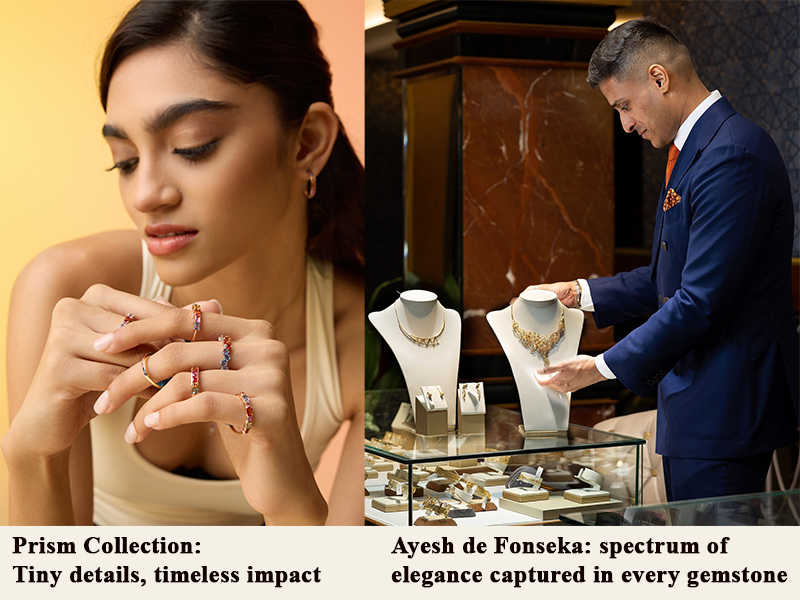
The Prism story
 Tiesh is a luxury Sri Lankan jewellery house known for its high-end handcrafted pieces that combine contemporary design with traditional craftsmanship.
Recently Tiesh unveiled a fresh vision for contemporary luxury called the Prism Collection.
The Prism Collection is a jewellery line launched by Tiesh that draws its inspiration from the way light refracts and splits into rich, vibrant colours when passing through a prism.
The idea behind this collection is to capture the spectrum of light and translate it into wearable art -jewellery that highlights brilliance, colour and dynamic form.
This is an era where jewellery is more than mere ornamentation – where every piece tells a story. Launched to great acclaim at the brand’s elegant Colombo showroom, this collection is a radiant celebration of light, colour and refined artistry – a body of work that doesn’t just adorn but transforms.
Renowned for its dedication to excellence, Tiesh continues to uphold its legacy of producing jewellery that epitomises luxury, elegance and meticulous craftsmanship. Each Prism creation is thoughtfully designed and expertly crafted using the finest precious stones and the skill of master local artisans, reflecting the brand’s unwavering commitment to quality and detail.
Launched as a festive yet fashion-forward collection, Prism presents a curated selection of jewellery that aligns seamlessly with today’s modern aesthetic. Available in yellow gold, rose gold and white gold; the Prism Collection features an extensive range of designs, including rings, earrings, pendants, necklaces, bracelets, bangles and chains. Each piece is crafted to highlight colour, balance and wearability, appealing to the modern, trend-conscious jewellery lover.
With a proud legacy spanning almost three decades Staying true to this ethos, the Prism Collection places
Sri Lankan sapphires in the spotlight, celebrating their natural colours, textures and rarity. Speaking of the collection, Tiesh Co-Director Ayesh de Fonseka stated, “Prism was created in keeping with the times, contemporary yet timeless. In a time when the nation looks towards renewal, this Collection emerges as a symbol of hope and positive transformation. Reflecting light, colour and clarity, the collection embodies a sense of resilience and betterment. As proud Sri Lankans, we wanted
this collection to showcase the exceptional beauty of our local sapphires alongside other precious stones. These are statement pieces designed for modern lifestyles.”
The collection also embraces customisation, a signature element of the Tiesh experience. Clients are invited to select their preferred gemstones and personalise designs, resulting in truly one-of-a-kind creations that reflect individual style and expression.
With global gold prices reaching historic highs, fine jewellery has inevitably become heavier on the wallet Yet for discerning clients, the conversation is no longer about grams alone
Here customers can adjust stone size, setting style and medal choice to suit their budget. At Tiesh, you’ll notice another surprise – the after-care service such as polishing and maintenance.
The gold at Tiesh remains genuine and hallmarked. In collections such as the Prism line, gemstones and design architecture do most of the talking, while gold becomes the elegant framework rather than the bulk of the piece. In their collections the gemstones carry much of the visual richness. Instead of purchasing a heavy block of gold, the client invests in design, craftsmanship and beauty. So, when gold prices rise globally our jewellery doesn’t escalate at the same pace because gold is not the sole component defining the piece Ayesh pointed out
We create jewellery meant to live with the heavier, not just sit in a vault. At its heart, Tiesh remains more than a jewellery house; it is a family legacy shared by vision, trust and affinity with craftsmanship. And within every shimmering facet of Prism lies that story: a family craft containing to shine, generation after generation.
The Prism collection is now available at the Tiesh showrooms R A de Mel Mawatha Colombo 3.
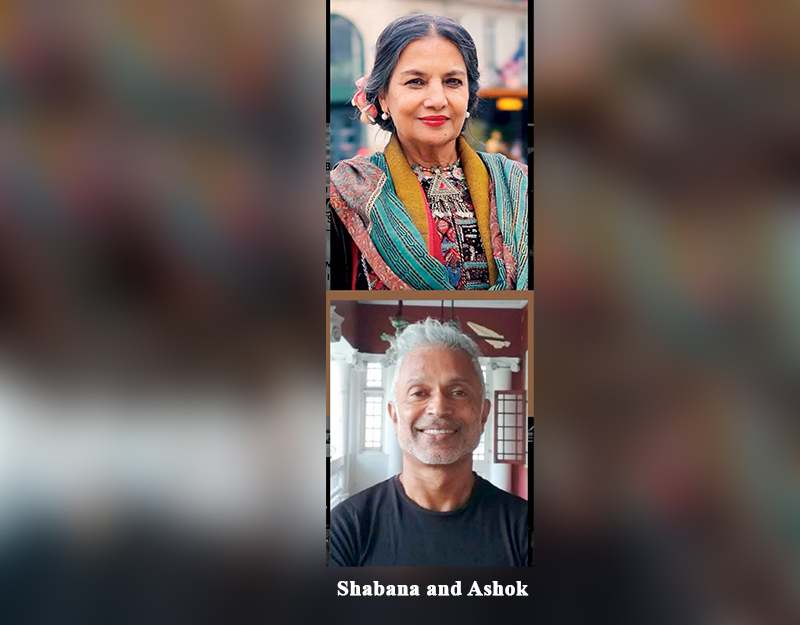
Cinema, courage and conversation:
Renowned Indian actress Shabana Azmi brought candour, conviction and a lifetime of cinematic wisdom to the stage recently, in conversation with Sri Lankan author Ashok Ferrey at the HSBC Ceylon Literary and Arts Festival recently at Cinnamon Lakeside Colombo.
In a wide-ranging discussion that traversed five decades of cinema, feminism, censorship and cross-border politics, Azmi reflected on a career spanning over 140 films — dismissing the debate over whether the figure stands at 140 or 160 with characteristic wit. “One hundred and forty is good enough,” she quipped, setting the tone for an evening that blended humour with hard truths.
Ferrey opened the conversation with Ankur, the 1974 classic directed by Shyam Benegal, which marked Azmi’s debut and helped pioneer India’s parallel cinema movement. Azmi credited her formative years at the Film and Television Institute of India for shaping her craft, emphasising that acting is both talent and technique.
“Training polishes the diamond,” she said, rejecting the notion that acting can be mastered in a matter of months. Exposure to international cinema — from Japanese to French and Swedish films — deeply influenced her aesthetic choices, she noted, adding that her upbringing in a household steeped in theatre and poetry further shaped her artistic sensibilities.
Azmi spoke passionately about the delicate balance between emotion and technical precision required of an actor.
“You are in the moment, but you are also watching yourself,” she observed, describing the psychological demands of the profession. “Civilised behaviour expects you to control emotion. Acting demands the opposite.”
The discussion moved to Arth (1982), directed by Mahesh Bhatt, a landmark film in which Azmi portrayed a woman who refuses to reconcile with an unfaithful husband. The decision to let her character walk away — radical at the time — drew scepticism from distributors who doubted Indian audiences would accept such defiance.
“They said it wouldn’t run a single day,” Azmi recalled. Instead, it became both critically acclaimed and commercially successful, resonating deeply with women across India. She described how women began approaching her not as a star but in solidarity, seeking guidance.
“That’s when I realised I have a voice,” she said, marking the beginning of her active involvement in the women’s movement.
Azmi was unequivocal in her stance on patriarchy, describing it as deeply entrenched in South Asian society. While acknowledging that conversations have begun, she warned that social conditioning — including women’s acceptance of domestic violence — remains troubling.
The conversation turned to Fire (1996), directed by Deepa Mehta, a film that sparked controversy for its portrayal of a same-sex relationship between two sisters-in-law. Azmi admitted she took time to consider the role, anticipating backlash.
Encouraged by her husband, lyricist and writer Javed Akhtar, Azmi chose to proceed. The film was initially screened without incident before political groups vandalised theatres in protest. Yet she remains proud of her decision.
“If you can feel empathy for these two women, you can extend that empathy to others — another nation, race, religion or sexuality,” she said, underscoring her belief that art creates a climate of sensitivity where change becomes possible.
On ageing in cinema, Azmi expressed optimism. Unlike earlier decades when actresses were relegated to peripheral roles after 30, today’s industry offers space for senior actors.
She credited contemporaries such as Amitabh Bachchan — whose sustained presence in leading character roles has reshaped industry norms — for broadening opportunities.
The session concluded with reflections on cross-border tensions, prompted by a question about an India–Pakistan cricket match taking place concurrently.
Azmi offered a nuanced perspective, suggesting that while cricket fuels adrenaline, cultural collaborations — particularly film co-productions — could serve as stronger bridges between nations.
“People don’t have a problem with each other. Politics does,” she remarked, advocating for artistic exchange as a means of fostering understanding.
Throughout the evening, Azmi’s words echoed her lifelong belief: that cinema is not merely entertainment but a powerful vehicle for social transformation.
By Ifham Nizam

Iran launches attacks across Middle East after US and Israel strikes on leadership sites

A committee will be appointed to formulate a national policy on medical education – PM

South Africa vs Zimbabwe, this time for Africa

ICC monitoring Middle East conflict as airspace closure hits travel plans

Sri Lanka make two changes and bowl; Pakistan drop Babar and Ayub

US, Israel launch attack on Iran, explosions in downtown Tehran

‘Dates have the highest sugar content to fight Coronavirus’

Sunday Island 27 December – Headlines

#SundayIsland 17th December – Headlines

Sunday Island – 28th March

Sunday Island Headlines – 21 March

Sunday Island – 21st February – Headlines
-
 Features7 days ago
Why does the state threaten Its people with yet another anti-terror law?
-

 Features7 days ago
Reconciliation, Mood of the Nation and the NPP Government
-

 Features7 days ago
Victor Melder turns 90: Railwayman and bibliophile extraordinary
-

 Features6 days ago
LOVEABLE BUT LETHAL: When four-legged stars remind us of a silent killer
-
 Features7 days ago
Victor, the Friend of the Foreign Press
-

 Business6 days ago
Bathiya & Santhush make a strategic bet on Colombo
-

 Business6 days ago
Seeing is believing – the silent scale behind SriLankan’s ground operation
-

 Features7 days ago
Barking up the wrong tree