
Sports
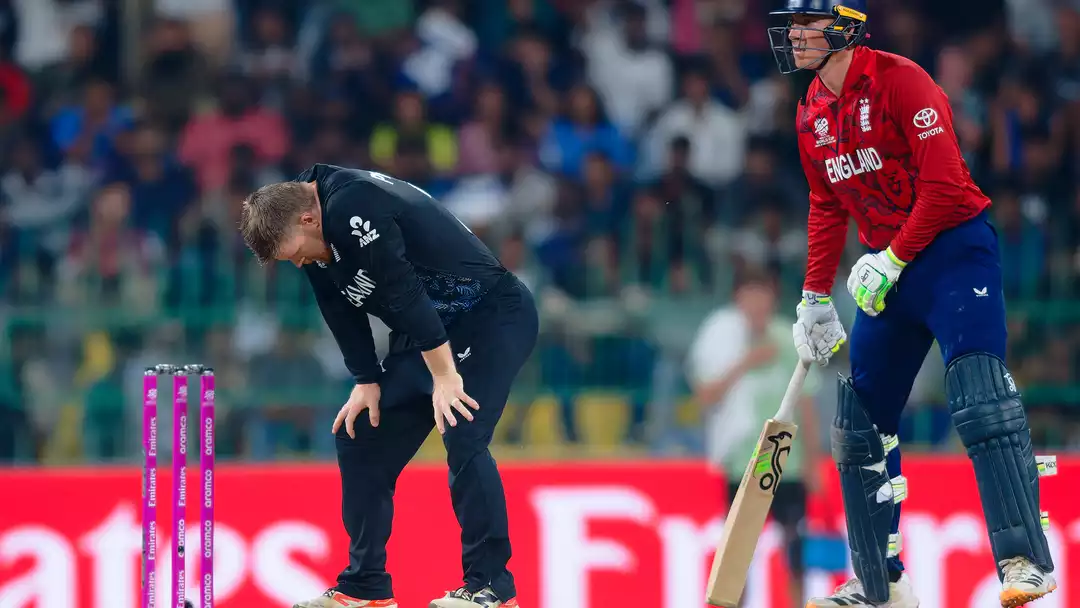
Six balls that changed the night

[Cricbuzz]


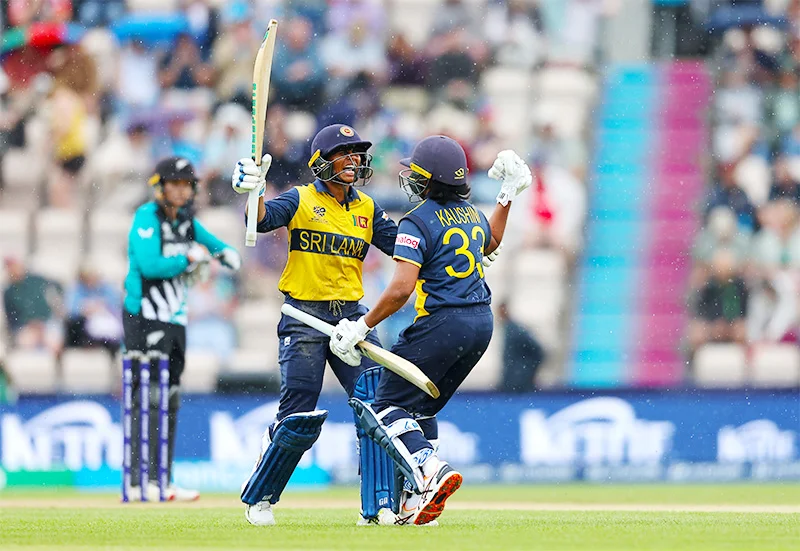
A gutsy half-century by middle-order batter Nilakshika Silva helped Sri Lanka upset defending champions New Zealand in their Group ‘A’ fixture of the Women’s World Cup at the Rose Bowl on Tuesday, keeping their semi-final hopes very much alive. It was the first time Sri Lanka Women had beaten the White Ferns in a World Cup encounter after seven successive defeats.
New Zealand started as overwhelming favourites and appeared to be cruising towards another victory when they reduced Sri Lanka to 55 for four while defending a target of 151.
But Nilakshika, showing nerves of steel and years of experience, produced a splendid innings, forging crucial partnerships with the lower order to guide Sri Lanka home just before rain threatened to intervene.
Batting at number six, the 36-year-old veteran remained unbeaten on 54 off just 37 deliveries, striking five fours and a six, as Sri Lanka completed a remarkable recovery and sealed victory with two balls to spare.
The revival was first engineered by Nilakshika and Kavisha Dilhari, who added 50 runs for the fifth wicket. Just when Sri Lanka had begun to regain control, Dilhari was run out attempting a risky second run. But Nilakshika was not prepared to throw in the towel.
Together with wicketkeeper Kaushini Nuthyangana, she added an unbeaten 48 run stand for the sixth wicket to ensure that Sri Lanka secured a memorable come from behind victory.
After suffering a crushing 87 run defeat to England in their opening game, Sri Lanka’s bowlers responded magnificently to restrict New Zealand to 150, although their fielding once again left plenty to be desired.
Chamari Atapattu and Vishmi Gunaratne provided a rollicking start during the Powerplay, but the captain’s dismissal triggered a collapse as Sri Lanka lost four wickets for the addition of just ten runs.
The victory owed much to Nilakshika, who has been serving Sri Lankan cricket with distinction for the last 13 years and delivered when her side needed her most.
Sri Lanka now head to Bristol for crucial encounters against West Indies and Ireland before wrapping up their group campaign against Scotland in Manchester.
Sri Lanka women have never reached the semi-final stage of an ICC event and their clash against West Indies has now assumed enormous significance. Another victory could put Chamari Atapattu’s side on the brink of history.
There will, however, be plenty of focus on improving the fielding over the next few days, as it was once again a major concern against New Zealand.
Rex Clementine in Southampton
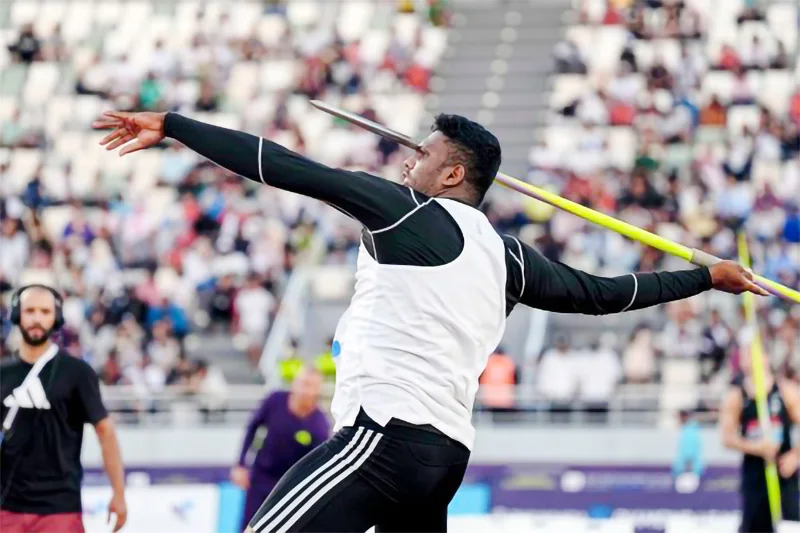
Rumesh Tharanga will arrive at Friday’s Doha Diamond League as the athlete to beat following a commanding victory at the Ostrava Golden Spike meeting on Tuesday.
Fresh from his recent record-breaking exploits, Tharanga once again asserted his dominance on the international stage, winning the men’s javelin with three throws beyond the 85-metre mark. Remarkably, any one of those efforts would have been sufficient to secure victory in the Czech Republic.
The 23-year-old produced his best throw of 86.57 metres in the third round to finish ahead of two-time world champion Anderson Peters, who placed second with a best effort of 84.27 metres.
Tharanga’s consistency throughout the competition underlined his status as one of the world’s leading javelin throwers. The victory further strengthened his credentials ahead of the Doha Diamond League, where he is expected to challenge a field featuring world champion Keshorn Walcott, Peters and world bronze medallist Curtis Thompson.
Tuesday’s triumph continued a remarkable season for the former Peterite, who has emerged as a genuine title contender on the global circuit with a string of world-class performances.
The men’s javelin is expected to be one of the highlights of the Doha Diamond League, with the entire podium from the 2025 World Championships returning to action. Walcott, Peters and Thompson will renew their rivalry in what promises to be a highly competitive contest.
Tharanga heads to Doha as the world leader after his stunning Sri Lankan record throw of 92.62 metres in Rome earlier this month. That performance elevated him to eighth place on the world all-time list and established him as one of the sport’s biggest stars.
Adding further intrigue will be the South Asian rivalry involving Tharanga, 2021 Olympic champion Neeraj Chopra and reigning Olympic champion Arshad Nadeem, should the Pakistani star make a rare appearance on the Diamond League circuit.
Tharanga has won six of his seven competitions this season. His narrow defeat to Peters in Rabat during his Diamond League debut remains his only setback of the year.
Doha has a reputation for producing outstanding javelin performances. Chopra joined the exclusive 90-metre club in the Qatari capital with his personal best of 90.23 metres, while Peters (93.07m) and Jakub Vadlejch (90.88m) went beyond the 90 metres mark during their memorable duel there in 2022.
Prior to Ostrava, Tharanga said he was not targeting a massive throw in the Czech Republic but hoped to produce something special in Doha. With the world’s best converging on a venue known for big distances, another thrilling contest could be on the horizon.
The Doha Diamond League was originally scheduled for early May but was later moved to June.
by Reemus Fernando

Sri Lanka women’s fast bowling coach Chamila Gamage hailed the efforts of middle order batter Nilakshika Silva after her side pulled off a stunning victory over defending champions New Zealand on Tuesday.
Sri Lanka were staring down the barrel at 55 for four in pursuit of 151 when Nilakshika walked out to the middle. The experienced campaigner produced a superb counterattack, turning the game on its head with a composed yet aggressive innings.
“Nilakshika is one of our most experienced players and she showed what she is capable of today. It was a terrific knock and one the team desperately needed. We are all delighted for her,” Gamage told reporters.
Sri Lanka’s seamers also delivered a vastly improved performance after enduring a torrid outing in the tournament opener against England, which ended in an 87-run defeat.
“We sat down and discussed what went wrong in the first game and what needed to be done. These players are quick learners and they adapted really well. They are all young and have bright futures ahead of them. I believe they are going to accomplish great things,” Gamage added.

Military held land: Govt. trying to maintain balance between security and civilian needs

Yoshitha granted bail, travel ban imposed

EV Adoption critical for renewable energy growth and economic stability, says Minister Karunathilaka

Speaker endorses Rescue, Rehabilitation and Insolvency (Corporate and Personal) Bill

Haiti deployment under UN command: India clears obstacle faced by SLA

Beyond diagnosis: A strategic design for 7% growth by 2029 (Part I)

‘Dates have the highest sugar content to fight Coronavirus’

Sunday Island 27 December – Headlines

#SundayIsland 17th December – Headlines

Sunday Island – 28th March

Sunday Island Headlines – 21 March

Sunday Island – 21st February – Headlines
-

 News6 days ago
CIABOC summons Yoshitha over his participation in British Navy training programme
-

 News3 days ago
Release of 2025 O/L results likely to be delayed
-

 Sports3 days ago
Tharanga set for high-profile javelin clash in Ostrava
-

 News6 days ago
Justice Minister responds to social media claims he represented Easter Sunday ringleader
-

 Features4 days ago
Politics of protected species
-

 News3 days ago
Theft of USD 2.5 mn from Treasury: CoPF accused of complicity in NPP cover-up
-

 News5 days ago
Commonwealth lawyers urge Lanka to uphold rule of law
-

 News2 days ago
Beijing Capital Airlines to resume flights to Colombo signalling boost to tourism