
Life style
Taste for good cars

BOOK REVIEW
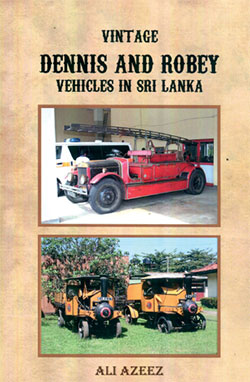
VINTAGE DENNIS AND ROBEY VEHICLES IN SRI LANKA by Ali Azeez; 60 pages, A5 size, numerous black-and-white and colour illustrations; published privately in 2014.
Copies in PDF format may be obtained free of charge by emailing the author at aliazeez07@gmail.com .
Reviewed by Roger Thiedeman
The pioneers of Sri Lanka’s vintage car movement in 1953 were Capt. E.B. ‘Tabby’ Murrell, Mr. Edward ‘Bugs’ Mason, Mr. H.C. (Chitru) Peiris, and Mr. W.R. Daniel. In following decades the old car ‘baton’ was passed on to other stalwarts, of which Mr. Vere de Mel was one. Another was the author of this book, Mr. Ali Azeez.
Ali’s enthusiasm for motor cars, especially what are today considered vintage and classic automobiles, began at an early age. Born into a family noted for its good taste in cars, it was inevitable that Ali would develop an interest in all things automotive: driving, maintaining, owning, and collecting a variety of vintage vehicles, while reading extensively on the subject. Today he is the proud owner of a 1936 Riley Lynx ‘Special Series’ tourer that once belonged to a close relative, and a 1937 Citroën Traction Avant 11CV Familiale (11B) long-wheelbase saloon. Land Rover is another marque beloved of Ali Azeez.
In time Ali became an active committee member of a succession of veteran/vintage car clubs in Sri Lanka, culminating in him holding senior positions in the Vintage Car Owners’ Club of Sri Lanka (VCOC). That was a period when, in addition to his knack for organising and promoting numerous vintage car rallies, road races and exhibitions, as the VCOC’s Newsletter Editor Mr. Azeez began to research and write ‘dossiers’ tracing the histories of interesting old cars for publication in the Newsletter. The subjects he chose were mostly vehicles owned by club members, but others from Sri Lanka’s motoring past were featured too.
One of Azeez’s in-depth profiles is the only detailed history of one of the rarest and finest cars to grace the roads of old Ceylon: a 1924 Napier 40/50 hp Cunard limousine which was imported by a distinguished member of his family.
In view of the passion, time and energy Ali Azeez selflessly invested in serving the VCOC, his involuntary exit from the club more than a decade ago in circumstances of which he was an innocent victim, can only be described as unjust and senseless.
Despite that blow, Ali Azeez never lost either his love of vintage cars or avid interest in motoring history. If anything, it gave him more time, opportunity and motivation to begin learning about types of vehicles that most other vintage enthusiasts might regard as ‘unglamorous’ and unworthy of their attention. This book is partially the result of that work.
Inspired by photos this reviewer took in 2011 of the Kandy Municipal Council’s preserved 1929 Dennis G-type fire engine, and two Robey steam wagons at the Sri Lanka-German Railway Technical Training Centre (SLGTTC), Ratmalana, Ali began his quest to discover as much as possible about the individual histories and mechanical characteristics of those vehicles. With encouragement from Mr. Brian Elias, a personal friend of Ali’s and Editor of a local newspaper’s motoring supplement, Mr. Azeez contacted several organisations in the UK dedicated to the preservation and history of old fire engines and steam-powered wagons (lorries) and traction engines.
Key members of those societies, with whom Ali forged close relationships, generously provided him with vast amounts of information, including rare photos and excerpts from specialist journals pertaining to that trio of vehicles before and after they arrived in Ceylon. Much of that material has been used in this book, which is all the better and more attractive for their inclusion.
Supporting the author’s text and pictures in both black-and-white and colour of Kandy’s Dennis fire engine, registered G-1010, official Dennis factory records provide more fascinating details. Extracts from Customer Order Books, Works Production Orders, and Chassis Lists and Despatch Records – each occupying a full page of the book for easy reading – comprise a potted ‘biography’ of this historic fire appliance, beginning in 1929 at its birthplace in Surrey, England.
As a bonus, the book contains information and photographs of other Dennis fire engines that served in Ceylon. Most notably a 1955 F8 model used by Britain’s Royal Navy at the dockyard in China Bay, Trincomalee. It later returned to the UK where it is now the prized, pristine possession of a fire engine enthusiast who also proved helpful to Ali in his research project.
Another comprehensive chapter is titled ‘Robey Steam Wagons in Sri Lanka’. Commencing with a brief explanation of the technical aspects of steam propulsion in roadgoing vehicles, the narrative shifts to a short history of Robey & Company, the Lincoln, UK-based makers of the two steam wagons of 1925 and 1928 vintage that are this chapter’s principal subjects.
Official records, correspondence relating to the two Robeys, plus a table of their ‘vital statistics’ aside, photographic coverage of both wagons is particularly impressive. Sure to please any lover of transport nostalgia and memorabilia, not just motor or steam vehicle aficionados, are photos of both vehicles working hard for their then employers, the British Ceylon Corporation (BCC), at various locations around Colombo. Two such ‘period’ pictures in colour are stand-outs, although others in black-and-white from the pages of UK-published Steaming magazine, are equally appealing. More colour pictures depict one of the vehicles (registered C-6037) at VCOC rallies and exhibitions before and after restoration by the SLGTTC.
But Ali Azeez’s interest in vintage motoring goes beyond classic motor cars and the utilitarian commercial types that are this book’s main subjects. As a fervent advocate for the preservation and fostering of Sri Lanka’s motoring heritage, for many years he has been campaigning and lobbying relevant authorities – and anyone else willing to listen – for the establishment of a national motoring museum, with State backing and continuing upkeep.
In a chapter titled ‘Transport Museum: An Immediate Need’ Azeez describes some of the museums in Sri Lanka, extant and defunct, small and large, dedicated to other types of transport. For example, the Old Town Hall Museum in the Pettah (which houses another steam wagon, built by Sentinel), the Sri Lanka Navy’s Museum at the Dockyard, China Bay, and the excellent Sri Lanka Air Force Museum at Ratmalana Airport. In fairness to the author, given that this book was published in 2014, no mention is made of the National Railway Museum at Kadugannawa, which was opened in late December that year.
Not entering into the author’s ‘calculations’ either are the motoring museums established in Sri Lanka over the past few years by a small handful of private and discerning car-collecting connoisseurs. Their extensive, varied and dazzling collections of motor vehicles are displayed in purpose-built ‘showrooms’, one in particular rivalling the facilities of better-known motoring museums overseas. But they are not open to the public, with visitors admitted in small numbers and only by special arrangement with the owners.
Rather, what Ali Azeez would like to see is a unified transport museum, accessible to the general public, that would accommodate, all on the same premises if not under one roof, the many road transport relics currently scattered around various government institutions. To demonstrate his point, he has depicted several of those vehicles within this chapter’s pages. Such a facility might induce private owners of historic vehicles to place some of their precious automotive possessions on public display in a secure environment, perhaps on a rotation basis as determined by the museum’s curators.
Almost as if responding to his own pleas, Ali Azeez cites numerous instances of how and when similar proposals were mooted, attracting tentative interest from the authorities, only for those grand plans to be shelved or disappear altogether. From this reviewer’s pragmatic point of view, the current economic climate in Sri Lanka – COVID-19 notwithstanding – will never be conducive to any such ambitious albeit laudable project getting off the ground, let alone reaching fruition.
Yet that should not detract from Ali Azeez’s well-meant intentions and dreams. Nor from his passion and foresightedness as a lover of all things motoring, not only when he wrote this book but over the years before and since. This slim but pleasing volume, packed with information, historical records, and attractive illustrations, is recommended to anyone interested in all aspects of road transport history, especially in the context of Sri Lanka.



Bernie Stefan is the Chairman and Managing Director of Nestlé Lanka Limited, overseeing Nestlé’s operations in Sri Lanka and the Maldives. He assumed this role in March 2023. Under his leadership, Nestlé has strengthened its footprint in Sri Lanka, touching individuals and families, communities and spearheading sustainable development.
Since taking charge in 2023, Stefan has brought with him over two decades of international experiences, steering the company with a clear focus on sustainability, innovation and long term growth.
Bernie describes the anniversary as a moment of pride and reflection on over a century of commitment to Sri Lanka and its people.
Under his leadership, Nestle has expanded its footprint while staying true to its mission: to improve lives by providing nutrition and wellness for all Sri Lankans. Beyond the commercial success, the company has focused on community impact – supporting local farmers. promoting sustainable practices and contributing to public health initiatives.
 (Q) Nestlé has been part of Sri Lankan homes for 120 years. How has the brand evolved alongside the changing lifestyles of Sri Lankan families?
(A) We at Nestlé are extremely proud of our 120 year journey of enriching Sri Lankan lives. It has been a journey guided by purpose and working together for good – touching individuals and families, the community, and the planet. As lifestyles and needs have evolved, so, too, have our products – offering convenient, tasty and nutritious solutions that meet everyday moments, whether it’s energy on the go or a quick and tasty meal. A true symbol of this legacy is our flagship brand, Nestomalt – synonymous with power, strength and energy – which today is enjoyed as the first cup of the day by a majority of Sri Lankan households.
(Q) Many Sri Lankans have grown up with Nestlé products at their breakfast table or during tea time. How does the company stay emotionally connected with generations of consumers?
(A) Our product range caters to the nutritional needs of consumers from birth to old age. We always ensure that the consumer is at the centre of everything we do. This deep understanding of consumer preferences, ensures not only that our products deliver taste and nutrition but also our communication is in tune to the local context. Our brands have been deeply rooted in the lives of the Sri Lankan community over many decades – be it through Milo school sports programmes or Nestomalt marathons. Being an organisation that has been present in Sri Lanka for such a long time, it also means that consumers hold many nostalgic memories from their childhood with our products.
(Q) From childhood treats to everyday beverages, Nestlé products often carry nostalgic memories. How important is this sense of nostalgia to the brand’s identity?
(A) Brands need to evolve with time and remain relevant. Nostalgia does bring a deep bond and connect with consumers. However, through product and packaging renovations, we have successfully ensured that our brands remain relevant to consumers. One of our oldest Nestlé brands in Sri Lanka, Milkmaid , today, has an online recipe platform with over 300 recipes. This is another example where we have ensured that our brands are able to connect with today’s consumers.
(Q) Has Nestlé adapted its products to suit modern lifestyles while still respecting local tastes?
(A) Our ability to cater to local taste preferences has been a crucial factor to the success of our brands. With the setting up of our local manufacturing operations in 1984, we now manufacture over 90% of Nestlé products sold locally. The deep consumer understanding our teams possess, combined with our global R&D expertise in the food and beverage sector, have given us the ability to tailor make our products to cater to the Sri Lankan taste palette while offering convenience. This is evident in the success of our Nescafe and Nestea 3-in-1 variants and the Ready-to-drink beverage range of Milo and Nescafe, that deliver convenience and great taste.
(Q) How is Nestlé aligning its practices to sustainability and mindful living?
(A) We are committed to reaching net zero carbon emissions by 2050. Promoting circularity is also a focus area in this journey. We have plans to be 100% plastic neutral this year. Our sustainability initiatives cover the entire value chain, from farm to fork. In Sri Lanka, we are focusing a lot on increasing yield and promoting regenerative agricultural practices across our dairy and coconut value chains. In our manufacturing operations, we have continuously striving towards reducing water and energy usage. We have also implemented numerous initiatives to reduce our carbon footprint in logistics, such as the adoption of rail transportation. We also focus on fostering behavioural change on responsible waste disposal amongst the youth through our School Waste Management Programme.
(Q) What moments or milestones best reflect its connection with everyday life in the country?
(A) Our ability to provide consumers with good food moments each and every day is something that I and the team are extremely passionate about. Also, the deep connect we have with the community, be it our dairy and coconut farmers, the numerous suppliers and trade partners, has been built on trust over the years. Today, we have farmers, suppliers and even employees from across generations and this speaks volumes about our business practices and the trust we have built in Sri Lanka for over a century.
(Q) Nestlé is known globally for innovation. How do you balance global expertise with the unique lifestyle and culinary culture of Sri Lanka?
(A) As I mentioned, understanding the taste palette, nutritional needs and the lifestyles of Sri Lankan consumers and ensuring our products fulfill these needs is key. Having access to one of the world’s leading R&D facilities gives us the unique ability to ensure our products deliver to these consumer needs and preferences. Further, it enhances our ability to ensure the freshness and bio-availability of certain nutrients contained in our products. We’ve also made significant strides in packaging innovation, where we use less plastic and materials that are better suited for recycling. The introduction of Coconut Milk Powder in 1986 was a first for Sri Lanka, and this is another great example of the deep understanding we have of local culinary culture.
(Q) How is the younger generation engaged with the brand today?
(A) Appealing to the discerning youth population will be key to ensuring the future success of our brands. Understanding the nuances of each generation is important. It is also evident that consumption patterns and lifestyles across generations are evolving rapidly. Staying abreast of these changes is something we are deeply committed to. In addition to delivering on taste and nutrition, being trendy and youthful – the purpose for which our brands stand for – is equally important. NESCAFÉ and MAGGI PAPARE BLAST are two brands that have developed a strong connect with Sri Lankan youth.
(Q) What vision do you have for the next chapter in Sri Lanka, especially in shaping lifestyle trends?
(A) Looking ahead, our vision is to continue enriching Sri Lankan lives by providing tasty and nutritious products and promoting healthier and active lifestyles. We will keep innovating to meet evolving consumer needs, while strengthening local sourcing and reducing our environmental impact. The next chapter is about deepening our positive impact – supporting communities, empowering youth and contributing to a resilient food system.
(Q) As the head of Nestlé Sri Lanka, what does celebrating 120 years personally mean to you?
(A) Celebrating 120 years in Sri Lanka is deeply meaningful to us, as it reflects the trust generations of Sri Lankan families have placed in Nestlé. This milestone is a testament to the dedication of our people and the strong partnerships we have built across the country. For me personally, it is both a moment of pride and a responsibility – to honour this legacy while continuing to work together for good, doing what is right for our consumers, our communities, and Sri Lanka.
By Zanita Careem
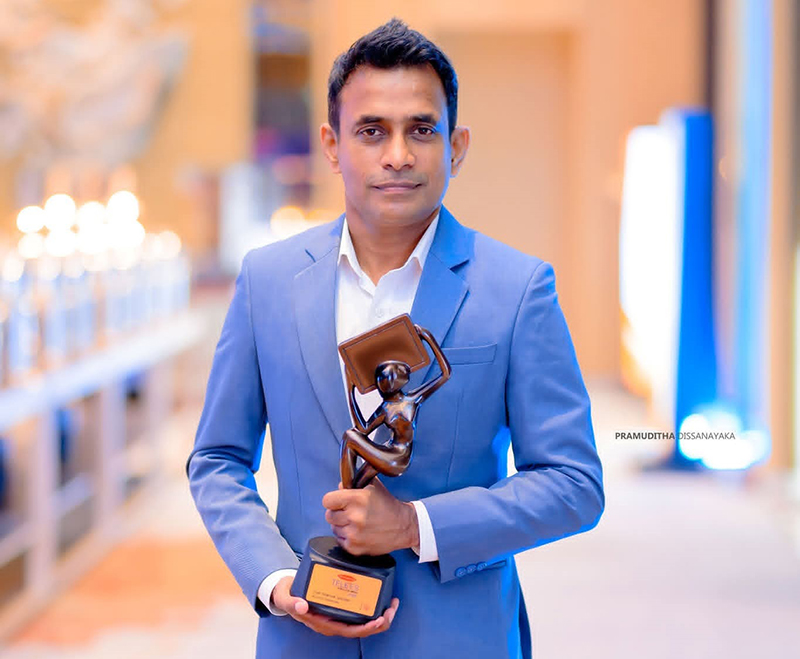
At a time when entertainment often overshadows education on television, K.C. Saranga has rewritten the script—securing a remarkable third consecutive win for Best Educational Programme at the Raigam Tele’es 2025.
His flagship programme, Jeevithayata Vidyawa (Science for Life), aired on Ada Derana, has not only dominated its category but also elevated the standards of educational broadcasting in Sri Lanka.
Reflecting on the milestone, Saranga described the win as more than a personal achievement. “Maintaining an award ceremony of this magnitude for 22 years is no small feat. Raigam Tele’es plays a pivotal role in uplifting the industry. By consistently recognising and rewarding Sri Lankan creators, it provides the necessary oxygen for television to evolve as a professional craft,” he said.
A veteran with over 25 years in the industry, Saranga—currently General Manager (News and Current Affairs) at TV Derana and Head of the Ada Derana News Channel—has seamlessly transitioned from hard news to impactful educational programming. His success underscores a broader vision: to harness television’s full potential as an audio-visual learning tool.
“There is a significant void in Sri Lankan television when it comes to high-quality educational productions,” he noted. “Television is an audio-visual medium; its true power lies in its ability to show, not just tell. We use multimedia elements—graphics, animation, and dynamic presentation—to grip the viewer’s attention.”
Saranga emphasised that his goal was to match global benchmarks. “If world-class science documentaries are available in English, our mission was to bring that same global standard to the Sinhala-speaking audience,” he said.
Through Jeevithayata Vidyawa, complex scientific concepts—from aerodynamics to cyclones—are presented in a manner that is both accessible and engaging, redefining the notion of “edutainment” in local television.
Expressing gratitude, Saranga credited his team and network for the continued success.
“This achievement is a result of a shared vision. My deepest gratitude goes to the management of Ada Derana. In an industry often driven by conventional ratings, they have consistently provided a sanctuary for creative freedom, allowing ‘out-of-the-box’ ideas to flourish,” he said.
He added: “To my incredible production team—this trophy belongs to you. Your technical skill and commitment have transformed simple ideas into a national standard. Finally, thank you to our viewers; your curiosity is our ultimate motivation. We will continue to prove that learning is an inspiring journey.”
Saranga’s hat-trick stands as a testament to the power of innovation in educational broadcasting—proving that knowledge, when presented with creativity and purpose, can captivate audiences just as effectively as mainstream entertainment.
By Ifham Nizam

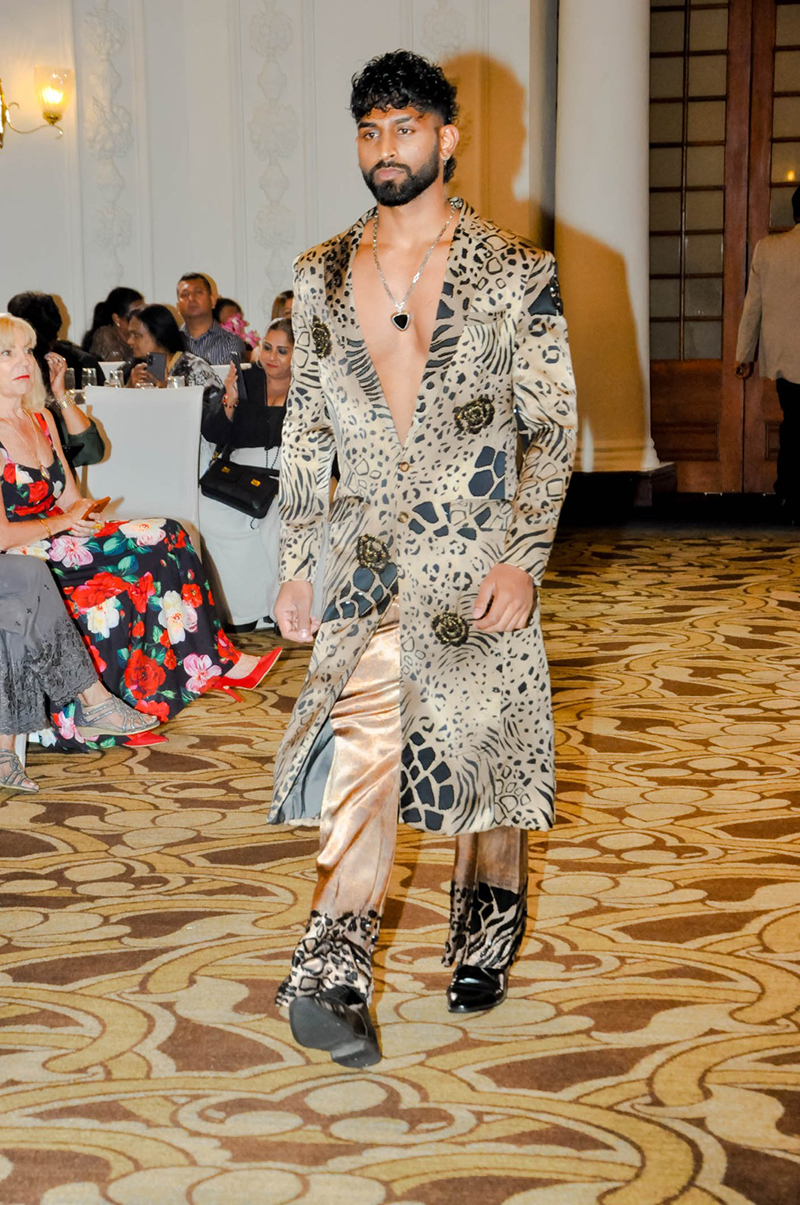
The event “Style Surge,” organised by the Lions Club Elevate, was an evening filled with glamour, leadership and purpose collided in a spectacular fusion. The grand Ballroom at Galle Face Hotel became a canvas of fashion; every detail, from the floral centrepiece to the curated lighting, whispered elegance, while glamour set the stage, purpose was the back bone.
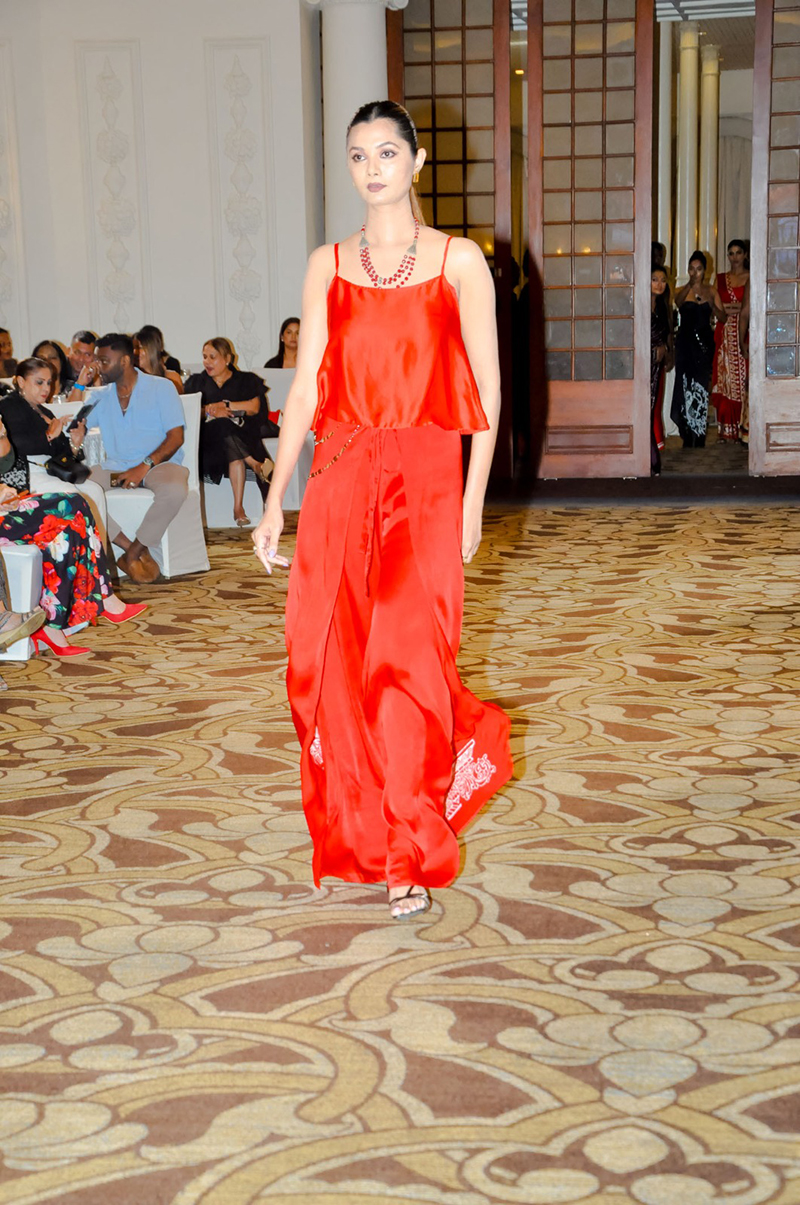
The show featured a curated selection of Sri Lankan designers, each bringing their signature styles to the stage.
The designers captivated the audience with bold, contemporary silhouettes that fused modern trends with traditional influence, creating pieces that were both sophisticated and wearable.
The batik ensembles by doyen of Batiks, Eric Suriyasena, were masterpieces, demonstrating the designer’s mastery in balancing artistry and practicality. Each piece told a story, highlighting the cultural nuances of Sri Lanka, while contributing to the glamour of the event.
The hair and make up for the models were curated by Salon Avra by Thushari de Silva and was nothing short of perfection,
From sleek, modern looks to elegant textured styles, Salon Avra ensured every model complemented the designer’s vision, highlighting the intricate details of each ensemble. The artistry on stage reflected a seamless collaboration between fashion beauty and presentation.
Style Surge unfolded an evening of elegance, creativity and purpose. It brought together Colombo style conscious crowd, social leaders and fashion enthusiasts and transformed the venue into a vibrant celebration of couture and compassion.
As the lights dimmed,the runaway came alive with a striking showcase of designs, ranging from contemporary chic to timeless sophistication, by designers like Eric Suriyasena, Anushko, Azeena Sulaiman and Jaywanthi Panibharatha. Leading fashion brands showcased were Aluminium, Disala, Eriq and Elegant Closet, and they presented a blend of contemporary and traditional fashion. Jewellery for the show was designed and sponsored by Blue Majestara Ceylon, . The Chief Guest was District Governor Lion Mahesh Borolugoda and his wife Lion Lady Sunethra Borolugoda.
Beyond glamour, this event, Style Surge, carried a meaningful mission to help rennovate two schools and improve educational facilities for future students
Lions Club of Colombo Elevate district 306D6, the organisers of this event, have been long synonymous with community development .The event underscores the power of fashion as a force of good.
Proceeds and awareness generated though the evening will be directed towards the clubs ongoing humanitarian initiatives, reinforcing its commitment to uplifting communities while engaging the public in an inspiring way.
In every sense, the event was more than a fashion show, it was a statement. This event reaffirms that glamour can also carry a purpose, creativity can spark compassion, and a runaway that can become a powerful platform for social change. This fashion show was graced by distinguished guests of honour , including designers Aseka Wijewardena, Michael Wijesuriya, Yolande Aluwihare, and Shyara Mendis
This event was organised by Lion Diana Nilanthi, Shen, Lion Thushari de Silva and Lion Shashika Hettiarachchi, whose commitment to creativity and attention to detail transformed the event into a truly memorable evening. They were the driving force that brought the vision of the show to life. Their meticulous planning, conceptualising the theme, coordinating the designers ensured the show ran seamlessly, from start to finish Pix by Thushara Attapathu
By Zanita Careem

-

- Thushari de Silva


-
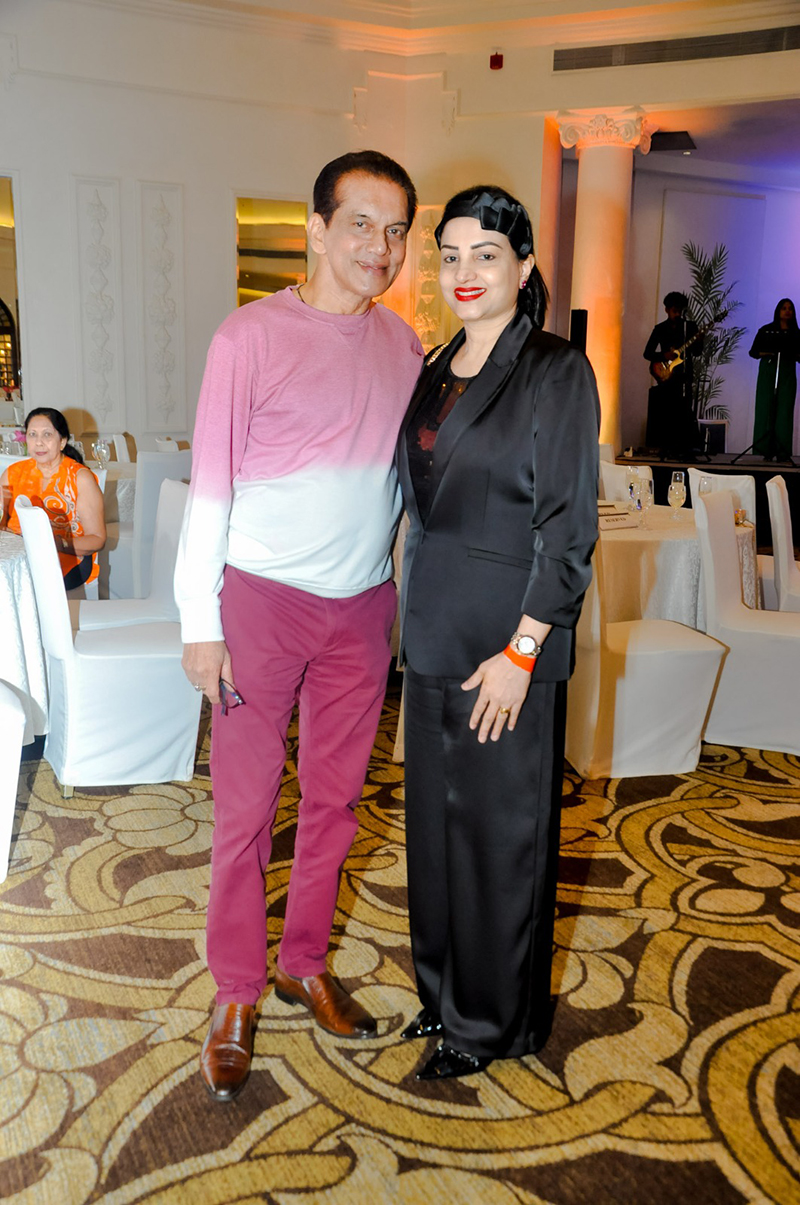
- Kamal Addiarachchi
-

- Azeena with a guest
-

- Enjoying the Kamal Addiarachchi night of style

Trump announces two-week ceasefire as Iran agrees to reopen Hormuz Strait

Yashasvi Jaiswal powers Royals past Mumbai Indians in 11-over thrash

Showers will occur at several places in the Western, Sabaragamuwa, Southern and North-western provinces and in Kandy, Nuwara-Eliya and Monaragala districts after 1.00 p.m.

The Sun is directly overhead Warakapola, Aranayaka, Gampola, Bibile, Inginiyagala, and Akkaraipattu at about 12:12 noon today (08)

AKD admits import of substandard coal, blames technicalities and supplier

‘Sri Lanka – China relations: Community with a Shared Future’ launched

‘Dates have the highest sugar content to fight Coronavirus’

Sunday Island 27 December – Headlines

#SundayIsland 17th December – Headlines

Sunday Island – 28th March

Sunday Island Headlines – 21 March

Sunday Island – 21st February – Headlines
-

 Features4 days ago
Ranjith Siyambalapitiya turns custodian of a rare living collection
-

 News7 days ago
2025 GCE AL: 62% qualify for Uni entrance; results of 111 suspended
-

 News4 days ago
Global ‘Walk for Peace’ to be held in Lanka
-

 Editorial7 days ago
Search for Easter Sunday terror mastermind
-

 News2 days ago
Lankan-origin actress Subashini found dead in India
-
 Opinion6 days ago
Hidden truth of Sri Lanka’s debt story: The untold narrative behind the report
-

 Opinion7 days ago
Is there hope for Palestine?
-

 Features4 days ago
Beyond the Blue Skies: A Tribute to Captain Elmo Jayawardena