
Latest News
Phillips 72-ball hundred flips the script as New Zealand beat Pakistan


A blistering onslaught from Glenn Philips in the final six overs of the first innings helped New Zealand ease to a crushing win over Pakistan in the first ODI of the tri-series in Lahore. The visitors posted 330 thanks to Phillips’ 72-ball century, with 98 runs coming in the final six overs. Pakistan could never quite muster a convincing response, with all hopes pinned on a flying start from Fakhar Zaman. However, when Phillips – who could seemingly do no wrong – trapped him in front for a 69-ball 84, their resistance melted away, and New Zealand’s task became something of a cakewalk. To make Pakistan’s evening worse, Haris Rauf picked up an injury which prevented him from batting, and New Zealand won by 78 runs.
New Zealand’s innings appeared a struggle until the 44th over, with Pakistan taking regular wickets, even if half-centuries from Kane Williamson and Daryl Mitchell kept them ticking along. On a flat wicket, Pakistan’s bowlers had done a stellar job restricting New Zealand’s scoring rate, with Shaheen Shah Afridi and Naseem Shah combining for five wickets. So it seemed, anyway, until Phillips let loose, ripping apart Pakistan’s bowlers at the very end. He would score his last 77 runs in 32 balls, as New Zealand took momentum with them into the dinner break.
New Zealand won the toss and opted to bat on what looked a dry, flat surface at the newly built Gaddafi stadium, but immediately ran into headwinds. Afridi continued his ODI wicket-taking form with one in his first over, inducing Will Young into a prod that got a nick through to the keeper. With Williamson largely subdued in the opening powerplay, run scoring came largely through a belligerent cameo from Rachin Ravindra. A couple of boundaries off Afridi either side of the wicket set the tone, and he had raced to 25 off 18 deliveries; 20 of them came through fours. But a slightly careless shot off Abrar Ahmed ended a nascently dangerous innings with Ravindra out caught and bowled.
Williamson continued to consolidate, and for a while New Zealand had entered a rut. By the end of the 18th over, their scoring rate had fallen below four, with Mitchell looking laboured as he shuffled along, scoring 9 off his first 22 balls. The escalation came all of a sudden, and primarily through Mitchell, when he charged down the ground to loft Khushdil Shah over the sightscreen for six. Williamson began to come into his own, too as New Zealand began to milk the bowling, with the run rate beginning to tick upwards as the partnership approached three-figures.
But Pakistan were maintaining a hold over the game by picking up regular wickets, and two in five deliveries pegged New Zealand back sharply. Afridi, once more, proved the partnership breaker, another gentle edge from Williamson that Rizwan comfortably pouched. The two-paced nature of the wicket went on to do for Tom Latham, who found the ball stopping on him as he chipped it up to midwicket.
In Mitchell and Phillips, though, New Zealand’s two most potent late-overs bludgeoners were at the crease, and they would go on to prove it over the next hour. Mitchell was picking off the Pakistan spinners whenever their lengths dropped short; each of his five sixes came against spin, but it would also be his downfall. A harmless full toss from Abrar was clipped straight into midwicket’s arms, Mitchell’s disbelief writ large on his face as he walked away 19 short of a hundred.
But for Pakistan, that was the reprieve before the storm. Phillips had been sedate until the 42nd over, nudging it around for 29 off 43, but when Salman Agha was pumped back over his head for a six, there were signs he was awakening. Agha was dispatched for another pair of sixes in his following over, but it was when the fast bowlers returned that the beast was truly unleashed.
A nudge off Naseem in the 47th over brought Phillips his half-century, but he wasn’t nearly done yet. Afridi was launched over deep midwicket and then scooped above short third for consecutive sixes, before Naseem was plundered for 17 in the 49th over. But the worst of the carnage was left for Afridi in the final over, which produced a whopping 25, bringing up Phillips’ maiden ODI century.
The crowd was at full capacity and full pitch when Pakistan came out to bat, because Babar Azam was opening alongside Fakhar. The noise was for Babar, but it was Fakhar who sprung out of the traps, helping Pakistan to a brisk start in the Powerplay. But Babar’s start to opening – the first time he has done so since 2015 – was inauspicious, flicking a harmless delivery from Michael Bracewell straight into midwicket’s hands.
Kamran Ghulam was similarly turgid, and the pressure fell squarely on Fakhar to produce a mammoth innings if Pakistan were to make headway in the chase. For a while, he offered them hope, taking down Mitchell Santner and Bracewell as he hurtled towards his century, but Ghulam and Rizwan were sent packing at the other end.
The death knell for Pakistan was struck by Phillips in the 24th over when he skidded one on that trapped Fakhar plumb in front. With the asking rate rising above nine and 212 runs still to get, there was little realistic hope the lower-middle order would be able to get Pakistan close. It was reflected in the activity of the crowd, which streamed towards the exits.
Tayyab Tahir and Agha tried to keep it going, building up a tidy little partnership, but even moments of brilliance went New Zealand’s way when Bracewell took a stunning catch diving to his right to send a disbelieving Tahir back to the pavilion.
Thereafter, it appeared both sides were going through the motions, New Zealand doing enough to chip away at the lower order. The only bad news for the visitors was what appeared a nasty injury to Ravindra, who lost a ball in the lights as it went on to hit him flush in the face, and went off as blood streamed down his hair.
The game itself was far more straightforward for New Zealand. Khushdil and Agha fell to spin within four balls of each other and, despite an entertaining little cameo from Abrar at the very end, Pakistan were merely delaying the inevitable. Matt Henry bounced out Naseem with 13 balls still to go; they are well placed in this tournament, and, it appears, well placed ahead of the Champions Trophy.
New Zealand 330 for 6 in 50 overs (Glenn Phillips 106*, Daryl Mitchell 81, Kane Williamson 58, Rachin Ravindra 25, Michaell Bracewell 31; Shaheen Sha Afridi 3-88, Abrar Ahmed 2-41) beat Pakistan 252 all out in 47.5 overs (Salman Agha 40, Tayyab Tahir 30, Fakhar Zaman 84;Matt Henry 3-53, Michael Bracewell 2-41, Mitchell Santner 3-41) by 78 runs
[Cricinfo]


Approval has been granted at the cabinet meeting held on 01-03-2023 for the National Curriculum Framework and the methodology for implementing the aforementioned framework, which was initiated by the National Institute of Education in 2019 under the education reform process.
However, considering the modules relevant to Grades 1, 6, and 10 that have been prepared by the National Institute of Education for the implementation of the new education reforms by the time the new government comes into power in 2024, it was planned to implement the new National Curriculum Framework only for Grades 1 and 6 in 2026, ensuring appropriate adjustments to the new government’s policies.
Further, it has also been planned to introduce vocational subjects from grade 10 onwards.
Accordingly, the concept paper required for ‘Transformational Change in Sri Lanka’s General Education’, which has been prepared to inform and make relevant parties aware of the proposed adjustments, has also been submitted to the Parliamentary Subcommittee on Education Reforms on 22-10-2025.
Subsequently, as decided at the Cabinet Meeting held on 13-01-2026, steps have been taken to postpone the implementation of education reforms for grade 6, which had been planned under the first phase of the comprehensive reform agenda for general
education, up to the year 2027, and only to implement new curriculum reforms for grade 1 in the year 2026.
Subsequently, the Ministry of Education, Higher Education, and Vocational Education has followed these steps.
• preparing a new concept paper with policy recommendations after reviewing the concept paper prepared related to bringing about transformational change in Sri Lanka’s general education
by the National Education Commission.
• Having reviewed the revised concept paper by the National Steering Committee established as per the cabinet decision dated 23-03-2026 and subcommittees established under 5 pillars
relevant to the education reforms-namely Curriculum Reform, Human Resource Development, Education Administrative Reforms & Infrastructure Development, Evaluation & Assessment, and Public Awareness & Promotion-and obtaining further observations and recommendations.
• Based on those observations and recommendations, further revising the National Curriculum Framework prepared by the National Institute of Education in 2023 and obtaining approval
from the Academic Affairs Board of the National Institute of Education.
• Obtaining approval from the Council of the National Institute of Education for the National Curriculum Framework approved by its Academic Affairs Board.
• Obtaining concurrence from the National Steering Committee for New Education Reforms on 2026-08-13 for the National Curriculum Framework approved by the Council of the National Institute of Education.
• Printing and preparing activity books and teacher guides for all 3 terms of Grade 1 and Grade 2 for the year 2027, so as to continue carrying forward the primary education reforms
commenced in the year 2026.
• Preparing Grade 6 modules for Terms I, II, and III, as well as teacher guides for all 3 terms.
• Master trainers have been trained by the National Institute of Education for all primary and secondary subjects, and all plans related to teacher training at the provincial level have been
prepared.
• Formulating the policy guidelines on school-based evaluation and assessment—prepared for practical implementation while managing available resources within the school system by the
Evaluation and Assessment Sub-Committee and obtaining the approval of the National Steering Committee.
Accordingly, the Cabinet of Ministers has approved the resolution furnished by the Hon. Prime Minister in her capacity as the Minister of Education, Higher Education, and Vocational Education to further implement the education reform process for grade 1, which has been initiated in the year 2026,
and to further initiate the education reform process for grade 2 and grade 6 in the year 2027, based on the concept paper prepared by the National Education Commission, the National Curriculum Framework approved by the National Steering Committee for New Education Reforms, and the School-Based
Evaluation and Assessment Guideline.
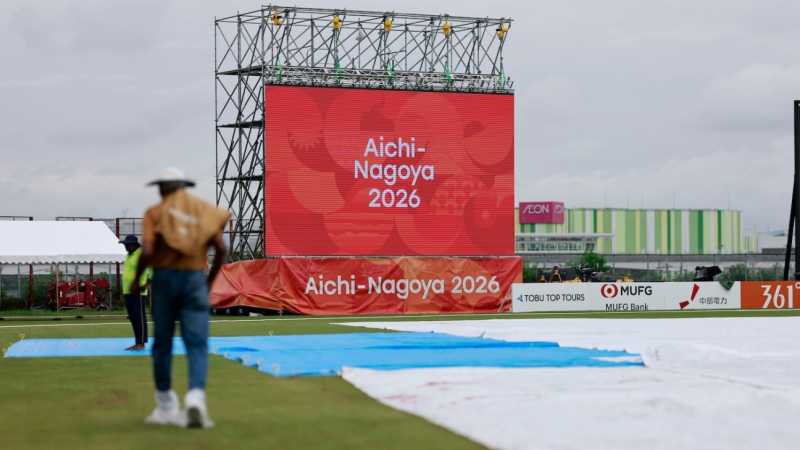
Sri Lanka will face India in the semi-finals of Asian Games men’s tournament after their quarter-final clash against Nepal was abandoned without a ball being bowled in Nisshin, Japan. The game was called off prior to the toss, with rain having begun hours prior to the scheduled 9am local start and not looking like abating.
Sri Lanka’s progression was assured by virtue of their higher seeding in terms of the ICC T20I rankings – Sri Lanka, alongside India, Pakistan and Bangladesh are the four seeded teams in the tournament. On Monday, India had qualified over Afghanistan after another washout, again by virtue of their higher. Similarly, Pakistan’s qualification was assured following a rain abandonment in their quarter-final against Hong Kong.
In the 2022 Asian Games, Sri Lanka had been eliminated at the quarter fial stages by Afghanistan. Another washout in the semis against, India though, will see the latter qualify for the final.
A few hours later, the fourth quarter-final between Bangladesh and Malaysia was also washed out. Bangladesh will now face Pakistan in the first semi-final on October 1, followed by India vs Sri Lanka later on the same day
(Cricinfo)
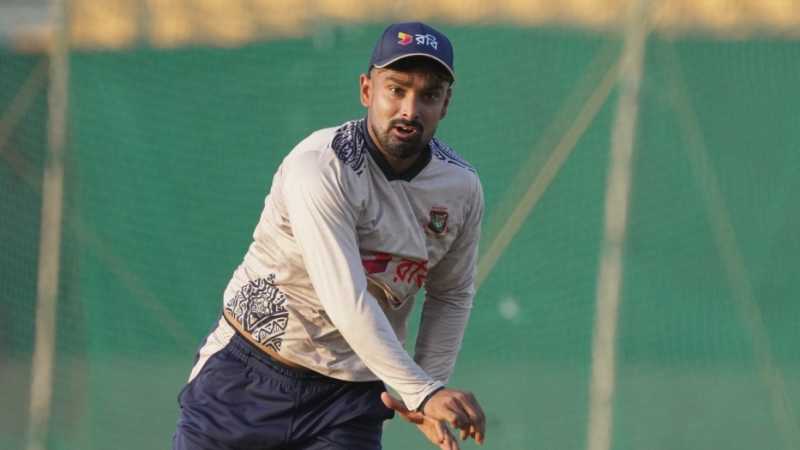
The Bangladesh vs Malaysia abandonment on Tuesday completed a quartet of rained off matches in the Asian Games men’s tournament. The match was called off two hours before the toss, with the teams told not to even turn up at the venue.
Bangladesh, by virtue of higher seeding, go through to the semi-finals where they will now face Pakistan on October 1. Earlier in the morning, the Sri Lanka vs Nepal fixture was also called off due to rain, with Sri Lanka advancing into the semi-finals where they will meet India.
There is, however, some good news, as the weather forecast in Nisshin is better for the semi-final and the medal match day, on October 1 and 3, respectively.
In the last edition (2023), Bangladesh had lost to India in the semi-final but won the third-place playoff against Pakistan to take home the bronze medal. They had won the bronze in 2014 as well and Bangladesh’s best finish was winning the gold medal in 2010, when they beat Afghanistan in the final.
(Cricinfo)

Cabinet nod to increase the number of new automated passenger clearance gates at the Bandaranayake International Airport to 12
Draft Bill for amending the Trust Ordinance
Implementing further relief programme to Public sffected by the Middle East conflict situation
Establishment of a Spectrum Management and Monitoring System and a Quality of Service and Quality of Experience System for the Telecommunications Regulatory Commission of Sri Lanka
Appointment of a Committee for the Restitution of Sri Lankan Cultural Heritage Held Abroad
Ten-Year National Action Plan on the Social Protection Sector (2026–2035)

‘Dates have the highest sugar content to fight Coronavirus’

Sunday Island 27 December – Headlines

#SundayIsland 17th December – Headlines

Sunday Island – 28th March

Sunday Island Headlines – 21 March

Sunday Island – 21st February – Headlines
-

 News7 days ago
Mastermind Naufer Moulavi among 15 found guilty
-

 Midweek Review7 days ago
Thileepan’s fast unto death: An authentic narrative that many missed
-

 Latest News6 days ago
Showers above 100 mm are likely at some places in the Western, Sabaragamuwa, Central and North-western provinces and in Galle and Matara Districts
-

 Editorial7 days ago
Big Bad Bills
-
Editorial6 days ago
Crimes punished and unpunished
-

 Features5 days ago
Beyond traditional jobs: Why Sri Lanka needs to facilitate the gig economy
-

 News7 days ago
No referendum needed for passage of 22 A: SC
-

 News7 days ago
One clause in Anti-Corruption (Amendment) Bill requires referendu: SC