
Latest News
Robinson routs New Zealand top-order as England hit back on 16-wicket day

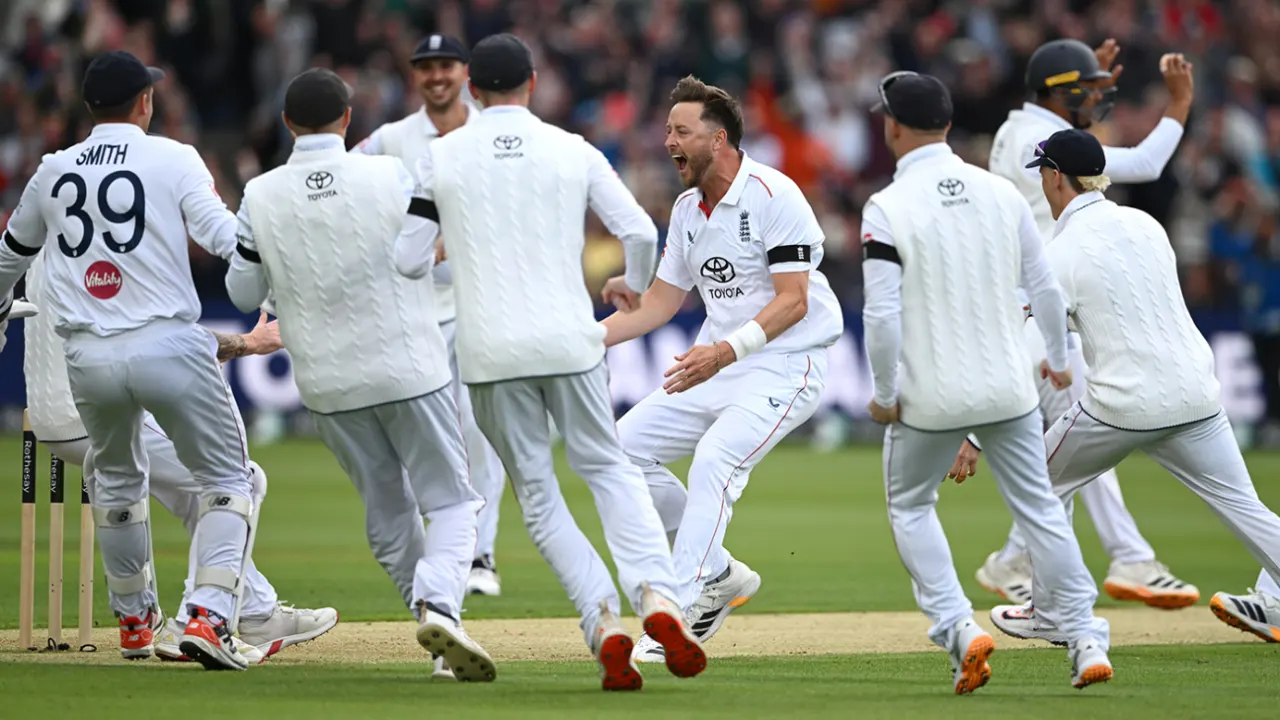
Welcome to England’s new Test era. Stop me if you’ve read this one before.
The opening day of the 2026 Test summer proved to be wildly undulating, intermittently chaotic, and utterly compelling. It was blessed with moments of genius and splashes of rank ineptitude, as polarised as the bright sunshine and torrential downpours in which it was staged, and it finished with England in command against New Zealand despite their best efforts at self-sabotage.
The net result was scarcely distinguishable, in other words, from the last first day of an England versus New Zealand Test match at Lord’s – the original Stokes-McCullum launch party of June 2022, when 17 wickets tumbled in a madcap day of seam and swing, and England’s eventual total of 141 in 42.5 overs (compared to 140 in 39.4 this time around) ended up being the launchpad for greater things.
The parallels were hardly exact – notwithstanding another counterattacking cameo from Harry Brook, timidity rather than bravado proved to be the defining feature of England’s innings. It was as if their determination to play “smarter cricket”, as per Ben Stokes’ pre-match comments, had caused the entire order to second-guess their previously route-one methods. The key beneficiary was the returning Kyle Jamieson, who booked his place on the Lord’s honours-board with a magnificent haul of 5 for 62, his first Test wickets since February 2024.
But then, in the evening sunshine, that performance was trumped by an even more startling comeback from England’s own rangy right-armer. Like Jamieson, Ollie Robinson chugged in from the Nursery End, exploiting his towering release point and metronomic accuracy to prove that outright pace is no pre-requisite for world-class status. He too was back after a two-and-a-half year absence from Test cricket, although Robinson’s many critics would argue that his own back issues in that period had been symptom, rather than cause, of his banishment.
As far as the Lord’s crowd was concerned, however, all was forgiven by the end of Robinson’s astonishing opening over. Six balls, three wickets, no runs, and an almighty acclaim as he trooped down to fine leg at the end of it, armed with instant evidence that he was worthy of the “No.1” shirt that he had claimed on his return.
His first victim was Devon Conway, pinned by a third-ball nip-backer as he thrust his pad down the line; his second was the mighty Kane Williamson, caught off a looping inside-edge at short leg as Robinson began his familiar airplane celebration before the ball had even nestled in Emilio Gay’s hands. One ball later, he was on a hat-trick, as Rachin Ravindra was late coming forward and thumped in front of all three. For the second time in the over, Rod Tucker’s verdict was shown to be marginal, but such was Robinson’s command of his own fingers on the seam, he effectively took ownership of the umpire’s too.
Gus Atkinson, 10mph quicker but initially off the pace at the business end, then made it 12 for 4 when Tom Latham also played down the wrong line. Not to be outdone, Robinson flattened Daryl Mitchell’s middle stump as he shouldered arms to another bail-trimmer, before Josh Tongue ploughed through Tom Blundell’s defences to cap a sorry scoreline of 29 for 6. Though Glenn Phillips stepped into the Brook role with an enterprising 31 from 34 balls, the deficit at the close was still a daunting 79.
New Zealand’s concerns weren’t limited to the scoreline. Though it seemed immaterial for much of the day, the loss of their attack leader, Matt Henry, to a back spasm could have more serious ramifications as and when England’s second innings gets underway. He managed four of the ten overs in a truncated morning session, in which period the debutant Gay came and went. Though Gay showed glimpses of his potential, having helped himself to a first-ball four off Jamieson’s loosener, he soon fell to the same bowler when squared up and caught at slip.
In Henry’s absence, New Zealand resumed with the seam-and-swing pairing of Nathan Smith and Will O’Rourke, and all hell broke loose. From 31 for 1 in the second over of the session, England tumbled to 34 for 4 in the space of 14 balls, culminating in the priceless scalp of Joe Root for 1. That then became 55 for 5 when Jamie Smith inexplicably shouldered arms to an in-ducker from Jamieson and lost his off stump, also for 1.
It will be little consolation to Smith that his dismissal was marginally less embarrassing than his awful slap to cover off Marnus Labuschagne in England’s previous Test at Sydney in January, but as an illustration of England’s scrambled post-Bazball mindset, it was perfect.
A glimpse of that commitment to “smarter cricket” had been witnessed from the outset of England’s innings. Duckett, fronting up for the first ball in the absence of his former partner, Zak Crawley, offered consecutive leaves to Henry’s opening deliveries en route to a maiden over, and had struck just one boundary in 31 balls before lunch.
He wasn’t able to make his start count, however. Smith, fresh from a six-wicket haul against Ireland last week, roared in from the Nursery End with an aggressive full length, and pinned Duckett on the back leg as he nipped the ball back down the slope – the first of six lbws in the day.
Jacob Bethell showed decent judgment in persuading his partner not to burn a review, but he couldn’t translate that eye on the ball into his own innings. After an indifferent spell with Royal Challengers Bengaluru in the IPL, and the added distraction of a finger injury, the sparkling form of his 154 at Sydney in January felt like a fever dream. After nudging along to 6 from 22 balls, Bethell launched into a drive as O’Rourke fired in a full length, missed the ball by a distance, and was sent on his way via three reds on review.
At 33 for 3, the stage was set for a Root special – he certainly had Lord’s full blessing to rebuild the innings at any tempo necessary. But O’Rourke had other ideas, and the ball with Root’s name on it was a beauty: a vicious lifter from just back of a length, which kissed the edge on its way through to Blundell.
Brook, who had swayed out of the way of a first-ball bouncer and took 11 balls to get off the mark, initially seemed unsure how to pace his attempted fightback. But, as so often, a moment of good fortune helped to crystallise his thought process. On 8, he sliced into a cut off O’Rourke, but Conway failed to grasp a routine chance as he attempted a reverse-cup take. Four balls later, Brook climbed through a trademark pull in front of square, and his innings was up and running.
His partners, however, were unable to find similar traction. After Smith’s aberration, Stokes emerged at his new berth at No.7, but scarcely exuded an air of permanence throughout an off-the-pace display. And, just as he was beginning to find his range with a pair of leg-side fours, he was undone by a blinder from his old adversary, Williamson, in the cordon. A low edge off Jamieson looked for all the world to be going to ground, but Williamson flung himself across first slip from second, scooped the chance up in his fingertips, and clutched it to his chest to be sure.
Brook carried on swinging, taking lumps out of Jamieson’s heavy lengths to march towards a 64-ball fifty with nine fours. But with New Zealand setting in-out fields for the inevitable miscue, the bowler should have had the last laugh on 46, only for Ravindra to spill a top-edged pull in front of the Mound Stand.
It didn’t matter too much in the long run, however. After Atkinson had come and gone for 4, Jamieson himself made amends on the fine leg rope to give Smith a deserved second, then landed his coveted place on the honours board soon afterwards too. Another downpour forced an early tea at 118 for 8, but two balls after the resumption, Robinson dangled his bat outside off and Latham smartly took the review with seconds to spare, to reveal a thin edge off the toe of his blade.
Tongue and Shoaib Bashir were an unlikely source of late resistance. However, both men played the shots that their senior team-mates had scrapped from their game-plan to add 22 for the last wicket, the second-highest stand of the innings. By the close, that injection of impetus was looking significantly more important than it seemed at the time.
Scores:
New Zealand 61 for 6 in 19.2 overs (Glenn Phillips 31*; Ollie Robinson 4-10) trail England 140 in 39.4 overs (Harry Brook 56; Kyle Jamieson 5-62, Nathan Smith 3-38, Will O’Rouke 2-25) by 79 runs
[Cricinfo]

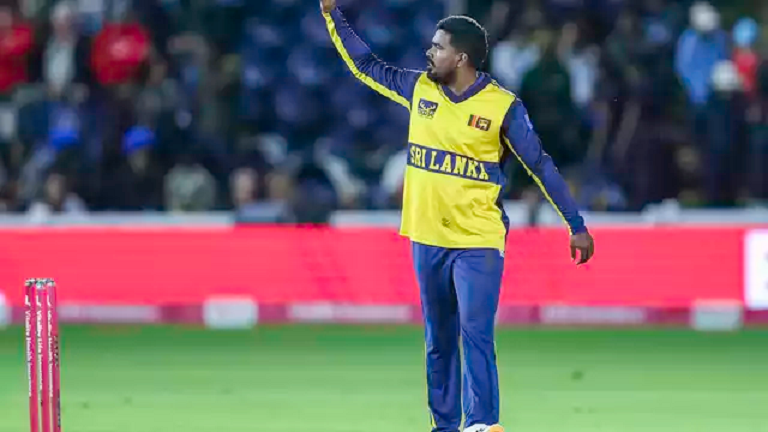
Vijayakanth Viyaskanth broke the stand with Parvez’s wicket and triggered another collapse. Bangladesh went from 50/5 to 72/8 in the space of 18 deliveries, the chase now well beyond their reach. Sri Lanka’s bowling quartet of Ratnayake (2-18), Nuwan Thushara (2-18), Vijayakanth Viyaskanth (2-26), Wanuja Sahan (2-17) did all of the damage as Bangladesh were bowled out for 102 – 63 short of their target.
Scores:
Sri Lanka 165/9 in 20 overs [Sahan Arachchige 33, Ashen Bandara 18, Thjarindu Rathnayake 65; Mahedi Hasan 2-19, Al Islam 1-18, Rishad Hossain 1-46, Saif Hasan 2-28, Mustafizur Rahman 2-43] beat Bangladesh 102/10 in 17.3 overs [Parvez Hossain Emon 20, Towhid Hridoy 11, Yasir Ali 21, Rishad Hossain 10, Nasum Ahmed 26; Nuwan Thushara 2-18, Tharindu Rathnayake 2-18, Vijayakanth Viyaskanth 2-26, SahanArachchige 1-09, Wanuja Sahan 2-17, Dushan Hemantha 1-11] by 63 runs.
[Cricbuzz]
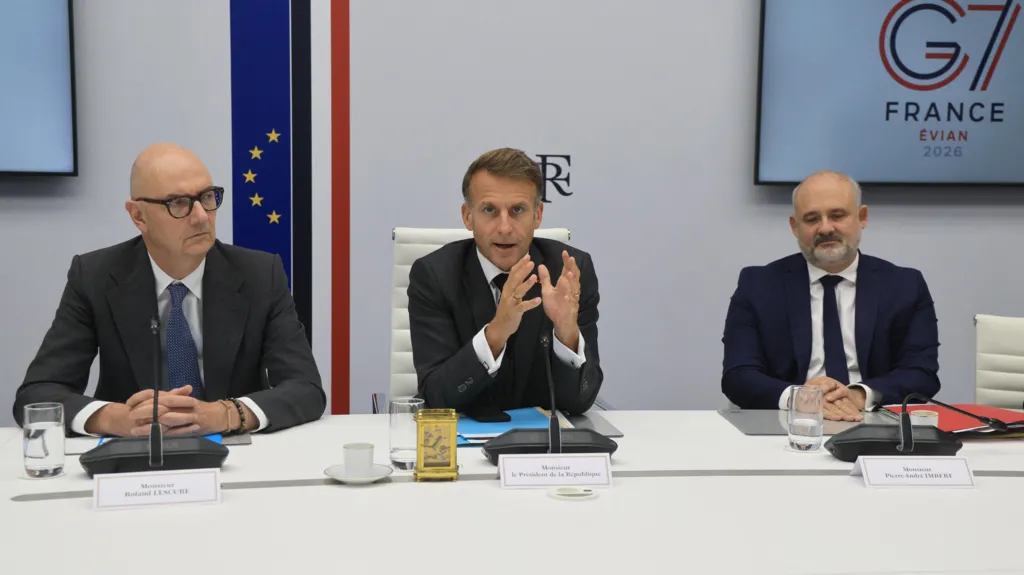
The G7 has agreed to release 100 million barrels of oil and diesel in a bid to ease supply pressures that have caused prices to skyrocket.
The group of advanced economies, including the US, said the move would include a “substantial release” of diesel in the coming days.
President Donald Trump had threatned to ban diesel exports in a move which would have eased pressure on prices for US consumers ahead of November’s midterm elections, but pushed up prices elsewhere.
In a joint statement, the G7 said member countries had now agreed to “refrain from export restrictions on energy and energy products” on one another.
The G7 includes the US, UK, Canada, Japan, Germany, Italy and France, with the EU also represented at its meetings.
Trump had warned he would ban diesel exports from the US if European countries did not agree to put more of their own stocks onto the market.
On Friday, he said on social media: “Europe has just agreed to release a massive amount of their heavily stocked Diesel Oil. The process will begin immediately.”
His Treasury Secretary Scott Bessent had argued US farmers, truckers, and businesses “should not be left carrying the burden” as prices soar.
Diesel is used heavily by the haulage industry and in agriculture, meaning rises in the cost of the fuel feed through into essentials such as food.
But, following a meeting of G7 leaders, French President Emmanuel Macron said the bloc had agreed to release reserves of “up to 100 million barrels” within four months under the coordination of the International Energy Agency (IEA).
The UK was represented at the meeting by Foreign Secretary Ed Miliband, who said the measures would “stabilise energy supplies, build resilience in supply chains and shield households and businesses from price shocks”.
Macron said the coordinated action would “bring down the prices of petroleum products, particularly diesel”. Highlighting the agreement not to pursue export bans, Macron said “President Trump, in particular, was very clear on this point”.
Speaking at the White House, Trump later said an export ban on diesel was “never really on the table”.
In the joint statement, G7 leaders said: “We will implement our commitments with a coordinated release through the IEA of 100 million barrels to begin immediately over four months, including a frontloaded substantial diesel release within the first 20 days by G7 members and partners.”
It is not yet clear which partner countries will release stocks, nor how quickly.
The 100 million barrels will comprise a mix of diesel and crude oil. The price of global benchmark Brent crude oil briefly dropped below $100 a barrel, but rose back to around $102 by Friday evening. Before the US and Israel invaded Iran, it was trading at around $73.
Matt Smith, director of commodities research at Kpler, said oil had risen again due to renewed strikes between Saudi Arabia and the Houthis in Yemen.
“Oil prices were selling off strongly due to the announcement of strategic stock releases in Europe, but they reversed course on rumours of Saudi Arabia planning an offensive into Yemen as it looks to re-establish a safe path via Bab-Al Mandeb,” he said.
European countries had pushed back against US threats to turn off American diesel, against a backdrop of the US-led war in the Middle East and reduced supplies from Russia and China.
The G7 leaders said they will also coordinate maintenance schedules to avoid multiple refineries being shut down at the same time, while encouraging countries with the capacity to do so to ramp up refining of diesel in particular.
Avoiding a ban on US diesel exports will offer significant relief to countries which are reliant on imports of the fuel, including the UK, where prices at the pump topped £2 a litre for the first time on Friday.
Over half of the UK’s diesel is imported, with 31% of those imports coming from the US.
(BBC)
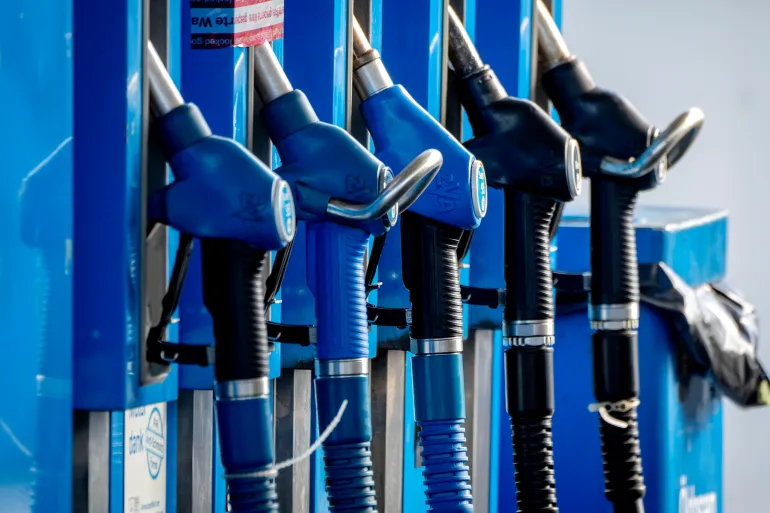
Th European Union “fully rejects” a US demand to release emergency diesel stocks as the fuel’s price soars in America and elsewhere amid the war with Iran.
The EU “fully rejects” the threat made by the US to ban diesel exports if Europe does not release more of its fuel stocks, according to European Commission spokesperson Anna-Kaisa Itkonen.
“A ban would not be beneficial to anyone. It would undermine our trust in the United States as a reliable partner,” she said, adding that the next EU’s Oil Coordination Group meeting is scheduled for October 15, but could be brought forward if needed.
On Thursday, President Trump said the US could ask European countries to release diesel reserves to rein in rising diesel prices due to the war on Iran.
His comments came after Treasury Secretary Scott Bessent urged Europe to “immediately” tap its reserves.
[Aljazeera]

Tharindu Rathnayake, bowlers secure Asian Games Bronze for Sri Lanka

G7 to release 100 million barrels of oil and diesel after Trump export ban threat

Showers above 75 mm are likely at some places in the Central, Sabaragamuwa, Western, Uva, North-western, Southern and North-central provinces and in Mannar district.

All set for Colombo rally against govt.’s tax policies

Yoshitha R money laundering trial postponed

Lankan troops test mettle in Russian war games

‘Dates have the highest sugar content to fight Coronavirus’

Sunday Island 27 December – Headlines

#SundayIsland 17th December – Headlines

Sunday Island – 28th March

Sunday Island Headlines – 21 March

Sunday Island – 21st February – Headlines
-

 News5 days ago
Police remove Thileepan statue in Jaffna
-

 Features5 days ago
The 22nd Amendment, constitutional recovery and illiberal slippage
-

 Features5 days ago
Of foreigners as CEOs of Lankan ventures
-

 Latest News3 days ago
Gold winner Tharanga gets brand-new Honda Vezel from SLAAJ
-

 News5 days ago
Sajith rejects Jt. Opp. protest sabotage claim; SJB TU chief demands remedial action
-

 Features4 days ago
Thailand’s biggest new global star …
-

 Features3 days ago
Why Sri Lanka needs an Inclusive Civic Nationalism – urgently
-
 News4 days ago
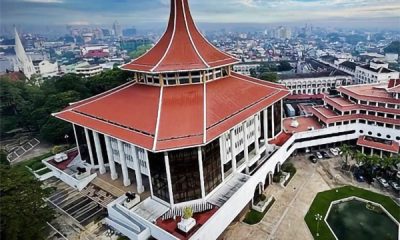
First cases taken up by SC after enactment of 22A dismissed