
News
IMF urges Lanka not to meddle with exchange rate

International Monetary Fund (IMF) Mission Chief for Sri Lanka, Evan Papageorgiou, yesterday said Sri Lanka’s current monetary policy stance remains “broadly appropriate,” despite the Central Bank of Sri Lanka’s (CBSL) recent 100-basis point policy rate hike.
Addressing the media, virtually, from Washington, he said the country’s macroeconomic recovery remained on track, supported by stabilising prices, improving foreign reserves, and continued economic momentum.
He expressed confidence that Sri Lanka still has strong potential to achieve the IMF’s 3% growth projection.
“We think that there are good, very strong factors in the economy that continue to push economic growth forward,” Papageorgiou said.
His remarks came a day after the IMF approved the combined Fifth and Sixth Reviews under Sri Lanka’s four-year Extended Fund Facility (EFF) programme, unlocking around $ 700 million in financing and marking another key milestone in the country’s post-crisis recovery programme.
Despite the policy tightening move, Papageorgiou said the IMF still expected inflation to remain broadly aligned with the CBSL’s 5% target, both this year and over the medium term.
“Now, with prices stabilised and foreign reserves continuing to grow as we have in the projection, we do not see any evidence of destabilising monetary expansion,” he added.
Papageorgiou highlighted the significant progress achieved under Sri Lanka’s IMF-supported reform programme, noting that inflation, which surged to nearly 60%-70% during the peak of the 2022 economic crisis, had now fallen to low single-digit levels, despite a temporary increase last month, linked to external shocks stemming from the Middle East conflict.
He stressed that one of the key reforms, under the IMF programme, had been ending monetary financing of the fiscal deficit by the CBSL.
According to Papageorgiou, the CBSL is no longer printing money to finance Government expenditure, while policy interest rates are being maintained in line with the inflation-targeting framework designed to preserve price stability.
He also defended Sri Lanka’s more flexible exchange rate regime, describing the rupee as an important “shock absorber” against external disruptions.
“In practical terms, allowing the exchange rate to adjust to global developments helps absorb part of the economic pressure from events such as rising global oil prices and geopolitical instability, rather than forcing the burden entirely onto foreign reserves or abrupt policy interventions,” he explained.
Papageorgiou insisted on the importance of maintaining a prudent and rules-based approach to both monetary policy and exchange rate management.
He noted that Sri Lanka’s foreign reserve position continued to improve, although the pace of reserve accumulation had moderated recently as the CBSL intervened selectively to smooth excessive currency volatility linked to the Middle East crisis.
Even so, he said the broader policy direction remained fully consistent with the reform path agreed between Sri Lanka and the IMF. “We do not see any evidence of destabilising monetary expansion,” Papageorgiou reiterated.
He also pointed out that the rupee should serve as the first line of defence against external shocks, particularly when the economy is hit by real sector disruptions, such as higher global energy prices.
“In such cases, some adjustment has to happen through the real sector and the currency, rather than trying to hold the exchange rate fixed and risking bigger problems later,” he said.



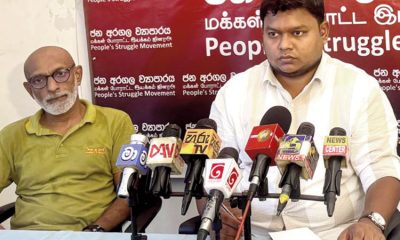

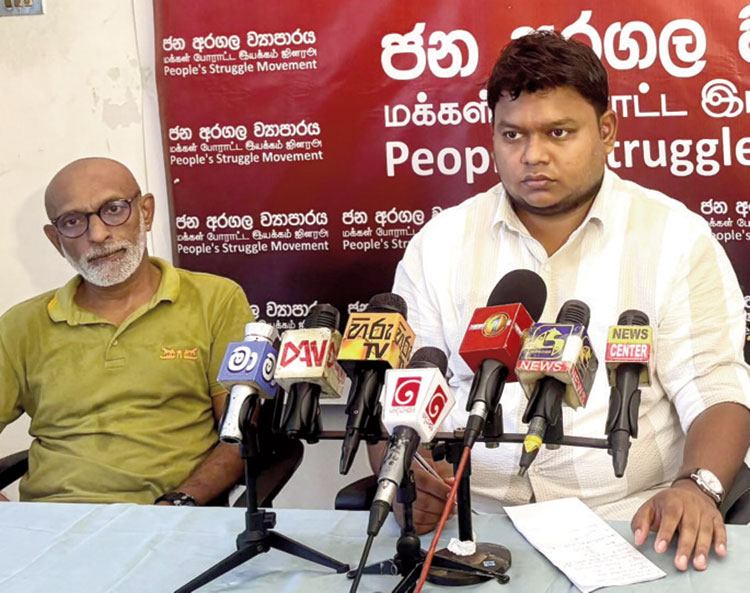
The Frontline Socialist Party-backed People’s Struggle Movement is set to stage a protest march in Colombo today (03) against what it describes as the growing tax burden on the public and the rising cost of living.
The organisers are due to commence the “Colombo March Against Unjust Taxes” at noon from Campbell Park, Borella. The FSP has also been mobilising support for the protest in Colombo and its suburbs in the run-up to the event.
People’s Struggle Movement National Executive Council member Wasantha Mudalige, speaking at a media briefing in Nugegoda yesterday (02), called on the public to join the protest, saying the movement intended to bring the tax burden faced by ordinary people to the forefront.
Mudalige alleged that successive tax measures had placed an excessive burden on households, particularly through taxes on food and educational items. He also criticised the Government over what he described as the high cost of basic food items and the difficulties faced by parents in meeting their children’s educational expenses.
He accused the Opposition of failing to adequately address the issue, claiming that opposition parties raised such concerns, mainly during election periods.
Mudalige also criticised the Government for what he described as a departure from promises made before the 2024 presidential election regarding taxes on educational equipment.
He questioned the tax burden on food items, citing figures of Rs. 100 per kilogramme on dried sprats, Rs. 310 per kilogramme on chicken and Rs. 11 per egg.
He further alleged that while ordinary people were bearing a heavy tax burden, wealthy groups were receiving tax concessions. He also criticised the Government’s economic programme and its implementation of measures associated with the International Monetary Fund (IMF).
The movement has framed today’s protest as part of a broader campaign over the cost of living and taxation. The People’s Struggle Alliance has separately announced that the Campbell Park demonstration will be the first in a series of public actions, with further protests planned in November.
Mudalige said the movement would continue to take the issue to the streets and urged the public to participate in today’s demonstration.
People’s Struggle Movement National Executive Council member Jayantha Amarasinghe also addressed the press.
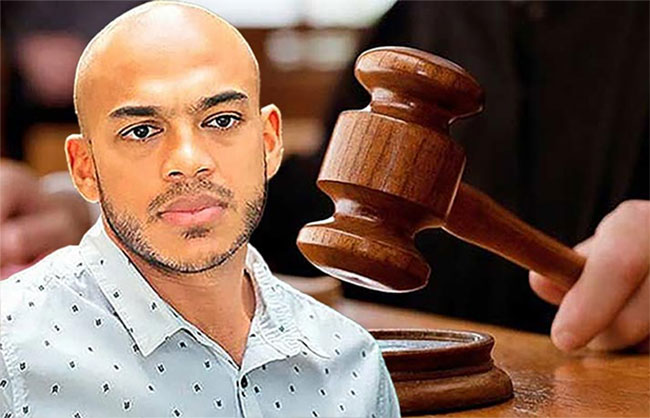
The Colombo High Court yesterday postponed the trial in the case filed under the Prevention of Money Laundering Act against Yoshitha Rajapaksa, son of former President Mahinda Rajapaksa.
The case was taken up before Colombo High Court Judge Udesh Ranatunga, with Yoshitha Rajapaksa, who is currently out on bail, appearing in court.
The trial was postponed as the President’s Counsel appearing for the defence was indisposed.
The Attorney General has filed the case against Rajapaksa, alleging that he committed an offence under the Prevention of Money Laundering Act by purchasing five plots of land in Dehiwala and Ratmalana, worth more than Rs. 73 million.
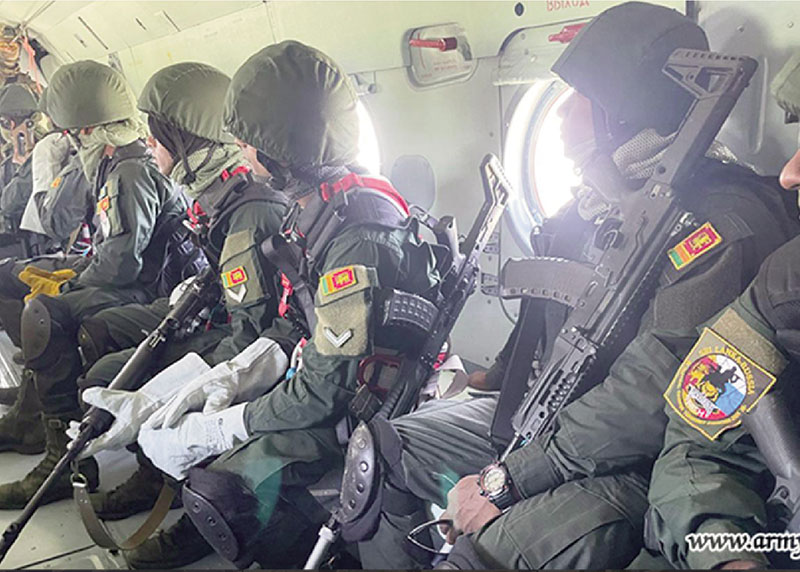
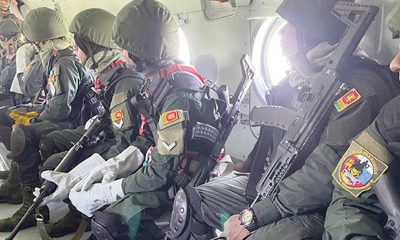
A contingent of the Sri Lanka Army, comprising 20 officers and 55 other ranks, participated in the combined military exercise ‘Wolverine Path II–2026’, conducted with the Armed Forces of the Russian Federation in Vladivostok, Russia, from September 18 to 25.
According to the Ministry of Defence, the exercise primarily focused on counter-terrorism operations and provided participating troops with training in a challenging combined operational environment.
The exercise included a range of tactical activities, including heli-rappelling, close-quarters battle (CQB), ambush operations, sniper firing, drone operations, buggy training and combat medical support.
The Ministry said the training enabled Sri Lankan troops to further develop their combat skills, tactical coordination and operational readiness.
It also provided an opportunity for the two militaries to exchange professional knowledge, operational experience and tactical expertise. Sri Lankan personnel gained exposure to training methodologies, tactical approaches and operational practices adopted by the Russian Armed Forces, the Ministry said.
The participation also enabled the Sri Lankan contingent to identify lessons from the joint training and share its own experiences with the Russian military.
The Sri Lankan contingent returned to the country following the exercise and arrived at Mattala Rajapaksa International Airport on September 28.
The Ministry said participation in the exercise contributed to enhancing the professional knowledge, tactical awareness and operational preparedness of Army personnel while promoting military-to-military cooperation, mutual understanding and professional relations between Sri Lanka and Russia.

Tharindu Rathnayake, bowlers secure Asian Games Bronze for Sri Lanka

G7 to release 100 million barrels of oil and diesel after Trump export ban threat

Showers above 75 mm are likely at some places in the Central, Sabaragamuwa, Western, Uva, North-western, Southern and North-central provinces and in Mannar district.

All set for Colombo rally against govt.’s tax policies

Yoshitha R money laundering trial postponed

Lankan troops test mettle in Russian war games

‘Dates have the highest sugar content to fight Coronavirus’

Sunday Island 27 December – Headlines

#SundayIsland 17th December – Headlines

Sunday Island – 28th March

Sunday Island Headlines – 21 March

Sunday Island – 21st February – Headlines
-

 News5 days ago
Police remove Thileepan statue in Jaffna
-

 Features5 days ago
The 22nd Amendment, constitutional recovery and illiberal slippage
-

 Features5 days ago
Of foreigners as CEOs of Lankan ventures
-

 Latest News3 days ago
Gold winner Tharanga gets brand-new Honda Vezel from SLAAJ
-

 News5 days ago
Sajith rejects Jt. Opp. protest sabotage claim; SJB TU chief demands remedial action
-

 Features4 days ago
Thailand’s biggest new global star …
-

 Features3 days ago
Why Sri Lanka needs an Inclusive Civic Nationalism – urgently
-
 News4 days ago
First cases taken up by SC after enactment of 22A dismissed