
Latest News
Kusal Mendis, Pathum Nissanka, bowlers put Sri Lanka 1-0 up

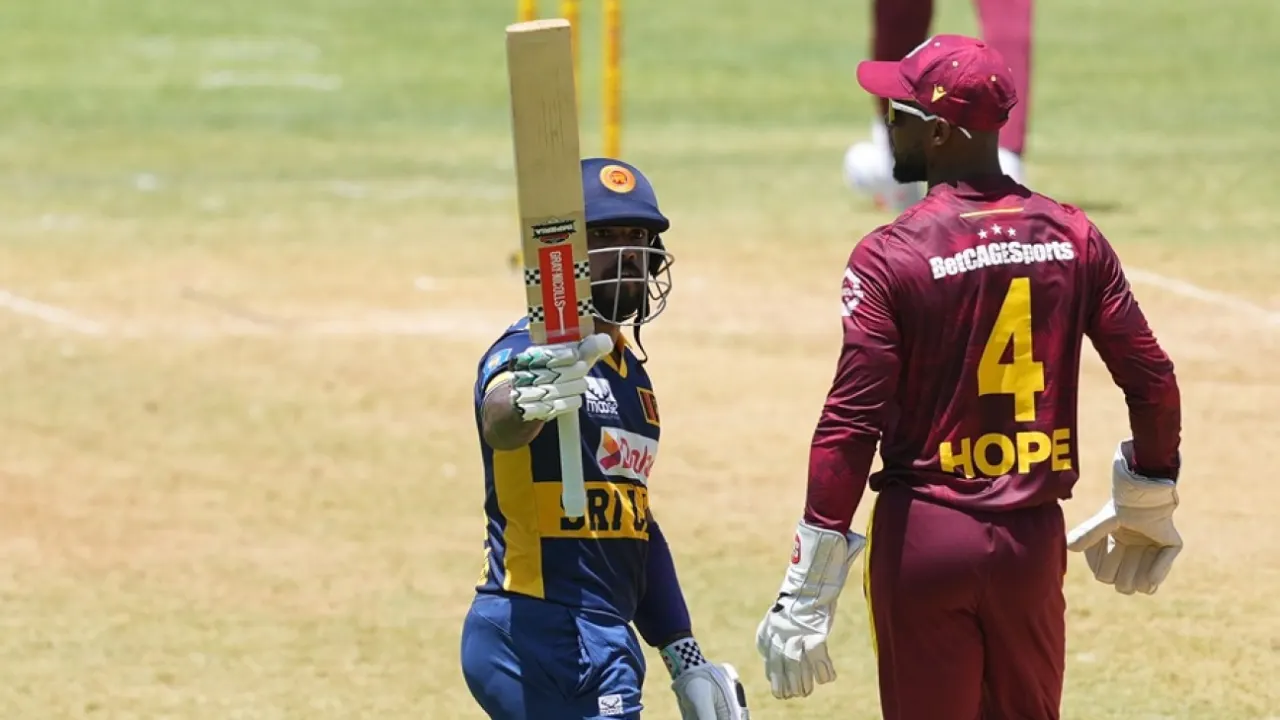
Kusal Mendis hit 72 off 62 to energise Sri Lanka after a slow start, while Pathum Nissanka, Janith Liyanage and Charith Asalanka produced important innings in Sri Lanka’s advance to 303 for 7. On a Sabina Park surface that took some turn, their total turned out to be 41 too many for West Indies, who began solidly enough, but were ultimately reined in by Sri Lanka’s spinners.
Maheesh Theekshana returned outstanding figures of 2 for 26 as West Indies’ batters frequently failed to to pick his variations, while Wanidu Hasaranga took 1 for 43. The only West Indies batter to cross fifty was captain Shai Hope, who hit 56 from 66 balls. But although there were other contributions, West Indies never managed to put a long partnership together. While Sri Lanka’s spinners squeezed West Indies, Dushmantha Chameera was the strike bowler, claiming 4 for 67 from his 10 overs.
After the teams exited briefly for bad light when West Indies were nine down in the 49th over, they returned to finish the match, the last wicket going down with four balls to spare. Sri Lanka now go 1-0 up in a three-match series.
Having won the toss in a day game, on a surface that had a green tinge to it, West Indies chose to bowl first and appeared at first to be prospering. Jayden Seales dismissed Sri Lanka’s new opener Kamindu Mendis in the the seventh over, and conceded no more than 32 in the powerplay, as Nissanka played with uncharacteristic caution.
Kusal ramped up the scoring soon after arriving at the crease, however. He took an immediate liking to Gudakesh Motie, hitting four sixes down the ground off him in the space of three overs. In the last of those overs – the 20th of the innings – Kusal hit two sixes and a four, as Sri Lanka plundered 18 in total. Motie never bowled again in the innings, with Roston Chase delivering ten tidy overs for two wickets instead. Kusal motored to a 42-ball half century, and had looked good to push on when he attempted to swipe a Matthew Forde full toss to leg, and somehow top-edged it to short fine leg. The 136-run second-wicket stand with Nissanka had put Sri Lanka firmly on track for a score in excess of 300.
Nissanka seemed to struggle by comparison. He was timing the ball poorly by his own standards, as West Indies’ bowlers discovered the Kingston track rewarded slower bowling. But although he had been dropped first ball at cover by Keacy Carty off the bowling of Seales, Nissanka played a largely sensible innings, running hard between the wickets, and finding what boundaries he could, particularly behind square on the leg side. It took him 71 balls to get to his half century, and he was striking at less than 80 when he was dismissed by Chase (via an unusual pad-bat catch to wicketkeeper Hope) for 79.
The hard-running Asalanka and the innovative Liyanage were then on hand to provide some heft and urgency to the final third of Sri Lanka’s innings. Liyanage produced the better of these knocks, hitting 44 not out off 29. Asalanka made 45 off 44. The two put on 64 for the fifth wicket.
West Indies gave themselves a shot of chasing down 304, though it would have been a ground record if they had. They openers had them rocketing to 50 for no loss after six overs, before an excellent pick up and throw from Liyanage ended John Campbell’s innings. West Indies’ other opener Justin Greaves would be out before the powerplay ended too, bowled by Theekshana who pinged his leg stump after Greaves had backed away. And still, while Hope was at the crease, there was a chance West Indies could make a charge at the total.
Ultimately they just lost too many wickets through the middle overs period that Sri Lanka’s batters had dominated. Keacy Carty was caught brilliantly at short midwicket by a diving Kamindu. Hope himself was fooled by a Chameera slower ball and spooned up a simple catch to backward point. From 167 for 5, and the required rate pushing seven, West Indies were always going to struggle. Though there were moments of resistance from the lower order, they folded eventually.
But it is their bowling that will worry West Indies most after this match. They lacked penetration in the middle overs, and the seamers were also too indisciplined, bowling 12 wides, while also straying too frequently into the pads. Although West Indies had four specialist bowlers, allrounder Chase was likely their best bowler on the day.
SCORES:
Sri Lanka 303 for 7 in 50 overs (Pathum Nissanka 79, Kusal Mendis 72, Charith Asalanka 45, Janith Liyanage 44*; Jayden Seals 2-67, Matthew Forde 2-44, Roston Chase 2-47) beat West Indies 262 in 49.2 overs ( Justin Greaves 45, Shai Hope 56, Roston Chase 33; Dushmantha Chameera 4-67, Asitha Fernando 1-59, Maheesh Theekshana 2-26, Wanidu Hasaranga 1-43, Charith Asalanka 1-06) by 41 runs
[Cricinfo]






Vijayakanth Viyaskanth broke the stand with Parvez’s wicket and triggered another collapse. Bangladesh went from 50/5 to 72/8 in the space of 18 deliveries, the chase now well beyond their reach. Sri Lanka’s bowling quartet of Ratnayake (2-18), Nuwan Thushara (2-18), Vijayakanth Viyaskanth (2-26), Wanuja Sahan (2-17) did all of the damage as Bangladesh were bowled out for 102 – 63 short of their target.
Scores:
Sri Lanka 165/9 in 20 overs [Sahan Arachchige 33, Ashen Bandara 18, Thjarindu Rathnayake 65; Mahedi Hasan 2-19, Al Islam 1-18, Rishad Hossain 1-46, Saif Hasan 2-28, Mustafizur Rahman 2-43] beat Bangladesh 102/10 in 17.3 overs [Parvez Hossain Emon 20, Towhid Hridoy 11, Yasir Ali 21, Rishad Hossain 10, Nasum Ahmed 26; Nuwan Thushara 2-18, Tharindu Rathnayake 2-18, Vijayakanth Viyaskanth 2-26, SahanArachchige 1-09, Wanuja Sahan 2-17, Dushan Hemantha 1-11] by 63 runs.
[Cricbuzz]
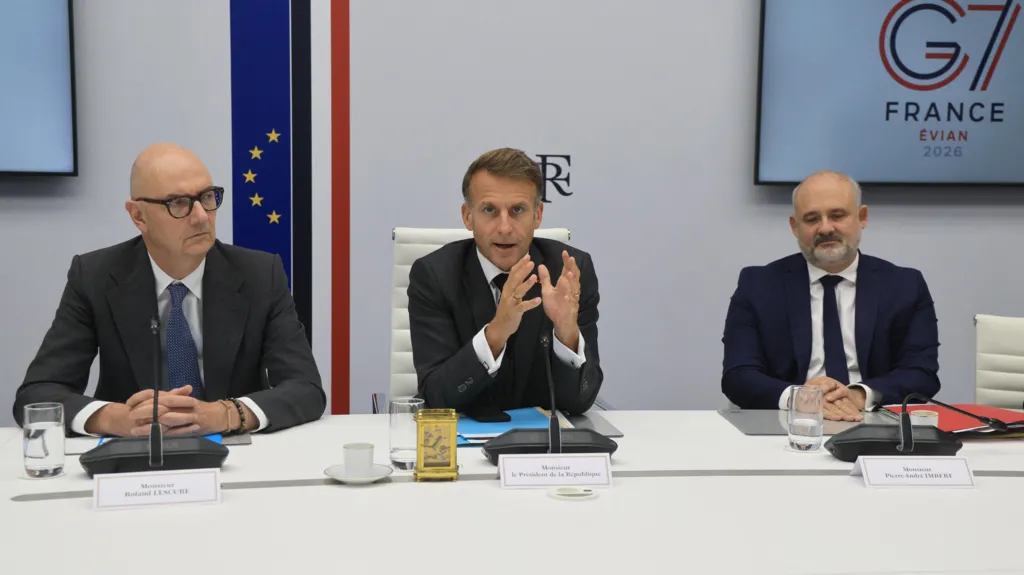
The G7 has agreed to release 100 million barrels of oil and diesel in a bid to ease supply pressures that have caused prices to skyrocket.
The group of advanced economies, including the US, said the move would include a “substantial release” of diesel in the coming days.
President Donald Trump had threatned to ban diesel exports in a move which would have eased pressure on prices for US consumers ahead of November’s midterm elections, but pushed up prices elsewhere.
In a joint statement, the G7 said member countries had now agreed to “refrain from export restrictions on energy and energy products” on one another.
The G7 includes the US, UK, Canada, Japan, Germany, Italy and France, with the EU also represented at its meetings.
Trump had warned he would ban diesel exports from the US if European countries did not agree to put more of their own stocks onto the market.
On Friday, he said on social media: “Europe has just agreed to release a massive amount of their heavily stocked Diesel Oil. The process will begin immediately.”
His Treasury Secretary Scott Bessent had argued US farmers, truckers, and businesses “should not be left carrying the burden” as prices soar.
Diesel is used heavily by the haulage industry and in agriculture, meaning rises in the cost of the fuel feed through into essentials such as food.
But, following a meeting of G7 leaders, French President Emmanuel Macron said the bloc had agreed to release reserves of “up to 100 million barrels” within four months under the coordination of the International Energy Agency (IEA).
The UK was represented at the meeting by Foreign Secretary Ed Miliband, who said the measures would “stabilise energy supplies, build resilience in supply chains and shield households and businesses from price shocks”.
Macron said the coordinated action would “bring down the prices of petroleum products, particularly diesel”. Highlighting the agreement not to pursue export bans, Macron said “President Trump, in particular, was very clear on this point”.
Speaking at the White House, Trump later said an export ban on diesel was “never really on the table”.
In the joint statement, G7 leaders said: “We will implement our commitments with a coordinated release through the IEA of 100 million barrels to begin immediately over four months, including a frontloaded substantial diesel release within the first 20 days by G7 members and partners.”
It is not yet clear which partner countries will release stocks, nor how quickly.
The 100 million barrels will comprise a mix of diesel and crude oil. The price of global benchmark Brent crude oil briefly dropped below $100 a barrel, but rose back to around $102 by Friday evening. Before the US and Israel invaded Iran, it was trading at around $73.
Matt Smith, director of commodities research at Kpler, said oil had risen again due to renewed strikes between Saudi Arabia and the Houthis in Yemen.
“Oil prices were selling off strongly due to the announcement of strategic stock releases in Europe, but they reversed course on rumours of Saudi Arabia planning an offensive into Yemen as it looks to re-establish a safe path via Bab-Al Mandeb,” he said.
European countries had pushed back against US threats to turn off American diesel, against a backdrop of the US-led war in the Middle East and reduced supplies from Russia and China.
The G7 leaders said they will also coordinate maintenance schedules to avoid multiple refineries being shut down at the same time, while encouraging countries with the capacity to do so to ramp up refining of diesel in particular.
Avoiding a ban on US diesel exports will offer significant relief to countries which are reliant on imports of the fuel, including the UK, where prices at the pump topped £2 a litre for the first time on Friday.
Over half of the UK’s diesel is imported, with 31% of those imports coming from the US.
(BBC)
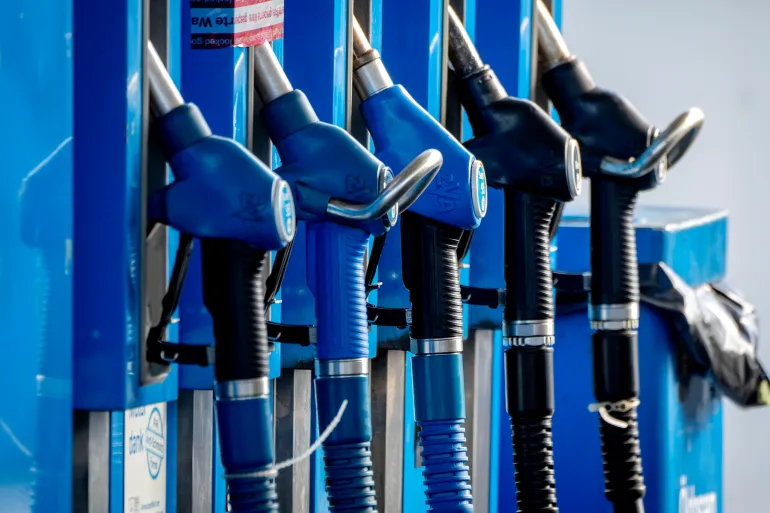
Th European Union “fully rejects” a US demand to release emergency diesel stocks as the fuel’s price soars in America and elsewhere amid the war with Iran.
The EU “fully rejects” the threat made by the US to ban diesel exports if Europe does not release more of its fuel stocks, according to European Commission spokesperson Anna-Kaisa Itkonen.
“A ban would not be beneficial to anyone. It would undermine our trust in the United States as a reliable partner,” she said, adding that the next EU’s Oil Coordination Group meeting is scheduled for October 15, but could be brought forward if needed.
On Thursday, President Trump said the US could ask European countries to release diesel reserves to rein in rising diesel prices due to the war on Iran.
His comments came after Treasury Secretary Scott Bessent urged Europe to “immediately” tap its reserves.
[Aljazeera]

Tharindu Rathnayake, bowlers secure Asian Games Bronze for Sri Lanka

G7 to release 100 million barrels of oil and diesel after Trump export ban threat

Showers above 75 mm are likely at some places in the Central, Sabaragamuwa, Western, Uva, North-western, Southern and North-central provinces and in Mannar district.

All set for Colombo rally against govt.’s tax policies

Yoshitha R money laundering trial postponed

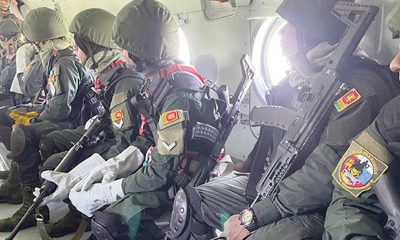
Lankan troops test mettle in Russian war games

‘Dates have the highest sugar content to fight Coronavirus’

Sunday Island 27 December – Headlines

#SundayIsland 17th December – Headlines

Sunday Island – 28th March

Sunday Island Headlines – 21 March

Sunday Island – 21st February – Headlines
-

 News5 days ago
Police remove Thileepan statue in Jaffna
-

 Features5 days ago
The 22nd Amendment, constitutional recovery and illiberal slippage
-

 Features5 days ago
Of foreigners as CEOs of Lankan ventures
-

 Latest News3 days ago
Gold winner Tharanga gets brand-new Honda Vezel from SLAAJ
-

 News5 days ago
Sajith rejects Jt. Opp. protest sabotage claim; SJB TU chief demands remedial action
-

 Features4 days ago
Thailand’s biggest new global star …
-

 Features3 days ago
Why Sri Lanka needs an Inclusive Civic Nationalism – urgently
-

 News4 days ago
First cases taken up by SC after enactment of 22A dismissed