
Life style
Honouring Sacred Heart Principals and teachers

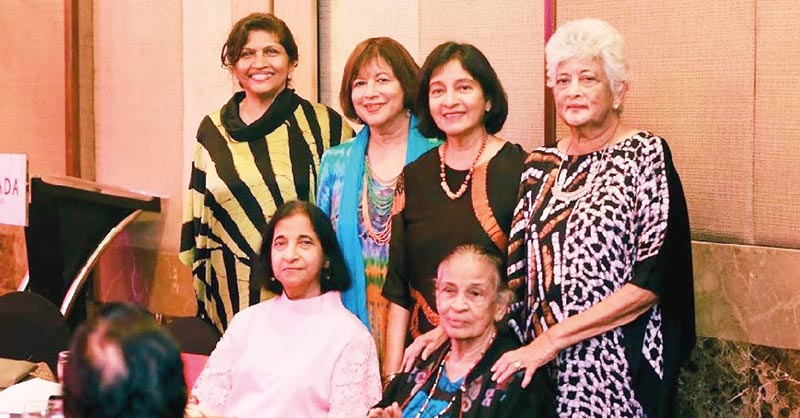
(Speech delivered by Savitri de Alwis, Past President of the Golden Heartians’ Club, at a recent ceremony to felicitate the former Principals and teachers of Sacred Heart Convent, Galle.)
Rev. Sr. Sandya Fernando Principal Sacred Heart Convent and Sr. Mihiri Perera, Deputy Principal, Chief Guest, Izzeth Jabeer, Guests of Honour – Dharma Gamanpila, Ratna Wimalasena and Kamani Gunawardene, distinguished guests and fellow Heartians.
What a privilege to see you all as we celebrate the tenth anniversary of the Golden Heartians’ Club by the past pupils of that very noble school Sacred Heart Convent. This occasion is also specially convened to celebrate the lives of Sr. Adrian and Sr. Rosina our beloved Mentors and Principals on our tenth anniversary celebrations and I’ve been given the opportunity to speak on behalf of all Heartians
it is remarkable to think that some of us here went to school in the last century, the 20th century! And I was a school girl in the 1960s and that decade was just unforgettable. Galle was considered a sleepy town unlike the buzzing city it is now
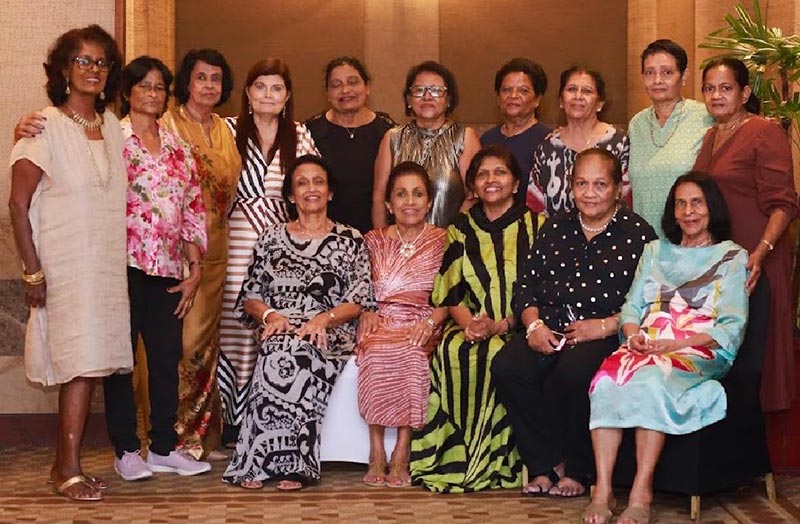
Creating memories
Sr. Adrian was our beloved Principal. I remember her as a young, beautiful, bespectacled, Irish nun with delicate features. And everyone loved her and we were inspired to be the best under her guidance. She was a good disciplinarian, kind but firm. And She was also ubiquitous, meaning she was everywhere at any one time. You look here she’s standing quietly and watching us in a white crisp habit and you look over there and she’s there observing everything the girls were up to. She knew our strengths and weaknesses and her uncanny ability to remember each of our names. Such was her engagement with the students. We respected her and revered her.
Back in the days in 1960s when we had about may be 500 students, there was no protocol and anyone could meet Sr. Adrian by passing any hierarchy which there was none. We had a lot of lovely girls from Dutch heritage, the burghers and they were a lovely set of girls who spoke English like they owned it. And like wise we had a lot of affluent Muslim girls from the Fort and the surrounds coming in their posh cars and enclosed decorative buggy carts to school.
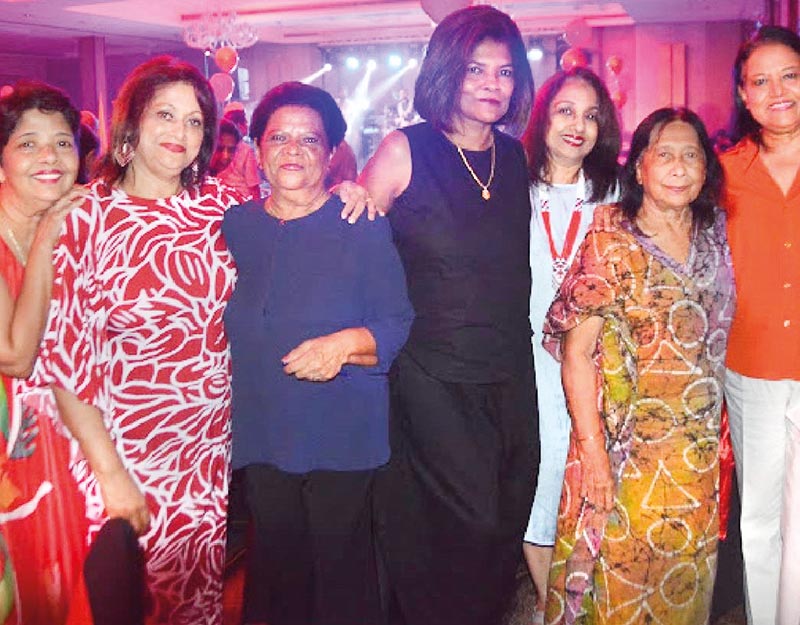
Wholeheartedly supporting for the school
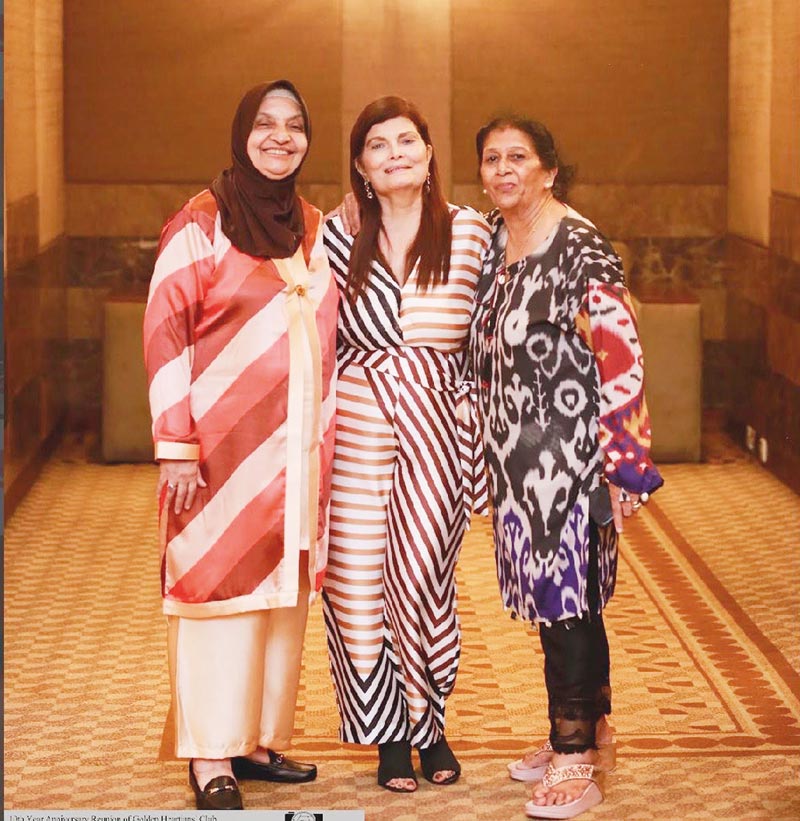
Ferial,Bernie and Kerima
Thankfully there were no Dutch burghers for competition in my class. I always strived to win the English prize, by virtue of which my melancholy friend in class who always had problems wanted to unburden these to Sr. Adrian. But my friend with her troubles couldn’t converse in English and so she asked me for the favour to translate. I was delighted as I saw it as a pocket money opportunity! In those days pocket money was really hard, we were 4 siblings all at SHC and my father was a Government Servant and money was tight. So we had to invent ways to earn our pocket money as we were glutenous for the delicious Alerics popsicles sold at the school tuck shop for 10 cents.
Imagine Alerics popsicles coming all the way from Colombo and in those days, there was no Southern expressway. Again, the thoughtfulness of Sr. Adrian to give us the best. I gathered Dutch courage (without the intoxication of course) and walked to Sr.Adrian’s office downstairs to the long room next to her office with my melancholy friend tagging along. We stood silently with hearts pounding and Sr. Adrian stood surveying us close and I began with my smattering of English to tell Sr.Adrian my friend’s problems., I am sure I made it up as I went along. Fortunately, my melancholy friend didn’t understand what I was saying. I am sure Sr Adrian was bemused and hid her chuckles under her straight face and having given us a patient hearing she told us rather sternly ‘now go back to class’. That was the end of that ordeal and I did earn my pocket money of 10 cents for that delicious Alerics popsicle and I am sure my friend was happy unburdening herself through me or, so she thought!
So in that once in a lifetime incredible school journey, We learned of books and learned of men and how to play the game. We were taught and prepared to face the challenges of the outside world by the values that were instilled in us by example of these unforgettable and humble nuns. And as we blossomed from tiny buds and uncut diamonds, Sr. Adrian gave us a polished Rose cut!
Today, although SHC is a Government School , under the leadership of the dynamic Principal Sr.Sandya Fernando, they are doing a phenomenal job. The benchmark has been set at a high bar. And I ask you as we celebrate the lives of our beloved Principals Sr. Adrian and Sr. Rosina today, do think how and what we can give back to the school for the solid foundations they built in us for who we are today.

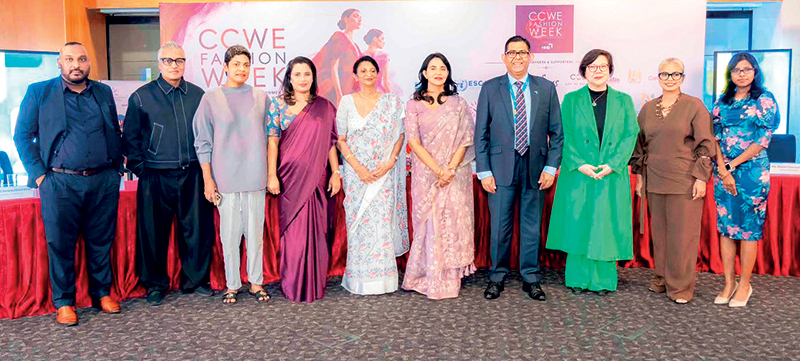
Dr. Ayanthi Gurusinghe, President, Chamber of Women Entrepreneurs, is spearheading a transformative initiative through CCWE (Ceylon Chamber of Women Entrepreneurs) Fashion Week, and International Summit 2026, a pioneering platform that brings together fashion, entrepreneurship, creativity and women empowerment, under one global umbrella. With the theme ‘Threads of Inclusion Woven From Every Walk of Life, this first ever fashion week in Sri Lanka aims to celebrate diversity while creating opportunities for women entrepreneurs, designers and innovators to connect with international markets and industry leaders. In this exclusive interview Dr. Gurusinghe speaks about their vision for the Summit, the growing influence of Sri Lankan fashion on the global stage, and the vital role women can play on shaping the future of business, creativity and sustainable development.
(Q) What inspired the idea behind the CCWE Fashion Week and International Summit?
(A) The inspiration behind the CCWE Fashion Week and International Summit 2026 came from a vision to create a platform where fashion becomes more than glamour — a platform that represents inclusion, empowerment, entrepreneurship, and social transformation. The Ceylon Chamber of Women Entrepreneurs recognised that many talented women, especially from rural and marginalised communities, possess creativity and business potential but lack exposure, networks, and international opportunities. Through this initiative, CCWE aims to bridge that gap by bringing together fashion, leadership, culture, business, and advocacy under one regional platform. The Summit was designed to celebrate diversity, create economic opportunities, and position Sri Lanka as a hub for inclusive and sustainable fashion in South Asia.
(Q) How does this platform inspire women entrepreneurs in Sri Lanka and beyond?
(A) This platform inspires women entrepreneurs by showing them that their talents, ideas, and businesses have value on both national and international stages. The CCWE Fashion Week and International Summit provides opportunities for networking, visibility, mentorship, partnerships, and market access. It encourages women to move beyond limitations and believe that they can build globally recognised brands, while remaining connected to their communities and cultural identity. By bringing together regional leaders, designers, entrepreneurs, policymakers, and development partners, the platform creates an environment where women can learn, collaborate, and grow with confidence.
The strength of this initiative is further enhanced through meaningful partnerships that reflect the vision of inclusion and empowerment behind the event. Hatton National Bank joins the platform as the Title Partner, supporting the advancement of financial inclusion and economic empowerment for women entrepreneurs across Sri Lanka. Through its partnership, HNB reinforces the importance of accessible financial opportunities, entrepreneurship development, and sustainable business growth for women-led enterprises.
At the same time, Hemas Consumer Brands, through its leading women’s care brand FEMS, joins as the Empowerment Partner, championing women’s wellbeing, dignity, confidence, and awareness. Their involvement reflects a shared commitment toward uplifting women and supporting platforms that celebrate inclusion, leadership, and social impact.
Hosting the event at Cinnamon Life also symbolises a new bridge toward inclusivity, innovation, and international collaboration. As one of Sri Lanka’s newest world-class lifestyle and event destinations, Cinnamon Life provides a modern regional platform that connects communities, businesses, creatives, and global audiences together, under one vision — “Threads of Inclusion Woven from Every Walk of Life.”
(Q) What is the Ceylon Chamber of Women Entrepreneurs’ long-term vision in organising such a major event?
(A) The long-term vision of the Ceylon Chamber of Women Entrepreneurs is to establish an international platform that continuously uplifts women-led businesses, and promotes inclusive economic development, and sustainability. Beyond a fashion event, the Summit is intended to become a global advocacy platform that highlights women’s leadership, promotes ethical and sustainable industries, encourages youth engagement, and creates lasting economic opportunities for women entrepreneurs locally and internationally.
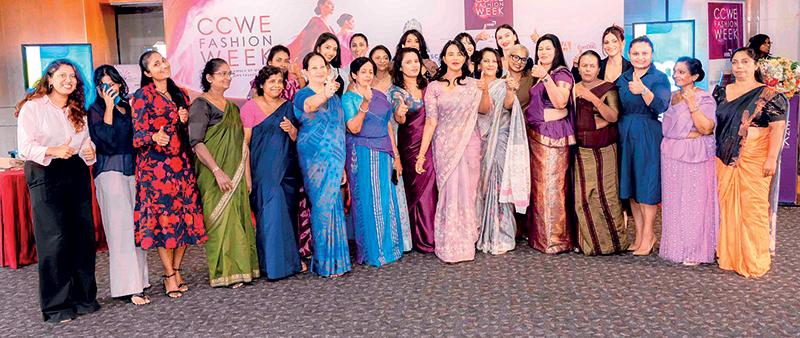
Entrepreneurs from far and wide gathered to celebrate innovation, creativity and women empowerment at the press conference
A key part of this vision is the implementation of the Feminism: Action and Mobilisation for an Inclusive Economy project, currently operating under CCWE, through which CCWE is directly supporting over 1,000 women entrepreneurs across Sri Lanka. Through training, financial literacy, business mentoring, networking, market access, and entrepreneurship development, the project aims to strengthen women-led micro and small businesses, particularly in rural and underserved communities. The Fashion Week and International Summit serves as an extension of this mission by providing visibility, recognition, and international exposure to these women entrepreneurs and their products.
(Q) How important is fashion as an economic driver for women-led businesses?
(A) Fashion is an extremely powerful economic driver for women-led businesses because it connects creativity with commerce. The fashion industry creates opportunities not only for designers, but also for artisans, textile producers, beauticians, models, photographers, marketers, event organisers, and small business owners. For many women, especially in developing countries, fashion provides an accessible pathway to entrepreneurship and financial independence. When supported properly, fashion can contribute significantly to employment generation, exports, tourism, and community development. CCWE believes fashion has the power to transform livelihoods while also promoting culture, sustainability, and innovation.
-

- Dr Ayanthi Gurusinghe addressing the gathering at the CCWE International Fashion Week
-

- Managing Director/ CEO of HNB Damith Pallewatte
(Q) How do you see fashion influencing society through the CCWE Fashion Week and International Summit 2026?
(A) Through the CCWE Fashion Week and International Summit 2026, fashion becomes a voice for inclusion, equality, identity, and empowerment. Fashion has the ability to influence how society views diversity, confidence, leadership, and self-expression. This platform aims to redefine beauty standards by celebrating people from different backgrounds, abilities, cultures, and communities. It sends a message that fashion should not be limited to exclusivity, but should represent humanity and opportunity for all. By integrating social advocacy with fashion, CCWE hopes to inspire positive social change and encourage industries to become more inclusive and socially responsible.
(Q) Does fashion today focus only on beauty, or does it represent empowerment and identity as well?
(A) Fashion today goes far beyond beauty. It has become a powerful form of self-expression, empowerment, identity, and confidence. Fashion reflects culture, personal stories, values, and individuality. For many women, fashion is connected to dignity, independence, and the courage to be seen and heard. At CCWE, we believe fashion should empower people emotionally, socially, and economically. It should create opportunities, break stereotypes, and give visibility to voices that are often unheard. True fashion today is about representation, inclusivity, purpose, and the confidence to embrace one’s authentic identity.
(Q) How does the Chamber support rural and emerging women entrepreneurs?
(A) The Chamber supports rural and emerging women entrepreneurs through training, mentorship, networking opportunities, business development programs, market access initiatives, and advocacy platforms. CCWE works closely with women from grassroots communities to help them develop skills, improve product quality, connect with buyers, and gain exposure locally and internationally.
One of the Chamber’s most impactful initiatives is the FAME Project ( Feminism: Action and Mobilisation for an Inclusive Economy) which currently supports more than 1,000 women entrepreneurs across Sri Lanka. Through this project, women are provided with entrepreneurship training, financial management support, leadership development, digital literacy, market linkage opportunities, and guidance to build sustainable businesses. Special focus is given to empowering women from rural communities, vulnerable backgrounds, and underserved regions, enabling them to become economically independent and socially confident.
CCWE also collaborates with corporate partners, government institutions, development agencies, and regional organisations to create long-term opportunities for women entrepreneurs to grow sustainably. Through initiatives like the CCWE Fashion Week and International Summit, rural women are given a platform to showcase their talents, tell their stories, and become part of a larger economic and social movement.
Pics by Nishan S. Priyantha
By Zanita Careem
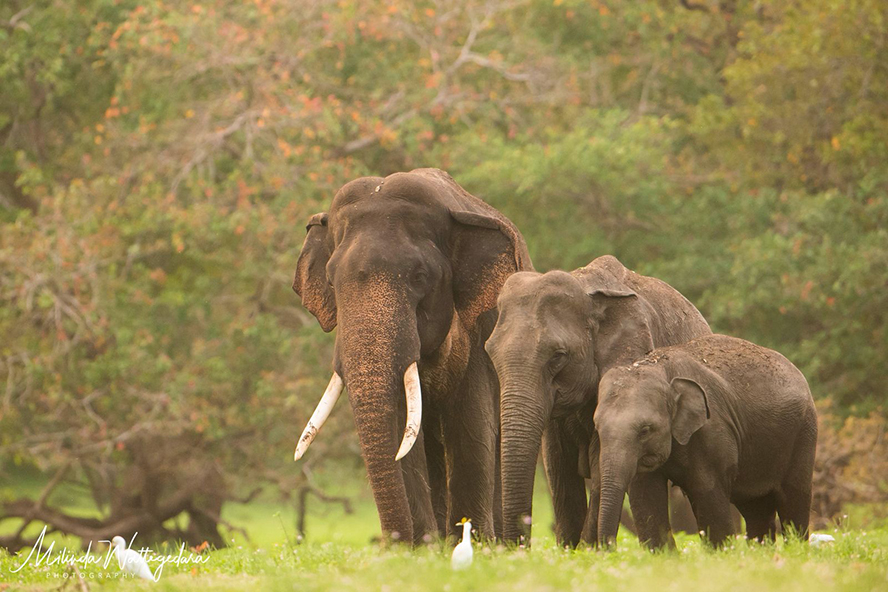
As dawn breaks over the ancient waters of Kala Wewa, the towering casts its timeless gaze across a landscape steeped in history, civilisation and wilderness.
For decades, another giant moved beneath those silent skies — a magnificent tusker whose presence inspired awe among villagers, pilgrims, wildlife photographers and conservationists alike.
He was Barana.
More than just an elephant, Barana became the living monarch of Kala Wewa’s forests — a symbol of Sri Lanka’s vanishing wild grandeur and one of the island’s most admired tuskers.
Today, Barana is gone.
Killed by illegal electric fencing, laid around cultivations, bordering elephant territory, his death marked not merely the fall of a giant, but the fading of an irreplaceable legacy deeply woven into Sri Lanka’s natural and cultural heritage.
Yet Barana’s story refuses to die.
It lives on in photographs, memories and the voices of conservationists fighting to ensure that Sri Lanka’s great tuskers do not disappear forever.
A Tusker Born for Legend
There are elephants, and then there are legends.
Barana belonged to the latter.
His very name carried historical resonance. Ancient chronicles identify “Barana” as the master craftsman believed to have sculpted the sacred Aukana Buddha during the reign of King Dhatusena, centuries ago. Few names could have suited the tusker more perfectly.
Like a sculpture shaped by nature itself, Barana possessed extraordinary physical beauty.
His enormous frame carried remarkable symmetry — broad shoulders, a domed forehead, towering stature and long elegantly curved tusks that instantly distinguished him from other elephants.
Dark pigmentation patterns spread artistically across his skin, while a scar etched across his forehead gave him the appearance of an old warrior who had survived countless battles in the wilderness.
Wildlife photographers, who encountered him often, described the experience with near reverence.
“He carried himself with the calm authority of a king,” one photographer recalled. “Even among elephants, Barana stood apart.”
Unlike many dominant bulls that roamed vast territories, Barana remained deeply connected to the Kala Wewa ecosystem throughout most of his life.
The ancient reservoir, grasslands and forests were not merely his habitat.
They were his kingdom.
The King of Kala Wewa
Over the years, Barana became one of Sri Lanka’s most photographed wild tuskers.
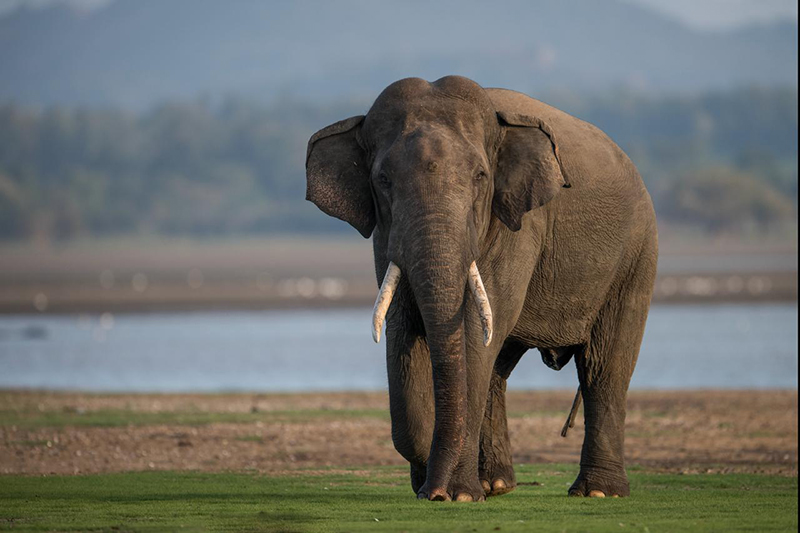
Barana is gone, killed by illegal electric fencing
Visitors to Kala Wewa National Park waited patiently for hours hoping to witness the giant emerge from the forest edge at dusk.
And when he appeared, silence often followed.
His slow, deliberate movements carried a strange dignity. Even among herds, Barana commanded attention effortlessly.
To many wildlife enthusiasts, seeing Barana in the wild became a once-in-a-lifetime experience.
His fame gradually spread far beyond conservation circles. Images of the majestic tusker circulated widely among wildlife photographers and nature lovers, elevating him into one of the most recognised elephants in Sri Lanka.
But then came the silence.
Between 2014 and 2017, Barana vanished completely.
No sightings. No tracks. No photographs.
For conservationists, the disappearance triggered deep anxiety.
Sri Lanka had already lost several iconic tuskers under tragic and mysterious circumstances, including the legendary Walagamba of Kala Wewa, who vanished in 2012 and was never seen again.
As months turned into years, many feared Barana, too, had been lost forever.
Then came the miracle.
In 2017, Barana suddenly reappeared.
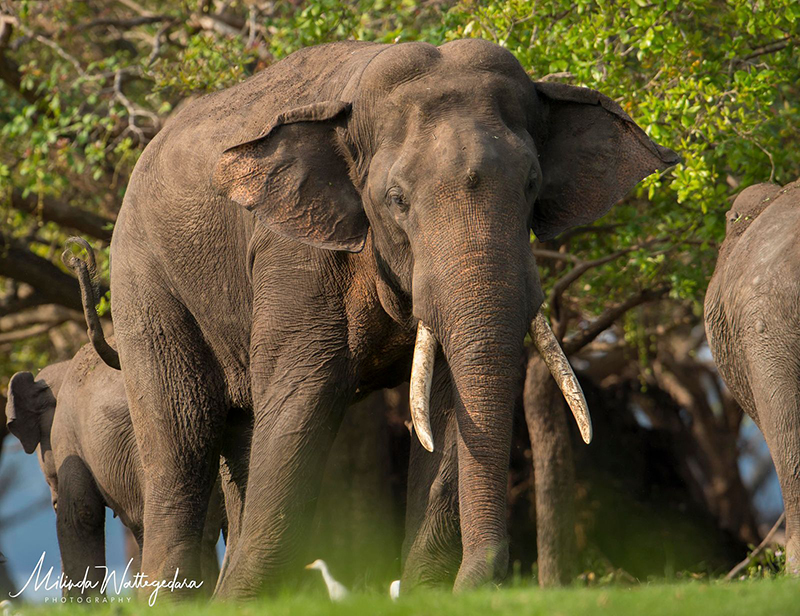
Seeing Barana in the wild became a once-in-a-lifetime experience
The dramatic return sent waves of excitement through Sri Lanka’s wildlife community. Photographs captured by wildlife photographer Raveendra Siriwardena confirmed what many had scarcely dared to believe — the king of Kala Wewa had returned home.
For a moment, hope returned with him.
A Tragic End
But the celebration would not last.
Barana’s life ended not deep within the wilderness he ruled, but amid Sri Lanka’s worsening human-elephant conflict.
Illegal electric fencing laid around small onion cultivations electrocuted the great tusker in his prime.
The news devastated conservationists across the country.
His death was particularly painful because Sri Lanka’s tuskers are exceptionally rare. Only a small percentage of male Sri Lankan elephants develop tusks, making each surviving tusker biologically and culturally invaluable.
Barana was not merely another elephant.
He represented generations of wilderness heritage slowly disappearing before the nation’s eyes.
“Barana was not merely an elephant — he was a living symbol of Sri Lanka’s natural heritage and the pride of Kala Wewa,” said Chandika Lakmal, Secretary and Chief Coordinator of Wild Tuskers of Sri Lanka.
“His tragic death is a painful reminder of the urgent need for sustainable solutions to the human-elephant conflict before we lose the remaining giants of our wilderness forever.”
Tragically, Barana’s fate mirrored that of other legendary tuskers linked to Kala Wewa. Revatha, too, perished due to conflict-related causes, while Deega 1 — regarded by many as the last great tusker of the dynasty — also died.
With each death, Sri Lanka loses not only elephants, but irreplaceable genetic lineage, ecological balance and cultural identity.
The Vanishing Legacy
For generations, Kala Wewa remained one of Sri Lanka’s richest elephant habitats.
Seasonal grasslands, forest corridors and ancient tank systems provided elephants with food, water and migratory pathways essential for survival.
Today, much of that balance has been disrupted.
Habitat fragmentation, encroachments, poorly planned development and invasive vegetation have steadily reduced feeding grounds around reservoirs and forests.
Traditional elephant corridors linking Kala Wewa with nearby protected areas have become increasingly blocked.
As food sources shrink, elephants are forced into villages and farmlands, intensifying deadly encounters with humans.
Conservationists say Barana became one of the most tragic victims of that growing crisis.
The Spirit of Barana Lives On
Yet even in death, Barana remains larger than life.
His towering image still dominates wildlife photography exhibitions and conservation campaigns. His story continues to inspire growing calls for stronger habitat protection, scientific land-use planning and humane solutions to human-elephant conflict.
Organisations, such as Wild Tuskers of Sri Lanka, continue documenting the island’s remaining tuskers, while educating younger generations about coexistence and conservation.
For many conservationists, Barana has now become more than a memory.
He has become a symbol.
A symbol of what Sri Lanka has already lost — and what it still has the power to save.
As evening shadows once again fall across Kala Wewa, the forests feel quieter without the giant who once ruled them.
No longer does Barana emerge majestically from the tree line while photographers hold their breath in anticipation.
But legends do not disappear easily.
And somewhere beneath the timeless gaze of the Aukana Buddha, the spirit of Barana — the last majesty of Kala Wewa — still walks the wilderness.
By Ifham Nizam

Against a backdrop of evolving global conversations on women’s empowerment leadership and social progress, ‘Sunday Island’ had the privilege of speaking with the Ambassador of Iran in Sri Lanka, Dr. Alireza Delkhosh, on the dynamic role of women in Iran. From diplomacy and education to entrepreneurship and cultural identity, the discussion explored how women in Iran continue to shape with resilience, intellect and vision. From remarkable achievements in education, medicine, entrepreneurship to their growing influence in culture and diplomacy, Iranian women remain an integral force in shaping the country’sfuture. In this exclusive interview, the Ambassador of Iran shares insights into the evolving status of women in Iranian society, the challenges they face and the opportunities that continue to empower them in a rapidly changing world.
(Q) How would you describe the position of women in Iran today to a Sri Lankan audience that may only know Iran through international headlines?
(A) Women in Iran constitute more than half of the national population and represent a highly educated and socially influential segment of society. Over recent decades, Iran has achieved near-universal female literacy among younger generations, exceeding 98%, while women account for approximately 55–60% of university entrants in many academic years.
Despite external perceptions often shaped by political narratives, Iranian women are deeply integrated into key sectors, including education, healthcare, science, culture, and professional services and sports. Their role reflects not only educational advancement but also broad participation in national development.
(Q) How would you describe the role of Iranian women in wartime?
(A) During periods of national crisis, including the eight-year Iraq–Iran war, and more recent security incidents, such as the 12-day and 45-day conflicts in 2026, Iranian women have played an essential and often sacrificial role in supporting society. More than 1000 female martyrs recorded during the eight-year Saddam’s imposed war on war. Women were actively engaged in crucial sectors, such as healthcare, education, emergency services, and civil support systems. Many served as nurses, teachers, and medical staff in difficult and high-risk conditions, particularly in frontline and support hospitals. In wartime circumstances, a number of female educators, and healthcare workers, lost their lives while carrying out their professional duties, reflecting their commitment to both public service and national resilience.
In the more recent 12-day and 45-day wartime situations, women continued to serve in essential public roles, while also contributing to social stability and community support. Female medical personnel, teachers, and civil workers remained active in maintaining essential services under pressure, ensuring continuity in education, healthcare delivery, and public welfare. Women in these sectors were among those who faced direct risks while performing their duties. At least 46 female teacher martyred while teaching in classroom. Overall, the participation of Iranian women in such periods reflects a combination of professional dedication, social responsibility, and sacrifice in service of national stability and public wellbeing.
(Q) Iran is often depicted as conservative, yet many reports highlight high female participation in higher education and science. How do you explain this contrast?
(A) This issue is less a contradiction and more a confrontation between media narratives and reality. Today, women in Iran are present in professions that are considered unthinkable in many other countries. Iranian women play a decisive role in the healthcare system, education sector, armed forces, the judiciary, and other key institutions.
Following the expansion of the national education system, since the 1970s, access to education significantly increased for both rural and urban populations, and girls have actively and widely participated in this process. As a result, women’s presence in universities has grown dramatically, reaching more than 50 to 60 percent in many fields. Women’s participation is particularly prominent in disciplines such as medicine, pharmacy, and the humanities.
-
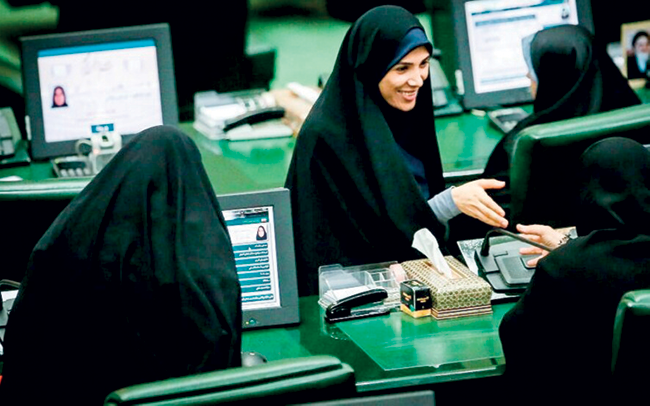
- They make voices heard in public life

Participation of women in politics reflects evolving conversations on representation and social progress
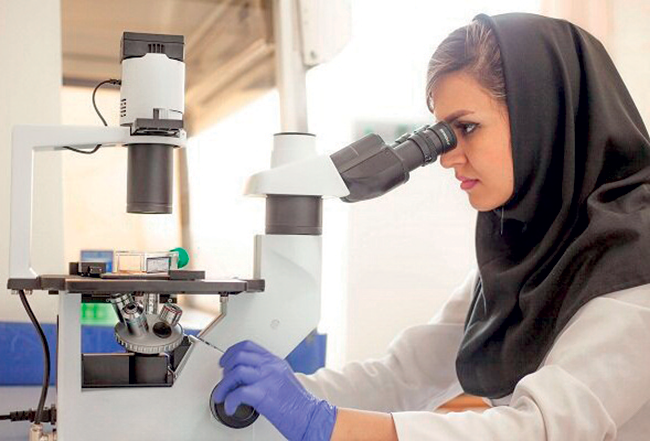
Women breaking barriers and inspiring new generation through education, research and innovation
(Q) Iranian women have major gains in literacy and university education over the decade. How does Iran compare with other West Asian countries in female education today?
(A) Iran is among the stronger performers in the region in terms of women’s education. For instance, female literacy is estimated at around 85–90% overall, and above 98% for youth. In higher education, women often represent a majority of students (50–70%) and in STEM and medical sciences, women’s participation is estimated at 60% or higher in some disciplines. Accordingly, compared to many West Asian countries, Iran ranks above regional averages in education indicators, though labour force participation remains comparatively lower.
(Q) What role do women play in Iran’s economic and social development?
(A) Women play a significant role in various sectors of Iran’s economic and social development, demonstrating substantial representation across key professional fields. In medicine, they are highly prominent, with approximately 60% of specialist physicians being women. They also maintain a strong presence in technology and information technology, where they account for roughly 30% of participation, and in education, where they make up a large portion of teachers and university faculty members. Furthermore, the creative industries highlight their cultural influence, with hundreds of female directors and thousands of actresses actively shaping the country’s arts and cinema landscape.
(Q) How important are family values and cultural tradition in shaping the role of women in Iran?
(A) The family remains one of the primary pillars of Iranian society and plays a decisive role in shaping the social identity of women. Many women in Iran manage significant family responsibilities alongside their professional activities. Social expectations often emphasise a dual role: professional participation on one hand, and maintaining a central role within the family on the other.
This structure is widely accepted in the general culture and influences career choices, work patterns, and the social identity of women.
(Q) How does Iran balance tradition, religion and modernisation regarding women’s role?
(A) The role of women in Iran is shaped by the concept of “evolution and synergy” between religion and modern life, rather than a confrontation between the two. Islamic teachings encourage both women and men to seek knowledge, social responsibility, and economic participation, while emphasising family stability, human dignity, and social ethics.
Within this framework, the governance system and legal principles are partly influenced by Islamic jurisprudence (Fiqh), which seeks to preserve moral and social values while enabling women’s presence in education, health, science, business, and public service. The goal is not to reject modernisation, but to guide it within an ethical and cultural framework, based on religion and national tradition.
Simultaneously, Iran has invested heavily in the education and professional development of women as part of the country’s modernisation path. The extensive participation of women in universities, medicine, science, entrepreneurship, and public management demonstrates that educational and professional progress can coexist with Islamic values and social norms.
From this viewpoint, modernisation in Iran is defined as a process compatible with cultural and religious identity; a model in which women can achieve both scientific and professional success while maintaining respected roles in the family and society.
(Q) Iranian women have played a major role in global cinema, literature, and the arts. How important is culture in empowering women?

Ambassador of Iran in Sri Lanka Alireza Delkhosh reflecting on the enduring diplomatic, cultural and economic ties between Iran and Sri Lanka
(A) Culture is one of the most significant and visible fields of women’s participation in Iran. Women in Iran are actively engaged in cinema as a major cultural sector as well as in visual arts. Since the 1980s, Iranian women filmmakers have made a significant and steadily growing contribution to national cinema, directing a substantial number of feature films and documentaries. While precise aggregated statistics vary across sources, Iranian cinema has consistently seen an increasing presence of women directors over the past four decades, many of whom have gained recognition at international film festivals.
Based on cinema magazine reports, each year, more than 20 new Iranian filmmakers debut, many of them women.
In the last two decades, Iran has had a higher proportion of women film directors than many Western countries. Iranian women artists frequently participate in the Venice Biennale, Cannes side programmes, and global galleries. Notable figures include internationally recognised directors, such as Samira Makhmalbaf, Narges Abyar, Rakhshan Bani-Etemad, Tahmineh Milani and many others.
This makes cinema one of the strongest global visibility platforms for Iranian women.
Also, Iran has a long literary tradition with significant female contribution. Over centuries, women, such as Forough Farrokhzad, Simin Daneshvar, and Parvin E’tesami, have become central figures in modern Persian literature. Women today continue to play a major role in publishing, translation, and contemporary writing.
Literature remains a key space where women achieve intellectual influence and public recognition.
Besides these, women in Iran play an active role in music, as performers, composers, and educators, particularly in classical, traditional, and ensemble-based music. Iranian women perfectly adapted themselves to the rules and regulations and continue to contribute significantly to the country’s cultural and musical landscape through formal artistic channels.
In Iran, culture acts as a parallel empowerment pathway for women. Along with women political and economic participation, cultural sectors—especially cinema, literature, and visual arts—have enabled Iranian women to achieve high international visibility and intellectual influence disproportionate to their formal political representation.
(Q) What impact have social networks had on young Iranian women and their aspirations?
(A) Social media has significantly expanded opportunities for people around the world, including women in Iran. Increased access to global education and professional networks, the growth of women-led digital entrepreneurship, and new platforms for cultural expression and advocacy are among these opportunities. At the same time, it operates within a regulated environment. However, regulation should not be equated with limitation. The experience of more than four decades of wide-ranging sanctions across economic, technological, and scientific sectors shows that working within constraints can foster resilience, creativity, and innovation rather than hinder progress. Iranian women’s participation in socio-economic and civic initiatives has expanded significantly through social media. Digital platforms have enabled women to build professional networks, launch online businesses, access global education, and engage in public dialogue. Social media has also created new spaces for cultural production, knowledge-sharing, community organising, and advocacy.
As a result, online platforms have become an important complementary channel for women’s visibility, entrepreneurship, and public engagement alongside traditional institutions.
(Q) How can cultural exchange between Iranian and Sri Lankan women strengthen relations between the two countries?
(A) I strongly believe that cooperation between women of our two countries holds great potential for strengthening bilateral relations and deepening people-to-people connections. Our societies share strong values centred on family, education, community service, and cultural heritage, which naturally provide a solid foundation for collaboration. Although large-scale women-focused initiatives are still developing, this presents a valuable opportunity for our Embassy and Cultural Centre to actively facilitate structured and meaningful exchanges.
We are working to support practical initiatives, such as academic partnerships between universities, joint cultural and artistic programmes, networking opportunities for women entrepreneurs, and cooperation among healthcare and social development professionals. Through workshops, exhibitions, scholarships, and digital platforms, we can connect young women leaders, researchers, artists, and business owners from both countries. These efforts will gradually build a sustainable bridge of friendship, mutual understanding, and cooperation driven by women’s contributions to education, culture, business, and public service.
(Q) Are there similarities between Iranian and Sri Lankan women?
(A) Yes, there are significant similarities between Iranian and Sri Lankan women, particularly in the areas of education and social roles, although differences also exist in the level of economic participation. In both countries, women have increasingly become key pillars of national development, especially in education, healthcare, and cultural sectors. In Iran, female literacy has risen dramatically over recent decades to over 90%, compared to less than 30% before 1979, and today women constitute more than half of university students, particularly in science and medical fields. In Sri Lanka, female literacy is also very high, and women consistently make up a large proportion of university students. This indicates that both countries have achieved a degree of gender parity in education, which is notable compared to many developing regions.
In both countries, women show a similar pattern of strong involvement in key sectors such as education, healthcare, and public services, reflecting their deep integration into social service fields even when overall economic participation differs.
At the social and cultural level, there are also important similarities. In both Iran and Sri Lanka, women play a central role in family structures, where responsibilities such as childcare, household management, and the upbringing of future generations remain important cultural roles. At the same time, women in both countries are increasingly involved in entrepreneurship and small businesses, particularly in urban areas. Overall, Iranian and Sri Lankan women share strong similarities in education and social participation, while the main difference lies in the level and structure of their participation in the formal labor market and economy.
In both countries, the status of women as the cornerstone of the family plays an irreplaceable role. A woman is, above all other titles, a mother, and in the cultures of both Iran and Sri Lanka, the role of the mother is incomparable to any other role.
(Q) How would you describe the women’s participation in Iran’s political system? What role do women currently hold in the Iranian govt. and Parliament?
(A) Women in Iran participate across several formal institutions, including the Islamic Consultative Assembly (Parliament), advisory councils, ministries, and various administrative and executive bodies. It reflects a structural presence of women within the governance system.
Beyond Parliament, women’s participation is more visible in the executive and administrative branches of government. Women serve as deputy ministers, presidential advisors, and provincial administrators. They are also present within the judicial and legal system in advisory and administrative judicial roles. At the local level, women have a stronger presence in city councils and municipal governance compared to national institutions. In addition, women hold significant roles in sectors such as health, education, and social policy, particularly in senior managerial and expert positions within the civil service, indicating a gradual expansion of their administrative influence.
Overall, women’s political participation in Iran can be described as a combination of relatively broad involvement in administrative and professional structures. Historically, women have held high-ranking positions such as ministerial and ambassadorial posts in certain periods of the Islamic Republic.
(Q) Has women’s political representation, in Iran, increased in recent years?
(A) Iran’s experience in this field reflects a gradual, evolutionary institutional process rather than abrupt changes. In recent years, women’s participation in governance structures has become increasingly visible, particularly within administrative and professional spheres.
The progress of Iranian women in the executive and administrative domains has been more tangible; they now serve in roles such as vice presidents, deputy ministers, presidential policy advisors, and senior managers in ministries like Health, Education, and Science. Furthermore, their representation in local councils and municipal management shows greater growth compared to the national level.
These sectors have witnessed a steady expansion in both the scope and level of female responsibility. Consequently, the overall trajectory of this movement can be described as a continuous advancement through which women’s leadership, especially in specialised, advisory, and managerial roles, is successfully integrated into the state system.
(Q) What challenges do women face when entering politics in Iran?
(A) In addition to Parliament, women are also present within the government structure; however, this presence is visible not only at administrative, advisory, and specialised levels but also at high-ranking political echelons. For instance, female deputy ministers and senior advisors operate in several ministries, and women hold high-level administrative positions and technical occupations, while also maintaining a presence at the cabinet level and in top political offices.
On the other hand, within the realm of political parties and networks, party leadership remains predominantly male-dominated. Consequently, women typically enter the political arena through professional, academic, or specialized pathways rather than party hierarchies. Overall, the pattern of women’s political participation in Iran can be characterised as a model of ‘gradual evolution,’ wherein their presence has been progressively expanding.
By Zanita Careem

President Commissions Offshore Patrol Vessel ‘Samudra Vijaya’ into Sri Lanka Navy

Shreyas Iyer to replace Suryakumar Yadav as India’s T20I captain

Pakistan hold their nerve to take series in low-scoring scrap

Robinson routs New Zealand top-order as England hit back on 16-wicket day

Rumesh Tharanga shatters Rome Diamond League record

Showers about 100 mm are likely at some places in the Western and Sabaragamuwa provinces and in Galle, Matara, Kandy and Nuwara-Eliya districts

‘Dates have the highest sugar content to fight Coronavirus’

Sunday Island 27 December – Headlines

#SundayIsland 17th December – Headlines

Sunday Island – 28th March

Sunday Island Headlines – 21 March

Sunday Island – 21st February – Headlines
-
 News6 days ago
IMF urges Lanka not to meddle with exchange rate
-
 News3 days ago
Lankan duo emerge winners in Latin dance championship held in Blackpool, UK
-
 Business4 days ago
IMF’s unstated rate:Sri Lanka’s $695m loan costs about 5.33% per annum
-
 News6 days ago
State of emergency extended
-
 Features5 days ago
Are threats to Buddha Sasana external or from within?
-

 Business4 days ago
Sri Lankan scientist-innovator Milinda Edirisinghe introduces AI-integrated gem testing system to gemological world
-
 News4 days ago
UNP challenges NPP move to amend Vihara – Devalagam Act
-
 Latest News1 day ago
Kusal Mendis, Pathum Nissanka, bowlers put Sri Lanka 1-0 up