
Sports
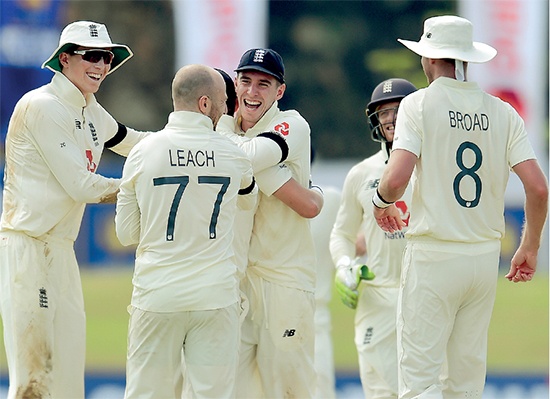
What’s England doing right in Sri Lanka

Rex Clementine in Galle Fort
There was a time when England barely lasted three days in Galle. The extreme heat, tracks that turned square and skilful spinners brought misery upon successive England teams. But they have found a way to turn the tide. What is England doing right to succeed in Sri Lankan conditions? In the last ten years, England have visited the island on three occasions and have never lost a series.
The easy answer is to say that the Sri Lankan team has lost some big names and the team is in transition. That’s not the truth. When England squared the two match series in 2012, the big three – Kumar Sangakkara, Mahela Jayawardene and T.M. Dilshan – were very much part of the side. So, they must be doing something right to do well here.
To start with England and Wales Cricket Board initiated a programme whereby their young First Class players performed in our domestic cricket. Some of the names that come to mind are Ben Foakes (Colts CC) and Moeen Ali (Badureliya CC). There were many others. The experience these players gain by playing on our surfaces against some good spinners is invaluable.
Foakes for example made his Test debut in the last series in Sri Lanka and he looked pretty comfortable. He went onto top batting charts scoring 277 runs. His wicket keeping was flawless too and he was named Player of the Series.
How many of our players have gone onto represent county cricket in the last ten years?
The other important thing is that England’s development squads are constantly touring sub-continent. This prepares them well when they engage in Test match cricket. Sri Lanka rarely sends their ‘A’ team on overseas assignments these days. We had a former board president who went on record saying that ‘A’ team cricket was a futile exercise as they didn’t bring any money!
The other thing that England have done well is to plan properly. Last year when they were here, they spent more than two weeks before the first Test match and they were involved in two warm-up games. The tour was aborted after the outbreak of the pandemic. This time too, they spent nearly two weeks in Sri Lanka before the opening Test match although they didn’t have the luxury of warm-up games against local sides due to health restrictions.
Sri Lanka’s planning has been extremely poor. The gap between the LPL final and the first Test in South Africa was ten days. That sums up the story. In both Tests against South Africa and the first game against England, our batsmen have been in T-20 mode and we have had little momentum. When will we learn?





by Rex Clementine
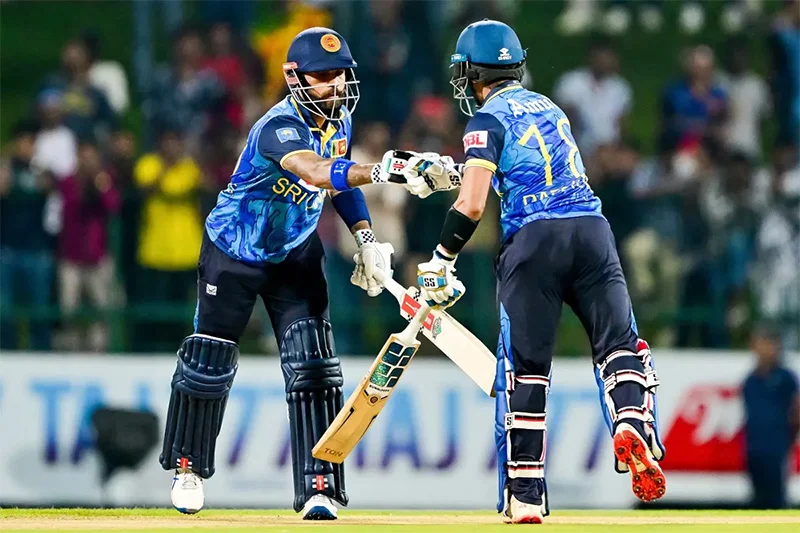
Prolific batsman Pathum Nissanka and white-ball captain Kusal Mendis are back in the fold after being named in Sri Lanka’s ODI and T20 squads for the six-match tour of England later this month.
Both Mendis and Nissanka missed the recent Test series against India through injury. Nissanka was recovering from wrist surgery, while Mendis suffered a hamstring injury during the LPL. It was the first major injury setback for the wicketkeeper batter, who has been a fixture in the Sri Lankan side for more than a decade.
Interestingly, Charith Asalanka has returned to the leadership group as vice-captain. Asalanka was stripped of the captaincy in both white ball formats earlier this year and subsequently fell out of favour with the selectors. His elevation suggests that the experiment of grooming Kamindu Mendis as the all-format vice-captain has, for the moment at least, been shelved.
There are, however, a few concerns heading into the tour. Kusal Mendis and Dushmantha Chameera have not featured in the ongoing domestic tournament, leaving them short of competitive cricket. Chameera’s lack of preparation will be particularly concerning given the fast bowler’s lengthy history of injuries. Pathum Nissanka did turn up for NCC though during this week’s T-20 competition but didn’t make an impact.
The inclusion of 28-year-old leg-spinner Sachindu Colombage in the ODI squad has also raised a few eyebrows.
While Sri Lanka’s T20 game remains a work in progress, their ODI fortunes have taken a significant turn for the better. The side has found consistency and made rapid strides, underlined by automatic qualification for next year’s World Cup in South Africa. It is a marked contrast to the build-up to the 2023 edition, when Sri Lanka were forced to travel to Zimbabwe and negotiate the qualifying tournament to earn their place at the World Cup.
Sri Lanka will begin the tour with the T20 series, with Southampton hosting the opener on September 15. The teams then travel to Cardiff and Manchester before the ODI leg gets underway at Chester-le-Street. Headingley will stage the second ODI, with the tour concluding at The Oval.
The Sri Lankan squad will leave for London on Saturday, September 5, giving them ten days to prepare for the six-match white-ball assignment.
ODI squad: Pathum Nissanka, Kamil Mishara, Kamindu Mendis, Charith Asalanka (vice-captain), Kusal Mendis (captain), Janith Liyanage, Pavan Rathnayake, Dasun Shanaka, Wanindu Hasaranga, Dunith Wellalage, Maheesh Theekshana, Sachindu Colombage, Dushmantha Chameera, Eshan Malinga, Asitha Fernando and Dilshan Madushanka.
T20 squad: Pathum Nissanka, Kamil Mishara, Lahiru Udara, Kusal Mendis (captain), Kamindu Mendis, Charith Asalanka (vice-captain), Janith Liyanage, Dasun Shanaka, Dunith Wellalage, Wanindu Hasaranga, Maheesh Theekshana, Tharindu Rathnayake, Dushmantha Chameera, Eshan Malinga, Nuwan Thushara and Binura Fernando.
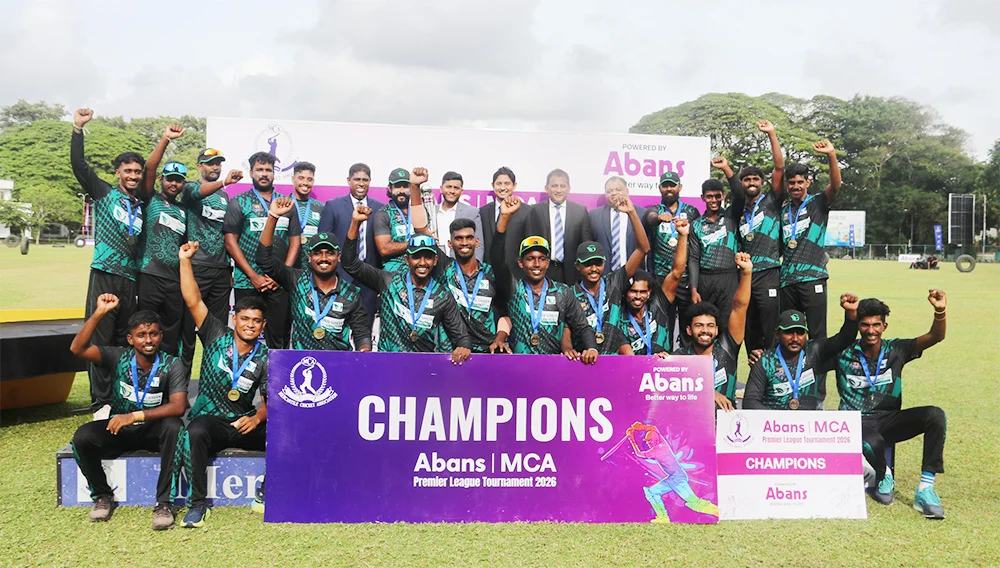
MCA – ABANS PREMIER LEAGUE 2026
A skipper’s innings of 70 runs off 89 balls by T M Sampath and a four fer by Hesham Madushanaka and two wickets by Upul Hettiarachchi helped new comers to the MCA cricket arena Golden Green Plantations defeat David Pieris Group of Companies by four wickets in the final of the MCA-Abans Premier League 2026 and become the first winners of the ‘Abans Challenge Trophy’.
Electing to bat first David Pieris Group of Companies were restricted to 147 runs in 39.3 overs. Santhush Gunathilake who opened innings topped the score card with a fluent 53 off 50 balls with seven fours and a six. Asitha Wanninayake chipped in with 31 off 59 balls. Heshan Madushanka captured four wickets for 11 runs.
Chasing 148 to win, skipper T M Sampath scored 70 runs off 89 balls with seven boundaries and two sixes before being stumped off the bowling of Dilanka Auwardt, with score on 122/5. Shammu Ashan and Mohamed Shamaz shared a 25 run partnership to equal the scores at 147/6 and Shammu Ashan scored the winning runs with a four.
The Golden Green Plantation Team led by T M Samapth comprised, Heshn Madushanka, Malith Mihiranga, Mohamed Shamaz, Randika Mihiranga, Upul Httiarachchi, Dhanuja Induwara, Gimadu Malkam, Sammu Ashan , Vikum Sanjaya and Johan Pathirana
With only four teams entering the prestigious MCA Premier Leaguethis year, DFCC Bank secured third spot having a slightly better run rate over Nawaloka Hospitals and were unlucky that the opportunity for securing a spot in the final was washed away as qualifier 2 was abandoned on two consuecutive days due to rain.
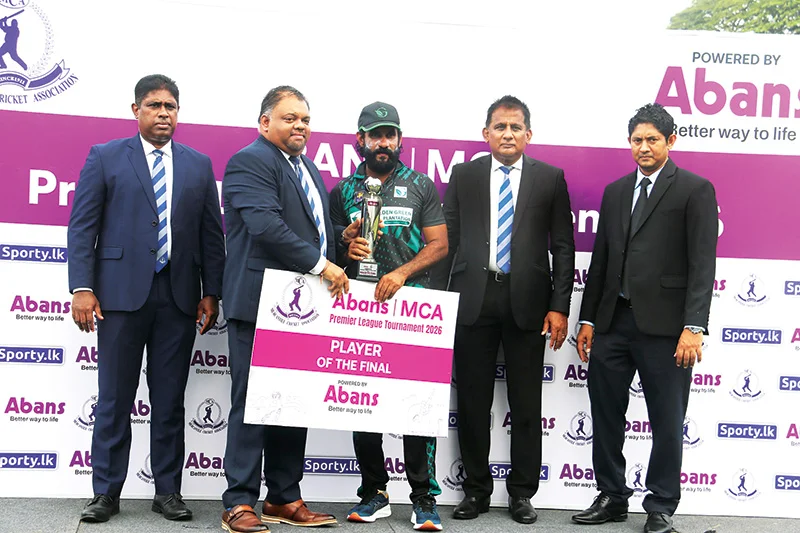
Player of the Final T M Sampath of Golden Green Plantations receives his trophy from Sajith Athapaththu Chairman of the MCA Social, Bar and Restaurant Committee
Special Awards:
Best fielder of the Final :
Dhanuja Induwara of Golden Green Plantations [3 catches and 1 runout]
Best bowler of the Final:
Heshan Madushanka of Golden Green Plantations [4 wickets for 11 runs]
Best batsman of the Final:
Santhush Gunathilake of David Pieris Group of Companies [53 runs off 50 balls]
Player of the Final ;
T M Sampath of Golden Green Plantations [70 runs and 1 wicket]
Best bowler of the Tournament:
Tharinda Nirmal of David Pieris Group of Companies [13 wickets in 4 innings]
Best batsman of the Tournament:
Pavan Pathiraja of DFCC Bank [267 runs in 4 innings]
Player of the Tournament:
Lahiru Samarakone of David Pieris Group of Companies [239runs and 4 wickets]
Scores:
David Pieris Group of Companies 147/10 in 39.1 overs [SanthushGunathilake 53, Asitha Wanninayake 31; Heshan Madushanka 4-11, Upul Hettiarachchi 2-19]
Golden Green Plantations 151/6 in 30.3 overs [T M Sampath 70; Dilanka Auwardt 2-35]

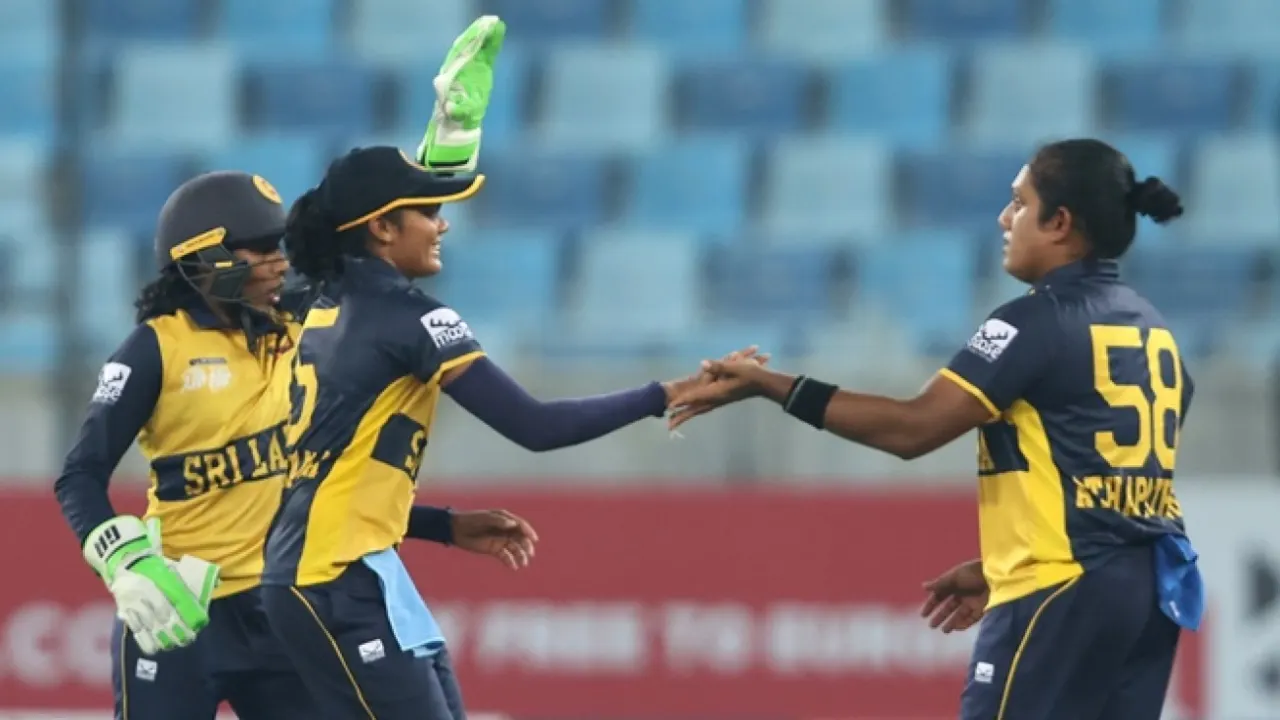
A Chamari Athapaththu seven-wicket haul and Nilakshika Silva’s 50 off 35 saw defending champions Sri Lanka withstand a valiant Indonesian side to register a resounding 75-run victory in their Asia Cup match in Dubai.
Athapaththu was undoubtedly the pick of the bowlers, as she started and finished Indonesia’s slide with career best figures of 7 for 05, inclusive of a hat-trick – nearly two in fact. Chasing a target of 125, the opening pair of Maria Corazon and Rahmawati Pangestuti struck 16 runs in the first two overs, but once spin came into play scoring slowed down to a trickle and Indonesia were eventually bowled out for 49 in the 19th over.
Sri Lanka, too, had found it tough to combat Indonesia’s mix of spin and slow-medium seamers as they stumbled to 62 for 6 in the 13th over, but their innings received a timely boost as Nilakshika countered with a trademark back-against-the-wall effort to drag her side to a total that seemed about par on a pretty sluggish surface. In the end it proved to be plenty.
Sri Lanka struggle early on
Having been put in to bat on a fresh surface, Sri Lanka were perhaps guilty of a little complacency against their less-fancied opponents. Time and again the top order sought to find the boundary, and time and again they failed to find their timing.
On a wicket where the ball was hardly coming on, the Sri Lankan batters’ tunnel vision focused squarely on boundary hitting and eschewed strike rotation; there were 19 dot balls in a powerplay that had fetched 31 runs for the loss of two wickets.
By the halfway point of the innings, the dot count had risen to 28. The scorecard, meanwhile, read 47 for 5. Indonesia, to their credit, did well to bowl to their fields and frustrate the Lankan batters.
Sanjana Kavindi got to double-digits with a pair of nicely struck boundaries, but she was the only one of Sri Lanka’s top five to do so – and she was eventually done in on 15 missing an attempted cut on a straight one.
Nilakshika brings the Silva-lining
With recognised batting fast running out, Sri Lanka needed someone to take control of the innings, and as she has done so often over recent years it was Nilakshika that stood up to be counted.
She first strung together 17 off 18 with Kaushini Nuthyangana, but when Nuthyangana fell Nilakshika produced a masterclass in batting with the tail. She cajoled Kawya Kavindi to keep rotating the strike, and when the opportunity arose she was unerring in finding the boundaries – including Sri Lanka’s first and only six of the innings in the penultimate over.
Their seventh-wicket partnership eventually ended on 50 off 36, reached simultaneously alongside side Nilakshika’s fifty – her third in T20Is – but by then she had already ushered her side to safety.
Athapaththu steals the show
In Chethana Vimukthi, Sri Lanka might have their first ever genuine fast bowler but on a wicket where the ball was not quite coming on, pace never seemed like the answer. For the first two overs of the chase, Indonesia’s openers did well to find boundaries against Vimukthi and and fellow seamer Kawya, but then Sri Lanka introduced their spinners.
Athapaththu promptly castled Pangestuti before removing Corazon and Rada Rani off consecutive deliveries in her next over. Here she missed her hat-trick by a whisker, a yorker narrowly missing Desi Wulandari’s off stump.
She brought herself back into the attack in the 14th and removed Nanda Sakarini, and she capped things off by achieving her hat-trick at the second time of asking, taking three wickets off what proved to be the final three deliveries of the innings.
Scores:
Sri Lanka Women 124 for 7 in 20 overs (Sanjana Kavindi 15, Nilakshika Silva 50, Kawya Kavindi 15*; Ni Ariani 1-23, Sang Maypriani 2-15, Ni Luh Dewi 3-32, Sofia Velic 1-21) beat Indonesia Women 49 all out in 18.3 overs (Rahmawati Pangestudi 10, Ni Made Putri Suwandevi 12; Kavya Kavindi 1-14, Sugandika Kumari 1-03, Chamari Athapaththu 7-05, Kavisha Dilhari 1-02) by 75 runs
[Cricinfo]

22A: SC urged to suspend hearing, appoint full bench

Govt. seeks NATO assistance

Recent ‘Ice’ detection at the Colombo Port made on US intelligence – Embassy

Sri Lanka launches National Food Safety Policy with support from FAO and EU

Mendis, Nissanka return for England white ball series

Janashakthi Life delivers 36% revenue growth, ‘outperforming the industry’

‘Dates have the highest sugar content to fight Coronavirus’

Sunday Island 27 December – Headlines

#SundayIsland 17th December – Headlines

Sunday Island – 28th March

Sunday Island Headlines – 21 March

Sunday Island – 21st February – Headlines
-

 News6 days ago
Eight politicians in drug kingpin probe
-

 Features4 days ago
“Wrap Me Up in My Blazer”— A Gentlemanly Bradby Reminiscence
-

 Business6 days ago
Sri Lanka opens up: A new season of direct connectivity
-

 Features3 days ago
When Sri Lankan stories find their own voice
-

 Latest News7 days ago
Nepal-Tibet floods: What happened, what caused them and who is missing?
-

 Features6 days ago
Redefining ageing in Sri Lanka
-

 Editorial6 days ago
The toxic legacy of two lakes
-

 Business6 days ago
Jaffna Teaching Hospital secures lifeline water supply via ADB-funded Thalaiyadi sea water desalination plant