
Features
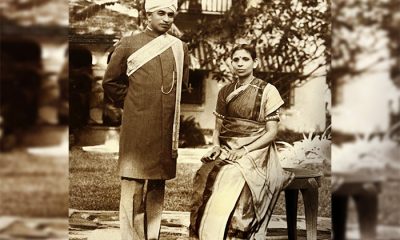
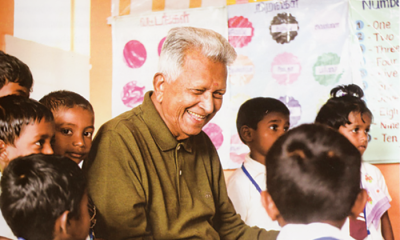
Sir Waitialingam Duraiswamy


Extracted From All Experience: Essays and reflections by Sam Wijesinha, 2001.
The State Council created under the Donoughmore Constitution had its first meeting on July 7th, 1931. It ran its full term and was dissolved on December 7th, 1935.The elections to the Second State Council were concluded on March 7th, 1936. Of the fifty seats for which nominations were received seven returned uncontested members, viz.
Bandaranaike Mr.SWRD for Veyangoda
Corea Mr.GCS for Chilaw
Duraiswamy Mr.Waitialingam for Kayts
Freeman Mr.HR for Anuradhapura
Jayatilaka Sir DB for Kelaniya
Kotalawela Col JL for Kurunagala
Senanayake Mr DS for Minuvangoda
On March 17th at the first meeting of the Council three persons were nominated for the post of Speaker. On the first ballot the result was:
Mr. Waitialingam Duraiswamy 27 votes
Mr. Francis de Zoysa KC. 17 votes
Mr. Charles Batuwantudawa. 14 votes
The third candidate was eliminated, and there was another ballot between the first two which resulted in:
Mr. Waitialingam Duraiswamy 29 votes
Mr. Francis de Zoysa KC 29 votes
Since both had equal votes there had to be a third ballot on which finally a Speaker was chosen:
Mr. Waitialingam Duraiswamy 30 votes
Mr. Francis de Zoysa KC 28 votes
So Mr. Duraiswamy, the Member for Kayts, was elected Speaker. It was a remarkable tribute that, in a Legislature of 39 Sinhalese and 19 others, a Tamil from Jaffna was elected to this prestigious post. Of the other six members who were uncontested, five were elected Ministers. The sixth Mr. Freeman, the former British Civil Servant who was elected the member from Anuradhapura, remained a back bencher.
Who was this remarkable member from Jaffna who defeated Francis de Zoysa, one of the foremost statesmen of this country, an eminently distinguished lawyer, a King’s Counsel and President if the Ceylon National Congress in 1925-26?
Sir Waitialingam Duraiswamy (he was knighted in 1936 was born in Velanai, an island on the west of the Jaffna peninsula, on June 8th, 1874. He was a son of Ayampillai Waitialingam who had spent some time in Malaya. Young Duraiswamy had his education at Jaffna College, Vaddukoddai where he excelled both in studies and in sports. Following the Jaffna tradition of seeking education whatever the difficulties, he was then sent across to India and joined Presidency College in Calcutta University. In 1897 he graduated with double honors in Mathematics and Science. He had the distinction of studying under Professor PC Roy and Jagdish Chandra Bose.
Returning to Ceylon, he joins the Colombo Law College and was admitted as an Advocate in 1902. He worked in the chambers HJC Pereira KC, who was later President of the Ceylon National Congress. HJC, as he was popularly known was not only a leading lawyer, but also a fighter for fair play and freedom. He exhorted workers to unite, which led in due course to the formation of Trade Unions. Young Duraiswamy this certainly had a great opportunity to obtain a good, all-round training in Pereira’s chambers.
Due to family responsibilities he returned to Jaffna and left behind his association with HJC, thereby abandoning the prospect of a successful career in Colombo. He set up his legal practice in Jaffna and in 1905, as an eligible young lawyer, married Rasamma, the daughter of Mudaliyar Sittampalam Sathasivam.
Whilst immersed in his advancing professional practice, he began his public life as a Founder member and Secretary of the Jaffna Association which, like the Ceylon National Congress, worked for the political advancement towards independence by democratic means. He was also a member of the Liberal party, led at that time by Sir James Pieris. In addition, he was joint Founder and Secretary of the Hindu Board of Education, which was responsible for establishing a series of schools. He was on the governing body of Jaffna Hindu College and the President of the Jaffna Paripalana Sabha, which was responsible for the publication of two newspapers.
For the next two decades he made steady progress in the profession to become the leader of the Jaffna Bar and to be appointed Crown Advocate, always the most coveted position in the field in Ceylon at that period. With his diverse interests in religious affairs, educational development and social service he was well recognized, warmly respected and deeply appreciated by the public of Jaffna.
By Ordinance No 13 of 1910, in terms of what are known as the McCallum reforms, a small semblance of the principle of representation through election was recognized for membership of the Legislative Council. One member was therefore elected in 1912 for the Educated Ceylonese Electorate of about 3,000 voters. One is very limited Educational franchise. Ponnambalam Ramanathan who had been in the Council from 1879 to 1892 as an Unofficial Nominated Member, was the choice of the electors. But agitation against the niggardliness of the concession, carried on for the next 10 years, resulted in the elective principle being extended by the Order-in-Council of 1920. This provided for election to 11 territorial and five non-territorial seats. Each of the provinces was to elect one member on a limited income franchise, with the much more largely populated Western Province being allocated three seats.
With his professional standing and his record of service to the public, Advocate Waitialingam Duraiswamy became the obvious choice to represent the Northern Province. He was the only Hindu elected to the Legislative Council of 1921 and was unopposed. Sir Henry Kotalawela (knighted in 1947), elected to represent the Uva Province was the only Buddhist. All the other nine territorially elected members, including Advocate ER Tambimuttu who represented the Eastern Province were Christians.
Sir Ponnambalam Ramanathan who was elected by the people both in 1912 and 1917 was knighted and nominated by the Governor as an Unofficial Member of the Legislative Council in 1921. It was claimed by NE Weerasooria in his book Ceylon and her People that ‘The distinction conferred on Sir Ponnambalam Ramanathan was the precursor of his secession from the Ceylon National Congress.
’ However, disappointment at the manner in which Sinhalese politicians insisted on taking all the elected seats in the Western Province as well as those for special groups (such as the Low Country Products Association, which had a voting membership of just 11) also doubtless contributed.
In 1922 Sir Waitialingam successfully moved a motion in the Council for prohibition on the basis of local options, which resulted in all taverns and foreign liquor shops being abolished in the Jaffna District. The option, it should be noted, was not exercised elsewhere and prohibition in the South seems to occur only through impositions on specific occasions.
It was at this time that the recommendations of the Salaries Commission for increases were included in the budget for 1923-24, a contravention of a promise given by Sir Andrew Caldecott, the Colonial Secretary. The Unofficial Elected Members recorded a protest and eventually all 11 of them walked out of the Council. They resigned but were re-elected unopposed. Sir Waitialingam was one of the leaders of this protest which was organized by Sir James Peiris.
In 1923 the communal tensions that had been simmering for a couple of years came into the open with the question of a Memorandum about Minorities which had been ‘sent secretly’ to the Secretary of State for the Colonies, the Rt Hon Winston Churchill, with a view to thwarting the grant of responsible Government and recommending a return to communal representation. The Colonial Secretary refused to table a copy of this ‘Secret Memorial.’ But the Ceylon Daily News published a scoop about it which created a sensation.
At a public meeting in honor of Governor Manning at Jaffna, the genesis of the ‘Secret Memorial’ was revealed. Sir Ambalavanar Kanagasabai (Nominated Unofficial Member) said, ‘It was Sir William Manning who obtained for the Tamils the preferential treatment and concession as outlined in the draft.’ The Governor in reply paid a fulsome compliment to Sir Ponnambalam Ramanathan for what it was suggested for assistance rendered in drafting these proposals.
Reflecting on these events, I feel today what Prof. KM de Silva so elegantly expressed when he wrote, “The Sinhalese Leaders of the Ceylon National Congress allowed themselves to be embroiled in a needless conflict. It was on an intrinsically unimportant issue – that reserved seat for the Tamils in the Western Province. A timely concession generously made would have removed it from the arena of political controversy.
” This big mistake on a small matter eventually cost us the friendship and the benevolence of two of the most outstanding men produced in 152 years of British rule. Ponnambalam Ramanathan and Ponnambalam Arunachalam, to both of whom so much is due from so many in our land. But this unwillingness to yield gracefully from a position of strength, so that concessions have to be exhorted with ever increasing suspicion, seems to be part of a congenital incapacity that continues to destroy the country.”
It should be noted however that the two elected Tamil members from the Northern and Eastern Provinces – Waitialingam Duraiswamy and ER Tambimuttu rejected the “Secret Memorial.” Duraiswamy indeed went on record saying, “I cannot understand how age and experience could have been guilty of such egregious blunders; this is all the work of our old men. If they cannot lead in the right way they lead in the wrong way, but they always lead, that is their one and only ambition.”
Meanwhile he was again elected uncontested to the enlarged new Legislative Council of 1924 to represent the Northern Province (Western Division). Tambimuttu was also re-elected to represent the Batticaloa District of the Eastern Province. During this period Duraiswamy was the architect of the Conference held in 1925 at Mahendra, his home in Jaffna, at which the delegates of the Ceylon National Congress led by Mr. CE Corea and the Ceylon Maha Jana Sabha led by himself discussed further reforms. Incidently Mahendra was the home graced by the visits of Mahatma Gandhi and Rajagopalachari in 1927 and in 1931 by Jawaharlal and Kamala Nehru and their daughter Indira.
During this time Duraiswamy was a member of the Akbar Committee of the Legislative Council which opted for establishing the Ceylon University in the Kandy District. Regrettably he remains, I believe, the only outstanding member of that Committee not recognized by a tangible memorial on the Peradeniya Campus.
In 1928 as the President of the Jaffna Association he gave evidence before the Donoughmore Commission and pressed for self-government. This was accepted but, together with many others in the Legislative Council at that time, he was not entirely happy with the Donoughmore Commission’s recommendations. At the debate in the Council in 1929 on the proposal that they be brought into operation, he was in opposition, and subsequently led the Jaffna boycott of the 1931 elections to the newly created State Council.
In a speech at Jaffna in 1931 Sir Waitialingam repudiated the suggestion that the boycott was for communal reasons. He went on to say, “We are not weak to depend on such sectional ideas, we are able to think for the good of the whole of Ceylon. Never did I think of communalism when I advocated reforms for the Island. We Tamils always worked for the good of the whole country, making no difference between race and race. Our safety lies in the safety of the Sinhalese, our freedom lies in the freedom of the Sinhalese, our progress in constitutional reforms depends on the co-operation of the Sinhalese. The policy of “Divide and Rule” shall not make us great. Therefore, let me once again assure the people of Ceylon that we are acting on behalf of the whole of Ceylon, and not from sectional motive.”
Jaffna abandoned the boycott and came back into the mainstream of national politics in 1934 when elections were held for the four seats in the district. On this occasion Duraiswamy did not contest. Kayts therefore was won by Mr. Nevin Selvadurai. In 1936 however, in the general elections to the Second State Council, he was as noted above elected uncontested to the Kayts constituency.
I have tried briefly in these paragraphs to answer the questions I proposed at the beginning as to who this remarkable gentleman was who came from Jaffna to defeat Francis de Zoysa for the post of Speaker. His election to this post was a demonstration of the unbounded popularity, and the high esteem in which he was held by all sections of the country. He was a gentleman of a genial disposition with a ready smile, full of kind thoughts, kind words, and kind deeds. Blessed by nature with a graceful appearance, he had dignity in his deportment and the gift of a sharp intellect. Impartiality and fairness came to him naturally,
On his election as Speaker, Sir Baron Jayatilaka, the Leader of the House and Minister of Home Affairs, congratulating him said, “You can bring to bear on the questions that will come up a trained and disciplined mind and long experience, not only as a prominent member of the legal profession, but also as a member of the Old Legislative Council for over 10 years.
Jayatilaka and Duraiswamy were born in the third quarter of the last century, both were graduates of the Calcutta University when such academic qualifications were uncommon, both were professionally experienced lawyers and dedicated educationists with long records of public service. They were interested in their own literature, deeply learned in their respective religions, and highly respected by their own people.
They brought trained and developed minds to bear on the problems of their country without fear or favour. They advanced into parliamentary politics with the ripe experience of their chosen disciplines and the mature mellowness of their age. Both faced three elections, and both were returned three times without contest. Both had a serenity that reflected contentment.
In concluding his response to Jayatilaka, Duraiswamy said, “When the time comes for me to lay down the authority with which you have clothed me, I will do so conscious of having done our best, to help forward the progress of Ceylon.” That authority he was entrusted with in 1936 he laid down in 1947, having maintained the dignity and safeguarded the privileges of the State Council for an unparalleled 11 years.
He created healthy precedents and built-up honorable traditions. He sometimes quoted from Ramayana and the Mahabharata, the Thirukkural and the Bhagavad Gita to defend the rights of backbenchers and protect those of the less influential members of the House. He was able to direct, guide and inspire the most difficult raw material to handle – the young enthusiastic legislators of the State Council.
At this point it may not be irrelevant to mention that Duraiswamy was an outstanding athlete in his day and continued to maintain his healthy mind in a healthy body. He was the Founder member of the Tamil Union and its President for several years. I still remember a picture in a newspaper that showed him as Speaker bowling to the Governor Sir Andrew Caldecott, with Minister DS Senanayake behind the stumps.
When he laid down his office there was not one person in the State Council who had a single word against him. He was an exemplary Speaker by any standard, totally free from sectarianism and deeply devoted to the ideal of a Ceylonese nation. As he wished on the day he was elected, so he downed his authority, having done his best to help forward the progress of Ceylon. The never-failing springs of his constant strength were the fundamental principles of his deep faith and the unbroken traditions of his ancient culture. Truly then it might be said of him that, ‘he was a man not for an age, but for all time.’








During a discussion at the Regional Center for Strategic Studies (RCSS) in Sri Lanka on 9 December, Dr. Neil DeVotta, Professor at Wake Forest University, North Carolina, USA commented on the “gravity of a geopolitical contest that has already reshaped global politics and will continue to mould the future. For Sri Lanka – positioned at the heart of the Indian Ocean, economically fragile, and diplomatically exposed- his analysis was neither distant nor abstract. It was a warning of the world taking shape around us” (Ceylon Today, December 14, 2025).
Sri Lanka is known for ignoring warnings as it did with the recent cyclone or security lapses in the past that resulted in terrorist attacks. Professor De Votta’s warning too would most likely be ignored considering the unshakable adherence to Non-Alignment held by past and present experts who have walked the halls of the Foreign Ministry, notwithstanding the global reshaping taking place around us almost daily. In contrast, Professor DeVotta “argued that nonalignment is largely a historical notion. Few countries today are truly non-aligned. Most States claiming neutrality are in practice economically or militarily dependent on one of the great powers. Sri Lanka provides a clear example while it pursues the rhetoric of non-alignment, its reliance on Chinese investments for infrastructure projects has effectively been aligned to Beijing. Non-alignment today is more about perceptions than reality. He stressed that smaller nations must carefully manage perceptions while negotiating real strategic dependencies to maintain flexibility in an increasingly polarised world.” (Ibid).
The latest twist to non-alignment is Balancing. Advocates of such policies are under the delusion that the parties who are being “Balanced” are not perceptive enough to realise that what is going on in reality is that they are being used. Furthermore, if as Professor DeVotta says, it is “more about perception than reality”, would not Balancing strain friendly relationships by its hypocrisy? Instead, the hope for a country like Sri Lanka whose significance of its Strategic Location outweighs its size and uniqueness, is to demonstrate by its acts and deeds that Sri Lanka is perceived globally as being Neutral without partiality to any major powers if it is to maintain its autonomy and ensure its security.
DECLARATION OF NEUTRALITY AS A POLICY
Neutrality as a Foreign Policy was first publicly announced by President Gotabaya Rajapaksa during his acceptance speech in the holy city of Anuradhapura and later during his inauguration of the 8th Parliament on January 3, 2020. Since then Sri Lanka’s Political Establishment has accepted Neutrality as its Foreign Policy judging from statements made by former President Ranil Wickremesinghe, Prime Minister Dinesh Gunawardena and Foreign Ministers up to the present when President Dissanayake declared during his maiden speech at the UN General Assembly and captured by the Head Line of Daily Mirror of October 1, 2025: “AKD’s neutral, not nonaligned, stance at UNGA”
The front page of the Daily FT (Oct.9, 2024) carries a report titled “Sri Lanka reaffirms neutral diplomacy” The report states: “The Cabinet Spokesman and Foreign Minister Vijitha Herath yesterday assured that Sri Lanka maintains balanced diplomatic relations with all countries, reaffirming its policy of friends of all and enemy of none”. Quoting the Foreign Minister, the report states: “There is no favouritism. We do not consider any country to be special. Whether it is big or small, Sri Lanka maintains diplomatic relations with all countries – China, India, the US, Russia, Cuba, or Vietnam. We have no bias in our approach, he said…”
NEUTRALITY in OPERATION
“Those who are unaware of the full scope and dynamics of the Foreign Policy of Neutrality perceive it as being too weak and lacking in substance to serve the interests of Sri Lanka. In contrast, those who are ardent advocates of Non-Alignment do not realize that its concepts are a collection of principles formulated and adopted only by a group of like-minded States to meet perceived challenges in the context of a bi-polar world. In the absence of such a world order the principles formulated have lost their relevance” (https://island.lk/relevance-of-a neutral-foreign-policy).
“On the other hand, ICRC Publication on Neutrality is recognized Internationally “The sources of the international law of neutrality are customary international law and, for certain questions, international treaties, in particular the Paris Declaration of 1856, the 1907 Hague Convention No. V respecting the Rights and Duties of Neutral Powers and Persons in Case of War on Land, the 1907 Hague Convention No. XIII concerning the Rights and Duties of Neutral Powers in Naval War, the four 1949 Geneva Conventions and Additional Protocol I of 1977 (June 2022)” (Ibid).
“A few Key issues addressed in this Publication are: “THE PRINCIPLE OF INVOILABILITY of a Neutral State and THE DUTIES OF NEUTRAL STATES.
“In the process of reaffirming the concept of Neutrality, Foreign Minister Vijitha Herath stated that the Policy of Neutrality would operate in practice in the following manner: “There is no favoritism. We do not consider any country to be special. Whether it is big or small, Sri Lanka maintains diplomatic relations with all countries – China, India, the US, Russia, Cuba or Vietnam. We have no bias in our approach” (The Daily FT, Oct, 9, 2024).
“Essential features of Neutrality, such as inviolability of territory and to be free of the hegemony of power blocks were conveyed by former Foreign Minister Ali Sabry at a forum in Singapore when he stated: “We have always been clear that we are not interested in being an ally of any of these camps. We will be an independent country and work with everyone, but there are conditions. Our land and sea will not be used to threaten anyone else’s security concerns. We will not allow military bases to be built here. We will not be a pawn in their game. We do not want geopolitical games playing out in our neighbourhood, and affecting us. We are very interested in de-escalating tensions. What we could do is have strategic autonomy, negotiate with everyone as sovereign equals, strategically use completion to our advantage” (the daily morning, July 17, 2024)
In addition to the concepts and expectations of a Neutral State cited above, “the Principle of Inviolability of territory and formal position taken by a State as an integral part of ‘Principles and Duties of a Neutral State’ which is not participating in an armed conflict or which does not want to become involved” enabled Sri Lanka not to get involved in the recent Military exchanges between India and Pakistan.
However, there is a strong possibility for the US–China Rivalry to manifest itself engulfing India as well regarding resources in Sri Lanka’s Exclusive Economic Zone. While China has already made attempts to conduct research activities in and around Sri Lanka, objections raised by India have caused Sri Lanka to adopt measures to curtail Chinese activities presumably for the present. The report that the US and India are interested in conducting hydrographic surveys is bound to revive Chinese interests. In the light of such developments it is best that Sri Lanka conveys well in advance that its Policy of Neutrality requires Sri Lanka to prevent Exploration or Exploitation within its Exclusive Economic Zone under the principle of the Inviolability of territory by any country.
Another sphere where Sri Lanka’s Policy of Neutrality would be compromised is associated with Infrastructure Development. Such developments are invariably associated with unsolicited offers such as the reported $3.5 Billion offer for a 200,000 Barrels a day Refinery at Hambantota. Such a Project would fortify its presence at Hambantota as part of its Belt and Road Initiative. Such offers if entertained would prompt other Global Powers to submit similar proposals for other locations. Permitting such developments on grounds of “Balancing” would encourage rivalry and seriously threaten Sri Lanka’s independence to exercise its autonomy over its national interests.
What Sri Lanka should explore instead, is to adopt a fresh approach to develop the Infrastructure it needs. This is to first identify the Infrastructure projects it needs, then formulate its broad scope and then call for Expressions of Interest globally and Finance it with Part of the Remittances that Sri Lanka receives annually from its own citizens. In fact, considering the unabated debt that Sri Lanka is in, it is time that Sri Lanka sets up a Development Fund specifically to implement Infrastructure Projects by syphoning part of the Foreign Remittances it receives annually from its citizens . Such an approach means that it would enable Sri Lanka to exercise its autonomy free of debt.
CONCLUSION
The adherents of Non-Alignment as Sri Lanka’s Foreign Policy would not have been pleased to hear Dr. DeVotta argue that “non-alignment is largely a historical notion” during his presentation at the Regional Center for Strategic Studies in Colombo. What is encouraging though is that, despite such “historical notions”, the political establishment, starting with President Gotabaya Rajapaksa and other Presidents, Prime Ministers and Ministers of Foreign Affairs extending up to President AKD at the UNGA and Foreign Affairs Minister, Vijitha Herath, have accepted and endorsed neutrality as its foreign policy. However, this lack of congruence between the experts, some of whom are associated with Government institutions, and the Political Establishment, is detrimental to Sri Lanka’s interests.
If as Professor DeVotta warns, the future Global Order would be fashioned by US – China Rivalry, Sri Lanka has to prepare itself if it is not to become a victim of this escalating Rivalry. Since this Rivalry would engulf India a well when it comes to Sri Lanka’s Exclusive Economic Zone (EEC), Sri Lanka should declare well in advance that no Exploration or Exploitation would be permitted within its EEC on the principle of inviolability of territory under provisions of Neutrality and the UN adoption of the Indian Ocean as a Zone of Peace.
As a measure of preparedness serious consideration should be given to the recommendation cited above which is to set up a development fund by allocating part of the annual dollar remittances to finance Sri Lanka’s development without depending on foreign direct investments, export-driven strategies or the need to be flexible to negotiate dependencies; A strategy that is in keeping with Sri Lanka’s civilisational values of self-reliance. Judging from the unprecedented devastation recently experienced by Sri Lanka due to lack of preparedness and unheeded warnings, the lesson for the political establishment is to rely on the wisdom and relevance of Self-Reliance to equip Sri Lanka to face the consequences of the US–China rivalry.
by Neville Ladduwahetty ✍️

A project sponsored by Perera and Sons (P&S) Company and built by Sri Lanka Navy
Petroleum Terminals Ltd
Former Managing Director Ceylon Petroleum Corporation
Former High Commissioner to Pakistan
When the 1132nd RO plant built by the Navy with funds generously provided by M/S Perera and Sons, Sri Lanka’s iconic, century-old bakery and food service chain, established in 1902, known for its network of outlets, numbering 235, in Sri Lanka. This company, established in 1902 by Philanthropist K. A. Charles Perera, well known for their efforts to help the needy and humble people. Helping people gain access to drinking water is a project launched with the help of this esteemed company.

The opening of an RO plant
The Chronic Kidney Disease (CKD) started spreading like a wildfire mainly in North Central, North Western and Eastern provinces. Medical experts are of the view that the main cause of the disease is the use of unsafe water for drinking and cooking. The map shows how the CKD is spreading in Sri Lanka.

School where 1132nd RO plants established by SLN
In 2015, when I was the Commander of the Navy, with our Research and Development Unit of SLN led by a brilliant Marine Engineer who with his expertise and innovative skills brought LTTE Sea Tigers Wing to their knees. The famous remote-controlled explosive-laden Arrow boats to fight LTTE SEA TIGER SUCIDE BOATS menace was his innovation!). Then Captain MCP Dissanayake (2015), came up with the idea of manufacturing low- cost Reverse Osmosis Water Purification Plants. The SLN Research and development team manufactured those plants at a cost of one-tenth of an imported plant.

The writer with his PSO’s daughter

Gaurawa Sasthrawedi Panditha Venerable Devahuwe Wimaladhamma TheroP/Saraswathi Devi Primary School, Ashokarama Maha Viharaya, Navanagara, Medirigiriya
The Navy established FIRST such plant at Kadawatha-Rambawa in Madawachiya Divisional Secretariat area, where the CKD patients were the highest. The Plant was opened on 09 December 2015, on the 65th Anniversary of SLN. It was an extremely proud achievement by SLN

Areas where the RO plants are located
First, the plants were sponsored by officers and sailors of the Sri Lanka Navy, from a Social Responsibility Fund established, with officers and sailors contributing Rs 30 each from their salaries every month. This money Rs 30 X 50,000 Naval personnel provided us sufficient funds to build one plant every month.
Observing great work done by SLN, then President Maithripala Sirisena established a Presidential Task Force on eradicating CKD and funding was no issue to the SLN. We developed a factory line at our R and D unit at Welisara and established RO plants at double-quick time. Various companies/ organisations and individuals also funded the project. Project has been on for the last ten years under six Navy Commanders after me, namely Admiral Travis Sinniah, Admiral Sirimevan Ranasinghe, Admiral Piyal de Silva, Admiral Nishantha Ulugetenna, Admiral Priyantha Perera and present Navy Commander Vice Admiral Kanchana Banagoda.
Each plant is capable of producing up to 10,000 litres of clean drinking water a day. This means a staggering 11.32 million litres of clean drinking water every day!
The map indicates the locations of these 1132 plants.
Well done, Navy!
On the occasion of its 75th Anniversary celebrations, which fell on 09 December 2025, the Navy received the biggest honour. Venerable Thero (Venerable Dewahuwe Wimalarathana Thero, Principal of Saraswathi Devi Primary Pirivena in Medirigiriya) who delivered the sermons during opening of 1132nd RO plant, said, “Ten years ago, out of 100 funerals I attended; more than 80 were of those who died of CKD! Today, thanks to the RO plants established by the Navy, including one at my temple also, hardly any death happens in our village due to CKD! Could there be a greater honour?

 The Universities Act is back in the news – this time with the present government’s attempt to reform it through a proposed amendment (November 2025) presented by the Minister of Education, Higher Education and Vocational Education, Harini Amarasuriya, who herself is a former academic and trade unionist. The first reading of the proposed amendment has already taken place with little debate and without much attention either from the public or the university community. By all counts, the parliament and powers across political divisions seem nonchalant about the relative silence in which this amendment is making its way through the process, indicative of how low higher education has fallen among its stakeholders.
The Universities Act No. 16 of 1978 under which Sri Lankan universities are managed has generated debate, though not always loud, ever since its empowerment. Increasing politicisation of decision making in and about universities due to the deterioration of the conduct of the University Grants Commission (UGC) has been a central concern of those within the university system and without. This politicisation has been particularly acute in recent decades either as a direct result of some of the provisions in the Universities Act or the problematic interpretation of these. There has never been any doubt that the Act needs serious reform – if not a complete overhaul – to make universities more open, reflective, and productive spaces while also becoming the conscience of the nation rather than timid wastelands typified by the state of some universities and some programs.
But given the Minister’s background in what is often called progressive politics in Sri Lanka, why are many colleagues in the university system, including her own former colleagues and friends, so agitated by the present proposed amendment? The anxiety expressed by academics stem from two sources. The first concern is the presentation of the proposed amendment to parliament with no prior consultative process with academics or representative bodies on its content, and the possible urgency with which it will get pushed through parliament (if a second reading takes place as per the regular procedure) in the midst of a national crisis. The second is the content itself.
Appointment of Deans
Let me take the second point first. When it comes to the selection of deans, the existing Act states that a dean will be selected from among a faculty’s own who are heads of department. The provision was crafted this way based on the logic that a serving head of department would have administrative experience and connections that would help run a faculty in an efficient manner. Irrespective of how this worked in practice, the idea behind has merit.
By contrast, the proposed amendment suggests that a dean will be elected by the faculty from among its senior professors, professors, associate professors and senior lecturers (Grade I). In other words, a person no longer needs to be a head of department to be considered for election as a dean. While in a sense, this marks a more democratised approach to the selection, it also allows people lacking in experience to be elected by manoeuvring the electoral process within faculties.
In the existing Act, this appointment is made by the vice chancellor once a dean is elected by a given faculty. In the proposed amendment, this responsibility will shift to the university’s governing council. In the existing Act, if a dean is indisposed for a number of reasons, the vice chancellor can appoint an existing head of department to act for the necessary period of time, following on the logic outlined earlier. The new amendment would empower the vice chancellor to appoint another senior professor, professor, associate professor or senior lecturer (Grade I) from the concerned faculty in an acting capacity. Again, this appears to be a positive development.
Appointing Heads of Department
Under the current Act heads of department have been appointed from among professors, associate professors, senior lecturers or lecturers appointed by the Council upon the recommendation of the vice chancellor. The proposed amendment states the head of department should be a senior professor appointed by the Council upon the recommendation of the vice chancellor, and in the absence of a senior professor, other members of the department are to be considered. In the proposed scheme, a head of department can be removed by the Council. According to the existing Act, an acting head of department appointment can be made by the vice chancellor, while the proposed amendment shifts this responsibility to the Council, based upon the recommendation of the vice chancellor.
The amendment further states that no person should be appointed as the head of the same department for more than one term unless all other eligible people have already completed their responsibilities as heads of department. This is actually a positive development given that some individuals have managed to hang on to the head of department post for years, thereby depriving opportunities to other competent colleagues to serve in the post.
Process of amending the Universities Act
The question is, if some of the contents of the proposed amendment are positive developments, as they appear to be, why are academics anxious about its passing in parliament? This brings me to my first point, that is the way in which this amendment is being rushed through by the government. This has been clearly articulated by the Arts Faculty Teachers Association of University of Colombo. In a letter to the Minister of Education dated 9 December 2025, the Association makes two points, which have merit. First, “the bill has been drafted and tabled in Parliament for first reading without a consultative process with academics in state universities, who are this bill’s main stakeholders. We note that while the academic community may agree with its contents, the process is flawed because it is undemocratic and not transparent. There has not been adequate time for deliberation and discussion of details that may make the amendment stronger, especially in the face of the disaster situation of the country.”
Second, “AFTA’s membership also questions the urgency with which the bill is tabled in Parliament, and the subsequent unethical conduct of the UGC in requesting the postponement of dean selections and heads of department appointments in state universities in expectation of the bill’s passing in Parliament.”
These are serious concerns. No one would question the fact that the Universities Act needs to be amended. However, this must necessarily be based on a comprehensive review process. The haste to change only sections pertaining to the selection of deans and heads of department is strange, to say the least, and that too in the midst of dealing with the worst natural calamity the country has faced in living memory. To compound matters, the process also has been fast-tracked thereby compromising on the time made available to academics to make their views be known.
Similarly, the issuing of a letter by the UGC freezing all appointments of deans and heads of department, even though elections and other formalities have been carried out, is a telling instance of the government’s problematic haste and patently undemocratic process. Notably, this action comes from a government whose members, including the Education Minister herself, have stood steadfastly for sensible university reforms, before coming to power. The present process is manoeuvred in such a manner, that the proposed amendment would soon become law in the way the government requires, including all future appointments being made under this new law. Hence, the attempt to halt appointments, which were already in the pipeline, in the interim period.
It is evident that rather than undertake serious university sector reforms, the government is aiming to control universities and thereby their further politicization amenable to the present dispensation. The ostensible democratis0…..ation of the qualified pool of applicants for deanships opens up the possibilities for people lacking experience, but are proximate to the present powers that be, to hold influential positions within the university. The transfer of appointing powers to the Councils indicates the same trend. After all, Councils are partly made up of outsiders to the university, and such individuals, without exception, are political appointees. The likelihood of them adhering to the interests of the government would be very similar to the manner in which some vice chancellors appointed by the President of the country feel obligated to act.
All things considered, particularly the rushed and non-transparent process adopted thus far by the government does not show sincerity towards genuine and much needed university sector reforms. By contrast, it shows a crude intent to control universities at any cost. It is extremely regrettable that the universities in general have not taken a more proactive and principled position towards the content and the process of the proposed amendment. As I have said many times before, whatever ills that have befallen universities so far is the disastrous fallout of compromises of those within made for personal gain and greed, or the abject silence and disinterest of those within. These culprits have abandoned broader institutional development. This appears to be yet another instance of that sad process.
In this context, I have admiration for my former colleagues in the Faculty of Arts at the University of Colombo for having the ethical courage to indicate clearly the fault lines of the proposed amendment and the problems of its process. What they have asked is a postponement of the process giving them time to engage. In this context, it is indeed disappointing to see the needlessly conciliatory tone of the letter to the Education Minister by the Federation of University Teachers Association dated December 5, 2025, which sends the wrong signal.
If this government still believes it is a people’s government, the least it can do is give these academics time to engage with the proposed amendment. After all, many within the academic community helped bring the government to power. If not and if this amendment is rushed through parliament in needless haste, it will create a precedent that signals the way in which the government intends to do business in the future, abusing its parliamentary majority and denting its credibility for good.

IMF Executive Board approves US$206 Million in Emergency Financial Support for Sri Lanka

Navy clears major bridge obstructions in Peradeniya and Lewella

Landslide early warnings issued to the districts of Badulla, Kandy, Kurunegala, Matale and Nuwara-Eliya extended till 8AM on Sunday (21)

Trump says US launched large-scale attacks on ISIL in Syria

Showers will occur in the Eastern, Western, Sabaragamuwa, Southern, Uva and Central provinces and in Polonnaruwa district

PM says govt. will introduce a new Constitution to abolish executive presidency

‘Dates have the highest sugar content to fight Coronavirus’

Sunday Island 27 December – Headlines

#SundayIsland 17th December – Headlines

Sunday Island – 28th March

Sunday Island Headlines – 21 March

Sunday Island – 21st February – Headlines
-

 Midweek Review4 days ago
How massive Akuregoda defence complex was built with proceeds from sale of Galle Face land to Shangri-La
-

 Features7 days ago
Why Sri Lanka Still Has No Doppler Radar – and Who Should Be Held Accountable
-

 News3 days ago
Pakistan hands over 200 tonnes of humanitarian aid to Lanka
-
 News3 days ago
Pope fires broadside: ‘The Holy See won’t be a silent bystander to the grave disparities, injustices, and fundamental human rights violations’
-
 Latest News7 days ago
Landslide early warnings in force in the Districts of Badulla, Kandy, Kegalle, Kurunegala, Matale, Nuwara Eliya and Ratnapura
-
 News4 days ago
Burnt elephant dies after delayed rescue; activists demand arrests
-
 Features7 days ago
Srima Dissanayake runs for president and I get sidelined in the UNP
-

 Editorial7 days ago
Disaster relief and shocking allegations