
Midweek Review
How massive Akuregoda defence complex was built with proceeds from sale of Galle Face land to Shangri-La


The Navy ceremonially occupied its new Headquarters (Block No. 3) at the Defence Headquarters Complex (DHQC) at Akuregoda, Battaramulla, on 09 December, 2025. On the invitation of the Commander of the Navy, Vice Admiral Kanchana Banagoda, the Deputy Minister of Defence, Major General Aruna Jayasekara (Retd) attended the event as the Chief Guest.
Among those present were Admiral of the Fleet Wasantha Karannagoda, the Defence Secretary, Air Vice Marshal Sampath Thuyacontha (Retd), Commander of the Army, Lieutenant General Lasantha Rodrigo, Commander of the Air Force, Air Marshal Bandu Edirisinghe, Inspector General of Police, Attorney-at-Law Priyantha Weerasooriya and former Navy Commanders.
With the relocation of the Navy at DHQC, the much-valued project to shift the Ministry of Defence (MoD) and Headquarters of the war-winning armed forces has been brought to a successful conclusion. The Army was the first to move in (November 2019), the MoD (May 2021), the Air Force (January 2024) and finally the Navy (in December 2025).
It would be pertinent to mention that the shifting of MoD to DHQC coincided with the 12th anniversary of bringing back the entire Northern and Eastern Provinces under the government, on 18 May, 2009. LTTE leader Velupillai Prabhakaran was killed on the following day.
The project that was launched in March 2011, two years after the eradication of the Liberation Tigers of Tamil Eelam (LTTE), suffered a severe setback, following the change of government in 2015. The utterly irresponsible and treacherous Yahapalana government halted the project. That administration transferred funds, allocated for it, to the Treasury, in the wake of massive Treasury bond scams perpetrated in February and March 2015, within weeks after the presidential election.
Maithripala Sirisena, in his capacity as the President, as well as the Minister of Defence, declared open the new Army Headquarters, at DHQC, a week before the 2019 presidential election. Built at a cost of Rs 53.3 bn, DHQC is widely believed to be the largest single construction project in the country. At the time of the relocation of the Army, the then Lt. Gen. Shavendra Silva, the former Commanding Officer of the celebrated Task Force I/58 Division, served as the Commander.
Who made the DHQC a reality? Although most government departments, ministries and armed forces headquarters, were located in Colombo, under the Colombo Master Plan of 1979, all were required to be moved to Sri Jayewardenepura, Kotte. However successive administrations couldn’t go ahead with the massive task primarily due to the conflict. DHQC would never have been a reality if not for wartime Defence Secretary Gotabaya Rajapaksa who determinedly pursued the high-profile project.
The absence of any reference to the origins of the project, as well as the significant role played by Gotabaya Rajapaksa at the just relocated Navy headquarters, prompted the writer to examine the developments related to the DHQC. The shifting of MoD, along with the Armed Forces Headquarters, was a monumental decision taken by Mahinda Rajapaksas’s government. But, all along it had been Gotabaya Rajapaksa’s determination to achieve that monumental task that displeased some within the administration, but the then Defence Secretary, a former frontline combat officer of the battle proved Gajaba Regiment, was not the type to back down or alter his strategy.
GR’s maiden official visit to DHQC
Gotabaya Rajapaksa, who made DHQC a reality, visited the sprawling building in his capacity as the President, Defence Minister and the Commander-in-Chief of the Armed Forces on the morning of 03 August, 2021. It was Gotabaya Rajapaksa’s maiden official visit to the Army Headquarters, located within the then partially completed DHQC, eight months before the eruption of the externally backed ‘Aragalaya.’ The US-Indian joint project has been exposed and post-Aragalaya developments cannot be examined without taking into consideration the role played by political parties, the Bar Association of Sri Lanka, media, as well as the weak response of the political leadership and the armed forces. Let me stress that a comprehensive probe should cover the period beginning with the Swiss project to humiliate President Gotabaya Rajapaka in November, 2019, by staging a fake abduction, and the storming of the President’s House in July 2022. How could Sri Lanka forget the despicable Swiss allegation of sexual harassment of a female local employee by government personnel, a claim proved to be a blatant lie meant to cause embarrassment to the newly elected administration..
Let me get back to the DHQC project. The war-winning Mahinda Rajapaksa government laid the foundation for the building project on 11 May, 2011, two years after Sri Lanka’s triumph over the separatist Tamil terrorist movement. The high-profile project, on a 77-acre land, at Akuregoda, Pelawatta, was meant to bring the Army, Navy, and the Air Force headquarters, and the Defence Ministry, to one location.
President Gotabaya Rajapaksa’s visit to Akuregoda would have definitely taken place much earlier, under a very different environment, if not for the eruption of the Covid-19 pandemic, just a few months after his victory at the November 2019 election. The worst post-World War II crisis that had caused devastating losses to national economies, the world over, and delivered a staggering blow to Sri Lanka, heavily dependent on tourism, garment exports and remittances by its expatriate workers.
On his arrival at the new Army headquarters, President Gotabaya Rajapaksa was welcomed by General Shavendra Silva, who also served as the Chief of Defence Staff. Thanks to the President’s predecessor, Maithripala Sirisena, the then Maj. Gen Shavendra Silva was promoted to the rank of Lt. Gen and appointed the Commander of the Army on 18 August, 2019, just three months before the presidential poll. The appointment was made in spite of strong opposition from the UNP leadership and US criticism.
President Gotabaya Rajapaksa hadn’t minced his words when he publicly acknowledged the catastrophe caused by the plunging of the national income and the daunting challenge in debt repayment, amounting to as much as USD 4 bn annually.
The decision to shift the tri-forces headquarters and the Defence Ministry (The Defence Ministry situated within the Army Headquarters premises) caused a media furor with the then Opposition UNP alleging a massive rip-off. Defence Secretary Gotabaya Rajapaksa reiterated his commitment to the project. If not for the change of government in 2015, the DHQC would have been completed during Mahinda Rajapaksa’s third term if he was allowed to contest for a third term successfully. Had that happened, Gotabaya Rajapaksa wouldn’t have emerged as the then Opposition presidential candidate at the 2019 poll. The disastrous Yahapalana administration and the overall deterioration of all political parties, represented in Parliament, and the 19th A that barred Mahinda Rajapaksa from contesting the presidential election, beyond his two terms, created an environment conducive for Gotabaya Rajapaksa’s emergence as the newly registered SLPP’s candidate.
Shangri-La move
During the 2019 presidential election campaign, SLPP candidate Gotabaya Rajapaksa strongly defended his decision to vacate the Army Headquarters, during Mahinda Rajapaksa presidency, to pave the way for the Shangri-La Hotel in Colombo. Shangri-La was among the hotels targeted by the Easter Sunday bombers – the only location targeted by two of them, including mastermind Zahran Hashim.
President Gotabaya Rajapaksa is on record as having said that vacation of the site had been in accordance with first executive President J.R. Jayewardene’s decision to move key government buildings away from Colombo to the new Capital of the country at Sri Jaywardenepura. Gotabaya Rajapaksa said so in response to the writer’s queries years ago.
Gotabaya Rajapaksa said that a despicable attempt was being made to blame him for the Army Headquarters land transaction. “I have been accused of selling the Army Headquarters land to the Chinese.”
Rajapaksa explained that Taj Samudra, too, had been built on a section of the former Army Headquarters land, previously used to accommodate officers’ quarters and the Army rugger grounds. Although President Jayewardene had wanted the Army Headquarters shifted, successive governments couldn’t do that due to the war and lack of funds, he said.
President Maithripala Sirisena and Prime Minister Ranil Wickremesinghe declared open Shangri-La Colombo on 16 November, 2017. The Hong Kong-based Shangri-La Asia invited Gotabaya Rajapaksa for dinner, the following day, after the opening of its Colombo hotel. Shangri-La Chairperson, Kuok Hui Kwong, the daughter of Robert Kuok Khoon Ean, was there to welcome Gotabaya Rajapaksa, who had cleared the way for the post-war mega tourism investment project. Among those who had been invited were former President Mahinda Rajapaksa, former External Affairs Minister Prof. G.L. Peiris, former Presidential Secretary Lalith Weeratunga, and President’s Counsel Gamini Marapana, PC.
The Cabinet granted approval for the high-profile Shangri-La project in October 2010 and the ground-breaking ceremony was held in late February 2012.
Rajapaksa said that the Shangri-La proprietor, a Chinese, ran a big operation, based in Hong Kong, Malaysia and Singapore. Another parcel of land was given to the mega ITC hotel project, also during the previous Rajapaksa administration. ITC Ratnadipa, a super-luxury hotel by India’s ITC Hotels, officially opened in Colombo on April 25, 2024
Following the change of government in January 2015, the remaining section of the Army headquarters land, too, was handed over to Shangri-La.
Gotabaya Rajapaksa emphasised that the relocation of the headquarters of the Army, Navy, and Air Force, as well as the Defence Ministry, had been part of JRJ’s overall plan. The change of government, in January 2015, had caused a serious delay in completing the project and it was proceeding at a snail’s pace, Rajapaksa said. Even Parliament was shifted to Kotte in accordance with JRJ’s overall plan, Gotabaya Rajapaksa said, explaining his move to relocate all security forces’ headquarters and Defence Ministry into one complex at Akuregoda.
Acknowledging that the Army Headquarters had been there at Galle Face for six decades, Rajapaksa asserted that the Colombo headquarters wasn’t tactically positioned.
Rajapaksa blamed the inordinate delay in the completion of the Akuregoda complex on the Treasury taking hold of specific funds allocated for the project.
Over 5,000 military workforce

Gotabaya Rajapaksa’s maiden visit to DHQC on 3 August, 2021. General
Shavendra Silva is beside him
Major General Udaya Nanayakkara had been the first Director, Project Management Unit, with overall command of approximately 5,000 tri-forces personnel assigned to carry it out. The Shangri-La transaction provided the wherewithal to implement the DHQC project though the change of government caused a major setback. Nanayakkara, who had served as the Military Spokesman, during Eelam War IV, oversaw the military deployment, whereas private contractors handled specialised work such as piling, AC, fire protection and fire detection et al. The then MLO (Military Liaison Officer) at the Defence Ministry, Maj. Gen Palitha Fernando, had laid the foundation for the project and the work was going on smoothly when the Yahapalana administration withheld funds. Political intervention delayed the project and by September 2015, Nanayakkara was replaced by Maj Gen Mahinda Ambanpola, of the Engineer Service.
In spite of President Sirisena holding the Defence portfolio, he couldn’t prevent the top UNP leadership from interfering in the DHQC project. However, the Shangri-La project had the backing of A.J.M. Muzammil, the then UNP Mayor and one of the close confidants of UNP leader Ranil Wickremesinghe. Muzammil was among those present at the ground breaking ceremony for Shangri-La held on 24th February, 2012 ,with the participation of Minister Basil Rajapaksa.
Having identified the invaluable land, where the Army Headquarters and Defence Ministry were situated, for its project, Shangri-La made its move. Those who had been aware of Shangri-La’s plans were hesitant and certainly not confident of their success. They felt fearful of Defence Secretary Rajapaksa’s reaction.
But, following swift negotiations, they finalised the agreement on 28 December, 2010. Lt. Gen. Jagath Jayasuriya was the then Commander of the Army, with his predecessor General Fonseka in government custody after having been arrested within two weeks after the conclusion of the 2010 26 January Presidential poll.
Addressing the annual Viyathmaga Convention at Golden Rose Hotel, Boralesgamuwa, on 04 March, 2017, Gotabaya Rajapaksa, perhaps for the first time publicly discussed his role in the Shangri-La project. Declaring that Sri Lanka suffered for want of, what he called, a workable formula to achieve post-war development objectives, the war veteran stressed the pivotal importance of swift and bold decision-making.
Gotabaya Rajapaksa explained how the government had acted swiftly, and decisively, to attract foreign investments though some such efforts were not successful. There couldn’t be a better example than the government finalising an agreement with Shangri-La Hotels, he declared.
Declaring that the bureaucratic red tape shouldn’t in any way be allowed to undermine investments, Rajapaksa recalled the Chairman/CEO of Shangri-La Hotels and Resorts, Robert Kuok Khoon Ean, wanting the Army Headquarters land for his Colombo project. In fact, the hotels chain, at the time, had proposed to build hotels in Colombo, Hambantota and Batticaloa, and was one of the key investors wanting to exploit Sri Lanka’s success in defeating terrorism.
“Khoon-Ean’s request for the Army Headquarters land caused a serious problem for me. It was a serious challenge. How could I shift the headquarters of the war-winning Army? The Army had been there for six decades. It had been the nerve centre of the war effort for 30 years,” said Rajapaksa, who once commanded the First Battalion of the Gajaba Regiment (1GR)
Rajapaksa went on to explain how he exploited a decision taken by the first executive president J.R. Jayewardene to shift the Army Headquarters to Battaramulla, many years back. “Within two weeks, in consultation with the Secretary to the Finance Ministry, Dr. P.B. Jayasundera, and the Board of Investment, measures were taken to finalise the transaction. The project was launched to shift the Army, Navy and Air Force headquarters to Akuregoda, Pelawatte, in accordance with JRJ’s plan.”
The Hong Kong-based group announced the purchase of 10 acres of state land, in January 2011. Shangri-La Asia Limited announced plans to invest over USD 400 mn on the 30-storeyed star class hotel with 661 rooms.
The hotel is the second property in Sri Lanka for the leading Asian hospitality group, joining Shangri-La’s Hambantota Resort & Spa, which opened in June 2016.
Rajapaksa said that the top Shangri-La executive had referred to the finalisation of their Colombo agreement to highlight the friendly way the then administration handled the investment. Shangri-La had no qualms about recommending Sri Lanka as a place for investment, Rajapaksa said.
The writer explained the move to shift the Army Headquarters and the Defence Ministry from Colombo in a lead story headlined ‘Shangri-La to push MoD, Army Hq. out of Colombo city: Army Hospital expected to be converted into a museum’ (The Island, 04 January, 2011).
Yahapalana chaos
In the wake of the January 2015 change of government, the new leadership caused chaos with the suspension of the China-funded Port City Project, a little distance away from the Shangri-La venture. Many an eyebrow was raised when the then Finance Minister Ravi Karunanayake declared, in March, 2015, that funds wouldn’t be made available to the DHQC project until the exact cost estimation of the project could be clarified.
Media quoted Karunanayake as having said “Presently, this project seems like a bottomless pit and we need to know the depth of what we are getting into. From the current state of finances, allocated for this project, it seems as if they are building a complex that’s even bigger than the Pentagon!”
The insinuating declaration was made despite them having committed the blatant first Treasury bond scam in February 2015 that shook the Sirisena-Wickremesinghe administration to its core.
In June 2016, Cabinet spokesperson, Dr. Rajitha Senaratne, announced the suspension of the Akuregoda project. Citing financial irregularities and mismanagement of funds, Dr. Senaratne alleged that all Cabinet papers on the project had been prepared according to the whims and fancies of Gotabaya Rajapaksa.
The then Minister Karunanayake spearheaded the campaign against the DHQC project alleging, in the third week of January, 2015, that Rs 13.2 billion, in an account maintained at the Taprobane branch of the Bank of Ceylon had been transferred to the Consolidated Fund of the Treasury. The matter was being investigated as the account belonged to the Ministry of Defence, he added. The Finance Minister stressed that the MoD had no right to maintain such an account in violation of regulations and, therefore, the opening of the account was being investigated. The Minister alleged that several illegal transactions, including one involving Samurdhi, had come to light. He estimated the Samurdhi transaction (now under investigation) at Rs. 4 billion.
Having undermined Shangri-La and the DHQC projects, the UNP facilitated the expansion of the hotel project by releasing additional three and half acres on a 99-year lease. During the Yahapalana administration, Dayasiri Jayasekera disclosed at a post-Cabinet press briefing how the government leased three and a half acres of land at a rate of Rs. 13.1 mn per perch whereas the previous administration agreed to Rs 6.5 mn per perch. According to Jayasekera the previous government had leased 10 acres at a rate of Rs 9.5 mn (with taxes) per perch.
The bottom line is that DHQC was built with Shangri-La funds and the initiative was Gotabaya Rajapaksa’s whose role as rock solid wartime Secretary of Defence to keep security forces supplied with whatever their requirements could never be compared with any other official during the conflict.
By Shamindra Ferdinando

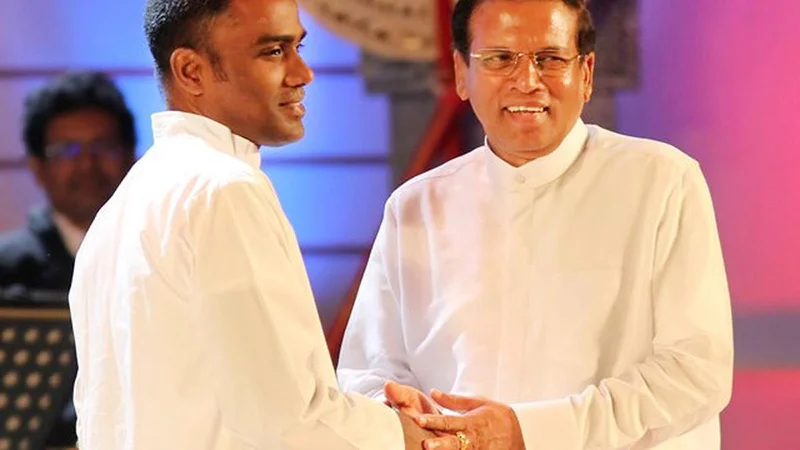
President Mahinda Rajapaksa caused controversy on three occasions, granting presidential pardon once during his first term and twice in his second term. The March 2009 presidential pardon granted to Mary Juliet Monica Fernando, wife of Minister Milroy Fernando, sentenced to death in March 2005 for double murder committed in the early 90s stunned the society. Later, President Rajapaksa released two convicted Indian women narcotics offenders and five Indian heroin smuggling fishermen. The release of fishermen took place following a telephone call received from newly installed Indian PM Narendra Modi, in late Nov., 2014.
By Shamindra Ferdinando
The controversial appointment of General Secretary of the Bodu Bala Sena (BBS) Ven. Galagodaaththe Gnanasara Thera as the Chairman of the Presidential Task Force for One Country, One Law on 26 October, 2021, drew widespread condemnation.
The 13-member Task Force was tasked to prepare a report on the implementation of the much touted ‘One Country, One Law’ concept. President Gotabaya Rajapaksa disregarded strong disapproval expressed by the educated society in general against Ven. Gnanasara’s appointment though it may have received the backing of those with a Buddhist label, who are in the majority. President Rajapaksa conveniently failed to take into consideration that Ven. Gnanasara had been the recipient of a controversial presidential pardon on 23 May, 2019, from President Sirisena.
At the time Ven. Gnanasara received presidential pardon, he was serving a six-year term of rigorous imprisonment for contempt of court over his conduct at the Homagama Magistrate’s Court on 25 January, 2016, during hearings regarding media personality Prageeth Ekneligoda. The disappearance of Ekneligoda, on the eve of the 2010 January 26 presidential election, remains an unsolved case for law enforcers.
The monk’s verbal attack on Sandhya, wife of media personality Prageeth Ekneligoda, at the Homagama Magistrate’s Court, was considered as aligning with members of the Directorate of Military Intelligence (DM) accused of being responsible for the media personality’s disappearance. So, what made President Rajapaksa make Ven. Gnanasara Chairman of a Task Force that dealt with the law of the country?
Senior Assistant Secretary to the President, Jeevanthie Senanayake, served as the Secretary to the Task Force.
By the time the Task Force handed over its final report—consisting of eight chapters and 43 recommendations—to President Gotabaya Rajapaksa, on June 29, 2022, the Sri Lanka Podujana Peramuna (SLPP/Pohottuwa party) administration was in tatters. India and the US backed the clandestine violent political movement (Aragalaya) that brought the government down to its knees and the utterly divided Pohottuwa party simply couldn’t tackle the developing situation.
Like the Romesh de Silva, PC, report on the new Constitution, commissioned by President Rajapaksa and received during Aragalaya, Ven. Gnanasara’s report never received the attention of the government. By then, the Pohottuwa party had given up hope in tackling the challenge posed by Aragalaya, hence the decision to elect UNP leader Ranil Wickremesinghe as President Gotabaya Rajapaksa’s successor, for the duration of what remained of the latter’s presidential term.
The ongoing controversy over disrobing of Ven. Gnanasara has to be discussed, taking into consideration the post-war political context in which the BBS was formed by Ven Gnanasara and Ven Kirama Wimalajothi, in early May, 2012, and the developments surrounding that organisation. Those who aligned with the BBS once served the interests of the Jathika Hela Urumaya (JHU) is not a secret. Ven. Gnanasara, who unsuccessfully contested the Colombo District, on the JHU ticket, at the 2004 parliamentary polls, achieved unprecedented political clout as the BBS rapidly expanded in the 2012-2013 period. Gnanasara had the backing of war-winning President Mahinda Rajapaksa’s government. The government allowed the BBS to go ahead with its strategy. Having held its first national convention, in late July, 2012, at the BMICH, Baudhaloka Mawatha, it called a protest outside the Bangladesh High Commission, in Colombo, in October, 2012, against what it called anti-Buddhist riots in that country.
Obviously, both the SLFP-led UPFA and the UNP felt they could take advantage of the BBS for their gain. Against the backdrop of the developments over the 2012-2021 period, the appointment of Ven. Gnanasara as the Chairman of the Presidential Task Force for One Country, One Law raised quite a number of eyebrows. How could a person who benefited as a direct intervention of President Sirisena, by way of an utterly controversial and unacceptable presidential pardon, was placed at the top of a Task Force that dealt with laws of the country?
A despicable practice
The executive unashamedly abused presidential pardons. Gotabaya Rajapaksa was no exception. In the run-up to Ven. Gnanasara’s appointment as head of ‘One Country, One Law’ Task Force, President Rajapaksa pardoned Duminda Silva, who had been imprisoned under a death sentence. That presidential pardon came into effect on 24 June, 2021. The former parliamentarian, who switched his allegiance from the UNP to the UPFA during Mahinda Rajapaksa’s presidency, received a presidential pardon, along with 92 others released to mark the Poson Full Moon Poya day that year.
Though yet to clearly know what happened during a fracas between Duminda Silva and Bharatha Lakshman Premachandra, both obviously under the influence of liquor during the local government election of 2011, in the Kolonnawa area, the former had been shot in the head and rushed to hospital with a bullet having passed right through the middle of his skull and he miraculously survived but as to whether all his faculties have been restored is unknown. He, too, is back in prison with his pardon removed. But what is certain is that in retaliation for shooting Duminda, by Bharatha, after being knocked down by the former during the fracas, Bharatha himself was shot dead by Duminda’s bodyguards soon, thereafter.
Silva was jailed in September 2016 after the Colombo High Court found him, and several others, guilty of the murder of former MP Bharatha Lakshman Premachandra in early October 2011. Three of Premachandra’s bodyguards were also killed in the shootout between two UPFA gangs, led by Premachandra and Silva, a sitting ruling party lawmaker at that time. Premachandra as presidential advisor on trade union matters, operated out of Temple Trees. What many really failed to realise, at that time, was that the shootout occurred between two groups of Rajapaksa loyalists and both parties received government patronage at the highest level. In spite of the police knowing armed groups were roaming, while voting on the local government election was underway, they did nothing, for obvious reasons.
Although presidential pardons granted to those convicted of minor offences, to coincide with Vesak, Poson, Christmas and the national Independence Day, cannot be challenged, the despicable practice of high profile convicts receiving privilege status undermined the rule of law. That is the undeniable truth as is the practice in the USA. Presidents and, in some instances, top prisons department management conspired to release high profile convicts by categorising them with ordinary prisoners.
Let me remind you of the shocking revelation of one such instance, less than a year after Anura Kumara Dissanayake won the presidency. The Cabinet of Ministers that met under the leadership of Dissanayake suspended Commissioner General of Prisons, Thushara Upuldeniya, in June last year, after the media revealed convicted financial fraudster Athula Thilakaratne was clandestinely included among 400 minor offenders released to mark Poson Full Moon Poya day.
Thilakaratne cannot be the first to secure his release in such a covert way. The Prisons Department must have arranged such secret operations over the years and the Justice Ministry, under successive governments, must have been aware of what was going on. The JVP-led NPP administration is the only regime to act swiftly and decisively when the media exposed the Prisons Department ruse.
But the incumbent government, too, turns a blind eye to serious wrongs committed by its own people or ensures that justice moves at a snail’s pace in such instances as in the case of releasing red flagged containers from the Colombo port, the coal scam, etc., while applying the full weight of available legal avenues against political opponents facing allegations, like the Rajapaksas, or their supporters, without even hearing their cases.
The other controversial presidential pardon, granted by Gotabaya Rajapaksa, happened in late March 2020, less than six months after his election as the President. The former Gajaba Regiment combat officer granted a presidential pardon to former Sri Lanka Army Staff Sergeant Sunil Ratnayaka, convicted for the December 2000 Mirusuvil massacre in Jaffna. The victims included three children. Altogether eight Tamil civilians were massacred. Ratnayaka was sentenced to death in June 2015 by a Colombo High Court Trial-at-Bar bench, a verdict unanimously affirmed by a five-judge bench of the Supreme Court of Sri Lanka in April 2019. But, President Rajapaksa released him. The President’s action drew widespread condemnation with the Geneva-based United Nations Human Rights Council (UNHRC) and Amnesty International leading the protests. Dr. Paikiasothy Saravanamuttu’s Centre for Policy Alternatives (CPA) challenged the President’s action.
Such unilateral action, regardless of the Supreme Court reaffirming the High Court Trial-at-Bar bench ruling, opened the country to international scrutiny. Unfortunately, Gotabaya Rajapaksa’s government simply failed to examine catastrophic repercussions of such ill-conceived decisions. Instead of adhering to the laws of the land, the government caused the rapid deterioration of the system.
Gevindu Cumaratunga, Yuthukama leader and outspoken SLPP National List lawmaker, had been the only member of a 145-person government parliamentary group to oppose Ven. Gnanasara’s appointment. The top SLPP leadership reacted angrily to Cumaratunga’s stand on the BBS chief.
Sirisena’s folly
Just a week before the 16 November, 2019, presidential election, President Sirisena pardoned Jude Shramantha Jayamaha, sentenced to death for the 2005 murder of Swedish teenager Yvonne Jonsson at the Royal Park apartment complex in Rajagiriya.
Sirisena’s irresponsible and contemptible action caused public outrage. The presidential pardon granted to Jayamaha was even worse than the release of Ven. Gnanasara, as the latter was only found guilty of ridiculing Sandya Ekneligoda in a court house, thereby causing contempt of court.
The wholly unnecessary presidential intervention, on behalf of Jude, who is from an affluent background, should have been investigated by the Commission to Investigate Allegations of Bribery or Corruption (CIABOC). What really made Sirisena get involved with the Jayamaha family? Who was the go-between the President and the Jayamahas?
The SLFP leader caused himself immense harm. That mysterious presidential intervention cost him dearly in the eyes of the public.
A three-judge Supreme Court bench comprising Justices S. Thurairaja, Yasantha Kodagoda, and Janak de Silva, in June 2024, ruled that the pardon was arbitrary, unlawful, violated constitutional provisions, and breached the public trust doctrine. But, by then, Jayamaha had vanished, possibly from the country itself and so far government efforts to track him down have failed and he still remains at large. Perhaps, Jayamaha will never be apprehended abroad and brought back. Sirisena owes the country an explanation why he pardoned Jayamaha, just a week before the presidential election.
Interestingly, the SLPP brought Sirisena back to Parliament at the August 2020 general election. In fact, 13 SLFPers were elected on the SLPP ticket and later received recognition as the second largest party in the SLPP coalition. Sirisena not only released Ven. Gnanasara, on 23 May 2019, but invited the controversial Thera to his official residence the following day. Sirisena’s media team believed in taking advantage of the developments. They released a video of the President in conversation with Ven. Gnanasara and the Thera’s mother. Ven. Ulapane Sumangala, now at the forefront of protests in support of Ven. Gnanasara, was also present on that occasion. The presidential pardon granted to Ven. Gnanasara was depicted as Sirisena’s achievement and action taken on behalf of the Buddhists.
Perhaps people have now forgotten that Sirisena publicly alleged that Ven. Athuraliye Rathana relentlessly pushed him to release Jayamaha and was the beneficiary of that deal. Appearing on a private television channel, Sirisena, then an MP representing the SLPP, claimed that those who arranged the release received a massive amount of money. The writer sought Ven. Rathana’s response to Sirisena’s claim. Ven Rathana, at that time the sole lawmaker representing ‘Our Power of People Party’ (OPPP) denied Sirisena’s claim (Presidential pardon for Royal Park murderer: Ven. Rathana denies Sirisena’s accusations, lodges complaint with CID, The Island, 24 June 2022/ https://island.lk/presidential-pardon-for-royal-park-murderer-ven-rathana-denies-sirisenas-accusations-lodges-complaint-with-cid/).
It would be pertinent to mention the battle between Ven. Gnanasara and Ven, Rathana over the sole National List slot received at the 2020 August general election. OPPP suffered dearly when the Election Commission rejected the District nomination lists submitted by the new party. Among the lists rejected was OPPP Kurunegala list which included Ven. Gnanasara. Therefore, he couldn’t contest. But, the OPPP declared that Ven. Gnanasara would be appointed to Parliament through the National List. But, when the party ended up with just one National List, Ven. Rathana, in spite of being rejected by the Gampaha electorate, wanted to be their sole appointed MP. Ven. Rathana secured the seat though the Executive Committee of the party favoured Ven Gnanasara.
The two monks reached consensus on contesting the 2020 general election together as they couldn’t align themselves with major political parties. Obviously, OPPP failed to attract the attention of the majority Sinhala Buddhist community though, by then, the JHU was no longer in politics. Sirisena intervened on behalf of Ven. Gnanasara, in the run up to the 2019 presidential and 2020 parliamentary polls.
For the LTTE’s benefit
President JRJ granted presidential pardon to notorious criminal Sunil Perera, alias Gonawala Sunil, in July, 1981. That despicable act coincided with the 50th anniversary of Sri Lanka receiving universal franchise. The UNPer, who had been convicted of raping a 17-year-old school girl, walked free from the Welikada Prison and, thereafter, to add insult to injury, he received from the same UNP government, an appointment as an All Island Justice of Peace.
The then Education and Youth Affairs and Employment Minister Ranil Wickremesinghe is alleged to have intervened on behalf of Gonawala Sunil. After Chandrika Bandaranaike Kumaratunga brought the UNP’s 17-year-old rule to an end in 1994, as I remember the Justice Ministry issued a statement regarding the presidential pardon granted to politically connected persons. The same list also dealt with the Liberation Tigers of Tamil Eelam (LTTE) members released by Ranasinghe Premadasa during the May 1989 to June 1990 period.
Among those LTTE terrorists was Manohari Daniels convicted for the 1987 November 9 car bomb blast, near the Maradana Railway Station. The deadly blast claimed the lives of nearly 30 people. Over 100 others suffered injuries. The LTTE wanted Premadasa to exercise his executive powers. On the orders of the President, terrorists were released quietly. Daniels, who had been serving a six-year term of RI, returned to Batticaloa.
Premadasa released LTTE terrorists, vacated Army camps, and provided them arms and funds to the tune of Rs 125 mn, during May 1989 to June 1990. Unfortunately, none of those demanding abolition of the executive presidency on the election platform never bothered to examine how successive presidents abused presidential pardon. Sirisena happened to be one of the worst offenders. He played politics with presidential pardon. At the completion of first year in office, on 8 January, 2016, Sirisena pardoned Sivaraja Jenivan, aka Sivarajah Jeneepan, or Mohommadu Sulthan Cader Mohideen, sentenced in 2015 to 10 years rigorous imprisonment by the Polonnaruwa High Court. The Polonnaruwa High Court found Jenivan guilty of planning to trigger a claymore mine attack, targeting Sirisena, in 2005. The ex-terrorist was released at a public ceremony to mark his first year in office. They shook hands on stage.
Sirisena later tweeted a photo of himself on stage with Jenivan, with a caption reading: “Ordered presidential pardon to a prisoner who was serving time for attempting to assassinate me in 2005.”
At the conclusion of the war, in May, 2009, President Mahinda Rajapaksa decided against initiating legal action in respect of approximately 12,000 LTTE cadres. Regardless of their status in the terrorist organisation, the war-winning government allowed all of them to be rehabilitated and released. Whatever the criticism directed at the government over post-war accountability issues, the rehabilitation project, implemented with the backing of the international community, received plaudits from the Tamil community.
Had the government launched investigations into those taken into custody in the closing stages of the war, hundreds would have faced prison terms. Even hardcore terrorists, including LTTE intelligence wing members, and, perhaps, a few suicide cadres, may have escaped punishment. The decision to integrate the entire lot to the society is a gesture that should have earned the gratitude of the Tamil community. Instead, the Illankai Thamil Arasu Kadchi (ITAK), and others who served the LTTE’s despicable interests, wanted to haul Sri Lanka before an international war crimes tribunal.
The Justice and National Integration Ministry should undertake an examination of presidential pardons and set the record straight. Perhaps a lawmaker should seek a written response from the Justice Ministry. Although D.B. Wijetunga had been rarely targeted over abusing presidential pardons, like his predecessors, JRJ and Premadasa, he, too, released two convicts. The three UNP Presidents, during the 1978-1994 period, released altogether 72 high profile convicts.
Ranil Wickremesinghe came to the rescue of Ranjan Ramanayake soon after the conclusion of Aragalaya (March-July 2022). Ramanayake, who had been sentenced to a four-year term of rigorous imprisonment for contempt of court, was released by Wickremesinghe in August 2022.
Ramanayake drew the attention of the judiciary when he declared, outside Temple Trees, in 2017, that the vast majority of judges and lawyers were corrupt and worked for money. Addressing the media, in his capacity as State Minister, Ramanayake said that 95% of judges and lawyers protected murders, corrupt elements and drug dealers. Sri Lanka never really made an attempt to prevent presidents and their henchmen from manipulating the law of the land. The President holds the power to grant a presidential pardon, or clemency, to individuals convicted by courts. Under Article 34, the President can grant a free pardon or a conditional pardon, put off sentences, substitute a lighter punishment, or remit all or part of a sentence or court penalty. The presidential pardon has become a tool in the hands of presidents who acted as if they held eternal power, thereby making a mockery of the law. The continuation of abusing presidential pardon, in a way subvert the rule of law. Such actions erode public confidence in the judiciary and have a detrimental impact on the Attorney General’s Department, as well as law enforcement.
Amidst the decision to introduce new prison regulations for monks serving jail terms, to appease the Maha Sangha, up in arms over producing Ven Gnanasara in court in civilian attire, the government has conveniently failed to declare its position on the presidential pardon. Let the public know of the recommendations made by retired Supreme Court Judge S. Thurairaja, on 10 July, 2026, regarding a systematic, fair, and transparent mechanism for granting presidential pardons in Sri Lanka. Thurairaja proposed the establishment of a clear, structured framework for granting presidential pardons under Article 34(1) of the Constitution, replacing ad-hoc or discretionary decisions. The bottom line is that as long as the executive presidency remains, presidential pardon will be abused as we have experienced over the past few decades.
by Chandre Dharmawardana
chandre.dharma@yahoo.ca
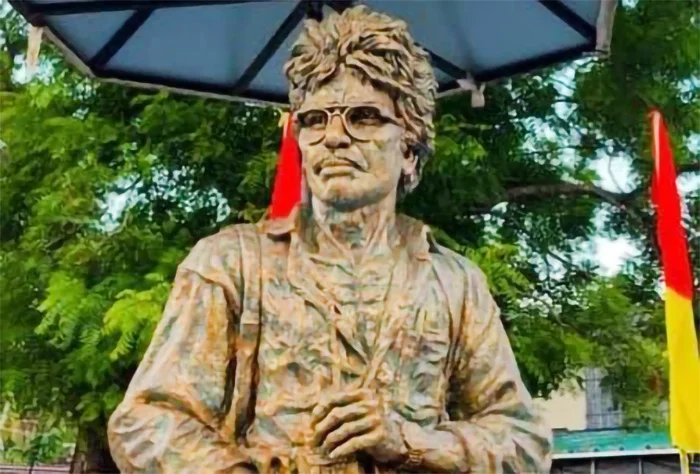
Shamindra Ferdinando, in The Island, 23 September 2026, in an article entitled “Thileepan’s fast unto death: An authentic narrative that many missed” has provided an excellent review of the recent political event associated with the attempt to commemorate Thileepan and install a bronze bust of the LTTE militant. Here I argue that Thileepan was sacrificed by Prabhakaran in 1987 to the war God Murugan. While Shamindra Ferdinando has succinctly analysed the political backdrop to the event, here I attempt to complement his article by delving into the socio-cultural and Hindu ritualistic background to the event.
Vedic texts describe a ritual called Purushamedha (literally “human sacrifice”). In the Shatapatha Brahmana (13.6.2), a vast list of 184 or 185 human “victims”—representing various professions, castes, and character types (e.g., lute players, actors, builders)—are bound to sacrificial posts. However, after hymns are chanted, a voice from heaven is said to instruct that they should not be killed and that they are to be spared. Some scholars, such as Asok Parpola, argue that certain older ritual texts, like the Shankhayana and Vitana Shrauta Sutras, mention details like “suffocation,” indicating that a literal version of the practice existed before the Brahmanas explicitly transitioned into a bloodless, symbolic rite.
Gandhi practised “hunger unto death” fasts as powerful political theatre but strictly observed the principle of Ahimsa (in not taking life). Gandhi’s fast-unto-death events always ended with his heeding to massive national protests for him to end his fast; he would ceremoniously take the glass of orange that ended his fasts. Mainstream political protests usually adopt the traditional Gandhian style (allowing water), whereas those seeking to directly replicate the intense “Thileepan style” of fasting unto death purposefully refuse both food and water to force an immediate crisis.
In the case of Thileepan, the “Thalivaar” fully intended to sacrifice him to the Six-Faced God Sanmukan or Kandasamy prior to direct hostilities against the IPKF.
The militant Tamil Eelamist movements were NOT rooted in Ahimsa but sharply broke away from it, especially after the 1972 Constitution, which hatched a pure mono-ethnic governance structure. Public Tamil separatist figures such as Kasi Anandan demanded the blood of traitors and named them after resigning in 1970 from his job as a translator in the state service to devote his time to propagate an extreme, violent form of Eelamist ideology that launched the ideology of the Tamil Student movement—the “boys” of the TULF.
Prabhakaran’s outfit was the most zealous “Tamil Liberation group” that heeded Kasi Anandan’s calls and began to kill moderate Tamils who backed reconciliation rather than stark separation. Kasi Anandan was a member of the central committee of the LTTE. The extent of Kasi Anandan’s role in the assassination of many distinguished Tamil leaders has never been examined by jurists or by the UNHRC.
Finally, the TULF opened the door for military action in its 1976 resolution at Vaddukoddai, a town whose name even in the 19th century was, ironically, “BataKotte”, i.e., the garrison town (fort = “kotte”) where soldiers (Bhata) were stationed, presumably to fight off Jaffna-based usurpers of local power.
Thileepan (Rasiah Partheepan), the political wing leader of the LTTE staged his 11-day fatal fast in front of the historic Nallur Kandaswamy Temple in Jaffna. Kandasamy (Murugan) is a God of War. By positioning a dying young fighter at the doorstep of Murugan’s most sacred shrine, the protest bypassed conventional political arena dynamics. It repositioned Thileepan’s hunger strike within the tradition of bhakti (sacrificial devotion) and religious martyrdom. Thileepan is an example of a HUMAN SACRIFICE in front of Murgan at the Nallur temple in the well-established tradition of sacrificial devotion entrenched in Hindu orthodoxy that Prabhakaran utilised to great theatrical effect.
In Hindu traditions, concepts of asceticism, self-mortification, and vows (vratams) are deeply understood forms of spiritual penance. The leader of the LTTE, Prabhakaran was highly adept at utilising martial history, local mythology, and symbols to build the cult of the Maaveerar (Great Heroes).
At the time, the Sri Lankan government virtually functioned under the Dicta of the Dixit-led Indian High Commission in Colombo for all matters concerning the LTTE. When the Indian government refused to capitulate and Thileepan passed away on September 26, 1987, the “theatrical” power of his death achieved its strategic goal. It broke any remaining Tamil faith in the Indian intervention, shifted public sympathy entirely to the LTTE, and primed the population for the bloody war against the Indian military that followed shortly after.
It was a political trap that ensnared the Indian effort at finding a reconciled solution; it ensured that the Sri Lankan government would fail to establish the Indo-Lanka agreement, rejected by Tamils and also by a large portion of Sinhalese, for devolution of power to the provinces.
While anthropologists should view the event as an astute manipulation of religious orthodoxy for political theater, Eelam Tamil ideologues view it very differently. To many of them Thileepan is a Thiyaga Theepam (the Light of Sacrifice). They see his fast as an act of absolute ahimsa (non-violence) and an ultimate personal sacrifice made out of genuine love and desperation for his people. In effect, violence is transformed into its opposite under the ideological lens of Eelamism. In the political vocabulary of the region, invoking Thileepan’s style of death means that an activist is signaling to the state that they have completely bypassed the path of negotiation and are fully prepared to die on camera to trigger a public uprising.
So, does the continued commemoration of Thileepan signal that many leading members of the Tamil community are not interested in any resolution short of separation, and even reject the existing 13th amendment framework of provincial councils?
In broad Vedic philosophy non-violence (Ahimsa) is praised, but as in the Brahma Sutras a loophole is left. Violence that is explicitly mandated by Vedic ritual logic is legally and considered purified. Medieval texts (like the Karika Purana) adapted these loopholes to outline instructions for human offerings to the Hindu Goddess Kali and male warrior Gods such as Murugan. The specific section of the Kalika Purana that outlines these rites is known as the Rudhiradhyaya (The Blood Chapter).
All this is presumably viewed as part of the Dharma-Yuddha that even Arjuna invoked. This continued symbolism based ultimately on a military confrontation of the majority is suicidal not just to followers of Thileepana, but to all members of the Tamil community and finally to the majority community as well. As I outlined in my article in The Island on 22 September (entitled, Illusion of Recovery), and as noted by other writers studying demographic trends, the total fertility rate (TFR) of females in Sri Lanka has dropped way below the 2.1 children per woman required to maintain its population at the current levels. Instead, all three populations, namely those of Tamils, Sinhalese and Muslims, are contracting rapidly, having peaked during the 2019-2022 period.
In the Jaffna peninsula, with a high level of female education, the TFR has dropped to 1.2 and the numbers of young people (who can be recruited to militant movements) are rapidly decreasing. Prabhakaran’s movement had scarified a whole generation of youth in recruiting even children as `child soldiers’, equipped even with a cyanide capsule for killing themselves. This too is an extension of the Thileepan sacrifice of life that Prabhakaran insisted and assiduously instilled even into women cadre by Adel Balasingham. In addition, there is a constant emigration out of the North and East into the diaspora at a rate greater than for the Sinhalese and Muslim communities.
While there is much emphasis on the violent rhetoric of the “Bodu Bala Sena” in the south, there is little mention of the “Siva Senai”, “Ravana Senai” and the “Rudra Senai” that have been violently active in their rhetoric in the North and in the Eastern province. The “Rudra Senai”, founded in 2016, has an openly anti-Muslim violent objectives that the Bodu Bala sena has also imitated.
Having sapped the Tamil demographic and given the average TFR of other communities, Tamils may run the risk of losing the limited political power that they hold today, a consequence of the disastrous political decisions they made in the 1970s.
Note: The 1977 elections overwhelmingly voted in the TULF, which became the leading opposition party. The TULF campaigned using the Vaddukoddai resolution. Its total vote was only 7% of the voting population of the country. It carried most of the votes in the North, but failed to capture a lead in the Eastern province. The Colombo Tamils did not support the LTTE at that time. A strong shift in favour of the LTTE occurred after the 1983 Black July pogrom.
Disintegrating Regionalism:
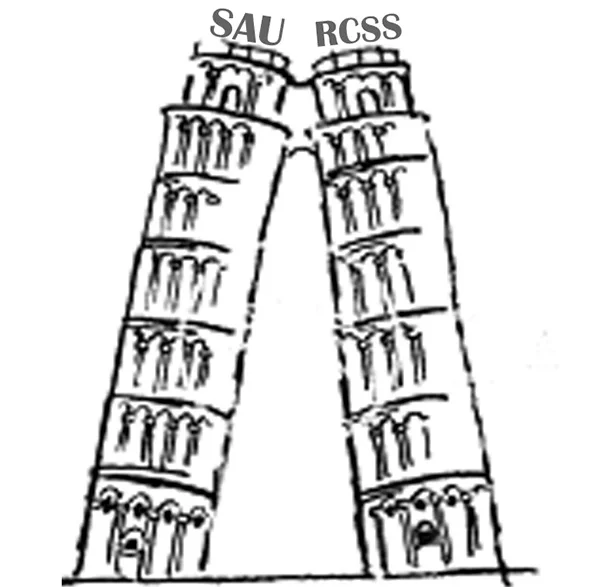
 Some weeks ago, I saw grainy photographs circulating on social media of individuals from Colombo’s Regional Centre for Strategic Studies (RCSS) and New Delhi’s South Asian University (SAU) holding up what appeared to be a document, with the caption that the two organisations had signed a Memorandum of Understanding. Ordinarily, it ought to have been a celebratory moment for regional academic cooperation in research and publication. RCSS was conceived in an era when South Asian multilateralism held genuine promise while the latter came into being when these ideals were deteriorating. In any case, theoretically at least, such institutional linkages are usually meant to foster cross-border dialogue, trust, and shared intellectual rigor.
Unfortunately, however, this specific partnership arrives at a time when both institutions have fallen from their apex. As such, far from indicating a synergy of intellectual powerhouses, the pact resembles an alliance of convenience born out of necessity in an era of institutional decline. It raises urgent questions about what SAU seeks to salvage, and why RCSS would risk mortgaging what remains of its institutional capital.
The Anatomy of Dual Decline
To understand the true sense of this MoU, one must confront the ground reality of the two signatories.
Once a vibrant, premier Colombo-based think tank that catalysed Track II diplomacy and groomed a generation of security analysts across South Asia, RCSS has long since drifted from its zenith. It was the organization that offered me my first research grant to conduct field research in Kathmandu and Colombo at the height of its reputation and much later I served on its International Research Committee. Sadly now, beset by structural funding cuts, inability to attract and retain bright young minds, and an inability to consistently attract top-tier researchers or groundbreaking projects, it has operated in a lower gear. Of late, it has mostly focused on presenting lectures by visiting academics and diplomats who happen to be passing through Colombo. Yet, despite its diminished intellectual output and stature, RCSS has largely retained a relatively benign, independent public image in Sri Lanka.
Conversely, South Asian University, which I helped establish and was part of for over a decade, was initiated as an ambitious joint enterprise by SAARC member states. It was expected to be an ivory tower intended to embody a pluralistic, pan-regional ethos offering high-quality advanced training to young people across the region. For about nine to ten years since its inception, it lived close to its expectations and became an institution of repute which nevertheless had a long way to go. Today, that founding vision and the initial success stories have been dismantled. SAU has suffered an acute institutional decline, increasingly marred by internal controversies, a chilling erosion of academic freedom, a student-unfriendly administrative climate, and troubling governance optics. More critically, its once-celebrated regional cosmopolitanism has given way to a heavily domesticised, north Indian majoritarian administrative and cultural ethos in terms of funding, staff and student recruitment, programming, and public persona. My interest in the news of the MOU between the two organizations came mostly from my close association with and observation of the two over a long period of time.
The MoU’s Strategic Use for SAU
For the India-dominated administrative and academic apparatus steering SAU at present, this partnership has little to do with rigorous strategic studies. Instead, it has everything to do with reputation laundering.
As SAU’s regional credibility has frayed, alienating scholars of repute who now view it as an extension of a singular national-project spearheaded by parochial Indian nationalist interests rather than a multilateral SAARC institution, it faces a severe legitimacy crisis. That it is legally and formally still considered a SAARC organisation is irrelevant. If RCSS wanted a sense of SAU’s reputation, all it needed to do was to undertake a simple online search. Even easier would have been to request one of the many freely available Generative AI programs if SAU has a sound reputation for academic freedom, student services and intellectual output. When I posed the question as to what concerns a Colombo-based think tank — I purposely did not refer to RCSS — should bear in mind when considering signing an MOU with SAU, one of the artificial intelligence programs I consulted offered the following summary assessment: “the central problem is not that RCSS has chosen to cooperate with an India-based university. It is that RCSS has chosen a partner whose recent institutional record raises fundamental questions about the very principles of critical inquiry, academic independence and regional intellectual dialogue that the agreement ostensibly seeks to promote.” Intriguingly, it actually referred to RCSS even though my query did not.
It is truly unfortunate that RCSS did not even undertake an exercise this simple despite being a think tank and a research organisation for strategic studies. However, by partnering with external organizations such as RCSS, particularly those in neighboring capitals like Colombo and touting these events across social media, SAU attempts to project an illusion of ongoing regional connectivity and academic vitality, which does not exist in reality.
It is in this context that one can understand the numerous requests for assistance regularly sent by students facing extreme difficulties in the university to officers in the foreign services of South Asian countries, regional University Grant Commissions or their equivalents, journalists and political leaders offering evidence of grievance. Obviously, this results from the fact there are no acceptable systems of grievance redressal within the university. As a constant, these emails flag what appear to be real student concerns as neither SAU nor the governments of the countries that ostensibly fund it care for their wellbeing. In a September 2024 interview, I described this situation in SAU as similar to “a concentration camp” where people had “no rights” and the institution itself had “no sense of ethics or propriety.” It is therefore extremely regrettable that RCSS has signed an MOU with this entity.
The RCSS, with its once-reputable legacy of research and dissemination and unblemished public standing in Sri Lanka, serves as a convenient vehicle for SAU’s image rehabilitation. It is apparent that SAU has recently launched a campaign to collect MOUs from all kinds of sundry organizations across the world and to invite mostly Indian-diasporic actors from such institutes in the West to visit the university. This effort allows SAU to signal to the academic world that it is still actively engaged in regional and global outreach and scholarship despite the converse being the reality. In this context and with particular regard to RCSS, SAU is effectively utilizing the historical reputation of a Sri Lanka-based think tank to mask its own domestic and institutional controversies. In short, SAU gains a veneer of internationalism or regionalism which it has largely forfeited at home.
What RCSS Stands to Gain — and Lose
For RCSS, the reputational ledger is unfortunately far more lopsided. What can a Colombo-based institution genuinely gain from an arrangement with an entity weighed down by systemic institutional baggage including corruption, compromised academic freedom, and an insular overly India-centric bureaucratic culture despite claims of South Asian regionalism?
The answer is, nothing of enduring intellectual value.
While RCSS may harbor quiet hopes that aligning with a heavily resourced SAARC institution might alleviate its own chronic funding constraints or inject momentum into its depleted programming, the price tag is too exorbitant. For one thing, SAU is no longer effectively SAARC, but practically North Indian and very much Hindu in its orientation.
The latter reality is exemplified by the fact that the University now hosts a Hindu temple in its premises — a demand that was resisted from within for a long time, and also has no religious edifices for other South Asian or Indian religions. By hitching its wagon to an institution widely criticized for stifling dissent and abandoning its multilateral mandate, RCSS trades away its most precious remaining asset: its independent reputation.
Ultimately, any kind of association is a form of endorsement and a considered choice. When a historically respected independent entity in our country chooses to validate an utterly compromised institution in India, it signals to the broader regional and global academic community a critical indifference to institutional decay and governance failures. If RCSS was seriously interested in having an MOU with an Indian institution of repute, that country offers plenty of options that would be worth considering despite their relative decline in the recent past. There likely would have been positive consideration from these institutions too, given RCSS’s reputation, if approached through correct channels.
The Case for Withdrawal
Institutions, much like governments, are ultimately judged by the company they keep. For an entity with a track record in strategic studies, this should have been self-evident. For RCSS, clinging to a partnership with the highly problematic SAU does not offer even marginal, short-term institutional or intellectual sustenance. Besides, the MoU signing and its broadcasting across social media comes at the catastrophic cost to its long-term integrity.
To safeguard its legacy and self-respect and any future potential to reinvent itself as a genuine, objective voice on South Asian strategic studies, RCSS must exercise courage with intelligence. It should critically review this engagement, which has seemingly been undertaken without due diligence, hurriedly and on compromised advice. That review should be far more realistic and objective in the context of publicly available information on SAU’s decline and consider a clean withdrawal from the MoU. A once elite member of Colombo’s intellectual community cannot afford to lend its fading historical prestige to whitewash the systemic failings of a once great South Asian project that has by now completely lost its way. If RCSS wishes to reclaim its stature, it must link its future to transparency, academic freedom, and partnerships of true substance — not cast its lot with sinking ships.

Sri Lanka, India caught in US-Iran ship crisis

Namal further remanded

IMF projects Lankan economic growth to moderate amidst mounting global uncertainties

Major Gen Pushpakumara assumes command of 56 Infantry Division

Dickwella axed, Bandara earns maiden Test call up

President signals priority for domestic economic policy autonomy

‘Dates have the highest sugar content to fight Coronavirus’

Sunday Island 27 December – Headlines

#SundayIsland 17th December – Headlines

Sunday Island – 28th March

Sunday Island Headlines – 21 March

Sunday Island – 21st February – Headlines
-

 Features6 days ago
The Sri Lankan who made Scottish history
-

 Sports6 days ago
Nissanka absence opens door for Sri Lanka’s young guns
-

 News5 days ago
NDB fraud Rs 60mn more than reported
-

 News5 days ago
Removing monk’s robes matter for Sangha to decide: Mahanayake Theras
-
 News6 days ago
Shiranthi R remanded until 13 Oct.
-
 Features6 days ago
Future of Sri Lanka’s state university system: Should it be shut down and reopened?
-

 News3 days ago
Sri Lanka escalates anti-graft drive with Shiranthi’s jailing
-
 Latest News4 days ago
Farhan, Sadaqat help Pakistan ace 183 chase to go 1-0 up