
Features
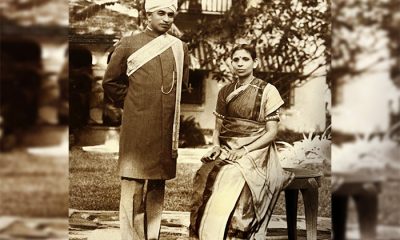
Sir Waitialingam Duraiswamy


Extracted From All Experience: Essays and reflections by Sam Wijesinha, 2001.
The State Council created under the Donoughmore Constitution had its first meeting on July 7th, 1931. It ran its full term and was dissolved on December 7th, 1935.The elections to the Second State Council were concluded on March 7th, 1936. Of the fifty seats for which nominations were received seven returned uncontested members, viz.
Bandaranaike Mr.SWRD for Veyangoda
Corea Mr.GCS for Chilaw
Duraiswamy Mr.Waitialingam for Kayts
Freeman Mr.HR for Anuradhapura
Jayatilaka Sir DB for Kelaniya
Kotalawela Col JL for Kurunagala
Senanayake Mr DS for Minuvangoda
On March 17th at the first meeting of the Council three persons were nominated for the post of Speaker. On the first ballot the result was:
Mr. Waitialingam Duraiswamy 27 votes
Mr. Francis de Zoysa KC. 17 votes
Mr. Charles Batuwantudawa. 14 votes
The third candidate was eliminated, and there was another ballot between the first two which resulted in:
Mr. Waitialingam Duraiswamy 29 votes
Mr. Francis de Zoysa KC 29 votes
Since both had equal votes there had to be a third ballot on which finally a Speaker was chosen:
Mr. Waitialingam Duraiswamy 30 votes
Mr. Francis de Zoysa KC 28 votes
So Mr. Duraiswamy, the Member for Kayts, was elected Speaker. It was a remarkable tribute that, in a Legislature of 39 Sinhalese and 19 others, a Tamil from Jaffna was elected to this prestigious post. Of the other six members who were uncontested, five were elected Ministers. The sixth Mr. Freeman, the former British Civil Servant who was elected the member from Anuradhapura, remained a back bencher.
Who was this remarkable member from Jaffna who defeated Francis de Zoysa, one of the foremost statesmen of this country, an eminently distinguished lawyer, a King’s Counsel and President if the Ceylon National Congress in 1925-26?
Sir Waitialingam Duraiswamy (he was knighted in 1936 was born in Velanai, an island on the west of the Jaffna peninsula, on June 8th, 1874. He was a son of Ayampillai Waitialingam who had spent some time in Malaya. Young Duraiswamy had his education at Jaffna College, Vaddukoddai where he excelled both in studies and in sports. Following the Jaffna tradition of seeking education whatever the difficulties, he was then sent across to India and joined Presidency College in Calcutta University. In 1897 he graduated with double honors in Mathematics and Science. He had the distinction of studying under Professor PC Roy and Jagdish Chandra Bose.
Returning to Ceylon, he joins the Colombo Law College and was admitted as an Advocate in 1902. He worked in the chambers HJC Pereira KC, who was later President of the Ceylon National Congress. HJC, as he was popularly known was not only a leading lawyer, but also a fighter for fair play and freedom. He exhorted workers to unite, which led in due course to the formation of Trade Unions. Young Duraiswamy this certainly had a great opportunity to obtain a good, all-round training in Pereira’s chambers.
Due to family responsibilities he returned to Jaffna and left behind his association with HJC, thereby abandoning the prospect of a successful career in Colombo. He set up his legal practice in Jaffna and in 1905, as an eligible young lawyer, married Rasamma, the daughter of Mudaliyar Sittampalam Sathasivam.
Whilst immersed in his advancing professional practice, he began his public life as a Founder member and Secretary of the Jaffna Association which, like the Ceylon National Congress, worked for the political advancement towards independence by democratic means. He was also a member of the Liberal party, led at that time by Sir James Pieris. In addition, he was joint Founder and Secretary of the Hindu Board of Education, which was responsible for establishing a series of schools. He was on the governing body of Jaffna Hindu College and the President of the Jaffna Paripalana Sabha, which was responsible for the publication of two newspapers.
For the next two decades he made steady progress in the profession to become the leader of the Jaffna Bar and to be appointed Crown Advocate, always the most coveted position in the field in Ceylon at that period. With his diverse interests in religious affairs, educational development and social service he was well recognized, warmly respected and deeply appreciated by the public of Jaffna.
By Ordinance No 13 of 1910, in terms of what are known as the McCallum reforms, a small semblance of the principle of representation through election was recognized for membership of the Legislative Council. One member was therefore elected in 1912 for the Educated Ceylonese Electorate of about 3,000 voters. One is very limited Educational franchise. Ponnambalam Ramanathan who had been in the Council from 1879 to 1892 as an Unofficial Nominated Member, was the choice of the electors. But agitation against the niggardliness of the concession, carried on for the next 10 years, resulted in the elective principle being extended by the Order-in-Council of 1920. This provided for election to 11 territorial and five non-territorial seats. Each of the provinces was to elect one member on a limited income franchise, with the much more largely populated Western Province being allocated three seats.
With his professional standing and his record of service to the public, Advocate Waitialingam Duraiswamy became the obvious choice to represent the Northern Province. He was the only Hindu elected to the Legislative Council of 1921 and was unopposed. Sir Henry Kotalawela (knighted in 1947), elected to represent the Uva Province was the only Buddhist. All the other nine territorially elected members, including Advocate ER Tambimuttu who represented the Eastern Province were Christians.
Sir Ponnambalam Ramanathan who was elected by the people both in 1912 and 1917 was knighted and nominated by the Governor as an Unofficial Member of the Legislative Council in 1921. It was claimed by NE Weerasooria in his book Ceylon and her People that ‘The distinction conferred on Sir Ponnambalam Ramanathan was the precursor of his secession from the Ceylon National Congress.
’ However, disappointment at the manner in which Sinhalese politicians insisted on taking all the elected seats in the Western Province as well as those for special groups (such as the Low Country Products Association, which had a voting membership of just 11) also doubtless contributed.
In 1922 Sir Waitialingam successfully moved a motion in the Council for prohibition on the basis of local options, which resulted in all taverns and foreign liquor shops being abolished in the Jaffna District. The option, it should be noted, was not exercised elsewhere and prohibition in the South seems to occur only through impositions on specific occasions.
It was at this time that the recommendations of the Salaries Commission for increases were included in the budget for 1923-24, a contravention of a promise given by Sir Andrew Caldecott, the Colonial Secretary. The Unofficial Elected Members recorded a protest and eventually all 11 of them walked out of the Council. They resigned but were re-elected unopposed. Sir Waitialingam was one of the leaders of this protest which was organized by Sir James Peiris.
In 1923 the communal tensions that had been simmering for a couple of years came into the open with the question of a Memorandum about Minorities which had been ‘sent secretly’ to the Secretary of State for the Colonies, the Rt Hon Winston Churchill, with a view to thwarting the grant of responsible Government and recommending a return to communal representation. The Colonial Secretary refused to table a copy of this ‘Secret Memorial.’ But the Ceylon Daily News published a scoop about it which created a sensation.
At a public meeting in honor of Governor Manning at Jaffna, the genesis of the ‘Secret Memorial’ was revealed. Sir Ambalavanar Kanagasabai (Nominated Unofficial Member) said, ‘It was Sir William Manning who obtained for the Tamils the preferential treatment and concession as outlined in the draft.’ The Governor in reply paid a fulsome compliment to Sir Ponnambalam Ramanathan for what it was suggested for assistance rendered in drafting these proposals.
Reflecting on these events, I feel today what Prof. KM de Silva so elegantly expressed when he wrote, “The Sinhalese Leaders of the Ceylon National Congress allowed themselves to be embroiled in a needless conflict. It was on an intrinsically unimportant issue – that reserved seat for the Tamils in the Western Province. A timely concession generously made would have removed it from the arena of political controversy.
” This big mistake on a small matter eventually cost us the friendship and the benevolence of two of the most outstanding men produced in 152 years of British rule. Ponnambalam Ramanathan and Ponnambalam Arunachalam, to both of whom so much is due from so many in our land. But this unwillingness to yield gracefully from a position of strength, so that concessions have to be exhorted with ever increasing suspicion, seems to be part of a congenital incapacity that continues to destroy the country.”
It should be noted however that the two elected Tamil members from the Northern and Eastern Provinces – Waitialingam Duraiswamy and ER Tambimuttu rejected the “Secret Memorial.” Duraiswamy indeed went on record saying, “I cannot understand how age and experience could have been guilty of such egregious blunders; this is all the work of our old men. If they cannot lead in the right way they lead in the wrong way, but they always lead, that is their one and only ambition.”
Meanwhile he was again elected uncontested to the enlarged new Legislative Council of 1924 to represent the Northern Province (Western Division). Tambimuttu was also re-elected to represent the Batticaloa District of the Eastern Province. During this period Duraiswamy was the architect of the Conference held in 1925 at Mahendra, his home in Jaffna, at which the delegates of the Ceylon National Congress led by Mr. CE Corea and the Ceylon Maha Jana Sabha led by himself discussed further reforms. Incidently Mahendra was the home graced by the visits of Mahatma Gandhi and Rajagopalachari in 1927 and in 1931 by Jawaharlal and Kamala Nehru and their daughter Indira.
During this time Duraiswamy was a member of the Akbar Committee of the Legislative Council which opted for establishing the Ceylon University in the Kandy District. Regrettably he remains, I believe, the only outstanding member of that Committee not recognized by a tangible memorial on the Peradeniya Campus.
In 1928 as the President of the Jaffna Association he gave evidence before the Donoughmore Commission and pressed for self-government. This was accepted but, together with many others in the Legislative Council at that time, he was not entirely happy with the Donoughmore Commission’s recommendations. At the debate in the Council in 1929 on the proposal that they be brought into operation, he was in opposition, and subsequently led the Jaffna boycott of the 1931 elections to the newly created State Council.
In a speech at Jaffna in 1931 Sir Waitialingam repudiated the suggestion that the boycott was for communal reasons. He went on to say, “We are not weak to depend on such sectional ideas, we are able to think for the good of the whole of Ceylon. Never did I think of communalism when I advocated reforms for the Island. We Tamils always worked for the good of the whole country, making no difference between race and race. Our safety lies in the safety of the Sinhalese, our freedom lies in the freedom of the Sinhalese, our progress in constitutional reforms depends on the co-operation of the Sinhalese. The policy of “Divide and Rule” shall not make us great. Therefore, let me once again assure the people of Ceylon that we are acting on behalf of the whole of Ceylon, and not from sectional motive.”
Jaffna abandoned the boycott and came back into the mainstream of national politics in 1934 when elections were held for the four seats in the district. On this occasion Duraiswamy did not contest. Kayts therefore was won by Mr. Nevin Selvadurai. In 1936 however, in the general elections to the Second State Council, he was as noted above elected uncontested to the Kayts constituency.
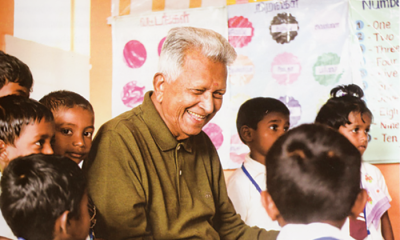
I have tried briefly in these paragraphs to answer the questions I proposed at the beginning as to who this remarkable gentleman was who came from Jaffna to defeat Francis de Zoysa for the post of Speaker. His election to this post was a demonstration of the unbounded popularity, and the high esteem in which he was held by all sections of the country. He was a gentleman of a genial disposition with a ready smile, full of kind thoughts, kind words, and kind deeds. Blessed by nature with a graceful appearance, he had dignity in his deportment and the gift of a sharp intellect. Impartiality and fairness came to him naturally,
On his election as Speaker, Sir Baron Jayatilaka, the Leader of the House and Minister of Home Affairs, congratulating him said, “You can bring to bear on the questions that will come up a trained and disciplined mind and long experience, not only as a prominent member of the legal profession, but also as a member of the Old Legislative Council for over 10 years.
Jayatilaka and Duraiswamy were born in the third quarter of the last century, both were graduates of the Calcutta University when such academic qualifications were uncommon, both were professionally experienced lawyers and dedicated educationists with long records of public service. They were interested in their own literature, deeply learned in their respective religions, and highly respected by their own people.
They brought trained and developed minds to bear on the problems of their country without fear or favour. They advanced into parliamentary politics with the ripe experience of their chosen disciplines and the mature mellowness of their age. Both faced three elections, and both were returned three times without contest. Both had a serenity that reflected contentment.
In concluding his response to Jayatilaka, Duraiswamy said, “When the time comes for me to lay down the authority with which you have clothed me, I will do so conscious of having done our best, to help forward the progress of Ceylon.” That authority he was entrusted with in 1936 he laid down in 1947, having maintained the dignity and safeguarded the privileges of the State Council for an unparalleled 11 years.
He created healthy precedents and built-up honorable traditions. He sometimes quoted from Ramayana and the Mahabharata, the Thirukkural and the Bhagavad Gita to defend the rights of backbenchers and protect those of the less influential members of the House. He was able to direct, guide and inspire the most difficult raw material to handle – the young enthusiastic legislators of the State Council.
At this point it may not be irrelevant to mention that Duraiswamy was an outstanding athlete in his day and continued to maintain his healthy mind in a healthy body. He was the Founder member of the Tamil Union and its President for several years. I still remember a picture in a newspaper that showed him as Speaker bowling to the Governor Sir Andrew Caldecott, with Minister DS Senanayake behind the stumps.
When he laid down his office there was not one person in the State Council who had a single word against him. He was an exemplary Speaker by any standard, totally free from sectarianism and deeply devoted to the ideal of a Ceylonese nation. As he wished on the day he was elected, so he downed his authority, having done his best to help forward the progress of Ceylon. The never-failing springs of his constant strength were the fundamental principles of his deep faith and the unbroken traditions of his ancient culture. Truly then it might be said of him that, ‘he was a man not for an age, but for all time.’







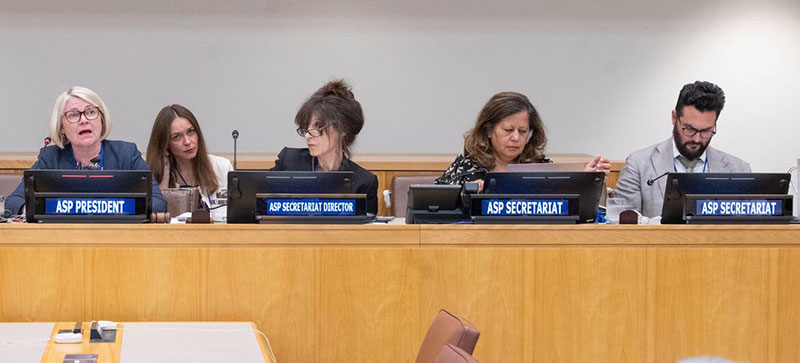
 US Secretary of State Marco Rubio’s warning to the International Criminal Court (ICC) was stark: ‘Either the ICC will end its threats, or we will end the ICC.’ It followed US central administration accusations that the court was unfairly targeting Americans on the basis of trumped-up war crimes charges.
However, a new plethora of sanctions has been clamped on the ICC by the US, which in turn has spurred accusations by sections of the world that the latter has unleashed an ‘assault’ on the international legal order.
What some of the sanctions would mean for the ICC was outlined by Rubio: ‘We will ban transactions with this rogue court, cutting off their resources and crippling their ability to operate against us.’
The ICC has shown consistency of purpose over the years. Despite some operational constraints it has indicted a large number of political strongmen from around the world, accused of war crimes and other governance excesses that come under its purview. Two such recent figures are: Russian President Vladimir Putin and Israeli Prime Minister Benjamin Netanyahu.
Rather than enjoy a mere nominal presence in the world community, the ICC has proved its effectiveness by detaining and bringing to justice scores of VIP politicians and others of their ilk who have been found guilty of human rights abuses and kindred excesses that come within the terms of reference of the ICC.
Accordingly, the international justice system would be stymied considerably as a result of the ICC being dis-empowered, particularly financially. Needless to say, potential and real perpetrators of the species of crime coming under the jurisdiction of the ICC would stand to gain most from such anarchic tendencies. That is, political repression globally would be enabled to enjoy a new lease of life.
A detailing of the types of crime coming under the purview of the ICC provides an idea of what it would cost the international community if the ICC’s operations are gravely hampered. They are mainly: genocide, war crimes, crimes against humanity and the crime of aggression.
That is, the part of the world to be worst affected would be the global South, since the latter is awash with the mentioned crimes. Needless to say, a chronically-disaffected South will sooner rather than later undermine the well being of the world dangerously. The world is already being put through these paces.
At the time of writing, ‘illegal migrants’ from the South, for example, are aggravating many a Western economy’s woes, besides creating for them acute law and order issues. The fact that these migrants’ presence goes on to become a virtual test of the migrant receiving states’ ability to forge domestic social inclusion in the face of jingoistic protests by mainly white supremacist groups is evidence of the latter. As is known, the US, to take just one example, has been up against this crisis for quite a while.
Accordingly, it will be in the best interests of the West if ‘illegal’ migrant arrivals on their shores are stemmed. If the socio-political and economic problems assailing the South are effectively managed through North-South collaborative, ‘trouble-shooting’ efforts the causes leading to ‘illegal’ migration and connected issues could be resolved at source as it were. For, it is the aggravation of the South’s material questions that lays the basis for the emergence of repressive and anti-democratic regimes in the hemisphere.
Until such time that the aforementioned issues in North-South relations are visited afresh and addressed urgently, a vibrantly functioning ICC would be needed. For, the latter would prove a deterrent to Southern political and military strongmen, highly prone to power abuse and like excesses, from coming into being in the wake of the South’s chronic material woes and the wars and conflicts that result from them.
It stands to reason then that the US would be acting in its own interests by enabling the ICC to perpetuate its mandate without hindrance. For a crop of issues that impinges negatively on internal law and order would be defused.
Meanwhile, there needs to be a meeting of minds among the rest of the West to put back in place a North-South dialogue process aimed at reducing some of the economic pressures that are weighing on the South.
Since economics usually drives politics it will be in the interests of the world community to scrutinizingly re-visit North-South issues of the past and put in place economic relief packages for Southern publics that would enable them to tide over their material hardships rather than permit the latter to aggravate into social disaffection and eventually armed militancy. It is the latter juncture that paves the way for the emergence of authoritarian rulers in the South who then go on to be a blight on their publics.
Accordingly, the Southern-based global development thinking of the past that envisaged a more equitable world economic order needs to be seen as an urgent need. That is, NAM’s international development paradigms need to be resuscitated to the extent possible.
It is unlikely that rightist governments of the West, such as the current Republican administration in the US, would find these projects feasible, but democratic states of Europe, led by perhaps the UK, are likely to think otherwise. For it would not be beneficial for the democratic world to be having on their hands repressive governments in the South who would be gravitating towards the major military and economic actors of the South, such as Iran and North Korea, who tend to be in constant power struggles with the West.
However, until such time that the mentioned, pro-people initiatives are given serious thought the ICC would need to be enabled by the international community to be in place comfortably and carry on with its mandate of bringing repressive rulers to book. Besides the ICC should pave the way for the peoples of the developing world to enjoy some substantial respite from the political repression and even terror which tend to be their lot.
Meanwhile, the wars of West Asia are relentlessly aggravating the economic hardships of people everywhere, driving the point home to enlightened sections that there is no alternative to peacemaking. A challenge is to convert the US under President Trump to this line of thinking.

 This week, I give you five simple, time-tested homemade remedies that help reduce the appearance of blemishes, control excess shine and leave your skin feeling softer and smoother.
The Honey and Lemon Brightening Dab:
For stubborn blemish marks, this is a classic. Mix one teaspoon of pure bee honey with three to four drops of fresh lemon juice. Apply gently, only on the affected spots, and leave for 10 minutes before rinsing with lukewarm water. While honey soothes and softens, lemon helps to brighten naturally. Use twice a week in the evening.
Besan and Rose Water Oil-Control Pack:
An ideal remedy to combat shine, especially on the T-zone. Take two teaspoons of besan (gram flour) and mix with sufficient rose water to form a smooth paste. Add a pinch of turmeric for its antiseptic goodness. Apply evenly, keep for 15 minutes and wash off. It absorbs excess oil without over-drying, leaving a beautiful matte finish.
Aloe Vera and Cucumber Ice Soother:
Blend fresh aloe vera gel with the juice of a grated cucumber and freeze the mixture in an ice tray. Each morning, wrap one cube in a soft muslin cloth and gently rub over a cleansed face for 30 seconds. It calms, tightens pores and imparts a baby-soft smoothness.
Oatmeal and Curd Gentle Polish:
Roughness and old blemish marks need gentle exfoliation. Combine one tablespoon of finely powdered oatmeal with one tablespoon of fresh curd (yoghurt). Massage very gently, in circular motions, for one minute, leave for five minutes and rinse. It removes dead cells and unveils softer, clearer skin.
Multani Mitti and Green Tea Magic Mask:
Brew some green tea and allow it to cool completely. Mix one and a half teaspoons of Multani Mitti (Fuller’s Earth) with the tea water to make a fine paste. Apply for 10 to 12 minutes – do not let it dry and crack completely – and wash off. It draws out impurities, fades blemishes and bestows a fresh, shine-free glow.
A Gentle Reminder:
As with any natural remedy, always do a patch test on your inner arm first. For those with oily or combination skin, avoid heavy coconut oil application and harsh scrubbing, as they tend to aggravate shine and blemishes.

 Dream of performing on a world stage? Well, here is your unique, golden opportunity!
The World Championships of Performing Arts (WCOPA) — the one and only official “Talent Olympics” — is the world’s premier global platform for aspiring singers, dancers, actors, models, instrumentalists, etc., to compete, shine and be discovered!
And, yes, this world stage is open to YOU, Sri Lankans living in Sri Lanka and overseas!
Held annually in glittering Las Vegas, WCOPA brings together over 70 countries, all competing for Gold, Silver and Bronze Medals, just like the traditional Olympics.
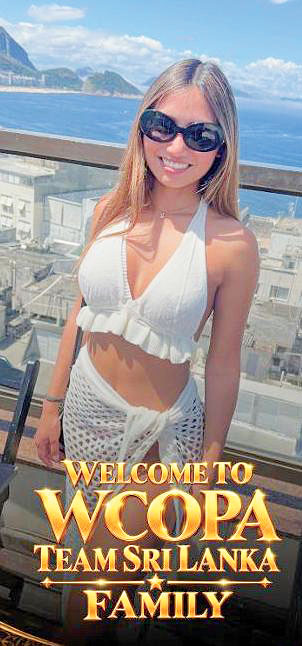
Lakisha Bernard: Will represent Team Sri Lanka at WCOPA 2027
Outstanding performers vie for the coveted titles of Junior and Senior Grand Champion Performer of the World, with winners and standout participants awarded over $500,000 in scholarships, cash awards and prizes to catapult their education and careers!
Sri Lanka is already making waves! At WCOPA 2026, Natharie Wickramasinghe, representing Team Sri Lanka, made the nation proud by winning a Bronze Medal in the Ethnic/Folklore Dance category!

Lakisha: Accomplished freelance Model and Fashion Design graduate
Recruitment for this prestigious competition is handled through a system of scouts and licensed National Directors — and this is where our very own Chris Rajendra, now based in Las Vegas, and National Director for Team Sri Lanka, comes into the scene.
If you are a singer, dancer, actor, model, instrumentalist — if you have talent burning inside you — contact Chris Rajendra today for registration and, who knows, you may find yourself in Las Vegas, and proudly draped in the Sri Lankan flag, at WCOPA 2027!
The contact address is: Chris Rajendra, wcopa.nationaldirector.sl@gmail.com
or chris.rajendra@gmail.com
Meanwhile, a star is born for 2027, in the form of Lakisha Bernard who is all set to represent Team Sri Lanka at WCOPA 2027.
Originally hailing from the sun-drenched coastal city of Colombo and now carving out her creative career in Canada, 22-year-old Lakisha is stepping into the international spotlight.
This accomplished freelance Model and Fashion Design graduate has officially been appointed as the Team Sri Lanka Promoter for Canada as she prepares to represent Team Sri Lanka at WCOPA in Las Vegas.
Lakisha brings a unique blend of high-fashion sensibility, captivating camera presence and expert garment design to the Team.
Having built her career, from local college shoots to high-glamour concepts, Lakisha’s inspiring journey embodies the true spirit of cultural bridge-building and creative resilience, bringing immense pride and recognition to Sri Lanka on the global stage.
WCOPA 2027 will be held at the legendary Westgate Hotel & Casino, Las Vegas, from 12th to 20th July – the very same iconic arena where the late, great Elvis Presley himself performed!
Your moment is now. Your stage is Las Vegas, so hurry and contact Chris Rajendra.

Showers or thundershowers will occur at most parts of the island

Prison rules to be revised over monks’ attire

AC President recuses himself from hearing prison attire case pertaining to Gnanasara Thera

Court orders steps to obtain INTERPOL Red Notice against Basil

CID informs Fort Magistrate’s Court investigation into money laundering case against Namal completed

No force used to make Gnanasara Thera wear prison garb – Prisons

‘Dates have the highest sugar content to fight Coronavirus’

Sunday Island 27 December – Headlines

#SundayIsland 17th December – Headlines

Sunday Island – 28th March

Sunday Island Headlines – 21 March

Sunday Island – 21st February – Headlines
-

 News6 days ago
NDB fraud Rs 60mn more than reported
-

 News6 days ago
Removing monk’s robes matter for Sangha to decide: Mahanayake Theras
-

 News4 days ago
Sri Lanka escalates anti-graft drive with Shiranthi’s jailing
-
 News5 days ago
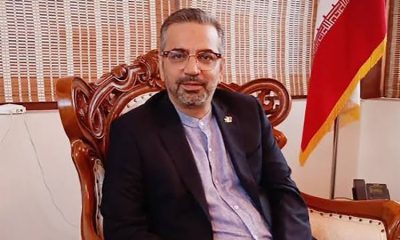
NPP govt. reminded of its responsibilities as US warship leaves Colombo
-
 Latest News5 days ago
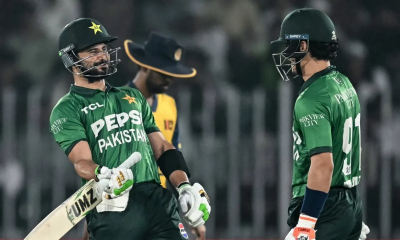
Farhan, Sadaqat help Pakistan ace 183 chase to go 1-0 up
-
 News6 days ago
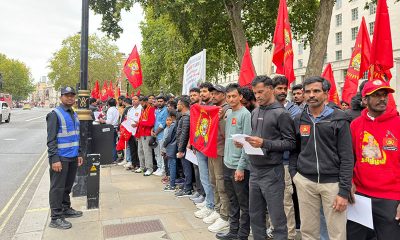
BHC, Colombo: “LTTE remains a proscribed org. in the UK”
-

 Latest News3 days ago
Farhan and Sadaqat help Pakistan seal series in style
-
 News4 days ago
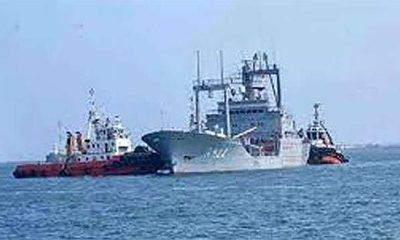
Iranian ships stranded, Lanka fears US sanctions