
Opinion
Send in clowns and be damned!

The Director-General of the Sri Lanka Tourism Develop Authority has given the thumbs up sign to the Director General of Health and IGP to allow foreign tourists to travel across districts/provinces in Sri Lanka through ‘bubble tourism’. This is despite the fact that Sri Lanka’s Immunology and Molecular Medicine authorities have now identified six new Covid-19 variants in Sri Lanka. These include variants from Denmark, Europe, Middle East, Nigeria and South Africa, including the deadly Indian B.1.617.
A golden wand of protection seems to attend the path of these foreign visitors across the island, while the public is prohibited from venturing into or through such areas to prevent the spread of the virus. It is an irrefutable fact that when foreign tourists are ferried across the Island and allowed to visit the provinces, there is an entourage of locals to assist them at their accommodation, in transport and at places of tourist interest. One of the first Covid-19 patients in Sri Lanka was a Tour Guide! The policy of ‘back to business as usual’, sporadic restrictions, onus of self-protection and ‘never mind the consequences’ has hitherto yielded horrendous results.
The cost of opening the country’s borders to foreign tourists from January 2021, with some short-term gains to hoteliers, has boomeranged on the nation’s production, manufacture and general socio economic well- being. Each new morning new widows and infants howl and mourn the deaths of loved ones. Death Rate and total Covid cases in Sri Lanka have now reached phenomenal levels. Hospitals cannot cope with the rising numbers of patients, who are being accommodated in makeshift sheds and warehouses, or asked to remain in their homes sans medical attention!
Who is really calling the shots in controlling the pandemic that has now reached crisis proportions in Sri Lanka? Does the Minister of Tourism, Prasanna Ranatunga, have special qualifications and abilities in the medical field, to warrant such decisions and directives to be given across the board by his petty minions and willing sycophants in the government bureaucracy? Is he not aware that the practice of bubble tourism is between countries that have relatively small incidence of Covid, as in the case of Australia and New Zealand, holding strong track records of implementing consistently rigorous anti-covid restrictions and regulations? Is not the Director General of Tourism, Ms. Kirmali Fernando, whose husband owns and runs Tourist Hotels, properly advised on the practices around the world? Or is short term pecuniary gain more important than ordinary human lives? In Sri Lanka ” a land like no other” when Ukraine was in a lockdown situation, their tourists were hosted in Sri Lanka.
According to the WHO, the coronavirus variant was first identified in India last year and was classified as a variant of global concern, with some preliminary studies showing that it spreads more easily and is increasingly classified as a variant of concern at a global level. WHO statistics reveal a sharp linear rise in the new Covid cases in India commencing from March 2021, even while our ‘Health Experts’ in the Tourism Ministry were encouraging and further promoting Bubble Tourism Agreements with India until late April 20, 2021
The recent fiasco in Piliyandala saw the local MOH up in arms over the blatant idiotic interference by the Minister Lokuge, in giving counter orders against the Ministry of Health and opening up Covid-19 areas, possibly due to requests of business cronies among his constituents. The subsequent death rate due to Covid in Piliyandala bears ample testimony to the demented exertions of this politico.
Blustering, blundering politicians apart, what of the high-powered Committees, consisting of retired senior government servants, expert medical personnel, deciding to administer the First Dose of anti-Covid-19 AstraZeneca Vaccine to approx. 9 lakhs of the population, while only retaining 03 lakhs for the Second Dose! Surely it is common sense to spread the vaccine in a manner that ensures that both doses are given during the prescribed period of at least 10 weeks! The logic of entering into a signed contract for supply of AstraZeneca to be given for the second dose, and opening a letter of credit, does not seem to have entered into the calculations of those charged with such responsibilities, who perhaps have reached the age of Dementia or careless indifference!
There was enough time to secure the required stock of AstraZeneca from January 2021, if not for political will considering that the Budget of December 2020 had no provision for anti-covid vaccines! Leaving the approx 600,000 of people particularly in the over 60 age group in dire straits, after their first dose of AstraZeneca, which cannot be mixed with other vaccines now available in the market, is tantamount to criminal negligence, breach of trust and inequitable governance. Even in the midst of such severe bungling, there are some politicos trying to pour down Vaccine Cocktails, hitherto never tried or tasted in other parts of the developed world, down the throats of these unfortunate victims.
The cronyism and nepotism rampant in the numerous and now commonplace accounts of people with ‘influential connections’’ getting the vaccine over others, shows a moral impoverishment of the country. It is a fact that today there are those who work in the front line of infection in their respective workplaces, who have not been given priority in the administration of the vaccine. However, Notables, VIPs and Politicians and their allies are given pride of place in getting the scarce second dose of the AstraZeneca, irrespective of the fact that this is considered more appropriate for senior citizens above the age of 55 or 60.
It is a time that the Public has seen through the lies, sheer hypocritical terminology and slanted data that might have hitherto lulled them towards the so-called resurgence of the virus in the “Avurudu Pokura”. Some amusing but insidious half-truths, and concealments are worth mentioning. The media gave the impression for a long time that the deaths were due to underlying conditions of non-communicable diseases such as diabetes and high blood pressure when the causative agent was Covid 19. The undeniable truth is that had it not been for the Covid-19 virus, those with underlying diseases might have lived to a ripe old age with the medications! It is only now, with the escalating deaths and ensuring chaos in the health sector, that the real causative agent of those afflicted with Covid-19 is being acknowledged as Covid pneumonia! The crass negligence of garment factory owners in the Brandix cluster, and resultant probe into criminal negligence is without any progress and lies hidden and dormant. The reluctance to admit that there was a community wide transmission across the island, and the continued lies that this is confined in the main to the Western Province, and that every case could be traced back to the Brandix or Peliyagoda Fish Market clusters is now a sad laughing matter!
Those of us who watched the TV news in the time leading up to the present crisis are privy to the spectacle of the representatives of the people (Politicians), at the pinnacle of power, neglecting to follow simple guidelines such as wearing a mask, avoiding crowded meetings, etc. The subtle interplay of attributing a particular age group to the Covid-19 casualty, the balancing of numbers of positive cases and deaths with limited PCR, and the relative lack of a Geographical Information System by which selective and targeted lockdowns could be imposed in severely affected areas, have contributed to maintaining a fog index over the actual situation prevailing in the country.
A nation that has seen its own Minister of Health and other politicians expound the virtues of a fake decoction called “Dhammika Peniya” as a possible Covid-19 preventive, cannot be too surprised thereafter to witness any worse inanities and tragic bungles!
In conclusion, a nation that with renewed hope changes its political pillow for a new government be it, SLFP, Yahapalanaya, alias SJB, Podujana Peramuna, appears to be doomed to certain abject disillusionment. The truth is plain to see. Any apolitical citizen can now realise that whether there be bond scams, major bribery and corruption charges, criminal negligence on terrorist massacres, the policy of no real remedial action, talk only and a series of commission reports, parading on remand, will be the final product. Except for some sprats down the line, the kingpin will continue their rampage. It is said that there is a certain camaraderie and wheeler dealing even amongst those who represent the people on either side of the divide in Parliaments. Where there is neither honour, principle nor true love of country and its people, in a system that is replete with sycophant”public” servants and moribund self-serving intelligentsia, the dark prescription still is “Send in the Clowns and be damned”.
SONALI WIJERATNE
Kotte

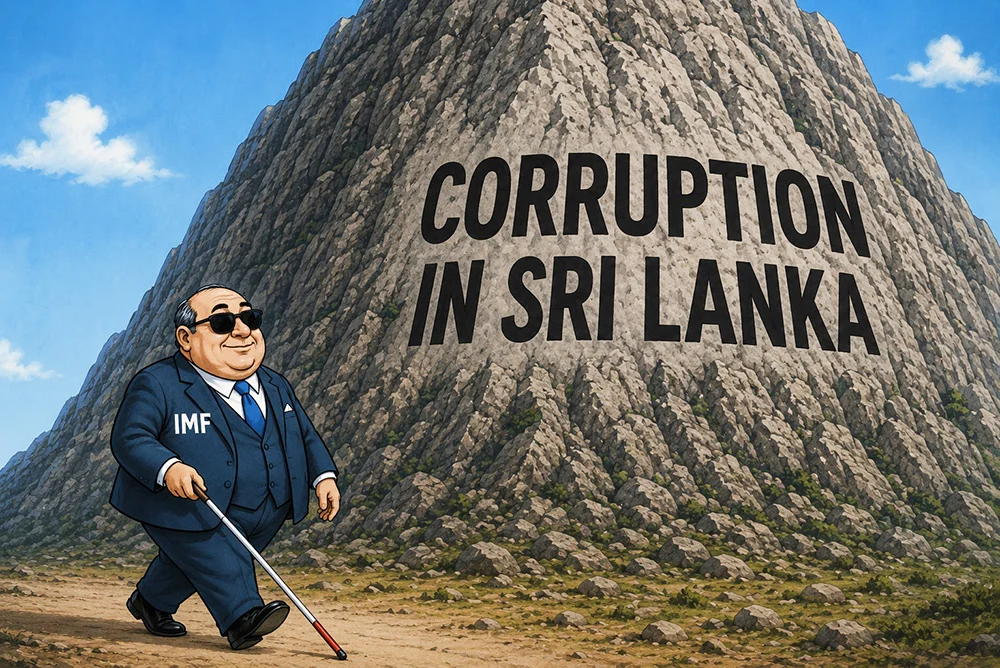
Anti-corruption and governance reforms are central pillars of Sri Lanka’s $2.9 billion bailout agreement with the International Monetary Fund (IMF). This was the first time in Asia that an IMF programme was explicitly linked to a comprehensive anti-corruption diagnostic and specific legislative measures.
At the press conference announcing the deal, Senior Mission Chief Peter Breuer said that the IMF had emphasised that anti-corruption and governance reforms are central pillars of the programme. He added that the IMF would subject Sri Lanka to a comprehensive governance diagnostic exercise, making it the first Asian economy to undergo such an exercise, which will assess corruption and governance vulnerabilities in Sri Lanka and provide prioritised and sequenced recommendations. “Sri Lanka will be the first country in Asia to undergo a governance diagnostic exercise by the IMF. We look forward to further engagement and collaboration with stakeholders and civil society organisations on this critical reform area,” the IMF official said.
An extract from the Technical Assistance Report on Governance Diagnostic Assessment, Sri Lanka (September 30, 2023) is as follows; “The report highlights immediate and short-term measures to address key corruption issues, as well as structural reforms that require more time and resources but are essential to strengthen governance and initiate lasting change. The recommendations are designed as a coherent approach to improving governance through a focus on: clarity of authority and responsibility for core functions; financial and operational independence of essential accountability and law enforcement institutions; transparency in government practices and performance, especially relating to the planning, spending, and accounting for the use of public funds and assets; inclusive, accessible, and rule-based means to enforce private agreements and challenge official behaviour; and efficient mechanisms for making information public and holding organisations and individuals to account for their performance and behaviour”.
Further, the agreement required Sri Lanka to implement several specific, actionable measures to curb corruption vulnerabilities:
New Anti-Corruption Legislation: The government passed the landmark Anti-Corruption Act in 2023, which expanded the powers of the Commission to Investigate Allegations of Bribery or Corruption (CIABOC), required electoral candidates and officials to declare their assets, and introduced protections for whistleblowers.
Fiscal and Procurement Reforms: The IMF programme included commitments to improve public financial management, increase tax transparency, and advance public procurement laws to eliminate political interference and cronyism in government contracts.
The IMF Executive Board is supposed to continuously track these anti-corruption and governance benchmarks during its periodic programme reviews to ensure compliance. The IMF officials’ last visit to Sri Lanka was from March 26th to April 9th when they reviewed the progress of the programme, decided that it was going well and approved the release of the final tranche. Their statement did not carry any reference to the activities of the government regarding control of corruption.
The Letter of Intent submitted by the government at the conclusion of the review becomes relevant under these circumstances. It was officially released on May 29, 2026. One of the critical undertakings by the government, according to the Letter of Intent, relates to cost-recovery pricing, the government has reaffirmed its commitment to maintaining cost-recovery pricing for fuel and electricity.
Going by available communications, apparently the IMF has not inquired into what caused the increase of cost of production of electricity. Cost of electricity production has gone up due to increased use of diesel, as low quality coal is not producing the required amounts. The coal that has been recently imported has been found to be of low quality and the government has said the losses due to this misadventure will not be shifted to the people. The irregularities in the coal procurement process that has happened recently is no secret, the Auditor General’s report has pointed out the flaws in the said procedure. Ironically, the IMF programme highlights the need to have fool proof procurement and tender procedures, and emphasises “holding organisations and individuals to account for their performance and behaviour” as the above quoted Technical Assistance Report mentions, yet it is silent on this matter showing its lack of responsibility. And it wants cost-recovery pricing for electricity! This may be taken as proof that the IMF is not very much concerned about the plight of the poor.
Further, these policies and recommendations of the IMF may substantiate the accusations made by left oriented organisations that the IMF insists on austerity measures, often at the expense of welfare expenditure, in order to serve neoliberalism. The clauses on corruption control in its agreement with the government appear to be mere lip service and window dressing. If no follow-up action is taken on these requirements, such clauses have no meaning and serve no useful purpose. If it is a responsible organisation, the IMF should have called for an impartial inquiry into the coal procurement procedure, for it is mandated to ensure transparency and integrity in these procedures. Moreover, if it is concerned about the welfare of the public it should not have asked for cost-recovery pricing of electricity when the reason for the increased cost could be corruption. Instead of going into the matter of corruption the IMF asks the government to recover the losses from the people. Cannot it think of a fairer means of recovering these losses instead of burdening the already impoverished people?
Thus, the question arises whether the IMF is a tool of imperialism. Many critics, particularly in the Global South, argue that the IMF functions as an instrument of financial imperialism or neo-colonialism. Structural Adjustment Programmes of the IMF ties its emergency loans to strict conditions like austerity, privatisation, and deregulation. Critics argue these demands dismantle local welfare systems, strip developing nations of their sovereignty, and open their markets to exploitation by multinational corporations. Further, the wealthy nations, particularly the United States and European powers, hold the majority of voting shares and effectively control the institution, dictating economic policy to weaker states. Critics claim that IMF-mandated currency devaluations artificially lower the cost of raw materials and natural resources in developing countries, benefiting wealthy creditor nations which amount to resource extraction.
Another matter of concern is that the interest rate for IMF loans to Sri Lanka, contrary to common belief that it is concessionary, is 5% which is pretty high and may be unbearable to a poor country like Sri Lanka. The country was in a woeful state in 2022 and was forced to declare bankruptcy, and seek IMF assistance. If we seriously examine the cause of this economic disaster, we will see that it was due to the economic policies the country had been following since independence. We import more than we export and take loans to meet the shortfall. This practice has gone on and on and is continued at present. No government, including the present one, despite its left leaning claims, had attempted to correct this colossal mistake. Our debt burden is frightening, less said about it the better.
The obvious solution to this problem would have been to achieve self-sufficiency in our essential needs, like food, and reduce reliance on imports. Most of our needs in food and other essentials could be locally produced. The IMF may not recommend such a course of action. It would want us to remain a poor country, struggling in the vicious cycle of import-export-debt quagmire.
by N. A. de S. Amaratunga
Opinion
When the decisive vote changes hands: Sri Lanka’s next electoral shift may already be underway
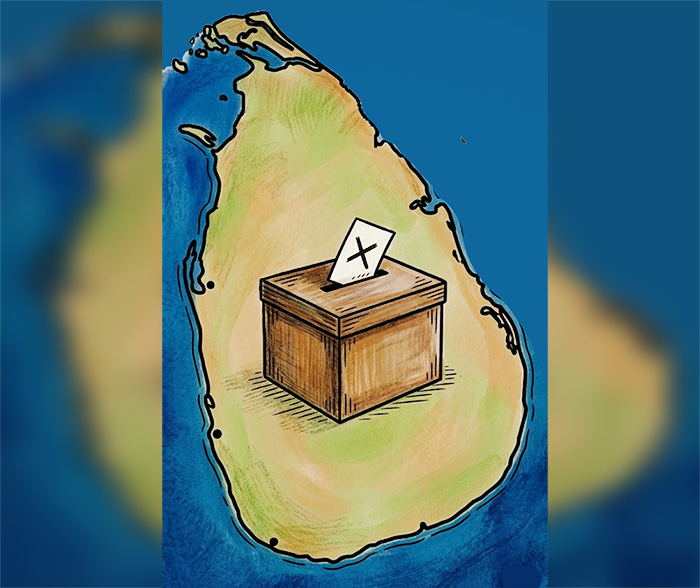
In the summer of 1789, as the French Revolution gathered momentum, delegates of the National Assembly assembled in Versailles to debate the future of France. The seating arrangement inside the chamber was not planned to shape political vocabulary for centuries to come. Yet it did. Those who favoured sweeping political change, greater equality, and the dismantling of inherited privilege gravitated to the left side of the hall. Those who defended the monarchy, established institutions, and traditional social hierarchies took their seats on the right. What began as a matter of convenience soon became a political metaphor. More than two centuries later, we still speak of the “left” and the “right” to describe competing visions of society.
Since then, the terms have evolved and acquired different meanings across countries and historical periods. Yet, the broad distinction remains remarkably durable. Ideologies associated with the left generally place greater emphasis on social, political, and economic equality, often advocating a more active role for the state in addressing disparities and expanding collective welfare. Ideologies associated with the right tend to place greater value on tradition, market mechanisms, authority, and various forms of social hierarchy, arguing that stability and prosperity emerge from preserving established institutions and incentives. Most political movements, of course, occupy positions somewhere between these poles, combining elements of both traditions in different proportions.
Few elections have altered the course of Sri Lankan politics as dramatically as the general election of 1977. Sweeping to power with an unprecedented five-sixths majority in Parliament, the United National Party ushered in a new political and economic era under the leadership of J. R. Jayewardene. He would later become the country’s first Executive President under a constitutional framework that vested extensive powers in the office. The changes that followed reflected a decisive move towards market-oriented reforms and a political outlook that leaned more to the right than anything Sri Lanka had previously experienced.
Yet even a political machine as formidable as the UNP’s could not hold power indefinitely. After nearly seventeen years of dominance, its grip on the electorate weakened. In 1994, the pendulum swung once again, bringing Chandrika Bandaranaike Kumaratunga. The victory was widely interpreted as a return to a more socially conscious and centre-left political vision.
What followed was not merely a change of government but the emergence of a recurring pattern in Sri Lankan political landscape. Since 1994, governments of varying compositions and personalities have risen to power with crucial support from parties and constituencies positioned on the left of the political spectrum. Whether through formal coalitions, strategic alliances, or ideological influence, the left has often provided the decisive electoral weight needed to secure victory. In many cases, without that support, the arithmetic of power would have looked very different.
Yet it is equally important to recognise what Sri Lanka has not become. Despite the enduring influence of left-wing thought, the country has never embraced an uncompromising far-left political project. Instead, successive governments have largely occupied a centre-left space, balancing market economics with welfare commitments, nationalism with social reform, and political pragmatism with egalitarian aspirations. The result has been a political landscape where power changes hands, parties rise and fall, and personalities dominate headlines, but the centre of gravity remains remarkably leftist. Sri Lanka’s electorate has repeatedly rewarded those who speak the language of social justice, even while stopping short of endorsing political extremes.
One possible explanation for this enduring centre-left tendency lies not in political parties themselves, but in the cultural formation of the electorate. For much of the period between the 1960s and the liberalisation of the economy in 1977–78, Russian literature occupied a prominent place in Sri Lanka’s reading culture. Affordable translations of the works of writers such as Tolstoy, Dostoevsky, Gorky, Chekhov and Pushkin circulated widely among students, teachers and ordinary readers. Alongside their literary value, these works exposed generations of Sri Lankans to questions of social justice, class inequality, collective responsibility and the moral obligations of society toward the vulnerable.
By the early 1990s, the generation that had grown up reading this literature had come of age politically. As they entered the electorate in larger numbers, they helped shape the contours of public opinion. Their voting preferences did not necessarily favour revolutionary socialism or radical left-wing politics. Rather, they appeared to support governments that combined commitments to welfare, social protection and egalitarian ideals with the practical realities of governing a developing nation. In this sense, the centre-left orientation that has characterised much of Sri Lanka’s political landscape since 1994 may owe as much to the country’s literary and intellectual culture as to the strategies of political parties themselves.
Yet there is an apparent paradox at the heart of this story. While successive governments often drew legitimacy from centre-left political ideals, their economic policies frequently moved in a different direction. Confronted by fiscal constraints, global economic pressures and shifting geopolitical realities, they operated within an international economic order largely shaped by market-oriented principles. Institutions such as the International Monetary Fund exerted considerable influence over economic policymaking, encouraging reforms associated more closely with liberalisation, fiscal discipline and market efficiency than with traditional left-wing economics.
It was thus a balancing act that defined Sri Lankan governance for decades after 1994: governments elected on promises of social justice and collective welfare, yet compelled to pursue economic strategies shaped by the imperatives of a global market economy. Politically, the country remained centre-left. Economically, it often travelled along a more market-oriented path.
Sri Lanka may have settled its political direction for the next few years, but the next truly decisive moment may arrive closer to 2030. By then, the composition of the electorate will have changed once again. A growing share of voters will belong to Generation Z and Generation Alpha, generations whose intellectual and cultural worlds differ markedly from those that came before them.
If the electorate that emerged in the 1990s was shaped, in part, by the values encountered in Russian literature and a reading culture that emphasised questions of social responsibility, collective welfare and inequality, the generations now entering political maturity have been formed by a different landscape altogether. Their influences are increasingly digital, global and instantaneous, are shaped more by algorithms and by social media feeds, content creators and transnational cultural currents. Many have grown up in a world where entrepreneurship, individual success, innovation and market-driven solutions occupy a far more visible place in public discourse.
This generational shift is unfolding alongside broader transformations in global politics. Across much of the world, including major powers such as the United Kingdom and the United States, contemporary political movements that emphasise markets, national interests, economic competitiveness, and stronger state authority have gained momentum. Whether these trends will find a lasting echo in Sri Lanka remains a question that deserves careful attention, not merely as an electoral matter, but as one intertwined with some of the defining challenges of our time.
Today, concerns of national sovereignty, security, strategic influence and even soft power are increasingly mediated through economic strength and market performance. Nations are judged not only by their political ideals but also by their ability to compete, innovate and secure their place within an interconnected global economy. Sri Lanka, still navigating the aftermath of economic crisis and charting its future development path, finds itself at the centre of these debates.
Against this backdrop, if the decisive vote is gradually passing from a generation shaped by the books that once filled the nation’s shelves to one shaped by the screens that now fill its hands, the question therefore does not simply become who will win the next election. It is whether the intellectual and cultural influences that shaped Sri Lanka’s centre-left political consensus can retain their hold on a new electorate formed by different experiences, different technologies, and different aspirations.
If every era is ultimately defined by the stories it tells itself, what story is the next generation of Sri Lankan voters already beginning to write? Will it move the centre of gravity towards a more market-oriented, centre-right vision? The answer may well determine not only the outcome of future elections, but the ideological direction of Sri Lanka itself.
By Viran Maddumage PhD (Reading), Macquarie University,
and Sanduni Rathnayake, AAL
Reimagining Sri Lanka’s Old Boys’ Unions into Lifelong Alumni Ecosystems A National Call for Ethical Citizenship, Educational Transformation and Social Renewal
For more than a century, Sri Lanka’s schools and colleges have produced generations of citizens who contributed immensely to the nation’s administration, education, medicine, engineering, law, agriculture, business, military service, arts, and leadership. Alongside these institutions emerged Old Boys’ Unions and alumni associations that represented far more than ceremonial organisations. They symbolised loyalty, institutional pride, brotherhood, continuity, and shared values that transcended generations. In many ways, these alumni associations became the emotional and moral extension of school life itself.
However, Sri Lanka now stands at a crossroads. While annual dinners, jubilees, and big matches continue to preserve nostalgia and tradition, many alumni organisations are increasingly struggling to remain relevant to younger generations. The modern world has changed rapidly, yet many alumni systems have remained largely unchanged. Today’s youth face digital disruption, migration pressures, economic uncertainty, social fragmentation, mental stress, and intense competition. As a result, younger alumni increasingly seek practical value from institutional networks through mentorship, career guidance, entrepreneurship support, emotional wellbeing systems, digital networking, and lifelong learning opportunities. Unfortunately, many traditional alumni associations continue functioning mainly as event-driven organisations rather than dynamic ecosystems capable of supporting individuals throughout life.
Globally, leading educational institutions in countries such as Singapore, the United States, the United Kingdom, Australia, Japan, and India have transformed their alumni organisations into sophisticated lifelong engagement ecosystems. These institutions maintain integrated digital platforms that support graduates from the moment they leave school until retirement and beyond. Their alumni systems provide mentorship, startup incubation, executive education, mental health assistance, professional networking, welfare support, diaspora engagement, retirement communities, and AI-driven alumni management systems. These modern ecosystems have evolved into strategic human capital development platforms that strengthen institutions, economies, and societies.
Sri Lanka possesses one of the strongest school identity cultures in Asia. The emotional attachment Sri Lankans maintain toward their alma mater remains exceptionally powerful even decades after leaving school. This cultural strength presents a historic national opportunity. If properly restructured, professionally governed, digitally transformed, and strategically managed, Sri Lankan alumni associations could become one of the country’s strongest long-term mechanisms for shaping ethical citizenship, reducing corruption, strengthening social cohesion, and nurturing morally grounded future generations.
One of the major weaknesses in modern society is that moral guidance and ethical accountability often decline sharply after formal schooling ends. During school life, students operate within structured environments shaped by discipline, institutional culture, accountability, and values. Yet, once individuals leave school, many gradually disconnect from those value systems and become increasingly exposed to political manipulation, unethical business cultures, social isolation, corruption, and declining civic responsibility. The absence of long-term moral ecosystems contributes significantly to the erosion of social ethics within society.
This is where modern Alumni Ecosystems can play a transformative role. A properly functioning alumni system should not merely preserve memories of the past. It should reinforce ethical citizenship and moral accountability throughout adulthood. Alumni communities can continuously remind individuals where they came from, what values shaped them, and what responsibilities they carry toward society. Such ecosystems can cultivate leadership ethics, civic consciousness, professional integrity, and social responsibility across generations. In this context, alumni associations become not merely educational bodies, but important instruments of national governance and social development.
A well-managed alumni ecosystem can therefore contribute meaningfully toward building a corruption-free society. Ethical peer influence, mentorship from respected senior alumni, intergenerational accountability, and strong institutional identity can discourage unethical behaviour and reinforce integrity in professional and public life. Sri Lanka should envision a future where every student entering adulthood remains connected to a structured lifelong support network. School leavers could receive career guidance and mentorship, entrepreneurs could access ethical business networks and investment opportunities, migrant professionals could reconnect globally through alumni platforms, and retired alumni could continue contributing through mentoring and community service. Elderly alumni could receive welfare support, companionship, and dignity during the later stages of life.
Another important concept is the “1950 Generation Acid Test” for alumni organisations. The true strength of an alumni association should not be measured merely by the number of events conducted or sponsorships obtained. Instead, institutions must ask how many of their oldest surviving alumni — particularly those born around 1950 or earlier — remain actively connected, respected, cared for, and meaningfully engaged by the institution. The demographic profile, wellbeing, engagement, and continued institutional connectivity of the oldest surviving members should be recognized as one of the most important indicators of the true strength, ethical legitimacy, and long-term sustainability of any alumni ecosystem.
Sri Lanka now urgently requires a National Alumni Transformation Framework under the Ministry of Education. Such a framework should modernise alumni constitutions, establish professional alumni offices, digitise databases, introduce transparent governance standards, integrate youth representation, strengthen diaspora engagement, establish welfare and wellness units, and create lifelong mentorship ecosystems. A structured tripartite partnership involving the College Alumni Association, the Principal of the respective college, and the Provincial Education Authorities could become a transformative governance mechanism to ensure continuity, accountability, intergenerational engagement, and value-based citizenship development.
Sri Lanka’s long-term transformation will not be achieved through infrastructure development alone. It will be achieved through people — and people are shaped not only during schooling, but through the lifelong communities they remain connected to afterward. The next decade may therefore determine whether Sri Lanka’s Old Boys’ Unions gradually decline into ceremonial nostalgia-driven organisations or evolve into intelligent, intergenerational Alumni Ecosystems capable of shaping ethical citizenship, corruption-free leadership cultures, and national transformation itself.
by Dammike Kobbekaduwe
FIPM (SL), Member-CIPM (SL), MBA (HRM)Founder Director of the Proprietary Planters Alliance (Pvt) Ltd

SLC name squads for Tri-Nation ‘A’ series and Four-Day series
SLC name squads for West Indies Emerging Tour of Sri Lanka 2026

ICC delegation visits Bangladesh to ‘review developments linked to the BCB’

Indonesia’s rupiah falls to record low against US dollar

INS Airavat makes port call in Colombo

Netanyahu downplays US-Israel rift after Trump confirms criticism

‘Dates have the highest sugar content to fight Coronavirus’

Sunday Island 27 December – Headlines

#SundayIsland 17th December – Headlines

Sunday Island – 28th March

Sunday Island Headlines – 21 March

Sunday Island – 21st February – Headlines
-
 News6 days ago
IMF urges Lanka not to meddle with exchange rate
-

 News3 days ago
Lankan duo emerge winners in Latin dance championship held in Blackpool, UK
-
 Business7 days ago
Sri Lanka’s construction industry losing ground while no one watches
-

 Business4 days ago
IMF’s unstated rate:Sri Lanka’s $695m loan costs about 5.33% per annum
-
 News6 days ago
State of emergency extended
-

 Features7 days ago
The Division Bell Mystery
-
 Features5 days ago
Are threats to Buddha Sasana external or from within?
-
 News4 days ago
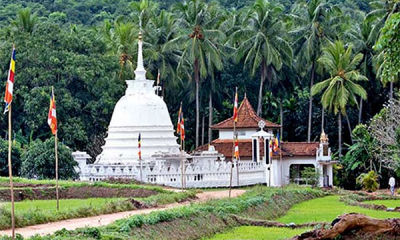
UNP challenges NPP move to amend Vihara – Devalagam Act