
News
Leaf disease threatens rubber plantations

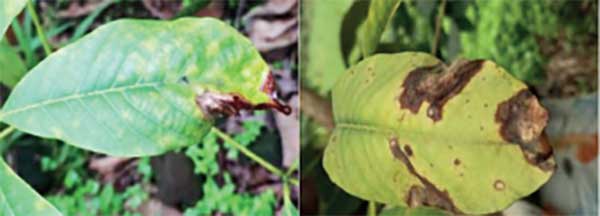
Pestalotiopsis leaf disease, a new threat to rubber trees across the whole world, has now become a grave threat to the sustainability of the rubber plantation industry in Sri Lanka, Colombo Rubber Traders’ Association (CRTA) said yesterday in a media statement.
“Although this fungus was reported in early 20th century in the country, it was considered a mild pathogen until recently. It reached epidemic proportions during the monsoon period of 2019 affecting plantations in Kalutara, Ratnapura and Galle districts. Unfortunately, almost all clones are susceptible for this disease.
“High humidity favours the spread of the disease causing defoliation and a considerable yield loss and ultimately the death of the tree, they said Unlike in the case of Corynespora leaf disease affecting young leaves at the apple green stage soon after wintering period, this new disease affects even mature leaves in the last quarter of the year.
“Other countries affected by this leaf disease are Malaysia, India, Thailand, Cameroon and Papua New Guinea, CRTA said. In all these countries there had been an alarming yield loss.
“As no resistant clone to this disease is identified to date, the only hope in managing the disease is by the use of fungicides. However, haphazard application of fungicides is of no use to control the disease. Chemical spraying should be done at the early stages of development of the disease. Unfortunately, proper protocol for fungicides spraying has not been developed yet.
“The disease may reach epidemic proportions in the coming monsoon period of this year starting from mid-April and hence all stakeholders are requested to be vigilant about this threat to the rubber plantation and they are strongly advised to get the assistance of scientists of the RRI in any emergency.”


By Anuradha Hiripitiyage
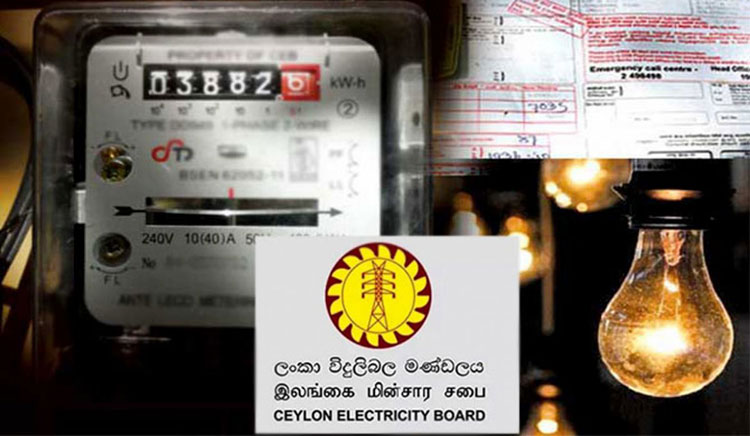
Electricity tariffs should be reduced by between 3 and 5 percent instead of being increased by 2.88 percent in the fourth quarter, as proposed by the National System Operator (NSO), Electricity Consumers’ Association Secretary Sanjeewa Dhammika said.
Addressing a media briefing in Maradagahamula, Divulapitiya, Gampaha, yesterday (16), Dhammika said a proper assessment of electricity generation costs, including the contribution of hydropower, could justify a reduction in tariffs.
He said the NSO had sought approval from the Public Utilities Commission of Sri Lanka (PUCSL) for a 2.88 percent tariff increase, which was expected to generate an additional Rs. 4,438 million.
However, the Commission had indicated that an increase of only 1.46 percent was warranted, amounting to Rs. 2,245 million, he said, adding that even this increase was unnecessary.
Dhammika alleged that the proposed revision sought to pass on to electricity consumers the financial burden arising from the non-arrival of five coal shipments and failed tenders.
“The Government had said that the burden of coal-related losses would not be passed on to the public. It is therefore unjust to make consumers bear these costs,” he said.
He pointed out that the PUCSL had forecast that hydropower would account for 32.34 percent of total electricity generation in the coming quarter, while the cost of such generation would represent only 3.45 percent of the overall cost of electricity production.
Consumers should benefit from the lower cost of hydropower generation rather than bear the burden of more expensive thermal power generation, he said.
Dhammika also questioned the inclusion of Rs. 669 million in capacity charges that had not been approved by the PUCSL, as well as a further Rs. 1,069 million to repay loans relating to incomplete projects.
Including such charges in the proposed tariff revision was unjustifiable, he said.
The PUCSL has given the public until October 30 to submit their views on the proposed tariff revision.
Dhammika said the possibility of increased hydropower generation in the coming weeks, as reservoir levels rise, should also be taken into account when determining electricity tariffs.
He maintained that tariffs could be reduced by 3 to 5 percent if hydropower generation was properly assessed and coal-related losses and unapproved charges were excluded from the calculations.
He further claimed that electricity tariffs could be reduced by as much as 10 percent through the promotion of renewable energy and the effective use of solar power and battery storage systems.
The Electricity Consumers’ Association urged the Government to withdraw the proposed tariff increase, insisting that consumers should not be made to bear costs arising from coal supply problems and other disputed charges.

By S.K. Samaranayake
Most Ven. Warakagoda Sri Gnanaratana Mahanayake Thera of the Asgiri Chapter has called for the immediate release of Ven. Galagodaaththe Gnanasara Thera, who is currently serving a prison sentence, following a court ruling.
The Asgiri Mahanayake made the appeal when a delegation of senior prison officials, including Assistant Commissioner of Prisons and Director of Operations Senaka Pallegedara, called on him on the 16th.
During the meeting, the prelate warned that the continued incarceration of Ven. Gnanasara Thera could lead to a volatile situation and cause public agitation.
Responding to the appeal, the prison officials informed the Mahanayake Thera that the authority to order the release of Ven. Gnanasara Thera did not rest with the Prisons Department but with the President.
Other senior prison officials, including Rajeev Srimal Silva, Sampath Warnakulasooriya and Mangala Welivita, were also present at the meeting.
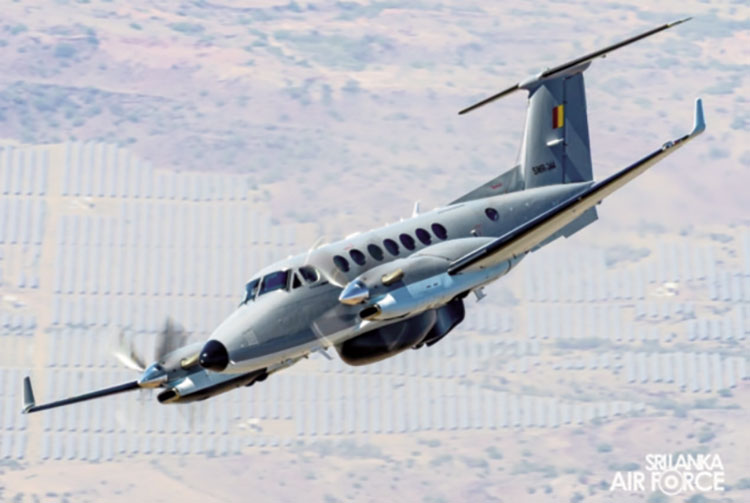
The Sri Lanka Air Force participated in a multinational air exercise in India, alongside the air forces of the United States, France and Germany, as Sri Lanka continues to expand military cooperation with foreign countries.
A Sri Lankan Air Force Beechcraft King Air 360ER aircraft, and a six-member crew, took part in Exercise Tarang Shakti 2026, held at Air Force Station Jodhpur, from September 26 to October 12.
The exercise was hosted by the Indian Air Force, under the theme “Power in Partnership,” and involved Australia, Bangladesh and the United Arab Emirates, among other participating countries.
According to the Sri Lanka Air Force, the exercise was aimed at enhancing operational cooperation and interoperability among participating air forces and providing opportunities to share tactics and operational experience.
India’s public broadcaster reported that the exercise included training and experience in planning and conducting joint multinational combat operations, including counter-air, air defence, reconnaissance and air-to-air refuelling missions.
The exercise also involved 32 countries as observers.
Sri Lanka’s participation comes amid increased military engagement with foreign partners. India and Sri Lanka recently exchanged 240 military personnel under a tri-service exchange programme.
Sri Lankan military personnel also recently participated in a counter-terrorism exercise with Russia, while a senior US Army Pacific official visited Sri Lanka and discussed opportunities for greater joint training.

Cut power bills by 3-5%, don’t hike them, consumers demand

Asgiri Mahanayake calls for immediate release of Gnanasara Thera

Lanka Air Force joins multinational exercise in India

Shiranthi granted bail in ‘Siriliya Saviya’ fund probe

Three Thai nationals arrested with hashish at BIA

Beyond arrivals: Can tourism and hospitality power Sri Lanka’s next growth phase?

‘Dates have the highest sugar content to fight Coronavirus’

Sunday Island 27 December – Headlines

#SundayIsland 17th December – Headlines

Sunday Island – 28th March

Sunday Island Headlines – 21 March

Sunday Island – 21st February – Headlines
-

 News6 days ago
Sri Lanka escalates anti-graft drive with Shiranthi’s jailing
-

 Latest News5 days ago
Farhan and Sadaqat help Pakistan seal series in style
-

 News6 days ago
Iranian ships stranded, Lanka fears US sanctions
-

 Latest News4 days ago
Nissanka’s return headlines Sri Lanka’s Test squad against Pakistan
-

 Features5 days ago
Intake 16: 45 years of duty and honour
-
 News5 days ago
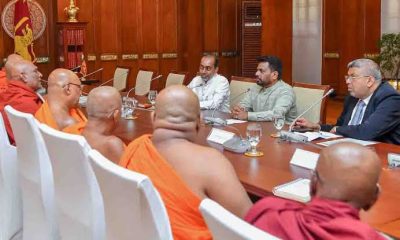
Malwathu Chapter issues statement on talks with President over Gnanasara Thera’s robes
-
 News5 days ago
CP alleges NPP has taken the blame for illegal US sanctions on Iranian vessels
-
 News6 days ago
Navi Pillay’s Lankan affairs in focus as she wins 2026 Nobel Peace Prize