
Latest News
Anthropic urges AI labs to pause, warns humans risk losing control

Anthropic is proposing that the world’s top artificial intelligence companies come up with a coordinated way to pause development of advanced AI systems, warning that the technology is improving so quickly that there’s a risk humans would lose control.
The company behind the Claude chatbot said in a blog post on Thursday that, as cutting-edge AI gets increasingly faster at carrying out tasks, “it would be good for the world to have the option to slow or temporarily pause” its development.
Anthropic said its internal research institute plans to explore the issue in collaboration with others and “take actions” to help build the systems for a credible slowdown or pause, without being more specific.
Anthropic rival OpenAI argued for a different approach in a report published on Wednesday, saying that “democratic governments — not private companies acting alone — must ultimately determine the rules, safeguards, and accountability mechanisms”.
“Our view is that decisions about the pace of AI innovation should not be left to any one lab, company, or special interest group,” it said.
AI models are getting faster, with rapid increases in how quickly they can carry out software tasks like coding on their own, Anthropic said in its post. Based on current trends and given enough computing power, an AI system could be able to design and develop its own successor, in what is known as “recursive self-improvement”.
Self-building AI would be a major technological milestone that would bring benefits in science, healthcare and other areas, Anthropic said, but it “also might increase the risks of humans losing control over AI systems”.
Some tech industry figures have long warned of such a scenario.
Anthropic’s post comes after a different warning this week from a team of researchers at the University of Toronto who showed how AI tools could be used to create a new kind of AI “worm” that adapts its hacking strategy as it spreads from device to device and takes over a vast computing network.
“I think it’s really important that people understand that it’s not just the biggest, most powerful language models that pose the security concerns,” lead researcher Nicolas Papernot said in an interview.
The authors of the Anthropic post, company cofounder Jack Clark and Marina Favaro, head of its research institute, said the pause would be used to enable “societal structures and alignment research” to keep up with AI advances. Alignment is industry shorthand for making sure the technology matches human values and intentions.
The proposed coordination would let advanced AI labs verify that global rivals have actually stopped or slowed their work, “and that a bad actor could not use the auspices of a coordinated slowdown to jump ahead in secret”.
The company said a coordinated global mechanism is needed because, without it, a slowdown in AI development could let the “least cautious” players catch up and add to pressure on companies and governments as they make tough choices about AI safety.
Fears that advanced AI systems may get out of human control and cause societal harm have risen as the technology becomes increasingly capable. Anthropic’s own Mythos model sent shockwaves through industries, including banking and software, earlier this year with its ability to find vulnerabilities in existing code.
But regulation has been slow, especially in the US, where most leading AI labs are based. A Trump administration executive order earlier this week put the onus on the labs themselves, asking them to voluntarily submit their most capable models for government cybersecurity testing before public release.
Safety focus
AI researchers have also urged a pause before, but have had little success. Elon Musk, who owns AI lab xAI, was among the backers of a 2023 push by the non-profit Future of Life Institute to halt AI development for six months to allow time for safety guardrails.
Anthropic has long positioned itself as a safety-focused AI lab. Earlier this year, it refused to let the US military use its models for domestic surveillance and fully autonomous weapons, prompting backlash from the government, which put it on a national security blacklist, set to take effect later in 2026.
Anthropic’s post comes as the company and ChatGPT-maker OpenAI race to sell shares on the stock market, in an IPO that could value Anthropic at nearly a trillion dollars.
Papernot notified Canadian cybersecurity authorities prior to releasing his report, which shows how researchers developed the worm in a laboratory by using an “open-source” AI tool that is easy for software developers to cheaply access and modify.
“In the past, cyber attackers would focus on targets that are very high value,” he said. “Banking systems, hospitals, electricity grids, water treatment systems, schools.”
Papernot agreed that there should be more collaboration between companies, government agencies and academic researchers to develop countermeasures as AI-powered hacking tools supercharge the search for computer vulnerabilities.
“That old laptop you have in your basement that you don’t check on regularly doesn’t seem like a very high-value target, but it can be used as a launch pad to attack these higher-value targets,” he said. “Anything connected to the internet is now at risk because of how low the cost has become to mount these cyberattacks.”
[Aljazeera]

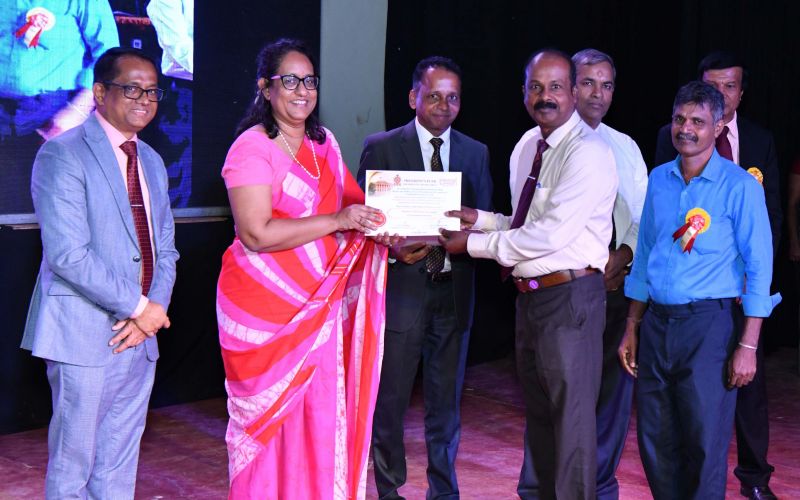
The “Mehewara Pasasum” programme to recognise Divisional Secretariats in the Eastern Province that demonstrated the highest level of performance in 2025 was held recently at the Swami Vipulananda Institute of Aesthetic Studies of the Eastern University, under the patronage of Prime Minister Dr Harini Amarasuriya. The programme was held as part of the initiative to decentralise President’s Fund services to the Divisional Secretariat level, with the aim of providing the public with a more efficient and prompt service.
Of the Divisional Secretariats in the three districts of Ampara, Batticaloa and Trincomalee, nine Divisional Secretariats, three from each district, were selected for recognition based on their efficiency in receiving President’s Fund applications and responding to them promptly.
Accordingly, the Sammanthurai Divisional Secretariat secured first place in the Ampara District, while the Addalachchenai Divisional Secretariat secured second place and the Kalmunai Divisional Secretariat third place.
In the Batticaloa District, first place was secured by the Kattankudy Divisional Secretariat, second place by the Manmunai North Divisional Secretariat and third place by the Koralaipattu Central Divisional Secretariat.
In the Trincomalee District, first place was secured by the Trincomalee Town and Gravets Divisional Secretariat, second place by the Kinniya Divisional Secretariat and third place by the Muttur Divisional Secretariat.
The first “Mehewara Pasasum” programme was held in Colombo, the second in Batticaloa, and this was the third programme.
Speaker Dr Jagath Wickramaratne, Minister of Industry and Entrepreneurship Development Sunil Handunnetti, Senior Additional Secretary to the President and Secretary to the President’s Fund Roshan Gamage, and a number of government officials and others were present at the occasion.
(PMD)
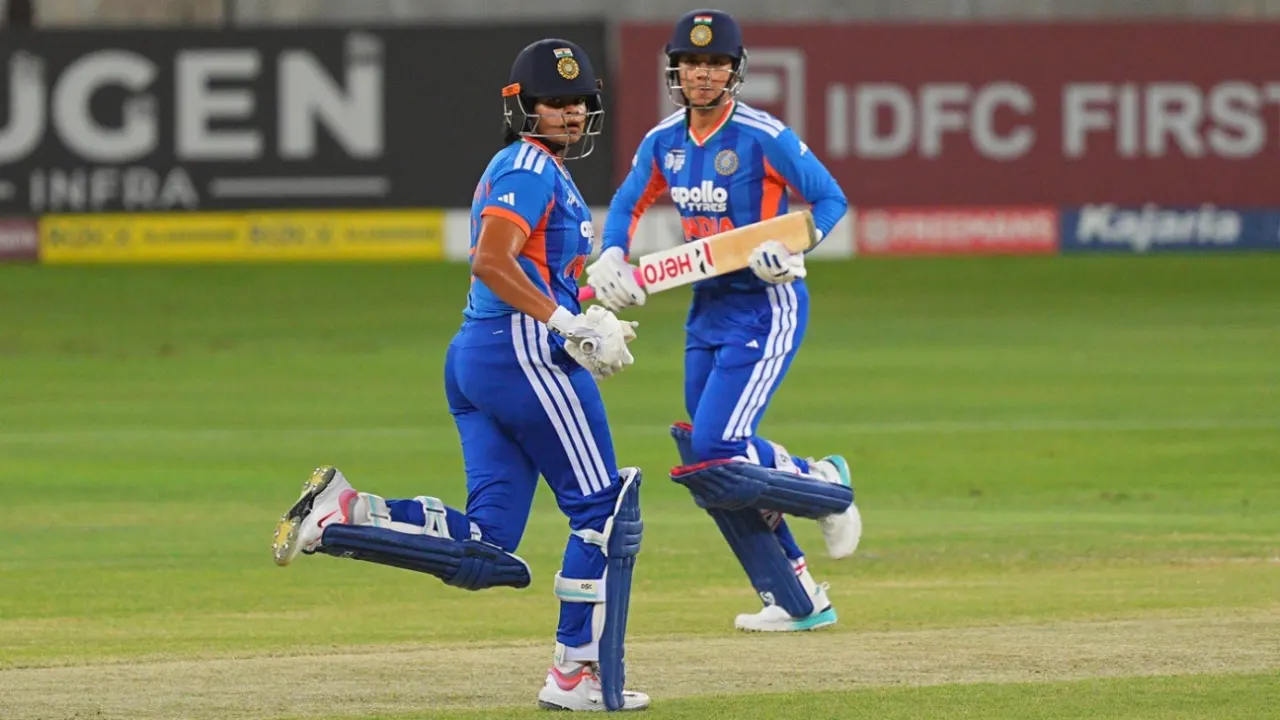
A commanding opening stand between Shafali Verma and Smriti Mandhana, followed by an excellent overall bowling effort, gave India their eighth Asia Cup title, fourth in T20 format, as they beat previous champions Sri Lanka by 72 runs in Dubai.
Shafali and Mandhana put up 129 for the first wicket, the highest partnership for any wicket in the Women’s T20 Asia Cup, to power India to 183 for 5. Sri Lanka’s chase never got going, despite India dropping as many as five catches, as the spin unit led by Deepti Sharmaand N Shree Charani kept them under control throughout. Chamari Athapaththu top-scored with 36, but Sri Lanka were eventually bowled out for 111. India now lead Sri Lanka 6-1 in Asia Cup final meetings.
Shafali set the tone after captain Harmanpreet Kaur opted to bat after winning the toss. When Sri Lanka introduced spin in the second over, both openers immediately attacked, picking up two boundaries. But Shafali combined power with placement in the third over, first using the pace on a short ball from outside off to guide it past short third, before clipping a length delivery through midwicket to make it back-to-back fours.
Athapaththu brought herself on in the fifth over but that brought little respite. Shafali got underneath a tossed-up delivery and launched it straight back over the bowler’s head before sending another ball in the slot over long-on. India raced to 57 without loss at the end of the powerplay.
The boundary-hitting continued after the powerplay too, with Shafali finding the ropes regularly on her way to a 24-ball fifty, the fastest half-century in Women’s T20 Asia Cup history. Mandhana, who had initially scored at around a run a ball, then joined in on the fun as she lofted a flighted delivery from Chamudi Praboda over long-on before bringing up her own half-century, off 36 balls, with a cut through the offside. India reached 98 without loss at the end of ten overs.
With India looking well on track for a 200-plus total, Sri Lanka finally made inroads in the 13th over when Praboda broke through, having Shafali mistime a shot to cover. India suffered another setback in the following over when Mandhana was run out for the third time in the tournament. Harmanpreet, coming in at No. 3, struck Athapaththu’s delivery straight to point and immediately set off for a single, but she hesitated midway before continuing, leaving Mandhana stranded as the throw came in. The mix-up ended Mandhana’s innings on 59, with Sri Lanka sending back both well-set openers in a space of six balls.
Sri Lanka could have had Richa Ghosh soon after but Kavisha Dilhari could not hold on to a difficult running catch. Ghosh had mistimed a slog sweep towards deep backward square leg, with Dilhari racing in and diving forward, only for the ball to slip from her hands as she hit the ground. Ghosh could not make the most of the reprieve as she scored 15 off 13 before picking out cover.
Sri Lanka did a better job at the death, restricting India and picking up the wickets of Harmanpreet and Deepti in successive deliveries in the 19th over. That brought G Kamalini, playing her first match in this Asia Cup and just her second T20I, to the crease and she managed a four and a six off the last two balls to take India to 183 for 5.
A chase of 184 was never going to be easy, but Imesha Dulani started the proceedings positively, shuffling across to a full delivery from Kranti Gaud and paddling it past short fine leg for four. But a similar attempt brought an end to her innings in the fourth ball of the over, with Dulani attempting a scoop only to miss the ball completely and watch it crash into the top of leg stump.
Earlier, Sri Lanka had suffered a setback when Vishmi Gunaratne appeared to roll her ankle while returning the ball and was carried off the field on a stretcher. She, however, came out to bat at No. 3, attempting to rebuild alongside Athapaththu. But fast bowlers Gaud and Nandani Sharma left the duo frustrated, with Athapaththu enduring a testing over from Gaud, getting off the mark only on the eighth delivery she faced.
She then showed off some of her big hitting, taking on Shafali for a six and a four, but despite the boundaries, she was only going at a run-a-ball at the end of the powerplay. Any hopes of Sri Lanka coming close to chasing the total ended with her dismissal in the tenth over.
Anticipating Athapaththu would look to attack, Deepti shortened her length, making her charge down the pitch. But the ball turned away sharply, beating Athapaththu’s attempted shot, and Ghosh completed a straightforward stumping, dismissing the Sri Lanka captain for 36. Deepti struck once more in the over, having Gunaratne bowled, leaving Sri Lanka needing 121 off the last ten.
As has been the case throughout the tournament, India’s spinners showed their prowess, never letting Sri Lanka even have a sniff at the game thereon. Wickets fell regularly, with Charani removing Harshitha Samarawickrama, the hero of the 2024 Asia Cup with a sharp return catch for 9.
Charani then picked up two wickets in the over. Kavisha Dilhari fell first, slicing a thick outside edge towards short third, following which Nilakshika Silva, who was playing with a broken finger, top-edged a shot towards deep square leg.
India were sloppy in the field, dropping five catches but it was too late for Sri Lanka to capitalise on the chances. Deepti finished with three wickets and Charani with four, finishing as the tournament’s top two wicket-takers, as India bowled Sri Lanka out for 111 on the last ball of the innings.
Scores:
India Women 183 for 5 in 20 overs (Smriti Mandhana 59, Shafali Verma 68, Harmanpreet Kaur 14, Richa Ghosh 17, Gunalan Kamalini 15*; Mithalia Ayodhya 1-33, Chamari Athapaththu 1-34, Chamudi Prabodha 1-40) beat Sri Lanka Women 111 all out in 20 overs (Chamari Athapaththu 36, Vishmi Gunarathne 20, Nilakshika Silva 22; Kranti Gaud 1-08, Shafali Verma 1-23, Shree Charani 4-20, Deepti Sharma 3-19, Prema Rawat 1-22) by 72 runs
[Cricinfo]

Rumesh Tharanga outsmarted a strong field including his closest rivals this season, Anderson Peters and Julian Webber to clinch the men’s javelin title of the inaugural Ultimate Championship in Budapest.
The Diamond League champion overtook Webber and Peters with his third round throw which was measured at 87.11 metres before further improving the distance to a colossal 91.01metres, the third time the 23 year old has exceeded the 90 meters mark this season.
The two-time world champion Peters finished second with 86.18m.
European champion Weber, who led in the first round, finished third with 85.89m. (RF)

US Supreme Court rejects Trump mail ballot restrictions ahead of midterms

Eastern Province Divisional Secretariats recognized for outstanding performance

Students of Rahmaniya Maha Vidyalaya Eravur visit Presidential Secretariat and President’s House

Showers above 100 mm expected at times in the Western, Sabaragamuwa, Central, Uva and Southern provinces, and in Ampara and Batticaloa districts

Controversy over absence of Agriculture Minister, Deputy at NPP’s inaugural farmers’ rally

Thousands march in Jaffna demanding international investigation into Chemmani

‘Dates have the highest sugar content to fight Coronavirus’

Sunday Island 27 December – Headlines

#SundayIsland 17th December – Headlines

Sunday Island – 28th March

Sunday Island Headlines – 21 March

Sunday Island – 21st February – Headlines
-

 Sports4 days ago
DDS set to lose Test captaincy
-

 News4 days ago
Sri Lanka faces new grid challenge as rooftop solar surges: former CEB GM
-

 Latest News4 days ago
Shafali, Deepti power India into sixth T20 Asia Cup final
-

 Latest News3 days ago
Sri Lanka thwart Fatima Sana challenge to secure Asia Cup final spot
-

 Opinion6 days ago
Navigating Sri Lanka’s Israeli Dilemma
-

 Features5 days ago
Lost for 90 years: Rare Goby resurfaces in Jaffna
-

 News2 days ago
Gnanasara Thero absconding after SC ruling
-

 News3 days ago
Ammunition cache found in old Kandy bungalow