
News
Delisting of Tamil Diaspora groups irks some; explanation sought

Decision based on GoSL assurance given in Geneva last June
By Shamindra Ferdinando
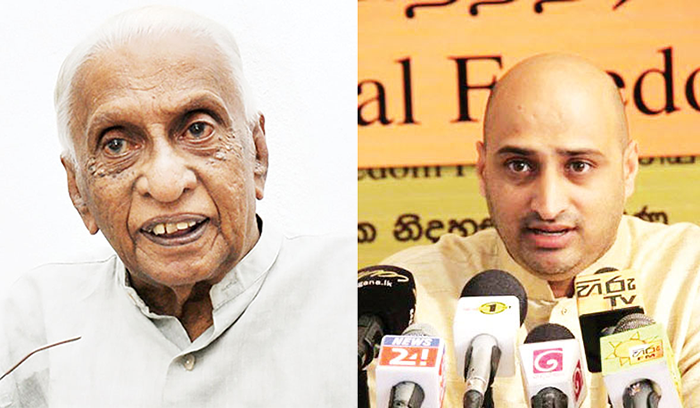
Dr. Gunadasa Amarasekera yesterday (14) said President Ranil Wickremesinghe’s government should explain the rationale behind delisting several Tamil Diaspora groups and individuals.
“The timing of the government announcement really worries us,” Dr. Amarasekera said on behalf of the Federation of National Organizations (FNO). He said such moves couldn’t be simply justified on the basis of the forthcoming sessions of the Geneva-based United Nations Human Rights Council. The next UNHRC sessions are scheduled for September.
Recalling that he too strongly backed the stand taken by President Wickremesinghe with regard to US Ambassador Julie Chung’s opposition to measures the government adopted to counter violent protests, Dr. Amarasekera emphasised national security couldn’t be jeopardised by politically-motivated decisions. The Defence and Foreign Ministries owed the public an explanation as regards the procedure adopted in delisting some Tamil diaspora groups and individuals.
The UK-based Global Tamil Forum (GTF), the British Tamil Forum (BTF) and the Canadian Tamil Congress (CTC) had been among those delisted, through an Extraordinary Gazette issued by the Ministry of Defence.National Freedom Front (NFF) spokesperson Mohammed Muzammil, MP, too, echoed Dr. Amarasekera’s concerns. Addressing a hastily arranged media briefing at NFF’s Pita Kotte party office, lawmaker Muzammil asked whether the government had received an undertaking from those delisted groups, and individuals, whether they would abandon the separatist agenda. Lawmaker Muzammil said President Wickremesinghe, who holds the defence portfolio, should address the concerns of those who felt betrayed by the disputed de-listing of those who propagated separatist ideology though the armed forces eradicated the LTTE in 2009.
Both Dr. Amarasekera and MP Muzammil pointed out that Tamil Makkal Theshiya Kutani leader C.V. Vignewaran, following a recent meeting with President Wickremesinghe, had declared that he received an assurance with regard to several of their demands. They asked whether the de-listing of these organizations, and individuals, had been part of the agreement between Tamil political parties and President Wickremesinghe.
The Island
sought the views of Suren Surendiran of the GTF, who is among those delisted. The UK-based GTF spokesperson alleged that the entire process of designation of groups and individuals was arbitrary, irrational, and an outright abuse of the United Nations Regulations – aimed at suppressing freedom of speech and dissent, not just within Sri Lanka but also across the borders.
“GTF and I were listed in 2014, delisted in 2015, re-listed in 2021 and re-delisted in 2022,” Surendiran said, declaring they remained committed to their original ideals meant to achieve justifiable aspirations of the Tamil-speaking people, and implementation of the 2015 accountability resolution.
Surendiran has sent us the following response: “Every time when a resolution is passed at the UNHRC, calling for Accountability and Reconciliation, the Rajapaksas, be it Mahinda or Gotabaya, will proscribe us as an angry reaction and then realise that no other government or international institution, including progressive Sri Lankans of all communities, and the wider media, recognise these proscriptions and just before another UNHRC session, the sitting government will de-proscribe us. This has been the case since 2014.”
“GTF is grateful that the international community and many Sri Lankan stakeholders (including the media) ignored this listing for what it truly was.
“We did an estimation on the loss of foreign currency inward flow into Sri Lanka directly related to these proscriptions of 2014 and 2021, at least per annum the loss has been USD 300 mn to half a billion dollars.
Former Presidents Mahinda Rajapaksa, Gotabaya Rajapaksa, Secretary of Defence Kamal Gunaratne, Former Foreign Minister G L Peiris and the notorious so called “terrorism expert” Rohan Gunaratna must explain these losses to the Sri Lankan people and held accountable for their arbitrary decisions and explain what benefits these proscriptions achieved.”
Authoritative sources said that contrary to concerns expressed by various iparties as regards the delisting of organizations and certain individuals, the decision to do so was announced by the former Foreign Affairs Minister Prof GL Peiris in mid-June this year at the 50th Geneva sessions. The Foreign Ministry quoted Prof. Peiris as having said: “The list of designated individuals, groups and entities under the United Nations Regulation No. 1 of 2012 is being reviewed. As of now 318 individuals and 04 entitles are proposed to be delisted. This is a continuing exercise.”
Sources said that it wouldn’t be fair to seek explanation from the incumbent government for a decision taken by the previous administration.





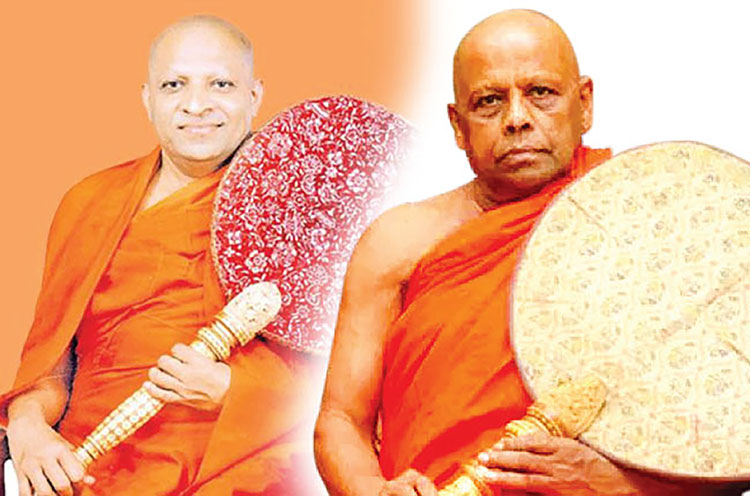
MONETABRIEF– Sri Lanka’s two most senior Buddhist chapters, Malwatte and Asgiriya, demanded special concessions for monks serving prison sentences, following the disrobing of convicted monk Ven. Galagodaatte Gnanasara in line with established procedures.
The chief prelate of the Asgiriya chapter, Most Venerable Warakagoda Sri Gnanarathana, told Prisons Commissioner Senaka Palletenna that Ven. Gnanasara, who is serving a six-year sentence for contempt of court, must be released immediately.
Prison authorities have no power to release or pardon convicts, but Palletenna told the monk in Kandy on Friday that he would convey his request to the relevant government authorities.
“There is no point in talking about this and that… The entire country has been shaken (??????? ) . He must be released,” the Asgiriya chief prelate said.
The Malwatte chief prelate, Most Venerable Thibbatuwawe Sri Siddhartha Sumangala, appeared to accept the court verdict against Ven. Gnanasara, but asked the prisons chief whether a separate section could be established for convicted monks.
Palletenna noted that a special ward for the clergy already existed at Welikada Prison.
At least 63 convicted Buddhist monks are currently incarcerated within Sri Lanka’s criminal justice system.
Meanwhile, a group of 34 Buddhist monks named in a Colombo Fort Magistrate’s Court order to vacate the vicinity of the Presidential Secretariat ended their protest and dispersed after lunch on Friday.The monks are demanding an unconditional pardon for Ven. Gnanasara, who has previously been imprisoned, making him a reconvicted prisoner.
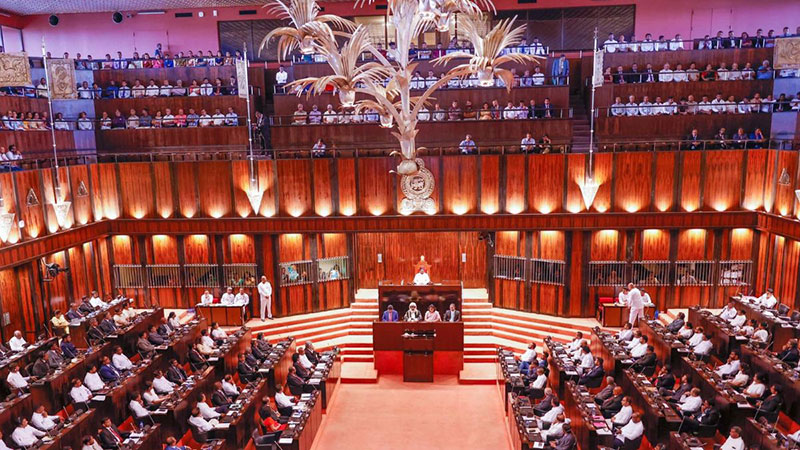
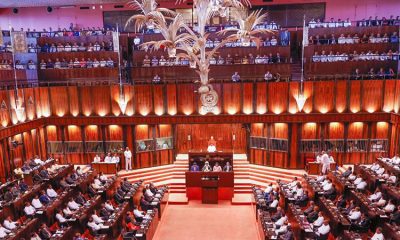
The debate on the no-confidence motion against Speaker Dr. Jagath Wickramaratne, submitted by the Samagi Jana Balawegaya (SJB), has been postponed indefinitely pending the Attorney General’s opinion on certain technical issues in the motion.
Government representatives raised the matter at a meeting of the Committee on Parliamentary Business, pointing out that several provisions of the motion required clarification and that the Attorney General’s advice should be obtained.
As obtaining the opinion would take time, the debate could not be scheduled for the next parliamentary week, parliamentary sources said.
Chief Opposition Whip Gayantha Karunatilaka said a date for the debate would be decided after the Attorney General’s advice was received.
Meanwhile, Parliament is scheduled to meet from October 20 to 23, Secretary General of Parliament Kushani Rohanadeera announced.
The parliamentary business for the week was finalised at a meeting of the Committee on Parliamentary Business held on Friday (16) under the chairmanship of Deputy Speaker Dr. Rizvie Salih.
On each sitting day, the period from 9.30 a.m. to 10 a.m. will be allocated for parliamentary business under Items 1 to 6 of Standing Order 22. Questions for Oral Answers will be taken up from 10 a.m. to 11 a.m., followed by questions under Standing Order 27(2) from 11 a.m. to 11.30 a.m.
On Tuesday, October 20, an Opposition-sponsored Adjournment Motion will be debated from 11.30 a.m. to 5.30 p.m.
On Wednesday, October 21, a resolution under the Public Debt Management Act and a Supplementary Estimate will be taken up for debate and approval from 11.30 a.m. to 5 p.m. The annual reports of five statutory institutions will subsequently be presented for approval without debate, while questions at the Adjournment Time will be taken up from 5 p.m. to 5.30 p.m.
On Thursday, October 22, the Second Reading debates on two Bills to amend the Poisons, Opium and Dangerous Drugs Ordinance (Bills Nos. 79 and 80) will be held from 11.30 a.m. to 5 p.m.
The annual reports of five statutory institutions will then be taken up for approval without debate, followed by an Opposition-sponsored Adjournment Motion from 5 p.m. to 5.30 p.m.
On Friday, October 23, the Second Reading debate on the Elimination of Rabies and Registration of Dogs Bill will be held from 11.30 a.m. to 5 p.m. A Government-sponsored Adjournment Motion will be debated during the final half-hour of the sitting.

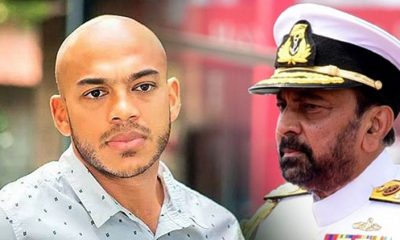
Former Navy Commander Admiral Wasantha Karannagoda had, by letter dated May 19, 2014, requested the Secretary to the Ministry of Defence to approve the funds required for former Navy Lieutenant Yoshitha Rajapaksa, son of former President Mahinda Rajapaksa, to attend the Royal Navy Young Officers Course at the Royal Navy Training College in the United Kingdom, the Colombo High Court was told on Thursday (15).
The court was informed that £24,536 in public funds had been spent on the training programme. The details emerged during testimony by a Navy representative appearing on behalf of former Navy Commander Admiral Travis Sinniah before Colombo High Court Judge Udesh Ranatunga, when the money laundering case against Rajapaksa was taken up for hearing.
Responding to questions during cross-examination, the witness explained that payments for Navy officers attending overseas training programmes were generally made in foreign currencies, including US dollars and British pounds.
Meanwhile, Navy Captain Nuwan Thushara Arangala, testifying for the prosecution, told court that Rajapaksa had received a total of Rs. 5,159,626.37 in salaries and allowances during his nine years of service in the Navy.
The court was informed that Rajapaksa had served as a Navy Lieutenant from December 14, 2006, to February 28, 2017, although his service had been suspended on February 28, 2016.
According to the testimony, his monthly gross salary was Rs. 16,390, in addition to allowances for food, uniforms, housing and special duties.
The witness clarified that these allowances did not include payments made for overseas training programmes or participation in sporting events while representing the Navy.
During the proceedings, the prosecution also submitted Rajapaksa’s annual declarations of assets and liabilities for the period from 2009 to 2015.
A National Savings Bank official also testified regarding savings accounts and fixed deposits maintained by Rajapaksa, stating that no withdrawals had been made from the accounts since they were opened.
Rajapaksa is facing charges under the Prevention of Money Laundering Act over his alleged failure to explain the source of nearly Rs. 735 million acquired between August 1, 2012, and August 29, 2013, in Rajagiriya and Bambalapitiya.
The prosecution alleges that funds suspected to have been derived from unlawful activities were deposited in bank accounts and fixed deposits.
The court also heard testimony concerning the appointment of a guardian for Daisy Forrest, the second defendant in the case, and matters relating to the clearance of an imported outside broadcasting (OB) truck associated with CSN television.
Further examination of witnesses was scheduled for October 30, with the court directing 11 prosecution witnesses to appear on that date.

Showers or thundershowers will occur in most parts of the island after 1.00 p.m.

Buddhist hierarchy demands prison perks for monk convicts

Debate on NCM against Speaker postponed indefinitely

Karannagoda pushed for £24,536 for Yoshitha’s UK training, Court told

Flu cases surge across Lanka

Lankan rubies among treasures of London’s Cheapside Hoard

‘Dates have the highest sugar content to fight Coronavirus’

Sunday Island 27 December – Headlines

#SundayIsland 17th December – Headlines

Sunday Island – 28th March

Sunday Island Headlines – 21 March

Sunday Island – 21st February – Headlines
-

 Latest News6 days ago
Farhan and Sadaqat help Pakistan seal series in style
-

 Latest News5 days ago
Nissanka’s return headlines Sri Lanka’s Test squad against Pakistan
-
 Features6 days ago
Intake 16: 45 years of duty and honour
-
 News6 days ago
Malwathu Chapter issues statement on talks with President over Gnanasara Thera’s robes
-
 News6 days ago
CP alleges NPP has taken the blame for illegal US sanctions on Iranian vessels
-

 Opinion6 days ago
How long can Sri Lanka remain silent on its demographic crisis?
-

 News4 days ago
Sri Lanka, India caught in US-Iran ship crisis
-
 Latest News4 days ago
Kusal Mendis’ unbeaten 87 hands Sri Lanka consolation win