
News
Ambassador Chung suggests Lankan entrepreneurs build operations in US

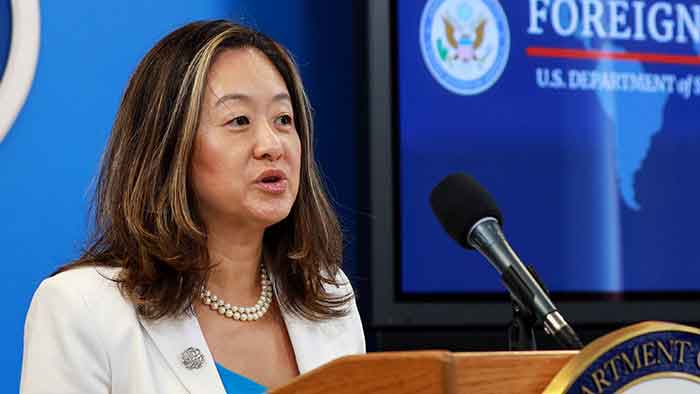
US Ambassador Julie Chung has urged the new government to prioritise transparency, good governance, and streamline trade regulations to attract foreign investment.
Addressing the Sri Lanka Apparel Exporters Association Annual General Meeting at the Cinnamon Grand Hotel on Monday, Ambassador Chung reaffirmed the strong and enduring economic partnership between the United States and Sri Lanka.
“As the new Sri Lankan government establishes its trade and investment priorities and plans, we are encouraged by the focus on transparency, good governance, and reinforcing the importance of a welcoming business environment, as I have discussed in recent weeks with senior officials. A clean and transparent procurement process, a level playing field for all investors, and the honoring of contracts will be watched keenly by foreign investors,” she said:
She said: The apparel industry, with its focus on ingenuity, creativity, and adaptability, plays a vital role in driving the global economy. It is an industry that not only shapes trends and consumer behaviour but also fuels economic growth, creates jobs, and fosters cross-border partnerships. Today, as we gather to celebrate the remarkable contributions of the Sri Lankan apparel sector, we recognize its critical role in global trade, with innovative designs and high-quality manufacturing that continue to make an impact around the world.
Speaking of ingenuity, the U.S. athletic footwear and apparel corporation Nike was started in 1964 by a young man selling shoes out of the trunk of his car. At the time, it was a small-scale operation with big dreams. Today, Nike is a $100 billion company with nearly 80,000 employees worldwide. This incredible success story is a testament to the power of determination, innovation, and commitment to producing a high-quality product. It shows us that with vision and drive, even the most humble beginnings can lead to extraordinary global success.
I would also like to remember Martin Trust, a native of Brooklyn, a giant of the apparel industry, and a dear friend to many of you. In 1970, Trust and his wife began an apparel business out of their apartment with a $1,000 initial investment. In the 1980s, Trust introduced U.S. manufacturing expertise and production techniques to the apparel industry right here in Sri Lanka. Today MAS Holdings, one of the companies Trust helped build, has invested back into the United States with a state-of-the-art design-to-delivery hub in Asheboro, North Carolina. Their Cetwick Product Development Hub and Support Center provides high-quality American jobs to individuals working in design, digital product creation, and logistics, while supporting U.S. universities and institutes engaged in research on apparel material sciences and other technologies.
The journey of companies like Nike and MAS remind us that success in the apparel industry is driven by a blend of creativity, resilience, and innovation – qualities that are clearly evident in the Sri Lankan apparel sector. From large-scale manufacturers to local entrepreneurs, your contributions are shaping the future of the global market. And as we continue to strengthen partnerships like the one between the U.S. and Sri Lanka, I am confident that the apparel industry will remain a key driver of prosperity, growth, and opportunity for both our nations.
The apparel industry–with so many connections to partnering with and adapting U.S. innovations–plays an indispensable role in Sri Lanka’s economic growth, with clothing and textiles remaining one of the country’s leading foreign currency earners. You are an important part of the foundation on which Sri Lanka’s growth depends. In a world that is changing rapidly, I know that the road ahead will undoubtedly present some unique challenges and opportunities – all twists and turns that I trust you’ll approach with the same tenacity, creativity, and commitment to innovation.
Last week, President Trump took office and outlined a clear set of priorities to make America safer, stronger, and more prosperous. I want to really underscore that the United States is open for business, and we look forward to welcoming even more business and investments in the coming years. U.S. apparel manufacturing is vibrant and diverse and has shown remarkable strength and continuous growth in the last several years. In fact, U.S. apparel manufacturing is projected to generate $365 billion in revenue in 2025 while employing 83,000 Americans. The U.S. market is not only one of the largest and most lucrative in the world, but it also provides unparalleled access to advanced technology, skilled labor, and a robust infrastructure that can significantly enhance your own production capabilities. By establishing operations in the United States, you can benefit from reduced shipping times, lower tariffs, and the ability to respond swiftly to market demands.
Investing in the United States is not just a strategic business move; it is a step toward building a more resilient and competitive future for your companies in the global marketplace.
As we know, the apparel industry is not immune to global shocks. How will you maintain resilience and innovation in a competitive global environment? As the new Sri Lankan government establishes its trade and investment priorities and plans, we are encouraged by the focus on transparency, good governance, and reinforcing the importance of a welcoming business environment, as I have discussed in recent weeks with senior officials. A clean and transparent procurement process, a level playing field for all investors, and the honoring of contracts will be watched keenly by foreign investors. The ability of the private sector to drive growth, unhindered by red tape and excessive regulation, is crucial for fostering economic progress and will be a key factor in the months ahead.
As the global apparel industry continues to evolve, Sri Lanka’s position as a leader in quality manufacturing and ethical practices can set a positive example. The United States remains a friend and partner in Sri Lanka’s journey. I hope all of you in the room tonight agree that U.S. partnership stands out for its commitment to transparency, ethical practices, and long-term collaboration, ensuring sustainable growth and mutual prosperity for both Sri Lanka and the United States. Together, we can drive economic growth in both of our countries while setting new standards for excellence on the global stage.




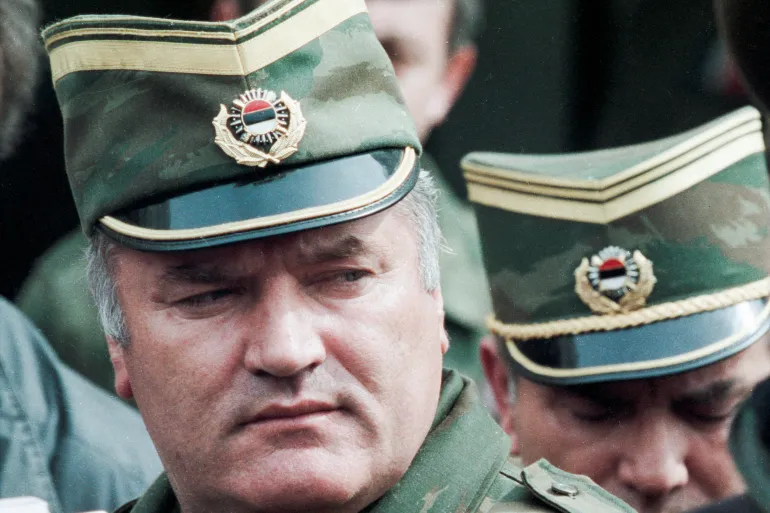
Bosnian Serb General Ratko Mladic, who was serving a life sentence for genocide, war crimes, and crimes against humanity during the bloody 1992-1995 war in Bosnia and Herzegovina, has died.
Mladic, the so-called “butcher of Bosnia” died at the age of 84, the Serbian state RTS television and the official Bosnian Serb television reported. His death was also confirmed by a UN official speaking to the Reuters news agency.
The reports said that Mladic died in a UN prison hospital in The Hague, Netherlands.
A family member of Mladic confirmed the reports and told the Associated Press that Mladic’s son, Darko Mladic, was on his way to The Hague.
Mladic was convicted of genocide for orchestrating the 1995 massacre of at least 8,000 Bosniak men and boys in a UN-designated “safe area” of Bosnia, in Europe’s worst atrocity since World War II.
He spent his last years in jail after he was convicted in 2017 for crimes the tribunal said at the time were “amongst the most heinous known to humankind”.
Former UN rights chief Zeid Ra’ad al Hussein described him as “the epitome of evil” after his conviction.
The former communist officer-turned nationalist warlord, was one of the most notorious figures of the conflict in which more than 100,000 people were killed and more than one million were driven from their homes.
He commanded his troops to “scorch the brains” of the Bosniaks and boasted of being a “Serbian god”.
When the Bosnian war started in 1992, Mladic became the commander of the Bosnian Serb troops and took control of large swaths of the country in an attempt to form a Serb mini-state.
Serbs under Mladic’s control laid siege to the capital, Sarajevo, and other cities and villages, established camps for detained Bosniaks and enemy soldiers, and systematically killed prisoners.
The killings, recognised as a genocide, were the culmination of a war that had lasted over three years, in which the Mladic pounded the besieged capital Sarajevo daily with the artillery, tanks, mortars and heavy machine guns of his nationalist Serb army, killing 10,000 people.
The dead from Srebrenica were bulldozed into mass graves over four days in July 1995, some of them dug up and relocated to remote mountains so as to hide evidence of the killings.
The goal, as determined by the UN International Criminal Tribunal for the former Yugoslavia (ICTY), was “ethnic cleansing” — the forcible expulsion of Bosniaks, Croats and other non-Serbs to clear Bosnian lands for a Greater Serbia.
The tribunal found that Mladic, together with late Serbian President Slobodan Milosevic and Bosnian Serb political leader Radovan Karadzic, were part of a criminal conspiracy to implement the plan.
Defiant to the end, Mladic said “I do not recognise this court,” at an ICTY hearing of his case in 2014.
When he was sentenced to life in prison in 2017 he shouted: “This is all lies, you are all liars!”
[Aljazeera]
* Govt. lacks plan to meet IMF targets
By Shamindra Ferdinando
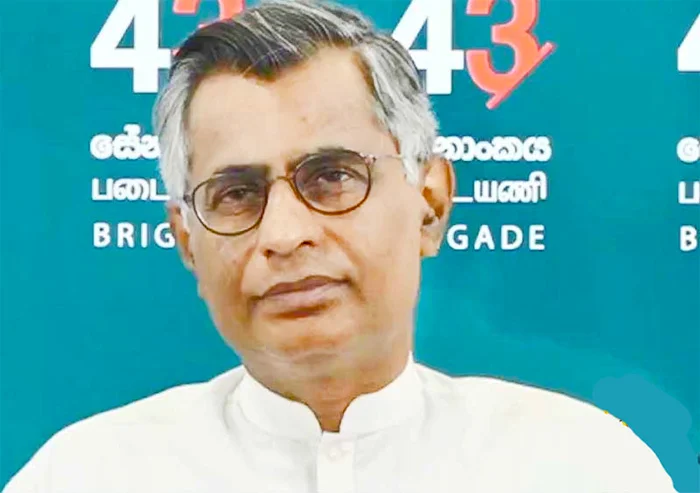
United Republican Front (URF) leader Patali Champika Ranawaka has alleged that the 22nd Amendment is aimed at enabling the National People’s Power (NPP) to perpetuate its rule without conducting elections.
The former Minister was addressing the media at the Flower Road Office of UNP leader Ranil Wickremesinghe on Tuesday (25). Alleging that the Pelawatte-based ‘red junta’ spearheaded the operation to enact the controversial 22nd Amendment, the ex-parliamentarian pointed out that neither President Anura Kumara Dissanayake nor Health and Media Minister Dr. Nalinda Jayathissa, who is also the Cabinet spokesman, never denied declarations made by various members of the NPP parliamentary group that elections wouldn’t be conducted for 10, 20 years.
The President and the Cabinet spokesman never clarified that such declarations were not the position of the government, Ranawaka said. The URF leader pointed out that some NPP/JVP members told those receiving appointments that they would also retire under the same administration.
Addressing the media after former External Affairs Minister Prof. G. L. Peiris, convenor of the Joint Opposition, said that the government recognised them as the real opposition. Referring to Dr. Jayathissa’s recent claim that they conspired at the residence of Prof. Peiris and challenged them to come on to the streets, ex-lawmaker Ranawaka thanked the Minister for the recognition at the expense of the Samagi Jana Balawegaya (SJB). The government accepted the challenge posed by them in spite of the main Opposition party, in Parliament, having 40 MPs, the URF Chief said, urging the government to reveal the identities of those who clandestinely led the ruling party.
The former MP said that the country was now aware of their conspiracies during the past six decades. Blaming the government for its inordinate delay in conducting the Provincial Council polls, and the failure to take tangible measures to do away with the executive presidency, as repeatedly promised in the run-up to the national elections in 2024, Ranawaka alleged that the government was busy conspiring to roll back the electoral map. He also alleged that President Dissanayake was leading the operation.
According to Ranawaka the government was keen to postpone elections indefinitely as its members feared to face the law under a different government.
Commenting on the economic situation, Ranawaka explained how under President Wickremesinghe tough measures were taken during the 2022 to 2024 period to stabilise the country with the backing of the International Monetary Fund (IMF). “However, the country cannot go on beyond 2027 under the current setup. In terms of the agreement with the IMF, the debt repayment was stopped. However, the country will have to start repayment in 2028,” the ex-MP said, pointing out the country’s reserves were down to USD 6.4 bn.
The ex-MP said the IMF expected Sri Lanka to maintain foreign reserves at USD 6.8 bn and to increase the reserves to USD 12 bn next year. In terms of the IMF’s recommendations, the foreign reserves have to be increased to USD 15 bn by 2028, Ranawaka said, recollecting how former President Ranil Wickremesinghe, at a recent book launch, explained the daunting challenges faced by the country on the economic front.
Ranawaka was referring to Wickremesinghe’s speech at the launch of former Minister Ranjith Siyambalapitiya’s book launch at the BMICH, where the former President warned of dire consequences if the government failed to adhere to the IMF formula.
The former Minister disputed the government’s much touted claim that corruption was dealt with. The person who caused an unprecedented gas crisis, in 2021, by promising to supply gas at a much lower price than what was paid by the then government at that time and ended up causing countrywide panic due to “accidental” blasts of domestic gas cylinders, received protection from this government.
The government conveniently refrained from initiating action against that person, Ranawaka said. Referring to the developments leading to President Gotabaya Rajapaksa’s government declaration of bankruptcy in April 2022, the ex-Minister claimed that the IMF, in a letter dated 7 March, 2022, alerted the Secretary to the President, the Finance Ministry and the Central Bank, of the impending economic collapse. The NPP government failed to take action against those responsible for creating the 2022 crisis, Ranawaka said.

Navy headquarters yesterday said it was continuing the search for Lt. Thilina Udayapriya, second-in-command of the Super Dvora Mark III Fast Attack Craft (FAC), which sank in the seas off Angulana, on 15 August, 2026. Of the 12-member crew, 11 were rescued but so far SLN efforts to locate the missing officer’s body had failed, sources said.
They said that the salvage operation of the sunken craft, taken delivery from Israel after the end of the war, is continuing amidst gruelling weather and rough sea conditions, and the sunken vessel is now off Bambalapitiya.
Sources said that the vessel collided with a sunken ship MV Thermopylae Sierra that sank in August 2012, during a monsoon storm. The ill-fated Super Dvora Mk III has gone over the ship wreck in spite of it being clearly demarcated in the nautical chart, aka hydrographic chart available to the ill-fated vessel’s crew. But authorities had failed to mark the site with a buoy to warn maritime traffic, in spite of public appeals. (SF)

More than 360 dead, 1,400 missing in Nepal and Tibet after Himalayan floods

Bosnian Serb convicted war criminal Ratko Mladic dies

Prince of Wales to celebrate 150th anniversary with six-a-side cricket

Unyielding Dinusha, spirited tail hold off India to save Colombo Test

US golfer Gogel gets six-month ban for betting

UAE’s Asif Khan handed 15-month ban for using a banned substance

‘Dates have the highest sugar content to fight Coronavirus’

Sunday Island 27 December – Headlines

#SundayIsland 17th December – Headlines

Sunday Island – 28th March

Sunday Island Headlines – 21 March

Sunday Island – 21st February – Headlines
-
 News7 days ago
Country’s first woman Surveyor General appointed
-

 Business6 days ago
SriLankan Airlines makes ShakthiSAT Mission possible for talented Sri Lankan student
-

 Features7 days ago
Medical education in Sri Lanka: Then and now
-
 Latest News7 days ago
Imran Khan moved to private hospital amid deteriorating health
-

 Latest News7 days ago
Government has declared 21, 22 and 23 August 2026 as national days of mourning
-
 Features5 days ago
My secondary schooling after Royal Primary
-

 Features5 days ago
From the First to the 22nd: A short history of Amendment Politics and Reform Frustrations
-
 News7 days ago
22A: Opp. demands all available SC judges hear petitions