
News
ADB funding for medicine: Govt. not allowed to participate in procurement process

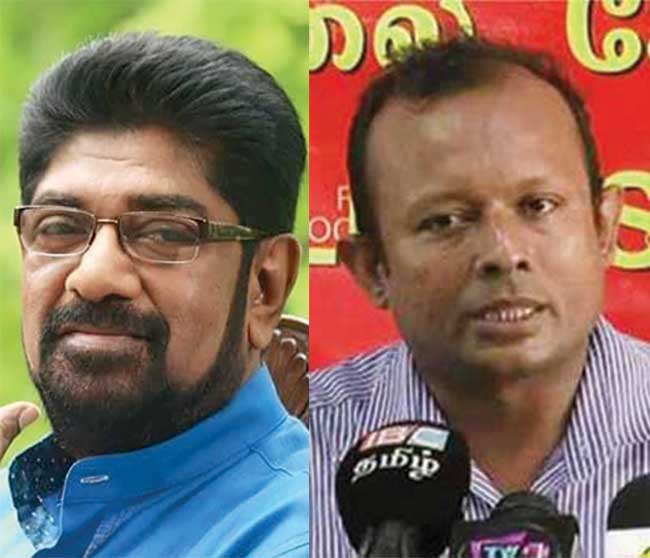
Jagoda stands by accusations
By Shamindra Ferdinando
Health Minister Keheliya Rambukwella has revealed that in respect of funds that had been made available by the Asian Development Bank (ADB) to procure urgently needed medicine, the entire procurement process was handled by that organisation.
The disclosure was made at a hastily arranged media briefing on Wednesday (28) at the health ministry to answer queries raised on allegations pertaining to procurement of medicines and surgical items through the Indian credit line.
Rambukwella said that there had been instances when the ADB even questioned some items chosen by the Health Ministry.The media was told the ADB provided USD 67 mn, in addition to USD 200 mn made available by India, USD 100 mn from Asian Infrastructure Investment Bank and USD 28 mn from China.
Minister Rambukwella maintained that the ADB procurement process was slow.
Education Secretary of the Frontline Socialist Party (FSP) Pubudu Jagoda, who challenged the procurement process in respect of the Indian credit line as well as Minister Rambukwelle’s recent controversial visit to India, said that the ADB policy was meant to deprive opportunities for waste and corruption.
Jagoda pointed out that the World Bank imposed strict regulations when Sri Lanka opened international competitive biddings for fertiliser.In terms of the World Bank guidelines, contractors and sub-contractors are required to permit the World Bank team to inspect records, accounts and other documents relating to the procurement process and audited by auditors appointed by the WB.
This was in relation to tenders that had been called for the procurement of 125,000 metric tonnes of urea for the Maha season utilising funds allocated under the USD 350 million emergency financing facility offered by the World Bank.
The Committee on Public Enterprises (COPE) during Prof. Charitha Herath’s tenure as its Chairman accused Litro of misappropriation of funds. Declaring that Sri Lanka couldn’t restore the supply of cooking gas till the World Bank provided USD 70 mn to the government contribution.
Prof. Herath said it had not been possible to restore the cooking gas supply until the World Bank provided USD 70 mn to the government and Sri Lanka added USD 20 mn to the funds provided by the WB. The lawmaker claimed that the supplier whose bid had been rejected earlier had secured the contract through a front. He alleged that a tonne of gas that could have been procured previously at a cost of USD 96 was finally obtained at USD 129.One-time Media Ministry Secretary alleged that even the funds provided by the World Bank at a time the country was struggling to resolve the economic crisis had been misappropriated.
Litro has denied lawmaker Herath’s allegations.Jagoda yesterday toldThe Islandthat the government-led procurement process had lost its credibility. Responding to questions, the FSP official said that there was no point in reminding the parliament of its responsibility as regards public finance. The country wouldn’t have ended up bankrupt if parliament fulfilled its obligations, Jagoda said, adding that emergency loans received from India as well as other countries and lending agencies had to be repaid with interest. Therefore, it would be the responsibility of the government to ensure a corruption-free process, Jagoda said.
The FSP official insisted that Minister Rambukwella hadn’t answered the issues raised by him and a section of the media. The Minister is on record as having said that 90 percent of the media reports and allegations made against him were false, Jagoda said. The FSP official challenged MP Rambukwella to disclose what he believed was accurate.






Governor of the American farming state of Montana Greg Gianforte, accompanied by First Lady Susan Gianforte and a delegation from the state, will arrive in Sri Lanka today (9) to expand opportunities for American agricultural exports and deepen security cooperation through the Montana National Guard’s State Partnership Program.
Declaring that Montana is the leading U.S. producer of pulses such as chickpeas, lentils, and dry peas, the US embassy in Colombo said that the delegation plans to engage with Sri Lankan pulse importers and traders to explore new markets for Montana-grown products, expand opportunities for American farmers, and strengthen commercial ties with Sri Lankan businesses.
“From Montana’s farms to Sri Lanka’s Indian Ocean shores, this partnership connects economic opportunity with shared security,” said U.S. Ambassador to Sri Lanka Eric Meyer. “We look forward to welcoming Governor Gianforte, First Lady Susan Gianforte, and the Montana delegation as they open doors for American farmers and deepen cooperation that benefits both our countries.”
The text of the statement: “Brigadier General Trenton Gibson, Montana’s Adjutant General and Commander of the Montana National Guard, will accompany the Governor’s delegation to advance defense cooperation through the State Partnership Program, which has linked Montana and Sri Lanka since 2021. In 2025, the Montana National Guard and Sri Lanka’s Ministry of Defense signed a Memorandum of Understanding to formalize and expand cooperation in disaster response, maritime domain awareness, and professional military education.
This partnership strengthens disaster readiness, maritime security, and the professional skills of military personnel while building lasting ties between Montana and Sri Lanka. The Governor’s visit will deepen that cooperation and open new opportunities for agricultural trade.
Starting his first business when he was in high school, Governor Greg Gianforte has spent his career creating jobs. In 1997, Greg and Susan Gianforte founded RightNow Technologies from their Bozeman home and grew it into the town’s largest commercial employer, creating over 500 high-paying Montana jobs.”
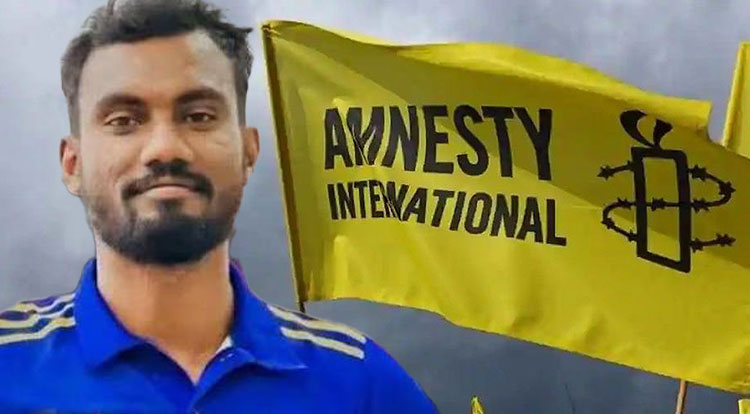
Amnesty International on Wednesday (7) urged Saudi Arabia to rescind death sentence against a Sri Lankan migrant worker over a controversial social media post.
The Criminal Court in Al Ahsa on 27 July this year sentenced Anojan Sivarasa to five years’ imprisonment and a SAR 3 million fine (USD 800,000), the maximum punishment under Article 6 of the Anti-Cybercrime Law. On 17 September, the Court of Appeal in the Eastern Region increased his sentence to death as a hadd (meaning “limits” or “boundaries”) refers to a category of fixed, mandatory criminal punishments in Sharia law) punishment, which is a fixed, mandatory punishment under Sharia. Anojan has appealed the death sentence.
Amnesty International opposes the death penalty in all cases without exception regardless of the nature or circumstances of the crime; guilt, innocence or other characteristics of the individual; or the method used by the state to carry out the execution.
The following is the text of AI statement issued in support of Sri Lanka’s efforts to secure the condemned man’s release: “Saudi Arabia’s authorities must urgently overturn the death sentence issued against a migrant worker on charges of “blasphemy”, said Amnesty International today. The organization is calling on Saudi authorities to release him immediately and unconditionally given his charges stem entirely from his exercise of his right to freedom of expression.
Anojan Sivarasa, a 24-year-old Sri Lankan national, was arrested on 1 July 2026 after posting a comment on Facebook deemed insulting to the prophet Mohammad. He told the judge that he made the comment during a moment of anger, and that he subsequently deleted it and published a video apology expressing remorse. He was prosecuted swiftly and just weeks later, on 27 July, was sentenced to five years in prison and a SAR 3 million fine (around USD 800,000). Less than two months later, this was increased to a death sentence on appeal on 17 September. He was denied access to a lawyer from the moment of his arrest and until his initial sentencing.
“The case raises alarming concerns about the application of the death penalty and the arbitrariness of the Saudi criminal justice system, with his initial sentence of five years transformed into a death sentence less than two months later on appeal. No one should be imprisoned, let alone face execution simply for expressing their views, even if these are deemed insulting or offensive. Anojan Sivarasa was exercising his right to freedom of expression and his execution would amount to arbitrary deprivation of life. Saudi authorities must immediately quash this death sentence, overturn his conviction and release him immediately and unconditionally,” said Heba Morayef, Regional Director for the Middle East and North Africa.
“International human rights law restricts the death penalty to the ‘most serious crimes,’ understood to involve intentional killing, yet the Saudi authorities have continued to impose death sentences for conduct that should not be criminalised and to execute people at a startling rate after grossly unfair trials, including for non-violent offences.
‘Sentencing a man to death over a social media post is a chilling illustration of the Saudi authorities’ willingness to impose this cruel and irreversible punishment, including for acts that should never be criminalised. Saudi authorities should immediately establish a moratorium on the use of the death penalty as a first move towards its full abolition.”
Saudi Arabia remains one of the world’s leading executioners. As of 5 October 2026, at least 175 people had been executed in Saudi Arabia this year, including many for drug-related offences. Foreign nationals account for a majority of those executed, with at least 94 foreign nationals from more than 20 countries put to death this year alone.
Saudi Arabia’s courts have, in recent years, imposed prison sentences of up to several decades for social media posts, with sentences swinging widely on appeal.
Saudi Arabia has no written penal code: many offences and their punishments are not defined in law but left to the discretion of judges, who rule according to their own interpretation of Sharia. Where written laws do exist, the authorities often rely on vague and overly broad provisions of the counter-terror law and anti-cybercrime law, such as impinging on “public order”, “religious values”, and “public morals,” to criminalise people solely based on their exercise of the right to freedom of expression.
“Saudi authorities must halt this crackdown on freedom of expression and immediately release all those detained solely on the basis of their exercise of human rights,” said Heba Morayef.
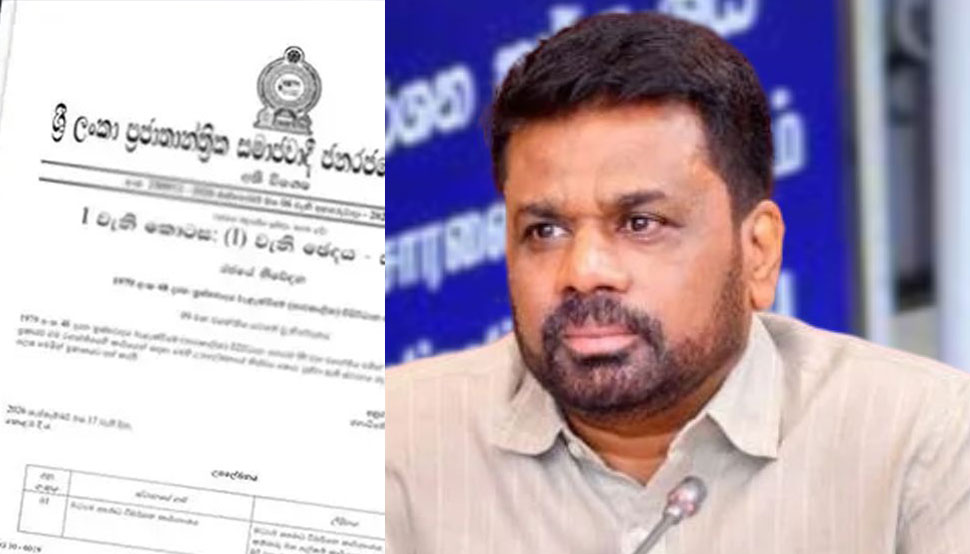
President Anura Kumara Dissanayake has declared the Central Criminal Investigation Bureau (CCIB) as a place of detention in terms of the Prevention of Terrorism Act (PTA). The President made the declaration by issuing an Extraordinary Gazette notification.
The Central Criminal Investigation Bureau is currently located at the Labour Secretariat building in Colombo 05.

COPE: Oil issue and ‘slippery’ answers

Montana Governor here to strengthen agricultural trade and security cooperation

Lankan on Saudi death row: AI throws its weight behind to secure Anojan’s release

Why Sri Lankan sports need science, sanity, and substance

R. S. (Siri) Palihawadana

The silent hunters: Why Sri Lanka’s spiders matter

‘Dates have the highest sugar content to fight Coronavirus’

Sunday Island 27 December – Headlines

#SundayIsland 17th December – Headlines

Sunday Island – 28th March

Sunday Island Headlines – 21 March

Sunday Island – 21st February – Headlines
-
 Editorial7 days ago
Colombo Port drug bust: The plot thickens
-

 Features5 days ago
The first woman in the foreign service or Ceylon Overseas Service it was then called
-

 Editorial6 days ago
Fuelling discontent and protest
-

 News4 days ago
Geneva takes up Sallay’s case and govt. ignores opportunity to answer accusations
-

 Foreign News6 days ago
Ten injured after car crashes into rugby supporters in Australia
-

 Latest News6 days ago
Tharindu Rathnayake, bowlers secure Asian Games Bronze for Sri Lanka
-

 News5 days ago
Nearly 20 Iranian tankers stranded off Lanka amid US sanctions
-

 Features4 days ago
Sri Lanka Cricket Bill: Governance reform is not yet a cricket strategy