
Features
VEDDA TRAILS AND TALES

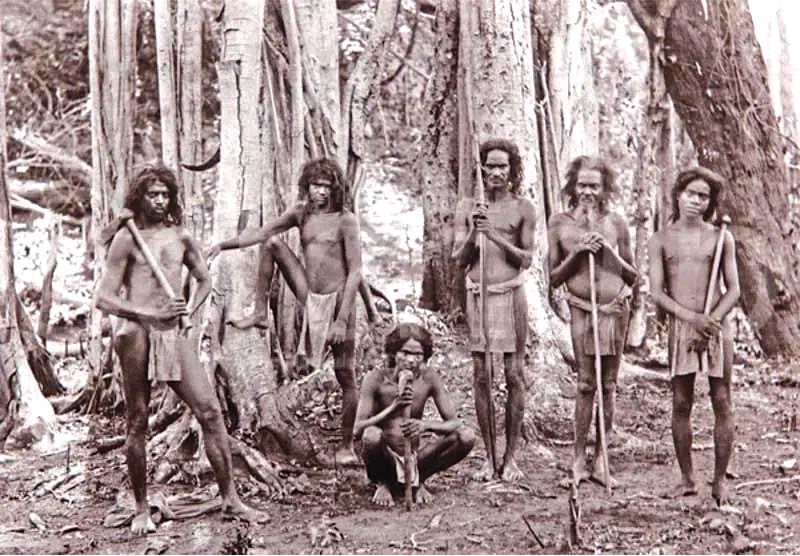
(Excerpted from Falling Leaves, an anthology of autobiographical tales by LC Arulpragasam)
Vedda Tales
Elephants (apart from sneaky bears!) were the main danger to the Veddas – since they would ravage and destroy their chenas. Their main fear was that they could be ambushed by elephants when in the ‘talawa’ or tall ‘savannah’ grasslands, interspersed only with small trees that offered no safety from elephants. The danger was even greater from a lone bull elephant, injured or ostracized from the herd, which could attack, even if unprovoked.
The first story is from an isolated chena in the jungle, where a lone Vedda from a flimsy platform built on a sturdy tree, tried to scare away a marauding elephant that was destroying his chena crop. Armed only with an old flint-gun with only one ball cartridge, the frightened Vedda discharged his only shot at the elephant. The latter, although severely wounded, charged repeatedly at the tree to which the Vedda hung for dear life. After several attempts to get at his tormentor, the wounded elephant, roaring with rage, retreated into the jungle. But an elephant never forgets! The next time that the hapless Vedda ventured into the jungle, the elephant was waiting for him. It blocked his path – and smashed him into smithereens!
Another story involves a famed elephant ‘charmer’, who was the leader of his clan at Danigala. Whenever a rogue elephant charged, he was reputed to stand his ground unflinchingly, shouting some chant that would cause the elephant to veer away, lumbering harmlessly past him! This always happened – until he committed a grievous sin. During the maha roghe’ of the 1930s (probably the devastating malaria epidemic of that time), his entire clan and family had been wiped out.
He was left alone in his lonely fastness of the Danigala rock with only his 14-year-old daughter. It is then that he committed the unpardonable sin of co-habiting with his own daughter – for which he paid the ultimate price. The very next time that he was confronted with a charging elephant, he put out his chest as was his wont, and unflinchingly shouted out his famous chant. But the elephant did not waver this time. It hurled him many yards away and proceeded to stamp repeatedly on his lifeless body. Thereby hangs a cautionary tale!
A different story illustrates the Veddas’ tenuous hold on life in their daily struggle with the elements. One night in Henebedde, at the height of the monsoon, a terrifying thunderstorm arose, filling the night with thunderous roar, venting winds and livid lightning, tearing down mighty trees and striking terror among the Veddas. Adding to the chaos, terrified animals were stampeding through the hamlet, including a herd of elephants that rampaged through their pathetic huts.
Unfortunately, a terrified baby elephant, having lost its mother in the storm had found its way into one of their huts. While the terrified occupants cowered in the corner, the baby elephant even more terrified, was trumpeting forlornly to its mother. The angry mother looking for its baby smashed the hut down, killing one of the cowering children. I experience the elemental fear of the Veddas even today, in their thoughts of that terrible night!
There is also the famous story of ‘Wallaha’ (the Bear), the famous head of the Henebedde clan, justly famed for his bravery. One day on a jungle trail, he was suddenly attacked by a bear – probably the most dangerous animal in those jungles. It follows the unsuspecting, attacking them when they are most vulnerable. Taken by surprise, ‘Wallaha’, not being able to use his bow and arrow, had to fight the bear with his bare hands.
The struggle lasted for more than two hours, in which the bear gouged out his eye and tore out his right arm. He did, however, manage to kill the bear with his bare hands – for which he was revered for generations with the name ‘Wallaha’ (the Bear). I showed a photograph of ‘Wallaha’ from Seligmann’s book to Kaira his son, now head of the Henebedda clan. Since he had never seen a photo before, he shouted: ‘Wallaha’ – and proceeded proudly to show it off to his entire clan!
The last story pertains to one that I myself had witnessed – in which I almost shared the Veddas’ superstitions of evil spells and spirits! A feud had erupted between the Henebedde clan and the adjoining one that lived across the rivulet that divided their hunting grounds. Things came to a head when the rival clan hired a ‘kattadiya’ (a dealer in evil spirits) from the South to cast a curse and ‘evil eye’ upon them. I remember even to this day (75 years later!), the night of throbbing, obsessive beat of drums, wafted by the winds across the river, sounding a seeming spell on the terrified Veddas cowering over their fires.
The once-familiar jungle now seemed to be closing in on them from all sides, fraught with their fancied fears of foreboding evil, their strangulated faces framed by their flickering fires – with me too succumbing to their fear of evil afoot! None of the families slept that night: neither did I – for the terrifying drums kept throbbing through the night. The next morning, drugged by deprived sleep, we staggered on our way to our next jungle destination. On the way, we heard loud singing and the sound of much laughter – partly to scare away wild animals. But we found that the jolly songs were emanating from the ‘evil’ kattadiya of the previous night! He was actually a very jolly fellow, whose infectious laughter provided us with companionable company. How easily the terrors of the previous night were dissipated and its expected evils extirpated!
My Personal Travails on the Trail
I need to list some of the hardships that I experienced on this trek, since it is germane to my story. First, we only ate the frugal food that the Veddas shared with us – for we had thrown away our supplies, which weighed a ton after a 12-15 mile walk every other day. Secondly, although we were supposed to boil our drinking water, we could not even find water to boil! In fact, we had to dig deep with our hands in dry riverbeds to collect even a few drops of dirty water.
No wonder, I developed severe dysentery! Moreover, I had to wear the same khaki shirt and trousers for three months in the jungle, able to wash them only when we found any rock pool or watering hole! Fourthly, by walking about 12-15 miles every other day, I was forced to cut big blisters on the soles of my feet every night with an un-boiled blade – only to walk the next morning on the newly-cut blisters! Meanwhile, I had developed severe dysentery (passing blood) by drinking dirty water, with accompanying back aches due to weakness. I had also grown a long beard – which I had not been able to shave for over three months!
Meanwhile, we discovered that we had walked off our maps of the Uva Province and were in fact going farther into the Eastern Province – which had not been our intention! I therefore decided to try to reach Inginiyagala (some 27 miles away) for medical treatment for my debilitating dysentery. But walking into Inginiyagala from the jungle in 1951, we found only massive jungle-clearing by massive machinery and a boom town straight out of the American Wild West – since the dam was under construction by American contractors. We could not even find a town centre or any professional – least of all, a doctor. Not having any money, I had to return to the jungle without treatment.
Our immediate concern, however, was that we had no food to eat, nor any place to sleep – nor any money, which was a necessity in this American boom town! Fortunately, our Vedda led us to a garbage dump where I greedily gobbled down food (we had not eaten all day) thrown away by labourers into the garbage bin; I knew only that my dysentery couldn’t get any worse!! However, I now faced the gruelling prospect of walking back about 90 miles to our original starting point, which was Bibile, in the Badulla District. I gritted my teeth and accomplished this task too, using my rifle as a haramitiya or old man’s stick!
But worse was still to come! I had left all my money with a school teacher in Bibile, since I had no use for it in the jungle. The teacher now apologized that he had spent (gambled) it all away; promising profusely to pay me back in instalments over the next two years! But I needed the money immediately to pay for medical treatment – and to catch a train back to Colombo for hospitalization! Desperate now, I used my last 12 cents to buy a bus ticket to Padiyatalawa (In hindsight, I realize my folly now: I was trying to work my way always towards Colombo, where I needed to get into the hospital).
I had no money – not even to eat. I somehow managed to reach an Apothecary’s clinic, somewhere in the jungle near Padiyatalawa. It was night time now –and the clinic was closed. When I shouted for help, a shuttered window slowly opened, and a double-barrel gun poked out – for it was a lonely place in the jungle. I shouted in English that I was a Lecturer in the University – to show that I was not a bandit! At last, however, Providence smiled upon me.
By an absolute and unbelievable stroke of luck, this Apothecary had worked under my father, a medical doctor, whom he greatly admired. He said that he had never worked under a better boss, nor ever met a more decent gentleman than my father! He welcomed me into his house. After giving me to eat (I had not eaten since morning), he attended to my medical needs. He even advanced me money for a 3rd Class train ticket to Colombo – as a low-paid Apothecary, he could not afford more. Tears come to my eyes (even after 75 years!) as I write this: for the providence that led me by chance to this forsaken place, where only the merit of my father saved me. I had neither the physical strength nor the financial means to go any farther! This was the lowest and most helpless position that I had reached in my entire life!
However, even more bad news awaited me in Colombo! Whereas I had been promised a post in the Sociology Faculty of the University, I found that the Vice-Chancellor (Sir Ivor Jennings) had now decided not to advertise the post that year. I was thus forced to sit for the Civil Service Examination – which was only two to three months away. Being absolutely sick with dysentery, I was forced despairingly to cram around the clock to face that examination. It is with luck that I managed to pass first in the CCS exam. of that year (1951).
In the Jungles of Wellassa-Bintenne
In 1950/51, when I was still in the University, I undertook a sociological survey of the Veddas living in the jungles of Wellassa and Bintenne in the Badulla District, as part of my University studies in Sociology. Mr. Cuda Bibile, a University colleague, accompanied me. The only authoritative study of the Veddas at that time had been done by Dr. C. Seligmann, a German anthropologist in 1911. In the course of our survey, we covered on foot about 250 miles through savannah-type grasslands in Wellassa and through thick jungles in Bintenne, visiting places where only Seligman and Dr. R.L. Spittel had been before.
We set out with a survey map dating from the 1930s of the scattered Vedda settlements. But the Veddas were hunter-gatherers, and their ‘hamlets’ had migrated over time along with their chena (swidden) fields, which moved every two years. Only sometimes knowing where we were, we ultimately found that we had walked off our maps of Wellassa and Bintenne in the Uva Province to Inginiyagala in the Batticaloa district of the Eastern Province! We trekked over a period of three months during the hottest time of the year, June-August, in the dry zone.
I carried a rusty old rifle (abandoned by the British Army after World War II), which I bought for the equivalent of US $ 2 off the Pettah pavement. This was to serve as protection against wild animals, as well as for foraging for food. But we found that it was impractical to shoot any game for food, since we had to carry the animal for the next fifteen miles until we reached our next destination. We also jettisoned our supplies because they weighed a ton by the end of each long day of walking!
We went into the jungle with no money – because there was no use for cash (only barter) in the forest. Since we had nothing to barter, we lived entirely on the charity of the poor Vedda families that we encountered. We would get a Vedda from one hamlet to walk with us for the ten to fifteen miles a day to reach the next little hamlet. These were not even ‘hamlets’ in the true sense of the term, since they consisted of only five to seven pathetic huts made of tree bark and leaves which moved, following the Veddas’ chena (slash and burn) cycle. We would spend about two to three days in each settlement, learning about their way of life and listening to their ancestral stories before moving on to the next settlement. In this manner, we covered the Vedda settlements of Dambana, Danigala, Henebedde, Bingoda and Mullegama over a period of three months.
Elephants were always a problem, especially in the ‘savanna’ grasslands of Wellassa. Sometimes on our walk of 10-20 miles each day, we would encounter a herd of elephants, sometimes up to fifteen or more, right across our way. Since this was open grassland, interspersed only with small trees that could easily be knocked down by elephants, we could not afford to be seen or scented by them. Our Vedda ‘tracker’ would always position us down-wind from the elephants, so that they could not scent us. But this meant lying in the grass sometimes for two hours, baked by the merciless sun, hoping that the herd would move on. We were always apprehensive that we would be benighted in the jungle, unable to reach our next destination before nightfall.
Life Among the Veddas
The Veddas in Seligmann’s time (1911) lived almost entirely on hunting and gathering. They shot game with their bows and arrows, gathered honey from the caves and trees as well as herbs and roots from the forest. By 1950, part of their time was devoted to chena (swidden) cultivation, which involved about four months’ work in felling and burning the forest in the dry season; they sowed their grains (mostly maize and millet) and planted their manioc (cassava) with the first rains. They continued their hunting and gathering at the same time, which continued to define their way of life.
Most of the Vedda settlements consisted of only five to eight households, all of them closely related. The group in Henebedde lived in a small clearing in the jungle, bounded by a perennial stream. Their huts were small, measuring only about 9 x 9 feet, with sides of bark and roofs of leaves. They only had one opening for the entrance, but no door or windows. They shared this limited space with their family, their hearth and their hunting dogs. Since there was no room in Kaira, their leader’s hut, I was allowed to sleep halfway through the door, with the choice of having either my head or my protruding toes being chewed by pesky bears!
Although the Veddas had their own language, which was still in use in Seligmann’s time, it was hardly used at the time of our visit in 1950. Like all the clans living in the area, they spoke Sinhala as their main language, even at home among themselves. However, as we walked eastward into what we later found was Bintenne Pattu of the Batticaloa district, we found that Tamil replaced Sinhalese as the main medium of communication.
We set out with a survey map dating from the 1930s that was supposed to mark the scattered Vedda settlements. But the latter were not to be found where they were supposed to be. The Veddas were hunter-gatherers, who lived partly by chena (slash and burn) cultivation. Hence their ‘hamlets’ had migrated along with their chena fields. We ultimately found that we had walked off our maps of Wellassa and Bintenne Pattus in the Uva Province, finding ourselves at Inginiyagala in the Eastern Province! We must have covered around 250 miles on foot over a period of three months, during the hottest time of the year, July-August, in the dry zone.
I carried a rusty old 303 rifle, which I had bought for the equivalent of US $2 off the pavement from old army surplus, sold as junk after World War II. I found later that it was completely cock-eyed, hitting one coconut tree while I was aiming at another coconut tree! But I reckoned that I could shoot a charging elephant at close range! The rifle was supposed to serve as protection against wild animals and foraging for food.
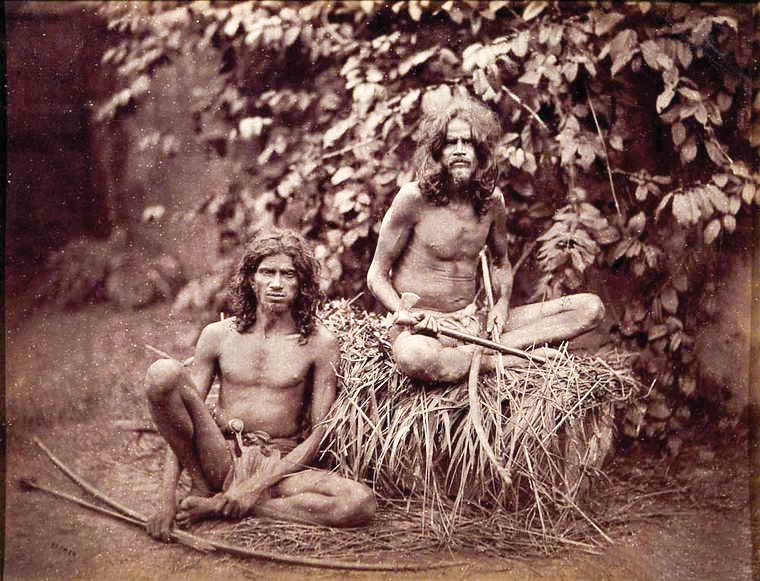
But we found that we could not shoot any animal for food since we had to carry it for the 12-15 miles to reach our next destination. Since we were supposed to cook our own food, we set out with some rice and dhal and a pan for cooking. However, we jettisoned our supplies within three days because they weighed a ton by the end of each walking day! We were also supposed to boil our water before drinking; but we could not even find water to boil! Since we were at the height of the dry season in the dry zone, we had to dig two to three feet with our bare hands in dry river-beds in order to find even a bit of black-coloured water to drink. No wonder that I got severe dysentery!
We went into the jungle with no money since there was no use for cash, but only barter, in the forest. Hence we lived entirely on the charity of the poor Vedda families that we visited. We would eat only what the Veddas ate – which was a kurrakanthalape (boiled kurakkan ball with a green chillie on top). We would get a ‘tracker’ from one hamlet to walk with us for the 12-15 miles needed to reach the next little hamlet. These were not even hamlets in the true sense of the term, since they consisted of only five to seven pathetic huts made of tree bark and leaves. Thus, we covered the Vedda settlements of Dambana, Danigala, Henebedde, Bingoda and Mullegama, over a period of three months.
Elephants were always a problem, especially in the savanna-type grasslands of Wellassa. Sometimes on our walk of 12-15 miles each day to a different settlement, we would encounter a herd of elephants (sometimes up to fifteen or more) right across our way. Since this was open grassland, interspersed with small trees that could easily be knocked down by elephants, we could not afford to be seen or scented by them. Since their sense of smell is strong, our vedda ‘tracker’ would always position us down-wind from them. But this meant lying in the grass for two hours or more, baked by the merciless sun, hoping that the herd would move away. We were always apprehensive that we would be benighted in the jungle, leaving us a prey to wild animals.
The Veddas in Seligmann’s time lived almost entirely on hunting and gathering. They shot game with their bows and arrows, gathered honey from the caves and trees, as well as herbs and roots from the forest. By the time of our visit, however, part of their time was devoted to chena cultivation. This involved about three months’ work in felling and burning the forest in the dry season and sowing their grains (mostly maize and millet) and manioc (cassava) with the first rains. They of course continued their hunting and gathering, which still continued to define their way of life.
Most of the Vedda settlements consisted of only five to eight households, all of them closely related. Their huts were small, measuring only about nine by nine feet, with sides of bark and roofs of leaves or talawa/ grass. They only had one opening for the entrance, but no door or windows. They shared this limited space with their family, their hearth and their hunting dogs. In the course of these travels, we spent three days in the settlement of Henebedde.
The group at Henebedde lived in a small clearing in the jungle, bounded by a perennial stream, which provided their water supply. The ‘hamlet’ comprised only seven or eight families, with Kaira as their head. He gave me shelter at night in his own hut, made only of bark and leaves. Since his hut was crowded with his family and hunting dogs; this left me with the choice of leaving either my head or my toes outside the hut – to be possibly nibbled by bears at night! We ate only what the family ate, which was cassava or sometimes kurakkan talappe (moist balls of ground millets), eaten with only a green chillie.
While at Henebedde, I showed Kaira a picture from Seligmann’s book (published in 1911) of the Vedda chief at that time. Kaira, who probably had not seen a photo before, was astounded to see a picture of his own father, the chief at that time: ‘Wallaha’! he cried. His father was named ‘Wallaha’ (‘Bear’) because he had fought and killed a bear with his bare hands, despite the fact that the bear had gouged out his eye and torn out one arm. We depended on Kaira’s protection, food and hospitality for three days, before going on to other Vedda settlements.
Although the Veddas had their own language, which was still in use in Seligmann’s time, it was hardly used at the time of our visit in 1951. Like all the clans living in the area, they spoke Sinhala as their main language, even at home among themselves. However, as we walked eastward into what we later found was Bintenne Pattu of the Eastern Province, we found that Tamil replaced Sinhalese as the main medium of communication. Of course when the Veddas came into town for barter, they used their own language, partly to prevent others from understanding their conversation, but partly as a ‘show’ to get money from strangers who had never seen Veddas before!
(More on the Veddahs next week)


 Israeli Prime Minister Benjamin Netanyahu’s message to Israel’s enemies was blunt and stark.‘We’re going to win; we have no choice.’ He said so while the majority of attendees at a recent UN General Assembly session walked out of the conference hall when the Israeli Prime Minister took the podium; many of them booing in derision.
Those commentators who have been studying Israel’s handling of her enemy states over the decades are unlikely to dismiss the entirety of Netanyahu’s address as rhetoric. The general pattern has been for the Israeli state to stand up firmly against its enemies in the battle field. On most occasions, these adversaries have been beaten back.
It is also little realized in particularly the Southern hemisphere that Israel, for the most part, could defend herself without much US assistance. The history of the conflict bears this out.
However, from the viewpoint of working towards a just and equitable peace in the Middle East the Israeli hard line stance has proved and will prove incalculably detrimental. The sworn enemies of Israel are not going to be in any way deterred by Netanyahu’s stark warnings. On the other hand, they would be only further provoked into taking on Israel by conventional or unconventional military means and seek its destruction.
The recent aborted mid-air hijacking of a Flydubai flight, consisting mainly of Israeli passengers, by an Omani extremist drives home the point. Israel’s enemies are bound to redouble their efforts to annihilate Israel rather than be deterred by the latter’s warnings about standing firm against them. This too history has proved.
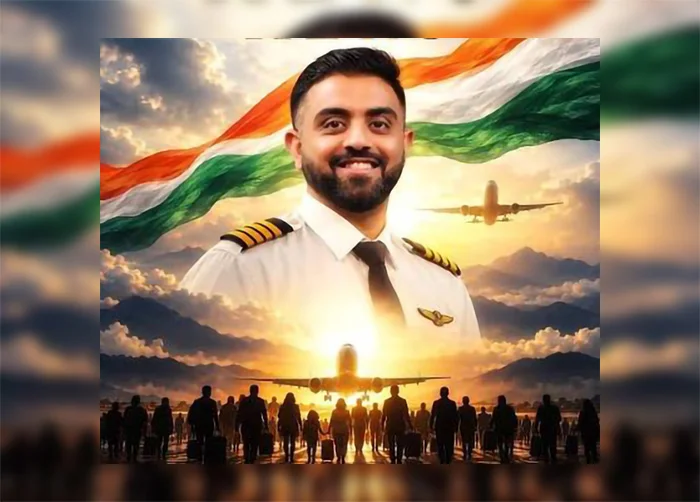
It would be in the fitness of things at this juncture to pay a tribute to the professionalism, courage and humanity of the relevant airline pilot, Captain Machchhar, whose timely action proved decisive in botching the hijack attempt. His intervention averted what could very well have been another 9/11 type tragedy. History is not going to forget his daring and resourcefulness.
Meanwhile, the ground realities in West Asia are undergoing further complications that portend increasing regional instability. For example at the time of writing Turkiye, Pakistan and Saudi Arabia have agreed under the recently established ‘Mecca Alliance for Defence’ to deploy ‘deterrence measures’ collectively in the event of any member of the alliance coming under military strikes from a non-member state.
The agreement is modeled on the NATO collective defence pact and should help in defusing any threat perceptions experienced by the alliance members in the short term. However, the group would need to be cognizant of the major and potentially divisive role Iran could play in the interstate politics of the Middle East region going forward.
Iran’s reported support, for example, for Yemen’s Houthi rebels, who are engaged in attacking Saudi national assets, could at some point in time compel the alliance, under the terms of the pact, to initiate deterrent military measures against Iran.
The implications for regional peace from such a turn of events hardly require elaboration. A full blown regional war emerges as a distinct possibility if Iran sees itself as being excessively antagonized by the alliance. A further complication is that antagonistic sectarian identities of an Islamic kind could come to play hugely divisive roles in it. Shiite Islamic states would be inclined to back Iran while those countries seen as Sunni Islamic in orientation are bound to support Saudi Arabia.
Accordingly, West Asia is a region rife with manifold aggravated insecurities. If the latter are not defused dexterously they could escalate into a conflict of extra regional dimensions. The latter development would render the world a collective loser.
Unfortunately, no constructive help could be expected from the US at this juncture by way of working towards regional and international peace even of short durance. Its war against Iran has only aggravated the world’s current insecurities.
For example, the world has been compelled to face the possibility of compounded economic woes as a consequence of the Hormuz crisis remaining unresolved. The world is currently experiencing what could be seen as a ‘winter of economic discontent’ of unprecedented proportions.
Unfortunately, the international community is to all intents and purposes helpless in the face of this multifaceted crisis. Substantial intervention is expected of the UN but since it has failed to reform itself over the years it is compelled to stand idly by while the world’s insecurities heighten and multiply.
Yet, it is the seemingly paralyzed UN system that has some potential to contain the current tide of international disorder to even a small measure. Given the persisting divergent and conflicting interests among the world’s principal power blocs, the G7 and BRICS for instance, it is mainly the UN and its principal agencies that could carry some credibility as peace brokers and mediators.
However, as an initial step towards bringing the principal protagonists to the negotiating table the UN would need to convince the principal powers of the UN Security Council of the need for a substantive broad-basing of the membership of the Council so as to reflect more accurately the current global political and economic realities. Such reforms would render the Council more representative and help in strengthening its credibility and effectiveness.
The above reforms call for years of dynamism, hard work and resourcefulness on the part of the international community, read the UN. Yet the aims are not impossible to achieve if strong leadership is brought to bear by the UN.
Meanwhile, the UN agencies and allied organizations need to pay stepped-up attention to the West Asian theatre and its wasting conflicts and wars. Here too there is immense hard work to be put in.
There is, for instance, identity politics and its issues that need to be managed urgently. While internal political matters of countries could not be addressed directly by UN agencies, awareness-raising programs and projects could be energetically carried out by them to blunt the appeal of identity-based slogans, relating to, for instance, religion and race.
Besides, values at the heart of democratic politics need to be freshly and enthusiastically propagated. Vast reserves of energy and resources are needed, to be sure, to consistently champion and implement these crucial projects but they need to be pursued single-mindedly if even a dent is to be made in the current runaway global disorder.
The aborted hijacking of the Flydubai flight pointed to the dehumanizing impact of identity politics on the human consciousness. It was also an indication that those sections endowed with humanity cannot stand idly by while identity politics continues to destroy civilizational values. The time to act is ‘now’.
by Professor Ranjith Bandara
Emeritus Professor of Economics, University of Colombo
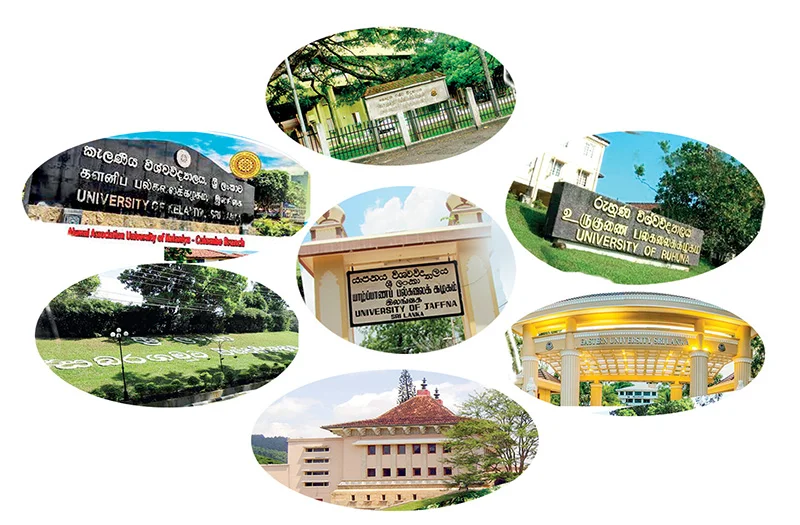
My life has been closely connected with Sri Lanka’s state university system for more than four decades. Its doors opened to me first as a student and later as an academic. The system gave me knowledge, opportunities and a life. Therefore, when I speak about its future, I do so not as an outsider, but as someone who owes much to it and genuinely wishes to see it become better.
Over the years, our university system has expanded significantly. New institutions, faculties, degree programmes and opportunities for students have been created. For 2024, the government expected to admit 43,204 students to national universities. By the time the relevant report was prepared, 42,282 students had been admitted through the general admission process, which had not yet been completed. This is an achievement that should not be dismissed.
However, expanding the system does not necessarily mean that its quality has improved. The real question is not simply how many students we have allowed through the doors, but what kind of education they receive after entering. (Source: Ministry of Education Annual Performance Report 2024.)
We often proudly declare that “our university is number one.” Yet a university does not become number one through publicity. Its true standing depends on the quality of its teaching, the strength of its research and the contribution it makes to society. A vice-chancellor writing about the institution’s, or his or her own, achievements on Facebook does not improve the quality of a university. What matters is good teaching, an education that encourages students to think, credible research and new knowledge that benefits society. A reputation must be earned through meaningful work, not through self-promotion.
The fundamental purpose of a university is clear: to create knowledge, to teach it and to train students to examine and understand it critically. To fulfil this purpose, academics need freedom, responsibility and time. Students must be free to ask questions, disagree and develop their own views based on evidence. Without such an environment, a university may award degrees, but it cannot fulfil the true purpose of university education.
The most serious danger I see is the growing tendency for political activity to take precedence over the academic mission of universities. Over the past five decades, this problem has gradually become more serious. In some universities today, it has become difficult even to hold or express an opinion that differs from the dominant political view.
Members of a university community have every right to hold political views and express them peacefully. A university should not be a place inhabited by silent people. However, when political loyalties, power blocs and struggles for positions become more important than research, teaching and learning, the university moves away from its true purpose. When the political camp to which an academic belongs matters more than the value of that academic’s ideas, the respect that should belong to knowledge is transferred to power.
These criticisms are not ideas I have borrowed from books. They are based on experiences from my own professional life. One such experience was the manner in which I had to leave the university nearly twenty years ago. In my view, the improper exercise of political power within the administration of the University of Colombo at that time, and the strong desire to retain that power, had a serious effect on my professional life. Although this was a personal experience, I mention it with regret because it reveals a deeper institutional problem.
The lesson I learned from that experience is not merely about one person or one incident. When there are no strong institutional safeguards to ensure that power is exercised fairly and individuals are protected, even an academic may be forced to leave an institution he deeply loves.
To those who criticise my later decision to enter national politics, my answer is this: when the university’s institutional system failed to provide me with fairness and professional protection in the face of the injustice I experienced, I had to choose another path through which I could use my knowledge and experience in the service of the country.
This does not mean that all vice-chancellors, academics or students behave in the same way. I personally know many people who, despite difficult circumstances, have taught with dedication, undertaken meaningful research and transformed the lives of their students. Scholars such as Professor W. D. Lakshman, Professor Arjuna Aluwihare and Professor Lakshman Jayatilake may be recognised among the distinguished vice-chancellors in the history of Sri Lanka’s university system. Their service deserves our respect and appreciation.
Nevertheless, the presence of a few good and committed individuals cannot, by itself, strengthen a weak institutional system. We must also create an institutional environment in which such people can work independently, fairly and effectively.
First, university leaders must be selected through a process based on clearly defined qualifications, transparent evaluation and accountability. Once a vice-chancellor has been appointed, his or her performance should be assessed according to the support provided for research, the quality of teaching, student welfare, the institution’s financial discipline and the fairness of its decisions. Personal loyalties and publicity skills cannot replace these measures of performance.
Second, academics must be given the time and space required to carry out their core responsibilities. It is meaningless to demand “world-class universities” without providing adequate time, facilities and reasonable funding for research. Teaching, too, should not be treated merely as delivering lectures. Students must be trained to reason, write, investigate and apply their knowledge to real-world problems. The quality of a degree programme should be measured not by its title, but by the capabilities of the graduates it produces.
Third, universities must establish an honest connection with the needs of the country. The problems confronting our economy, schools, healthcare system, agriculture, environment and wider society are all legitimate subjects for research. Seeking answers to these problems does not diminish the dignity of a university; it increases its value to society.
At the same time, research must not be controlled by short-term political demands. Knowledge can serve the country only when researchers are free to communicate what they discover. Sri Lanka’s World Bank-supported AHEAD higher education programme similarly connected the expansion of enrolment in priority disciplines with improving the quality of degree programmes and promoting research and innovation. These goals were linked because meaningful expansion cannot be separated from educational quality. (Source: World Bank overview of the AHEAD programme.
Fourth, the responsibilities of students must be clearly emphasised. The duty to protect the academic environment of a university cannot be placed solely on administrators and academics. Every student has a fundamental responsibility to give priority to his or her education, respect the right of other students to learn and allow the free exchange of ideas.
Student activities, social debate and political engagement all have an important place in university life. However, none of them should be allowed to disrupt education or prevent other students from learning.
When students abandon their primary purpose of learning and create an environment that obstructs education, the university system cannot fulfil one of its most important functions: producing knowledgeable and responsible graduates. A university may continue to award degree certificates, but if lectures, research, open discussion and intellectual inquiry do not receive sufficient attention, it risks producing graduates who lack depth of knowledge, critical thinking and professional competence.
The result may be the emergence of a group of “half-educated” graduates, individuals who possess certificates but have not received a complete intellectual education. Therefore, just as we discuss student rights, we must also have an honest and open discussion about student responsibilities within the university system.
My position on the current professional struggle of university academics is also clear. If they are demanding fair conditions of employment, those demands should be discussed seriously. If their struggle is also intended to free universities from political interference and restore research, teaching and learning to the centre of university life, I stand with them.
The rights of academics and the educational rights of students should not be presented as opposing interests. Both can be protected and respected only within a well-functioning university.
When I say that “the state university system should be shut down and reopened,” I do not mean that we should close the door on the future of our students. I mean that we must close the door on systems in which power matters more than knowledge.
Students have the right to hold political views and participate actively in debates on national issues. A university needs a student community that thinks about the country’s problems and speaks out against injustice. However, student politics should not shut down the university, deprive other students of their education or become a means of displaying organisational power. The right to fight for one’s beliefs comes with the responsibility to respect another person’s right to an education.
Simply attempting to establish another 50 universities will not solve these problems. Sri Lanka needs a higher education system that brings together the contributions of state, state-affiliated and private institutions while applying clear standards and responsibilities to all of them.
Strict discipline within such a system should not mean suppressing freedom of thought. It should mean ensuring that everyone fulfils their responsibilities in relation to teaching, research, examinations, institutional governance and student welfare. A degree certificate will then have value not merely because of the name of the institution that issued it, but because the knowledge and capabilities of the person who earned it can be trusted.
We should learn from advanced higher education systems, but we should not simply copy them. We must develop institutional autonomy, reliable quality-assurance mechanisms and publicly accountable governance in ways that suit our own needs. What we owe future generations is not merely a country with a larger number of universities, but a country in which people can trust the education those universities provide.
What we must close down, therefore, is not the universities themselves, but the outdated system that closes the door on knowledge, freedom and responsibility. What we must reopen is a genuine university system devoted to learning, inquiry, research and the creation of new knowledge in the service of the country.

 From beauty pageants and medical science to challenging British immigration policy and making political history in Scotland, yes, that’s Sri Lankan Deena Tissera, born into privilege, in Chilaw, but exposed to poverty and the realities of war.
Now, after 15 years in British politics, she tells Ivan Alvis why she is no longer interested in fitting anyone else’s image of a leader.
She was educated at The British school in Colombo and her father was a doctor-entrepreneur-philanthropist, and mother a former beauty queen and movie star.
She studied Medical Science, moved into Global Health and began a PhD in Public Health, competed in Miss Sri Lanka for Miss World, and, in 2022, made history as the first woman of colour elected to Aberdeen City Council; the first politician of Sri Lankan descent elected in Scotland.
The moment that set it all in motion came during the worst period of her life. Her father had died. She was 24 and missed her university examinations to attend his funeral.
“My father’s greatest wish for me was that I completed my education. However, I was being told that my education would be delayed because I had missed examinations to attend his funeral.”
She refused to accept it. She challenged the university, protested, went before its board and represented herself — and won.
“I went from fighting for myself to realising there were thousands of students who sometimes needed somebody to fight with them.”
She was elected Students’ Union Vice President. Soon her campaigning grew larger. As an international student she had experienced Britain’s immigration system, first-hand, and helped build a UK-wide movement, campaigning for international student rights, and contributing to campaigns that helped achieve changes to immigration rules.
“That taught me one of the most important lessons of my life. Politics isn’t about having a title. Politics is understanding where power sits, organising the people who don’t have it and knowing how to make the people who do have it, listen.”

Deena: Beauty pageant
contestant
The instinct to challenge inequality began earlier. Though born to privilege, her father took her into communities affected by the war through his philanthropic work.
“I grew up with opportunities, but I was surrounded by poverty. That contradiction affected me enormously. My father taught me that privilege isn’t something you should feel guilty about. But you should understand the responsibility that comes with it.”
If her father gave her a sense of service, her mother gave her confidence. Inspired by her, Deena took to modelling … and the Miss Sri Lanka pageant.
“People sometimes expect serious women to edit the glamorous parts out of their history. I can, and have been in a beauty pageant, and still understand economic policy.”
Her academic background continues to shape her politics: “Medical science teaches you evidence. Global health teaches you systems. Public health teaches you that someone’s health can be determined by poverty, housing, education and employment long before they reach a hospital.”
While at the University of Aberdeen she joined Labour Students, later becoming Vice-Chair of her Constituency Labour Party. What followed was more than a decade of door-knocking, organising, strategising, winning and losing.
The overnight success took 15 years. In 2022 she won Hilton, Woodside and Stockethill in Aberdeen.
The historic label came with a complicated reality. She remembers entering rooms with qualifications, campaign experience and leadership credentials — and still sensing she was not the person others imagined as leader.
“There have been tables where I have looked around and known I may be the most accomplished person sitting there, but I wasn’t necessarily the person people saw as the leader. And that’s because I didn’t fit the look.”
Her answer was to work harder — another qualification, another campaign. Then she realised the flaw in that strategy.
“If you wait for everybody else to decide you’re good enough, you can spend your entire life auditioning for a position you’re already qualified to occupy. I owned my identity and started leading with the confidence of my competence.”
At 39, successful and unmarried, she speaks with unusual candour. “Being unmarried is a marital status. It isn’t a performance review.”
Her message to young Sri Lankan and migrant women is direct: “Do not shrink your ambition to make yourself easier for somebody else to digest.”
Her blog series ‘Taboo Tuesdays’ — with titles like “Politics Is a Blood Sport – And We Pretend It Isn’t” — examines ambition, envy, ego and power from inside the room.
Since her election, she has led on anti-poverty and inequality, served as Labour’s Energy Spokesperson for Aberdeen covering net zero, environment and transport, and served as Chief Whip of the Labour group.
She was adviser to former Prime Minister Gordon Brown on his Our Scottish Future commission, took part in the Jo Cox Women in Leadership programme, and served as Scottish executive representative for the northeast, Highlands and Islands at her party’s top table.
Recognition has followed — 35 Under 35 Scotland’s rising political stars, Exceptional Achiever of the Year, Politician of the Year nomination, and Outstanding Woman in Governance and Public Policy by Women in Management UK.
As Energy Spokesperson for Aberdeen, one of Europe’s key energy cities, she sits at the centre of Britain’s energy debate. She supports transition but warns: “A just transition cannot mean asking one community to carry the economic cost of everybody else’s environmental ambition.”
Ask her if she wants more power and her answer is simple: “Yes. I am ambitious. But power without purpose is just status.”
Perhaps her most personal answer is about representation: “The first Sri Lankan elected in Scotland means something to me because it means the next Sri Lankan isn’t the first.
“I didn’t have to become less Sri Lankan to become Scottish. I didn’t have to become less feminine to become politically serious. And I didn’t have to look like somebody else’s idea of leadership before I was allowed to lead.”
In conclusion, Deena Tissera had this to say: “There was a time when I wanted to prove I deserved a seat at the table. Now I walk in knowing I do.”

Showers above 100 mm are likely at some places in the Western, Sabaragamuwa, Central, Uva and Southern provinces and in Anuradhapura district

PSTA worse than PTA: FSP

Shiranthi R remanded until 13 Oct.

Former NSB Chairman Kariyawasam granted bail

Katchatheevu row: India SC urges fishermen to avoid Sri Lankan waters

Remembering Juvenal, Coke, Acton and Machiavelli

‘Dates have the highest sugar content to fight Coronavirus’

Sunday Island 27 December – Headlines

#SundayIsland 17th December – Headlines

Sunday Island – 28th March

Sunday Island Headlines – 21 March

Sunday Island – 21st February – Headlines
-

 Editorial6 days ago
Colombo Port drug bust: The plot thickens
-

 Features4 days ago
The first woman in the foreign service or Ceylon Overseas Service it was then called
-

 Editorial5 days ago
Fuelling discontent and protest
-

 News3 days ago
Geneva takes up Sallay’s case and govt. ignores opportunity to answer accusations
-

 Latest News5 days ago
Tharindu Rathnayake, bowlers secure Asian Games Bronze for Sri Lanka
-
 Foreign News5 days ago
Ten injured after car crashes into rugby supporters in Australia
-

 Features3 days ago
Sri Lanka Cricket Bill: Governance reform is not yet a cricket strategy
-
 News4 days ago
Nearly 20 Iranian tankers stranded off Lanka amid US sanctions