
Opinion
This Pretentious Plenitude

(loketa parakase, gedarata maragate )
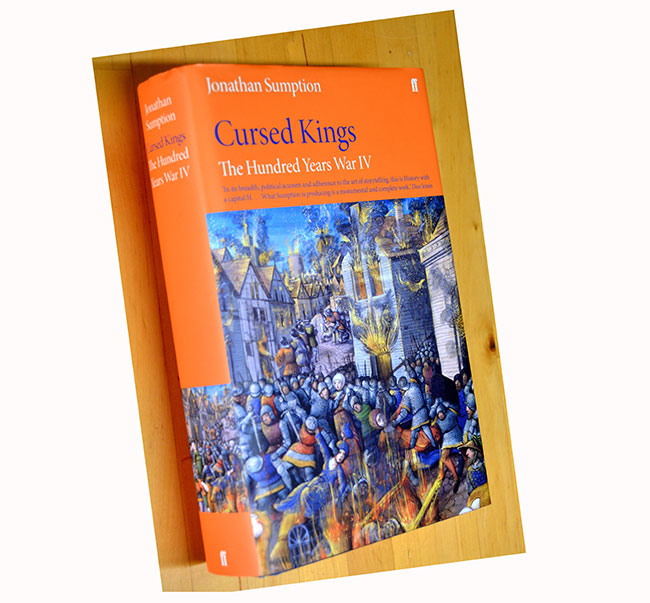
“On 3 June, 1400, the Byzantine Emperor Manuel II Paleologus entered Paris. By the showy standards of contemporary state visits, Manuel cut a sory figure. Accompanied by fewer than sixty of his own attendants, speaking nothing but Greek, mounted on a borrowed white charger and dependent for his travelling expenses on his hosts, he had come to beg for money and troops in the hope of preserving his shrunken domains from the Ottoman Turks.”
– Cursed Kings, The Hundred Years War IV, 2015)
By Usvatte-aratchi
A few days ago, I went to Panadura to see my brother, 95 years old. We parked the car to go to the Arpico Supercentre at the southwestern corner of Galle Road and Nirmala Mawatha. From the park, I did not go into the store; I sat in the car. There were about 20 cars parked and people went into the store and drove away after making their purchases. There were more women shoppers than men. The women were distinctly well-clothed and appeared well-fed. They all wore slacks or skirts and upper garments, all in good taste with no garish hues. None wore a sari. All men wore slacks and shirts and none a kapati suit or sarong. All the cars glistened in the morning sun; none had scratches or worse damage. One car had a number plate BK; all the others had number plates with three letters. There was plenitude; where is the austerity the country is published to undergo? Or is austerity the burden borne by only one category of citizens? A few days later, as I entered through the gates to a hospital compound, I noticed that the man who issued tokens from a little cubicle in the heat and humidity wore a necktie. Public servants assembled before ministers invariably wearing a suit. The rooms are airconditioned to accommodate them. Doesn’t it make more sense to wear simple shirts in rooms cooled to a higher temperature to save fuel? Why this pretence of plenitude in this land of austerity? It is so poor that it bears the odium of having defaulted on its sovereign debt.
What are the rules of etiquette that require us to wear evening dress, no matter who the dignitary that one has to meet? Well, of course, anyone is entitled to wear funny clothes, even silken wigs in this high temperature and high humidity in torrid tropical weather. But in this impoverished hungry land, where children who attend school faint from starvation? There are reports of stunted and underweight children. I expect to read infant and maternal mortality rates for 2021, 2022 and 2023 higher than the excellent levels that our health services had ensured for us. The age cohorts born in 2020-2024 will bear the scars of this scourge throughout their lives.
Sometime in the mid-1980s, a friend of mine was the Indian Ambassador to Vietnam. She was very keen to learn Vietnamese. After a few weeks in the country, she hired someone to teach her Vietnamese. Although now written in Latin script, there is a range of diacritical marks to help one to speak a word with the proper tones -more complex than in Mandarin or Thai. (The Latin script was introduced in the 17th century by Portuguese Jesuit priests.) In the second week of lessons, the tutor took the liberty of raising a question with the Ambassador, one evening after the lesson. ‘Madam, with the flaps of the dress you wear, I can make a pretty blouse’. Isn’t it a pity that so much cloth must is wasted’? (Vietnamese are still small-made, perhaps genetically and the result of centuries of malnutrition.) The ambassador who was very sympathetic to what Vietnam was trying to achieve, was shocked by how right the tutor was. She took her lesson seriously. I was a student in Britain in the 1960s and stayed in my lodgings all summer, except to go to the theatre in London. One summer, I was invited to tea in the garden with the queen. Many students from Commonwealth countries were so invited. I had no suit to wear for the occasion nor did I consider it wise to invest in one, just to attend a tea party. (Mad Hatter might have considered it otherwise.) We are still a poor country and anyone who yearns for the use of expensive clothing must seek a fitting clime. Some of you must have observed the army-style warm collarless cardigan that President Volodymyr Zelensky wore when he addressed the US Congress, a rare honour bestowed on men from outside the US. Does a caparisoned elephant look more dignified than the real thing in the wild? Do murderers, plunderers, women abusers and forgers gain dignity when they wear kapati suits buttoned up to the chin? If clothes make for dignity, mannequins in shop windows must present the most dignified postures in the world.
Take the case of cars. In this small island with a short mileage of expressways and a speed limit of 100km per hour, where do people go in a Mercedes 350 or BMW 740 ? Those gas guzzlers, V8 vehicles which even Bhikkhu covet, are symbols of pretentious plenitude. I recall some MPs explaining in parliament that they needed expensive vehicles because they had to travel in their electorates on uneven roads. When NIssanka Wijewardene was the government agent in Badulla in the early 1960s, he toured the district on horseback and Uva is still not an area roads in good condition in that part of the country. Leonard Woolf, 123 years ago, toured the Hambantota district on horseback. Riding a horse on rough tracks and rural roads is no fun. I cannot see why MPs cannot travel about in cheaper cars which are less expensive to buy and also consume much less gas. All this plenitude is at the expense of rich and poor taxpayers. The frequent use of helicopters by the president and ministers is something we cannot afford. Once a relative of a president flew in a helicopter from Ratmalana to Maharagama, at government expense. A president travelled by helicopter several times to ‘inspect’ construction work on the Moragahakanda dam. I wondered how much engineering the man had in him to waste so many resources for so flimsy a reason. When a dam was built across Gal Oya at Inginiyagala in 1950-52 with two months to spare before the end of the contracted date, there was nobody flying around in helicopters. The Ampara-Siyambalanduwa road was a decade away and one had to drive to Chenkaladi to get to Inginiyagala, a tiring journey for a young man even in 1968-69. When a poor population struggles to climb higher in the income ladder, it does not help to grease it with opulent lifestyles by its leaders. That grease pulls down people back into poverty.
Our religious leaders do not help. The Durutu perahera was held a few weeks back. Navam perahera is on a grand scale. Then comes Avurudu when the whole country takes a holiday and eats and drinks as if there were no tomorrow. May is for vesak. June, and people sojourn in Anuradhapura. July is for many festivals in devale in the south. August puts up the spectacle in Mahanuvara. September opens a period of quietude in pansal only to begin again in November. Who objects to religiosity among believers but please undertake them without denying the rest of this economy resources. It is more important that a child goes to school regularly than that votive candles are lit on an altar.
Some places of religious importance in this country are mighty rich. Their daily income probably is in the millions. What is the educational institution or hospital that they financed to build and run? Even the Vidyodaya pirivena receives, to date a subvention out of taxpayers’ money. Why isn’t it maintained with the collections in the shrine with a Bo-tree in Kalutara? The collections are administered by the Public Trustee but why not give a sense of ownership to those that collect the money? The Venkateshwar kovil in Andhra Pradesh runs a fine university with a part of the huge income it earns. Superstitious politicians from our country contribute to that income. Satya Sai Baba organization in Bengaluru runs schools and provides pipe-borne water to villagers close to their offices. The Rama Krishna Mission in India has a brilliant record of having established and run many schools and colleges in India. Tatas have established research institutes that put out high-quality work. In the 13th and fourteenth centuries when England was probably poorer than Sri Lanka then and certainly poorer than even impoverished Sri Lanka today (2023), colleges that now comprise Oxford and Cambridge universities, were built and run by Roman Catholic churches, monasteries and rich individuals. Many Bishops established colleges in Oxford and Cambridge. Walter de Merton started Merton College in Oxford; Peterhouse in Cambridge had similar beginnings. They had to wait for Edward III and Henry VI to meet Royal benefactors of colleges. In the first settlements in Boston Bay, the immigrants established Harvard College (now Harvard University) in 1635 well before a systematic government came into being there. Someone needs to inquire why well-endowed religious establishments in this country, do not find it fitting that they establish educational facilities for bright students. They would rather gild with 13.5 kg of gold, a fence around a venerated tree.
Why do we so often mistake appearances for substance? More than 120 years ago, Thorstein Veblen coined the term ‘conspicuous consumption’ to identify behaviour patterns of people in opulent societies. What does one call this pretentious plenitude in a land where hunger haunts almost every household day after day?



‘Before I took this position, I knew so little about them that I didn’t even know their names. I had not met them in any context outside the present.’ (My translation.) President Dissanayake, recently speaking about judges of the Supreme Court and of the Appeals Court.
by Usvatte
Nothing announces more loudly the gaping distance between the social strata from which our rulers, prior to 2024 came, and those of the present government come. That response came from President Dissanayake when he was accused of raising the age of retirement of judges to help his favourites. He could not possibly have had favourites among persons wholly strangers to him. That charge, therefore, prima facie, must fail.
Those who ruled this country as politicians and senior public servants, judges, lawyers and other professionals, generally prior to 2024, commonly went to schools in Colombo or its neighbourhood. Leaders even from Jaffna, Anuradhapura, Kandy, Ratnapura and Galle had been educated in schools in Colombo or their equivalents in other urban centres. They had met each other either as relatives, friends, school mates, debaters or competitors on playgrounds. Three of four who were our first prime ministers attended S. Thomas’ College, Galkissa; the other Royal College, Colombo. Of the first four prime ministers, two went to Cambridge and one to Oxford. There, then followed a family, two of whom attended the highly reputed St. Bridget’s Convent, in Colombo, two others having attended S. Thomas,’ and Oxford, and one, the redoubtable Sciences Po in Paris. Two more came from Royal College, Colombo, and a third claimed that he attended St. Joseph’s, Maradana. So, did we spend the first near-half-century of an independent country. These ladies and gentlemen, together with many others, with roughly similar backgrounds, established a form of government new to our society. A part of the achievements of that leadership was an excellent (within the resources they had) public health scheme and a school system that, in time, reached almost every child.
Unlike the earlier rulers, Dissanayake attended government schools in Tambuttegama and Kelaniya University. He studied science and mathematics. He can differentiate an equation for you and speak intelligently about Paul Dirac and Higgs boson with the same felicity as accusations against former politicians. There is a Prime Minister who can talk to you impromptu on August Compte and Claude Le`vi-Strauss. She did go to prestigious schools in Colombo but decided to throw her lot with those that had not. (That was not uncommon in periods of radical change in several societies in the past.) There are ministers in this government who have travelled regularly by train, without snatching gold necklaces on women passengers. Others have pushed themselves into crowded buses, to get home before dark on roads unlit for miles. Many have taught in rural schools in Pooneryn or Nikaweratiya. Few have travelled by motor car to schools in major towns including Colombo and its environs. Few have lived in or have homes in major towns including the national capital. One MP says that she was born in a ‘line room’ in a tea plantation. One must know the poverty, squalor and violence of these habitats to measure the social distance she has travelled. The new political leaders are culturally very different from the old. (I avoid the term class because the term has connotations which are not seen here.) Those people are the salt of this earth, representative of common people in this country. We now have in Parliament a House of Representatives full of Commons. We look forward to them for leadership to move this society from the morass it is in.
A coterie of people from the deep south of the country, who were elected to office with much optimism, turned out to be a deep disappointment and turned this country into a kleptocracy and a haven for druggists and gangsters. The offspring of leading politicians in the group that went to those same good schools that I mentioned above, have been accused in our courts of heinous crimes. Some crowd our prisons. They evidently plundered the public purse, pushed the country into debt both local and foreign, corrupted processes of governance including the judiciary and let the country into a venomously poisonous murky backwater from which young people flee as soon as they can collect the airfare for a one way ticket to Dubai or obtain a visa to South Korea.
The present government was formed by young people who have yet to be tried. The electorate, by an overwhelming majority, elected them to Parliament. The President was elected by a thin margin. In my understanding, this government has yet to suffer sinking damage. They have faced several squalls and one or two have been thrown overboard but the ship has survived and plunged ahead in heavy seas. A major storm has been brewed and the government has been battered. But the rudder is in place, the engine room is dry, there is ample fuel and the crew is fresh and willing. On the radar, I read heavier storms developing ahead and these will severely test the skills of the captain and his mates. Despite loud and wide claims to the contrary, I do not see a sharper captain or more skilled and less tainted sailors who can guide this ship safely over choppy seas over the next few years. A capacity to speak English fluently, hold a firm handshake and wear a necktie neatly do make a good brown sahib (Tarzie Vittachi) but not necessarily a Manmohan Singh or a Zhu Rongji or, indeed, a Lee Kwan Yu. Those that batter the government, except for a few outstanding scholars and fine lawyers, are laden with so much foul lead that any vessel carrying them must instantly seek the bottom. The new politicians have not been tested with temptation. Who can, I certainly cannot, give them a carte blanche of good behaviour? Time will test them? The government has demonstrated competence ample to win that chance.
There is much talk that the government did not consult stakeholders when they introduced legislation to raise the age at which judges in courts will retire. Who expects a government to foresee every emergency and write it into its election manifesto? What indeed is at stake and who holds the stakes? The government holds forth that what is at stake is the administration of fair justice to both those who come to courts accused of crimes and those who seek redress for harm inflicted on them by those who broke the law. They are the janathava who hold the highest stakes. ‘Will my case be heard to a close and the accused be duly punished? And where is justice? Will the accused die before the case will be heard to a close in 2038, when I myself might be dead? Will those who plundered the government Treasury and their progeny live in splendid luxury while those who lost loved ones, limbs and all they possessed suffer both misery and penury? Is that not foul justice? Is that just at all?’ The government, both in public and implicitly, has consulted these stakeholders amply. The fast disposal of cases of where politicians and others had committed serious crimes was a major plank in the platform on which the JJB sought election. I don’t recall that any party either at a general election or the one to elect a president challenged that course. True enough, they did not seek a mandate to paint the east window of the magistrate’s court in Meegahakotuva.
How many of you have read in an election manifesto in the United Kingdom, Angola, Paraguay or Mongolia an undertaking to raise the wages of judges of the supreme court? Lawyers are not stakeholders in this principal contest. They, of course, are more than amicus curiae.
Highly regarded scholars in law, eminent lawyers in practice, trade unions and politicians who want to test the last chance they have to come to power now protest that the rule of law is at risk of loss, that the executive and legislative branches of government may subject the judicial branch under their subjugation and with that bury democratic governance. Like most eventualities that are possible. But what is the probability that that eventuality will come about? (An unkind professor once said, ‘It is possible that all of you will win first class honours. But what is probable is that one will.) Were the government to raise the age of retirement of judges, in what manner is the rule of law denied; in what manner will democracy cease to be? The probability that any political party that may come to power will kill the independence of the judiciary, deny the rule of law and establish a dictatorship is exactly the same as the NPP government may do so. The president of BASL made a declaration, a few weeks back, that the 22nd Amendment to the Constitution, which is the offending piece of legislation, would no longer be inimical to democracy, if it were to be effective from 01 January 2027. Is there a long rahu kala in kethu dasa inimical to democracy from September 01 to December 31, 2026? What is the poison in the proposed 22nd Amendment that will be wafted away between now and 01 January 2027? In the absence of a satisfactory answer to that question, what is the objection to the proposed Amendment?
Among the three branches of government, the judiciary is the weakest. It has no tanks; it has no money. The executive branch appoints them and the legislative, may lawfully, remove them. Yet the judiciary branch is so important for democratic governance that the fundamental laws of governance (the Constitution), courts themselves under the law and long custom, bind the other two branches and the general public to good behaviour. Democratic governance is possible only when those three branches check each the others’ excesses and support their good functioning. The judicial branch is no less important than the other two.
A well-functioning judiciary is at stake. The government has put out the beginning of a solution. BASL and the learned professors with it, possibly could not have a stake in delaying judicial procedures and denying justice to close perhaps to 5 million citizens. The stakes they play for must be different. The public will be grateful if they would disclose them.
In time, I expect new casus belli and more violent skirmishes, because the lines now have been drawn.

By Mohammed Ismail Mohammed Sadaath
(Continued from the Sunday Island Sept. 13)
By the late 1990s, Ashraff was beginning to speak differently about his political future. Published historical accounts record that he argued a political party representing a minority community had reached certain limitations and needed to expand into national politics.
The National Unity Alliance was subsequently created and formally registered on 23 August 23, 1999.
This should not be exaggerated. The NUA had not existed long enough before Ashraff’s death for us to describe it as a completed ideological transformation. It could also be interpreted as an electoral strategy. Ashraff was ambitious, and a politician seeking influence beyond a minority constituency would naturally benefit from a wider platform.
But I came to understand the NUA differently because of a conversation I had with Ashraff at the time.
A plate of rice and a question I wanted to ask
At that period, I was attached to the Department of Political Science at the University of Colombo as a lecturer. One day, I received a telephone call asking me to come and meet the leader. I went to his ministerial bungalow in Colombo.
When I arrived, M.M. Mohideen, Sammanthurai Yaseen and several other senior SLMC leaders were there. The atmosphere was relaxed and celebratory. They were marking the registration of the National Unity Alliance and eating kiddu rice together.
Ashraff noticed me and asked that a plate be brought for me. I had already had lunch. But when the Leader himself invited me to join the meal, refusing did not seem appropriate. I therefore took a little rice and joined them.
It was a surprisingly ordinary setting for what would become one of my strongest political memories. There was no stage, no microphone and no formal political speeches. Just the Leader, senior party colleagues, food and conversation. But I had a question.
I had watched Ashraff build the Muslim Congress. I had myself worked within the movement. I knew how much political strength the SLMC had given him. He had reached Parliament and become one of the country’s most powerful Muslim Cabinet Ministers. Why, then, another political organisation?
I asked him respectfully, “Sir, may I ask you a question?” He agreed.
I asked, in substance: You have built the SLMC into a powerful political force. Through this party you have reached one of the highest positions attained by a Muslim political leader in Sri Lanka. Why, then, have you registered the National Unity Alliance? His answer has remained with me for more than two decades.
Ashraff reflected on the atmosphere that had been created during the process of building Muslim political power. He spoke about the language used in political mobilisation, including ethnic appeals and community-centered slogans that had helped mobilise and unite Muslims.
But he was worried about where such politics might eventually take the younger generation. The very political atmosphere that had helped create Muslim political consciousness, he suggested, could become volatile if it continued without change.
His concern was especially about Muslim youth. He feared that they could eventually be taken in a direction he did not want them to go. He wanted to correct that course. He wanted Muslim youth to move towards a broader national agenda.
I do not present this conversation as a verbatim transcript. I was not recording him, and more than two decades have passed. What I recount is my recollection of the substance and meaning of that exchange.
What struck me was his willingness to reflect critically on his own politics.
Re-reading the NUA
Political leaders are generally comfortable describing the mistakes of their opponents. It is much rarer for a leader to ask whether the political language that helped him acquire power may itself have produced unintended consequences.
Ashraff was not saying that Muslim political mobilisation had been unnecessary. Nor was he abandoning Muslim political rights. What he appeared to be recognising was something more complex: the politics required to awaken and organise a marginalised community may not be the same politics required to lead the next generation of that community.
The SLMC had told Muslims that they needed their own voice, that others could not decide their political future without them, and that they had to organise. That message transformed Muslim politics.
But once a community possesses political confidence, what comes next? Can young Muslims be taught to defend their identity without being politically separated from the rest of the country? Can Muslim political confidence become part of a larger Sri Lankan citizenship?
My conversation with Ashraff suggested that these questions were occupying his mind.
The NUA may therefore also have represented an element of political self-correction. Ashraff had used identity to build representation, but he appeared increasingly unwilling to allow identity to become a permanent political prison.
Once a community has been successfully mobilised around its identity, how does a leader prevent that identity from becoming a permanent boundary between that community and the nation? Ashraff never had the opportunity to answer that question fully.
Then came September 16
On September 16, 2000, Ashraff’s helicopter crashed near Aranayake. His death ended not only a political career but also an unfinished political experiment.
There would be no opportunity to see how the NUA developed. There would be no Ashraff at the negotiating table during the 2002 peace process, no Ashraff to respond to the final stages of the war, and no opportunity to see whether the man who had built the country’s strongest autonomous Muslim political movement could genuinely move beyond it towards a broader national political platform.
History stopped Ashraff at perhaps the most interesting point in his political evolution.
The party survived, but did the vision?
Ashraff’s death exposed an important weakness in the movement he had created. The SLMC possessed an exceptionally powerful leader, but it had not developed an equally strong succession system.
Leadership disputes followed. Fragmentation became a defining feature of post-Ashraff Muslim politics. There is an obvious irony here: Ashraff spent much of his political life consolidating Muslim political strength, while after his death political actors increasingly competed over different pieces of that inheritance.
The SLMC survived. Other Muslim parties emerged. Muslim politicians continued entering governments. Cabinet portfolios continued to be obtained. Coalition bargaining survived extremely well.
But the question is whether Ashraff’s method survived more strongly than Ashraff’s purpose.
Political leverage can secure ministries and appointments, but it can also create institutions, correct structural inequalities and influence national policy. Political success must eventually be measured by what remains when the politician leaves office: institutions, policies, rights, educational opportunities, administrative reforms, security, social cohesion and a stronger generation.
If bargaining repeatedly changes who holds office without changing the structural conditions affecting the community, bargaining has lost its transformative purpose.
Remembering Ashraff without making him a saint
Ashraff should not be transformed into a politician who never made mistakes. He was a political actor operating in a deeply divided country. He sought power, used powerful community-centered rhetoric, and led in a highly personalised manner. His political mobilization attracted criticism for communal and ethno-religious tendencies.
Acknowledging these contradictions does not diminish his historical importance. It makes the final stage of his political journey more interesting.
A leader who had used identity politics appeared to be asking whether identity politics had reached its limits. A leader who had taught a community how to stand separately was beginning to ask how that political confidence could be taken back into a national space.
For me, this journey is captured in two memories. The first is Maruthamunai: I was a district-level party activist, I spoke at the Masoor Moulana Grounds, Ashraff listened, and he later promoted me to a national youth role. That was Ashraff the political organiser, building a movement and strengthening Muslim political consciousness.
The second memory is Colombo. Years had passed. The NUA had been registered. I was sitting with Ashraff, M.M. Mohideen, Sammanthurai Yaseen and other senior SLMC leaders, sharing a simple celebratory meal. I asked why he needed the NUA after achieving so much through the SLMC. I heard a leader worrying about where mobilisation might eventually lead Muslim youth.
Only much later did I realise how closely those two encounters were connected. At Maruthamunai, I saw a leader determined to build a generation of politically conscious Muslim youth. Years later in Colombo, I heard the same man worrying about where that political consciousness might lead if it remained permanently tied to ethnic slogans. That change in Ashraff’s thinking has stayed with me.
More than a photograph on a September stage
Every September, commemorating Ashraff is easy. His photograph can be displayed, a stage can be decorated, speakers can call him Thalaivar, his achievements can be listed and his speeches replayed.
But political inheritance is not measured by how often a dead leader’s name is mentioned. It is measured by what later generations do with the political space he created.
Ashraff helped give Sri Lankan Muslims an independent political voice. What has that voice produced during the 26 years since his death? He demonstrated the power of coalition bargaining. How much of that bargaining has been converted into durable policy rather than temporary office? He helped build institutions. What comparable institutions will the present generation of Muslim politicians leave behind?
And if Ashraff himself became worried that communal political rhetoric could lead Muslim youth in an undesirable direction, who continued his effort to bring that generation into a broader national agenda?
These questions should not be treated as criticism of one particular Muslim political party. They concern the direction of Muslim political leadership as a whole.
From Sammanthurai to an unfinished national journey
Sri Lanka in 2026 is very different from the Sri Lanka Ashraff left behind in September 2000. The war has ended. The LTTE no longer exists. The traditional political system has undergone dramatic change. A younger generation has grown up without direct memories of much of the violence that shaped Ashraff’s political career.
Yet many underlying issues remain. Land remains sensitive in the East. Administrative boundaries remain politically contested. Tamil-Muslim relations periodically become strained. Religion can rapidly become politicized. Questions of minority representation remain unresolved.
Sri Lanka continues struggling with one of its oldest democratic challenges: how can communities maintain their identities and political dignity while simultaneously building a common citizenship?
Ashraff did not solve that problem. History should not pretend that he did.
But several times during his political life, he recognised when an existing political model had become insufficient. When traditional Muslim representation seemed inadequate, he helped create an autonomous Muslim political movement. When demographic weakness appeared to condemn Muslims to the political margin, he transformed organised votes into national bargaining power. When political representation alone seemed insufficient, he used political influence to build institutions. And when the language of identity politics itself appeared capable of producing consequences he feared for a younger generation, he began exploring a broader national political platform.
Then the helicopter fell. The leader disappeared. The SLMC survived. The tree survived. Coalition politics survived. The politics of bargaining survived. But the larger journey from identity, to representation, to political confidence, and finally towards a broader national citizenship remains unfinished.
Perhaps that is why, 26 years after his death, the most meaningful question on September 16 should no longer simply be: Who inherited M.H.M. Ashraff’s party? A far more important question is: Who understood where Ashraff was trying to go next?
(Concluded)
References
Yusoff, M.A., Sarjoon, A., Hussin, N. & Ahmad, A. (2017), “Analyzing the Contributions of the Sri Lanka Muslim Congress and its Founder–Leader to Muslim Politics and Community in Sri Lanka,” Social Sciences, 6(4), 120.
Yusoff, M.A., Sarjoon, A. & Mohd Zain, Z. (2018), “Analyzing the Fragmented Sri Lankan Muslim Politics in Post-Ashraff Era,” Journal of Politics and Law, 11(3).
Johansson, Andreas (2019), Pragmatic Muslim Politics: The Case of the Sri Lanka Muslim Congress. Palgrave Macmillan.
Parliament of Sri Lanka, official profile of M.H.M. Ashraff.
D.B.S. Jeyaraj, “Remembering SLMC Leader M.H.M. Ashraff,” Daily FT.
D.B.S. Jeyaraj, “MHM Ashraff: From Muslim Leader to National Statesman,” Daily Mirror.
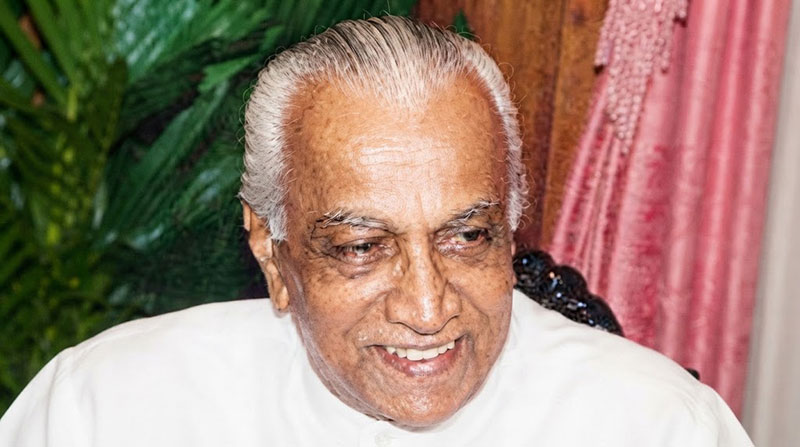
Mr. R.M.Amerasekera’s recent article on how improving rural households and villages contributes to national development (Sunday Island Aug. 23) was interesting reading as I, during my long years in the public service, was privileged to be associated with projects to improve the living conditions of rural folk.
In this context, mention should be made of that down to earth politician, D.B.Wijetunga who as
Minister for Highways and Power & Energy focused much attention on uplifting the living standard of villagers with projects to improve their lot. As Minister for Highway he successfully pushed the Treasury to increase inadequate provision in the estimates to improve roads under Provincial and District Road Committees.
Having done so, he instructed area engineers to see that the full allocation was utilized giving top priority to improve minor roads. Foot paths were widened and made motorable and farmers who carried their produce to market on their heads or shoulders had tractors. School children had small vans or two-wheeled tractors to take them them to school. It should also said that the interest shown by the government inspired villagers themselves to organize shramadana activities that were guided by Area Engineers.
Then D.B.Wijetunga as Minister for Power & Energy was keen on providing electricity to villages. Finding there was no provisions in government estimates he consulted his Secretary to the Ministry, Prof. K.K.Y.W. Perera, who suggested that we approach Asian Development Bank (ADB). Thanks to Prof. Perera’s influence with the ADB a loan was arranged subject to the condition that only financially viable villages be connected.
To satisfy this condition, a survey had to be carried out. Special mention should be made of Engineer Maxie Tissera who devotedly with the assistance of Area Engineers, prepared a list of such villages and
work started with all enthusiasm. Members of Parliaments, seeing that some villages in their electorate had been not listed, provided funds from their Decentralized Budget to provide electricity to such villages. A recent news item says that almost the entire country has now been electrified.
I am happy that I was involved in these two projects during my public service career as an Assistant Secretary to the Ministries for Highways and Ministry for Power & Energy.
G.A.D.Sirimal, SLAS,
Rtd. Asst. Secretary,
Ministry for Power & Energy

Fast Attack Craft P 4447 recovered in successful salvage operation

Showers above 100 mm are likely at some places in the Western, Central, Sabaragamuwa, Southern, North-central and North-western provinces

Shafali, Mandhana power India to eighth Asia Cup title

Tharanga wins Ultimate Javelin title

CIABOC member’s appointment: Controversy over Speaker under probe heading selection process

GMOA: Countrywide cadre revision not done since 2015

‘Dates have the highest sugar content to fight Coronavirus’

Sunday Island 27 December – Headlines

#SundayIsland 17th December – Headlines

Sunday Island – 28th March

Sunday Island Headlines – 21 March

Sunday Island – 21st February – Headlines
-

 Sports4 days ago
DDS set to lose Test captaincy
-
 News7 days ago
Thailand shuts door on undesirables from Sri Lanka
-

 News4 days ago
Sri Lanka faces new grid challenge as rooftop solar surges: former CEB GM
-

 Latest News4 days ago
Shafali, Deepti power India into sixth T20 Asia Cup final
-
 Business7 days ago
CEB successor company breaks into top three in competitive BESS tender
-
 Opinion6 days ago
Navigating Sri Lanka’s Israeli Dilemma
-

 Latest News3 days ago
Sri Lanka thwart Fatima Sana challenge to secure Asia Cup final spot
-
 Features5 days ago
Lost for 90 years: Rare Goby resurfaces in Jaffna