
Business
Survey reveals Lankan PR agencies see AI as a game-changer, emphasizes need for technical know-how and ethical guidelines


In a recent research study involving 25 leaders and executives from PR agencies in Sri Lanka, it was found that over 90% of participants believe that Artificial Intelligence (AI) is already present in the country’s communications industry. Moreover, nearly two-thirds of the respondents stated that AI is poised to have a significant impact on the PR industry within the next three years.
While 21 respondents mentioned that their agency leaders understand the true potential and impact of AI in communications, the survey highlighted the greatest challenge faced when advising clients on AI-related matters: the lack of actual sound knowledge and understanding, as well as the potential applications and limitations, which was identified by 70% of the participants.
This challenge was closely followed by other factors, including a skills gap in talent, difficulties in proving the value of AI, and budget considerations. Interestingly, the survey revealed that clients do not frequently seek expert advice from agencies on AI matters.
Thanzyl Thajudeen, the country representative, underscored the importance of better preparation for AI in Sri Lanka by acquiring technical know-how and talent. Thajudeen emphasized that this preparation should encompass various aspects of communications, such as multi-scenario planning, deep audience insights, content automation, crisis mitigation, and active monitoring. Additionally, building creative capacity and skills and implementing industry guidelines to uphold standards and ethics were also highlighted as essential steps.
One of the key findings from the survey was that 56% of respondents expressed concerns about the potential misuse of AI by PR professionals, and some indicated that they would not use AI at all. On the other hand, 88% of respondents believe that PR professionals should utilize AI content writing platforms, like ChatGPT, with many already using them for social media management and press releases.
The survey also revealed that the most used AI tools among the respondents included ChatGPT, Canva, Google Analytics, Grammarly, and social media analytics. When it comes to acquiring AI knowledge, self-learning was the preferred method (76%), followed by on-the-job training, workshops, events, and related qualifications. Additionally, 22 respondents strongly recommended the regulation of AI in the country, along with the implementation of ethical guidelines specifically tailored for the PR industry.
The Public Relations and Communications Association (PRCA), the world’s largest professional PR body, conducted the survey. Representing 35,000 PR professionals in 82 countries worldwide, PRCA is a global advocate for excellence in public relations with a mission to create a more professional, ethical, and prosperous PR industry. Through exceptional training, authoritative industry data, and global networking and development opportunities, PRCA aims to empower PR professionals. It also manages the International Communications Consultancy Organisation (ICCO), the umbrella body for 41 PR associations and 3,000 agencies worldwide.











When you think of sharks in Sri Lanka, your mind probably goes to the sleek blacktip reef sharks gliding through the reefs of Pigeon Island. But what most people don’t realise is that Sri Lanka is home to over 100 species of sharks and rays—ranging from reef dwellers and open-ocean giants to mysterious deep-sea, with some juvenile bull sharks being found even in freshwater!. They’re scattered across almost every part of the coastline, from coral reefs and estuaries to muddy lagoons and inland waterways. Yet despite their presence, these fascinating creatures remain deeply misunderstood and largely unprotected in national conservation efforts.
Chances are, if you’ve eaten karawala (dried fish) in Sri Lanka, you’ve possibly eaten shark—without even knowing it. Shark meat often ends up in local markets with no species names, and no questions asked. But here’s the catch: unlike fast-growing fish like sardines or mackerel, most sharks and rays grow slowly, mature late, and have very few offspring. Some only give birth once every couple of years. That means that their populations are usually precarious and they are sensitive even to small-scale fishing operations, which push their populations into serious decline. And in Sri Lanka, while vessel sizes are smaller in comparison to many developed countries, the number of vessels combined with their fishing techniques has resulted in the depletion, and in the case of sawfishes, a likely local extinction.
That’s where Important Shark and Ray Areas (ISRAs) come in. ISRAs are a global science-based tool designed to designate places that matter most for sharks, rays, and chimaeras. They aren’t marine protected areas and don’t come with legal restrictions—but they highlight critical habitats based on rigorous scientific criteria. These include areas used for breeding, feeding, migration, or home to rare, threatened, or range-restricted species.
In 2024, after a thorough review and vetting process, five (of the seven) proposed areas from Sri Lanka were formally designated as ISRAs
Bathalangunduwa Island, located on the fringes of the shallow coastal Puttalam Lagoon and off the coast of Wilpattu National Park in northwestern Sri Lanka, qualifies as an ISRA based on the presence of the threatened Winghead Shark (Eusphyra blochii). This area meets two ISRA criteria: it supports a vulnerable species and functions as a reproductive habitat.
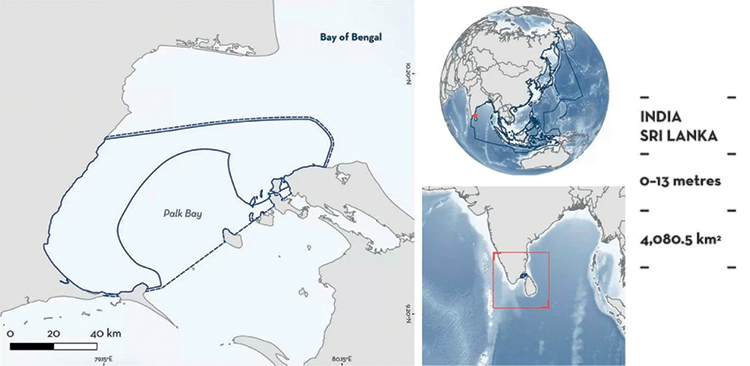
Palk Bay, a shallow, semi-enclosed water body shared between India and Sri Lanka, qualifies as an ISRA due to the presence of multiple important species. These include the threatened Shorttail Whipray (Maculabatis bineeshi), the range-restricted Sharpnose Guitarfish (Glaucostegus granulatus), and reproductive populations of the Grey Sharpnose Shark (Rhizoprionodon oligolinx). This was one of the few trans-boundary ISRAs covering both Indian, and Sri Lankan waters.
-
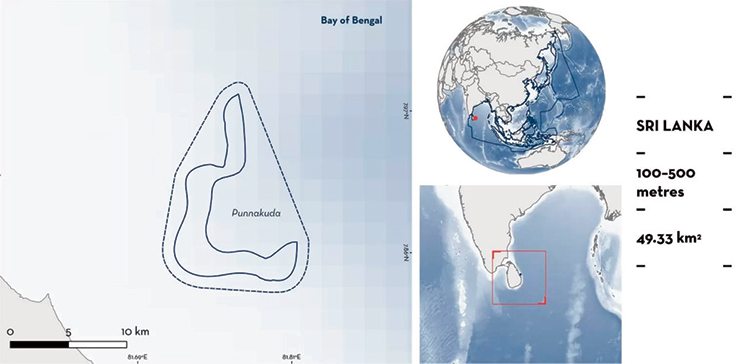
- Punnakuda ISRA
-

- Pigeon Island ISRA
-

- Pasikuda & Kalkudah ISRA
-
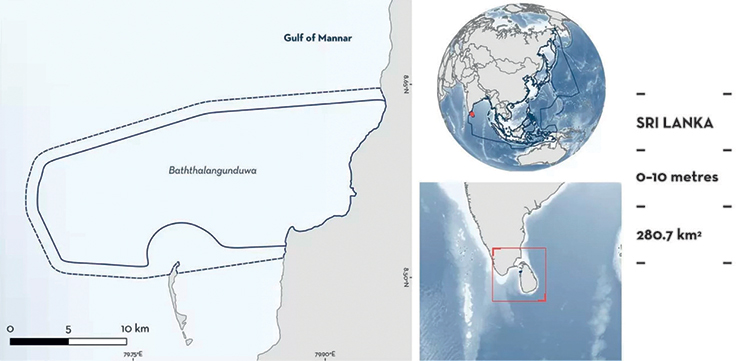
- Baththalangunduwa ISRA
Pasikudah & Kalkudah, a coastal stretch in Sri Lanka’s Batticaloa District, is known for its coral reefs and nearshore shark activity. This ISRA qualifies due to the presence of threatened and range-restricted species, such as the Stripenose Guitarfish (Acroteriobatus variegatus).
Punnakuda Canyon, a deep-sea canyon located just offshore from Pasikudah & Kalkudah and beyond the boundaries of the coastal ISRA, qualifies based on the presence of threatened and range-restricted deep-sea species, including the Indian Swellshark (Cephaloscyllium silasi).
Pigeon Island, the only ISRA in Sri Lanka that overlaps with a Marine Protected Area—the Pigeon Island Marine National Park—qualifies due to the presence of threatened species and undefined aggregations, notably the Blacktip Reef Shark (Carcharhinus melanopterus).
These areas are already designated ISRAs. In addition to this Sri Lanka also has two “Areas of Interest”; Koddiyar Bay and Hikkaduwa.
While these ISRAs don’t enforce protection on their own, except for Pigeon Island, which happens to overlap with an already established National Park, they’re a vital starting point. They help guide where marine protected areas might be placed, where fishing regulations could be refined, and where development should tread carefully. For Sri Lanka, ISRAs offer a powerful chance to align conservation and fisheries planning before it’s too late.
Most importantly, ISRAs are created using available scientific knowledge. Organisations like Blue Resources Trust (BRT) were able to contribute to the designation of ISRA’s due to long-term monitoring of shark and ray fisheries across the country. BRT has built the largest dataset on Sri Lankan sharks and rays, thanks to contributions from the Tokyo Cement Group, the Save Our Seas Foundation (SOSF), the Marine Conservation and Action Fund (MCAF) of the New England Aquarium, the Hong Kong Ocean Park Conservation Foundation (OPCFHK), the Prince Bernhard Nature Fund, amongst others.
By designating our ISRAs, Sri Lanka now has the recognition to make smarter, science-led decisions for the ocean’s most vulnerable species.
As shark and ray populations decline under pressure from overfishing, habitat loss, and climate change, knowing where they still have a chance to thrive is the first step toward saving them. Through ISRAs, Sri Lanka can take the lead in showing how conservation and coastal livelihoods can go hand in hand.
To explore ISRA maps and learn more, visit: https://sharkrayareas.org
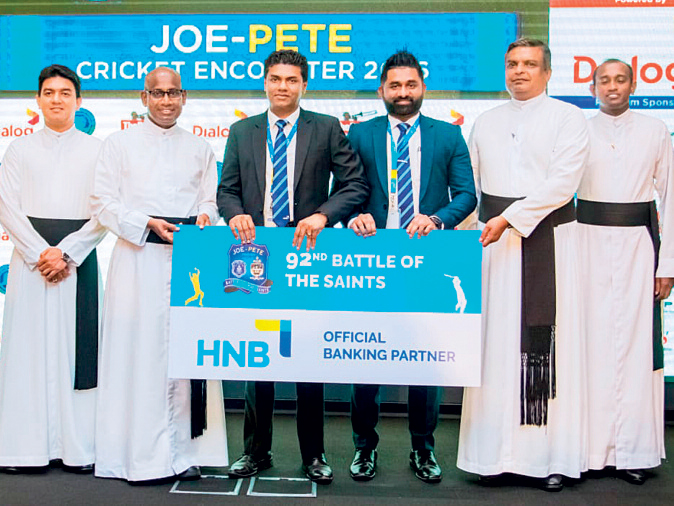
HNB PLC, one of Sri Lanka’s leading private banks, has been named the Official Banking Partner for the 92nd edition of the annual “Battle of the Saints” cricket encounter between St. Joseph’s College and St. Peter’s College. The highly anticipated match is scheduled to take place from March 19 to 21, 2026, at the iconic Sinhalese Sports Club (SSC), continuing a celebrated tradition in Sri Lankan school cricket.
HNB’s Managing Director and CEO, Damith Pallewatte, said the bank is proud to support an event that embodies the spirit, discipline, and unity of Sri Lanka’s youth. “School sports play a vital role in shaping confident leaders and resilient communities. Partnering the 92nd edition of this iconic encounter is part of our commitment to nurturing young talent and empowering the next generation of Sri Lankans to achieve their full potential,” he stated.
The 92nd Battle of the Saints promises to be another thrilling chapter in the history of Sri Lanka’s school cricket, with HNB ensuring that its legacy continues by supporting both sporting excellence and the holistic development of young Sri Lankans.
Business
Britol and GP Certified Drive a Revolutionary Shift with the Introduction of Certified Recycled Plastics in FMCG Packaging
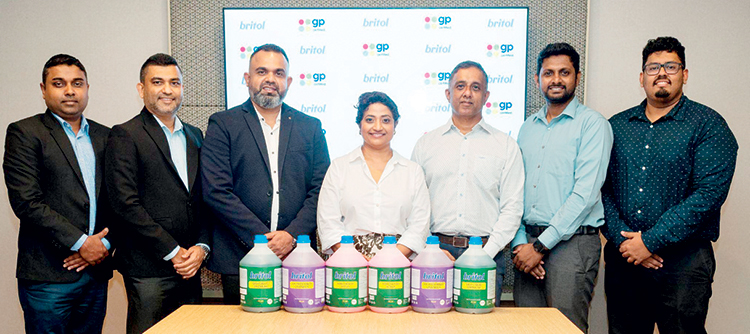
In a revolutionary step towards sustainable manufacturing, reducing plastic pollution and creating local jobs,, Britol and the Antler Group of Companies partnered with GP Certified to integrate certified recycled plastics into large-scale production of their products.
This initiative marks a significant milestone in the plastics and recycling industry. Most brands in Sri Lanka use virgin plastics to produce their plastic packaging – everything from a shampoo to a toilet bowl cleaner is packaged in a bottle made with plastic that is imported, used once and discarded. Marking an impactful departure from business as usual, the Antler Group of Companies now uses safe, ethically produced and cost-effective GP Certified recycled plastics to replace up to 40% of the imported virgin with locally recycled plastics in some of their Britol range of products. .
Speaking on the milestone, Ms Ashani Jayasinghe, the Chairman at Antler Group of Companies stated that “For over 4 decades, sustainability has guided Antler’s journey, shaping how we innovate, manufacture and lead. Through the GP Certified programme, Antler and Island Climate Initiative is setting new standards. A standard that enables manufacturers, partners and communities, to take part in a circular environmentally responsible system.”
Echoing this sentiment, Mr. Chaminda Rajapakse, Managing Director of GP Certified, expressed: “This partnership with Antler represents a critical step in mainstreaming certified recycled plastics within the FMCG sector. This milestone directly supports the rollout of Extended Producer Responsibility (EPR) in Sri Lanka by providing FMCG companies with a credible, local compliance pathway. GP Certified enables brands like Britol to meet EPR obligations through verified recycled content, traceability, and accountable downstream processing, reducing reliance on offsets or non-circular disposal. By linking compliant producers with certified recyclers, GP Certification helps translate EPR from a regulatory requirement into a practical, scalable market mechanism that strengthens domestic recycling and closes the loop.”
This collaboration underscores the shared vision of GP Certified and Antler to drive the circular economy forward, inspiring industries to embrace certified recycled materials as the new norm.
This initiative was supported by the PLEASE project which was funded by the World Bank and implemented by the South Asia Co-operative Environment Program (SACEP).

ISRAs of Sri Lanka – Protecting Hidden Shark and Ray Hotspots

HNB Sponsors 92nd Battle of the Saints as Official Banking Partner

Britol and GP Certified Drive a Revolutionary Shift with the Introduction of Certified Recycled Plastics in FMCG Packaging

Highest-Ever Profit by NSB in 2025

Fast-track fuel supply for exporters says EDB chief

Dharmaraja Rugby Rising from Lake View to Restore a Historic Legacy

‘Dates have the highest sugar content to fight Coronavirus’

Sunday Island 27 December – Headlines

#SundayIsland 17th December – Headlines

Sunday Island – 28th March

Sunday Island Headlines – 21 March

Sunday Island – 21st February – Headlines
-

 Business6 days ago
Browns EV launches fast-charging BAW E7 Pro at Rs. 5.8 million
-

 Life style7 days ago
From culture to empowerment: Indonesia’s vision for Sri Lanka
-

 News4 days ago
CIABOC questions Ex-President GR on house for CJ’s maid
-

 Life style7 days ago
Ranjith Fernando celebrates cricketing journey with Hob Nails to Spikes
-

 News5 days ago
Sri Lankan marine scientist Asha de Vos honoured at UNGA opening
-

 Features6 days ago
Achievements of the Hunduwa!
-

 Latest News7 days ago
QR code system will be implemented for fuel with effect from 06.00 a.m. today (15th)
-

 News5 days ago
Australian HC debunks misleading travel risk claims for Sri Lanka