
Opinion
Priority requirements for winning elections and solving national problems

An open letter to National People’s Power
The National People’s Power (NPP) is emerging as the main movement aligned with the people’s aspirations that manifested through the Peoples’ Struggle of 2022. This situation is commensurate with the state of affairs at the first national election of (then) Ceylon, in 1947, where we missed a golden opportunity.
Therefore, in order to win the upcoming elections, and thereon to find solutions to national problems including the ethnic issue that continues to cause sharp disagreement in the society, we earnestly request that you pay focused attention to the following priorities.
Uniting the people by uniting all leftist and progressive forces against racism, authoritarianism and neoliberalism (the common enemy).
Proposing a solution acceptable to all ethnic groups to solve the ethnic problem.
It is our observation that even though the aspirations of the people against racism, authoritarianism and neoliberalism have been expressed through the 2022 struggle, the NPP has still failed to represent those aspirations as a whole.
The main reason for that is the tendency of the leftist and progressive political forces in our country to not give priority for uniting all the likeminded forces to build a unity of the people against the common enemy; from the beginning until today.
At the first national elections of 1947, the Lanka Sama Samaja Party(LSSP) was the main stream that represented the aspirations of the people against neo-colonialism (the common enemy). The LSSP therefore had a special responsibility to prioritize the unification of all leftist and progressive forces against neo-colonialism. Had that been done, serious mistakes such as the nomination of Wilmot Perera from the LSSP to the Matugama Constituency, which led to the defeat of C. W. W. Kannangara, would not have happened. Afterall, the leftist and progressive forces had the potential to win the election of 1947.
If that had happened then, the common enemy would not have had the opportunity to deprive the hill country Tamil (Malaiyaha Tamil) people of their citizenship and political rights, thereby weakening the left and progressive forces. Likewise, the common enemy would not have got a chance to appoint E.A Nugawela, who has been working against free education from the beginning, as the Minister of Education and that resulted in distorting the free education policy before it had a chance of full implementation.
Therefore, the NPP has been given a special responsibility to ensure that the wrong committed by the LSSP in 1947, is not repeated by the NPP in 2024. Accordingly, we suggest that the NPP should give first priority to uniting all the forces against racism, authoritarianism and neoliberalism (the common enemy), i.e. all the left-wing and progressive forces.
In accordance with this strategic vision, we suggest that the second priority of the NPP should be to present a solution proposal that is acceptable to all ethnic groups in order to solve the ethnic problem. For that, on the one hand, a solution proposal should be presented that does not give any space to the common enemy to stir up racism as usual. On the other hand, it has to be a practical solution that can gain the confidence of the majority of the people of the North.
Such divisive and complex issues cannot be addressed using traditional methods. Instead, it is possible to use the latest democratic practice, the deliberative democratic method. According to this system, political decisions for burning issues are first made by a People’s Assembly that is chosen by lottery to represent the composition of the citizen society, just as a jury is chosen. Then those decisions are approved using referendums or through public representatives.
The composition of the People’s Assembly selected by the lottery system can be determined efficiently by computing using algorithms to represent the composition of the citizen society in the right way. Thereafter, the public assembly should be provided with necessary facilities and convened at a suitable place. All important information related to the problem should be given. The People’s Assembly maybe divided in to smaller groups so that the space is created where deeper dialogue and deliberation can take place. Smaller groups maybe determined through a vote. Facilitators should support this process of deliberate discussion. The People’s Assembly should be provided opportunities to discuss with the necessary subject experts to get knowledge and information that can help make informed decisions. This deliberation should be broadcasted live online and necessary arrangements should be made to bring the public responses regarding the proposed matter to the attention of the public assembly. In the end, the People’s Assembly will arrive at decisions/political solutions by either consensus or when consensus is not possible, through a vote. Care should be taken that no influence is exerted on the People’s Assembly by the organizers or facilitators or subject experts in this entire process.
Trials conducted in various countries have confirmed that a People’s Assembly selected by lottery according to this method can make optimal political decisions through deliberation, and that those decisions become the will of the majority priority of the people. The uniqueness of this approach is the possibility of making optimal political decisions by the majority of all parties concerned based on political equality and particularly for citizens of societies that are sharply divided by race or religion. This modern knowledge has been presented in detail by Wijayananda Jayaweera’s book Sanvicharaniya Samajayak.
Therefore, we suggest that the capability and determination of the NPP should be announced without delay to provide an optimal solution to the ethnic problem, which is acceptable not only to the majority in the north but also to the majority in the east, the mountains and the south, using the deliberative democratic system.
We respectfully inform you that we are committed to stand to achieve these priorities and happy to further discuss the proposals mentioned above here if necessary.
01 Prof. Jayadewa Uyangoda
02 Prof Sarath Abayakoon
03 Dr.Ramesh Ramasamy
04 Dr.Selvy Thiruchandran
05 Dr. Herath M.Ariyarathne
06 Dharmasiri Bandaranayka
07 Dr.Saiful Islam
08 Dileepa Manawadu
09 E.M.Bandara Menike
10 P.Muththulingam m
11 Suresh Jeewarathnam
12 Eng.Gufran Ismail
13 Selvarasa Thileepan
14 Dr.M.Siddik Sadik
15 Jayathilake Bandara
16 Kaudulle Jayathissa
17 S.Sivagurunathan
18 T.Mathusoothanan
19 Hashim Salih
20 Nawaratne Banda
21 T.M.Premawardana



A leadership crisis that exposes the strategic fault lines of Ukraine’s war effort—and the competing imperatives of domestic command, Western pressure, and battlefield reality.
Ukrainian President Volodymyr Zelensky’s abrupt dismissal of Defence Minister Mykhailo Fedorov and his broader cabinet reshuffle have exposed a deep fracture within Ukraine’s wartime power structure. This extends far beyond personalities and into the strategic orientation of the state itself. What is unfolding is not merely a bureaucratic dispute but a crisis of command in a country prosecuting a high intensity, NATO-supported war against Russia.
On 16 July, protests broke out in Kyiv demanding the removal of Commander in Chief Oleksandr Syrskyi and the reinstatement of Fedorov. Smaller demonstrations occurred in Odessa, Lviv, Kharkiv, Lutsk, Dnipro, and other cities. These protests, which have continued for a week, signal a rupture within the prowar bloc that has sustained the Zelensky administration since 2022.
Antiwar sentiment did not drive the demonstrations, in which the “usual suspects” of US-backed “Colour Revolutions” took part. In this case, veterans, territorial defence networks, and upper middleclass “civil society” actors, who remain committed to the war’s continuation. Their demand for Fedorov’s reinstatement reflects a belief that Zelensky has lost operational coherence and strategic clarity. Placards bearing Fedorov’s name were, in effect, endorsements of escalating long range warfare against Russia, despite the catastrophic human toll already borne by both sides.
The political shock waves have reverberated through Ukraine’s Western patrons. The Mayor of Kyiv, Vitaly Klitschko, a major player in the 2014 “Maidan Coup” who is aligned with German strategic interests, condemned the firing publicly as a “big mistake,” while major Western media outlets described the move as “destabilising.” Behind the scenes, officials in Washington and Brussels viewed the sudden change with alarm. Such reactions reveal the degree to which Fedorov had become embedded in Western military technical planning, particularly in the domain of drone warfare, where Ukraine’s operations increasingly intersect with NATO intelligence and logistical support.
This conflict has emerged precisely as Ukraine intensifies drone strikes deep inside Russian territory and escalates operations against Crimea. Fedorov, appointed only six months ago, became the face of this strategy, celebrated by Western media as a “drone warfare mastermind” and criticised domestically for sidelining artillery procurement. His approach aligned closely with NATO’s interest in testing and refining asymmetric strike capabilities against Russia.
Zelensky’s subsequent hints that he may reconsider the decision underscore the precariousness of his position. His authority now rests on a fragile balance between Western expectations, domestic military factions, and a society exhausted by mobilisation. His consultations with both Syrskyi and Fedorov suggest an attempt to reassert control over a command structure that is no longer unified.
Fedorov’s postdismissal revelations sharpen the picture. His claim that Syrskyi and Chief of the General Staff Andrii Hnatov blocked reform initiatives systematically, and that Syrskyi enabled corruption, points to a structural clash between two models of warfare. The Western media has analysed the row as one in which Fedorov represents a Westernaligned, technologydriven paradigm emphasising drones, automation, and longrange strikes. It portrays Syrskyi as embodying an entrenched Sovietera command culture, reliant on artillery, mass mobilisation, and hierarchical control. Zelensky’s decision to side with Syrskyi is presented as a political calculation, preserving the loyalty of the traditional military establishment at the expense of the “reformist” faction.
However, Fedorov’s political alliances complicate this narrative. His cultivation of farright networks, including neo Nazi blogger Serhii Sternenko, reveals the darker undercurrents of Ukraine’s wartime coalition. Sternenko’s role in the 2014 Odessa massacre underscores how extremist actors continue to intersect with state structures, especially in moments of institutional fragmentation.
In actual fact, the power struggle reflects a contradiction between two elite strategies for managing subordination. Ukraine is a subaltern national state embedded in a wider hierarchy of imperialist power. Fedorov is tied to global centi-billionaires and Western technology platforms. His camp can look “more Western” because it is more integrated into transnational circuits of capital and war-tech. The apparent modernity of that model still carries dependency: it improves efficiency while deepening reliance on external monopolies. The war state becomes dependent on foreign-owned infrastructure, satellite systems, software, and elite relationships, which gives external capital leverage over military coordination and political priorities.
Syrskyi, by contrast, is closer to an older form of domestic elite power: the military-bureaucratic order linked to native oligarchic interests, procurement channels, and patronage. This is a more nationally rooted fraction of the bourgeois bloc, but not necessarily a more independent one, because Ukrainian oligarchic power has long been intertwined with Western finance, arms flows, and state restructuring.
The struggle between Syrskyi and Fedorov therefore reflects competing modes of dependency, and (although clearly the Western establishment favours the latter) not a clean split between “national” and “Western” camps. One route passes through transnational tech capital and managerial reform; the other through entrenched oligarchic-military command and domestic networks of influence. The clash is therefore not an isolated dispute but a symptom of an intra-elite struggle over how Ukraine should be governed as a dependent war economy. Neither side points beyond bourgeois rule; they are different management styles of the same subordinated state form.
Taken together, the crisis reflects a deeper geopolitical reality: Ukraine’s war effort is no longer anchored by a unified elite consensus. Instead, it is being pulled apart by competing military doctrines, Western strategic pressures, corruption scandals, and the exhaustion of a society asked to sustain indefinite mobilisation.
Vinod Moonesinghe, formerly chair of the Ceylon German Technical Training Institute and of the National Institute for Language Education and Training, serves as Convenor of the Asia Progress Forum.
By Vinod Moonesinghe ✍️

I never learned how to communicate my emotions properly, even with my closest friends. It was only when a friend of mine called to tell me about the immense pressure and struggles he was experiencing that I realised how deeply ingrained this issue truly is in us. We are all taught, whether subliminally or explicitly, that expressing our emotions and seeking help are weaknesses. Even when talking to those close to us, it is the norm to keep our feelings secondary. That phone call revealed something I had sensed but never named: young men like us are experiencing an epidemic of loneliness, and our society has left us to face it alone.
Male loneliness and disengagement among young men aged 15 to 29 has emerged as a critical social and political crisis. As a young man, I have witnessed how pervasive disconnection isolates my peers, leaving them vulnerable to harmful online influences. The lack of emotional support systems, positive male role models, and societal permission for vulnerability drives young men toward toxic ideologies that further increase their isolation and threaten societal connection. This failure is a deeply systemic one, and it demands urgent action.
I think often about that phone call from my friend. Here was someone I had known for years, someone I considered close, and yet neither of us had ever truly discussed what we were going through. We had talked about sports, school, and superficial matters, but never the weight we carried. When he finally opened up, I realised I had been waiting for permission to do the same. This is the tragedy of male socialisation: we are surrounded by others who share our struggles, yet we are conditioned to suffer in silence. The statistics confirm what I experienced personally: we are a generation in crisis.
I am 17 years old, and I write this as a Sri Lankan-American trying to make sense of two worlds. My father was born in Colombo, and my grandparents, after 35 years in Washington, D.C., returned to Sri Lanka a decade ago, drawn by a homeland that continues to shape our family’s identity. On a visit to see them, we made a pilgrimage to Kataragama, one of the holiest sites on the island. Watching the devotees there, people from every background, every faith, my grandmother spoke to me about anukampā. It’s a Sinhala word that’s hard to translate exactly. She described it as what happens when your heart trembles because someone else is suffering. Not pity, not sympathy from a distance, but actually feeling it with them, and being moved to do something about it.
That idea stayed with me. When I think about what young men need, what I needed when I was struggling and didn’t know how to ask for help, it’s exactly that. Not judgment. Not being told to toughen up. Just someone whose heart trembles with ours, who sees our pain and responds. This essay argues that the epidemic of male loneliness stems from systemic failures in education and community support, pushing young men toward radical online communities. We need schools, governments, and communities to respond with the kind of compassion my grandmother described, and we need it now.
A Global Epidemic in Numbers
Recent data underscores the severity of male loneliness. A 2021 survey by the American Enterprise Institute found that 15 percent of men report having no close friends, a sharp rise from just 3 percent in 1990 (Cox, 2021). For young men aged 18 to 29, this isolation is particularly acute, with 27 percent reporting no meaningful social connections (American Enterprise Institute, 2021). This disconnection correlates with declining mental health: the National Institute of Mental Health reports that men aged 18 to 25 have suicide rates three times higher than their female counterparts (NIMH, 2023). These statistics reveal a generation of young men struggling to find belonging in a society that often equates emotional expression with weakness.
The World Health Organization’s 2025 Commission on Social Connection confirms that loneliness has become a defining public health crisis of our era. The WHO reports that one in six people worldwide is affected by loneliness, with the phenomenon linked to an estimated 871,000 deaths annually, more than 100 deaths every hour (WHO, 2025). Young people bear a disproportionate burden: between 17 and 21 percent of individuals aged 13 to 29 report feeling lonely, with the highest rates among teenagers (WHO, 2025). Gallup’s 2025 data reveals that 25 percent of American men aged 15 to 34 experience daily loneliness, significantly higher than the 18 percent national average and notably higher than their female peers, who also report 18 percent (Gallup, 2025). The United States stands out among wealthy nations: nowhere else is the gap between young male loneliness and the rest of the population as pronounced.
The Absence of Role Models
I attribute this crisis to the absence of positive, accessible male role models. Traditional notions of masculinity emphasise stoicism and competition, leaving young men without guidance on emotional health or self-awareness. Schools and communities rarely provide structured environments for boys to develop emotional literacy, unlike programs often available for girls, such as mentorship initiatives or social-emotional learning curricula tailored to female experiences (Brooks, 2022). This systemic oversight leaves young men to navigate their emotional lives alone, often turning to the internet for answers.
The cultural norms that stigmatise male vulnerability are not accidental; they are reinforced from childhood through adulthood. Phrases like “man up” and “boys don’t cry” communicate a clear message: emotional expression is weakness (Pollack, 1998). Moreover, mental health services remain inaccessible due to cost or stigma, with only 27 percent of men seeking therapy compared to 45 percent of women (American Psychological Association, 2021). Blaming individuals for their isolation overlooks the systemic failures that leave young men without the tools or spaces to address their emotional needs.
The Lure of Toxic Online Communities
In the absence of real-world support, young men are drawn to online communities, particularly those within the “Red Pill” movement, which promise belonging but often promote harmful
ideologies. Influencers like Andrew Tate or “Red Pill” podcast hosts offer messages of discipline and strength that resonate with isolated young men.
They are effective in their messaging because they feel relatable to millions of men across the country. Unlike celebrities and professional athletes, who can feel distant, these influencers are often everyday people, making their messages more direct and effective. Their content creates a one-on-one experience that speaks individually to every viewer and listener. As an example, when a multi-millionaire singer addresses their audience about an issue, it can feel impersonal and disconnected because their message is directed to hundreds of millions of people. On the other hand, when a young man can call into an influencer’s show, be heard and his views validated, this creates a powerful sense of belonging. It becomes less like watching content and more like talking to your friends.
However, the danger lies in the unchecked spread of misogyny, conspiracy theories, and radical beliefs. A 2022 study by the Anti-Defamation League found that 60 percent of young men exposed to “Red Pill” content reported increased hostility toward women, with many endorsing views that frame vulnerability as weakness (ADL, 2022). These influencers exploit the emotional void in young men’s lives, offering a sense of community while reinforcing the very isolation they claim to address. By presenting their ideologies as undeniable truths, they radicalize vulnerable audiences, with real-world consequences.
Political Ramifications
The political ramifications of this crisis are undeniable. In the 2024 U.S. presidential election, Donald Trump secured 56 percent of the young male vote, a significant increase from 41 percent in 2020 (AP VoteCast, 2024). This shift aligns with the rise of far-right movements, including MAGA, which capitalise on young men’s disillusionment by promoting narratives of dominance and control. Political scientist John Sides argues that these movements fill an emotional void by offering a sense of purpose and identity to disaffected men (Sides, 2024). Meanwhile, progressive voices often dismiss young men’s struggles as entitlement, failing to engage them with empathy or provide alternative spaces for connection. This imbalance allows far-right ideologies to dominate the narrative, further alienating young men from constructive societal participation.
Sri Lanka’s Parallel Challenge
This crisis is not confined to American shores. Sri Lanka, a nation that has endured decades of civil conflict, a devastating tsunami, and recent economic upheaval, faces its own youth mental health emergency. A WHO Global School-based Health Survey found that 30.8 percent of Sri Lankan adolescents report loneliness, while 40.3 percent experienced some form of mental health difficulty in the year preceding the survey (Rasalingam et al., 2022). The data is stark:
20.2 percent of adolescents experienced anxiety, and 3.7 percent reported suicidal ideation.
A separate study published in BJPsych International revealed that 9.5 percent of Sri Lankan school children aged 13 to 17 had seriously considered attempting suicide, with nearly 39 percent experiencing bullying within the preceding month (Wickramaseckara Rajapakshe et
al., 2023). Sri Lanka has historically had one of the highest suicide rates in the world, and while pesticide regulation has reduced overall numbers, the underlying mental health crisis, particularly among young people, remains insufficiently addressed. The country has approximately 170 board-certified psychiatrists serving a population of over 22 million, with adolescent mental health services only recently beginning to develop.
The parallels between American and Sri Lankan young men are instructive. Both face traditional cultural expectations around masculinity that discourage emotional expression. Both navigate economic uncertainty and rapidly changing social landscapes. Both are increasingly exposed to global digital platforms that can either connect or isolate, and both deserve better than what their societies currently offer. In both countries, the old ways of raising boys, telling them to be tough, to hide their feelings, to figure it out on their own, are failing a new generation.
What Compassion Looks Like in Practice
When my grandmother explained anukampā to me, she wasn’t giving a philosophy lecture. She was telling me how to be a good person. Your heart should tremble when you see someone suffering, she said. Then, you do something. That’s the difference between feeling bad for someone and actually caring: one keeps you comfortable, the other demands action.
To address this crisis, society must prioritise emotional literacy and community-building for young men. Schools should implement mandatory social-emotional learning programmes tailored to boys, teaching communication and vulnerability as strengths, not weaknesses. Community organisations can create mentorship programmes pairing young men with positive role models who model healthy masculinity: men who demonstrate that strength includes the courage to be vulnerable, that leadership includes the wisdom to listen, and that success includes the capacity to form meaningful relationships.
Additionally, policymakers must invest in accessible mental health resources, reducing financial and cultural barriers to care. The WHO’s 2025 report emphasises that solutions exist at national, community, and individual levels, from policy reform to strengthening social infrastructure like parks, libraries, and community centres where genuine human connection can flourish (WHO, 2025). These interventions can counteract the allure of toxic online spaces by providing young men with real-world support and belonging.
Sri Lanka, with its deep Buddhist roots, has something to offer to this global conversation. The concept of anukampā isn’t just a religious idea, it’s a practical one. It asks us to feel what others feel and then act on it. I call on leaders in Sri Lanka and around the world, teachers, politicians, religious figures, and community elders, to take this seriously. Young men are not a problem to be solved. They are people who are hurting, and they deserve to be met with hearts that tremble alongside theirs.
A Personal Plea
Young men’s loneliness isn’t a personal failing; it’s a societal one. The concept of “just toughen up” no longer works. This perspective ignores the structural barriers that discourage emotional expression. When people tell us to simply try harder, they overlook the fact that we were never given the tools to begin with.
What gave my friend the courage to reach out that day? What would have happened if he hadn’t? How many other young men are carrying that same weight in silence, waiting for permission that may never come? I have seen how policy and community engagement can make a difference. But policy alone is not enough. We need a cultural shift and a willingness to actually feel the pain of this generation and respond to it.
By neglecting to provide young men with emotional tools and supportive communities, we drive them toward radical ideologies that perpetuate division and harm. The evidence, from rising isolation rates to political shifts, demands urgent action. By fostering emotional literacy, creating mentorship opportunities, and challenging outdated notions of masculinity, society can empower young men to build meaningful connections and reject toxic influences.
If we fail to act, we risk creating a more divided and hostile world. But if we respond with real compassion, if our hearts tremble with the suffering of this generation and we are moved to action, we offer young men what they most need: the knowledge that their struggles are seen, their suffering is shared, and they are not alone. That is what my friend gave me when he called. That is what I hope to give others, and that is what I ask of you.
References
American Enterprise Institute. (2021). The Decline of Friendship in America. Retrieved from AEI.org
American Psychological Association. (2021). Mental Health Service Utilization by Gender. Retrieved from APA.org
Anti-Defamation League. (2022). Online Hate and Its Impact on Young Men. Retrieved from ADL.org AP VoteCast. (2024). 2024 Presidential Election Voter Demographics. Associated Press.
Brooks, D. (2022). The Boy Crisis: Why Our Boys Are Struggling and What We Can Do About It. Basic Books.
Cox, D. A. (2021). Men’s Social Circles Are Shrinking. American Enterprise Institute.
Gallup. (2025). Younger Men in the U.S. Among the Loneliest in West. Gallup World Poll. Retrieved from https://news.gallup.com/poll/690788/younger-men-among-loneliest-west.aspx
National Institute of Mental Health. (2023). Suicide Statistics by Demographics. Retrieved from NIMH.nih.gov
Pollack, W. (1998). Real Boys: Rescuing Our Sons from the Myths of Boyhood. Random House.
Rasalingam, A., et al. (2022). Assessment of mental health problems among adolescents in Sri Lanka: Findings from the cross-sectional Global School-based Health Survey. Health Science Reports, 5(6), e886. Retrieved from https://pmc.ncbi.nlm.nih.gov/articles/PMC9576112/
Sides, J. (2024). The Political Appeal of Far-Right Movements to Young Men. Journal of Political Science, 45(3), 112–130.
Smith, R. (2023). The Rise of Red Pill Influencers and Their Impact on Youth. Social Media Studies, 12(4), 89–104.
Wickramaseckara Rajapakshe, O. B., Mohan, M., & Singh, S. P. (2023). Development of adolescent mental health services in Sri Lanka. BJPsych International, 20(2), 41–43. Retrieved from https://pmc.ncbi.nlm.nih.gov/articles/PMC10895478/
World Health Organization. (2025). WHO Commission on Social Connection: Global Report on Loneliness and Social Isolation. Geneva: WHO. Retrieved from https://www.who.int/news/item/30-06-2025-social-connection-linked-to-improved-heath-and-reduced-risk-of-early-death
by Nikhil de Silva ✍️
Opinion
Bleeding Treasury: Multi-billion rupee liquor sticker scam and urgent need for systemic reform
by Prof. Asoka. S. Seneviratne
For a nation navigating the perilous waters of economic recovery, fiscal discipline is not a mere bureaucratic preference, it is a matter of absolute national survival. Every single rupee leaked from the state Treasury directly compromises public services, infrastructure, and the socioeconomic welfare of millions of citizens. Yet, while the public bears the burden of high taxation, a monumental revenue hemorrhage has been silently occurring at the heart of the state’s revenue framework.
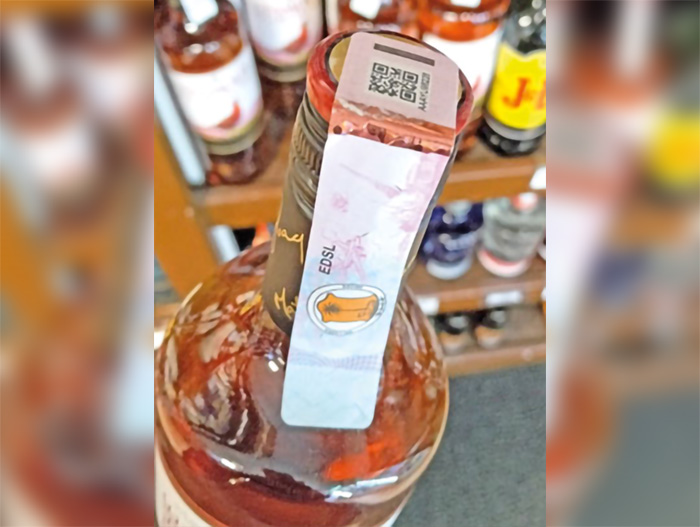
The security sticker system, ironically introduced by the Department of Excise to curb tax evasion and regulate alcohol production, has evolved into an unprecedented conduit for systemic fraud. Recent disclosures by the Parliamentary Committee on Public Finance (COPF) and the Committee on Public Accounts (COPA) have laid bare a terrifying reality: a multi-billion rupee scam that has starved the state treasury of critical revenue while enriching an entrenched network of colluding officials, foreign contractors, and unscrupulous local distilleries. This article deconstructs the anatomy of this institutional disaster, exposes those who turned a blind eye, and outlines the radical legislative and structural overhaul required to permanently safeguard our national revenue.
Shocking Scale of Treasury Revenue Leakage
The financial dimensions of the liquor security sticker fraud are staggering. According to parliamentary oversight committee revelations, the calculated revenue leakage resulting from the circulation of counterfeit and illegally diverted genuine security stamps has reached an estimated tens of billions of rupees annually. To contextualize this loss for the public, legislative watchdogs noted that the volume of state funds evaporating through this single loophole is equivalent to financing multiple massive national health infrastructure projects on the scale of the Suwaseriya ambulance service.
When an illicitly produced or unrecorded bottle of liquor enters the formal retail supply chain bearing a compromised sticker, the treasury loses the entirety of the heavy excise duty levied on it. For every bottle of standard spirits pushed through this parallel economy, thousands of rupees bypass the state completely and flow straight into the pockets of criminals. This is not a minor leak; it is a macroeconomic catastrophe.
The Anatomy of an Exploitative Procurement Blueprint
The foundation of this multi-billion rupee hemorrhage was laid not in illicit distilleries, but within the fine print of a deeply compromised state procurement contract. The state entered into a long-term agreement with an external vendor, Madras Security Printers (MSP), to supply physical tax stamps and digital authentication features. Under the terms of this active contract, which runs until January 2, 2027, the state has been paying an inflated rate of approximately US$ 7.99 per 1,000 digital markings—inclusive of port and customs levies.
The technical absurdity of this arrangement was laid bare by COPF: over 80% of local alcohol manufacturers have transitioned away from physical paper stickers to digital markings printed directly onto bottles during high-speed production. Despite the total elimination of physical paper, printing, and shipping costs, the state continues to pay the maximum contract rate for a digital label that inherently costs fractions of a single cent to generate. The treasury is effectively subsidizing an extortionate profit margin for an external vendor under the guise of security procurement.
Deliberate Inaction: Who Ignored Warning Signs?
A fraud of this magnitude cannot survive in a vacuum; it requires the oxygen of institutional indifference. Multiple administrative layers systematically ignored glaring red flags for years. When the initial procurement process was floated, the Presidential Secretariat’s Procurement Appeal Board intercepted the project and ordered a complete recall due to glaring technical and procedural irregularities. Yet, administrative bodies willfully bypassed these warnings, re-tendering and locking the state into a contract with the exact same questionable entity.
Furthermore, international watchdogs and civil society groups had repeatedly raised alarms regarding the specific foreign contractor’s operational history, citing severe software manipulation disputes, security breaches, and counterfeit controversies in developing nations such as Kenya, South Sudan, and Bangladesh. By turning a blind eye to these verified international precedents, the high-level decision-makers who finalized this framework effectively left the keys to Sri Lanka’s revenue vault in compromised hands.
The primary regulatory bulwark against liquor tax evasion is the Department of Excise, yet its leadership presided over a total collapse of operational oversight. In an era dominated by rapid technological advancement, oversight committees exposed a staggering vulnerability: the Excise Department completely lacked an integrated, automated backend database system to cross-reference and validate the serial numbers of stamps issued.
By keeping the monitoring framework fundamentally manual, rudimentary, and disconnected, the department created the perfect blind spot. Even worse, the physical QR codes printed on the labels were found to be non-functional for field verification by standard smartphones, making point-of-sale authentication an impossibility. This technical failure ensured that whether a sticker was poorly counterfeited or illicitly leaked from an official batch, it could circulate in retail outlets with complete impunity.
Systemic Inside Collusion and Forensic Truth
Recent law enforcement interventions have shattered the narrative that this scam is merely the work of isolated, low-level bootleggers. Following extensive raids conducted by the Criminal Investigation Department (CID) at illicit distribution hubs, such as the massive bust in Malabe where thousands of liters of untaxed alcohol were seized, forensic teams uncovered a dark truth. Many of the “fake” security stamps affixed to the illegal bottles were not counterfeits at all; they were authentic, officially generated high-security labels.
Arrested suspects and trade union whistleblowers have detailed a deeply entrenched criminal nexus inside the regulatory apparatus. Corrupt excise officials reportedly coordinated directly with sub-agents to divert genuine sticker batches straight into illicit blending plants. There are even documented allegations of senior executives actively calling field teams to abort ongoing raids on compromised retail outlets, and in some cases, transporting seized illicit stocks into regional offices to manually paste genuine stickers after the fact to contaminate legal evidence.
Abolishing the Corrupt “Spot Fine” Loophole
For decades, the wealthy masterminds behind revenue fraud have exploited a massive legal loophole embedded within antiquated sections of the Excise Ordinance: the compounding of offenses via “spot fines.” Under this archaic system, when a prominent distillery or major retail distributor is caught manufacturing or selling untaxed liquor with fraudulent stamps, the department frequently settles the matter quietly behind closed doors through an administrative fine.
This spot fine framework must be completely and unconditionally abolished. It strips the judicial system of its jurisdiction and allows corporate criminals to view state penalties as a minor, predictable cost of doing business. A multi-billion rupee assault on the state treasury cannot be settled with an administrative slap on the wrist. Every instance of sticker fraud must be automatically escalated to the Attorney General’s Department for mandatory criminal prosecution, eliminating the arbitrary discretionary powers currently weaponized by corrupt bureaucrats to shield their corporate conspirators.
A Mandate for Drastic Punishments: Confiscation and Mandatory Prison
To break the back of these deeply entrenched syndicates, the state must introduce an overwhelming “fear factor” into the law. Populist rhetoric and minor financial penalties have failed. The legislative framework governing both the illicit liquor industry and the narcotics trade must be overhauled to introduce draconian, non-negotiable statutory punishments (see graph 1).
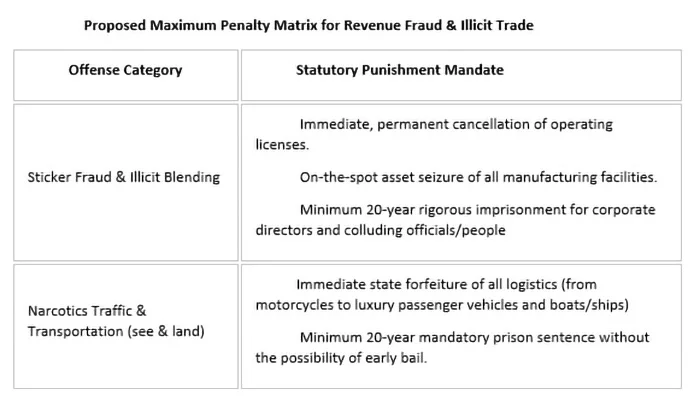
When an illicit operation is raided, the state should not wait for a decade of exhausting litigation to freeze assets. The law must allow for the immediate, on-the-spot physical confiscation of all manufacturing infrastructure, land, distribution vehicles, and liquid capital involved in the crime. Combining this immediate economic destruction with a mandatory 20-year minimum prison sentence will fundamentally alter the risk-reward calculus for these criminal syndicates.
It is essential that the above-mentioned penalties be imposed on those who possess illegal firearms and on individuals involved in their unlawful use, possession, or distribution.
Tracing the Spoils: Wealth Investigations and Absolute Asset Forfeiture
The corporate directors, high-ranking state officials, and external collaborators who orchestrated this scam did so driven by unadulterated greed, funneling their illicit gains into luxury real estate, high-end vehicle fleets, and hidden offshore accounts. True justice demands that the prosecution extend far beyond the physical boundaries of the distilleries.
Under the Prevention of Corruption Act and modern anti-money laundering statutes, the state must launch aggressive, retroactive wealth investigations into every single public official, technical evaluation committee member, and excise executive associated with the liquor sticker procurement and enforcement timeline. If an official’s lifestyle, property holdings, or family assets fail to align with their legitimate state-salaried income, those assets must be frozen under public property laws and permanently forfeited to the treasury. Jail time is insufficient if the perpetrator is allowed to return to a hoard of hidden wealth upon release.
Global Best Practices
The systemic vulnerabilities paralysing Sri Lanka’s revenue collection are entirely preventable, as demonstrated by the stringent protocols enforced in developed jurisdictions. Countries like the United Kingdom, Germany, and Singapore do not rely on disconnected, manual validation systems or unchecked external monopolies to collect excise duties.
* Integrated Digital Traceability:
Developed nations deploy advanced, state-owned encrypted track-and-trace networks. Every bottle is assigned a unique, cryptographically secure digital identifier at the moment of manufacture, which is fed directly into a centralized blockchain or real-time ledger managed directly by the state’s central revenue authority, completely bypassing third-party contractors.
* Zero-Tolerance Enforcement Models:
In these jurisdictions, the discovery of a single unrecorded or falsely authenticated product results in the immediate, automated shutdown of the entire facility, multi-million dollar corporate forfeitures, and immediate criminal indictments for corporate directors.
* Independent Oversight:
Revenue departments are audited by completely independent anti-corruption bodies operating outside the ministry’s hierarchy, rendering internal bureaucratic cover-ups virtually impossible.
Uplifting Excise Department:
Architecture of True System Change
A genuine “system change” requires that we simultaneously clean out corruption and completely modernise our institutional infrastructure. The Department of Excise must undergo (i) a comprehensive operational evolution, (ii) matching the standards of modern global revenue authorities.
This transformation must begin with complete digitalisation. The entire department must be integrated into (i) a single Revenue Administration System, (ii) creating a real-time, (iii) transparent data link between the manufacturer, (iv) the customs point, (v) the department’s operations room, and (vi) the Inland Revenue Department. Field officers must be equipped with secure, state-encrypted mobile devices capable of instantly validating digital bottle markings on retail shelves. Furthermore, the human resource structure must be professionalized—merit-based recruitment, independent performance scorecards, and high technical qualifications must completely replace political appointments and arbitrary promotions, building an institution where integrity is structurally guaranteed.
The multi-billion rupee liquor security sticker scam is a stark warning of the catastrophic dangers of institutional decay. It is a textbook case of how flawed procurement, technical loopholes, and insider collusion can combine to systematically drain the lifeblood of our national economy. Sri Lanka can no longer afford to sustain these parallel criminal economies while honest citizens bear the brunt of national recovery.
The upcoming expiration of the current supplier contract on January 2, 2027, presents a critical, unmissable window for absolute reform. The government must seize this moment to dismantle the failed physical sticker framework, bypass exploitative contractor monopolies, and transition to a state-owned, transparent digital tracking architecture. Simultaneously, the legal system must act with uncompromising severity—abolishing spot fines, enacting mandatory 20-year prison sentences, and aggressively liquidating the assets of every official and corporate executive who participated in this betrayal of public trust. The eyes of the nation are wide open, and the demand for real, structural accountability can no longer be ignored.
(The writer served as the Special Adviser to the Office of the President of Namibia from 2006 to 2012 and was a Senior Consultant with the UNDP for 20 years. He was a senior economist with the Central Bank of Sri Lanka (1972-1993). He can be reached at asoka.seneviratne@gmail.com.)

US hits dozens of trading partners with new wave of tariffs

Arachchige, Rathnayake and Malinga pump Jaffna

Hermann, Liyanage and Mujeeb steer Colombo Kaps to a 23 run win

Showers expected in the Western and North-western provinces and in Galle and Matara districts

Child abuse crisis: 108,000 complaints reported in 10 years

CA dismisses writ petition seeking postponement of A/L exam

‘Dates have the highest sugar content to fight Coronavirus’

Sunday Island 27 December – Headlines

#SundayIsland 17th December – Headlines

Sunday Island – 28th March

Sunday Island Headlines – 21 March

Sunday Island – 21st February – Headlines
-
 Features5 days ago
Two memorable excerpts from a former SLAF commander’s memoir
-

 Business5 days ago
‘Giving up was never an option’: The fisherman who fought back after losing millions in SL
-

 Latest News6 days ago
Davis cup Asia/Oceania Group IV 2026 to be held in Colombo from 20th to 25th July
-

 Life style5 days ago
Taste of the Swiss Alps comes to Colombo
-

 Features5 days ago
Erdoğan’s New Republic
-
 Midweek Review2 days ago
Three high-profile alleged suicides shaping key investigations
-
 News6 days ago
Evidence recorded in money laundering case against Yoshitha Rajapaksa
-

 News6 days ago
Dengue outbreak gallops ahead: Infections surpasses 73,455, leaving 50 dead