
Latest News
President Ranil Wickremesinghe calls for unified action to safeguard the Indian Ocean

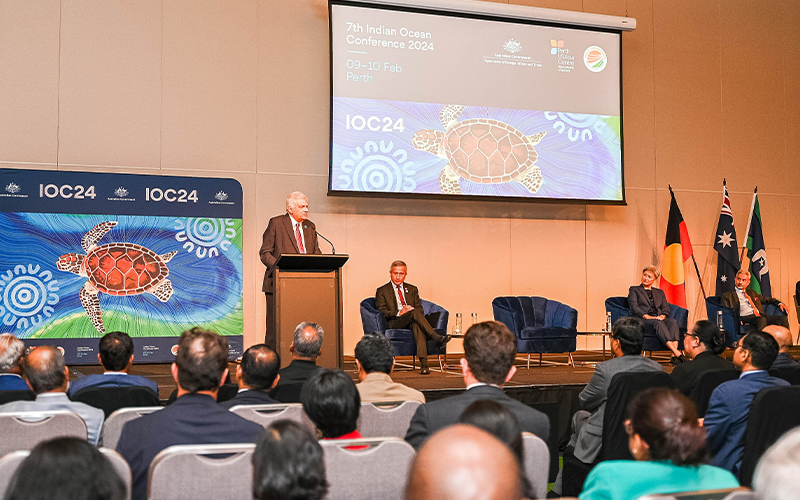
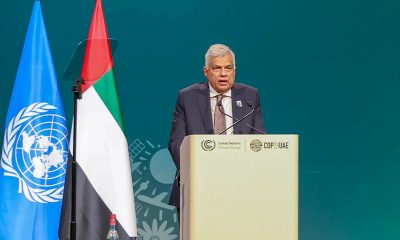
President Ranil Wickremesinghe in his address at the 7th Indian Ocean Conference in Perth, focusing on the theme “Towards a Stable and Sustainable Indian Ocean, ” emphasized the urgency of addressing the climate crisis, noting the Indian Ocean’s vulnerability to warming and rising sea levels. He proposed initiatives such as the Tropical Belt Initiative and the International Climate Change University to mitigate the effects of climate change and ensure climate justice for vulnerable countries.
Following is the full speech delivered by President Ranil Wickremesinghe;
“It is a great pleasure to be here in Perth for the 7th edition of the Indian Ocean Conference. I thank the Australian Government, for the hospitality afforded to all of us. I also thank the India Foundation for once again bringing us together. The theme of this Conference – “Towards a Stable and Sustainable Indian Ocean”- could not be timelier and more appropriate.
The Australasian continent is unique in that it has borders with both the Indian Ocean and the Pacific Oceans. Perth played a crucial role in the history of Sri Lanka – Australia relations. During World War II, Royal Canadian Air Force, Catalina Flying Boats, traversed the expanse of the Indian Ocean, connecting Perth with Koggala Air Base in Ceylon. The only air link between the Indian sub-continent and Australia. Known as flights of the double sunrise, they operated a non-stop route upto 32 hours in radio silence, to ensure the success of a critical air route during World War II for the Allies.
The Japanese attacks in April 1942 on the Indian Ocean specially Ceylon was described by Churchill as the most dangerous moment of the war highlighting the importance of the Indian Ocean to the British Empire. I was just talking with Dr. Balakrishnan and he said there were no carrier battles in the Indian Ocean for the simple reason that the Japanese sank the only British carrier.
Let me highlight a few important developments which I hope will make a contribution to your deliberations.
Firstly, historically speaking, the Indian Ocean is multipolar and has resisted domination by a single power. This multipolarity is a reflection of the essence of the Indian Ocean region and its people. As Asia emerged from colonialism the newly independent countries of Asia ie. Ceylon, India, Indonesia, Burma and Pakistan convened the Bandung Conference in 1955 to oppose colonialism in all its forms. The conference declaration to oppose big power rivalry in turn led to the Non Aligned Movement. Since then the Indian Ocean region has been influenced by the spirit of Bandung. It has never became a part of the US Hub and Spoke system.
The past two decades has seen the emergence of diverse framings of the Indian Ocean region and a flurry of diplomatic activity articulating various policy positions, tilts, and frameworks. What is clear is that no single, objective geopolitical construct has emerged, and we are left instead with a contested vision with multiple interpretations.
The key frameworks that have emerged include in addition to IORA, the Indo-Pacific, the BRI, the QUAD, and the BRICS. There are also regional organizations including ASEAN, ARF (ASEAN Regional Forum), ACD (Asia Cooperation Dialogue) BIMSTEC, SAARC, GCC, Arab League, OIC, SADC, EAC and SCO that have been established. Additionally, we have the operational arrangements that deal with specific areas of cooperation including RCEP, IONS, the Djibouti Code of Conduct, IOTC, Indian Ocean Commission (IOC), MASE, four regional Information Fusion Centres (Singapore, India, Seychelles and Madagascar), and the CGPCS (Contact Group on Piracy off the Coast of Somalia).
Along with these frameworks and groupings, we also see an increased militarization of the Indian Ocean which is redefining power balances and alliances. In the maritime space we see a building up in naval capabilities in India, and with USA, Australia, UAE, Saudi Arabia, and China all increasing their naval presence significantly. Therefore, balancing between the great power rivalries is becoming an increasingly more complex task. As a result, the space for manoeuvrability for littoral states is shrinking fast as this rivalry in the Indian Ocean region intensifies and spills over into decision making on political, economic and security issues. The proverbial question to choose one over the other is perennially hanging over us.
Secondly, the geopolitical developments have resulted in an increase in the strategic importance of the Western Indian Ocean that was not foreseen four years ago. This in turn is shifting the geopolitical emphasis towards the Indian Ocean. The Ukrainian war, and the consequent Western sanctions on Russia has resulted in the resource rich economy finding new markets in China and the Western Indian Ocean. For e.g. Russian Crude Oil is refined in the Gulf refineries. Dubai has replaced London as the financial centre for the oligarchs. Russia has developed a closer friendship with Iran, which is an important source of supply for drones. Russia is carrying on naval exercises with Indian Ocean countries, including Myanmar and South Africa.
China itself has played an active role in healing the rift between Iran and Saudi Arabia. Iran and its allies have become important players in West Asia. The Shanghai Cooperation Organisation, with India, Pakistan and Iran as members have the Western Indian Ocean as its outer limits.
The ill-advised judgment of the US in supporting the Gaza war will diminish its influence in the region. The hostility of the countries forming the Islamic Arch in the Indian Ocean will prevent any close rapprochement with the US for some time. The Russian, Chinese and Iranian strategies are successfully biting at the US hegemony thereby further weakening the US. The Indian Ocean stability requires an early end to the Gaza war followed by,
a. the establishment within 5 years of an Independent Palestine State and
b. guarantees for the security of the state of Israel.
Thirdly, the recent attacks on commercial vessels by the Yemen-based Houthi rebels, is a challenge to the ‘Freedom of Navigation’. We have to ensure access and mobility in the Suez Canal, Red Sea, Bab-el-Mandeb and the Gulf of Aden. In addition, we also face the threat of Somali Pirates, once again. The safety of undersea cables and critical infrastructure are also facing additional threats. The presence of drugs in the Indian Ocean and Human Smuggling has increased. IUU fishing still takes place. These threats present challenges to the Freedom of Navigation. We need to refocus on the freedom of navigation in the Indian Ocean. Sri Lanka offers to recommence the discussions on the Freedom of Nation in the Indian Ocean.
Fourth, is expanding connectivity. According to estimates there will be an eight-fold increase in the GDP of India and Indonesia by 2050. Similar increases are expected in some of the other countries in South and West Asia. This requires additional port capacities and new transport routes. The Suez Canal may not be sufficient. In this regard India’s two new connectivity initiatives are welcome. Firstly, the India (Mumbai) – Iran – Russia corridor and secondly the India (Mumbai) – Middle East – Europe corridor. Similarly, there are connectivity initiatives taking place in the Bay of Bengal. Work has already commenced on the Chongqing – Kyaukphyu corridor giving access to Western China. Thailand is planning the Kra land bridge connecting the Gulf of Siam with the Bay of Bengal. India and Sri Lanka are commencing feasibility studies on land connectivity between the two countries making Sri Lanka a Regional Logistics Hub with Colombo and Trincomalee ports available to South India.
The Indian Ocean Conference theme this year “Towards a more stable and sustainable Indian Ocean” highlights the two key areas which require our focus. What I have outlined before, dealt primarily with pursuing stability of the region. There is an equally serious, more immediate and existential threat that looms and that is the Climate Crisis.
Experts have revealed that the Indian Ocean is warming at a higher rate than the other oceans around the world. The levels of warming are estimated to be three times higher than in the Pacific Ocean and coastal areas across the IOR will experience continuous rise in sea levels and face severe coastal erosion. The Indian Ocean is also rising at a level of 3.7 millimetres annually and extreme sea disasters are inevitable. The island states of the IOR are vulnerable and have to be provided with adequate resources to mitigate the effects of climate change. Changes at sea also affect monsoon patterns and in turn impact on agriculture and food security across the Indian Ocean region. They also impact on the biodiversity and in turn on food and livelihood of people of the littoral states.
The Indian Ocean presents opportunities in terms of ecology. Not only is it our biggest sink for Carbon, but it also provides potential for mitigating the climate crisis, through offshore wind, solar, and wave energy. Through seaweed farming and mangrove cultivation we can increase the sequestration of Carbon. Sustainable exploitation of our Ocean’s resources is critical for our survival, as the Ocean provides for our future.
At COP 28 Sri Lanka proposed three key initiatives, (1) the Tropical Belt Initiative, including the Indian Ocean (2) The International Climate Change University and the Climate Justice Forum. As the current Chair of the Indian Ocean Rim Association (IORA) Sri Lanka is focusing on the interdependence between the Indian Ocean and climate change. The Climate Justice Forum aims to accelerate financing of losses and damages and includes debt justice as an essential component of the overall solution. Any proposals for mitigation and adaptation interventions must take into account the debt component faced by Climate-vulnerable and developing countries.
We are living in uncertain times. The stability we had taken for granted since the end of WWII and the Cold War is unravelling. Globalisation is being challenged as is multilateralism. The Climate Crisis is affecting prospects for trade and economic development around the world. It is impacting on food security, livelihoods, supply chains, biodiversity and maritime transportation. Either we can wait for global developments to dictate our fate or unite, so that we may chart our own course.
Creating a safer ocean environment by building confidence and predictability among users and enhancing ocean situational awareness will be key to maintaining peace and security in the Indian Ocean. The main platform that can undertake this important task is the Indian Ocean Rim Association (IORA). Ensuring a peaceful and secure Indian Ocean would facilitate sustainable use of oceans for the economic and social benefit of coastal and littoral states.
An overarching architecture for the Indian Ocean that deals with critical issues is required. The basis for such a structure is already in existence including the United Nations Convention on the Law of the Sea (1982) and the recently adopted BBNJ agreement in 2023 on the conservation and sustainable use of marine biological diversity of areas beyond national jurisdiction or the High Seas Treaty.
A Code of Conduct on freedom of navigation and over flight and unimpeded commerce and similar guiding principles on dealing with the climate crisis and the sustainable use of the Indian Ocean are a necessity. Only the leaders of the IORA countries can ensure that these measures are translated to the creation of an overarching regional architecture for the Indian Ocean region. Therefore the responsibility lies with us.
I thank you.”








Latest News
Trump says US will ‘obliterate’ Iran’s power plants if Strait of Hormuz not open before 48-hour deadline

President Donald Trump says the US will “obliterate” Iranian power plants if the Strait of Hormuz is not open within 48 hours – the waterway is vital for global oil shipping.
Iran warns it will retaliate against all US-linked energy infrastructure in the Middle East if its power plants are attacked.
Trump also says he has achieved his war aims “weeks ahead of schedule”, adding: “Iran wants to make a deal. I don’t”
More than 100 people have been injured after strikes on southern Israel. The target appears to have been a nuclear facility 13km away from the city of Dimona
Meanwhile, Israel says it launched a wave of strikes on the Iranian capital. It follows an attack on Iran’s Natanz nuclear facility, Tehran says
An attempted Iranian strike on the joint UK-US base on Diego Gracia happened late on Thursday night into Friday morning, the BBC understands. Foreign Secretary Yvette Cooper says the UK won’t be drawn into wider conflict
[BBC]
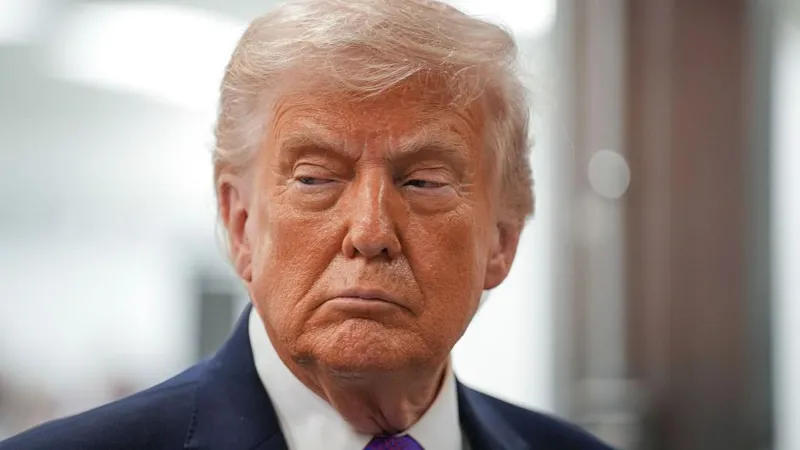
Three weeks after the joint US-Israeli war against Iran began, the conflict has reached a fuzzy state of mixed messages and uncertainty, with Donald Trump’s public comments often seemingly contradicted by realities on the ground.
The war is “very complete, pretty much”, Trump has said, but new American ground forces – including a Marine expeditionary unit – are moving into the region. It is “winding down”, but US and Israeli bombing and missile strikes on Iranian targets continue unabated.
Opening the Strait of Hormuz, the geographic choke point through which 20% of the world’s oil export travels, is a “simple military manoeuvre”, but for now only Iranian-approved ships are transiting the waters.
The Iranian military is “gone”, but drones and missiles are still striking targets in the region and targets have extended as far as the joint US-UK base on Diego Garcia.
In a Friday evening Truth Social post published while he was flying from Washington to his Florida resort for the weekend, the US president provided a numbered list of American military objectives for the Iran war, which he said the US was “getting really close” to fulfilling.
The items, comprising his most detailed statement on the subject since the war began, included degrading or destroying Iran’s military, its defence infrastructure and its nuclear weapons programme, as well as protecting American allies in the region.
Not included was the goal of securing the Strait of Hormuz, which Trump said should be the responsibility of other nations that are more dependent on oil exports from the Gulf. The president has frequently noted that the US is a net exporter of energy and does not rely on oil from the Middle East – although such a view glosses over the global nature of the fossil fuel market, where price fluctuations directly impact the price at American gas pumps.
Trump’s Truth Social post also made no call for Iranian regime change. Gone are any references to approving the nation’s next leader or “unconditional surrender”, which Trump had insisted on in the early days of the war.
In Trump’s latest outline of his objectives, it is possible that the US could end its operation with Iran’s current anti-American leadership in power, its oil exports still flowing and its ability to assert some measure of control over the Strait of Hormuz intact.
If that is an unappealing resolution to a war that the president and his aides have said began with the 1979 Iran Revolution and that they would finish, there is an alternative route that involves the US ground forces presently on the way to the Middle East region.
Just over a week ago, US media reported that a Marine expeditionary unit, with about 2,500 combat soldiers and supporting ships and aircraft, had been dispatched from Japan to the Middle East, which it should reach in the coming days. Another Marine force of similar size recently departed its base in California with its arrival expected in mid-April.
Military analysts have suggested that the US could be planning to capture Kharg Island. an 3-sq-km (8-sq-mile) slice of land that contains Iran’s primary oil export terminal. Doing so could, in theory, cut off the nation’s oil shipments, depriving the nation of much-needed revenue and forcing it to make greater concessions to the Americans in exchange for an end to hostilities.
Trump on Friday said that he wasn’t sending ground troops to Iran, but added: “If I were, I certainly wouldn’t tell you”. Clarity, it seems, is not his intention.
The threat of such a move prompted Iran’s state media to report on Saturday that any attack on Kharg Island would lead Iran to cause “insecurity” in the Red Sea, another key global shipping transit point, and “set fire” to energy facilities throughout the region.
Iran’s warning underscores the dangers that would accompany a US escalation that further exposes American military forces to Iranian reprisals.
Earlier this week, US media reported that the Trump administration was preparing to ask Congress for $200bn (£150bn) in emergency funding for the ongoing Iranian military operation. Such a request would suggest that, far from winding down, the White House is preparing for a long, expensive fight.
The initial reaction from Congress, including from Trump’s Republican allies, was cautious at best.
“We’re talking about boots on the ground. We’re talking about that kind of extended activity,” said Republican Congressman Chip Roy of Texas.
“They have got a whole lot more briefing and a whole lot more explaining to do on how we’re going to pay for it, and what’s the mission here.”
The so-called “fog of war” doesn’t just cloud the thinking of military planners, it also affects the perception of politicians and the public.
The Iran war, it seems, is at a pivot. But which direction it takes from here is a puzzle.
(BBC)
Latest News
Heat Index likely to increase up to ‘Caution level’ at some places in the Western, Sabaragamuwa, Southern and North-western provinces and in Anuradhapura, Monaragala, Mannar and Vavuniya districts

Warm Weather Advisory
Issued by the Natural Hazards Early Warning Centre of the Department of Meteorology
at 3.30 p.m. on 21 March 2026, valid for 22 March 2026.
Heat index, the temperature felt on human body is likely to increase up to ‘Caution level’ at some places in the Western, Sabaragamuwa, Southern and North-western provinces and in
Anuradhapura, Monaragala, Mannar and Vavuniya districts.
The Heat Index Forecast is calculated by using relative humidity and maximum temperature and this is the condition that is felt on your body. This is not the forecast of maximum temperature. It is generated by the Department of Meteorology for the next day period and prepared by using global numerical weather prediction model data.

Effect of the heat index on human body is mentioned in the above table and it is prepared on the advice of the Ministry of Health and Indigenous Medical Services.
ACTION REQUIRED
Job sites: Stay hydrated and takes breaks in the shade as often as possible.
Indoors: Check up on the elderly and the sick.
Vehicles: Never leave children unattended.
Outdoors: Limit strenuous outdoor activities, find shade and stay hydrated.
Dress: Wear lightweight and white or light-colored clothing.
Note:
In addition, please refer to advisories issued by the Disaster Preparedness & Response Division, Ministry of Health in this regard as well. For further clarifications please contact 011-7446491.

Fuel price hikes trigger transport disruptions and calls for fare increases

Prof. Peiris honoured by International Institute of Rehabilitation

CMC resumes parking fees

Substandard coal deepens energy crisis, warns former CEB Chief

Sri Lanka, ICRC to develop unified national database for missing persons

Experts urge hydration and fruit intake amid heatwave

‘Dates have the highest sugar content to fight Coronavirus’

Sunday Island 27 December – Headlines

#SundayIsland 17th December – Headlines

Sunday Island – 28th March

Sunday Island Headlines – 21 March

Sunday Island – 21st February – Headlines
-

 News5 days ago
CIABOC questions Ex-President GR on house for CJ’s maid
-

 News6 days ago
Sri Lankan marine scientist Asha de Vos honoured at UNGA opening
-

 News6 days ago
Australian HC debunks misleading travel risk claims for Sri Lanka
-

 News4 days ago
Bailey Bridge inaugurated at Chilaw
-

 Latest News6 days ago
Wednesdays declared a government holiday with effect from 18th March
-

 News4 days ago
Pay hike demand: CEB workers climb down from 40 % to 15–20%
-

 News3 days ago
CIABOC tells court Kapila gave Rs 60 mn to MR and Rs. 20 mn to Priyankara
-

 Editorial5 days ago
Couple QR-based quota with odd-even rationing