
Features
King Donald and the executive presidency


“…Cicero’s tongue will have to be torn out, Copernicus’s eyes gouged out, and Shakespeare stoned. That is my system.” Dostoyevsky (The Possessed)
In 1787, Louis XVI summoned the Paris Parliament to approve a loan for his financially struggling government. The Parliament refused its consent on the grounds that only the nation, represented by the Estates General, could authorise new taxes or loans. Louis ordered the edict approving the loan be transcribed in the Parliament’s register. The Duke of Orleans objected saying this would be illegal. “The king replied that everything he did was legal” (The Revolutionary Temper: Paris, 1748-1789 – Robert Darnton).
In 2013, Mahinda Rajapaksa impeached a chief justice for refusing to give a pass to an anti-constitutional piece of legislation. In 2020, Gotabaya Rajapaksa said that his verbal orders should be considered as circulars. But even critics of presidentialism regarded monarchical presidents as a Rajapaksa, Lankan or a Third World malaise. That the United States, with its long established institutional, legal, and procedural guardrails, was an exception to this rule was regarded by one and all as an incontrovertible fact.
In 2025 those comforting delusions are crumbling as Donald Trump rides roughshod over vital American institutions from the Harvard University to the supreme court, insisting that his will overrides every other law, tradition, and consideration. Executive presidency’s vulnerability to authoritarianism can no longer be explained away as a Rajapaksa, Sri Lankan or third-world problem. It’s a weakness deeply embedded in the blood, bones, and sinews of the system itself which places a single individual (elected or not) at the apex and centre of power.
The first pushback against JR Jayewardene’s 1971 proposal for an executive presidential system came not from the SLFP or the left, but from within the UNP. Dudley Senanayake, a man less blinded by ambition and less wedded to power than most Lankan leaders before or since, pointed out, in remarkably prescient language, the unsuitability of an executive presidency for Ceylon in 1971: “The presidential system has worked in the United States where it was the result of a special historic situation. it worked in France for the same reasons. But for Ceylon, it would be disastrous. It would create a tradition of Caesarism. It would concentrate power in a leader and undermine the parliament and the structure of the political parties” (Daily Mirror – 8.10.1971 – quoted in JR Jayewardene of Sri Lanka – KM de Silva and Howard Wriggins).
Mr. Senanayake was dead right about Ceylon/Sri Lanka, but wrong in his sanguinity about the United States. In 2025, Donald Trump celebrated his administration decision to terminate federal approval for New York’s pricing programme by writing on his social platform Truth Social, “CONGESTION PRICING IS DEAD. Manhattan and all of New York is SAVED. LONG LIVE THE KING.” When a fallible individual is placed at the head of the state and government, the danger of that individual seeing himself/herself as an uncrowned monarch is innate to the system itself (not to mention human mentality). The potential may remain dormant for a long time, but non realisation doesn’t mean non-existence.
As the United States and the world are finding out with King Donald I.
Democratic Penguins Republic
A monarchy is as good, bad or mad as the monarch. This is true of the executive presidency as well. When Maithripala Sirisena unleashed confusion and mayhem on the country with his anti-constitutional coup of 26 October 2018, satirical website News Curry responded with a tweet – “Sales of Marijuana, Cocaine and Ecstasy stall as drug users demand something stronger. Please give us whatever…President Sirisena is smoking,’ said several druggies.” Gotabaya Rajapaksa was so non compos mentis, he turned governance into a theatre of absurdity to which nothing insane was alien.
Now Donald Trump is following suit, busting the myth of American exceptionalism with one insane measure after another.
In the course of his tariff rampage, President Trump slammed 10% taxes on some strange places. Like Jan Mayen island, a small volcanic landmass with no people and lots of polar bears; and the Heard Island and the McDonald Island, both volcanic and both inhabited only by penguins. A You Tube video which went viral captures the absurdity of Trump-economics. Nettled by the unfair tariffs, the hitherto peaceful and retiring penguins of the McDonald Island form an army to wage war on the US. “…an orange hand reached out in shame – and now the world shall learn our name… They taxed our fish they asked for more – we answer tariff with total war” (https://www.youtube.com/watch?v=HJ8qGOe2K0o).
It is relatively easier to remove a prime minister who crosses the line too often and/or too much. But impeaching a president is a near-impossibility. As Dr Colvin R de Silva warned, “The procedure provided for the removal of a President by Parliament is so cumbersome and prolix…we can be ruled by a mad President for quite a time” (https://www.cpalanka.org/wp-content/uploads/2023/09/Reforming-Presidentialism-27.pdf). Sri Lanka had to suffer under Gotabaya Rajapaksa until he pushed the country into bankruptcy. Donald Trump may do the same – or worse – to the US in the three and a half years remaining to him.
Executive presidency creates a network of patronage which, like monarchy, is centred around an individual. The president becomes the ultimate source of reward and punishment. The Rajapaksas, for instance, used presidential powers to heap largess on acolytes and persecute opponents, often breaking laws and violating norms. Donald Trump too is creating a “brazenly transactional ecosystem…which rewards flattery and lockstep loyalty,” Antonia Hitchens writes. “Recently, a group of prominent Republicans and members of the first Trump Administration signed an open letter comparing the President to a ‘royal despot.’ The insult, however, may not have landed with Trump, who, on February 19th, posted ‘LONG LIVE THE KING,’ referring to himself. But praise for a king often comes, at least in part, from a sense of fear over the power he wields. ‘We are all afraid,’ Lisa Murkowski, the Republican senator from Alaska, said last week… ‘I’ll tell you, I’m often-times very anxious myself about using my voice, because retaliation is real’ (https://www.newyorker.com/magazine/2025/04/28/how-trump-worship-took-hold-in-washington).
JR Jayewardene introduced the presidential system as part of an overall plan with three main objectives, wrote his biographers, KM de Silva and Howard Wriggins: “political reconstruction and democratic revival; economic regeneration; and a constructive accommodation of minority interest, especially those of the estranged Tamil community” (JR Jayewardene of Sri Lanka). These three objectives fell by the wayside early in the Jayewardene presidency. Democratic backsliding reached its nadir with the postponement of the general election through a manifestly unfree and unfair referendum in 1982. The economy fell victim to political upheavals; growth had plummeted by the end of the Jayewardene presidency. Instead of accommodating minority interests, the depredations against minorities reached a new high, and a small scale insurgency grew into a fully-fledged war. (Incidentally, the opening up of the economy took place before the presidential system was introduced while the Indo-Lanka Accord was the result of Indian pressure. Neither of these positive developments resulted from the presidential system.)
During its lifespan of nearly 47 years, Lankan presidency has undermined democracy, created instability, and institutionalised corruption and unforgivable inefficiency. Not to mention political chaos and institutional disintegration as presidents cling to the invisible crown and would-be-presidents jostle to wrest it.
The Forever Ring
In 2010, Sumanadasa Abeygunawardane, the man hailed as ‘royal astrologer’ predicted that the Rajapaksas would rule the country for the next 50 years: “President Mahinda Rajapaksa and the Rajapaksas will rule this country for a long time…. The Rajapaksas will become beloved leaders of this country…. The next chapter in Sri Lanka is reserved for the Rajapaksas” (Silumina – 7.6.2009). Three months later, Mahinda Rajapaksa brought in the 18th Amendment removing presidential term limits, paving the way for him to contest the presidency again and again.
In 2025, Donald Trump’s online store is selling merchandise emblazoned Trump 2028. These include T-shirts in navy and red priced at $38 reading Trump 2028 (Rewrite the Rules). The Rules mentioned here doubtless refer to the 22nd Amendment which limits American presidents to two (consecutive or non-consecutive terms). Changing this ‘Rule’ requires a two-thirds majority in the Senate and the Congress and three-fourth majorities in all state legislature – an impossibly tall order.
Yet, President Trump is considering a third term, as he stated in an interview with NBC; asked whether he was joking he said, “No, I’m not joking.” Questioned about the impossibility of amending the 22nd Amendment, Steve Bannon’s answer was, “There are methods of doing it” (https://www.reuters.com/world/us/trump-says-he-is-not-joking-about-third-presidential-term-2025-03-30/). Mr. Trump’s 2020 attempt to gain a second term unconstitutionally led to an armed insurgency against the Congress and the Senate. What chaos results from any attempt to bypass or ignore the 22nd Amendment remains to be seen.
In JRR Tolkien’s The Lord of the Rings, the main protagonist is the hobbit Frodo Baggins to whom the One Ring is entrusted. When he first looks carefully at the Ring, it “appeared plain and smooth, without mark or device he could see. The gold looked very fair and pure, and Frodo thought how rich and beautiful its colour, how perfect its roundness. It was an admirable thing and altogether precious. When he took it out he had intended to fling it from him into the very hottest part of the fire. But he found now that he could not do so…” The Ring had begun to possess his mind, addling it with desire.
Like Maithripala Sirisena. On 21 November 2014, having walked out of the Rajapaksa government and accepted the mantle of common presidential candidate, he addressed a media conference telling the nation what he would do if he elected. The first item on his agenda was the abolition of the executive presidency which he eviscerated as a political and moral calamity, and a crucible of injustice. “We came to a clear decision with the UNP to abolish the executive presidency,” he stated. “I ask the people to give me power to abolish the executive presidency in 100 days.”
There’s no reason to think he wasn’t sincere, at that moment. When the 19th Amendment was being discussed in 2015, he wanted to limit his presidential term to four years. The same man soon developed a taste for the presidential One Ring, tried to extend his first term from five to six years, and pushed the country into a mire of chaos simply to win Rajapaksa backing for a second term.
The JVP has opposed the executive presidency from the beginning. Anura Kumara Dissanayake and the NPP promised to abolish it, if elected. Yet, there’s not even a whiff of a coming constitutional transformation. What is indubitable is that Anura Kumara Dissanayake is enjoying being the president, acting the president. He doesn’t look as if he wants to destroy this One Ring by throwing it into the Crack of Doom.
During the presidential election campaign, the NPP/JVP carried out a superlative advertising blitz to market its candidate to a still undecided electorate. Presidential systems focus on individuals rather than parties, organisations or movements. This focus carries with it the danger of birthing personality cults. Signs of such a cult around President Dissanayake are already visible. He has become the government’s main attraction, its problem-solver-in-chief; a saviour in-the-making.
Until he became the president, Mr Dissanayake remained first among equals within the JVP. Now, thanks to the power and the glamour of the presidency, he is elevated way beyond that position of rough equality. He is the Ring-bearer and he seems to enjoying that primacy to the fullest.
The keeper of the One Ring never gives it up, Gandalf the mage warns Frodo; he only plays with that idea. So every previous promise to abolish the executive presidency was broken. Will Anura Kumara Dissanayake go where none of his predecessors did, and fulfil his pledge to end the presidency? Or will he do a Mahinda Rajapaksa, a Maithripala Sirisena, or a Ranil Wickremesinghe and stake the future of the country (and his own party) for another presidential term?
by Tisaranee Gunasekara

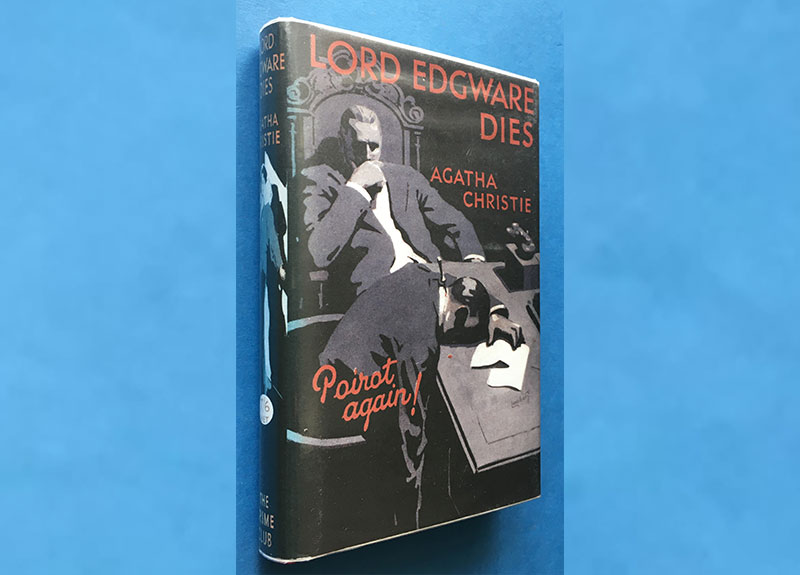
It has been some time since I read an Agatha Christie, the plot of which I cannot remember. So, I was delighted to find on the shelves of a friend Lord Edgware Dies, which I had a vague memory of, but no certainty about who had done it.
When I read it, I found that my memory of who was probably the killer was correct, but I could not be certain and the red herrings Christie threw in were so diverting that until almost the very end I wondered if I had been wrong.
The plot is very simple. Jane Wilkinson, who is married to Lord Edgware, tells him that she is desperate for a divorce since she is in love with a very proper Anglo-Catholic peer, Lord Melton, but Edgware refuses to divorce her. She asks Poirot to talk to him, which he does, and is surprised to find that Edgware has told Jane he is prepared to give her a divorce. This was, after he had categorically refused, through a letter, which Jane said she had not received.
That night Edgware is murdered, after Jane had been to see him, or so the butler said, and also Edgware’s secretary. But Jane had been that evening at a grand dinner many miles away, where a dozen fellow guests could swear to her presence.
There was a solution however to the mystery of two Jane Wilkinsons, namely a skilful impersonator called Carlotta Adams who, in the opening chapter had impersonated Jane Wilkinson, who had also been at the performance. But when Poirot goes to see her, he finds that she had been found dead on the morning after Edgware had been killed, of an overdose. And in her bag was a gold case, with a strange inscription, that contained the drug, along with a pair of pince-nez.
Her maid said she had written a letter to her sister in America and posted it the previous night. Poirot asks Inspector Japp to get the letter, and a transcript is received from America, and in it the name of Edgware’s nephew Ronald Marsh is mentioned; he had taken Carlotta to dinner after her performance, with which the book opens, and had then set her a challenge. Japp arrests Marsh, but Poirot is not happy and asks for the original of the letter, which the sister sends him. That shows that a page is missing, and the tear is obvious, though that raises the question as to why it had not simply been cut.
Matters are further complicated by the fact that Marsh had gone in a taxi to the Edgware house, along with Edgware’s daughter Geraldine, in the interval of an opera which had previously seemed to provide them with cast iron alibis. Geraldine had gone in to fetch her pearls so that Marsh could raise money he needed, and thus had an opportunity to kill Edgware, as did Marsh, for the driver said he had got out of the taxi while waiting and gone into the house.
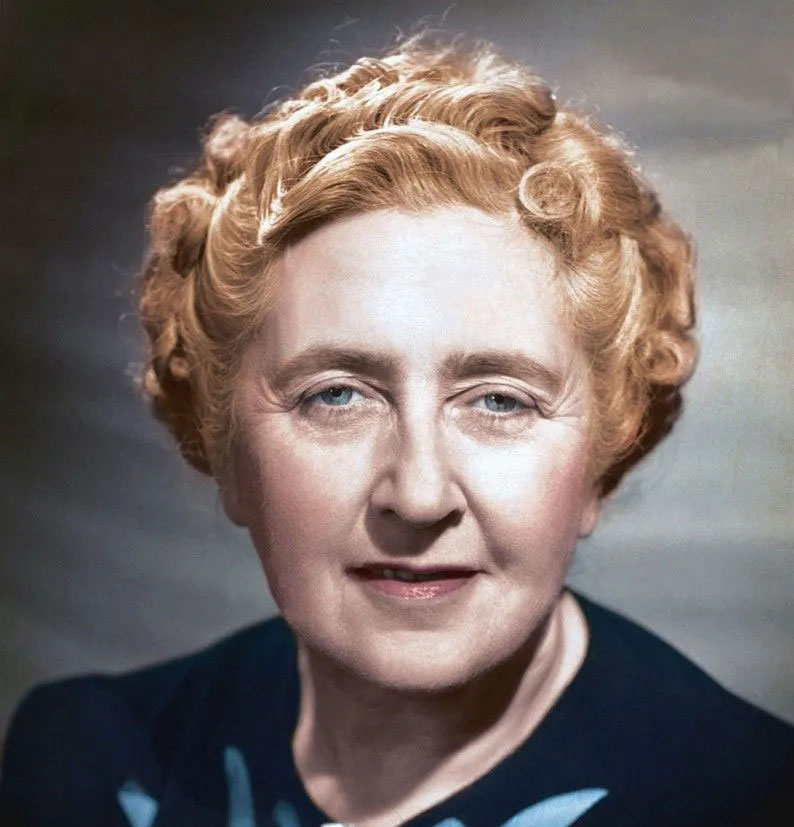
Agatha Christie
Marsh explained why he had gone to the house on the night of the murder as having followed Bryan Martin, an American actor, who had been in love with Jane, whom he saw go into the house with a key. But there was no one visible when he entered, and Geraldine almost immediately came down and they left together. And Martin too has become an object of suspicion to Poirot, for he had been to see him before the murders were discovered with a story of being followed by a man with a gold tooth – a story Poirot immediately realized was false when he was asked how old the man was, and was told he was young, for young people did not have gold teeth.
A heap of French money Edgware had got for a trip to Paris was missing, but since Marsh had no need for it after his cousin’s offer of help, Poirot deduces that it must have been taken by the butler, who has disappeared. Christie has stressed that he is astonishingly handsome, unusual in a butler, and Poirot notes a resemblance to Martin, so he thinks the mysterious man going into the house must have been him.
Incidentally, later Poirot assumes that Edgware’s change of mind was because he was involved in some scandal, and I believe Christie intends us to see the cause of this in his handsome butler, though this is not specified.
Meanwhile, Poirot has asked Japp to find out the provenance of the case found in Carlotta’s handbag, and it turns out to have been made in Paris, specially commissioned, and collected by a woman with pince-nez.
But then another murder occurs—that of another guest at the grand dinner, which provided Jane with her alibi. The victim is an actor who had been bemused when Jane, at a lunch, thought the Judgment of Paris referred to the city. He told Hastings he wanted to see Poirot, but was killed before he could get to the appointment. Poirot had rushed there when told about his request, but it was too late.
Meanwhile, Poirot has tried out the pince-nez on Edgware’s secretary, but she could not see through these. It was only a chance remark heard outside the theatre that led him to try them out on Wilkinson’s maid Ellis, a spare pair that had been appropriated for the night of the murders.
Poirot then lays things out, having summoned Martin and told him that he probably suppressed Edgware’s letter, as he had been dropped by then and he did not want Jane to marry another. But after teasing Martin, Poirot says that Jane was in fact the murderer, and she got Carlotta to impersonate her at the dinner while she went to the house and killed her husband. After meeting Carlotta later and checking with her through a call that she had not been rumbled, Jane had gone ahead with the murder – she put veronal into her drink and the case with veronal into the handbag. She forgot to take out the pince-nez she had used earlier to imitate an American. Carlotta had registered as the American in a hotel and Jane had gone to see her, and there they exchanged identities. After seen the letter, she made use of it by tearing off the page that referred to her, and the S of She, so that the person who had challenged Carlotta to impersonate her seemed to be a man.
There is a coda in which Jane, condemned to death, writes to Hastings, still full of pride at her ingenuity hoping she will be remembered.
by Prof. O. A. Ileperuma
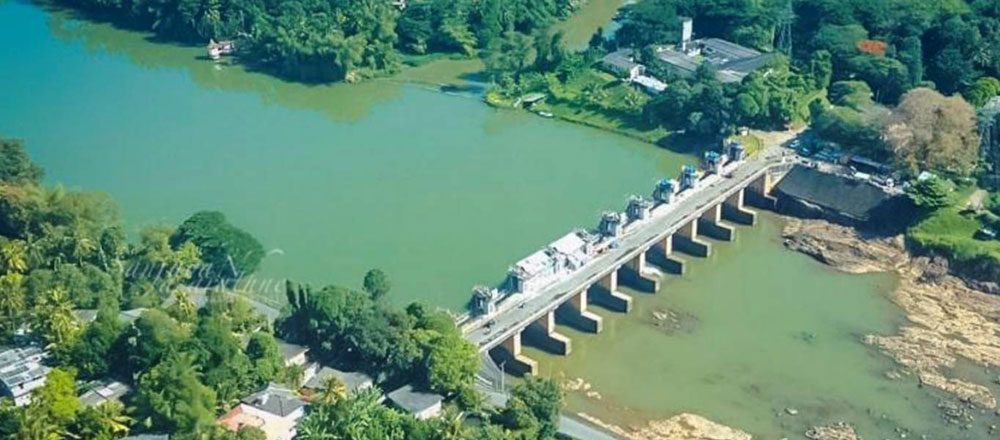
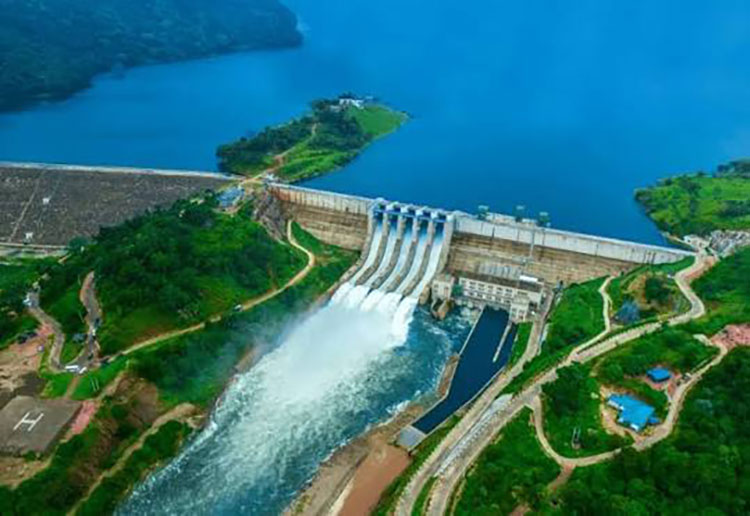
Silting of reservoirs is a major problem today affecting our hydropower production and irrigation systems. The main Mahaweli reservoirs are silted to a considerable extent reducing the water holding capacity of them. Due to poor soil management practices, floodwaters deposit large amounts of silt in these reservoirs. When the Polgolla reservoir was fully drained about two years back, one could see mountains of silt in the lower reaches of the reservoir. A rough estimate is that 50% of the total capacity of these reservoirs has been lost to siltation. This is a serious issue which affects not only power and agriculture but also flood control.
Our ancient irrigation systems ensured that desilting of reservoirs took place under royal decree where all users of the reservoirs were ordered to carry out desilting of reservoirs during the dry season. The clay thus collected was used in making bricks for the construction of great stupas which dot the landscape of our ancient kingdoms. This ensured that the reservoirs had their full capacity filled with water for the next cultivating season. Our ancient kings were clever enough not to construct reservoirs by blocking main rivers such as the Mahaweli. A classic example is the Minipe left canal where they tapped only the surface water of Mahaweli. Even the bigger tanks such as Nuwara Wewa and Parakrama Samudraya were fed with minor rivulets. There were also other ingenious features in the cascade irrigation systems built by the ancient kings, such as mud sluice canals and forest reservations between the reservoirs in the cascade system. These reservations helped trap silt and remove excess nutrients, which could otherwise contribute to increasing salinity as water flowed from one reservoir to another.
-

- Parakrama Samudraya
-

- Kalawewa
-
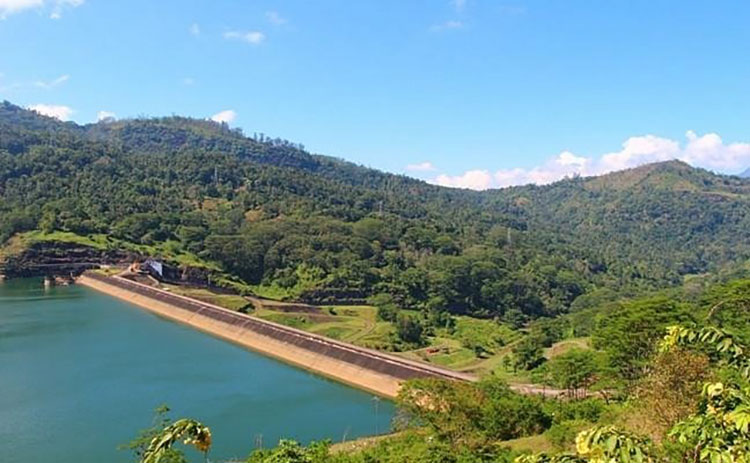
- Kotmale

Victoria
Moragahakanda
A classic engineering marvel is the former Yoda Ela, which carries water from Kalawewa to Nuwara Wewa and Tissa Wewa. It is 87 km long although the straight distance between these points is only about 40 km. The gradient of this canal is about 10 cm per km or 6 inches per mile. Yodha Ela functions as a moving reservoir and feeds about 4,600 hectares of paddy lands. It is a winding canal with about 120 smaller reservoirs on its way. It was constructed during the reign of King Dhatusena around 459 AD and later expanded by King Parakramabahu by connecting more reservoirs to the network. Unfortunately, during the Mahaweli project our modern-day engineers constructed a concrete canal replacing the winding path of this Yoda Ela also called Jaya Ganga. This effectively removed the ability of the old Yoda Ela to remove silt and nutrients. The bank of this Ela has wet zone trees such as jak and areca nut growing well. They take up the nutrients from the flowing stream making the water suitable for irrigation later.
Ancient Mesopotamian civilisations depended on dams constructed along the two main rivers, Euphrates and Tigris. After continuous irrigation of their fields over several thousand years, salinity of the irrigated lands increased making them unsuitable for agriculture. People died due to famine and this clearly illustrates the danger of blocking main rivers for agriculture. There is scientific evidence that the salinity of paddy soils in the Mahaweli C area is increasing.
We saw the devastation caused by Cyclone Ditwah. The sluice gates of the Kotmale Reservoir were opened, and Kandy and Peradeniya were flooded. If the reservoir had had greater storage capacity, couldn’t the opening of the gates have been delayed? This may not be an argument that modern-day engineers would readily accept, and I am not an irrigation expert. These ideas may well be naïve. But most of us tend to think of reservoirs mainly in terms of hydropower generation and irrigation, while their role in flood control receives much less attention. The question therefore deserves serious consideration. Could restoring lost reservoir capacity through desilting help improve our ability to manage extreme rainfall and reduce flood risks?
Desilting our reservoirs should be considered a national priority.
Export diversification – Missing the wood for the trees – Part III
by Gomi Senadhira
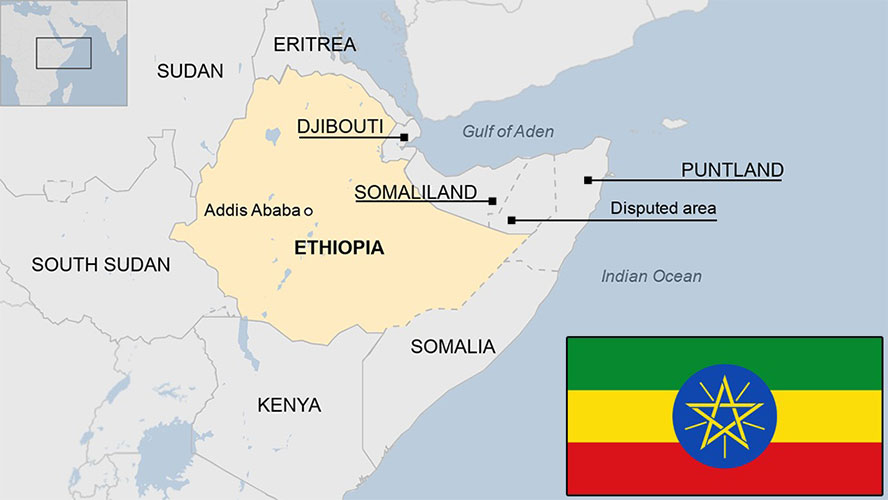
In Sri Lanka, the word “Ethiopia” is often used as disparaging slang to describe individuals or areas experiencing extreme poverty, starvation, or severe economic hardship. This linguistic habit originated in the 1980s with the Western media coverage of the devastating Ethiopian famine of 1983-85. That media coverage shocked the world but also left an outdated and offensive global stereotype that the country is permanently starving. Much has changed since then. By now, with an annual growth rate of around 9%, it is the fastest-growing economy in sub-Saharan Africa. Ethiopia has also emerged as a highly competitive exporter and is challenging not only its competitors in the region but also countries like Sri Lanka. This article is on how Sri Lanka has lost ground to Ethiopia (and a few other countries) in the GCC markets for agricultural and floricultural products.
Sri Lanka – A Pioneer in the Agriculture and Floricultural Market in the GCC
As discussed in Part II of this article, by the mid-1980s Sri Lanka had established a strong foothold in the GCC’s fruit, vegetable, and floricultural market. Geographical proximity and well-established shipping and air links gave Sri Lanka a strong comparative advantage over Southeast Asian and African nations. Thailand, Vietnam, and Kenya were not even in the market. At that time, Ethiopia was experiencing (as BBC news reports described) “a biblical famine”.
The market was not very large, but it was lucrative and growing. Trade Minister Lalith Athulathmudali as well as the Chairman of the Export Development Board, Victor Santiapillai, who visited Kuwait (and the GCC countries), recognised the market potential for these products and encouraged us to continue with our work. The minister was particularly keen to further develop links between the market for these products, exporters, and his Export Production Villages (EPVs). So, it was becoming a successful case not only for export diversification but also for transferring gains from exports directly to rural households.
From Trailblazer to Tailender
As a result, even by the beginning of this century Sri Lanka had a larger market share than most of its competitors from Asia or Africa. But since then, our competitiveness has weakened significantly. The tables below provide a comparative snapshot of Sri Lanka’s performance vis-à-vis Thailand, Vietnam, Kenya and Ethiopia in the GCC market for vegetables, fruits and floricultural products. As illustrated therein, in 2001 Sri Lanka was ahead of Thailand, Kenya and Ethiopia in this small but rapidly growing market. Since then, we have fallen behind Thailand, Kenya and many other countries in that lucrative market. If this trend continues, Sri Lanka will fall behind Ethiopia within the next few years. (See Table 1)
In the GCC market for vegetables (covered in HS chapter 07), Sri Lanka was ahead of most other competitors in 2001. As illustrated in Table 1 , Sri Lanka had failed to develop this market, while Thailand, Kenya, and even Ethiopia had very efficiently increased their market shares. The GCC is a market to which Sri Lanka can supply some vegetables, like cabbages, by sea. It appears Sri Lanka had also failed to exploit this mode of supply.
We can see a similar trend in the market for fruits. Vietnam, Kenya, and Thailand have emerged as major players, while exports from Sri Lanka have staggered on slowly. In this segment, Vietnam has emerged as a leading player during the last twenty years and the GCC imports from Viet Nam have shot up from US$44 thousand in 2001 to US$346 million by 2024. In part one of these articles, I discussed the remarkable increase of jackfruit exports from Vietnam “…just $3 million in 2015 to an impressive $236.8 million in 2023” while most of our jackfruit production rots under the trees. This explains how countries develop their markets, geographically and product-wise. (See Table 2)
Sri Lanka’s performance has been weakest in the market for floricultural products (HS Chapter 06), which groups live trees, cut flowers, and ornamental foliage. When we first entered the market in the 1980s, the market was dominated by the Netherlands, and Kenya and Ethiopia were not even in the market. At that time, we identified the Gulf states as a market where Sri Lanka could have a dominant presence due to geographical proximity. Even in 2001, Sri Lanka was ahead of Kenya, Ethiopia, and Thailand. But by now, Kenya has emerged as the dominant supplier. Ethiopia is also expanding its market share and is the third-largest exporter. (See Table 3)
Missing the Wood for the Trees
In the mid-1980s, Sri Lanka first established its foothold in the GCC market. Since then, Thailand, Vietnam, Kenya, and even Ethiopia have moved well ahead of us and have become leading players. Why did we lag behind in our export diversification efforts in general and, more particularly, in the GCC market?
The reasons are very clear. After the initial attempts in the 1980s and early 1990s, Sri Lanka has not been proactively involved in identifying, developing, and promoting new products and markets, or protecting and further developing new markets already established. The focus has simply been on traditional exports: tea, coconut, cinnamon, and garments, while other products were almost ignored. In essence, we have been and continue to focus intensely on a narrow group of products and markets, and we have lost sight of the bigger picture.
(The writer can be reached at senadhiragomi@gmail.com)

ITS Giuseppe Garibaldi’ departs Colombo

Green Climate Fund (GCF) Regional Dialogue for East and South Asia will be held from 14 to 17 September 2026 at Cinnamon Life at City of Dreams Hotel, Colombo

Showers will occur in the Western, North-western and Sabaragamuwa provinces and in Kandy, Nuwara-Eliya, Galle and Matara districts

Prof. Pieris says Buddha Dhamma recognised as source of law under Constitution

GR leaves FCID after making statement over MiG deal

Dengue cases top 97,000 in 2026

‘Dates have the highest sugar content to fight Coronavirus’

Sunday Island 27 December – Headlines

#SundayIsland 17th December – Headlines

Sunday Island – 28th March

Sunday Island Headlines – 21 March

Sunday Island – 21st February – Headlines
-

 Sports2 days ago
DDS set to lose Test captaincy
-

 Latest News7 days ago
Tharanga creates history with Diamond League crown in Brussels
-

 Features6 days ago
After the parade: What a traffic OIC’s walk-out tells us
-

 News7 days ago
Dispute which triggered listed company director being detained at BIA resolved
-

 Editorial6 days ago
Arrests as theatre
-

 News5 days ago
Thailand shuts door on undesirables from Sri Lanka
-

 Latest News6 days ago
Harshitha’s composed knock seals Sri Lanka’s semi-final berth
-

 News6 days ago
‘Choka Malli’ slips out of country before travel ban