
Features
I’ve witnessed a coup attempt before — and history bodes poorly for America’s future

by Alfred Mccoy, Tom Dispatch
As an eyewitness, I can recall the events of January 6th in Washington as if they were yesterday. The crowds of angry loyalists storming the building while overwhelmed security guards gave way. The slavishly loyal vice-president who would, the president hoped, restore him to power. The crush of media that seemed confused, almost overwhelmed, by the crowd’s fury. The waiter who announced that the bar had run out of drinks and would soon be closing…
Hold it! My old memory’s playing tricks on me again. That wasn’t the U.S. Capitol in January 2021. That was the Manila Hotel in the Philippines in July 1986. Still, the two events had enough similarities that perhaps I could be forgiven for mixing them up.
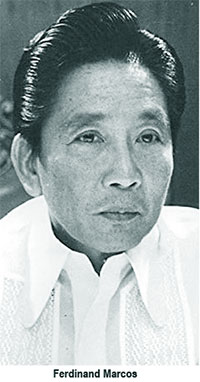
I’ve studied quite a number of coups in my day, yet the one I actually witnessed at the Manila Hotel remains my favorite, not just because the drinks kept coming, but for all it taught me about the damage a coup d’état, particularly a political coup, can do to any democracy. In February 1986, a million Filipinos thronged the streets of Manila to force dictator Ferdinand Marcos into exile. After long years of his corruption and callous indifference to the nation’s suffering, the crowds cheered their approval when Marcos finally flew off to Hawaii and his opponent in the recent presidential election restored democracy.
But Marcos had his hard-core loyalists. One Sunday afternoon, four months after his flight, they massed in a Manila park to call for the restoration of their beloved president. After speakers had whipped the crowd of 5,000 into a frenzy with — and yes, this should indeed sound familiar in 2021 — claims about a stolen election, thousands of ordinary Filipinos pushed past security guards and stormed into the nearby Manila Hotel, a storied symbol of their country’s history. Tipped off by one of the Filipino colonels plotting that coup, I was standing in the hotel’s entryway at 5:00 p.m. as the mob, fury written on their faces, surged past me.
For the next 24 hours, that hotel’s marbled lobby became the stage for an instructive political drama. From my table at the adjoining bar, I watched as armed warlords, ousted Marcos cronies, and several hundred disgruntled soldiers paraded through the lobby on their way to the luxury suites where the coup commanders had checked themselves in. Following in their wake were spies from every nation — Australian secret intelligence, American defense intelligence, and their Asian and European counterparts — themselves huddled in groups, whispering mysteriously, trying (just like me) to make sense of the bizarre spectacle unfolding around them.
 Later that same evening, Marcos’s former vice-president, the ever-loyal Arturo Tolentino, appeared at the head of the stairs flanked by a security detail to announce the formation of a “legitimate” new government authorized by Marcos who had reportedly called long-distance from Honolulu. As the vice president proclaimed himself acting president and read off the names of those to be in his cabinet, Filipino journalists huddling nearby scribbled notes. They were furiously trying to figure out whether there was a real coalition forming that could topple the country’s democracy. It was, however, just the usual suspects — Marcos cronies, leaders largely without followers.
By midnight, the party was pretty much over. Our waiter, after struggling for hours to maintain that famed hotel’s standard of five-star service, apologized to our table of foreign correspondents because the bar had been drunk dry and was closing. Sometime before dawn, the hotel turned off the air conditioning, transforming those executive suites into saunas and, in the process, flushing out the coup plotters, their hangers-on, and most of the soldiers.
All day long, on the city’s brassy talk-radio stations and in the coffee shops where insiders gathered to swap scuttlebutt, Marcos’s loyalists were roasted, even mocked. The troops that had rallied to his side were sentenced to 30 push-ups on the parade ground — a source of more mirth. For spies and correspondents alike, the whole thing seemed like a one-day wonder, barely worth writing home about.
But it wasn’t. Not by a long shot. A coterie of colonels deep inside the Defense Ministry, my source among them, had observed that comedic coup attempt all too carefully and concluded that it had actually been a near-miss.
A year later, I found myself standing in the middle of an eight-lane highway outside the city’s main military cantonment, Camp Aguinaldo, ducking bullets from rebel soldiers who had seized the base and watching as government Marines and dive bombers attacked. This time, however, those colonels had launched a genuine coup attempt. No drinks. No waiters. No wisecracks. Just a day of bombs and bullets that crushed the plotters, leaving the country’s military headquarters a smoking ruin.
Two years later, the same coup colonels were back again for another attempt, leading 3,000 rebel troops in a multipronged attack on a capital that trembled on the brink of surrender. As a cavalcade of rebel armor drove relentlessly toward the presidential palace with nothing in their way, American President George H.W. Bush took a call aboard Air Force One over the Atlantic about a desperate request from his Philippine counterpart and ordered a pair of U.S. Air Force jet fighters to make a low pass over the rebel tanks and trucks. They got the message: turn back or be bombed into extinction. And so Philippine democracy was allowed to survive for another 30 years.
Message from the Manila Hotel
The message for democracy offered from the Manila Hotel was clear — so clear, in fact, that it helps explain the meaning of tangled events in Washington more than 30 years later. Whether it’s a poor country like the Philippines or a superpower like the United States, democracy is a surprisingly fragile construct. Its worst enemy is often an ousted ex-president, angry over his humiliation and perfectly willing to destroy the constitutional order to regain power.
No matter how angry such an ex-president might be, however, his urge for a political coup can’t succeed without the help of raw force, whether from a mob, a disgruntled military, or some combination of the two. The Manila Hotel coup teaches us one other fundamental thing: that coups need not be carefully planned. Most start with a handful of conspirators plotting some symbolic attack meant to shake the constitutional order, while hoping to somehow stall the security services for a few critical hours — just long enough for events to cascade spontaneously into a desired government collapse.
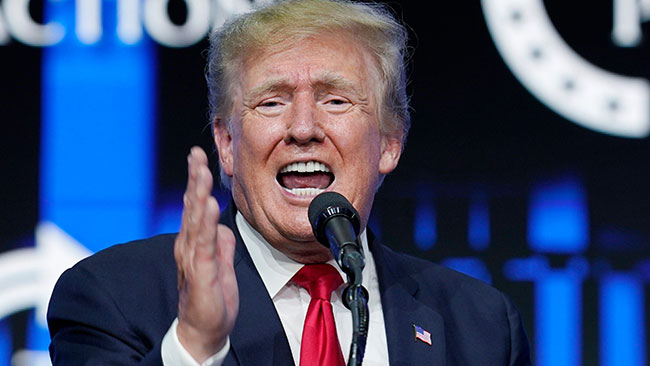
Whether in Manila or Washington, coup plotting usually starts right at the top. Just after the news networks announced that he had lost the election last November, Donald Trump launched a media blitz with spurious claims of “fraud on the American public,” firing off 300 tweets in the next two weeks loaded with false charges of irregularities and sparking loud, long protests by his loyalists at vote-counting centers in Michigan and Arizona.
When that response got little traction and Biden’s majority kept climbing, Trump began exploring three alternate routes, any of which might have led to a constitutional coup — manipulating the Justice Department to delegitimize the election, rigging the ratification of electoral votes in Congress, and the paramilitary (or military) option. At a White House meeting on December 18th, Michael Flynn, Trump’s former national security advisor, urged the president to “invoke martial law as part of his efforts to overturn the election” and accused his staff of “abandoning the president,” sparking “screaming matches” in the Oval Office.
By January 3, rumors and reports of Trump’s military option were circulating so credibly around Washington that all 10 living former defense secretaries — Dick Cheney, Donald Rumsfeld, and Mark Esper, among them — published a joint appeal to the armed forces to remain neutral in the ongoing dispute over the election’s integrity. Reminding the troops that “peaceful transfers of power… are hallmarks of our democracy,” they added that “efforts to involve the U.S. armed forces in resolving election disputes” would be “dangerous, unlawful, and unconstitutional.” They warned the troops that any “military officials who direct or carry out such measures would be… potentially facing criminal penalties.” In conclusion, they suggested to Trump’s secretary of defense and senior staff “in the strongest terms” that “they must…refrain from any political actions that undermine the results of the election.”
To legitimate his claims of fraud, according to the New York Times, the president also tried — on nine separate occasions in December and January — to force the Justice Department to take actions that would “undermine an election result.” In response, a mid-ranking Trump loyalist at Justice, a nonentity named Jeffrey Clark, began pressuring his boss, the attorney-general, to write Georgia officials claiming they had found “significant concerns that may have impacted the outcome of the election.” But at a three-hour White House meeting on January 3rd, Acting Attorney General Jeffrey Rosen balked at this evidence-free accusation. Trump promptly suggested that he could be replaced by that mid-ranking loyalist who could then send the fraud letter to Georgia. The president’s own top appointees at Justice, along with the White House counsel, immediately threatened to resign en masse, forcing Trump to give up on such an intervention at the state level.
Next, he shifted his constitutional maneuvering to Congress where, on January 6th, his doggedly loyal vice president, Mike Pence, would be presiding over the ratification of results from the Electoral College. In this dubious gambit, Trump was inspired by a bizarre constitutional theory advanced by former Chapman University law professor John Eastman — that the “Constitution assigns the power to the Vice President as the ultimate arbiter.”
In this scenario, Pence would unilaterally set aside electoral votes from seven states with “ongoing disputes” and announce that Trump had won a majority of the remaining electors — making him once again president. But the maneuver had no basis in law, so Pence, after scrambling desperately and unsuccessfully for a legal justification of some sort, eventually refused to play along.
A Political Coup
With the constitutional option closed, Trump opted for a political coup, rolling the dice with raw physical force, much as Marcos had done at the Manila Hotel. The first step was to form a crowd with some paramilitary muscle to stiffen the assault to come. On December 19th, Trump called on his hard-core followers to assemble in Washington, ready for violence, tweeting: “Big protest in D.C. on January 6th. Be there, will be wild!”
Almost immediately, the Internet’s right-wing chat boards lit up and indeed their paramilitaries, the Proud Boys and Three Percenters militia, turned up in Washington on the appointed day, ready to rumble. After President Trump roused the crowd at a rally near the White House with rhetoric about a stolen election, a mob of some 10,000 marched on the Capitol Building.
Starting at about 1:00 p.m., the sheer size of the crowd and strategic moves by the paramilitaries in their ranks broke through the undermanned lines of the Capitol Police, breaching the building’s first-floor windows at about 2:10 p.m. and allowing protesters to start pouring in. Once the rioters had accomplished the unimaginable and seized the Capitol, they were fresh out of plans, reduced to marching through the corridors hunting legislators and trashing offices.
At 2:24 p.m., President Trump tweeted: “Mike Pence didn’t have the courage to do what should have been done to protect our Country.” On the far-right social media site Parler, his supporters began messaging the crowd to get the vice president and force him to stop the election results. The mob rampaged through the marbled halls shouting “Hang Mike Pence.” Hunkered down inside the Capitol, Representative Adam Kinzinger (R-Illinois) tweeted: “This is a coup attempt.”
At 2:52 p.m., Representative Abigail Spanberger (D-Virginia), a former CIA agent, tweeted from inside the barricaded House chamber: “This is what we see in failing countries. This is what leads to the death of democracy.”
At 3:30 p.m., a small squad of military police arrived at the Capitol, woefully inadequate reinforcements for the overwhelmed Capitol Police. Ten minutes later, the D.C. Council announced that the Defense Department had denied the mayor’s request to mobilize the local National Guard. While the crowd fumbled and fulminated, some serious people were evidently slowing the military’s response for just the few critical hours needed for events to cascade into something, anything, that could shake the constitutional order and slow the ratification of Joe Biden’s election.
In nearby Maryland, Republican Governor Larry Hogan had immediately mobilized his state’s National Guard for the short drive to the Capitol while frantically phoning Acting Secretary of Defense Christopher Miller, who repeatedly refused him permission to send in the troops. Inside the Pentagon, Lieutenant General Charles Flynn, the brother of the same Michael Flynn who had been pushing Trump to declare martial law, was participating in what CNN called those “key January 6th phone calls” that refused permission for the Guard’s mobilization.
Following a phone call from the mayor of Washington and its police chief pleading for help, Secretary of the Army Ryan McCarthy “ran down the hall” of the Pentagon to get authorization for the Guard’s mobilization. After a crucial delay of 90 minutes, he finally called the Maryland governor, outside the regular chain of command, to authorize the Maryland Guard’s dispatch. Those would indeed be the first troops to arrive at the Capitol and would play a critical role in restoring order.
At about 4:30 p.m., Trump finally tweeted: “These are the things and events that happen when a sacred landslide election victory is so unceremoniously and viciously stripped away from great patriots who have been badly & unfairly treated for so long. Go home in love & peace.”
Ten minutes later, at 4:40 p.m., hundreds of riot personnel from the D.C. police, the FBI, and the Department of Homeland Security arrived, along with the Maryland Guard, to reinforce the Capitol Police. Within an hour, the protesters had been pushed out of the building and the Capitol was declared secure.
Just five days later, Dr. Fiona Hill, a senior Russia expert on the National Security Council under Trump, reviewed these events and concluded that President Trump had staged a coup “in slow motion… to keep himself in power.”
History’s Lessons
Beyond all the critical details of who did what and when, there were deeper historical forces at play, suggesting that Donald Trump’s urge for a political coup that would return him to power may be far from over. For the past 100 years, empires in decline have been roiled by coup attempts that sometimes have overturned constitutional orders. As their military reverses accumulate, their privileged economic position erodes, and social tensions mount, a succession of societies in the grip of a traumatic loss of global power have suffered coups, successful or not, including Great Britain, France, Portugal, Spain, the Soviet Union, and now the United States.
Britain’s plot was a bit fantastical. Amid the painful, protracted dissolution of their empire, Conservative leaders plotted with top generals in 1968 to oust leftist Labour Prime Minister Harold Wilson by capturing Heathrow airport, seizing the BBC and Buckingham Palace, and putting Lord Mountbatten in power as acting prime minister. Britain’s parliamentary tradition simply proved too strong, however, and key principals in the plot quickly backed out.
In April 1974, while Portugal was fighting and losing three bitter anticolonial wars in Africa, a Lisbon radio station played the country’s entry in that year’s Eurovision Song Contest (“After the Farewell”) just minutes before midnight on an evening that had been agreed upon. It was the signal to the military and their supporters to overthrow the entrenched conservative government of that moment, a success which became known as the “Carnation Revolution.”
However, the parallels between January 6th and the fall of France’s Fourth Republic in the late 1950s are perhaps the most telling. After liberating Paris from Nazi occupation in August 1944, General Charles de Gaulle headed an interim government for 18 months. He then quit in a dispute with the left, launching him into a decade of political intrigue against the new Fourth Republic, whose liberal constitution he despised.
By the mid-1950s, France was reeling from its recent defeat in Indochina, while the struggle against Muslim revolutionaries in its Algerian colony in North Africa turned ever more brutal, marked as it was by scandals over the widespread French use of torture. Amid that crisis of empire, an anti-elite, anti-intellectual, antisemitic politician named Pierre Poujade launched a populist movement that sent 56 members to parliament in 1956, including Jean-Marie Le Pen, later founder of the far-right National Front.
Meanwhile, a cabal of politicians and military commanders plotted a coup to return General de Gaulle to power, thinking he alone could save Algeria for France. After an army junta seized control of Algiers, the capital of that colony, in May 1958, paratroopers stationed there were sent to capture the French island of Corsica and to prepare to seize Paris should the legislature fail to install de Gaulle as prime minister.
As the country trembled on the brink of a coup, de Gaulle made his dramatic entry into Paris where he accepted the National Assembly’s offer to form a government, conditional upon the approval of a presidential-style constitution for a Fifth Republic. But when de Gaulle subsequently accepted the inevitability of Algeria’s independence, four top generals launched an abortive coup against him and then formed what they called the Secret Army Organization, or OAS. It would carry out terror attacks over the next four years, with 12,000 victims, while staging three unsuccessful assassination attempts against de Gaulle before its militants were killed or captured.
The Coup of 2024?
Just as the Filipino colonels spent five years launching a succession of escalating coups and those French generals spent four years trying to overthrow their government, so Trump’s Republicans are working with ferocious determination in the run-up to the 2022 and 2024 elections to ensure that their next constitutional coup succeeds. Indeed, if you look back on events over the past year through the prism of such historical precedents, you can see all the components for a future political coup falling into place.
No matter how improbable, discredited, or bizarre those election fraud claims are, Republican loyalists persist in endless ballot audits in Arizona, Wisconsin, Pennsylvania, Georgia, and Texas. Their purpose is not really to find more votes for Trump in the 2020 election, but to maintain at least the present level of rage among the one-third of all Americans and more than half of all Republicans who believe that Joe Biden’s presidency is fraudulent.
Since the 2020 election coincided with the new census, Republicans have been working, reports Vox news, to “gerrymander themselves into control of the House of Representatives.” Simultaneously, Republican legislators in 19 states have passed 33 laws making it more difficult for certain of their residents to vote. Driven by the white nationalist “replacement theory” that immigrants and people of color are diluting the pool of “real American” voters, Trump and his Republican loyalists are fighting for “ballot integrity” on the principle that all non-white votes are inherently illegitimate. As Trump put it on the stump in 2016:
“I think this will be the last election that the Republicans have a chance of winning because you’re going to have people flowing across the border, you’re going to have illegal immigrants coming in… and they’re going to be able to vote and once that all happens you can forget it. You’re not going to have one Republican vote.”
In case all that electoral manipulation fails and Trump needs more muscle for a future political coup, right-wing fighters like the Proud Boys are still rumbling away at rallies in Oregon, California, and elsewhere across America. Just as the Philippine government made military rebels do a risible 30 push-ups for the capital crime of armed rebellion, so federal courts have generally been handing out the most modest of penalties to rioters who attempted nothing less than the overthrow of U.S. constitutional democracy last January 6th.
Among the 600 rioters arrested as of August, dozens have been allowed to plead guilty to misdemeanors and only three had been sentenced to jail time, leaving most cases languishing in pretrial motions. Already Republicans like Senator Ted Cruz have rallied to their defense, writing the U.S. attorney general to complain about an “unequal administration of justice” with “harsher treatment” for Capitol defendants than those arrested in Black Lives Matter protests.
So, in 2024, as the continuing erosion of America’s global power creates a crisis of confidence among ordinary Americans, expect Donald Trump to be back, not as the slightly outrageous candidate of 2016 or even as the former president eager to occupy the White House again, but as a militant demagogue with thundering racialist rhetoric, backed by a revanchist Republican Party ready, with absolute moral certainty, to bar voters from the polls, toss ballots out, and litigate any loss until hell freezes over.
And if all that fails, the muscle will be ready for another violent march on Washington. Be prepared, the America we know is worsening by the month.

Features
Combining local resources,traditional knowledge and science to build a food-secure Sri Lanka


World Food Day 2026: Innovating today for a better food future
by Dr. Kaushalya Wijayasekara
What will be on the Sri Lankan dinner table ten years from now? Will our children be able to get nutritious food at a price their families can afford? Will farmers be able to grow enough despite changing weather and rising costs? And how much of the food we produce will actually reach the consumer, instead of being lost or wasted along the way?
These questions can’t wait. A farmer faces unpredictable weather. A family faces rising food costs. Fruit goes unsold after a good harvest. Some children do not get enough nutrition. The future of food is tied to the future of Sri Lanka itself.
World Food Day 2026 is a chance to look beyond the immediate problems and ask whether we can build a food system that feeds our people well, gives farmers better opportunities, protects the environment and makes better use of what we already have. The answer can be yes, but we will have to think differently.
We are not starting from zero. Sri Lanka has diverse crops, fisheries, traditional food knowledge, indigenous varieties, research institutions, universities and a young generation able to create new solutions. What we need is to bring these together and act. Producing more will not secure our food future on its own. It will depend on how intelligently we produce, process, preserve, distribute and consume food.
Making more of what we already have
Innovation does not always mean inventing something new. Often it means finding better uses for the resources we have.
Sri Lanka grows traditional rice varieties, kurakkan, green gram, cowpea, jackfruit, breadfruit, cassava, sweet potato, coconut and palmyrah. All of them have great potential for modern, nutritious, value-added foods. Jackfruit and breadfruit can be made into flour and other convenient products. Traditional rice varieties can go into new foods that suit changing consumer needs. Palmyrah, with its strong cultural heritage, can create new income through better processing, packaging, quality assurance and market development.
The aim is to connect our traditional food knowledge with modern consumer needs and technology, while keeping our food heritage.
Stop wasting the food we produce
Reducing food loss and waste should be a major priority. Seasonal fruits such as mango, banana, papaya and pineapple can be lost in large quantities when production exceeds demand or when storage, transport and processing facilities are inadequate. With suitable technology, these fruits can become dried products, pulps, powders, beverages and other shelf-stable foods.
Agricultural and fisheries by-products are resources too. They could be turned into food ingredients, animal feed, bio-based products and other useful materials, which would move us toward a more circular food economy.
Technology alone is not enough. We need stronger local processing facilities, cold storage, efficient transport, collection centres and market information systems, especially close to where food is produced. Cutting food loss raises the value of what our farmers and fishers already produce.
Nutrition and food safety come first
Food security means more than having enough food. People also need food that is safe and nutritious.
Sri Lanka can develop affordable, nutritious foods from local pulses, grains, vegetables, fruits and fish. Children and other vulnerable groups should get particular attention. Schoolchildren in particular deserve a focus: safe, nutritious, locally sourced products for school feeding programs would support child nutrition, local farmers and domestic food industries at the same time.
Food safety must stay at the centre of food innovation. Good hygiene, quality control, laboratory testing, traceability and appropriate food safety systems are what make new products safe as well as attractive and nutritious.
A food system that can cope with climate change
Climate change is already affecting agricultural production, water availability, crop yields and food prices. We need food systems that can handle changing conditions. That means climate-resilient crops, efficient water use, soil and water conservation, better storage and resource-efficient food processing.
Traditional knowledge matters here. Generations of Sri Lankan farmers have developed practices suited to local climates and ecosystems. Combining that experience with modern science can give us solutions that fit local conditions and are sustainable. Technology alone will not build the future of food. Science, experience and local knowledge together can.
Give young people a bigger role
Sri Lanka’s universities have an important part to play in shaping our food future. Young people should be encouraged to identify real problems in the food system and work on practical solutions in areas such as food waste, sustainable packaging, nutrition, food safety, modernising traditional foods and digital technologies.
A good research project should not always end as a research paper. Where appropriate, research should be supported to move on to products, technologies, enterprises and community solutions. That needs stronger partnerships between universities and industry, along with mentoring, research funding, business support and market connections. If young researchers and entrepreneurs can turn their ideas into viable food innovations, both consumers and producers will benefit.
A pathway designed for Sri Lanka
We do not need to copy food-system models from other countries. We can build a pathway that suits our own resources, culture and needs. It would bring together local resources, traditional knowledge, scientific research, appropriate technology and entrepreneurship, with farmers, fishers, universities, research institutions, food industries, entrepreneurs and policymakers working side by side.
The goal goes beyond selling raw materials. We need to create more value, reduce waste, improve nutrition, generate jobs and strengthen rural livelihoods. This matters especially for small and medium-scale food enterprises, which can drive local economic development when they get the right technical, financial and market support.
The choices we make today
The food future will not create itself. It will be shaped by what we grow, what we research, what we process, what we consume and what we choose not to waste.
So, the question for World Food Day 2026 is this: what can we do today so that every Sri Lankan has safe, nutritious, affordable and sustainable food tomorrow?
The answers are already around us, in our farms, fisheries, food businesses, universities, laboratories and communities. We have the resources, the traditional knowledge, the scientific expertise and talented young people. What we need now is to connect them and act.
A better food future begins with the choices we make today.
Dr. Kaushalya Wijayasekara
Senior Lecturer, Department of Biosystems Technology, Faculty of Technology, University of Ruhuna

By Admiral Ravindra C Wijegunaratne
WV, RWP and Bar, RSP, VSV, USP, NI (M) (Pakistan), ndc, psn, Bsc
(Hons) (War Studies) (Karachi) MPhil (Madras)
Former Navy Commander and Former Chief of Defence Staff
Former Chairman, Trincomalee Petroleum Terminals Ltd
Former Managing Director Ceylon Petroleum Corporation
Former High Commissioner to Pakistan
The Digampathana suicide truck attack on 16th October 2006 remains the deadliest single strike in Sri Lanka Navy history, leaving scars that time cannot erase.
It was a seemingly ordinary Monday morning on 16 October 2006, but the calm of that day would soon be shattered in a way none of us could have imagined. As the Commandant of the Naval and Maritime Academy and Flag Officer Commanding Naval Fleet at Trincomalee, I was aware that a number of my cadets were travelling that morning, part of a convoy of fifteen buses carrying naval personnel from Trincomalee, Colombo, and other bases, heading toward Dambulla to rendezvous with another group. The convoy also included trucks and escort vehicles, a routine movement planned and coordinated with the army to ensure the roads were clear. The morning started quietly. Some personnel greeted friends, handed over their weapons, or strolled to a nearby tea shop. It all seemed so ordinary—too ordinary for what would come next.

Sri Lanka Navy sunk LTTE Ships carrying arms, ammunition and warlike materials thousand miles away from Sri Lanka in Indian Ocean in September and October 2007.
By late morning, both convoys had reached the small ground at Digampathana, near the Sigiriya junction, and personnel mingled briefly, unaware that a carefully orchestrated act of terror was waiting. Then, suddenly, an empty half-truck veered directly into the convoy. It exploded with a ferocity I can still recall as if it were yesterday. Nuts, bolts, and high explosives tore through the air. Pandemonium erupted instantly. I later learned that 107 of our naval personnel were killed on the spot and another 153 critically injured. The scene was indescribable—bodies scattered, vehicles mangled, personal effects strewn across the ground. I remember later hearing that the head of the suicide bomber was recovered more than 100 meters away from the blast, a grim testament to the sheer force of the explosion.
I was in my office at the Naval and Maritime Academy when my mobile phone rang. A young midshipman from the 21st intake called, his voice trembling: “Sir, there was a huge explosion at the convoy point! Many are dead … my batch mate Wijesundara is among them.” I immediately jumped into my jeep with my escort Chief Petty Officer and driver and rushed to Digampathana, relying on every ounce of my driving skill to reach the scene. The journey, which usually took little more than an hour, felt endless that day, each passing mile weighed down by dread.
When I arrived, I was confronted with a sight that no training can prepare you for. The injured were being rushed to Dambulla Hospital, where doctors and nurses worked tirelessly, improvising in ways that saved lives despite the overwhelming chaos. I went back to the site after visiting the hospital. The remains of our naval personnel were scattered across the ground, and someone had begun collecting weapons and protective gear. I immediately contacted Surgeon Rear Admiral Nico Jayasekara and received his instructions: collect all body parts in separate bags and transport them to the Trincomalee Naval Hospital mortuary. This gruesome work had to be done with care and dignity, and it filled the icebox in my vehicle. Through DNA testing initiated by Rear Admiral Nico, we were able to identify every naval personnel lost that day, bringing some closure to grieving families.
The Navy Commander at the time, Vice Admiral Wasantha Karannagoda, was devastated. I had worked closely with him and knew how deeply he cared for his men. He ensured that the fallen were honoured with full ceremonial naval funerals at Welisara Naval Base, attended by families and comrades. Sixty-seven funerals were conducted in a single day—a number that still haunts me.
The Digampathana attack remains the largest single loss of naval life in our history. It was a day of sorrow, but also a day that reinforced our resolve. The tragedy galvanized the Navy to target the LTTE Sea Tiger wing with renewed determination and reshaped our maritime operations forever. Every time I think of that day, I remember not just the lives lost, but the courage, professionalism, and dedication of those who survived, those who treated the injured, and those who ensured the fallen were honored properly. May the souls of our naval hero’s rest in peace, their sacrifice guiding us and inspiring generations of naval personnel to come.

Tales of Mystery and Suspense – 24
I was intrigued by the title of a book I found in a book drop at the condominium of a friend, Murder at Whitby Abbey, and I brought it home with me though I will not be able to return it in the near future. It was described on the cover page as ‘a standout in the crowded medieval mystery field’, though I fear I do not know of other books in this field, apart from the Cadfael series, which I have dealt with earlier.
The book, by Cassandra Clark, is set during the reign of Richard II and has as a backdrop his precarious position, which led to his being replaced, and murdered, by his cousin Henry, who reigned as Henry IV. It is a gloomy book, the action taking place in the twelve days of Christmas leading up to the Epiphany. And the gloom is pervasive, even though this is supposed to be a time of festivity, with mummers performing, and many of those in the guest house where the heroine stays going to town to enjoy themselves, with much drinking and much music, which also fills the guesthouse.
The heroine Hildegarde is a nun, sent to try to acquire a relic being sold by Whitby Abbey, though this was also a penance set by the Abbot of the monastery that governed her abbess because she had had sex with a man. Soon after she and her companions reach the Abbey set high on a cliff, she finds that there are other bidders, and soon suspects that the hierarchy, not perhaps the Abbot who seems a weakling, but his rapacious bursar, is determined to make money, and not above creating false relics to sell to several aspirants.
After Hildegarde and her Cistercian companions – Whitby is a Benedictine Foundation – two monks, Gregory and Egbert, and a young priest Mark, reach the abbey, they find that Aelwyn, a monk they had met on their way to the guesthouse had died. This was in the apple store, and they realize, when they find the surplices of novices stuffed into the air vents, that he had been left to suffocate in the overwhelming scent of apples.

Clark
The Cistercians are asked to look into the death, perhaps because they are likely to get no cooperation from the Abbey folk, but perhaps because those in charge are keen to know what happened. And the infirmarer, an old monk, suggests Hildegarde talk to a man called Edred who worked for the bursar, and had been a friend of Aelwyn’s. But Edred too is killed, before he can keep an appointment he had made with Hildegarde, drowned in a pool near the farmhouse of the Abbey.
Meanwhile tensions arise between the fisherfolk and the abbey for the bursar wants to charge them for using the beach that technically belongs to the abbey to dry their fish and their nets. This leads to physical battles, when the guards used by the abbey, under the command it seems of the bursar whose determination to make money is not resisted by the abbot and the prior, try to storm the area where the fishermen live.
Hildegard finds out more about what had happened through two youngsters, one of whom Torold is the son of Aelwyn by a woman who worked as a prostitute for a cartel, and with whom Mark fell in love. The other works on the farm and had seen Edred meet someone near the pool, after which that someone left the place by himself. And the boy had also found in the pool a sort of dagger with the seal of the abbey.
He and his dog, and Torold who follows her, rescue Hildegarde from a man at arms who has waylaid her and tries to rape her earlier. Escaping into the abbey she was nearly been raped then by the bursar, but she managed to escape, in the process setting fire to him and the muniments room, which led, when he was rescued, to the discovery of a box with the money he said had been stolen, blame being cast on both Aelwyn and Edred.
Matters come to a head when the fisherfolk try to storm the abbey, being resisted by the men at arms stationed on the towers. But then Hildegarde realizes that behind the murders was the bursar’s clerk, whom she pursued to the cathedral. There is great drama then as she escapes from him when he tries to kill her, and then from the man at arms who had tried to both rape and kill her, but they both fall from the scaffolding she had climbed, the latter coming from a tower where he had been stationed.
Both of them think they run the rapacity of the abbey, the latter claiming to work for the nobles opposed to Richard, who is presented throughout the book as devoted to his subjects, not to power or money. But though the villains die, the bursar continues, having got over the hysteria the fire had caused and his acknowledgment then of guilt – and though the abbot and the prior seem less vicious, whether they will be able to assert themselves is questionable.
Before the climax, when the others in the guesthouse were leaving, Hildegarde found that two of them were in possession of the relic, for which they seem to have paid well. Hildegarde herself had made a derisory offer, but before she leaves the abbot gives her the relic, perhaps in gratitude for what she and her fellow Cistercians had discovered, the abbey having made as much money as it needed and more from the gullible other buyers.
Mark’s inamorata is saved from the stews because she moves in with Edred’s widow whom the bursar had thrown out of the rooms he occupied when her husband was found dead. Hildegarde had paid for lodgings, in a house run by the man who ran the brothels, but he had a kindly side and was going to finance them to make nets for the fishermen.
So, the Cistercians set off for their home as swiftly as they can to get there on the day of the Epiphany, having stopped en route to pray for King Richard whose birthday it was.

Namal, Janaki further remanded

Achintha smashes 1,500 metres record at All Island Schools Games

Rare pink diamond goes on display in France 100 years after amateur heist

Nursery owner in China jailed for life after hundreds of children poisoned

Pakistan, Sri Lanka look to find the right mix as World Cup countdown begins

Mumbai Indians and head coach Mahela Jayawardene part ways

‘Dates have the highest sugar content to fight Coronavirus’

Sunday Island 27 December – Headlines

#SundayIsland 17th December – Headlines

Sunday Island – 28th March

Sunday Island Headlines – 21 March

Sunday Island – 21st February – Headlines
-

 News7 days ago
Sri Lanka escalates anti-graft drive with Shiranthi’s jailing
-

 News7 days ago
Iranian ships stranded, Lanka fears US sanctions
-

 Latest News6 days ago
Farhan and Sadaqat help Pakistan seal series in style
-

 Latest News5 days ago
Nissanka’s return headlines Sri Lanka’s Test squad against Pakistan
-

 Features6 days ago
Intake 16: 45 years of duty and honour
-
 News6 days ago
Malwathu Chapter issues statement on talks with President over Gnanasara Thera’s robes
-
 News7 days ago
Navi Pillay’s Lankan affairs in focus as she wins 2026 Nobel Peace Prize
-
 News6 days ago
CP alleges NPP has taken the blame for illegal US sanctions on Iranian vessels