
Opinion
Instructors of English, and their positioning in ELTDs

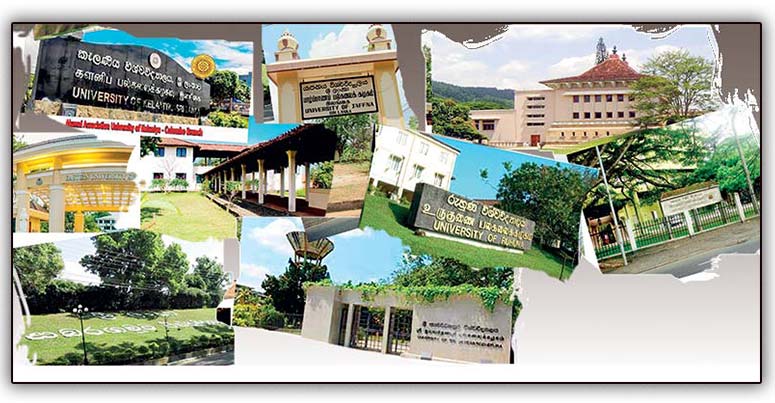
and the wider context of Higher Education
by Ashanthi Ekanayake
The devalued or undervalued role of the English instructor, which has a certain gendered aspect as women outnumber men, and as it is generally perceived as a category, deserves some consideration.
As an Instructor of English, I want this to read like the personal account it is, but I also want it to have some depth and validity as it is an exercise which seeks answers to the questions of systemic injustices and inequities and inequalities we face as professions, and explore the question of how we might overcome the oppression and gain a semblance of agency, though we remain a small group.
To start where my journey began, after a brief stint at the Department of Classical Languages after graduation in the obligatory position of temporary lecturer, I was gratified when I obtained a position as a permanent instructor in April of 2004. When I first discussed my prospects as an Instructor of English with my friend’s mother, whom I thought of as a role model, as she was not just a mom but also an accomplished academic of some renown, she said, “ell if you want to bring up a family and also engage in a profession, this is a good one.
” Warning bells should have rung then, but I then went ahead and secured myself a position. The second time I would hear something about how an English Instructor was generally perceived was when a senior academic, whom I looked up to, made a tongue in cheek comment. “Well,” he said ponderously, “the ELTU was at one point seen as a place for wives, girlfriends and mistresses of academics.” That gave me a very clear indication of how my profession and its category stood in comparison to the others in the University.
Yet I remained quite impervious, until I made the mistake of introducing myself as a “lecturer” to an academic of the medical faculty. He did not mince words in disabusing me of my misperception of my standing in the wider university community. Thereafter I would introduce myself very succinctly as an instructor of English to all and sundry and the be caught up in an explanation of where exactly my position fitted in the university system, a difficult endeavour at the best of times, which turned out to be demeaning to boot, because we were it appeared neither fish, flesh, nor fowl.
But why am I giving unnecessary history and personal history at that? Well sometimes the personal is the universal, so bear with me, I promise not to disappoint you.
I continued on my merry-way working in many of the ELTUs of the university of Peradeniya, and became aware of the many systemic injustices, inequities and inequalities that is part and parcel of the experience. The differences and imparities operated on multiple levels but then I was just biding my time. I was not sure what I was waiting for, but I was busy making a living, working, attempting to become qualified, becoming a parent so on and so forth, basically doing everything a mother and a professional does.
As the most junior member of the permanent staff, I did not see how I was going to change the situation anytime soon. Meanwhile, a promotional scheme had come into effect and gone and many things had happened. I was impervious and had been too busy complaining about being underpaid, exploited and undervalued. Things were changing and I was finding some of these changes and my experiences difficult to grapple with.
Like many positions in the system, mine had no clear job description. There was that frightening clause at the end of my letter of appointment, I was to perform “any and all duties” as directed by my head of department. I was safe while my HoD was fair and human, and the demands being made did not appear at least on the surface unfair. My workload according to my grade was between 14 to 16 contact teaching hours, spread across the five-day working week, except during the intensives when one would teach for longer hours. Still tolerable. So, one continued.
Then, I became aware of a few things. Most academics and many in the non-academic staff, took it as a given that we were of a lower category, and came lower in the pecking order. They would on occasion become quite abusive. As a woman, I was made to feel extremely vulnerable because I was not aware of the system and its intricacies and the apparatuses and mechanisms available for my/ our protection. To use a posh term, I was not aware of my positioning and my sense of agency within the system. To add to this one of my supervisors were given to saying that we as a group were too empowered. Was that such a bad thing? Empowerment meant that we were able to carry out duties in a healthy environment.
Recently, when I spoke of the agency available to me, as an instructor, or lack thereof to a colleague in the temporary cadre, 20 years my junior, recruited having graduated recently, guffawed snidely. Thus, the notion of agency is a concept necessarily denied to those in our category. On occasion, we were treated with extreme violence and derision at august fora such as the faculty boards.
On one instance a colleague complained to me of a colleague of a different category, throwing her out of a classroom and then gesturing towards her attire, and asking if she was indeed a teacher. Many of our rights, and freedoms are circumscribed and the situation it appears will not improve anytime soon. A case in point is the finger scanner attendance system.
Recently, a now discredited academic turned politician who was removed and subsequently reinstated into a certain state committee added to our burdens and we now mark our attendance through the finger scanner system. This is something which has given rise to many disparities within and across the system. His main concern was that there was no proof of the services we had provided, so we now mark attendance which in no way provides evidence about the volume and extent of the work we do. Now, we have a work load and a work day we are constrained in multiple ways. When we ask about how exactly it is implemented, we are not given straightforward answers. A senior colleague asked if our work day was 8.00 am to 4.00 pm, the official to whom the question was posed glibly answered, “I didn’t say that.”
This has given rise to the question of job descriptions and role definitions. According to certain officials, we have not been defined as being teachers. Only lecturers are considered academics and they are exempt from marking attendance as it goes against “tradition.” The most glaring injustice is that our workload and work norms match those of the academic cadre, we have the same qualifications from the same places but not only is our pay lower but the demands made are unjust in the extreme. For an instance, we do not receive research allowances of the sort academics receive but certain ELTDs insist on research.
During intensive courses instructors are forced to work longer hours, on occasion starting sessions at 8.00am and going on until 4.00pm. We are seen largely as beasts of burden. An instance of when we face additional unfairness is when services are commandeered for editing content in (not copy editing/proofreading) research articles and abstracts when the actual appointed the editors according to the publication are others. Those whose duty it is to perform this function send stringent guidelines about editing the research articles and palm off their duties on the English instructors. They receive a commendation and have their names mentioned in the volume as editors. The instructors only receive a letter of acknowledgement of the service performed.
Many Units have now been upgraded to departments so now we have ELTDs and not ELTUs. Thus, there are lecturers in the equation and the differences and inequalities are manifold and magnified at close quarters. The appointed paper setter is an academic but the paper comes to be set by an instructor. In one faculty of the University of Peradeniya, payment vouchers do not mention the academic support category at all.
To add to these injustices on occasion we are left out of certain other benefits of being in the university system, such as the vaccination scheme for university staff.
The webpage of the ELTD of the University of Peradeniya mentions no less person than Theodoric de Souza as its founding Head albeit of the sub department. Who was he? A well-known figure in Bolshevik/Marxian (quaint term found in early articles) trade union action among many other things. Interestingly, the author had a very close call, with the term Bolshevik being included in a reading text as it was a term that Arts Faculty students are “apparently” not aware of. Would “Doric” turn in his grave at this turn of events? Would he be appalled at the way we are being treated. He apparently had keen sense of fair-play and justice according to Jeanette Cabraal, (13th March 2014: Daily Mirror).
Even women academics, aware of feminist ideals and values will on occasion behave in a way which prompts one to question if they indeed practice what they preach. Some of us have Stockholm syndrome we side with our abusers because they have complete control over us and they say this is the best thing for you. This is seen also in a comment made by a senior academic about their relations with the ELTD of their own university at a workshop in the author’s hearing. “Oh! now they have achieved academic status we leave them to their own mad devices. In our opinion they are mad and when they don’t agree with our viewpoint, we drag them by their hair in the direction we want them to go.” This comment was made in 2014.
What if you protest, then you become an upstart and a misfit, your own see you as a scapegoat and blame everything they cannot change about their own situation on that unworthy individual and try their best to oust the person out of the system. They project certain personal traits on that person which are seen as unacceptable and run the individual out with abusive behaviour.
If an institution is truly committed to improving the learning and teaching of English, we need to be aware of these aspects of our profession. So, where to Instructors of English?

By Chula Goonasekera
For the LEADS Forum (admin@srilankaleads.com)
Sri Lanka’s future prosperity will depend on how effectively it positions itself within an increasingly complex global environment. At a recent LEADS Forum discussion (https://youtu.be/Bbr3e_qU1Fw), veteran diplomat Prasad Kariyawasam, former Secretary to the Ministry of Foreign Affairs, High Commissioner to India, Ambassador to the United States, Ambassador /Permanent Representative to the UN in New York and Geneva —outlined the strategic choices Sri Lanka must make to secure long term stability and economic advancement. Kariyawasam offered a rare blend of historical perspective, diplomatic experience and practical guidance.
His central message was clear: Sri Lanka must exercise strategic agency—engaging all major partners while safeguarding its national interests.
Foreign Policy as an Extension of National Aspirations
Foreign policy, Kariyawasam emphasised, is inseparable from domestic priorities. As your text notes, “foreign relations often reflect the medium- and long-term aspirations of a country’s people and its leadership.” Governments must therefore craft external relations that reflect the public’s economic and social expectations, avoiding short-term political impulses that undermine long-term national interests.
For a small nation, foreign policy cannot be symbolic or personality driven. It must be purposeful, pragmatic and directed towards the security and prosperity of the people.
A History of Global Connectivity
Sri Lanka’s history demonstrates that the island has never been isolated. From ancient ties with India and Southeast Asia to Arab, Persian and Chinese maritime networks, the island prospered when connected to the wider world. We must realise that “geography creates opportunity, but geography alone does not create prosperity.” Institutions, infrastructure and policy determine whether geographic advantage becomes economic success.
Colombo’s emergence as a cosmopolitan trading hub and Galle’s role as a resupply station for Indian Ocean shipping in colonial times , illustrate how deeply Sri Lanka has been embedded in global commerce for centuries.
Lessons from Asia’s High Performers
Kariyawasam highlighted the experiences of Japan, South Korea, Taiwan, Singapore and Vietnam. Their paths differ, but their success rests on common foundations:
• investment in human capital and infrastructure
• merit based institutions
• integration into global markets
• attraction of investment and technology
• export oriented industries
• strategic engagements with both China and Western economies
The lesson for Sri Lanka is not imitation but continuous adaptation and constructive integration with the global economy.
India: Sri Lanka’s Closest Major Partner
India’s transformation into a global economic power presents Sri Lanka with both opportunity and responsibility. India is already Sri Lanka’s largest source of tourists and a major investor. Kariyawasam states, “The larger question is how effectively Sri Lanka can participate in and benefit from India’s growth.”
A partnership should encompass modern, more open pathways for trade, investment, logistics, energy, technology, digital services, education and professional mobility—And asymmetry between the two economies must be handled with maturity and foresight, seeking special and differential treatment .
China and Other Global Partners
China remains a significant economic partner. Sri Lanka must avoid viewing this relationship through a zero sum lens. The goal should be productive and transparent engagement, ensuring better terms of trade and meaningful technology transfer.
Equally Important relations must be nurtured with the United States, European Union, United Kingdom, Japan, Australia, ASEAN and the Gulf.
All these relationships can be vibrant partnerships that does not lead towards , dependency but mutually beneficial pragmatic arrangements .
A Fragmenting International System
Global geopolitics is becoming more volatile. Trade tensions, wars, sanctions, supply chain disruptions, climate change and technological competition increasingly shape national security. We must realise, “foreign policy cannot be separated from economic policy.”
Sri Lanka’s recent economic crisis demonstrated the importance of international confidence, access to finance and resilient supply chains. Energy security, food security, cybersecurity and digital infrastructure are now core elements of national strategy.
Strategic Agency: The Guiding Principle
Sri Lanka must avoid becoming an arena for great power competition. Strategic agency means making decisions based on national interest, expanding Sri Lanka’s choices, not restricting them.
India is essential. China is important. The United States, Europe, Japan, Australia, ASEAN and the Gulf are important. The objective is a web of partnerships that strengthens resilience and autonomy.
Sri Lanka’s Strategic Assets
1. Location: Sri Lanka’s geography is a long standing advantage. Ports such as Colombo, Hambantota, Trincomalee and Galle can become specialised hubs—if connected to logistics, manufacturing, services and exports.
2. Digital Connectivity: Submarine cables, data centres, cloud services and cybersecurity are now as important as physical geography. Sri Lanka can turn its location into both a maritime and digital advantage.
3. Tourism and Natural Heritage: The focus should shift from tourist numbers to value creation—wellness, heritage, ecotourism, cruise tourism, education and MICE tourism.
4. Human Resources and Demographics: High literacy is no longer enough. Skills in technology, engineering, AI, logistics and advanced manufacturing are essential, especially with an ageing population.
5. Migrant Workforce: Migrant workers are a strategic asset, not merely a source of remittances. Bilateral labour agreements, skills recognition and diaspora engagement should be central to foreign policy.
Requirements for Sustained Prosperity
Sri Lanka’s future depends on:
• peace and security
• access to international markets
• productive investment
• a skilled, productive workforce
• modernised agriculture
• higher value tourism
• demographic preparedness
• climate resilience
• strong, predictable institutions
Please note that “foreign policy can open doors. Domestic institutions determine whether we can walk through them.”
The Role of the State
Sri Lanka does not need a larger state—only a more capable one. Policy continuity, professional institutions, predictable regulation and reduced corruption are essential. Geography does not change; long-term national interests do not change. Intentional relationships built over decades should not be reinvented with each election cycle.
Building Trust Internationally
Trust is a strategic asset. Sri Lanka must be known as a country that honours commitments and maintains predictable policies. This is vital not only for diplomacy but also for investment and long term partnerships.
Avoiding Zero Sum Geopolitics
Sri Lanka does not need to choose between India and China, or between Asia and the West. The task is to identify what each relationship can contribute to national development while protecting sovereignty and freedom of decision making.
Sri Lanka’s geography is an inheritance, but prosperity is not guaranteed. The world is changing rapidly—great-power competition, technological disruption, and climate vulnerability demand a foreign policy that is pragmatic, adaptive, and anchored in national interest.
Sri Lanka must build partnerships without dependencies, maintain strategic agency without isolation, and integrate with the global economy while strengthening domestic capacity.
“We cannot change where Sri Lanka is. We can, however, determine what Sri Lanka becomes because of where it is”


by Gomi Senadhira
Sri Lanka’s former ambassador to the United States Mahinda Samarasinghe is back in Sri Lanka lobbying for speedier finalisation of a new tariff deal with the United States. According to news reports, delivering the keynote address at the Sri Lanka Institute of Directors’ Annual Meeting last week, he stated, “I have recommended very strongly to the government that we need to conclude the agreement so that we can lock in the very favourable tariff rate that Sri Lanka has got up to now“.
I do not understand why the former ambassador is urging the government to expedite the finalisation of a new tariff deal or what is “the very favourable tariff rate” he refers to in his speech. However, given the ongoing terrible tariff turbulence in the United States and the fragile economic situation in Sri Lanka, I believe, this is not the right time to rush into finalising any trade agreement with the United States. I am also of the opinion that at this juncture Sri Lanka should maintain strategic patience and explore all available options.
Lessons from the countries that rushed for trade deals
To better comprehend this, let’s look at experiences of the countries that rushed to conclude tariff deals with the United States after President Donald Trump declared his “reciprocal tariffs” under the International Emergency Economic Powers Act (IEEPA) in April 2025. As Samarasinghe stated in his keynote, “The bottom line on all these negotiations was that every country that finally agreed to sign the agreement had to give either complete duty-free access for American exports into those markets, or near complete duty-free access.” In exchange for these tariff concessions and other market access commitments these countries managed to get the newly introduced country specific “reciprocal tariffs” reduced.
However, in February 2026, the Supreme Court of the United States (SCOTUS) struck down these “reciprocal tariffs” under the IEEPA. With that, the market access gains these countries received in exchange for complete duty-free access for American exports into their markets evaporated under U.S. domestic law. By moving too fast to conclude bilateral tariff agreements with the United States these countries are now bound to strict obligations whereas the benefits they bargained from the U.S. administration are not worth the paper those were written on.
Sri Lanka’s experience
In April 2025, President Trump declared his “reciprocal tariffs” and labelled Sri Lanka as the worst offender, imposing one of the highest additional duties at 44%. Since then, Ambassador Samarasinghe and other negotiators have managed to negotiate this down to 20%. I do not know what the deal was through which Sri Lanka managed to reduce the 44% tariff to 20% or what we gave in return for this “concession.” However, what we received in return has absolutely no value after the decision by the SCOTUS.
Current state of US tariffs
After the decision by SCOTUS, the U.S. administration introduced a temporary 10% additional tariff on all countries for 150 days. At the end of that period, this 10% tariff was replaced by a new “forced labor tariff ” of 10% to 12.5% on all trading partners under Section 301 of U.S. trade law. Twenty-five U.S. states and several small businesses have already filed lawsuits against these tariffs in U.S. courts. This new “forced labour tariff ” on Sri Lanka was first fixed at 12.5%. Later, after President Anura Kumara Dissanayake issued a gazette notice prohibiting the importation of goods produced using forced labour, it was reduced to 10%. That means Sri Lanka has already made a substantial commitment to receive this “tariff concession,” and I presume our negotiators understand the implications of this commitment.
Make haste slowly
After President Trump imposed 44% “reciprocal tariffs” on Sri Lanka, through an article published in The Island on 25th April 2026 (), I urged the government to engage immediately with the US administration on these tariffs. However, I also emphasised that the best way to move forward was to make haste slowly.
Two millennia ago, Augustus Caesar, the first emperor of Rome, frequently used the phrase, “make haste slowly”, because he detested rashness and haste in his military commanders. It was the recurring guiding maxim that he emphasised throughout his 40-year imperial rule. After 2000 years, this classical oxymoron remains a definitive golden rule for professional trade negotiators. More importantly it is the exact blueprint required when navigating turbulence in trade negotiations with the Trump administration.
The endgame – The most dangerous moment in trade negotiation
Samarasinghe has also stated the agreement is 90% complete. Any experienced trade negotiator should know that the final 10% contains high-stakes provisions and is the most dangerous moment in a trade negotiation. A single misplaced comma or ambiguous product description in a tariff schedule can cost millions through unintended loopholes. Rushing this last stretch to secure a deal can permanently expose Sri Lanka to sudden shifts in American trade policy, heavy compliance costs, or strict enforcement under Section 301 regarding supply-chain labour standards. Hence, this is the time for strategic patience.
(The writer can be reached at senadhiragomi@gmail.com)
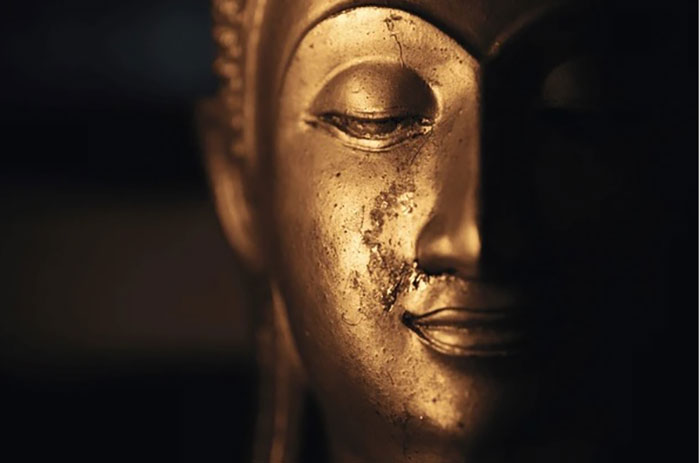
Upon reading the article titled “Prof. Pieris says Buddha Dhamma recognized as source of law under Constitution” (Island, September 12, 2026), the classical Sinhala idiom “Yanne Koheda? Malle Pol” immediately comes to mind. The expression, translating literally to answering “I have coconuts in my bag” when asked “Where are you going?”, underscores a complete disconnect in logic. Because it is uncertain whether the article accurately represents the professor’s precise words, the following critique addresses the contents of the report rather than the speaker himself.
The central premise of the report concerns a statement delivered by the Chief Justice regarding a petition filed against the 22nd Amendment to the Constitution. According to the report, the Chief Justice’s observation that the determination would be made strictly on the basis of established law rather than Buddhist teachings was characterised as a “cavalier dismissal” of the Buddha Dhamma. This assertion carries a host of unexamined assumptions. Had the writer specified precisely which tenets of the Buddha Dhamma were violated, a direct legal or philosophical evaluation could take place. However, no specific Buddhist tenet or law was identified as having been transgressed, and for good reason: no such statutory legal framework exists within the Buddha’s teachings.
To understand the flaw in this argument, one must examine the constitutional context alongside the canonical meaning of the terms involved. Article 9 of the 1978 Constitution of Sri Lanka mandates that the Republic shall give Buddhism the foremost place and that it shall be the duty of the State to protect and foster the Buddha Sasana, while guaranteeing the fundamental rights of all religions under Articles 10 and 14(1)(e).
While “Buddhism” and “Buddha Dhamma” are frequently used as interchangeable terms in casual dialogue, they represent distinct concepts. “Buddhism” is an umbrella term coined by 19th-century Western scholars to classify the global institutionalised religion, incorporating its diverse sects, cultural traditions, rituals, and socio-political histories. Conversely, Sasana is the ancient term designating the structural framework established by the Buddha to preserve and transmit his teachings, comprising the monastic order (Sangha) and its supporting institutions.
In classical Theravada commentarial literature, the Sasana operates as a functional three-tiered structure. It encompasses Pariyatti Sasana, the preservation and study of sacred texts; Paṭipatti Sasana, the practical execution of the doctrine through ethical conduct and meditation; and Paṭivedha Sasana, the direct experiential realization of ultimate truth, or enlightenment. This structural breakdown raises fundamental questions about state capacity. While a state can readily support Pariyatti Sasana through academic institutions, textual preservation, and educational funding, it cannot legislate or enforce Paṭipatti or Paṭivedha. Practical engagement and spiritual realisation are inherently internal, first-person experiences. Expecting the state to codify or guarantee enlightenment is a conceptual impossibility.
Furthermore, the Buddha Dhamma refers specifically to the unconditioned truths of existence and the teachings imparted to realize them, including the Four Noble Truths, the Eightfold Path, and Dependent Origination. As the late Venerable Professor Kotagama Wachissara Thera observed, there is no rigid ideologue or “ism” in the core Dhamma. The teachings do not constitute a system of divine commandments or a legal statute enforced through reward and punishment. Rather, Buddhist ethics function as self-directed guidelines for psychological clarity and moral inquiry. Even the Vinaya Pitaka, which contains explicit rules of conduct, functions as an internal monastic code rather than a civil or criminal law intended for the laity.
Throughout the Pali Canon, guidance regarding governance focuses on the moral character of leadership and the social duties of statecraft rather than rigid legal codification. In discourses such as the Cakkavatti Sihanada Sutta (DN 26), the Buddha observes that social instability and crime cannot be eliminated solely through punitive measures, emphasising instead that states must provide economic opportunities, fair wages, and resource distribution to maintain societal balance. Crucially, in the Maha Parinibbana Sutta (DN 16), the Buddha explicitly highlights the importance of respecting established laws and traditions rather than enacting arbitrary regulations.
The natural laws articulated in the Dhamma, such as the law of cause and effect or the three characteristics of existence, govern all phenomena universally, regardless of legal statutes or personal belief. They are not human laws to be applied or suspended by a court of law. Therefore, characterizing the Chief Justice’s adherence to constitutional jurisprudence over religious doctrine as a “cavalier dismissal” lacks logical and textual foundation. Framing the judiciary’s adherence to legal precedent as an attack on the Dhamma distracts from fundamental constitutional principles and risks misguiding the public for political ends.
Geewananda
Gunawardana,
Ph.D.

Buttler out of Oval decider as Lawrence earns ODI call-up

Showers will occur in the Western, Eastern, Uva and Sabaragamuwa provinces and in Galle, Matara, Kandy and Nuwara-Eliya districts.

Nor’easter brings flooding as New York and New Jersey declare emergency 2 hours ago

Trump rejects Iran deal to reopen Strait of Hormuz in seven days

Govt plans to hire 121,000 state workers, redistribute tax revenue

Parliament clears 22A amid protests

‘Dates have the highest sugar content to fight Coronavirus’

Sunday Island 27 December – Headlines

#SundayIsland 17th December – Headlines

Sunday Island – 28th March

Sunday Island Headlines – 21 March

Sunday Island – 21st February – Headlines
-

 News5 days ago
Mastermind Naufer Moulavi among 15 found guilty
-
 News7 days ago
Hatton youth protest against reported death sentence for Lankan in Saudi Arabia
-
 News7 days ago
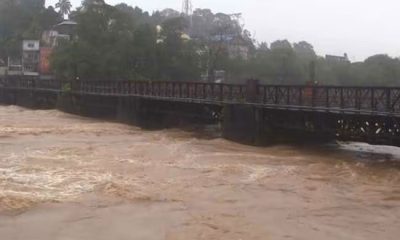
Mahaweli rises as heavy rain triggers flood, landslide fears
-

 News6 days ago
Protest against setting up of cement factory in highly populated area near BIA
-

 Midweek Review5 days ago
Thileepan’s fast unto death: An authentic narrative that many missed
-
 Latest News4 days ago
Showers above 100 mm are likely at some places in the Western, Sabaragamuwa, Central and North-western provinces and in Galle and Matara Districts
-

 Editorial6 days ago
Trouble beginning in earnest
-
Editorial5 days ago
Big Bad Bills