
Foreign News
India ‘engaging with US’ after shackled deportees spark anger

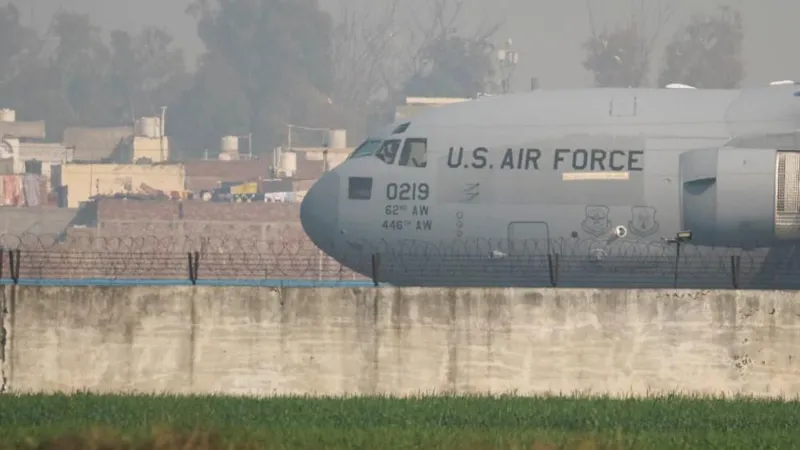
India’s Foreign Minister S Jaishankar has told parliament the government is working with the US to ensure Indian citizens are not mistreated while being deported.
His statement came a day after a US military flight brought back 104 Indians accused of entering the US illegally.
One of the deportees told the BBC they had been handcuffed throughout the 40-hour flight, sparking criticism.
But Jaishankar said he had been told by the US that women and children were not restrained. Deportation flights to India had been taking place for several years and US procedures allowed for the use of restraints, he added.
Deportation in the US is organised and executed by the Immigration and Customs Enforcement (ICE).
“We have been informed by ICE that women and children are not restrained,” Jaishankar said.
He added that according to ICE, the needs of deportees during transit, including for food and medical attention, were attended to and deportees could be unrestrained during bathroom breaks.
“There has been no change from past procedure,” he added.
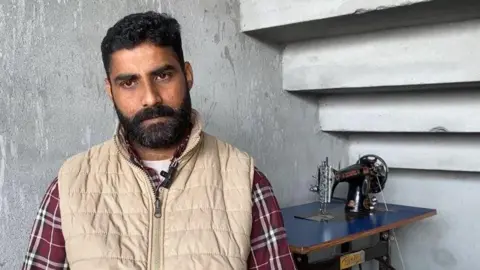
However Jaspal Singh, one of the deportees on the flight that landed in Amritsar city in the state of Punjab on Wednesday, told BBC Punjabi that he was shackled throughout the flight.
“We were tortured in many ways. My hands and feet were tied after we were put on the plane. The plane stopped at several places,” he said, adding that he was unshackled only after the plane landed in Amritsar.
The US has not given further details of how deportees were treated on the flight. Officials have said that enforcing immigration laws is “critically important to the national security and public safety of the United States” and it was US policy to “faithfully execute the immigration laws against all inadmissible and removable aliens”.
The US border patrol chief posted video showing deportees in shackles, saying the deportation flight to India was the “farthest deportation flight yet using military transport”.
President Donald Trump has made the mass deportation of undocumented foreign nationals a key policy. The US is said to have identified about 18,000 Indian nationals it believes entered illegally.
Trump has said India’s Prime Minister Narendra Modi had assured him that the country would “do what’s right” in accepting US deportations.
In his statement on Thursday, Jaishankar said all countries had an obligation to take back their nationals who had entered other countries illegally. They often faced dangerous journeys and inhumane working conditions once they had reached their destinations, he said.
Fraudulent Indian travel agencies are known to take huge sums of money from people desperate to travel abroad for work, and then make them undertake dangerous journeys to avoid being caught by immigration officials.
Jaspal said he had taken a loan of 4m rupees ($46,000; £37,000] to travel to the US, a dangerous journey that took months and during which he saw bodies in the jungle of other migrants who had died on the route.
[BBC]

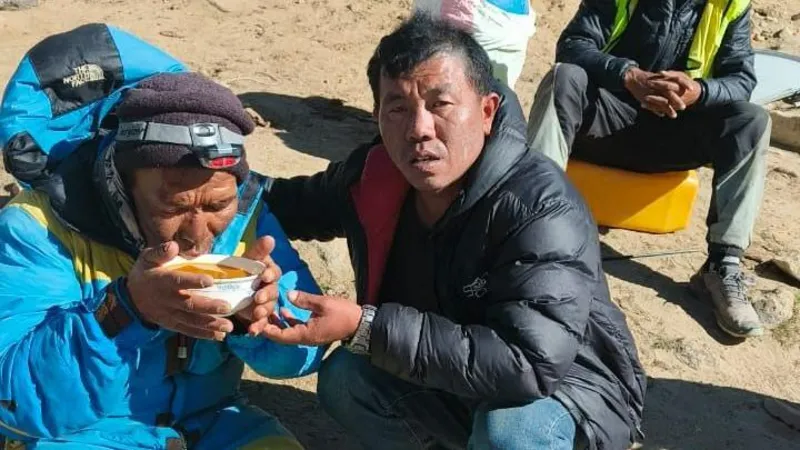
The Nepali guide discovered crawling down Everest six days after he was last seen alive has told the BBC he survived by “chewing ice” and eating a few chocolates he found in his pocket.
Dawa Sherpa was adamant he did not “go missing” on the descent down, but instead was forced to “stay behind” after his oxygen ran out.
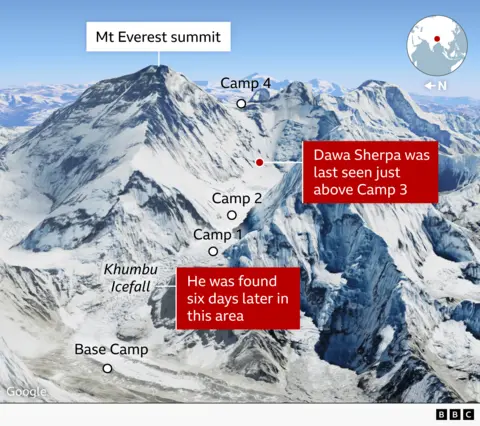
It had been assumed Dawa Sherpa had perished on the mountain, with his family back in Nepal’s capital Kathmandu starting to perform last rites before he was spotted by a clean up team “sliding” down the mountain towards Base Camp.
He was airlifted to hospital in Kathmandu, where he spoke to the BBC while receiving treatment for dehydration, frostbite and a fractured bone.
“I didn’t think I would be alive,” he told BBC Nepali on Friday. “I thought I would perish this way.”
Climber Chris Thrall was the last person known to have seen Dawa Sherpa alive before he was rescued near the Khumbu Icefall on Thursday.
The former British soldier said the 57-year-old was sitting on his backpack just above Camp 3 – around 7,500m (24,600ft) – “as he had done hundreds of times before to take a short rest”.
Thrall continued to descend alone for what he estimated to be about 50-100m before he came across another member of their group, a “Polish climber with no oxygen, battling fairly severe frostbite”.
“So immediately my attention turned to the weakest member of the trio. And that was that,” he told the BBC’s Newshour programme.
“As I look back up the mountain, as I helped this guy descend, Hillary Dawa didn’t appear to have moved, and certainly wasn’t descending, because we would have seen his head torch.”
Up above, Dawa Sherpa told the BBC he had found himself in trouble.
“As the oxygen ran out, I couldn’t walk,” he explained.
“I didn’t eat anything for the first two days. Then I began chewing ice. It pained my teeth. I chewed the ice hard.”
Then he discovered some chocolates in his pocket, and managed to get some melted ice to drink.
He made his way down slowly – only to fall into a crevasse, according to two different people who spoke to Dawa Sherpa about his ordeal.
For two-and-a-half days he was trapped, they said, unable to find a way out.
Then an avalanche sent snow tumbling into the crevasse – and gave him the first hope he had had in days.
“Stepping on the snow, I stood up and looked above… It felt I could get out from there,” he told the BBC.
Once he had scrambled out, he found ropes nearby which helped his manoeuvre further down the world’s tallest mountain.
Another avalanche threatened his progress, but he was determined to keep going.
“I got through the snow and moved downwards. I walked throughout that night.
“Then, I came close to the base camp.”
It was there he saw the first people he had seen in almost a week.
“Its boys were going up to collect the waste. I met them. They carried me down.”
News of his survival was met with shock and delight by the wider sherpa community, the climbers he had been with, and his own family.
Five people have died during this year’s climbing season, with more than 300 dying since records began in the 1920s.
Pemba Sherpa, executive director of 8K Expeditions which was overseeing search efforts, called it a “true self-rescue”.
“Dawa managed to survive against all odds for days. It’s nothing short of a miracle,” he said.
When Thrall first saw comments on social media saying Dawa Sherpa, also known as Hillary Dawa Sherpa after famed mountaineer Edmund Hillary, had been found alive, he said he thought it was “spam”.
“It’s kind of crazy one minute to be fighting back tears with his daughter, and then the next minute to see him crawling into town,” Thrall told BBC’s Newshour. “It’s absolutely amazing, beyond words.”
His wife, Damu Sherpa, told news agency AFP she had given up hope, until seeing a picture of her husband.
“We thought he was no more, and had already begun his last rites,” she said as she waited to meet him at the hospital.
“I was so surprised when I saw the photos and recognised him – he was still wearing a cap I knitted for him.”
“He recognised me … is good and speaks,” his daughter Mhendo Lhamo Sherpa told Reuters news agency later, after visiting him. “We are happy.”
Doctors at Kathmandu’s HAMS Hospital say Dawa Sherpa has been “receiving comprehensive medical care in the intensive care unit”, but is stable and his “dehydration is showing significant improvement”.
More than 1,000 have summited Everest summit this season, making it the busiest on record.
[BBC]
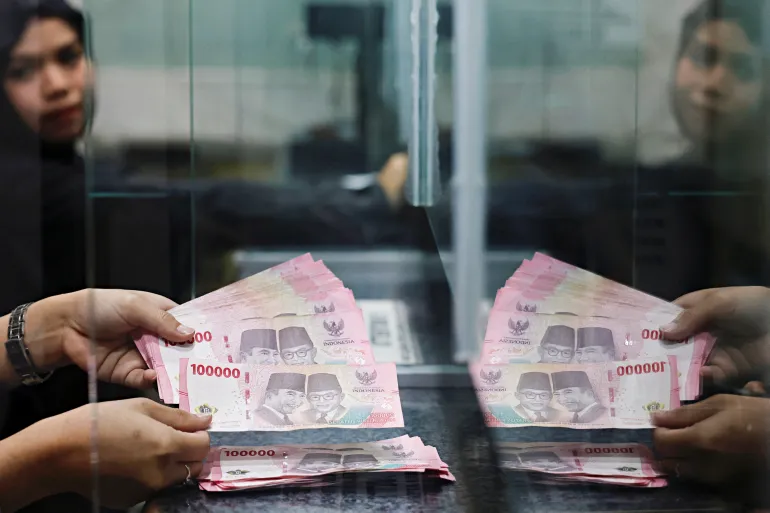
Indonesia’s rupiah has hit its weakest level ever against the US dollar, breaching the psychological 18,000 threshold amid surging energy costs.
The currency hit 18,028 against the greenback on Thursday, despite recent central bank efforts to provide support.
The energy shock driven by the US-Israel war on Iran has placed a significant strain on energy-importing Southeast Asian economies, particularly Indonesia and the Philippines.
The resulting pressure on trade balances has contributed to capital outflows and weaker currencies.
Gulf hostilities flared again on Wednesday, sending oil prices up more than 1 percent.
Adding to regional uncertainty, the United States has proposed additional import duties of 10 percent or 12.5 percent on goods from 60 economies, including Indonesia, Malaysia and Singapore, over alleged forced labour failures.
Permata Bank chief economist Josua Pardede said that an exchange rate of 18,000 was a “psychological threshold” for market investors.
The weakening, he told the AFP news agency, was fuelled by high dollar demand caused by the spike in oil prices and a narrowing trade surplus.
Indonesia is a net oil importer and is particularly affected by the rising crude costs, though the government insists it will leave subsidised fuel prices unchanged.
The country’s trade surplus has been hammered, narrowing to just $89m in April, from $3.3bn a month before, further reducing dollar supply in the Indonesian market, Josua said.
“Dollar supply from goods trade is dwindling, while dollar needs for energy imports, raw materials, dividends, foreign debt payments and seasonality needs remain significant,” he said.
“This is why the increase in the BI [Bank Indonesia] lending rate and intervention is not enough to reverse the rupiah’s [depreciation].”
The central bank hiked rates by 0.5 basis points to 5.25 percent last month – the first increase in two years – as it looked to stabilise the rupiah and keep inflation in check.
The central bank’s spokesman, Ramdan Denny Prakoso, said on Wednesday that it continued to use “all available policy instruments” to “maintain adequate foreign exchange liquidity”.
Bank Indonesia also tightened rules for dollar purchases.
Since May, buyers of more than $25,000 in a given month have been required to provide supporting documents to justify their need for US currency.
[Aljazeera]
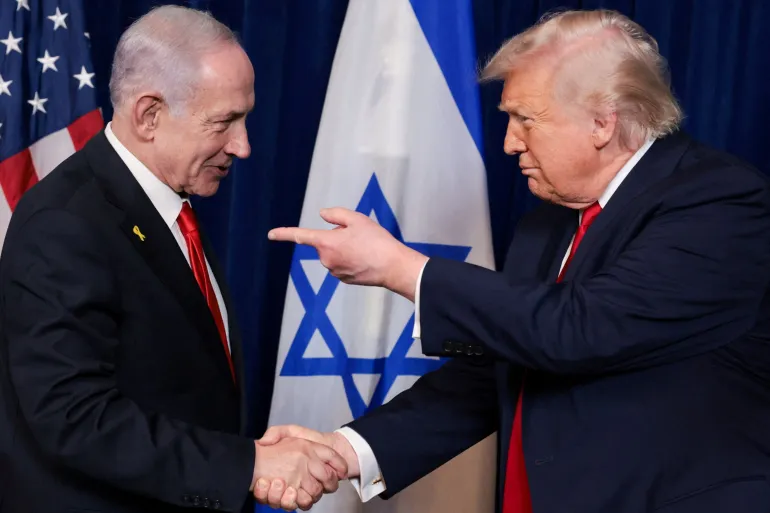
Benjamin Netanyahu has played down reports of a rift with Donald Trump after the United States president confirmed that he recently called the Israeli prime minister “f****ing crazy”.
Asked during an interview with CNBC on Wednesday, Netanyahu rejected the idea his ties with Trump have shifted: “No, this has been this has been a great relationship because he’s been the greatest friend that Israel has ever had in the White House.”
Netanyahu — who is wanted by the International Criminal Court (ICC) for war crime charges in Gaza — added that the two leaders have mutual respect for each other.
“We have common goals. Sometimes, we have, as in the best of families, you have these tactical disagreements,” he said.
“We always find a way to work them out, and we do so as great friends. We can disagree in the morning, and by the afternoon, we have common action.”
The comments came after Trump told the New York Post that he berated Netanyahu during a call earlier this week over Israel’s escalation in Lebanon.
“I was a little bit perturbed at his constantly fighting with Lebanon,” Trump said.
Israel’s attacks in Lebanon, including an announcement that the Israeli military would bomb the capital, Beirut, have risked derailing the talks between the US and Iran.
Tehran has suggested that it may respond militarily to Israel’s assault in Lebanon.
Trump said on Monday that he spoke to Netanyahu and a representative from Hezbollah, and both sides agreed to hold fire.
But the fighting in southern Lebanon, where Israel has displaced hundreds of thousands of people and razed entire towns to the ground, has continued.
The Israeli military, however, did hold off its attacks against Beirut.
Despite the apparent disagreement over Lebanon, Trump lauded the Israeli prime minister on Wednesday, saying that he “works well” with him.
“I like Bibi a lot,” he said, using Netanyahu’s nickname.
For his part, Netanyahu stressed that he and Trump are on the same page in Lebanon and share the objective of disarming Hezbollah.
“I think he understands that Lebanon has been taken hostage by Hezbollah,” Netanyahu said.
Hezbollah, which is allied with Iran, says it is fighting against Israel’s aims to expand into Lebanon and ethnically cleanse the south of the country.
The Lebanese group argues that its fighting is legitimate under the United Nations Charter, which grants the right to self-defence to states and individuals.
After Israel and the US attacked Iran without direct provocation on February 28, fighting spilled over into Lebanon. Two days into the conflict, Hezbollah launched rockets against Israel in what it said was a response to the daily Israeli ceasefire violations and the killing of Iranian Supreme Leader Ali Khamenei.
Since the start of the regional war, several Israeli politicians have openly called for indefinitely capturing southern Lebanon and building settlements there.
In March, Israeli Defence Minister Israel Katz outlined a plan to occupy the south of the country and prevent hundreds of thousands of residents from returning to their homes.
Katz has also said he ordered “an acceleration in the destruction of Lebanese homes in contact-line villages”, admitting that the policy follows the model of the annihilation of Rafah and Beit Hanoon in Gaza.
But Netanyahu said on Wednesday that he wants “peace” with Lebanon.
“If we want to save Lebanon and if we want to get a Lebanese-Israeli peace, as I do, we have to disarm Hezbollah, and we have to demilitarise Lebanon,” the Israeli prime minister said. “I know that this is a goal that the president and I share.”
The demilitarisation of the entire country appears to be a new Israeli demand that would require preventing the Lebanese Armed Forces from acquiring weapons that could pose a threat to Israel.
Since April, Lebanese and Israeli officials have held several rounds of talks in the US, but the negotiations have failed to produce a ceasefire or halt Israel’s systemic destruction of Lebanese towns.
[Aljazeera]

England make inroads after New Zealand set 254 to win

Rusty West Indies face upbeat Sri Lanka with series on the line

Pakistan naval trio leaves Colombo after goodwill visit

PEOTV secures media rights for FIFA World Cup

Anthropic urges AI labs to pause, warns humans risk losing control

Iran footballers issued US visas for World Cup, says White House

‘Dates have the highest sugar content to fight Coronavirus’

Sunday Island 27 December – Headlines

#SundayIsland 17th December – Headlines

Sunday Island – 28th March

Sunday Island Headlines – 21 March

Sunday Island – 21st February – Headlines
-

 News5 days ago
Lankan duo emerge winners in Latin dance championship held in Blackpool, UK
-

 Business6 days ago
IMF’s unstated rate:Sri Lanka’s $695m loan costs about 5.33% per annum
-
 Latest News3 days ago
Kusal Mendis, Pathum Nissanka, bowlers put Sri Lanka 1-0 up
-
 News3 days ago
New US tariffs proposed on 60 countries, including Sri Lanka
-

 Business6 days ago
Sri Lankan scientist-innovator Milinda Edirisinghe introduces AI-integrated gem testing system to gemological world
-

 Features7 days ago
Are threats to Buddha Sasana external or from within?
-

 News6 days ago
UNP challenges NPP move to amend Vihara – Devalagam Act
-
 Features2 days ago
Power crept into the Sangha and is now tearing it apart