
Business
ICMA Australia hosts insightful session on bridging generational divide in the workplace

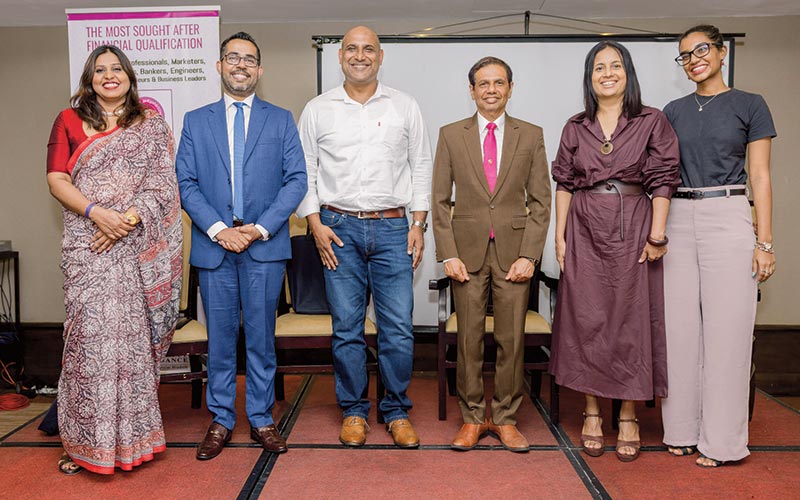
The Institute of Certified Management Accountants (ICMA) of Australia hosted a thought-provoking evening themed ‘The Gen Z Equation: What Every Leader Needs to Know,’ designed to address one of today’s most pressing workplace challenges of understanding and effectively managing generational differences.
Current workplaces have become increasingly multifaceted across generations, harnessing the strengths of each generation while addressing their unique needs has become critical for organizational success. Through the event, ICMA sought to provide attendees with practical tools and insights to transform these differences from workplace challenges into competitive advantages.
The session united seasoned leadership expertise with authentic Gen Z perspectives to help leaders build stronger, more collaborative workplaces, unpacking intergenerational dynamics, challenging common myths, and sharing research-backed insights.
Participants included leaders, managers, HR professionals, and team members working in inclusive, multigenerational environments committed to building future-ready workplaces.
The evening featured a unique father-daughter facilitation team, combining decades of leadership. The two comprehensive presentations were followed by a moderated panel discussion that delivered practical insights from both sides of the divide.
The main presentation, ‘A Leader’s Guide to Bridging the Generational Gap,’ was led by globally experienced leadership trainer Vidusha Nathavitharana. He holds global leadership training experience and HR thought leadership, specializing in intergenerational workplace dynamics. His expertise combines deep theoretical knowledge with practical, real-world applications.
Vidusha’s presentation explored whether the generation gap is real or perceived, examined why age-related differences matter more than ever, and provided practical strategies for creating alignment across generations. Participants gained insights into addressing low engagement and learnt from case studies of high-engagement and workplace harmony has driven impressive results.
The co-presentation was on ‘The Gen Z Voice—Straight from the Source’ delivered by Shaakya Nathavitharana, a Gen Z with academic research in workplace psychology. She has unique Gen Z perspectives grounded in academic research and professional experience in learning and development. Her work focuses on practical solutions for bridging age-diverse gaps in modern workplaces.
During her presentation, she challenged common myths about her own generation, presenting data-driven insights into Gen Z workplace expectations. Her presentation demonstrated how meeting Gen Z’s needs benefits all generations and explored the powerful potential of generational collaboration.
The evening concluded with a vibrant discussion moderated by Lien Keerthisinghe featuring the facilitators and Dulani Nissanka, Group Chief Human Resources Officer, Abans Group Sri Lanka, providing attendees with opportunities to engage directly with the experts and explore practical applications of the insights presented.
Established in 1996 in Australia, ICMA is a global accounting body dedicated to advancing management accounting expertise. With a growing presence across Asia-Pacific, the Middle East, and Africa, ICMA’s workshop modules are recognized up to Level 9 by the New Zealand Qualification Agency (NZQA).
ICMA has established a strong presence in Sri Lanka since 1998, through a partnership with the Institute of Chartered Accountants of Sri Lanka.

Business
Aitken Spence concludes FY26 on a strong note, recording a 18% growth in PBT to Rs. 12.8 bn


Aitken Spence PLC, a leading conglomerate with a diverse regional presence, recorded a strong Profit Before Tax (PBT) of Rs. 12.8 billion for the year ended March 31, 2026. The strength of the Group’s diversified portfolio was clearly demonstrated during the financial year, with overseas operations contributing 61% of total profits. This growing international presence continues to enhance earnings resilience, reduce concentration risk, and unlock multiple avenues for growth across markets and sectors.
The Group’s share of profits from equity-accounted investees increased significantly, by 46%, to Rs. 2.3 billion, driven by stronger contributions from the Port City BPO venture, as well as improved performance in the Group’s plantation and bunkering operations.
Profit after tax rose to Rs. 9.1 billion, representing a 27% increase over the corresponding period last year, with Rs. 6.8 billion attributable to equity holders of the Company.
The Group’s Tourism sector demonstrated a substantial improvement, recording a PBT of Rs. 7.9 billion for the year ended March 31, 2026. It is noteworthy that the Group’s Tourism sector emerged as the key contributor, accounting for 61% of the Group’s total contribution. The improvement in the Tourism sector’s performance was supported by stronger tourist arrivals across destinations, higher occupancy levels, and improved room rates during the year. The sector also benefited from lower interest costs, which contributed to the growth in profitability. The destination management segment also delivered a strong performance, navigating a challenging local industry environment during the financial year, while benefiting from the continued recovery in global travel and increased inbound tourism.
The Group’s Maritime & Freight Logistics sector achieved a PBT of Rs. 4.7 billion for the year ended March 31, 2026, driven primarily by the maritime and port segment. The sector operated in a challenging global environment, with escalating pressures toward the latter part of the year impacting overall performance. Despite these headwinds, port operations demonstrated healthy growth in both revenue and earnings, supported by increased operational activity. The integrated logistics segment recorded stable revenue levels, and the newly commissioned warehouse complex demonstrated encouraging progress in its initial phase of operations. However, these gains were partially offset by softer performances in the transport and distribution segments.
The Services sector delivered a marked improvement in profitability during the year, with profit before tax rising sharply to Rs. 1.2 billion, supported by the continued scaling and maturity of the portfolio. The Group’s BPO services segment recorded strong growth, driven by expanded operations and a growing client base, while the Group’s elevator agency improved volumes, and the property management segment delivered a steady performance. However, this was moderated by weaker outcomes in the Group’s insurance and money transfer segments.
Business
Value Network Ventures’ USD 4 mn carbon investment puts SL’s mangroves on global climate map

At a time when Sri Lanka was grappling with economic uncertainty, dwindling foreign reserves and an urgent need for foreign investment, a little-publicised environmental initiative quietly attracted nearly USD 4 million into the country through an innovative carbon-financing mechanism centred on mangrove restoration.
The project, implemented by TCP Lanka (PVT) Ltd. under the leadership of conservationist Thushan Kapurusinghe, has already restored approximately 3,000 hectares of mangrove ecosystems across Sri Lanka’s coastal belt, making it one of the largest nature-based carbon sequestration initiatives undertaken in the country.
Kapurusinghe, chairman of TCP Lanka (PVT) Ltd, said the investment originated from VNV, a Singapore-based project development company specialising in carbon-financing ventures linked to ecosystem restoration.
According to him, VNV sought a credible local partner capable not only of planting mangroves on a large scale but also of maintaining them over decades to ensure the generation of verifiable carbon credits.
“This is not a conventional tree-planting programme where saplings are planted and forgotten. Carbon-financing projects require long-term commitments because the trees must survive, grow and continue absorbing carbon dioxide from the atmosphere if carbon credits are to be generated and traded internationally, he explained.
The project commenced in 2021, during a period when Sri Lanka was facing severe economic challenges compounded by the lingering effects of the COVID-19 pandemic.
In 2021, TCP Lanka (PVT) Ltd. signed an MoU with the State Ministry of Coast Conservation and Low-Lying Lands Development (CCLD). The Secretary of the Coast Conservation Ministry officially requested the Director General of the Coast Conservation Department to appoint a liaison officer to coordinate this project with TCP.
Prematilake (the appointed CCD officer) organized several meetings in the districts of Kalpitiya, Mannar, Jaffna, Trincomalee, Batticaloa, and Ampara to create awareness about this project and seek their assistance. These meetings were attended by officers from government agencies such as the Forest Department, Coast Conservation Department, Central Environmental Authority (CEA), Department of Wildlife Conservation, Department of Fisheries, and others. Furthermore, the Secretary of the State Ministry of Coast Conservation organized several meetings in 2021 and 2022 with officials from the relevant ministries and departments.
It represented a rare example of climate finance flowing directly into large-scale ecosystem restoration while simultaneously creating employment opportunities and strengthening environmental resilience.
Initially conceived as a 500-hectare initiative, the project rapidly expanded following consultations with government agencies. Officials encouraged the expansion of the programme after recognising its potential to attract foreign investment while restoring degraded coastal habitats.
Following discussions between TCP and the VNV, the project was progressively enlarged first to 1,000 hectares and eventually to 3,000 hectares, significantly increasing the scale of investment.
The restored areas span several districts, including Puttalam, Kilinochchi, Mullaitivu, Trincomalee, Batticaloa and Ampara, covering some of Sri Lanka’s most ecologically significant coastal landscapes.
What makes the initiative particularly noteworthy is its registration under VERRA, one of the world’s leading carbon standards organisations. VERRA certification is regarded as a critical prerequisite for projects seeking access to international carbon markets, as it provides globally recognised methodologies for measuring, monitoring and verifying carbon sequestration.
Kapurusinghe noted that carbon financing differs fundamentally from traditional donor-funded environmental projects. Investors provide capital upfront for restoration activities with the expectation that future carbon credits generated by the restored ecosystems will eventually offset their investment and generate returns.
“The concept is straightforward. Investors provide the funds needed to restore degraded ecosystems. As the mangroves grow, they remove carbon dioxide from the atmosphere and store it. That stored carbon can then be converted into certified carbon credits that are sold in international markets,” he said.
Mangroves are among the most efficient natural carbon sinks on Earth, capable of storing several times more carbon per hectare than many terrestrial forests. Beyond carbon sequestration, they provide critical ecosystem services including shoreline protection, fisheries enhancement, biodiversity conservation and climate adaptation benefits for vulnerable coastal communities.
The project’s significance extends beyond environmental restoration. It also demonstrates how natural ecosystems can become economic assets within the emerging global carbon economy.
By Ifham Nizam
Business
Toastmasters across Sri Lanka unite for a conference of transformation, inspiration and progress
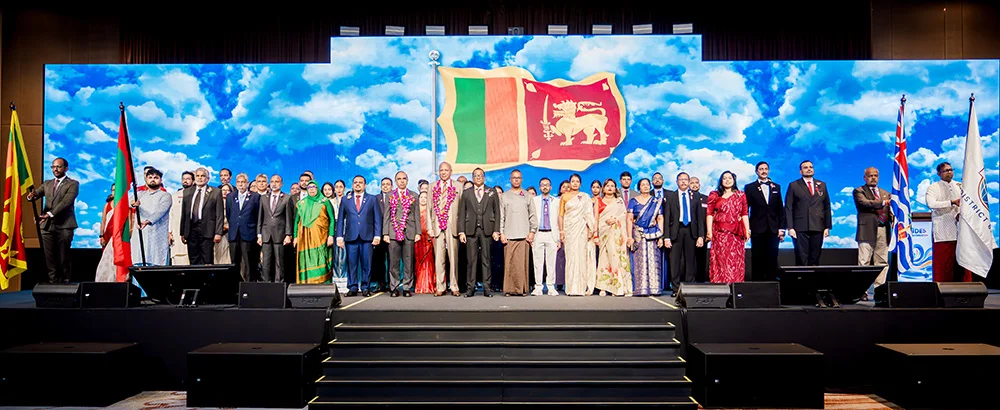
District 82 Toastmasters International concluded its flagship annual conference, Ovation 2026, on 16th and 17th May at Shangri-La Colombo. Themed “Tides of Transformation,” the two-day event brought together communicators, leaders, professionals, entrepreneurs, educators, and change-makers from across Sri Lanka and the wider region, marking what many attendees described as one of the most energising gatherings the district has seen in recent years.
Recognised as one of the highest-performing Toastmasters districts globally, District 82 represents Sri Lanka, the Maldives, and the British Indian Ocean Territory. Ovation 2026, chaired by DTM Mario de Silva, served as the district’s premier platform for celebrating excellence in communication, personal growth, and leadership. The conference was powered by Home Lands, with support from a strong lineup of corporate partners including Janatha Steels, Nestlé, Maliban Biscuit Manufactories, A J Medichem International, New Anthoney’s Farms, Jayes Investment, and Zorro Tapes.
The conference opened with a keynote from K R Ravindran, Past President of Rotary International, who spoke on character-driven leadership and the importance of integrity in today’s world. The programme continued with impactful sessions from Rasini Bandara on resilience and mental strength, and Michelle de Silva on authenticity and purposeful leadership. A panel discussion titled “The Human Touch in a Digital Age,” featuring Sanali Kaushalya, Mevan Peiris, and Sanjaya Elvitigala, moderated by DTM Gayathri Liyanage, explored what it means to lead with empathy in an increasingly technology-driven world.

INS Airavat makes port call in Colombo

Netanyahu downplays US-Israel rift after Trump confirms criticism

Sabalenka the latest French Open shock exit as Shnaider wins quarterfinal

Kusal Mendis, Pathum Nissanka, bowlers put Sri Lanka 1-0 up

Showers about 100 mm are likely at some places in the Western and Sabaragamuwa provinces and in Galle, Matara, Kandy and Nuwara-Eliya districts

BASL asks govt. to abandon plan to raise retirement ages of CA and SC judges

‘Dates have the highest sugar content to fight Coronavirus’

Sunday Island 27 December – Headlines

#SundayIsland 17th December – Headlines

Sunday Island – 28th March

Sunday Island Headlines – 21 March

Sunday Island – 21st February – Headlines
-

 News5 days ago
IMF urges Lanka not to meddle with exchange rate
-

 News2 days ago
Lankan duo emerge winners in Latin dance championship held in Blackpool, UK
-
 Business6 days ago
Sri Lanka’s construction industry losing ground while no one watches
-

 Business3 days ago
IMF’s unstated rate:Sri Lanka’s $695m loan costs about 5.33% per annum
-

 News5 days ago
State of emergency extended
-

 Features6 days ago
The Division Bell Mystery
-

 Features4 days ago
Are threats to Buddha Sasana external or from within?
-

 News3 days ago
UNP challenges NPP move to amend Vihara – Devalagam Act