
Latest News
Hybrid model agreed for Champions Trophy and ICC events from 2024-27

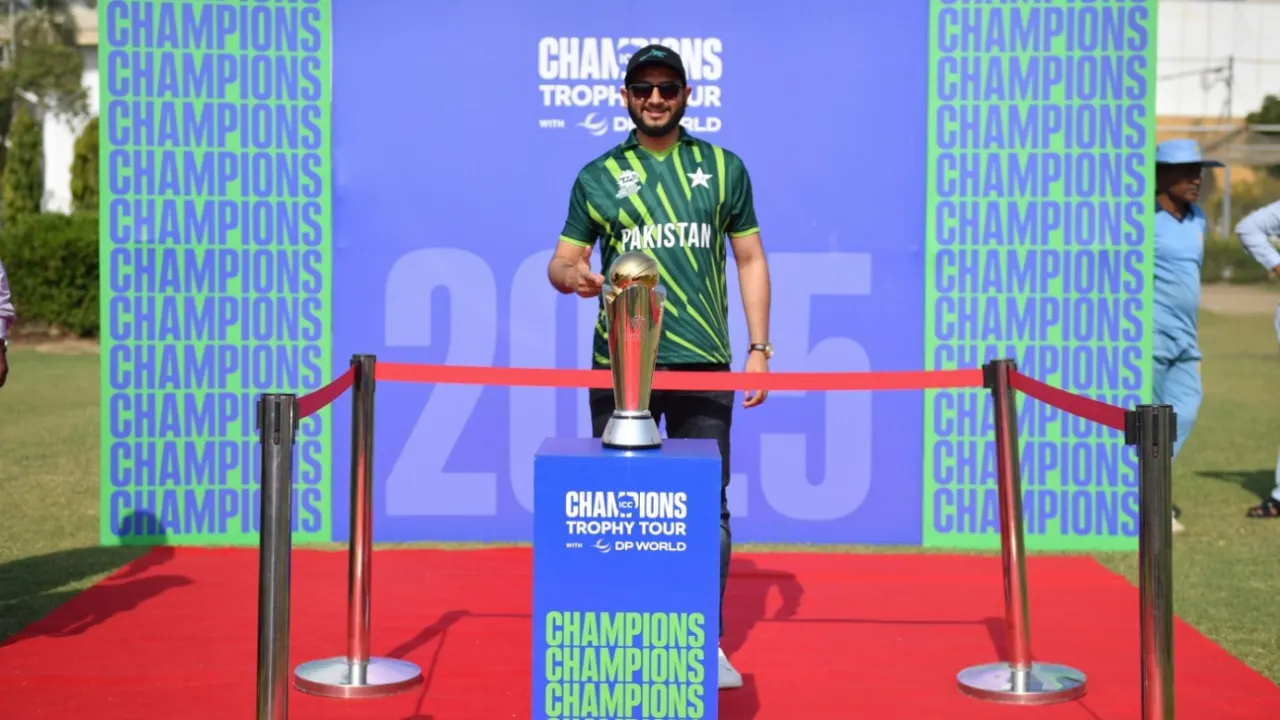
The ICC has finally reached a breakthrough in the 2025 Champions Trophy impasse, with a hybrid model agreed upon that will see India’s matches in the eight-team event taking place at a neutral venue. In return, Pakistan’s matches in ICC events hosted by India will also take place at a neutral venue.
ESPNcricinfo has seen a resolution with details of the agreement, which went through an ICC board vote. In the agreement, during the 2024-2027 event cycle, all matches involving India in an event hosted in Pakistan will be played at a neutral venue, and in return all matches involving Pakistan in an event hosted by India will be played at a neutral venue. In both instances, all matches are taken to include knockout games such as the semis and the final.
The agreement begins with the 2025 men’s Champions Trophy in Pakistan, and will apply to the 2025 women’s ODI World Cup in India, and the 2026 men’s T20 World Cup which is co-hosted by India and Sri Lanka. The last event offers an easy solution with Sri Lanka as co-host but it would mean that any game India and Pakistan are drawn to play – a group game or a knockout – will take place in Sri Lanka. It could also apply to the 2028 women’s T20 World Cup, the first tournament of the next events cycle and which has now been awarded to Pakistan.
The choice of neutral venue will be made by the tournament host and will need to be approved by the ICC. In the case of the Champions Trophy, the PCB has to propose a neutral venue within 24 hours of the resolution being passed. The UAE has been the frontrunner, though Sri Lanka has also been mentioned. The PCB will retain full hosting rights for the event.
The resolution also refers to the possibility of a triangular or quadrangular T20I tournament, involving India, Pakistan and another Full Member from Asia (and an Associate Asian nation if it is a quadrangular). This is thought to have been one of the points pushed for by the PCB in its negotiations during the impasse, although the ICC has only said that it will not object to such an event being staged and that similar neutral venue arrangements will apply as those in the ICC event model. The resolution also says that no ICC director will make a public announcement on the tri-series, which will be a matter solely between the BCCI and PCB.
The resolution will allow all parties to breathe a considerable sigh of relief, given how close it is to the start date of the Champions Trophy. The uncertainty has plagued the event from the moment the BCCI notified the ICC that it would not travel to Pakistan for the event more than a month ago.
That sparked off a period of intense negotiations between the PCB, BCCI and the ICC, and was complicated by the poor political relations between the two countries. The governments of both countries were involved in final approvals on the agreement but were also present through the process; Mohsin Naqvi, the PCB chair, is the interior minister in Pakistan’s government. Jay Shah, who was the BCCI secretary until December 1 when he took over as ICC chairman, is the son of India’s home minister, Amit Shah. The PCB had begun by insisting they would not adopt a hybrid model for the event but subsequently began to push for any solution to be more equitable and just in the longer term. In that sense, they will be happy to have secured an agreement on not playing matches in India in the next two ICC events in the country.


Aryna Sabalenka’s bid for a first French Open title has been left in tatters after she fell apart in a bizarre defeat by Russian 25th seed Diana Shnaider in the quarterfinals.
The world number one led by a set and a double break before exiting the tournament on Wednesday in a blaze of unforced errors, collapsing to a 3-6, 7-5, 6-0 loss in blustery conditions on Court Philippe-Chatrier.
Shnaider will face Polish qualifier Maja Chwalinska in the semifinals today [Thursday], with Marta Kostyuk or Mirra Andreeva awaiting the winner in Sunday’s final.
“Well honestly, I’m speechless, I’m super happy. Obviously tough conditions with the wind,” said the 22-year-old Shnaider after beating a top-10 player for only the second time in her career.
“First time playing Aryna, so definitely a lot of nerves, and I feel the first set was trying to adjust to her game.”
Sabalenka was the only Grand Slam champion left in either the men’s or women’s singles draws at Roland-Garros, but belied that status by making a whopping 57 unforced errors.
Shnaider was playing in her first major quarterfinal, but now finds herself a strong favourite to reach the final heading into her last-four tie against world number 114 and fellow left-hander Chwalinska.
“Definitely super happy I managed to finish on a good note rather than start on a good note. Definitely a special tournament for me here,” added the Russian.
“It’s going be a lefty battle, so I’m looking forward [to the semifinal].”
Sabalenka’s scarcely believable defeat was reminiscent of the way she threw away a strong position in last year’s final against Coco Gauff.
The Belarusian was playing in her 14th consecutive Grand Slam quarterfinal, but failed to become the first woman to make seven straight major semis since Serena Williams.

The top seed raced into a 5-1 lead and eventually sealed the opener on her third set point after initially failing to serve it out.
The second set followed a similar pattern at first, as Sabalenka moved 4-1 in front with a double break before throwing away her next service game.
Sabalenka became increasingly frustrated as she gifted Shnaider three break points to level at 4-4.
After some animated remonstrating with her box, she recomposed herself enough to hold.
But the 28-year-old’s game continued to come apart, as a string of unforced errors allowed Shnaider to break again and tie up the set at 5-5, with Sabalenka left to gesticulate wildly towards her coaching staff.
Shnaider could not believe her luck as Sabalenka dumped successive forehands into the bottom of the net to finish off the set and send the match into a decider.
The Russian grew in confidence and moved 2-0 up in the third as Sabalenka sprayed eight unforced errors around Chatrier in the space of two games.
Shnaider cruised to victory from there, fittingly securing a semifinal berth when Sabalenka knocked a routine backhand into the net on the third match point.
A stunned world number one was left to trudge off court after winning just 14 points in the deciding set.
[Aljazeera]
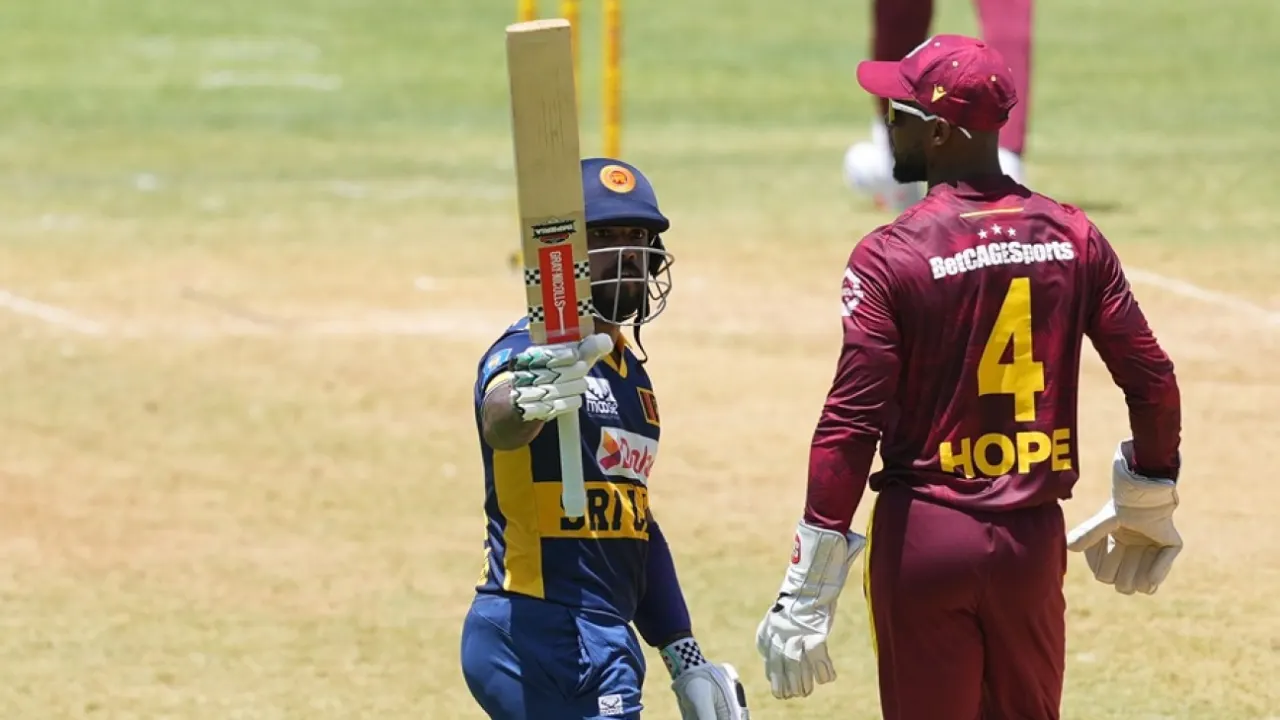
Kusal Mendis hit 72 off 62 to energise Sri Lanka after a slow start, while Pathum Nissanka, Janith Liyanage and Charith Asalanka produced important innings in Sri Lanka’s advance to 303 for 7. On a Sabina Park surface that took some turn, their total turned out to be 41 too many for West Indies, who began solidly enough, but were ultimately reined in by Sri Lanka’s spinners.
Maheesh Theekshana returned outstanding figures of 2 for 26 as West Indies’ batters frequently failed to to pick his variations, while Wanidu Hasaranga took 1 for 43. The only West Indies batter to cross fifty was captain Shai Hope, who hit 56 from 66 balls. But although there were other contributions, West Indies never managed to put a long partnership together. While Sri Lanka’s spinners squeezed West Indies, Dushmantha Chameera was the strike bowler, claiming 4 for 67 from his 10 overs.
After the teams exited briefly for bad light when West Indies were nine down in the 49th over, they returned to finish the match, the last wicket going down with four balls to spare. Sri Lanka now go 1-0 up in a three-match series.
Having won the toss in a day game, on a surface that had a green tinge to it, West Indies chose to bowl first and appeared at first to be prospering. Jayden Seales dismissed Sri Lanka’s new opener Kamindu Mendis in the the seventh over, and conceded no more than 32 in the powerplay, as Nissanka played with uncharacteristic caution.
Kusal ramped up the scoring soon after arriving at the crease, however. He took an immediate liking to Gudakesh Motie, hitting four sixes down the ground off him in the space of three overs. In the last of those overs – the 20th of the innings – Kusal hit two sixes and a four, as Sri Lanka plundered 18 in total. Motie never bowled again in the innings, with Roston Chase delivering ten tidy overs for two wickets instead. Kusal motored to a 42-ball half century, and had looked good to push on when he attempted to swipe a Matthew Forde full toss to leg, and somehow top-edged it to short fine leg. The 136-run second-wicket stand with Nissanka had put Sri Lanka firmly on track for a score in excess of 300.
Nissanka seemed to struggle by comparison. He was timing the ball poorly by his own standards, as West Indies’ bowlers discovered the Kingston track rewarded slower bowling. But although he had been dropped first ball at cover by Keacy Carty off the bowling of Seales, Nissanka played a largely sensible innings, running hard between the wickets, and finding what boundaries he could, particularly behind square on the leg side. It took him 71 balls to get to his half century, and he was striking at less than 80 when he was dismissed by Chase (via an unusual pad-bat catch to wicketkeeper Hope) for 79.
The hard-running Asalanka and the innovative Liyanage were then on hand to provide some heft and urgency to the final third of Sri Lanka’s innings. Liyanage produced the better of these knocks, hitting 44 not out off 29. Asalanka made 45 off 44. The two put on 64 for the fifth wicket.
West Indies gave themselves a shot of chasing down 304, though it would have been a ground record if they had. They openers had them rocketing to 50 for no loss after six overs, before an excellent pick up and throw from Liyanage ended John Campbell’s innings. West Indies’ other opener Justin Greaves would be out before the powerplay ended too, bowled by Theekshana who pinged his leg stump after Greaves had backed away. And still, while Hope was at the crease, there was a chance West Indies could make a charge at the total.
Ultimately they just lost too many wickets through the middle overs period that Sri Lanka’s batters had dominated. Keacy Carty was caught brilliantly at short midwicket by a diving Kamindu. Hope himself was fooled by a Chameera slower ball and spooned up a simple catch to backward point. From 167 for 5, and the required rate pushing seven, West Indies were always going to struggle. Though there were moments of resistance from the lower order, they folded eventually.
But it is their bowling that will worry West Indies most after this match. They lacked penetration in the middle overs, and the seamers were also too indisciplined, bowling 12 wides, while also straying too frequently into the pads. Although West Indies had four specialist bowlers, allrounder Chase was likely their best bowler on the day.
SCORES:
Sri Lanka 303 for 7 in 50 overs (Pathum Nissanka 79, Kusal Mendis 72, Charith Asalanka 45, Janith Liyanage 44*; Jayden Seals 2-67, Matthew Forde 2-44, Roston Chase 2-47) beat West Indies 262 in 49.2 overs ( Justin Greaves 45, Shai Hope 56, Roston Chase 33; Dushmantha Chameera 4-67, Asitha Fernando 1-59, Maheesh Theekshana 2-26, Wanidu Hasaranga 1-43, Charith Asalanka 1-06) by 41 runs
[Cricinfo]
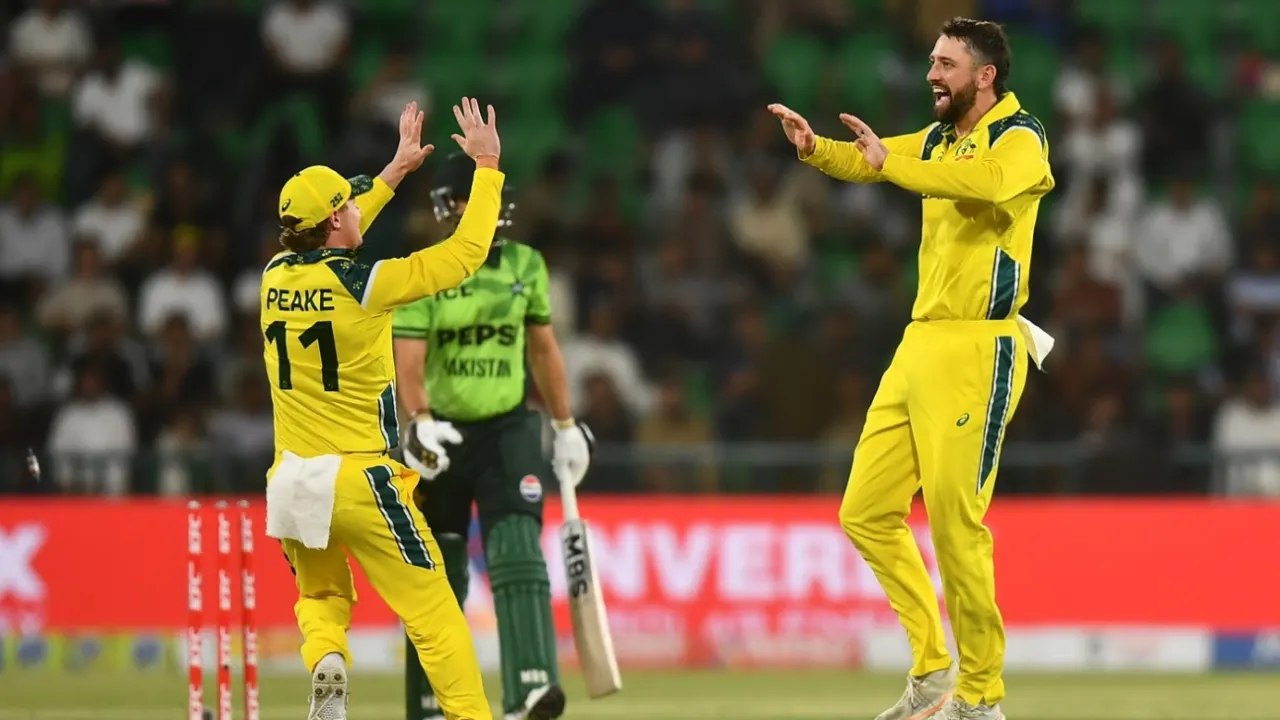
Quite what either side will ultimately take from this ODI series is debatable, but a patched-up Australia side can be proud of how they adapted to earn a decider against Pakistan in Lahore after being outplayed in the opening match. As a number of ESPNcricinfo feedbackers pointed out, it’s been something of a throwback with a 1990s vibe around the scoring rates. In the first match, 200 wasn’t enough for Australia, but in the second 231 certainly was.
Josh Inglis and Cameron Green put in the hard yards during the first half of the innings – it was especially hard work for Green, who battled for rhythm, but there was satisfaction in his gritty fifty which he acknowledged with a somewhat relieved punch of the air – and their innings allowed Matt Renshaw and latterly 19-year-old Oli Peake to play with a little more freedom.
Renshaw’s form has been especially eye-catching, extending a strong introduction to Australia’s white-ball set-up since late last year, while Peake’s maturity was on show when he did not panic at being 6 off 15 balls and managed to dispatch vital late sixes.
With the ball, Nathan Ellis was ideal for the slow, grippy surface and produced a career-best performance. The spinners all played their role, with Matt Short’s three wickets fitting into the bonus category; his delivery to slide past Salman Agha’s outside edge was an excellent piece of bowling.
Ahead of the match, Pakistan coach Mike Hesson defended the home surfaces the team is playing on before being hoisted by their own petard. Arafat Minhas looks a very exciting find – with bat and ball – while Ghazi Ghori has shown plenty of promise. But a lot of questions remain. Shadab Khan continued to labour with the ball, but his 71 kept Pakistan in the game although he may in the longer run have muddied the waters.
Pakistan have only lost one home bilateral ODI series since 2015nbut, after the recent loss in Bangladesh, a defeat in the decider on Thursday would add to the uncertainty around their game as a whole.
Sahibzada Farhan has forged his reputation in T20s – domestically and internationally – but he’s found life tougher in the early stages of his ODI career. He has made three starts in five innings but not been able to convert; in the first game of this series he gave it away when he picked out long-off. In the second match, he top-edged a sweep in the second over, having already lost his opening partner, and it left Pakistan on the back foot.
Matt Renshaw has been the most fluent batter on show in the first two matches in tough conditions. The left-hand batter has continued his impressive white-ball form with smart placement, good running and putting away the bad ball. His only blip has been falling on both occasions when Australia needed someone to close out the innings, although the two dismissals were against good deliveries. There is argument that he may be worth a go higher up the order.
Pakistan have been unchanged so far and Shadab’s runs will likely keep him in the XI given the balance he brings to the lower order. There is a clamour for Sufyan Moqim to play but it’s tricky to see how he fits in unless they drop a batter or only play one quick.
Pakistan (probable) Sahibzada Farhan, Maaz Sadaqat, Babar Azam, Ghazi Ghouri (wk), Arafat Minhas, Salman Agha, Abdul Samad, Shadab Khan, Shaheen Afridi (capt), Haris Rauf, Abrar Ahmed
Australia’s initial thoughts on this series may have been to give most players an outing, but their balance for the second match served them well so Liam Scott will likely have to wait for his debut. Labuschagne has missed out twice in the series – extending a lean time in ODIs – and is under increasing pressure but may cling onto his place for now. There could be consideration given to elevating Renshaw given his fine form.
Australia (probable) Alex Carey, Matt Short, Josh Inglis (capt & wk), Marnus Labuschagne, Cameron Green, Matt Renshaw, Oli Peake, Matt Kuhnemann, Nathan Ellis, Adam Zampa, Tanveer Sangha

INS Airavat makes port call in Colombo

Netanyahu downplays US-Israel rift after Trump confirms criticism

Sabalenka the latest French Open shock exit as Shnaider wins quarterfinal

Kusal Mendis, Pathum Nissanka, bowlers put Sri Lanka 1-0 up

Showers about 100 mm are likely at some places in the Western and Sabaragamuwa provinces and in Galle, Matara, Kandy and Nuwara-Eliya districts

BASL asks govt. to abandon plan to raise retirement ages of CA and SC judges

‘Dates have the highest sugar content to fight Coronavirus’

Sunday Island 27 December – Headlines

#SundayIsland 17th December – Headlines

Sunday Island – 28th March

Sunday Island Headlines – 21 March

Sunday Island – 21st February – Headlines
-

 News5 days ago
IMF urges Lanka not to meddle with exchange rate
-

 News2 days ago
Lankan duo emerge winners in Latin dance championship held in Blackpool, UK
-
 Business6 days ago
Sri Lanka’s construction industry losing ground while no one watches
-

 Business3 days ago
IMF’s unstated rate:Sri Lanka’s $695m loan costs about 5.33% per annum
-
 News5 days ago
State of emergency extended
-

 Features6 days ago
The Division Bell Mystery
-

 Features4 days ago
Are threats to Buddha Sasana external or from within?
-

 News3 days ago
UNP challenges NPP move to amend Vihara – Devalagam Act