
Sports
How Sri Lanka fumbled their Champions Trophy spot

by Rex Clementine
Champions Trophy, one of cricket’s biggest showpiece events is underway in Pakistan and Dubai, but conspicuous by their absence are Sri Lanka – a team that once punched above their weight at ICC tournaments. For the first time since Anura Tennekoon led Sri Lanka to their maiden ICC event, the 1975 Prudential World Cup in England, the men’s team has failed to make the cut.
How did Sri Lanka end up missing out on a tournament of the magnitude of the Champions Trophy? To be clear, this is not a witch hunt to pin the blame on individuals. Rather, it’s a post-mortem to identify where things went off the rails and, more importantly, how to avoid future embarrassments of this scale.
The warning signs had been flashing like a malfunctioning scoreboard for a while. Sri Lanka’s steady slide in the rankings due to poor bilateral performances meant they had to take the scenic route through qualifiers. Ultimately, their ninth-place finish in the 2023 World Cup in India proved to be the death knell for their Champions Trophy hopes. Only the top eight teams went through and Sri Lanka missed out.
Both Sri Lanka and Bangladesh finished with four points apiece, but Bangladesh sneaked through by the barest of margins – thanks to a slightly superior Net Run Rate. This was a case of failing to keep an eye on the fine print, a classic example of losing a game in the dressing room before even stepping onto the field.
From the outset, Sri Lanka’s preparation for the World Cup resembled a game plan scribbled on a napkin – unclear and chaotic. The selection committee, after initially deciding to replace Dasun Shanaka as captain, made a dramatic U-turn at the eleventh hour. Shanaka, in a cruel twist of fate, lasted just two games before being sidelined by injury, and the captaincy baton was hastily passed to Kusal Mendis. Burdened with leadership responsibilities, Mendis lost his golden touch with the bat and Sri Lanka lost their direction.
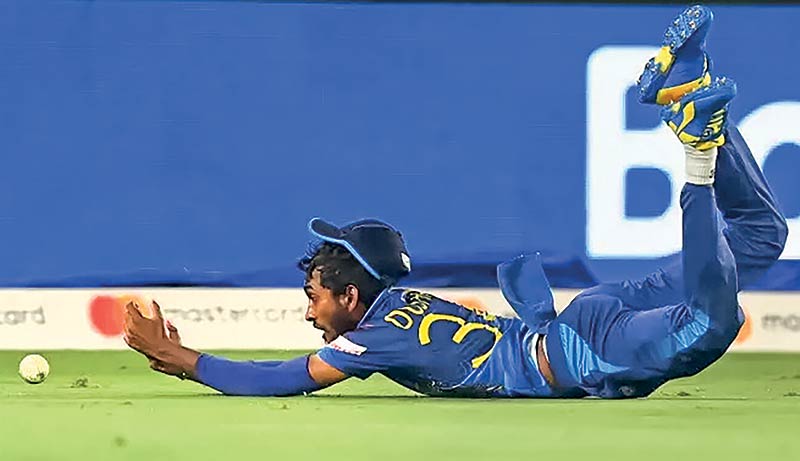
Fielding was Sri Lanka’s Achilles’ heel and the team management’s approach to fixing it was akin to putting a band-aid on a fractured leg. They hired a foreign fielding coach to create an illusion of progress, but the reality was starkly different. Sri Lanka finished the tournament as the worst fielding side – proof that simply ticking boxes doesn’t win matches.
Take the match against Pakistan in Hyderabad. After posting a formidable 344, Sri Lanka should have won easily. Instead, butter-fingered fielding gifted Pakistan reprieves, and they chased down the target with ten balls to spare. The lapses in the field turned what should have been a regulation win into an agonizing defeat.
Then there was the curious case of Sri Lanka’s inability to bat out 50 overs consistently. In a desperate bid to plug the hole, the selectors turned to Dimuth Karunaratne, hoping his Test match resilience would steady the ship. While the idea had merit – given Karunaratne’s solid showing in the 2019 World Cup – he was inexplicably underutilized, playing just two matches. The end result? The problem persisted, and the batting continued to implode under pressure.
Even amid the wreckage, there were glimpses of brilliance. Sri Lanka dismantled defending champions England in emphatic fashion, thanks largely to Lahiru Kumara breathing fire with the ball. He sent Jos Buttler and Ben Stokes packing, putting Sri Lanka in the driver’s seat. But just when he looked like being the X-factor, Kumara was sent home. The official word was an injury, but murmurs in cricketing circles suggested otherwise. Whatever the real reason, losing a strike bowler mid-tournament only added to Sri Lanka’s woes.
But here’s the good news – Sri Lanka has begun to turn the tide. Currently ranked No. 5 in ODIs, the team has clawed their way back through sheer grit, a clearer strategy, and, most importantly, a no-nonsense approach to discipline. Indiscipline, which once festered unchecked, is no longer tolerated. And it’s paying dividends.
Captaincy, long a poisoned chalice, has now been handed to Charith Asalanka, who is marshalling his troops with composure. The team is slowly but surely putting the heartbreak of missing the Champions Trophy behind them and is now focused on regaining lost glory.
Since their World Cup exit, Sri Lanka have beaten both India and Australia in bilateral ODI series – no mean feat, considering these two sides were finalists in the last World Cup. That’s quite the statement of intent. Adding to the feel-good factor, Maheesh Theekshana has climbed to the No. 1 spot in the ICC ODI bowler rankings, becoming only the second Sri Lankan after Nuwan Kulasekara to achieve the feat.
Off the field, crucial reforms have been implemented to ensure Sri Lankan cricket regains its competitive edge. The domestic structure, once bloated and diluted, is finally being streamlined. The number of first-class teams has been reduced to 14, meaning a powerhouse like SSC will temporarily lose their first-class status after finishing at the bottom. It’s a bitter pill to swallow, but credit to the authorities for having the courage to make tough calls. Next year, the number will be cut further to 12, making the tournament more competitive and weeding out mediocrity.
Additionally, the schools’ first eleven knockout matches have been extended from two to three days, and even Big Matches will now be played over three days, with Sri Lanka Cricket (SLC) footing the bill. This move is aimed at nurturing players who can bat long and take games deep – a skill set that has been sorely lacking in recent years.
Meanwhile, Sri Lanka ‘A’ and the Under-19 teams are getting regular exposure, ensuring a robust pipeline of talent for the future.
Sri Lankan cricket has endured its fair share of setbacks, but the signs are encouraging. The team has taken its knocks, learned its lessons, and is charting a course back to the top. There’s still plenty of work to be done, but if recent performances are anything to go by, the dark days may finally be behind them.
As any seasoned cricketer will tell you, form is temporary, but class is permanent. Sri Lanka may have hit a rough patch, but the fire still burns.




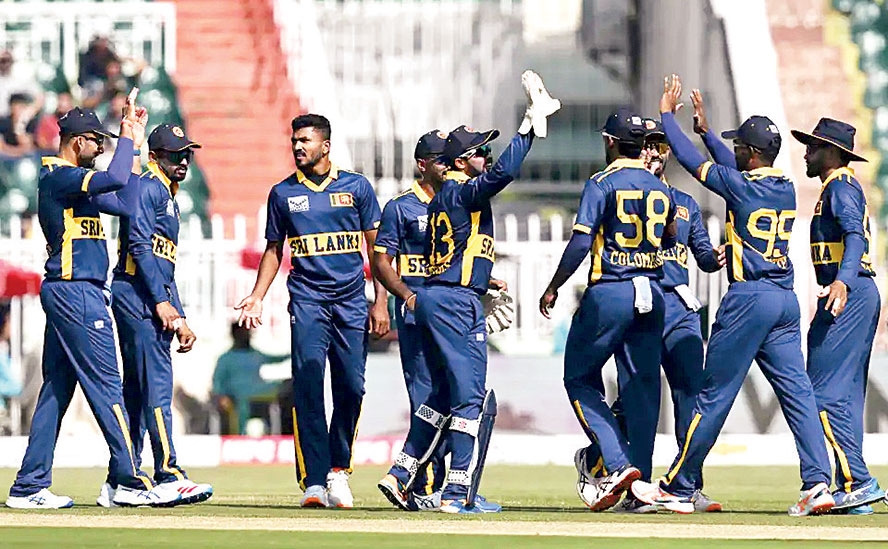
Eshan Malinga returned career best figures of four for 46, but his impressive spell could not prevent Pakistan from breaching the 300 run mark in the curtain-raiser of the ODI tri-nation series in Rawalpindi on Sunday.
Pakistan were bowled out for 305, with former captain Salman Ali Agha leading the charge with his fourth ODI hundred.
Agha struck a fluent 107 off 90 deliveries, peppering the boundary with ten fours and a six before falling to Asitha Fernando. The Sri Lankan seamer was equally impressive, returning tidy figures of three for 39.
Agha featured in a 97 run partnership with Hasan Nawaz and at 215 for four with 13 overs remaining, Pakistan appeared poised for a formidable total. However, Sri Lanka’s bowlers clawed their way back into the contest, applying the brakes just when the hosts threatened to run away with the game.
On a surface tailor made for batting, Sri Lanka’s late fightback could prove crucial, with the visitors fancying their chances of chasing down the target.
Left-arm seamer Dilshan Madushanka finished with two for 67, although his figures flattered him somewhat. He was guilty of straying onto the pads far too often, offering the Pakistan batters several scoring opportunities.
Sri Lanka went into the contest with just four specialist bowlers, leaving the part timers to shoulder a fair share of the workload. To their credit, the makeshift attack rose to the occasion, sharing ten overs between three bowlers without allowing Pakistan to completely dictate terms.
Dasun Shanaka did the lion’s share of the work, sending down seven overs, while Sahan Arachchige and Kamindu Mendis chipped in with the remaining three.
Sri Lanka also welcomed back top order batter Avishka Fernando, who returned to the ODI fold after spending several years on the sidelines.
England are the third team in the tri-nation competition, which serves as valuable preparation for next year’s World Cup.
The opening three matches will be played in Rawalpindi before the tournament shifts to Lahore for the remaining fixtures, including the final.
Sri Lanka are in the midst of a marathon 50 day tour of Pakistan. Having already completed a three-match T20I series, they will turn their attention to the tri-nation tournament before playing a First Class warm-up fixture followed by two Tests.
19 Division I – Tier ‘A’ Cricket
by Reemus Fernando
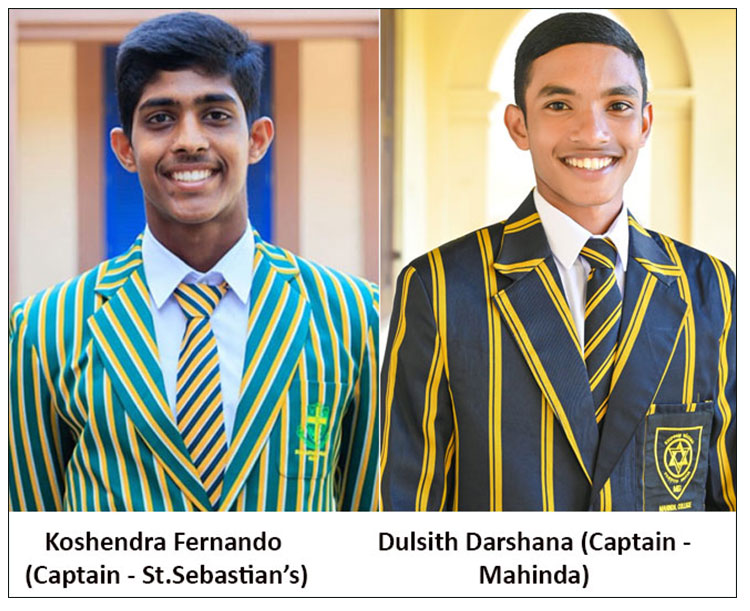
The top eight teams begin their battle for the Under 19 Division I Tier ‘A’ limited-overs title today, when Mahinda College, Galle, take on St. Sebastian’s College, Moratuwa, in the first quarter-final at Dombagoda.
Led by Dulsith Dharshana, Mahinda qualified for the knockout stage with wins over St. Anthony’s College, Katugastota (by five wickets), Royal College, Colombo (by six wickets) and Lumbini (by ten wickets). Their only defeat came against St. Peter’s College, Bambalapitiya, the only side to top 200 against them. In their other matches, Mahinda’s bowlers kept opponents to low totals.
That bowling unit, spearheaded by left-arm paceman Sadew Nethmina, appears to have peaked ahead of the crucial clash. They bundled Lumbini out for 40 in their last match, with Nethmina and Vishmitha Sathsara sharing nine wickets between them.
St. Sebastian’s reached the knockout stage on the back of wins over Maris Stella College, Negombo, and D. S. Senanayake College, Colombo. Their match against Sri Sumangala College, Panadura, ended without a result because of rain, while they lost by two wickets to Richmond, the eventual group champions.
St. Sebastian’s boast a strong batting line-up, with Hirusha Perera, Navinu Fernando, Lashen Fernando, Thivanka Fernando and Meshone Ferdinando all making notable contributions in the group stage. Skipper Koshendra Fernando is expected to lead the bowling attack with his spin, supported by Adeesha Lakshan, Lashen Fernando and Risinu Prabesh.
Teams
Mahinda (from):
Dulsith Darshana (Captain), Sadew Nethmina (Vice Captain), Randula Mabarana, Manitha Rajapaksha, Sehas Ashinsa, Kaveesha Githmal, Thiyon Helika, Kavindu Nimsata, Gesandu Bisas, Vishmitha Sathsara, Buddhima Tharupathi, Naviru Nishitha, Nihindu Sesitha, Anuga Palliyaguru, Senuja Vehan, Kevin Geemitha, Bakshara Jayarathne.
Officials: Denuwan Rajakaruna (Head Coach), Sandaru Nethmina (Asst. Coach), Y. Nishantha Kumara (Master in Charge)
St. Sebastian’s (from): Koshendra Fernando (Captain), Meshone Ferdinando, Nisila Dimath, Navinu Fernando, Hirusha Lochana, Lashen Fernando, Thejan Bandara, Chamath Wellalage, Risinu Prabesh, Sanoj Perera, Deneth Keshara, Adeesha Lakshan, Dilena Fernando, Thiwanka Fernando, Shenas Hashein, Pathiv Vehan, Dineepa Wickramsooriya.
Officials:
Lahiru Kanishka (Head coach), Nishantha Fernando (Asst. Coach), Sandaru Tharusha Perera (Master in Charge)
The other three quarter finals will be played on Tuesday as per the below schedule.
Mahanama Colombo V St. Joseph’s Darley Road at Mattegoda
Nalanda Colombo V St. Anthony’s Katugastota at Campbell Place
Richmond Galle V Wesley Colombo at Weeraketiya
Several big names fell at the first hurdle, including last year’s finalists Royal College, Colombo, as well as S. Thomas’ College, Mount Lavinia, Trinity College, Kandy, and St. Peter’s College, Bambalapitiya. Royal and St. Peter’s were in the same group and finished behind Mahinda and St. Anthony’s. S. Thomas’ were in Group ‘A’, where Mahanama and Wesley edged out the rest to book their places.
by Reemus Fernando
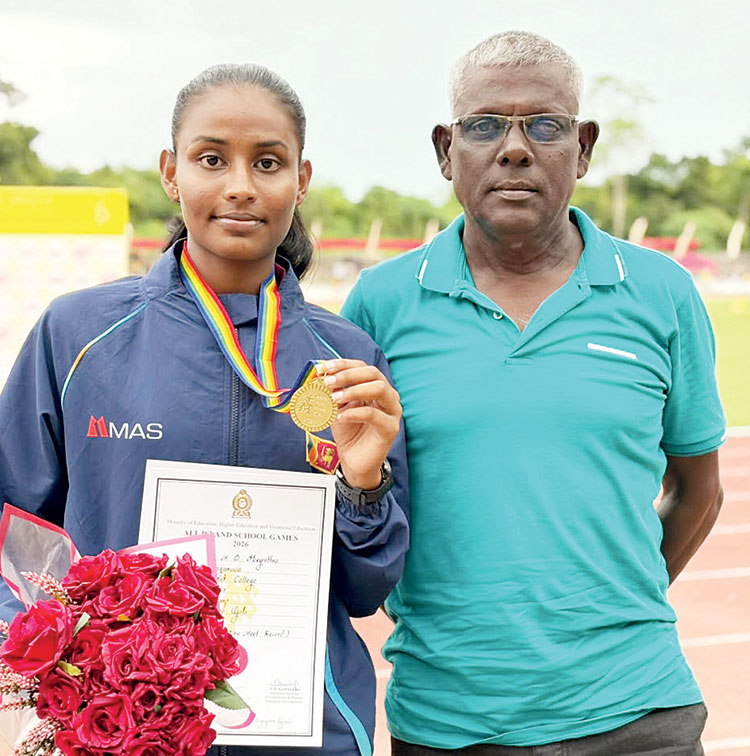
Asian Junior Championship medallist Mihinsa Dewmini Abeyratne broke a ten-year-old meet record to win the Under 20 high jump at the All Island Schools Games Athletics Championship at Diyagama on Sunday.
The President’s College, Embilipitiya, athlete cleared 1.75 metres, equalling her personal best, to erase the record of Poornima Gunarathne of Leeds International, Panadura. Gunarathne’s mark of 1.74 metres had stood since 2016.
Trained by retired sports officer Gamini Dias, Mihinsa was expected to achieve something special this season after setting a personal best of 1.75 metres at the same venue earlier this year. She followed that with a bronze medal at the Asian Junior Championship in Hong Kong.
Hers was one of six meet records to fall by the time this report was filed on day three of the meet.
In the girls’ category, Lyceum International School, Wattala, and Ave Maria Convent, Negombo, set new marks in relay events. In a closely contested Under 14 4×100 metres final, Lyceum clocked 51.35 seconds to erase Musaeus College’s 2019 record. Ladies’ College, who finished second in 51.52, also bettered the previous mark.
Ave Maria Convent edged Nimala Maria Balika in another tight finish to win the Under 16 girls’ 4×100 metres in a new meet record of 49.49 seconds. Nimala Maria Balika also bettered the old record.
In the boys’ category, Sadeesh Denuwan of Halmillaketiya MV stole the limelight with a new meet record of 11.22 seconds in the Under 14 80 metres hurdles. Maneesha Samarasinghe of Lyceum International, Wattala, set a new record of 13.09 seconds in the Under 16 100 metres hurdles.
Lyceum International, Wattala, also set a new meet record of 3:13.76 in the Under 20 4×400 metres relay.

Showers or thundershowers will occur in most parts of the island after 1.00 p.m

CTU: Teacher shortage casts doubt on govt.’s education reforms

Norochcholai to remain offline for several days after blackout

President links businessman held with arms to politicians

CID probe sought into tusker’s death amid fears of elephant-killing syndicate

Bill to allow remote witness testimony in courts

‘Dates have the highest sugar content to fight Coronavirus’

Sunday Island 27 December – Headlines

#SundayIsland 17th December – Headlines

Sunday Island – 28th March

Sunday Island Headlines – 21 March

Sunday Island – 21st February – Headlines
-

 Latest News6 days ago
Nissanka’s return headlines Sri Lanka’s Test squad against Pakistan
-

 News5 days ago
Sri Lanka, India caught in US-Iran ship crisis
-
 Latest News6 days ago
Imran Khan’s PTI braces to fight federal takeover of Khyber Pakhtunkhwa
-

 Latest News5 days ago
Missiles intercepted near Riyadh after Saudi coalition hits Yemen fuel depot
-

 Latest News5 days ago
Kusal Mendis’ unbeaten 87 hands Sri Lanka consolation win
-
 News6 days ago
Mahinda and Shiranthi hospitalised
-

 News2 days ago
Asgiri Mahanayake calls for immediate release of Gnanasara Thera
-

 News6 days ago
Presidential pardons: Govt. studying Justice Thurairaja’s recommendations – Minister