
News
How an Intruder in the General Assembly was Upstaged by a Foreign Minister

By Thalif Deen
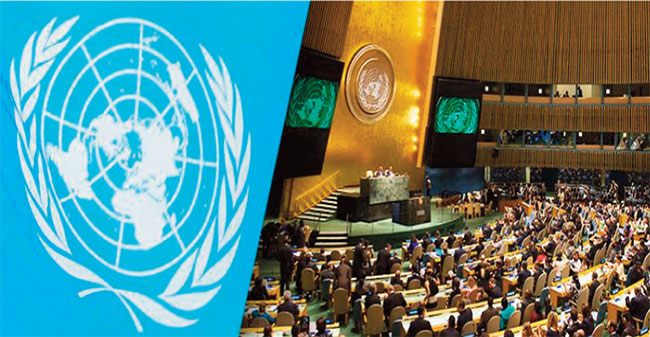
UNITED NATIONS – Sri Lanka had its fair share of Foreign Ministers who made their annual visits to the UN during the General Assembly sessions in September when the world body traditionally hosted over 150 world leaders, including heads of state and heads of government.
Sri Lanka’s Foreign Minister ACS Hameed had one of his memorable moments when an Eelam activist and lawyer from London, Krishna Vaikunthavasan, surreptitiously gate-crashed into the UN and tried to upstage Hameed by walking onto the podium of the General Assembly hall and momentarily took the speaker’s slot.
The incident, perhaps a rarity in the history of the UN, saw the intruder unleashing a diatribe against a member state accusing it of genocide and lambasting the government for committing war crimes against the Tamils fighting for a separate state in northern Sri Lanka.
When the president of the Assembly realized he had an interloper on his hands, he cut off the mike and summoned security guards who bodily ejected him from the hall and banned him from the UN premises. And as Hameed walked up to the podium, there was pin drop silence in the Assembly Hall.
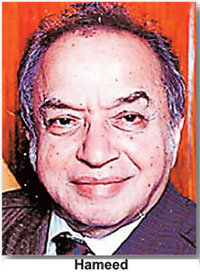 As a member of the Sri Lanka delegation at that time, I was seated behind Hameed. But the unflappable Hameed, unprompted by any of his delegates, produced a riveting punchline: “Mr President”, he said “I want to thank the previous speaker for keeping his speech short,” he said, as the Assembly, known to suffer longwinded speeches, broke into peals of laughter. The intruder was in effect upstaged by the Foreign Minister.
Hameed’s canny sense of humor also went far beyond the confines of the UN. When he came under attack for staying in five-star luxury hotels during the UN General Assembly sessions in New York, he fired back at the Opposition MP in Parliament with a rejoinder dripping with sarcasm: “Where do you want me to stay when I travel overseas as the Foreign Minister?”, he asked. “in thosai boutiques?”
To put it in perspective, that would be like rooming at the Ambal Café in Hulftsdorf or Saraswathy Lodge in Bambalapitya. Or perhaps Saravana Bhavan in New York’s Lexington Avenue.
Hameed routinely pitched his tent either at New York’s Hyatt Regency, the Intercontinental Barclay, the Waldorf Astoria or the Palace Hotel—and he did it in style, like scores of other high-flying Foreign Ministers arriving for the UN sessions. A globe-trotter of near-biblical proportions, he was probably in Colombo only on transit, in between catching overseas flights.
Hameed was an unforgettable character in his heyday—enjoying every single moment of his tenure as Foreign Minister beginning 1977. And more so, because President JR Jayewardene (JRJ) never addressed the UN nor stepped into the UN premises (even while he stayed at the Waldorf Astoria in New York during his state visit to Washington DC in April 1983.) The reasons for shunning the UN remains a mystery.
With Sri Lanka holding the chairmanship of the Non-Aligned Movement (NAM) during 1976-1979, Hameed was constantly called upon to preside over some of the thorniest international issues of the mid-1970s: which of the two Cambodian factions had the rightful claim to the seat at the UN (the General Assembly session that day was held up for over four hours as he negotiated behind closed doors to help resolve the dispute, with backing from the UN’s Legal Adviser)? Was it Kampuchea under the Khmer Rouge regime (1975-1979)?
And, in another dispute, should Egypt, which had signed the Camp David peace agreement with Israel in 1978, be driven out of NAM? There were also sharp divisions in NAM over the disputed territory of Western Sahara in the Maghreb region of North Africa and the split over the Soviet invasion of Afghanistan (1979-1989).
 As he sat in judgement, Hameed’s closest advisers during the General Assembly sessions included two outstanding career diplomats, Jayantha Dhanapala and Nihal Rodrigo, along with Ernest Corea, Sri Lanka’s High Commissioner to Canada and later Ambassador to the United States.
Ernest was one of Hameed’s longstanding friends, having known him long before he became Foreign Minister, and was the only Sri Lankan Ambassador who addressed him by his first name: Shahul, throwing protocol to the winds.
As Ernest once told me : “Shahul faced many challenges in his life – one of them was a lack of physical height – but his biggest challenge was managing the Foreign Affairs portfolio for the Sri Lanka government. To the best of my recollection, he was the first Foreign Minister to hold that portfolio without the direct involvement of the Prime Minister’s/President’s office”. Previously, Defence and External Affairs were integrated into a single portfolio.
When President Jayewardene unhitched them, there was a fairly widespread perception, particularly in Colombo’s foreign policy establishment, that the whole business of foreign affairs was being downgraded. “Shahul proved them wrong”, said Ernest.
As part of the landscape in the UN Delegate’s Lounge, Hameed was seen holding court, even as he kept chomping at his cigar, probably the best from Cuba, which he picked up in Havana during his frequent trips to the Cuban capital, before Sri Lanka handed over the NAM chairmanship to Fidel Castro in 1979.
At home, Hameed had a tough task steering the NAM ship among sceptics like Gamini Dissanayake and Lalith Athulathmudali, and of course, JRJ himself. Still, Hameed showed remarkable patience and persistence.
Perhaps his most joyous moment as Foreign Minister was when JRJ told Fidel Castro at the Havana summit that it was Hameed who enabled Sri Lanka to hand over NAM’s leadership to Cuba “untarnished and unaltered.”
This put to rest the speculation even within his own party that his days as Foreign Minister would be short. “The fact is that JRJ realized as few others did that Shahul had an intuitive feel for international relations. Those who had the privilege of working with him understood this. He had his faults. Who doesn’t?,” asked Ernest.
“I am not going to be counted among his critics who might want to let fly at him now that he is no longer with us. Rather, I would like to remind those of us who worked with him and others who observed him at work that he was outstanding in several areas”.
First, he was tri-lingual: in English, Sinhala and Tamil. This gave him a remarkable reputation among his peers. Second, he had a phenomenal memory and could at precisely the correct moment during a drafting session pull out from the recesses of his mind a word, a phrase or other salient reference that added substance and depth to a public policy statement. He was also insistent, as some of his colleagues were not, that a solid Sri Lanka/India relationship was an essential component of foreign policy, said Ernest.
“One more point needs to be stressed and this is very personal. He was an excellent extempore speaker. He could intervene in a debate to deal with a complex issue for which most of us were unprepared as if he was saying to himself: “Here’s that loose ball I was waiting for,” declared Ernest.
Armed with self-deprecating humour, Hameed funded the publication of a collection of cartoons that lampooned him. He particularly relished a cartoon which showed him sitting before a huge globe with the caption: “Let me see – what are the countries I have still not visited.” His initials ACS were spelled out as “All Countries Seen.”
An equally lovable cartoon in November 1978 showed a world-weary Hameed arriving at the Katunayake airport and innocently asking a passer-by: “My dear man, could you show me the way to Harispattuwa?,” his electorate in his hometown of Akurana, a majority Sinhala Buddhist electorate. And to have been elected over a very long period was a tribute to Hameed’s political relationship among his voters.
The cartoons were sketches from some of Sri Lanka’s celebrated artistes of the 1970s, including W.R.Wijesoma, Jiffrey Yoonoos, Mark Gerreyn and Amita Abayesekera.”One of the greatest gifts is the ability to laugh at oneself,” said Wijesoma in an introduction to the book titled “Mr Foreign Minister”, ” Mr Hameed is doing just that, and I believe he is having the last laugh.”
Oscar Wilde once made the distinction between two forms of torture: the rack and the Press. Ask any politician, said Hameed, and he would opt for the grisly torture chamber over the editorial offices and the news desks in Colombo.
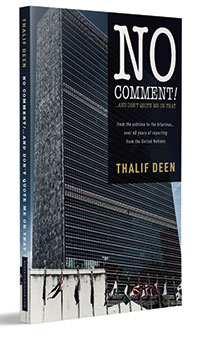
This article is adapted from a newly-released book on the United Nations titled “No Comment—and Don’t Quote Me on that” authored by Thalif Deen. The book is available on Amazon and at the Viitha Yapa bookshop.


…Urges President not to undermine public confidence in independence of judiciary
The Colombo Law Society has urged President Anura Kumara Dissanayake not to proceed with any constitutional amendment to extend the retirement age of Supreme Court and Court of Appeal judges, warning that such a move could undermine public confidence in the independence of the judiciary.
In a letter dated July 2, 2026, the Society said its Executive Committee had unanimously resolved to convey its concerns following reports of a proposal to increase the retirement age of judges of the superior courts.
The Society said any amendment affecting the tenure of sitting judges should be approached with caution, adding that public confidence in the independence of the judiciary must be safeguarded.
Full text of the letter: The Executive Committee of the Colombo Law Society, at its duly convened meeting held on 25 June 2026, deliberated extensively on the reported proposal to increase the retirement age of Judges of the Court of Appeal and the Supreme Court.
Having carefully considered the matter, the Executive Committee unanimously resolved to convey its concerns to Your Excellency and to express its support for the position taken by the Bar Association of Sri Lanka in its letter addressed to Your Excellency, dated 25 May, 2026.
The Colombo Law Society recognizes and appreciates the invaluable contribution made by members of the higher judiciary to the administration of justice in Sri Lanka. However, we respectfully take the view that any alteration to the constitutionally established retirement age of Superior Court Judges must be approached with the utmost caution and only after broad consultation with all relevant stakeholders.
The existing retirement ages of Judges of the Court of Appeal and the Supreme Court have remained unchanged since the promulgation of the 1978 Constitution. Any departure from this long-standing constitutional framework, particularly where it affects serving judges, may give rise to public concern and perceptions that could undermine confidence in the independence and impartiality of the judiciary.
The independence of the judiciary is one of the cornerstones of the Rule of Law and democratic governance. Equally important is the public perception of such independence. The judiciary must not only be independent in fact but must also be seen to be independent and free from any appearance of influence or accommodation.
The Colombo Law Society further notes that the number of Judges of both the Court of Appeal and the Supreme Court was increased through constitutional reform in 2020. In those circumstances, questions naturally arise as to whether there exists a compelling institutional necessity to alter the retirement age of Superior Court Judges at this juncture.
We respectfully submit that constitutional amendments relating to the judiciary should be undertaken only after careful consideration of their long-term impact on judicial independence, public confidence, and the constitutional framework of the Republic.
Accordingly, the Colombo Law Society respectfully urges Your Excellency to give the fullest consideration to the concerns expressed by the legal profession and to refrain from proceeding with any constitutional amendment seeking to extend the retirement age of Judges of the Court of Appeal and the Supreme Court.
We remain confident that Your Excellency will continue to uphold and safeguard the independence, integrity, dignity, and public confidence in the judiciary, which remain essential to the preservation of the Rule of Law and democratic governance in Sri Lanka.
News
Freedom 250: US Embassy celebrates America’s 250th Independence Day through magic of American cinema


The US Embassy in Sri Lanka commemorated America’s semiquincentennial—250 years of independence—with Chief Guest, Minister of Health and Mass Media Nalinda Jayatissa, and hundreds of Sri Lankan partners, government officials, business leaders, diplomats and friends of the United States, at a Freedom 250 celebration honouring the enduring power of freedom through the lens of American cinema. The July 2 celebration highlighted the ideals that have shaped the United States for two and a half centuries—individual liberty, self-government, freedom of expression, and the belief that free people can dream, create, and shape their own future. The Embassy grounds were transformed into an immersive cinematic experience, celebrating how American films have reflected those freedoms while inspiring audiences across generations and around the world, including in Sri Lanka.
Welcoming guests to the celebration, Chargé d’Affaires Jayne Howell reflected on the profound connection between American freedom and cinematic storytelling. “Tonight, we celebrate 250 years of American independence by honouring one of our nation’s greatest gifts to the world—the art of cinema,” she said.
“For more than a century, American filmmakers have used their creative freedom to craft stories that resonate across every border and culture. From the opening of the world’s first dedicated movie theater in New Orleans, in 1896, to the groundbreaking animation of Snow White, from the sweeping epics like The Godfather to the technological marvels of Avatar, Star Wars and Jurassic Park, and classics like The Bridge on the River Kwai—filmed in Sri Lanka and forever linking the island to Hollywood history—our films reflect the very freedoms we celebrate today—the freedom to dream boldly, to question deeply, and to imagine new possibilities.”
CDA Howell continued, “As we share this cinematic journey with our Sri Lankan friends—fellow champions of democracy and freedom—we’re reminded that the best American stories are universal stories. They speak to the courage we see in The Wizard of Oz, the unity we witness in The Avengers, the wonder we experience through E.T., the spirit of exploration and achievement captured in films like Apollo 11, and the resilience we admire in Forrest Gump. Tonight, we celebrate not just American cinema, but the freedom that makes it possible—the freedom to tell any story, to show America at its best and its most complex, and to believe that movies can change how we see ourselves and each other. That freedom is what we honour on this 250th anniversary and the enduring values that will guide us forward.”
The evening opened with a stunning visual spectacle: rooftop screens displayed on the Embassy building celebrating 250 years of American independence and commemorating the signing of the Declaration of Independence on July 4, 1776. The centerpiece was an open-air screening, under the stars, featuring carefully curated clips that traced American cinema’s evolution—from silent films that established visual storytelling techniques still used today, through Disney’s Snow White and the Seven Dwarfs (the first full-length animated feature), The Matrix’s groundbreaking “bullet time” effects, to Christopher Nolan’s The Dark Knight, which redefined superhero cinema as a vehicle for exploring complex questions about justice and society.
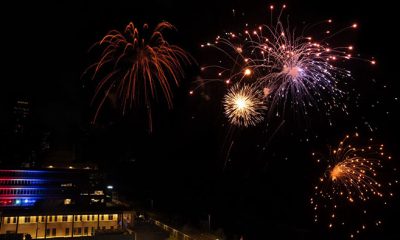
The celebration concluded with fireworks illuminating the Colombo sky as the III Marine Expeditionary Force Band, the US Marine Corps’ forward-deployed band in the Indo-Pacific region, based in Okinawa, Japan, performed a montage of American songs that have inspired generations. Guests enjoyed a menu featuring high-quality US beef and other American food and beverages, showcasing the global reputation of American agricultural exports.
As the United States marks 250 years of independence, Freedom 250 celebrates the enduring idea that has defined America since 1776—that freedom unlocks human potential, fuels creativity and innovation, and empowers individuals to shape a better future. Through education, trade, investment, security cooperation, and the enduring ties between our people, the United States and Sri Lanka continue to strengthen a partnership built on opportunity and shared democratic values.
The US Embassy extends its sincere gratitude to the generous sponsors whose support made this year’s Independence Day celebration possible, including Diamond Sponsors Brandix, Hayleys, Hirdaramani, MAS Holdings, Mastercard, RM Parks, and Visa, along with our other valued partners.
News
CA dismisses application filed by Yoshitha seeking to quash conspiracy charge in money laundering case
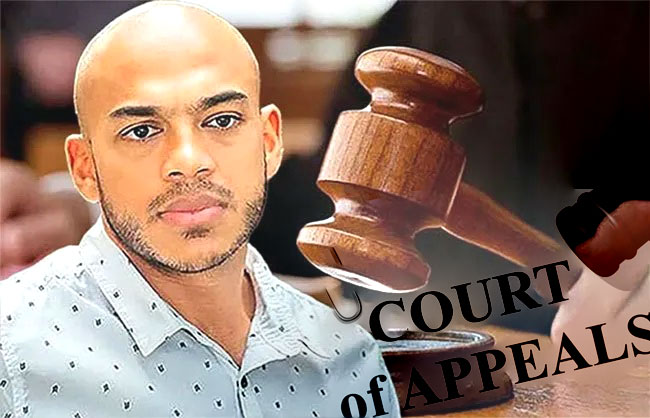
The Court of Appeal yesterday dismissed a revision application filed by Yoshitha Rajapaksa seeking to quash a conspiracy charge in the money laundering case, pending before the Colombo High Court.
Rajapaksa had challenged the conspiracy count in the indictment filed by the Attorney General, under the Prevention of Money Laundering Act, contending that the charge was not legally maintainable.
A Court of Appeal Bench, comprising Justices Amal Ranaraja and Dr. Sumudu Premachandra, rejected the application, ruling that the conspiracy charge could proceed before the Colombo High Court.
The ruling clears the way for the High Court to continue hearing the money laundering case, filed by the Attorney General against Rajapaksa.

India A grow lead after Sai Sudharsan hits 168

Boys among men – Sooryavanshi joins Tendulkar, Aaqib and Hasan Raza

Brutal heat cancels Fourth of July events, from DC to Philadelphia

Arias sends Colombia into World Cup last-16 with 1-0 win over Ghana

Messi scores again but Argentina given World Cup upset fright by Cape Verde

Anguished families left to identify Venezuela quake victims at makeshift morgue

‘Dates have the highest sugar content to fight Coronavirus’

Sunday Island 27 December – Headlines

#SundayIsland 17th December – Headlines

Sunday Island – 28th March

Sunday Island Headlines – 21 March

Sunday Island – 21st February – Headlines
-
 News6 days ago
LAWASIA warns against ad hoc initiative to increase judges’ retirement ages
-
 Features5 days ago
Climate action to bring South Asia together
-
 News5 days ago
Chamuditha to seek removal of injunction on Youtube programme
-
 Features7 days ago
People’s Bank expands digital banking network with 125th cheque deposit kiosk
-
 News17 hours ago
Freedom 250: US Embassy celebrates America’s 250th Independence Day through magic of American cinema
-
 News2 days ago
CIABOC to question Harak Kata on Rs. 200 mn bribery allegation
-
 News2 days ago
SLAF conducts successful rescue mission under UN command in Central African Republic
-
 News5 days ago
CPRP alleges another death in custody, seeks protection for witness