
News
Historic ‘loss and damage’ fund adopted at COP27 climate summit


(Al Jazeera) Countries at the United Nations COP27 climate summit in Egypt have adopted a final agreement that establishes a fund to help poor nations cope with the extreme weather events caused by global warming.
Following tense negotiations that ran through the night, the summit’s Egyptian presidency released a draft text of the overall agreement early on Sunday and also called a plenary session to push the document through as the final, overarching agreement for the UN summit.The plenary session approved the document’s provision to establish a “loss and damage” fund to help developing countries bear the immediate costs of climate-fuelled events such as storms and floods.
However, many of the more contentious issues regarding the fund were pushed into talks to be held next year, when a “transitional committee” will make recommendations for countries to then adopt at the COP28 climate summit in November 2023.The recommendations will cover “identifying and expanding sources of funding”, which refers to the vexed question of which countries should pay into the new “loss and damage” fund.
Still, the adoption of the fund is a big win for poorer nations which have long called for financial compensation because they are often the victims of climate change – such as worsened floods, droughts, heat waves, famines and storms – despite having contributed little to the pollution that is heating up the planet.
“This loss and damage fund will be a lifeline for poor families whose houses are destroyed, farmers whose fields are ruined, and islanders forced from their ancestral homes,” said Ani Dasgupta, president of the environmental think-tank World Resources Institute, minutes after the early morning approval was announced.Calls by developing countries for such a fund have dominated the two-week summit, pushing the talks past their scheduled finish on Friday.
“This is how a 30-year-old journey of ours has finally, we hope, found fruition today,” Pakistan Climate Minister Sherry Rehman said.
One-third of her nation was submerged this summer by a devastating flood and she and other officials used the motto: “What went on in Pakistan will not stay in Pakistan.”
Collins Nzovu, Zambia’s minister of green economy and environment, said he was “excited, very, very excited”.
“Very exciting because for us, success in Egypt was going to be based on what we get from loss and damage,” he said.
“This positive outcome from COP27 is an important step toward rebuilding trust with vulnerable countries.”
According to the agreement, the fund would initially draw on contributions from developed countries and other private and public sources such as international financial institutions.While major emerging economies such as China would not initially be required to contribute, that option remains on the table and will be negotiated over the coming years.
This is a key demand by the European Union and the United States, who argue that China and other large polluters currently classified as developing countries have the financial clout and responsibility to pay their share.The fund would be largely aimed at the most vulnerable nations, though there would be room for middle-income countries that are severely battered by climate disasters to get aid.
Experts said the adoption of the fund was a reflection of what can be done when the poorest nations remain unified.
“I think this is huge to have governments coming together to actually work out at least the first step of … how to deal with the issue of loss and damage,” said Alex Scott, a climate diplomacy expert at the think-tank E3G.But, like all climate financials, it is one thing to create a fund and another to get money flowing in and out, she said.
The developed world still has not kept its 2009 pledge to spend $100bn a year in other climate aid – designed to help poor nations develop green energy and adapt to future warming.
“In many ways, we’re talking about reparations,” said University of Maryland environmental health and justice professor Sacoby Wilson.
“It’s an appropriate term to use,” he said, because rich northern countries had received the benefits of fossil fuels, while the poorer global south nations were suffering the effects of climate change.
Some delegates meanwhile said the approved deal does not do enough to boost efforts to tackle the emissions that cause global warming.
It did not contain a reference requested by India and some other delegations to the phasing down use of “all fossil fuels”.
It instead called on countries to take steps toward “the phasedown of unabated coal power and phase-out of inefficient fossil fuel subsidies,” as agreed at the COP26 Glasgow summit.The draft also included a reference to “low-emissions energy”, raising concern among some that it opened the door to the growing use of natural gas – a fossil fuel that leads to both carbon dioxide and methane emissions.
Norway’s Climate Minister Espen Barth Eide told reporters his team had hoped for a stronger agreement. “It does not break with Glasgow completely, but it doesn’t raise ambition at all,” he said.
“I think they had another focus. They were very focused on the fund,” he said.


The US Supreme Court has rejected President Donald Trump’s bid to allow the US Postal Service to enforce a rule targeting mail-in ballots.
On Monday, the conservative-majority court refused to lift an order by US District Judge Indira Talwani that blocked the measure, dealing a blow to Trump’s efforts to restrict voting by mail before the November midterm elections.
The postal agency adopted the rule after Trump signed an executive order in March seeking to tighten rules around mail-in voting. Under this measure, states were required to send the Postal Service a list of recipients and use ballot mail envelopes previously approved by the agency.
The Postal Service was allowed to deny ballots if they failed to comply with the new standards or were not associated with registered voters on the lists.
Talwani imposed an injunction blocking the rule, saying that it likely violated the US Constitution and would be impossible to apply given the nearing midterms.
Shortly after, the Trump administration issued an emergency request to the Supreme Court urging it to allow an “important federal policy to protect the mails from being used to commit voter fraud”.
In late August, the Supreme Court had temporarily allowed Trump to move ahead with his executive order on procedural grounds, but did not rule on the legality of the plan.
In the latest decision, the court said in an unsigned order that the administration was “unlikely to succeed on the merits” of its challenge. Justice Samuel Alito and Justice Clarence Thomas dissented, with Alito writing that some plaintiffs lacked standing while the rest were pursuing a claim the court had recently called a “Hail Mary pass”.
[Aljaeera]
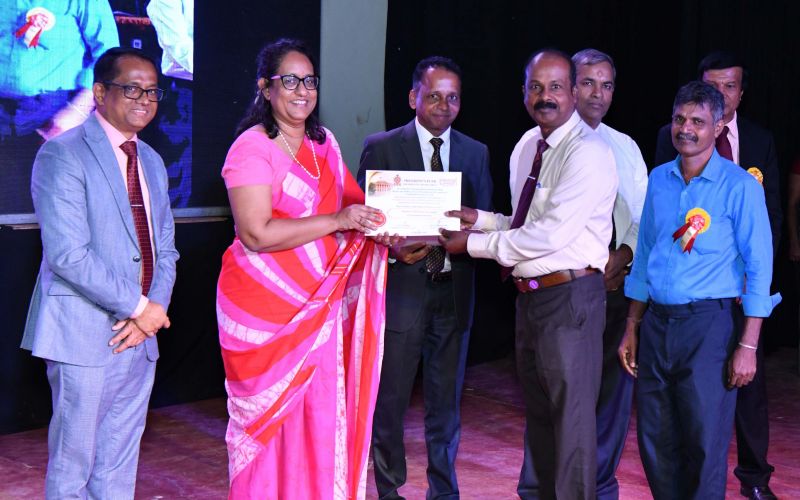
The “Mehewara Pasasum” programme to recognise Divisional Secretariats in the Eastern Province that demonstrated the highest level of performance in 2025 was held recently at the Swami Vipulananda Institute of Aesthetic Studies of the Eastern University, under the patronage of Prime Minister Dr Harini Amarasuriya. The programme was held as part of the initiative to decentralise President’s Fund services to the Divisional Secretariat level, with the aim of providing the public with a more efficient and prompt service.
Of the Divisional Secretariats in the three districts of Ampara, Batticaloa and Trincomalee, nine Divisional Secretariats, three from each district, were selected for recognition based on their efficiency in receiving President’s Fund applications and responding to them promptly.
Accordingly, the Sammanthurai Divisional Secretariat secured first place in the Ampara District, while the Addalachchenai Divisional Secretariat secured second place and the Kalmunai Divisional Secretariat third place.
In the Batticaloa District, first place was secured by the Kattankudy Divisional Secretariat, second place by the Manmunai North Divisional Secretariat and third place by the Koralaipattu Central Divisional Secretariat.
In the Trincomalee District, first place was secured by the Trincomalee Town and Gravets Divisional Secretariat, second place by the Kinniya Divisional Secretariat and third place by the Muttur Divisional Secretariat.
The first “Mehewara Pasasum” programme was held in Colombo, the second in Batticaloa, and this was the third programme.
Speaker Dr Jagath Wickramaratne, Minister of Industry and Entrepreneurship Development Sunil Handunnetti, Senior Additional Secretary to the President and Secretary to the President’s Fund Roshan Gamage, and a number of government officials and others were present at the occasion.
(PMD)
News
Students of Rahmaniya Maha Vidyalaya Eravur visit Presidential Secretariat and President’s House

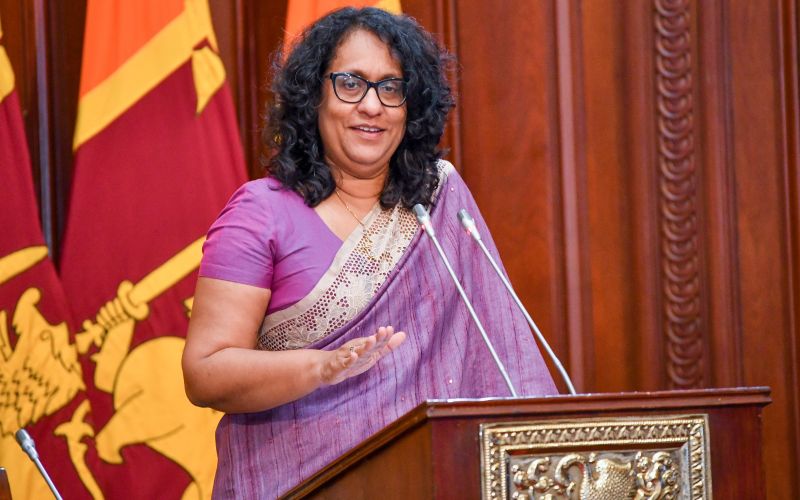
A group of students from Rahmaniya Maha Vidyalaya, Eravur, Batticaloa visited the Presidential Secretariat and President’s House on Monday (14) afternoon .
The students were given this opportunity as part of the “Vision” programme series, jointly implemented by the Presidential Secretariat, the Ministry of Education and the Communication Division of the Parliament of Sri Lanka for schoolchildren.
Prime Minister Dr Harini Amarasuriya stated that nurturing a future generation capable of providing leadership to society and committed to bringing about positive change in the world was an urgent need of the present day. She further stated that the Government’s objective in introducing the new education reforms was to prepare children to acquire knowledge from around the world while nurturing a confident and empowered generation capable of making a meaningful contribution to the country.
Following a visit to the former Parliament building at the Presidential Secretariat, the students were briefed on the history of Parliament.
Senior Additional Secretary to the President Roshan Gamage briefed the students on the role of the President’s Fund and the benefits available to schoolchildren through the Fund.
As part of the programme, valuable plants were also presented to the school as a symbolic gesture highlighting the importance of environmental conservation.
The Director and Assistant Director of the Tri-Forces Security Coordination Unit, the Principal and teachers of Rahmaniya Maha Vidyalaya Eravur and several others were present on the occasion.
(PMD)

Nairobi and Munich to host 2029 and 2031 World Athletics Championships

Pakistan fined, docked 11 points in Edgbaston Test for slow over rate

England look to continue domineering T20 form

US Supreme Court rejects Trump mail ballot restrictions ahead of midterms

Eastern Province Divisional Secretariats recognized for outstanding performance

Students of Rahmaniya Maha Vidyalaya Eravur visit Presidential Secretariat and President’s House

‘Dates have the highest sugar content to fight Coronavirus’

Sunday Island 27 December – Headlines

#SundayIsland 17th December – Headlines

Sunday Island – 28th March

Sunday Island Headlines – 21 March

Sunday Island – 21st February – Headlines
-

 Sports5 days ago
DDS set to lose Test captaincy
-

 News5 days ago
Sri Lanka faces new grid challenge as rooftop solar surges: former CEB GM
-

 Latest News4 days ago
Shafali, Deepti power India into sixth T20 Asia Cup final
-

 Opinion7 days ago
Navigating Sri Lanka’s Israeli Dilemma
-

 Latest News4 days ago
Sri Lanka thwart Fatima Sana challenge to secure Asia Cup final spot
-
 Features6 days ago
Lost for 90 years: Rare Goby resurfaces in Jaffna
-

 News3 days ago
Gnanasara Thero absconding after SC ruling
-

 News4 days ago
Ammunition cache found in old Kandy bungalow