
News
‘Govt must hide its head in shame for allowing the crisis to deepen’

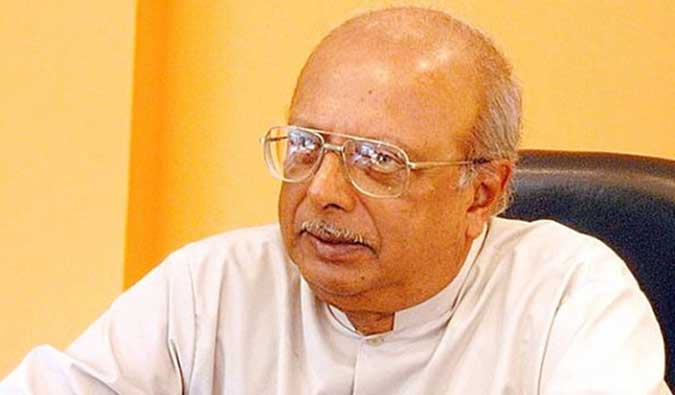
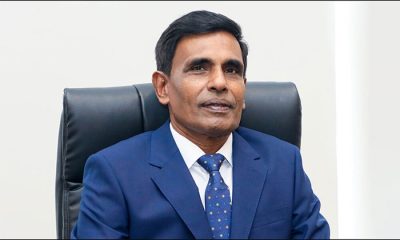
by Prof.TISSA VITARANA
Looking back at 2022, Sri Lanka cannot look forward to 2023, with any sense of hope. The economic, social and political crisis deepens without any clear plan by the Government to emerge from the crisis. Inflation is increasing with the Government, which is short of money due to its reluctance to tax the rich, resorting to massive printing of currency notes. This rise in the cost of living is fed by the support given to the private traders and big rice mill owners to fleece the cultivator and the producer who are in perpetual debt to them on the one hand and the consumer on the other. Survey data indicates that more than 65% of families live below the poverty line and that the malnutrition rate has approached 20%. Thus one out of five children below five years of age is suffering from severe under nutrition, and are both physically stunted and thin, but also mentally defective.
The future generation will be badly affected. Thus people with fixed or diminishing incomes faced with the high cost of living are suffering from hunger. In many families the parents have one meal a day and the children two, but the meals lack protein which is essential for development as well as vitamins and key minerals. Rampant bribery and corruption in the Administrative service has added to the suffering of the average person in his daily life; it is no longer a Public Service, it only serves the rich, the crooks and those with influence Instead of Government action to stop this exploitation by the middleman, like strengthening the Cooperative Movement among producers and consumers, reviving the Marketing and Food Control Departments, the Government supports the exploiter, rather than the exploited.
Ranil Wickremasinghe (RW) as Finance Minister tries to control the inflation by increasing the bank interest rate to a massive 30%. This not only deters the startup of new companies but also hits the established ones. The outcome of these policies is that the economy will continue to shrink, with more closures and job losses in the private sector together with the near complete stop to infrastructure development in the public sector. RW claimed that he would revive the economy through the private sector but his policies are undermining the private sector. The lack of jobs especially among the youth is leading to their leaving the country in huge numbers. The brain drain among professionals like doctors due to wrong tax policies is also increasing in an alarming manner. The youth that remain are driven to illicit activities like drug addiction and trafficking, and prostitution. Criminal activities like robberies, petty thefts, abductions, rape, assaults and murders are increasing so that people fear to venture out, especially after dark. Conflicts within families and between families and among criminal gangs are increasing. In society as a whole the collective cooperative spirit is being replaced by neoliberal individualism. Social cohesion is being lost. There is a complete breakdown of law and order.
The policy of taking more and more foreign loans is being persisted with. But even the International Monetary Fund (IMF) has yet to come forward with any part of its promised 3.9 billion US dollar (USD) aid package, despite several months of negotiations. Even if we get the IMF loan it will be too little too late. The terms demanded, if fully implemented, will reverse all the gains of the post-1956 era towards building a national economy as a sovereign independent state and emerge from our colonial past. The IMF demands would lead to de-nationalization and privatization of state-owned enterprises, but worst of all to the ownership passing over even to foreign hands. Sri Lanka would become a neo-colony subject to direct Imperialist exploitation once again.
The Government expects that by bowing down to the IMF terms Sri Lanka would be able to access more multilateral and bilateral loans and emerge from the dollar crisis and restore the ability to import using letters of credit from local banks. But getting deeper into foreign debt, which is the main cause of our dollar shortage and crisis, will only make matters worse. In 2021 we had to pay USD seven billion to service our 52 billion USD foreign debt, and Sri Lanka will be drawn further into the foreign debt trap. The fact that nearly 50% of the foreign loans are International Sovereign Bonds (which are short term high interest private loans) which are difficult to re-negotiate to delay payment makes matters worse. To further aggravate the situation the ban on the import of half of over 1500 non-essential items by this Government has been lifted recently. The dollar shortage will get worse and the fuel and gas queues will return and the shortage and high price of medicines and essential food items will also continue to rise.
The wrong policies of the present Government should be radically changed. There must be “a system change”. The way to increase productivity and national income is not by going back to the purely profit oriented privatization policy, but to move with the times and turn to a solidarity economy, as in Scandinavia and some provinces in Germany. In our agricultural economy the biggest export income earner is tea. But the private companies say they are running at a loss and cannot pay the employees a living wage. After 5 years of struggle the employees won a wage increase, the total allowance was raised to Rs.1000/day. But the employees are now being forced to increase their green leaf quota from 18 kilos per day to an impossible 24 kilos.
Even if they provide 20 or even 22 kilos, their pay is cut by Rs 50 per Kg, so that they are back to the status quo ante. We must learn from Kerala, India, where the solidarity economy is now in action. The ownership has been given to the employees by the Left regime, and as owners with shares in the company, in addition to their salary, they have increased the output tremendously and produce a large profit, which also benefits the society.
The present Government should also promote value added industry based on local raw material. I am happy to mention that as Minister of Science and Technology I developed the nanotechnology centre, SLNTEC, which can do this. In addition I was happy to learn that the Vidatha Centres for the development of SMEs in every Division have now topped the mark of thousand entrepreneurs that have successfully exported their products. Thus the answer is to make Sri Lanka an industrialized exporter of finished products.



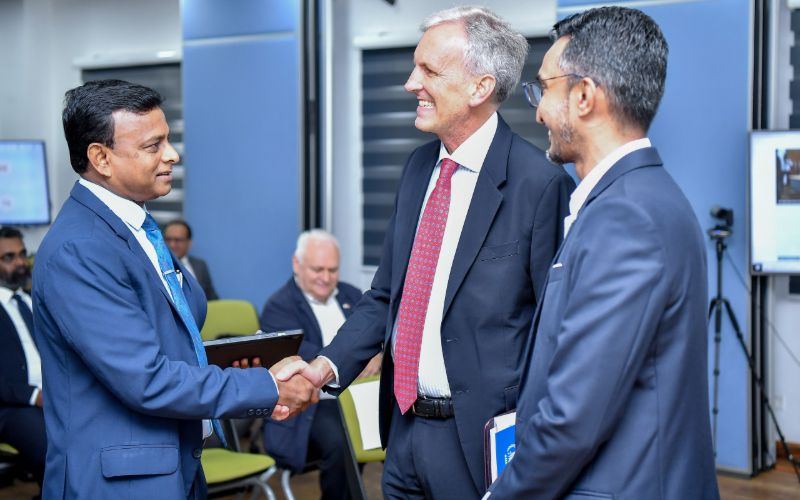
The conclusion of the Humanitarian Priorities Plan (HPP) implemented by the United Nations for those affected by Cyclone Ditwah was marked at a ceremony held in Colombo this morning (11), under the patronage of Commissioner General of Essential Services and Chief of Staff to the President, Prabath Chandrakeerthi, and United Nations Resident Coordinator in Sri Lanka, Marc-André Franche.
Speaking at the event, UN Resident Coordinator Marc-André Franche noted that the humanitarian relief programme launched for those affected by Cyclone Ditwah had been successfully implemented owing to the strong political leadership and the swift response demonstrated in managing the disaster situation.
Commissioner General of Essential Services and Chief of Staff to the President Prabath Chandrakeerthi emphasized that Sri Lanka had demonstrated how strong national leadership and effective partnerships could ensure the delivery of relief to affected communities in a fair and efficient manner during times of crisis. He further stated that the timely and accurate data and assessments provided by the United Nations had played a crucial role in facilitating rapid relief efforts. He also noted that the Government is continuing its efforts to strengthen multi-hazard early warning systems to enhance resilience against future natural disasters of a similar nature and to further expand institutional coordination at national, provincial and local levels.
Expressing appreciation and gratitude for the generous and prompt assistance extended by various countries and partners, the Commissioner General also commended the contribution of all state institutions that helped ensure the uninterrupted provision of essential services and facilitated the swift delivery of relief assistance.
Under the United Nations’ Humanitarian Priorities Plan for Cyclone Ditwah, a fundraising initiative was launched to mobilise US$35.4 million for those affected by the disaster. Of this amount, 75 per cent has already been disbursed as assistance to affected communities across the country. Through the programme, each affected family received an allowance of Rs. 27,000 through Divisional Secretariats, while a range of additional relief measures, including the construction of temporary housing, were also implemented.
The Humanitarian Priorities Plan covered 25 districts and delivered assistance through nine key sectors. Official reports indicate that 87 per cent of the targeted population of more than 650,000 people, equivalent to approximately 575,000 individuals, directly benefited from the programme. This achievement clearly reflects the confidence and support extended by foreign governments and organisations towards the Cyclone Ditwah response programme being implemented by the present Government.
Among those who attended the event were Additional Secretary (Disaster Management) to the Ministry of Defence K. G. Dharmatilake, ambassadors and high commissioners from several countries, representatives of the United Nations Development Programme (UNDP), representatives of the World Health Organization (WHO), representatives of international humanitarian organisations, and a number of local and international dignitaries.
(PMD)

A discussion to review the potential impacts of the anticipated El Niño phenomenon and the preparedness plans of relevant institutions to address its effects was held this morning (11) at the Presidential Secretariat under the patronage of President Anura Kumara Dissanayake.
The meeting was attended by representatives of the Department of Meteorology, the Department of Irrigation, the Central Environmental Authority, Mahaweli Authority of Sri Lanka, the Disaster Management Centre, Vidulijanana Lanka (Pvt) Ltd and the National System Operator (Pvt) Ltd, among other relevant institutions.
Extensive discussions were held on the possible impact of the anticipated El Niño conditions on the country’s food security, drinking water supply and energy sector, as well as the immediate measures required to effectively manage these sectors.
Particular attention was given to current reservoir water levels and the measures required managing potential pressure on agriculture, drinking water supply and energy generation. Officials also briefed the President on the preparedness plans already in place to mitigate any adverse effects.
Officials noted that the expected El Niño conditions are likely to resemble those experienced during 2016–2017. They further stated that water management plans have been formulated accordingly and that steps have already been taken to commence the 2026 Yala season approximately one and a half months earlier than usual.
Special attention was also focused on ensuring an uninterrupted electricity supply over the upcoming months, maintaining agricultural activities and safeguarding food security. The President instructed relevant officials to prepare and submit detailed plans to ensure adequate electricity generation, the provision of water required for the forthcoming cultivation season and the protection of drinking water resources.
President Dissanayake observed that, just as Sri Lanka had successfully managed challenges arising from Cyclone Ditwah and the conflict situation in the Middle East, the country possesses the capacity to effectively address this global challenge as well. The President expressed confidence that with proper planning and timely implementation, Sri Lanka would be well positioned to respond to any eventuality.
Among those present were Secretary to the President Dr. Nandika Sanath Kumanayake, Senior Additional Secretary to the President Kapila Janaka Bandara, Director General of the Department of Meteorology A. L. K. Wijemannage, Director General of the Department of Irrigation Kithsiri Weligopolage, Director General of the Mahaweli Authority of Sri Lanka H. M. K. K. Herath, Chairman of the Central Environmental Authority Professor Tilak Hewawasam, Acting Director General of the Disaster Management Centre Brigadier D. D. G. A. Jayawardena and several senior officials representing the relevant institutions.
(PMD)
Latest News
New Sasakawa Memorial Sri Lanka–Japan Cultural Centre reflects enduring friendship between Sri Lanka and Japan – PM

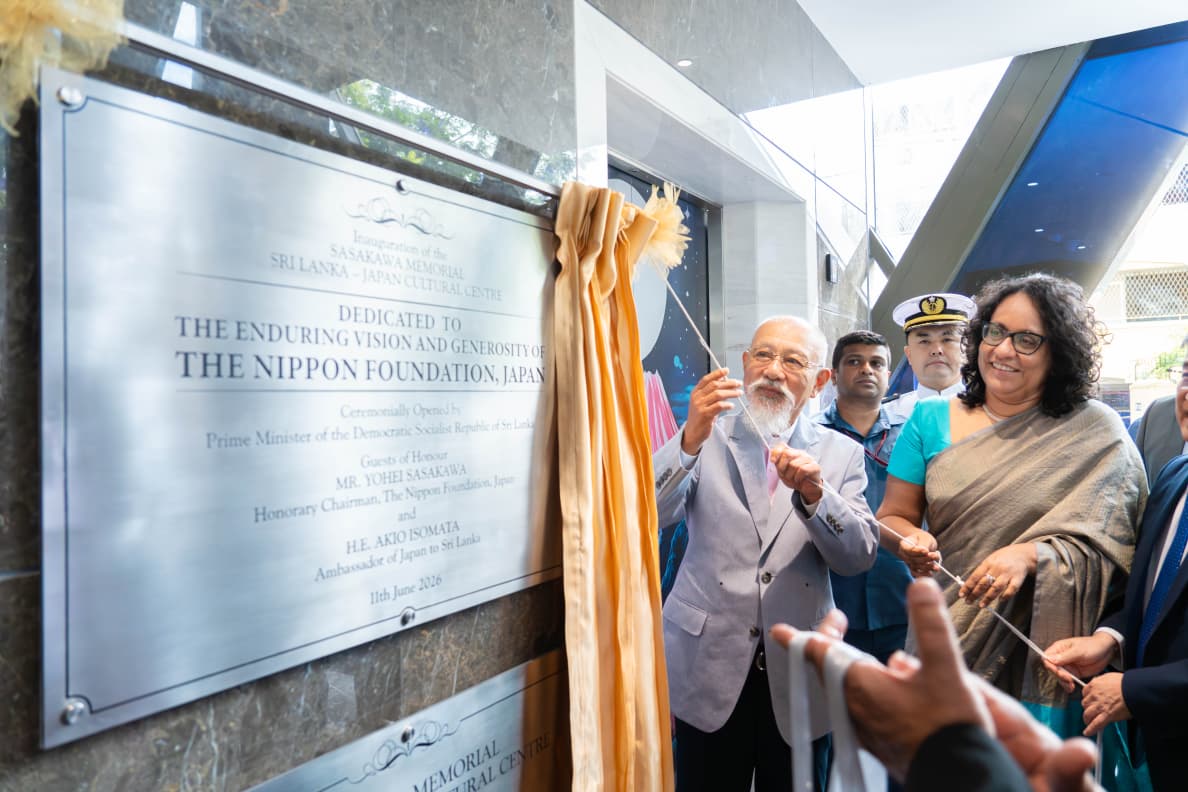
Prime Minister Dr. Harini Amarasuriya participated at the ceremonial opening of the new Sasakawa Memorial Sri Lanka–Japan Cultural Centre today [11th of June 2026].
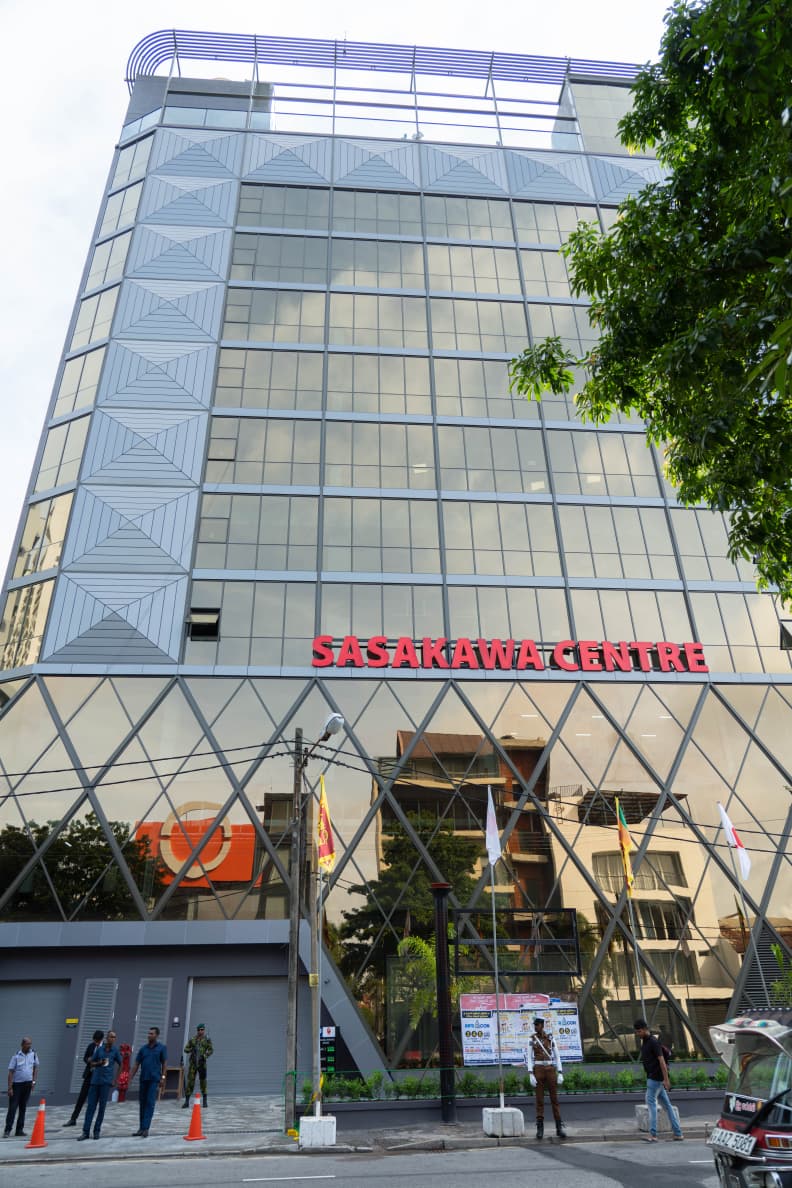
The cultural centre, commissioned by the Sasakawa Memorial Sri Lanka–Japan Cultural Centre Trust and situated at No. 85, Ward Place, Colombo 07, is a landmark development designed to promote cultural exchange, education, professional training and bilateral cooperation between Sri Lanka and Japan.
The New Sasakawa Centre was ceremonially opened by the Ambassador of Japan to Sri Lanka Akio ISOMATA, Minister of Fisheries, Aquatic and Ocean Resources, Ramalingam Chandrasekar, Minister of Buddhasasana, Religious and Cultural Affairs, Hiniduma Sunil Senevi, Yohei SASAKAWA, Chairman of The Nippon Foundation, Japan, Premalal Fernando, Chairman, Sasakawa Centre Trust. The Prime Minister unveiled the inaugural plaque.
Following the occasion Memorandum of Understanding was signed between the Ministry of Defence and Sasakawa Peace Foundation in the presence of Prime Minister Dr. Harini Amarasuriya and Yohei SASAKAWA, Honorary Chairman.
Addressing the occasion, Prime Minister Dr. Harini Amarasuriya stated, that the friendship between Sri Lanka and Japan is enriched by a long history of cultural and spiritual connections and that the societies are connected through a deep appreciation of nature, culture, learning, and community.
Highlighting the longstanding contribution of the Sasakawa Centre, the Prime Minister stated that it has played an invaluable role in promoting Japanese language education and strengthening mutual understanding between the people of Sri Lanka and Japan. She expressed confidence that the new Centre would emerge as a dynamic platform for cultural exchange, educational cooperation, and meaningful people-to-people engagement.
The Prime Minister stated that, at a time of increasing global uncertainty, partnerships based on mutual respect, shared values, and a commitment to peace are more important than ever. She reaffirmed that Sri Lanka and Japan remain committed to dialogue, international cooperation, and s rules-based international order that promotes peace, prosperity, and human dignity.
The occasion was attended by the Ambassador of Japan to Sri Lanka Akio ISOMATA, Minister of Fisheries, Aquatic and Ocean Resources, Ramalingam Chandrasekar, Minister of Buddhasasana, Religious and Cultural Affairs, Hiniduma Sunil Senevi, Yohei SASAKAWA, Chairman, The Nippon Foundation, Japan, Premalal Fernando, Chairman, Sasakawa Centre Trust and Diplomatic core, distinguished guests.

[Prime Minister’s Media Division]

Samarawickrama’s rise gives Sri Lanka a second pillar

Prabhsimran, Gaikwad, Tilak score fifties in DLS loss to Afghanistan A

India-born Nikhil Chaudhary called into Australia T20I squad

Men’s ODI World Cup 2027 set to run from October 4 to November 21

UN Humanitarian Priorities Plan (HPP) for Cyclone Ditwah successfully concluded

President chairs discussion on potential El Niño impacts and institutional preparedness

‘Dates have the highest sugar content to fight Coronavirus’

Sunday Island 27 December – Headlines

#SundayIsland 17th December – Headlines

Sunday Island – 28th March

Sunday Island Headlines – 21 March

Sunday Island – 21st February – Headlines
-
 Features7 days ago
Power crept into the Sangha and is now tearing it apart
-

 Features7 days ago
Kondachchi wind farm and battery storage project to boost energy security, says Power Ministry Secretary
-

 News5 days ago
Women’s T20 World Cup 2026 warm-up: Chamari Athapaththu’s 94 helps Sri Lanka beat Pakistan
-
 Features7 days ago
Saudi Arabia sets new benchmark in Hajj management as 1.7 million pilgrims complete sacred journey
-

 News6 days ago
Asst. Manager, security officer arrested over Rs 30 mn snatch at Horana PB branch
-

 Editorial4 days ago
Probe Sallay’s complaint
-

 News5 days ago
Lankan-Canadian inducted to Toronto Sports Hall of Fame
-
 News2 days ago
Local firms move millions of dollars overseas for phantom imports: Govt.