
News
Government prepares to force the people to accept the economic burdens

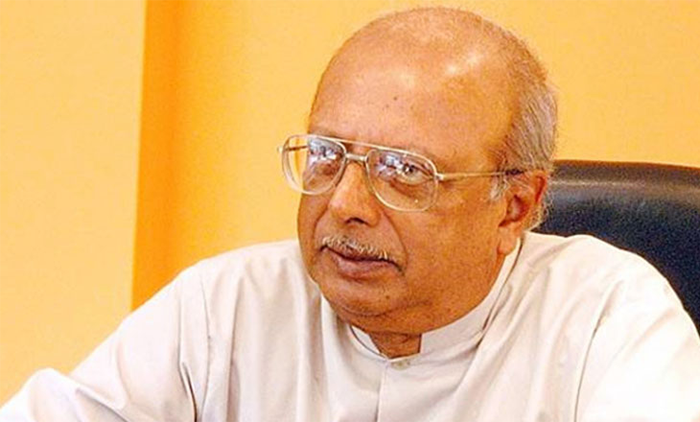
by Prof.Tissa Vitarana
The people continue to suffer more and more due to inflation but the Government’s response is inadequate. The price of food keeps rising while there is no increase in income. The result is that a large mass of poor are facing a grave crisis. To my knowledge a large number of families have only one meal a day. Some of them with difficulty provide two meals to their children.
Stories of children fainting in school due to hunger are widespread. There are also reports that school attendance has dropped and the education of the children is suffering. Even among lower middle class families there has been an adverse impact. The reports coming from the Medical Research Institute (MRI) and other such institutions suggest that the nutritional value of the food consumed has also deteriorated.
The MRI states that the income of more than 60% of families is below the poverty line. The current data suggest that among them the level of malnutrition is approaching 20%. This means that among children under five years of age, one out of five is malnourished. Not only is their physical development affected but also their mental development. This will have an adverse effect on the future generation.
In the face of this food crisis I appeal to the Government to give priority to addressing this problem. About a year ago I mentioned this situation to the former prime minister but there doesn’t seem to be any positive response up to now. The government should identify the families that are at risk. This can be done easily through the midwives and the public health inspectors (PHIs). The families that are at risk should be provided with dry rations, at least once a week, ensuring that essential food items reach those affected.
Even among those consuming a sufficient amount of food there is concern among nutritionists that the quality of the food from a nutritional point of view is inadequate. The high price of food which is continuing to increase (food inflation) needs urgent corrective measures. While welcoming the fact that the price of flour has been reduced by Rs.24/-, it is distressing to see that the price of a loaf of bread remains unchanged. The government should insist that bakers pass on the price reduction to the consumer. As a result of a number of problems that have arisen in the agriculture sector, like the scarcity of chemical fertilizer, the production of food, both rice and vegetables, have also reduced. There is a shortage of food according to media reports and this should be looked into and corrected.
The Paddy Marketing Board (PMB) has cut down purchasing paddy due to a lack of funds. In this context there are reports that the five main private mill owners are purchasing the paddy at a low price so that the farmers suffer. It would appear that this paddy is being stored in order to raise the market price of both paddy and rice. I have been informed that the government rice mills are also not fully operative. This situation must not be allowed to continue. I call upon the ministers and officials concerned to see that the government stocks are release to the market so that the price can be brought down. Profiteering in the food sector must be prevented by urgent government action.
Another area of concern is the shortage and high price of medicines, specially essential ones. There is an acute shortage in the government hospitals, and statements have been made by doctors that as many as 90 medicines, including essential ones, are not available. This is a very serious situation which may lead to increasing illness and even more deaths.
The government must take urgent action to see that this situation does not continue and that normalcy is restored. It is sad to see that donations of medicine have to be obtained from both local and foreign sources from countries like India, China and Japan. Adequate funds must be provided by government for the purchase of the required medicine as a matter of urgency. I have been informed that shortage of a large number of essential medicines exists both in the government and the private sectors and needs urgent attention.
The government tax policy is also a cause for concern. While indirect taxes which affect the poor are raised, the direct taxation is limited and done in a unfair manner. The middle class is being targeted while the rich and super rich are hardly affected. It is disturbing to see that the government gives tax holidays and waivers to the rich. Not surprisingly government revenue has fallen and both capital and recurrent expenditure have to be curtailed, adversely affecting the development of the country and the lives of the people.
When Sri Lanka was faced with one of its most severe economic crises in 1972/73, Dr.N.M.Perera, who was then the Minister of Finance, put the main tax burden on the rich, raising the upper limit to 70%. In today’s context too the government should take similar action by placing the main tax burden on those who can afford to pay.
The cost of transport has also gone up steeply. This directly affects passengers, but it also affects the price of goods. The lack of dollars also affects industries due to the inability to purchase essential foreign requirements, and many private and public enterprises have had to curtail production. This in turn leads to increased unemployment. The economy as a whole is contracting due to the above changes with reduced incomes of a large section of the population who are also badly affected by inflation and the high prices.
The suffering people are being forced into a situation where they have to openly protest. It is distressing to see that the Ranil Wickremesinghe – led government is strengthening the armed forces and the police. It is clamping down on reasonable peaceful protests. Are we heading for Fascist rule? This must not be permitted under any circumstances. While warning the public of the possible dangers it is essential that the trade unions become more active and warn the working and middle classes and prepare them to resist any moves to suppress the people and force them to submit to the burdens that are being contemplated.



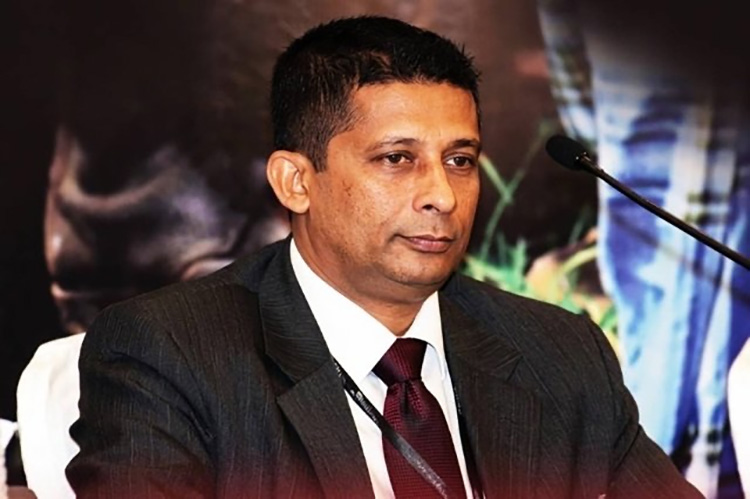
The government has chosen not to respond to questions raised by the United Nations Human Rights Council (UNHRC) regarding the detention of retired Maj. Gen. Suresh Sallay in connection with the ongoing investigations into the 2019 Easter Sunday attacks.
The Criminal Investigation Department (CID) arrested the ex-official in late February this year. The Special Rapporteur on the promotion and protection of human rights and fundamental freedoms while countering terrorism, the Working Group on Arbitrary Detention, the Special Rapporteur on the right of everyone to the enjoyment of the highest attainable standard of physical and mental health and the Special Rapporteur on the independence of judges and lawyers have jointly raised the issue on 20 July, 2026.
Drawing attention of President Anura Kumara Dissanayake to what they called alleged arbitrary detention of Sallay, former Director General of the State Intelligence Service (SIS) and former Director of Military Intelligence (DMI), under the Prevention of Terrorism Act (PTA), as well as allegations of torture and other cruel, inhuman or degrading treatment while in custody, resulting in the grave deterioration of his health, and imminent risks of retaliation through further torture and ill-treatment resulting in irreparable harm, should he be released from hospital and returned to custody, the UN sought the government explanation with a 60-day period.
The UN has stated: “This communication, and any response received from your Excellency’s Government, will be made public via the communications reporting website at the 60 days mark. Should your Excellency’s Government respond within 60 days, both the communication and the response, may be published before the 60 days mark. The communications and responses
will also be made available in the subsequent periodic report to be presented to the Human Rights Council.”
In the absence of the government’s response, the UN posted the letter, dated 20 July, 2026, addressed to President Dissanayake. The full letter can be accessed https://spcommreports.ohchr.org/TMResultsBase/DownLoadPublicCommunicationFile?gId=31125
News
Section of wartime KKS High Security Zone vacated to facilitate economic development in the area
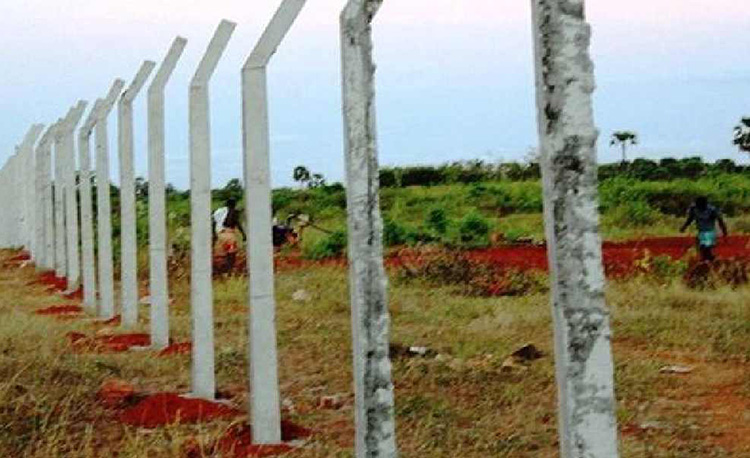
The Army, last week, vacated an area, within the wartime high security zone in the Jaffna peninsula. The Defence Ministry said that an extent of 187.56 acres of land, belonging to the Cement Corporation in Kankesanthurai, Jaffna, has been released by the military. The released land, located in Grama Niladhari Division J/233, Kankesanthurai West, within the Valikamam North (Tellippalai) Divisional Secretariat Division, had been utilised by the Sri Lanka Army since the middle of 1997.
The release of the 187.56-acre extent forms part of the initiative to make State land available for the proposed investment zone in Kankesanthurai, thereby facilitating future investment and economic development in the area.
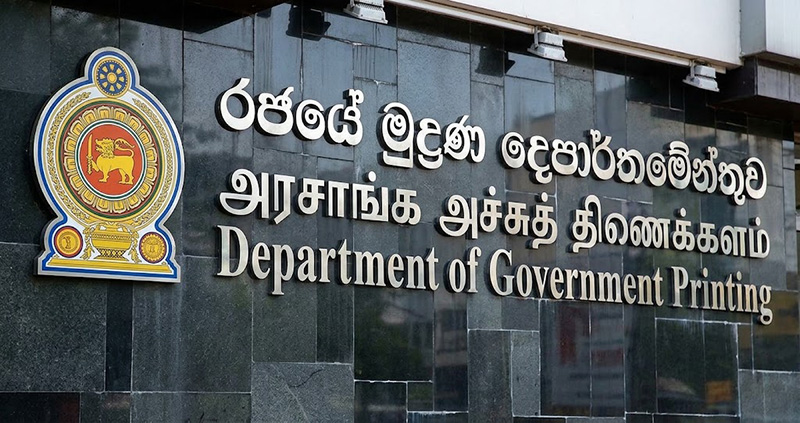
A complaint has been lodged with the Colombo Fraud Investigation Bureau against the Government Printer and the Secretary to the Ministry of Media regarding the online release of falsified documents bearing a forged Speaker’s certificate.
Attorney-at-Law Aruna Laksiri has lodged a complaint with the Colombo Fraud Investigation Bureau requesting legal action against the Government Printer of the Department of Government Printing (No. 118, Dr. Danister de Silva Mawatha, Colombo 08), Prasanna Jayaratne, and the Secretary to the Ministry of Mass Media (Asidisi Medura, 163, Kirulapone Mawatha, Polhengoda, Colombo 05), Dr. Anil Jasinghe.
The complaint alleges the commission of offences by forging and uploading falsified documents online using a forged Speaker’s certification, failure to perform statutory duties, and misappropriation of public property.
The complaint states that a copy of the English translation of the 22nd Amendment to the Constitution was downloaded and printed from the official website of the Government Printing Department (www.documents.gov.lk), which operates under the Ministry of Mass Media. On its outer cover and on page 1, the text “certified on 25th of September, 2026” is inscribed inside brackets.
The complaint pointed out that the Speaker has certified an English translation. Under Articles 23, 79, 83, and 80 of the Constitution, Parliament enacts laws and the Speaker certifies bills strictly in the Sinhala and Tamil languages; under the Constitution, therefore the Speaker cannot apply such certification to an English translation.

Showers or thundershowers will occur at several places in the most part of the island after 1.00 p.m

GS1 Lanka drives Sri Lanka’s shift to 2D barcodes

Geneva takes up Sallay’s case and govt. ignores opportunity to answer accusations

Section of wartime KKS High Security Zone vacated to facilitate economic development in the area

Lawyer lodges complaint against Govt. Printer, Media Ministry Secy.

Sri Lankan troops in joint anti-terrorist exercise in Russia

‘Dates have the highest sugar content to fight Coronavirus’

Sunday Island 27 December – Headlines

#SundayIsland 17th December – Headlines

Sunday Island – 28th March

Sunday Island Headlines – 21 March

Sunday Island – 21st February – Headlines
-

 Latest News5 days ago
Gold winner Tharanga gets brand-new Honda Vezel from SLAAJ
-

 Features5 days ago
Why Sri Lanka needs an Inclusive Civic Nationalism – urgently
-

 News4 days ago
US-assisted ‘Ice’ detection: NPC to examine IGP’s move to transfer drug-busting team
-

 Features6 days ago
Thailand’s biggest new global star …
-
 News6 days ago
First cases taken up by SC after enactment of 22A dismissed
-

 News5 days ago
Civil society activist accuses govt. of favouring Ven. Gnanasara
-

 Editorial3 days ago
Colombo Port drug bust: The plot thickens
-

 Editorial6 days ago
Aftershocks of 22A