
Business
Emirates boosts services to Melbourne adding second daily A380 flight


Emirates has announced the second daily flight on its Dubai-Melbourne route, served by its flagship A380 aircraft. Starting 1 May, the airline will offer customers fourteen weekly services from Dubai to Melbourne. The expansion of services is supported by the Victorian Government to help fast-track the return of international flights to Melbourne and bring more visitors to the state.
The additional daily frequency between Dubai and Melbourne will grow Emirates’ seats to over 1,000 a day totalling 700,000 a year between the airline’s global Dubai hub and Victoria, with 516 seats on each flight. Travellers can choose from 14 First Class suites, 76 lie-flat seats in Business Class and 426 ergonomically designed seats in Economy Class. Tickets can be booked on emirates.com, the Emirates App, or via both online and offline travel agents.
From 1 May, Emirates’ additional daily flight will depart Dubai daily at 10:05hrs, arriving in Melbourne at 05:30hrs the next day. From Melbourne, the flight will depart at 05:15 and arrive in Dubai at 13:10hrs. The additional flight will join the existing service which flies daily from Dubai, departing at 02:40hrs and arriving at 21:50hrs in Melbourne. From Melbourne, the flight departs at 21:15hrs and is scheduled to arrive in Dubai at 05:15hrs the next day. All times are local. The addition of the second daily A380 service will also offer customers more convenience with the option of choosing a morning or evening flight, for optimal onwards connection opportunities when they stop in Dubai.
Before the pandemic, international flights brought more than 3.1 million visitors to Victoria each year and injected $8.8 billion into the economy. Emirates carried 22 per cent of the 1.3 million passengers that arrived in Victoria from key European countries such as Germany, France, Italy, the Netherlands and Switzerland, which added $86 million to the Victorian economy in 2019.
Barry Brown, Emirates Divisional Vice President for Australasia said: “As an international airline that has been serving Australia for over 25 years, we are especially delighted to boost our services to Melbourne, adding yet more seats and flight options to the Victorian capital. Our second daily A380 service reaffirms our ongoing commitment to Australia and our loyal passengers as demand for international travel continues to increase. The newly expanded flight schedule also means our customers can experience three continents in one day, enjoying their breakfast in Australia, lunch in Dubai, and dinner in Europe.”
“Emirates’ inaugural flight to Australia arrived in Melbourne in 1996. Since then, we have carried more than 11 million passengers on this key route and we are delighted that Victorian travellers and businesses can continue to enjoy the global reach that our expansive network offers.”
Emirates’ increasing operations
With Australia being the third-largest destination for Emirates’ A380 operations, the airline has been continuously committed to increasing flights to Australia which will soar to 42 weekly flights in May, with the airline’s flagship flying to Sydney, Melbourne and Brisbane. From then Victoria and News South Wales capitals will be served by twice daily flights and the Queensland capital once daily, operating on the iconic A380 aircraft.







Business
Ceylon Chamber expresses concern over new US labour-related tariffs and calls for urgent engagement


The Ceylon Chamber of Commerce is concerned by the announcement of new labour-related tariffs by the United States on several countries, including a proposed 12.5% tariff on exports from Sri Lanka. This development comes at a time when Sri Lanka was continuing discussions with the US following the suspension of the previously announced reciprocal tariffs and was seeking to secure a more favourable trading arrangement.
The imposition of an additional tariff on Sri Lankan exports risks undermining the competitiveness of key export sectors compared to other countries, which are at a lower rate of 10%. At a time when Sri Lanka is working to accelerate export growth, attract investment, and create employment opportunities, any increase in trade barriers presents a significant challenge. At present, key goods exports such as Apparel and Tea are down by 7% and 6% respectively in the first four months of 2026.
Sri Lanka has built a strong reputation as a responsible sourcing destination, with many industries adhering to high labour, environmental, and governance standards. The country has also made substantial progress in strengthening regulatory frameworks and promoting ethical business practices.
The Ceylon Chamber therefore requests the relevant authorities to engage proactively and at the highest levels with the United States to better understand the basis for the tariff and to present Sri Lanka’s case. Every effort should be made to secure a reduction in the proposed tariff and, ultimately, to seek its removal altogether. It is important that Sri Lanka seeks to return to the lower tariff band while continuing discussions towards achieving a more competitive and predictable trading environment.
Given the importance of the US market to Sri Lankan exports, timely engagement and clear communication on the way forward will be critical in providing confidence to exporters and investors. The Ceylon Chamber stands ready to support these efforts and work collaboratively with all stakeholders to safeguard Sri Lanka’s export competitiveness and long-term economic interests.

The Sri Lankan rupee came under renewed pressure recently, depreciating significantly against the US dollar across several commercial banks, with the greenback’s selling rate reaching as high as Rs. 340 in some instances, triggering concerns among businesses, industrialists and consumers over the potential impact on inflation, electricity tariffs and the broader economy.
The latest depreciation marks one of the sharpest daily movements in recent months and comes at a time when Sri Lanka is striving to consolidate economic gains achieved through painful fiscal and monetary reforms.
Banking and financial sector sources said increased demand for foreign exchange, coupled with market uncertainty and rising import requirements, had contributed to the weakening of the local currency.
The development is expected to increase the cost of imports across a range of sectors, including fuel, pharmaceuticals, food items, industrial raw materials and machinery.
Economists note that while exporters may benefit from higher rupee returns on foreign currency earnings, the wider economy is likely to face increased cost pressures.
“The exchange rate affects virtually every sector of the economy. Any sustained depreciation inevitably filters through to consumer prices and business operating costs, a senior financial analyst said.
Particular concern is being expressed within the energy sector, where electricity generation costs remain closely linked to movements in the exchange rate.
Sri Lanka continues to rely heavily on imported fuel and energy-related inputs, all of which are purchased in foreign currency. A weaker rupee therefore translates directly into higher generation costs for the power sector.
Energy economists warn that if the depreciation trend continues, the financial burden on the electricity sector could increase substantially, potentially paving the way for future tariff revisions.
The issue has gained added significance amid ongoing discussions on Sri Lanka’s long-term energy transition and commitments to reduce dependence on coal-fired power generation.
Several energy experts argue that the country is entering a delicate phase where policymakers must carefully balance environmental objectives with affordability and energy security.
According to industry observers, the gradual move away from coal-based electricity generation—supported by international climate financing frameworks and policy reforms associated with multilateral lending programmes—could increase the country’s exposure to imported fuel costs unless sufficient low-cost alternatives are developed in time.
They point out that coal has historically provided relatively inexpensive baseload power to the national grid. While renewable energy sources such as solar and wind are essential components of Sri Lanka’s future energy strategy, experts note that large-scale storage systems and backup generation capacity remain costly and technologically demanding.
As a result, any future reduction in coal-based generation without corresponding investments in affordable alternatives could place additional pressure on electricity prices.
The latest weakening of the rupee further compounds these concerns.
“Every depreciation of the rupee increases the local currency cost of imported fuel, spare parts, equipment and energy-sector obligations. Ultimately, those costs have to be absorbed either by the utility provider, the Treasury or consumers, an energy sector specialist observed.
Industrialists have meanwhile warned that rising electricity costs could affect competitiveness, particularly among export-oriented manufacturers that are already operating under challenging global market conditions.
By Ifham Nizam
Business
John Keells Consumer Foods Sector strengthens leadership pipeline through Aspire Executive Development Programme

John Keells Consumer Foods Sector has reinforced its commitment to building future ready leadership with the successful graduation of 36 participants from the “Aspire” Executive Development Programme 2025, a sector wide Talent Development initiative conducted in collaboration with the Postgraduate Institute of Management, University of Sri Jayewardenepura.
The graduation marks a significant milestone in the sector’s ongoing people development journey, reflecting its focus on strengthening leadership capabilities, business acumen, strategic thinking and cross functional collaboration among emerging executives. Designed to align individual growth with evolving business priorities, the programme combined academic learning, interactive engagement and action driven projects which enabled participants to apply leadership concepts to real business contexts.
Operating under John Keells Holdings PLC, the John Keells Consumer Foods Sector comprises leading food and beverage brands such as Elephant House and Keells Krest with a strong legacy in Sri Lanka. Through initiatives such as “Aspire”, the sector continues to invest in structured learning and capability building as key enablers of sustainable business growth and long-term organizational resilience.
Daminda Gamlath, President, John Keells Consumer Foods Sector, said, “The Aspire Executive Development Programme reflects our belief that future growth must be supported by strong, agile and purpose driven leaders. We are proud to celebrate the graduation of these 36 participants, who have demonstrated commitment, curiosity and the ability to think beyond their functional roles. Their development is an investment not only in their individual careers, but also in the continued progress of our businesses.”
Imani Perera, Head of Human Resources, John Keells Consumer Foods Sector, said, “Aspire” was designed to unlock both individual and collective potential by giving our executives the tools, exposure and confidence to lead with greater impact. The successful completion of this programme is a testament to our continued focus on nurturing talent from within and preparing our people for future leadership roles with greater responsibilities.”
The sector will continue to advance its people development agenda through structured learning, leadership development and capability building initiatives that support business growth and prepare employees for Future strategic roles.

Anthropic urges AI labs to pause, warns humans risk losing control

Iran footballers issued US visas for World Cup, says White House

Showers will occur at times in the Western, Sabaragamuwa and North-western provinces and in Galle, Matara, Kandy and Nuwara-Eliya districts

China, Lanka intensify cooperation to fight cross-border crimes spreading across Asia and beyond

Asst. Manager, security officer arrested over Rs 30 mn snatch at Horana PB branch

Anguruwatota elders’ home fire death toll rises to 13

‘Dates have the highest sugar content to fight Coronavirus’

Sunday Island 27 December – Headlines

#SundayIsland 17th December – Headlines

Sunday Island – 28th March

Sunday Island Headlines – 21 March

Sunday Island – 21st February – Headlines
-

 News4 days ago
Lankan duo emerge winners in Latin dance championship held in Blackpool, UK
-

 Business5 days ago
IMF’s unstated rate:Sri Lanka’s $695m loan costs about 5.33% per annum
-

 Latest News2 days ago
Kusal Mendis, Pathum Nissanka, bowlers put Sri Lanka 1-0 up
-
 News2 days ago
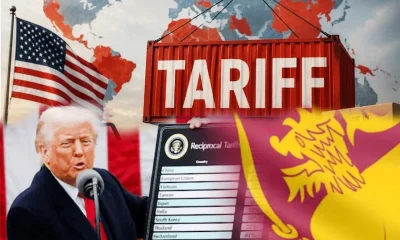
New US tariffs proposed on 60 countries, including Sri Lanka
-

 Business5 days ago
Sri Lankan scientist-innovator Milinda Edirisinghe introduces AI-integrated gem testing system to gemological world
-

 Features6 days ago
Are threats to Buddha Sasana external or from within?
-

 News5 days ago
UNP challenges NPP move to amend Vihara – Devalagam Act
-

 News4 days ago
Sri Lankan teen killed in Chennai clash; three arrested