
News
CPA: Warns country heading towards constitutional crisis


The Centre for Policy Alternatives (CPA) has raised concerns about the actions of the President and the government in response to the Supreme Court’s interim order last week restraining Deshabandu Tennakoon from exercising the powers, functions, and responsibilities of the office of the Inspector General of Police (IGP).
Issuing a statement, the policy think-tank, based in Colombo, said this interim order had been met with statements by the government, including a formal statement in Parliament by the Prime Minister on 27 July, explicitly rejecting it, that raises alarm as to whether Sri Lanka is heading towards a constitutional crisis.
Urging the President to desist from any or all action that raised that prospect, CPA said the Election Commission had issued a gazette setting the date of the Presidential Election to be held on 21st September 2024, and it was incumbent on the Government and all stakeholders to adhere to the Constitution and respect the integrity of the election.
CPA warned that any attempt to subvert elections, and the rule of law, will have significant implications on governance and democracy and setback Sri Lanka’s path towards economic recovery and stability.
According to CPA, the following briefly sets out some of the recent events and their implications.
* The Supreme Court’s Interim Order on the IGP
The Supreme Court’s interim order this week was in response to several cases filed challenging the appointment of Tennakoon as IGP. One of the petitions was filed by CPA’s Executive Director. After hearing lengthy submissions, the Court found that the Petitioners’ case could proceed to the next stage and in light of the strong case made out, the Court also granted an interim order.
CPA welcomes the interim order which upholds the clear and unambiguous provisions of the Constitution. CPA’s position is that, on the documents produced by the Respondents in court, including the minutes of the Constitutional Council meeting, it is clear that the President could not have appointed Tennakoon as IGP on 26th February 2024, as the required support of at least five members of the Constitutional Council was not met.
CPA notes that the President is duty-bound to uphold the Constitution. Nothing in the order would prevent the President from making an acting appointment after following the appropriate procedure set out in the Constitution. If the President does not make an acting appointment, that is a choice he makes and he would be fully responsible for the consequences of that choice. Willful violation of the Constitution, including by refusing to do what the Constitution requires him to do, is a ground on which a President can be impeached. As seen in several recent cases, a person holding the office of President can also be held liable in his individual capacity even after the conclusion of his term of office for such violations. In such a context, any action to subvert and/or undermine the Constitution by the individual holding the office must be monitored and necessary legal action pursued.
* Misinformation on the Supreme Court’s Interim Order
CPA also notes that there has been significant misinformation on the validity and the impact of the Supreme Court’s order, including in the Prime Minister’s statement to the House on 27th July. The Supreme Court’s interim order was not against Parliament, nor was it against the Constitutional Council. The Constitutional Council, moreover, is not a committee of Parliament and thus is not protected by the parliamentary privilege of exclusive cognisance. A judicial decision that the President disagrees with is not a sufficient basis to claim a judicial attack on the powers and privileges of Parliament. The order of the Supreme Court restrains Tennakoon personally from functioning in the office of IGP. Any suggestion that the order is an order against the functions of Parliament is without merit and lacks any basis in terms of the Constitution and the law. Having misinformed itself on these matters, the Government has in its irresponsible response to the Supreme Court acted in breach of several constitutional conventions that are central to the rule of law, the separation of powers, and the independence of the judiciary. These include the conventions that the Government: obeys the orders of a court even and especially when it does not agree with the reasoning of a judicial pronouncement; does not attack the judiciary in Parliament or elsewhere; and observes the sub judice principle.
CPA also notes the misinformation campaign to indicate that the President cannot make an acting appointment to cover the functions of the office of IGP. This claim is patently false. The Constitution makes specific provisions for acting appointments (Article 41C(2)). The only requirement is that when such an appointment is for a period of more than two weeks, the President needs to get the approval of the Constitutional Council. Furthermore, recent examples dispel these false claims. Firstly, in the aftermath of the 2019 Easter Sunday attacks, the then President appointed Mr. C.D. Wickramarathne as acting IGP whilst Mr. Pujith Jayasundara (who was the IGP) was suspended pending investigations into his conduct. More recently, an acting appointment to the office of IGP was made when Mr. Tennakoon was first appointed as acting IGP in November 2023.
As such, there is no impediment for the President to make an acting appointment to the office of IGP. In fact, the Constitution requires the President to respect the order of the Court and his own responsibilities in terms of the Constitution to make a suitable acting appointment. It is unfortunate that the President seems to be acting in a manner intended to frustrate the order of the Court and subvert the Constitution.
* The Supreme Court’s Interim Order and the Presidential Election
CPA notes the attempts to imply that the interim order may have a bearing on the holding of the presidential election. The interim order has no impact on the conduct of elections. The order leaves it open to the President to make a suitable acting appointment in terms of the Constitution. Even if the President does not make such an appointment, the Election Commission has a provision in the Constitution to give necessary orders to the hierarchy of the Sri Lanka Police to perform functions relating to the election (Article 104G and 104GG).


The Ministry of Industries and Entrepreneurship Development has recommended the establishment of Sri Lankan Standards, i.e. the import testing methodology for imported tires used for passenger cars and pneumatic tires for three-wheelers with the aim of ensuring a fair competitive environment for local
manufactures and ensuring consumer safety and security.
Taking into the said recommendations, “Import and Export (control regulations N0.08 of the 2026)” has been enacted to amend the existing regulations by means of the Extraordinary Gazette Notification No. 2508/27 dated 2026-10-01, prescribing Sri Lanka standard 1212 for the import of passenger types (HS Code 4011.10.90) and Sri Lanka standard 1347 for the import of
pneumatic tires for three – wheeled vehicles (HS Code 4011.90.10).
Accordingly, the Cabinet of Ministers has approved the resolution furnished by the President in his capacity as the Minister of Finance, Planning, and Economic Development to submit the aforementioned regulations to Parliament for approval.
Approval of the Cabinet of Ministers was granted at their meeting held on 02.06.2025 to introduce a new act to promote and providing legal provisions for facilitating the Public Private Joint Enterprises within Sri Lanka as well as the establishment of the National Agency for Public Private Partnership Joint Enterprises.
Accordingly, the Legal Draftsman has formulated the relevant draft bill and the Attorney General has given his clearance to the said draft bill.
The Cabinet of Ministers approved the resolution furnished by the President in his capacity as the Minister of Finance, Planning and Economic Development to publish the said
draft bill in the government gazette notification and thereby submit it to the Parliament for its concurrence.
Regulation, development and control of indigenous medical sector in Sri Lanka comprised of Ayurvedha, Sidhdha, Unani, Local Therapies are carried out under the provisions of Ayurvedha Act No. 31 of 1961.
Although amendments were made to the act from time to time as per the requirements, the necessity of further amending the Ayurvedha Act has been identified to enable efficiently maintaining all activities of local medical field productively, further formalizing the regulation of the sector, taking actions to providing licenses applicable to export of local medicines, and achieving the progress and sustainable development goals in the local medical sector.
Based on the said factors, the Cabinet of Ministers granted approval to the resolution furnished by the Minister of Health and Mass Media to direct the Legal Draftsman to formulate a draft bill to amend the Ayurvedha Act No. 31 of 1961.

Import and Export (Control) Regulations No. 08 of 2026
Draft Bill of the Public Private Partnership Enterprises Act to be gazzetted
Amendment of the Ayurvedha Act No. 31 of 1961

Cabinet nod to amend the Sri Lanka Development Administration Institute Act No. 9 of 1982
Establishment of the National Higher Performance Centre
State patronage for the cremation ceremony of the late deputy prelate (Anu Nayaka Thero) of the Sri Laka Ramangya Maha Nikaya, Gatambe Rajopawanramadhipatha, Siri Chandawimala Wanshalankara, Chandrakeerthi Sri Amarawansha, Sadhdharmawageeshwara, Shasanashobhanna Most Venerable Keppetiyagoda Siriwimalabhidhana Thero

‘Dates have the highest sugar content to fight Coronavirus’

Sunday Island 27 December – Headlines

#SundayIsland 17th December – Headlines

Sunday Island – 28th March

Sunday Island Headlines – 21 March

Sunday Island – 21st February – Headlines
-

 Features3 days ago
Kotahena:A Small Enclave, An Extraordinary Legacy
-

 News7 days ago
Sri Lanka, India caught in US-Iran ship crisis
-

 News4 days ago
Asgiri Mahanayake calls for immediate release of Gnanasara Thera
-

 Latest News7 days ago
Missiles intercepted near Riyadh after Saudi coalition hits Yemen fuel depot
-
 Latest News7 days ago
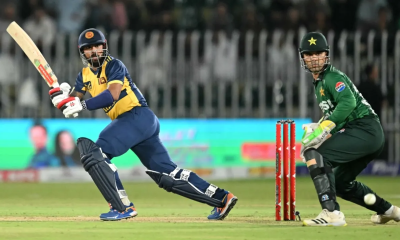
Kusal Mendis’ unbeaten 87 hands Sri Lanka consolation win
-

 News2 days ago
Record 1,600 students take Russian Classical Ballet examination in Sri Lanka
-
 News6 days ago
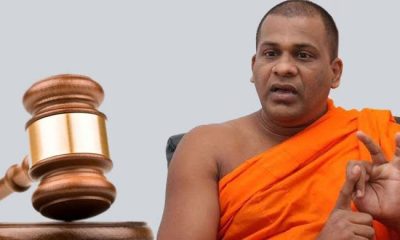
AC President recuses himself from hearing prison attire case pertaining to Gnanasara Thera
-
 News5 days ago
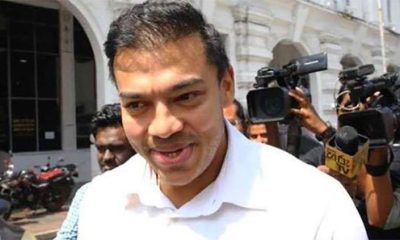
Naval officer testifies Yoshitha received Rs. 5.15 mn in salaries during SLN service