
Business
Brisk trading in NDB rights with high net worth investors seeing long term value

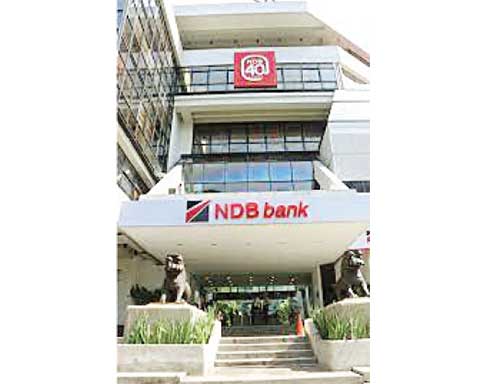
There has been considerable investor interest in the ongoing rights issue of the National Development Bank PLC closing later this week with 35.9 million rights transacted on the trading floor of the Colombo Stock Exchange up to Friday by way of 3,825 trades at a high of Rs. 2.50 per right when trading opened on April 27 and a low of 50 cents on Friday, stock analysts said.
Each new rights share will be issued at Rs. 75, with existing shareholders entitled to 28 new shares for every 61 they presently hold.
“The secondary market price of NDB was fairly close to the issue price at the time of the rights allotment,” a share broker said. “In that context many shareholders were interested in selling their rights at the best price they would command rather than taking new shares. Some market players sold some of their NDB shares soon after the rights issue announcement, planning to re-enter the stock at the lower rights price and possibly increasing their holdings with applications for additional shares. The early birds did better than those who transacted later.”
The last day for acceptance and payment for the new shares is May 5 when the issue closes with renunciation of rights entitlements closing the previous day.
Shares remaining unsubscribed will be initially allotted to Norfund up to 9.99% of the bank’ equity and thereafter, if available, to others including legal entities seeking unsubscribed shares. This will be subject Banking Act restrictions, NDB said in a circular.
A previous rights issue by the NDB several months ago was under-subscribed. In that context, the bank reached an agreements with the Norwegian Development Fund (Norfund), fully owned by the Government of Norway to take a stake in NDB by way of a private placement at a price of Rs. 82.50 a share – Rs. 7.50 higher than they were being offered to existing shareholders through the rights issue.
Analysts said that a total of approx. 106.78 million new shares were being offered by way of rights and approx. 37.6 million by way of the private placement with Norfund.
Existing shareholders were permitted the opportunity to apply for more than their rights entitlement at the same Rs. 75 rights price. Allotment of unsubscribed rights shares to such applicants would be on a “reasonable basis” depending on the availability and subject to restrictions under the Banking Act.
The rights share was considered a good long-term investment in the context of the price of both the rights and privately placed share was less than half the NDB’s net assets value per share which stood at Rs. 192.49.
“That’s the reason for the interest in the issue and the brisk trading of rights on the trading floor,” a broker explained. “Paying a small premium to acquire more than their entitlement was considered worthwhile by some high net worth long-term investors in this context.”
Additionally, there was also the factor that transaction cost applicable to secondary market deals do not apply to tights issues and is a further saving on cost.
Norfund’s only investment in Sri Lanka ahead of its entry into the NDB is a stake in Softlogic Life Insurance and it is looking for further potential investment here, according to NDB. The fund which has committed investments worth over USD 2.88 million up to the end of 2019 prioritizes investment in clean energy, financial institutions, green infrastructure and scalable enterprises aligned with UN sustainable development goals.
If it succeeds in achieving its objective of acquiring 9.99% of NDB equity, it will be the second largest shareholder of the bank behind the EPF which owns 10% Other big shareholders include the Bank of Ceylon (8.36%), Sri Lanka Insurance Corporation (SLIC) General Fund (6.39%), Life Fund (4.37%) and Dr. Sena Yaddehige (4.37%).
Softlogic Insurance, ETF, Perpetual Treasuries, Richard Pieris, HNB and Phoenix Ventures are the other big institutional shareholders. Individually, the biggest private shareholders are Messrs. Ashok Pathirage and Merril. J. Fernando.
The issue has been structured in a fashion that the maximum number of shares Norfund can subscribe for will not trigger the SEC’s mandatory offer requirements under its Takeovers and Mergers Code. This requires any investor acquiring 30% or more of a listed company to offer minority shareholders the highest price they have paid in the previous 12 months for that company’s shares.
NDB said the private placement will only take place if Norfund is unable to get the 9.99% stake under the rights issue.


The Securities and Exchange Commission of Sri Lanka (SEC) successfully hosted a series of high-level meetings of the International Organization of Securities Commissions (IOSCO), bringing together leading securities regulators and enforcement officials from around the world to discuss emerging regulatory challenges, strengthen international cooperation, and enhance collective efforts to combat cross-border securities market misconduct.
The meetings, held at the Hilton Colombo from 13 to 16 October 2026, included sessions of the IOSCO Enforcement and Cooperation Committee and its Screening Group (Committee 4/SG), as well as meetings of the Monitoring Group and the Steering Committee. The event attracted approximately 50 senior representatives from securities regulators and exchanges across several jurisdictions, including Australia, Japan, the United States, the United Kingdom, France, Italy, Canada, New Zealand, India, Germany, Belgium, Singapore, China and Spain, reflecting the global significance of the discussions and the growing importance of international regulatory collaboration.
Welcoming delegates to Sri Lanka, Senior Professor D.B.P.H. Dissabandara, Chairman of the SEC, emphasized the critical role of international cooperation in safeguarding market integrity and investor confidence in an increasingly interconnected financial landscape.
“No regulator can effectively address cross-border misconduct in isolation. The speed with which information, transactions and illicit activities can move across borders requires an equally coordinated and timely regulatory response. Strong international cooperation, effective information sharing and mutual trust among regulators are essential to maintaining fair, transparent and resilient capital markets,” he stated.
The discussions focused on a range of enforcement and cooperation matters, including mechanisms for enhancing cross-border information exchange, strengthening investigative collaboration among regulators, addressing increasingly sophisticated forms of securities fraud and market abuse, and promoting the effective implementation of international standards and best practices. Participants also exchanged experiences and insights on emerging enforcement challenges arising from technological developments, digitalization of financial services, and increasingly interconnected global markets.
IOSCO is recognized as the leading international body that brings together the world’s securities regulators and serves as the global standard setter for securities regulation. Through its policy work and cooperative initiatives, IOSCO plays a central role in promoting investor protection, ensuring that markets are fair, efficient and transparent, reducing systemic risk, and strengthening confidence in capital markets worldwide.
Sri Lanka has maintained a strong and active relationship with IOSCO for more than three decades. The SEC became an Ordinary Member of IOSCO in 1993 and has been a signatory to the IOSCO Multilateral Memorandum of Understanding (MMoU) since 2004. The MMoU is the internationally recognised benchmark for cooperation and information sharing among securities regulators and serves as a critical tool in facilitating cross-border investigations and enforcement actions.

Pan Asia Bank recently entered into a one-year Memorandum of Understanding (MOU) with Ideal Motors (Pvt) Ltd, creating a new financing avenue for customers purchasing vehicles from the authorised Mahindra dealer. The strategic partnership will enable customers of Ideal Motors to access leasing facilities from Pan Asia Bank, making vehicle financing more convenient while supporting their mobility and business requirements. The agreement also provides an opportunity for the Bank to expand its leasing portfolio and strengthen its presence in Sri Lanka’s vehicle financing market.
Ideal Motors is the authorised dealer for the Mahindra vehicle range in Sri Lanka, including the Mahindra Bolero CPU Truck and Scorpio Jeep/Pickup. The vehicles cater to a range of requirements, from commercial and business applications to personal mobility, making accessible financing an important part of the purchasing decision.
The Bank’s vehicle leasing facilities are designed to simplify the financing process, with convenient repayment options and professional support to help customers select a solution suited to their requirements. For customers, the arrangement brings vehicle selection and financing closer together, reducing the need to navigate the two processes separately.
“Our partnership with Ideal Motors enables us to bring financing closer to customers at the point of vehicle purchase. We remain focused on providing convenient and flexible leasing solutions that support both personal mobility and the needs of businesses,” said Naleen Edirisinghe, Director/CEO of Pan Asia Bank.
Pan Asia Bank and Ideal Motors will work closely during the one-year partnership to maximise business opportunities and deliver a seamless financing experience to customers. The collaboration is expected to strengthen both organisations’ ability to respond to demand for commercial and personal vehicles while creating greater value for customers.
Yohan Ebell, Head of Retail Credit, Pan Asia Bank, said: “Through this partnership, we aim to make vehicle financing simpler and more accessible, with leasing solutions designed to meet the varied requirements of Ideal Motors’ customers.”
The collaboration also reflects Pan Asia Bank’s commitment to building partnerships that make financial services more accessible and responsive to the needs of individuals and businesses.
Pan Asia Bank has established a growing presence in vehicle financing, offering leasing solutions designed around customer convenience and flexibility. Its leasing proposition is supported by a nationwide branch network and a customer-focused approach, enabling customers to obtain guidance on financing options while completing their vehicle purchase.

Heritance Hotels and Resorts has secured four distinguished titles at the World Travel Awards 2026, with three national awards recognising its Sri Lankan properties and an international title for Heritance Aarah in the Maldives.
The three Sri Lankan titles recognise Heritance Tea Factory as Sri Lanka’s Leading Heritage Hotel 2026, Heritance Ahungalla as Sri Lanka’s Leading Luxury Hotel 2026, and Heritance Kandalama as Sri Lanka’s Leading Wedding Hotel 2026. Heritance Aarah was named the Indian Ocean’s Leading All-Inclusive Resort 2026.
Internationally recognised within the global travel and tourism industry, the World Travel Awards celebrate excellence across hotels, resorts, and destinations. Recognition at this level affirms the quality, distinctiveness, and consistency of the experiences delivered by Heritance Hotels and Resorts.

Import and Export (Control) Regulations No. 08 of 2026
Draft Bill of the Public Private Partnership Enterprises Act to be gazzetted
Amendment of the Ayurvedha Act No. 31 of 1961

Cabinet nod to amend the Sri Lanka Development Administration Institute Act No. 9 of 1982
Establishment of the National Higher Performance Centre
State patronage for the cremation ceremony of the late deputy prelate (Anu Nayaka Thero) of the Sri Laka Ramangya Maha Nikaya, Gatambe Rajopawanramadhipatha, Siri Chandawimala Wanshalankara, Chandrakeerthi Sri Amarawansha, Sadhdharmawageeshwara, Shasanashobhanna Most Venerable Keppetiyagoda Siriwimalabhidhana Thero

‘Dates have the highest sugar content to fight Coronavirus’

Sunday Island 27 December – Headlines

#SundayIsland 17th December – Headlines

Sunday Island – 28th March

Sunday Island Headlines – 21 March

Sunday Island – 21st February – Headlines
-

 Features3 days ago
Kotahena:A Small Enclave, An Extraordinary Legacy
-

 News7 days ago
Sri Lanka, India caught in US-Iran ship crisis
-
 News4 days ago
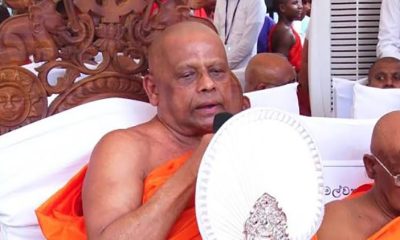
Asgiri Mahanayake calls for immediate release of Gnanasara Thera
-

 News3 days ago
Record 1,600 students take Russian Classical Ballet examination in Sri Lanka
-

 News6 days ago
AC President recuses himself from hearing prison attire case pertaining to Gnanasara Thera
-
 News5 days ago
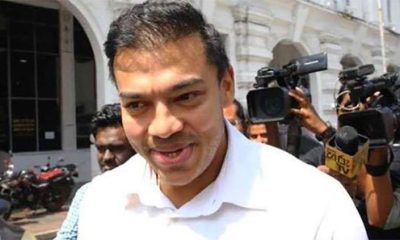
Naval officer testifies Yoshitha received Rs. 5.15 mn in salaries during SLN service
-

 Latest News7 days ago
Heavy showers above 100 mm are likely at some places in the Western, Sabaragamuwa, Southern, Central, and North-western provinces and in Anuradhapura district.
-

 News3 days ago
Karannagoda pushed for £24,536 for Yoshitha’s UK training, Court told