
Foreign News
Boat disaster in Ethiopia kills 12

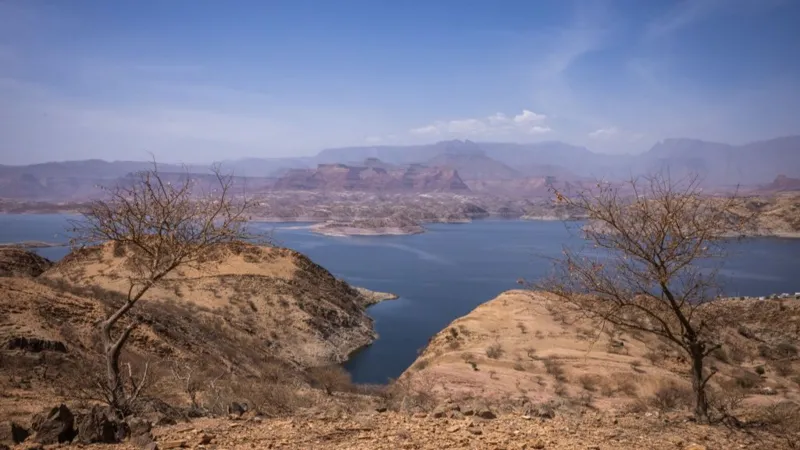
Reports from northern Ethiopia say at least 12 people have drowned after their boat sank in the Amhara region.
The wooden vessel was taking passengers to a funeral across the Tekeze river, which runs along Ethiopia’s border with Eritrea.
The boat was hit by a flash flood and capsized on Saturday.
Twenty-six people were thought to have been on board when the accident happened.
The survivors were taken to hospital for treatment reports the Ambara Media Corporation [AMC] including a “severely wounded” child.
It was not yet clear on Sunday if all the bodies of those who died had been recovered from the water.
Work on an out-of-use bridge which spans the Tekeze river was due to be finished last month, but had been delayed, a local official told AMC.
Media access to northern Ethiopia is heavily restricted by the authorities.
The region has seen recent clashes between the military and an ethnic Amhara militia known as the Fano.
[BBC]

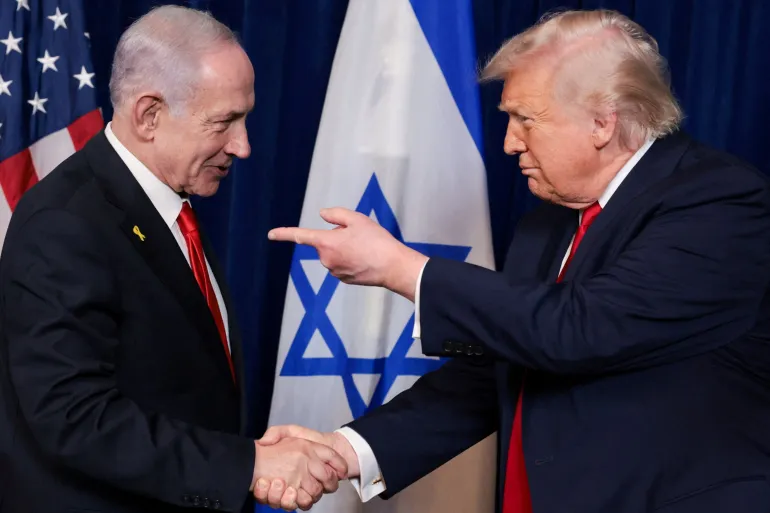
Benjamin Netanyahu has played down reports of a rift with Donald Trump after the United States president confirmed that he recently called the Israeli prime minister “f****ing crazy”.
Asked during an interview with CNBC on Wednesday, Netanyahu rejected the idea his ties with Trump have shifted: “No, this has been this has been a great relationship because he’s been the greatest friend that Israel has ever had in the White House.”
Netanyahu — who is wanted by the International Criminal Court (ICC) for war crime charges in Gaza — added that the two leaders have mutual respect for each other.
“We have common goals. Sometimes, we have, as in the best of families, you have these tactical disagreements,” he said.
“We always find a way to work them out, and we do so as great friends. We can disagree in the morning, and by the afternoon, we have common action.”
The comments came after Trump told the New York Post that he berated Netanyahu during a call earlier this week over Israel’s escalation in Lebanon.
“I was a little bit perturbed at his constantly fighting with Lebanon,” Trump said.
Israel’s attacks in Lebanon, including an announcement that the Israeli military would bomb the capital, Beirut, have risked derailing the talks between the US and Iran.
Tehran has suggested that it may respond militarily to Israel’s assault in Lebanon.
Trump said on Monday that he spoke to Netanyahu and a representative from Hezbollah, and both sides agreed to hold fire.
But the fighting in southern Lebanon, where Israel has displaced hundreds of thousands of people and razed entire towns to the ground, has continued.
The Israeli military, however, did hold off its attacks against Beirut.
Despite the apparent disagreement over Lebanon, Trump lauded the Israeli prime minister on Wednesday, saying that he “works well” with him.
“I like Bibi a lot,” he said, using Netanyahu’s nickname.
For his part, Netanyahu stressed that he and Trump are on the same page in Lebanon and share the objective of disarming Hezbollah.
“I think he understands that Lebanon has been taken hostage by Hezbollah,” Netanyahu said.
Hezbollah, which is allied with Iran, says it is fighting against Israel’s aims to expand into Lebanon and ethnically cleanse the south of the country.
The Lebanese group argues that its fighting is legitimate under the United Nations Charter, which grants the right to self-defence to states and individuals.
After Israel and the US attacked Iran without direct provocation on February 28, fighting spilled over into Lebanon. Two days into the conflict, Hezbollah launched rockets against Israel in what it said was a response to the daily Israeli ceasefire violations and the killing of Iranian Supreme Leader Ali Khamenei.
Since the start of the regional war, several Israeli politicians have openly called for indefinitely capturing southern Lebanon and building settlements there.
In March, Israeli Defence Minister Israel Katz outlined a plan to occupy the south of the country and prevent hundreds of thousands of residents from returning to their homes.
Katz has also said he ordered “an acceleration in the destruction of Lebanese homes in contact-line villages”, admitting that the policy follows the model of the annihilation of Rafah and Beit Hanoon in Gaza.
But Netanyahu said on Wednesday that he wants “peace” with Lebanon.
“If we want to save Lebanon and if we want to get a Lebanese-Israeli peace, as I do, we have to disarm Hezbollah, and we have to demilitarise Lebanon,” the Israeli prime minister said. “I know that this is a goal that the president and I share.”
The demilitarisation of the entire country appears to be a new Israeli demand that would require preventing the Lebanese Armed Forces from acquiring weapons that could pose a threat to Israel.
Since April, Lebanese and Israeli officials have held several rounds of talks in the US, but the negotiations have failed to produce a ceasefire or halt Israel’s systemic destruction of Lebanese towns.
[Aljazeera]
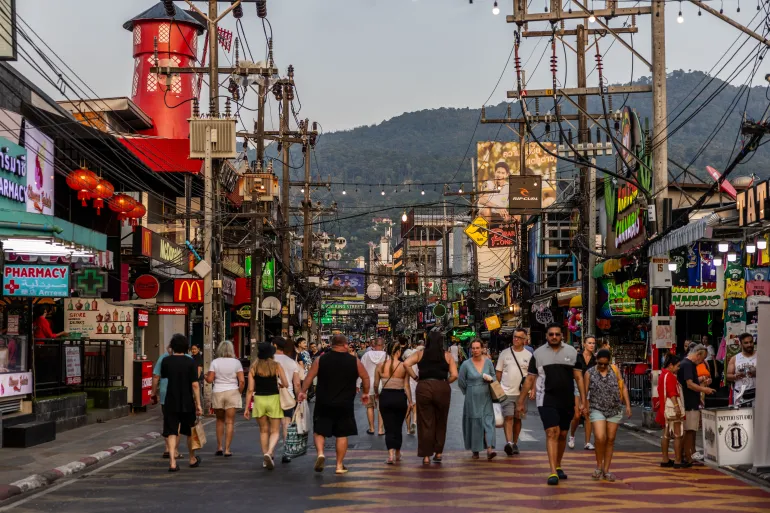
On paper, it was registered as a nail salon.
In reality, it was allegedly a front for an adult content business run by an Israeli woman through the subscription-based website OnlyFans.
The woman’s company in the southern province of Krabi was just one of nearly 500 businesses – ranging from beauty salons to cannabis farms – that Thai authorities say were registered by a single accounting firm.
All of the companies were linked to foreigners who had falsely listed a Thai “nominee” as the majority owner to get around the law on foreign ownership, according to authorities.
Under the Foreign Business Act, non-citizens are generally prohibited from holding more than a 49 percent stake in local businesses.
To get around the rule, some foreign entrepreneurs pay locals to fill out paperwork stating that they own at least 51 percent of their company despite having little or no involvement in the business.
After years of turning a blind eye to the dubious use of Thai nominees, authorities are now cracking down and demanding proof that citizens listed as local partners have real holdings in the firms they are registered to.
After launching a wave of inspections across popular tourist areas and cross-checking official databases using artificial intelligence, the government has identified 50,000 foreign-linked companies for greater scrutiny.
Legal firms say they are being inundated with inquiries from foreign businesses and property owners who fear their assets could be frozen or seized if they are found to be part of illicit nominee schemes.
“All of them fear losing their investment and being charged with a criminal case,” Brian Ramsden, general manager of foreign affairs at Lawyers for Expats Thailand, told Al Jazeera.
“It’s always the same excuse: ‘We knew it was illegal, but the lawyers told us it’s OK,’” Ramsden said, explaining that his firm has been getting more than 100 calls a day, “asking us what to do”.
“If the company is not trading, it’s a red flag,” Ramsden added.

Thai Prime Minister Anutin Charnvirakul has been among those leading the charge against fraudulently registered companies.
On a tour of popular tourist areas in southern Thailand last month, Anutin pledged to throw the book at illegal businesses and take down any criminal organisations using shell companies, a matter of growing concern amid the proliferation of cyber-scam networks in Southeast Asia.
“In cases where … one person holds shares and owns over 200 companies, it is essentially selling companies, selling shells so that foreigners can go and conduct business,” he said.
“This violates the legislative intent of the law, and it is believed that we will be able to prosecute in this regard.”
On resort islands Koh Samui and Koh Phangnan alone, about 70 percent of the 16,800 “registered legal entities” are part-owned by foreigners, the Ministry of Commerce said following an audit last month, though it added that their foreign links did not necessarily mean they were breaking the law.
Last week, authorities said they had referred 28 foreign suspects to prosecutors following an investigation into fraudulently registered firms in the provinces of Phuket and Surat Thani.
The arrests came after authorities in Koh Phangan had earlier announced the confiscation of 30 plots of land worth approximately 150 million baht ($4.5m) and arrested two Thai nationals linked to illegal companies.
The enforcement push comes as some local businesses complain about being undercut by foreigners.
“There are foreigners who invest in villas and convert them into Airbnbs, and once they’ve developed them, Thai people can no longer touch them price-wise,” Thong, a prominent Thai businessman who asked to be identified only by his nickname, told Al Jazeera.
“It is not right for foreigners to own them completely because it means many Thai people get left behind. That’s the real problem.”
The crackdown has also prompted fears that legitimate foreign investors could find themselves on the wrong side of the law unawares, damaging Thailand’s reputation as a place to invest.
While condominium ownership rules mean that 51 percent of any development must be reserved for Thais, it is not unheard of for developers in hot spots such as Bangkok, Phuket and Pattaya to sell entire apartment blocks to foreign clients.
On online forums, foreigners have shared horror stories about buying and leasing property in Thailand, including learning that they did not legally own the condo they bought because it had been reserved for Thai ownership.

Across Pattaya, foreign business-people and investors are in a state of “heightened wariness and stress”, said Victor Wong, a foreign investment and tax specialist based in Pattaya.
“The system is tightening without simultaneously expanding lawful entry points,” Wong told Al Jazeera.
“Clients are no longer looking for shortcuts; they are looking for sustainable, lawful structures that will allow them to continue operating in Thailand with confidence,” he said.
While the sudden enforcement of decades-old rules has sent a chill through the expat community, not all foreign residents are sympathetic to concerns about the crackdown.
“This isn’t Thailand’s fault,” said Ramsden of Lawyers for Expats Thailand.
“No one put a gun to the foreigners’ heads. They come to Thailand, and most of their common sense goes out the window,” he said.
“This is about the people not following the rules. This crackdown is going to be better and safer for Thailand.”
[Aljazeera]
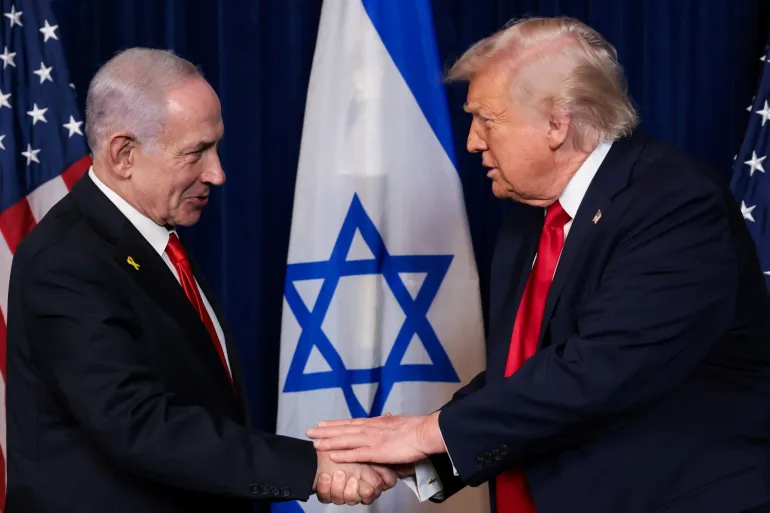
In January 2024, the publication Axios reported that the United States president at the time, Joe Biden, was “running out of patience” with Israeli Prime Minister Benjamin Netanyahu.
Israel’s genocidal war on Gaza had been raging for months by that point, and Biden was facing public backlash over US support for the conflict.
The assault would continue for the rest of Biden’s term and bleed into the first 10 months of Donald Trump’s second presidency.
Since then, media outlets have continued to publish anonymous accounts of rifts and “frustrating” calls between Trump and the Israeli prime minister. But US support for its Middle East ally has never wavered.
Another anonymously sourced report about a furious, expletive-laden call between US and Israeli leaders came out this week, and it spread rapidly across international media.
Axios reported on Monday that Trump called Netanyahu “f***ing crazy” and berated him over Israel’s escalation in Lebanon.
Around the same time, an Israeli attack killed six people, including two children, in the southern Lebanese town of al-Marwaniyah.
Experts say that despite leaks of feuds and harsh words between US leaders and Netanyahu, policies are ultimately what matters, and they have changed very little.
Ryan Costello, the policy director at the National Iranian American Council Action (NIAC), said political observers have grown to “mock” reports of closed-door anger from US presidents against Netanyahu.
“What’s really important is what actually happens in practice,” Costello told Al Jazeera.
Though there are reports of Trump giving Netanyahu a dressing-down, Isabelle Hayslip, an advocacy manager at the US-based rights group DAWN, said that US policy remains aligned with Israeli interests.
“Single-source reporting of Trump as a strongman who picks up the phone and yells at Netanyahu for undermining US policy is contradicted by the actual policy outcomes where Netanyahu gets exactly what he wants,” Hayslip told Al Jazeera.
“Trump has no final say over Israeli actions. Like his predecessors, the president has proved completely unable to prioritise American interests, instead catering to Israel’s expansionist whims.”
The latest report comes as Trump faces increasing pressure from his Democratic rivals and segments of his base over his handling of the war on Iran, which he launched jointly with Netanyahu on February 28.
The conflict, which saw Iran close the Strait of Hormuz, has sent gasoline prices soaring in the US and fuelled inflation.
Critics have accused Trump of allowing Israel to drag the US into a war that does not advance Washington’s priorities.
With negotiations to end the war stagnating, Israel’s escalation in Lebanon and its threat to bomb Beirut risks derailing the fragile truce that came into effect in April.
Iranian officials have suggested that they cut off contact with the US over the Israeli attacks in Lebanon.
Before the Axios report, Trump announced he had spoken to Netanyahu and an unidentified Hezbollah representative, and both sides agreed that “all shooting will stop”.
But Netanyahu was quick to assert that the Israeli military “will continue to operate as planned in southern Lebanon”, where it is deepening its invasion and turning entire towns into rubble.
Advocates say Israeli atrocities in Lebanon and across the region could not have happened without US backing.
Since the start of Israel’s genocidal war on Gaza in October 2023, the US has provided Israel with nearly $25bn in military aid, helped fend off retaliatory Iranian attacks against the country and vetoed several ceasefire resolutions at the United Nations Security Council.
Nonetheless, anonymous accounts that the US president is angry at Netanyahu have become a regular feature in the media.
Such reports are attributed to US officials, but it is unclear how leaks with a similar message on the same topic have continued across two administrations from different political parties.
Publicly, aides of both Biden and Trump have largely refrained from criticising Israel.
Trump has regularly praised the Israeli prime minister, arguing on more than one occasion that Israel would have ceased to exist without Netanyahu’s leadership.
In December, the US president also called the Israeli prime minister a “hero” during a meeting in Florida.
“We’re with you, and we’ll continue to be with you,” Trump told Netanyahu.
Two weeks earlier, Axios reported that the White House had “scolded” Netanyahu over Israel’s ceasefire violations in Gaza.
“The White House message to Netanyahu was: ‘If you want to ruin your reputation and show that you don’t abide by agreements, be our guest, but we won’t allow you to ruin President Trump’s reputation after he brokered the deal in Gaza,” the publication quoted a US official as saying.
Few people know the exact content of high-level calls at the White House. Sometimes, top officials, including members of the National Security Council, sit in on conversations between the president and world leaders after briefings.
Negar Mortazavi, a senior fellow at the Center for International Policy, a research nonprofit, said the leak about the tense call between Trump and Netanyahu may be aimed at making Trump look tough on Israel to quell outrage over the war.
“It could be sort of a way of moderating the anger or the blame at the US for continuing this unpopular, illegal, unnecessary war,” Mortazavi told Al Jazeera.
She added that the message it sends is, “Look, we’re very angry at Israel. We yell at them. We call them names.”
But Mortazavi stressed that policy is more important than rhetoric: “Does that change the facts on the ground?”
For his part, Costello argued that the leak was likely directed at Iran.
“I see this one primarily as a signal to the Iranians that Trump is serious, and he wants to insulate what’s happening in Lebanon and Israel’s attacks from the Iran negotiations,” Costello said.
“It remains to be seen the extent to which that excoriation has actually led to a change in Israel’s policies, and I think there is a strong incentive for continued defiance from Netanyahu.”
Axios, meanwhile, has defended its coverage.
“We stand by our reporting, which by the way noted ‘Trump and Netanyahu have had several tense calls in the past but have still coordinated closely on Iran and other issues,’” Jake Wilkins, a spokesperson for the publication, told Al Jazeera in an email.
Mortazavi warned that all sides of the war on Iran are trying to influence public perceptions of the conflict.
She pointed to recent reports that Iranian President Masoud Pezeshkian had resigned, a rumour that was promptly denied by his office.
“This is a very hybrid war. It’s a war on the battlefield. It’s an intelligence war. It’s a war of narratives,” Mortazavi told Al Jazeera. “And then there’s also an information war, which includes disinformation, half-truths and strategic leaks.”
[Aljazeera]

Netanyahu downplays US-Israel rift after Trump confirms criticism

Sabalenka the latest French Open shock exit as Shnaider wins quarterfinal

Kusal Mendis, Pathum Nissanka, bowlers put Sri Lanka 1-0 up

Showers about 100 mm are likely at some places in the Western and Sabaragamuwa provinces and in Galle, Matara, Kandy and Nuwara-Eliya districts

BASL asks govt. to abandon plan to raise retirement ages of CA and SC judges

New US tariffs proposed on 60 countries, including Sri Lanka

‘Dates have the highest sugar content to fight Coronavirus’

Sunday Island 27 December – Headlines

#SundayIsland 17th December – Headlines

Sunday Island – 28th March

Sunday Island Headlines – 21 March

Sunday Island – 21st February – Headlines
-
 News5 days ago
IMF urges Lanka not to meddle with exchange rate
-

 Business6 days ago
Sri Lanka’s construction industry losing ground while no one watches
-

 News2 days ago
Lankan duo emerge winners in Latin dance championship held in Blackpool, UK
-

 Business3 days ago
IMF’s unstated rate:Sri Lanka’s $695m loan costs about 5.33% per annum
-
 News5 days ago
State of emergency extended
-

 Features6 days ago
The Division Bell Mystery
-

 Features4 days ago
Are threats to Buddha Sasana external or from within?
-

 News3 days ago
UNP challenges NPP move to amend Vihara – Devalagam Act