
Business
Aitken Spence non-tourism sectors record highest ever PBT of Rs. 5 billion in 2020-2021

During a turbulent financial year that was affected by the unprecedented COVID-19 pandemic, Aitken Spence Group’s non-tourism sectors delivered the highest ever profit before tax of Rs. 5.01 billion for the twelve months ending 31st March 2021 compared to Rs. 4.2 billion last year and partially offsetting the impact of the Group’s Tourism portfolio which recorded its worst year ever due to the devastating impact of the pandemic.
The Group’s non-tourism sectors overcame multiple challenges including business disruptions, health and safety risks faced by the Spensonians and the overall slowing down of economic activity to record a growth in profit before tax of 55% in the 4th quarter and 18.9% in the financial year, compared to the corresponding periods in the previous year.
The Maritime and Freight Logistics sector which has operations across 5 countries contributed 51.2% of the Group’s non-tourism profit before tax by recording Rs. 2.6 billion which is a growth of 13.9% year-on- year. This is despite the overall decline in trade volumes during the year. The cargo general sales agencies represented by the Group performed exceptionally well which benefitted from increased freight rates and innovative marketing efforts. Despite the lower import and export volumes recorded by the country during the year, the Group’s integrated logistics segment witnessed a growth in profits due to strategic shifts implemented in its business activities. It is noteworthy that amidst challenges the sector established new strategic partnerships demonstrating the confidence of the business partners in these companies and the Group.
The Strategic Investments sector was the second highest contributor towards the Group’s performance with a profit before tax of Rs. 2.1 billion which is a growth of 23.3% year-on-year. The country’s first ever waste-to-energy power plant commenced in February 2021 with a healthy contribution during these months of operation. The Group recently invested in three more renewable energy projects, expanding its portfolio in hydropower in the pursuit of meeting rising energy demands, sustainable development, access to clean energy and lowering the national carbon footprint. The Group’s investment in plantations provided a substantial boost to the overall earnings of the sector recording its highest ever profit from inception due to its balanced portfolio of diversification.
The Services sector performance was commendable recording a profit before tax of Rs. 392 million which is a growth of 31.8% year-on-year. The Money transfer segment responded to a change in customer needs by facilitating a door-step delivery solution with no additional cost and a direct to bank facility, which resulted in an increase in remittances handled and a record year of performance for the business unit. The Insurance segment was able to record a marginal increase in profitability compared to the previous year through innovative solutions despite the challenges posed by the pandemic. The Elevators segment had an improved year, to record a profit for the year despite the temporary slowdown in the construction industry.
The Tourism sector was worst affected as border closures brought international tourism to a halt. The Tourism sector recorded a sharp decline in revenue from which the sector is still recovering due to the recurrence of the pandemic in source markets despite the roll out of vaccines. Notwithstanding these setbacks, Heritance Kandalama, Sri Lanka, and Heritance Aarah, Maldives belonging to the Group’s Heritance Hotels and Resorts cluster was the only Sri Lankan hotel chain to be recognised at the Condé Nast Traveller Readers’ Choice Awards Middle East 2020. Moreover, Aitken Spence Travels became one of the first Destination Management Companies (DMCs) to be awarded the ‘Safe and Secure’ Tourism Certificate of Compliance by the Sri Lanka Tourism Development Authority (SLTDA).
The Group led the revival of the tourism sector in Sri Lanka and significantly contributed towards the recovery through facilitation of the first of the charter flights to Sri Lanka since the reopening of the airports on 21st January 2021, from unconventional markets such as Kazakhstan. The Group accounts for over 35% of the total arrivals to Sri Lanka from the date of reopening of airports to the end of the financial year. The resorts of the Group in the Maldives recorded a promising revival with the gradual reopening of the resorts from the third quarter of the financial year, with the segment recording a profit from operations for the fourth quarter.
Overall, the Group recorded a loss before tax of Rs. 2.8 billion with the tourism sector reporting a loss of Rs. 7.8 billion for the year. Nevertheless, the Group’s resilience despite its large exposure to the tourism sector is commendable at a time when some of the world’s largest tour operators and air lines required Government bailouts in order to keep afloat.
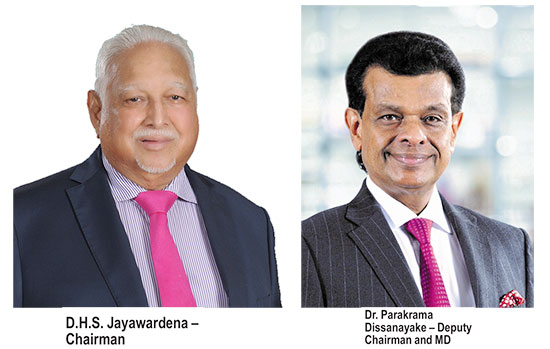
“During yet another challenging year, Aitken Spence has been reinventing its businesses and our priorities are focused on re-strategising our operations and business models while strengthening resilience. With this objective, the Group embarked on a business and process transformation drive across all business segments. Our strategy to realign, reinvent and relaunch has been adopted very well by our motivated Spensonians proving their true grit. We are indeed confident of the capability of our team to take the Group to a brighter future in the new reality that has characterised the current business environment”, commented Dr. Parakrama Dissanayake, Deputy Chairman and Managing Director of Aitken Spence PLC.
Aitken Spence PLC won the highest number of awards received by a single company at the Best Corporate Citizen Sustainability Award 2020 and the only company that has been ranked among the Top 10 Best Corporate Citizens in Sri Lanka for an unprecedented 15 consecutive years.
Listed in the Colombo Stock Exchange since 1983 and with a history spanning over 150 years, Aitken Spence is a blue-chip conglomerate with operations in 16 diverse segments in 8 countries: Sri Lanka, Maldives, Fiji, Mozambique, India, Oman, Myanmar and Bangladesh.


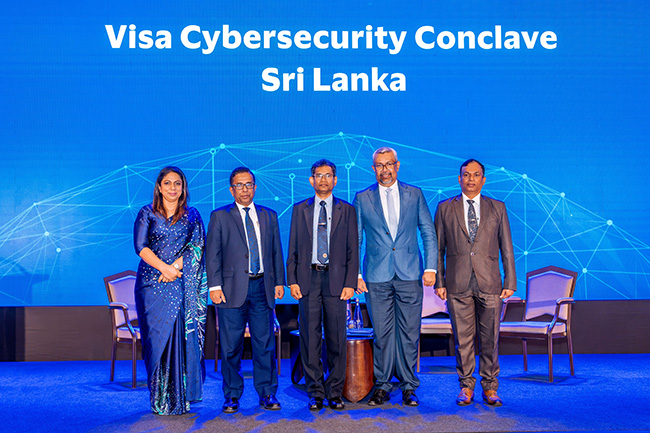
Visa successfully hosted the Visa Sri Lanka Cybersecurity Conclave 2026 on 25 June 2026, convening leaders from the banking sector, Government, regulators and industry bodies to foster dialogue on evolving cyber threat landscape and the collective action needed to strengthen cyber resilience across Sri Lanka’s digital economy.
As digital payments continue to expand, cybersecurity remains critical to sustaining trust, protecting consumers and businesses, and supporting a more inclusive digital economy. The conclave served as a focused platform for industry dialogue on emerging cyber threats, fraud prevention, regulatory readiness and public-private collaboration in safeguarding consumers, businesses and the wider financial ecosystem.
The event featured expert-led sessions by Visa leaders, covering Cyber Threat landscape, AI-driven Cybersecurity, Visa Cyber Solutions and Advisory, Risk landscape and AI-powered Fraud Prevention introducing Featurespace. Discussions underscored the increasing sophistication of cyberattacks and fraud patterns, particularly as AI-enabled threats create new challenges for financial institutions, regulators, and businesses.
A senior-level panel discussion brought together Sirikumara Kudagama, Deputy Governor of the Central Bank of Sri Lanka; Waruna Dhanapala, Secretary to the Ministry of Digital Economy; Brigadier K.V.P. Dhammika, Director of Cyber Command and Information Warfare Centre; Mr. Kapila Hettihamu, Chief Risk Officer of Commercial Bank of Ceylon; and Avanthi Colombage, Country Manager, Sri Lanka and Maldives, Visa. The panel delved on Sri Lanka’s changing cyber risk environment and the need for stronger preparedness across the financial sector, with emphasis on proactive threat intelligence, real-time response capabilities, stronger information sharing, capacity building, robust regulatory frameworks and the adoption of advanced security solutions to help institutions stay ahead of emerging risks.
Waruna Dhanapala, Secretary to the Ministry of Digital Economy, said, “As Sri Lanka advances its digital transformation, cybersecurity is a national priority and a critical enabler of trust in the digital economy. The expansion of digital payments and technology-enabled commerce presents significant opportunities, but also requires coordinated action, strong safeguards and trusted partnerships. Initiatives such as the Visa Sri Lanka Cybersecurity Conclave 2026 are valuable in bringing together government, regulators, financial institutions and industry leaders to exchange insights, address emerging risks and strengthen collective resilience. We value the role that global payments leaders such as Visa continue to play in supporting Sri Lanka’s digital ecosystem through expertise, innovation and collaboration. This conclave was a timely effort to reinforce the shared responsibility needed to build a secure, resilient and inclusive digital economy for the country.”
Commenting on the success of the conclave, Avanthi Colombage, Country Manager, Sri Lanka and Maldives, Visa, said, “As Sri Lanka’s digital economy continues to grow, cybersecurity is fundamental to building trust in digital payments. At Visa, we are committed to working closely with regulators, financial institutions and ecosystem partners to support safer, more resilient digital commerce for consumers and businesses. Strengthening cyber resilience is not the responsibility of one institution alone. It requires collaboration, preparedness and continued investment across the ecosystem. Through initiatives such as the Visa Sri Lanka Cybersecurity Conclave 2026, Visa continues to support Sri Lanka’s financial ecosystem with global expertise, practical insights and security-led solutions that help protect the future of digital commerce in Sri Lanka.”
Business
First Capital maintains Bond Yield Outlook for 2026, identifies market recovery potential in 2027

First Capital Holdings PLC, a subsidiary of JXG (Janashakthi Group) and a key player in Sri Lanka’s capital markets landscape, has maintained its outlook for Sri Lanka’s fixed income and equity markets, forecasting stable bond yields through 2026 while identifying potential opportunities emerging in 2027 as economic conditions improve.
According to the First Capital Mid-Year Outlook 2026, bond yields are expected to remain within current forecast ranges during 2026, with a 50 basis point premium introduced to the longer end of the yield curve in the first half of 2027 due to continued concerns surrounding debt sustainability and the pace of structural reforms.
First Capital expects inflation to average 6% in 2026, with recent monetary policy tightening by the Central Bank of Sri Lanka supporting inflation stability. However, the higher interest rate environment is expected to weigh on economic growth and credit expansion, creating potential room for a rate reduction during the first half of 2027.
Commenting on the outlook, Dimantha Mathew, Chief Research & Strategy Officer of First Capital Holdings PLC, said, “The recent tightening in monetary policy has helped stabilise inflation expectations, although it is expected to moderate economic momentum in the near term. We believe investors should remain positioned within shorter tenures, providing a dual opportunity with potential capital gains as yields are expected to normalise and move down towards our targeted bands, whilst attractive carry opportunities remain available for investors. While progress on reforms remains critical, improving macroeconomic stability could create favourable conditions for market recovery over the medium term.”
First Capital forecasts the Average Weighted Prime Lending Rate (AWPR) to remain between 10.0%–11.0% during the second half of 2026, before easing to 9.5%–10.5% in the first half of 2027, supported by moderating GDP and credit growth and stabilising liquidity conditions.
The Sri Lankan Rupee is expected to remain within a range of LKR 325–335 against the US Dollar during the second half of 2026, with a gradual depreciation to LKR 335–345 anticipated in the first half of 2027 as external pressures and foreign exchange dynamics evolve.
In equities, First Capital maintains its 2026 All Share Price Index (ASPI) base case fair value target of 20,500 and introduces a 2027 target of 24,500, supported by expectations of softer inflation, earnings recovery, improving liquidity and a gradual easing of monetary policy. Given the expected near-term sideways movement in the market, First Capital recommends a higher cash allocation of 50% to enable investors to capitalise on potential entry opportunities ahead of a broader recovery.
The First Capital Mid-Year Outlook 2026 reflects the institution’s continued commitment to providing research-driven market insights and supporting investors in making informed investment decisions amid Sri Lanka’s evolving economic landscape.

The CSE was trending down yesterday as external environmental issues, especially the US-Iran hostilities, continued to impact the global economy adversely.
The All Share Price Index went down by 170.60 points, while the S and P SL20 declined by 43.39 points. Turnover stood at Rs 2.63 billion with four crossings.
Turnover stood at Rs 2.63 billion with four crossings. Those crossings were: CT Holdings crossed 1.1 million shares to the tune of Rs 551 million; its shares traded at Rs 510, Cargills Ceylon 856,000 shares crossed for Rs 145 million; its shares sold at Rs 630, LMF 232 million shares crossed for Rs 232 million; its shares sold at Rs 84 and Dialog 457,000 shares crossed to the tune of Rs 20 million; its shares sold at Rs 43.
In the retail market companies that mainly contributed to the turnover were; JKH Rs 109 million (5.5 million shares traded), Haycarb Rs 93 million (535,000 shares traded), CCS Rs 60 million (447,000 shares traded), Bairaha Farm Rs 54 million (626,000 shares traded), Ambeon Capital Rs 48 million (1.6 million shares traded), LMF Rs 47 million (556,000 shares traded) and ACL Cables Rs 44 million (455,000 shares traded). During the day 56 million share volumes changed hands in 17347 transactions.
It is said that manufacturing sector counters, especially JKH, performed well. Further, beverage sector counters, especially Cargills and CCS performed significantly well.
Yesterday the rupee was quoted at Rs 336.20/30 to the US dollar in the spot market, from Rs 336.15/25 Friday, while bond yields edged up, dealers said.
The telegraphic transfer rate for the dollar was 331.80 buying, Rs 340.80 selling; the euro was 376.9467 buying, 390.8637 selling; and the pound was 445.4833 buying, 459.5289 selling.
By Hiran H. Senewiratne

Charted Computer Institute of Sri Lanka to be established
Drug Dependent Persons (Treatment and Rehabilitation) Act No 54 of 2007 to be amendmend
Mrs. O. T. M. I. Thilakarathne appointed to the Post of Surveyor General
Purchase of 600 buses for intercity / long distance services of the Sri Lanka Transport Board
Protection of Historical, Cultural, and Traditional Intellectual Property related to the Kandy Esala Perahera
Development of roads which are not under the Road Development Authority

‘Dates have the highest sugar content to fight Coronavirus’

Sunday Island 27 December – Headlines

#SundayIsland 17th December – Headlines

Sunday Island – 28th March

Sunday Island Headlines – 21 March

Sunday Island – 21st February – Headlines
-
 Business3 days ago
‘Giving up was never an option’: The fisherman who fought back after losing millions in SL
-

 Features3 days ago
Two memorable excerpts from a former SLAF commander’s memoir
-

 Latest News3 days ago
Davis cup Asia/Oceania Group IV 2026 to be held in Colombo from 20th to 25th July
-

 Features3 days ago
Erdoğan’s New Republic
-

 Life style3 days ago
Taste of the Swiss Alps comes to Colombo
-
 Features7 days ago
Dirty Money
-
 News4 days ago
Dengue outbreak gallops ahead: Infections surpasses 73,455, leaving 50 dead
-

 News4 days ago
Evidence recorded in money laundering case against Yoshitha Rajapaksa