
Sports
How Sri Lanka fumbled their Champions Trophy spot

by Rex Clementine
Champions Trophy, one of cricket’s biggest showpiece events is underway in Pakistan and Dubai, but conspicuous by their absence are Sri Lanka – a team that once punched above their weight at ICC tournaments. For the first time since Anura Tennekoon led Sri Lanka to their maiden ICC event, the 1975 Prudential World Cup in England, the men’s team has failed to make the cut.
How did Sri Lanka end up missing out on a tournament of the magnitude of the Champions Trophy? To be clear, this is not a witch hunt to pin the blame on individuals. Rather, it’s a post-mortem to identify where things went off the rails and, more importantly, how to avoid future embarrassments of this scale.
The warning signs had been flashing like a malfunctioning scoreboard for a while. Sri Lanka’s steady slide in the rankings due to poor bilateral performances meant they had to take the scenic route through qualifiers. Ultimately, their ninth-place finish in the 2023 World Cup in India proved to be the death knell for their Champions Trophy hopes. Only the top eight teams went through and Sri Lanka missed out.
Both Sri Lanka and Bangladesh finished with four points apiece, but Bangladesh sneaked through by the barest of margins – thanks to a slightly superior Net Run Rate. This was a case of failing to keep an eye on the fine print, a classic example of losing a game in the dressing room before even stepping onto the field.
From the outset, Sri Lanka’s preparation for the World Cup resembled a game plan scribbled on a napkin – unclear and chaotic. The selection committee, after initially deciding to replace Dasun Shanaka as captain, made a dramatic U-turn at the eleventh hour. Shanaka, in a cruel twist of fate, lasted just two games before being sidelined by injury, and the captaincy baton was hastily passed to Kusal Mendis. Burdened with leadership responsibilities, Mendis lost his golden touch with the bat and Sri Lanka lost their direction.
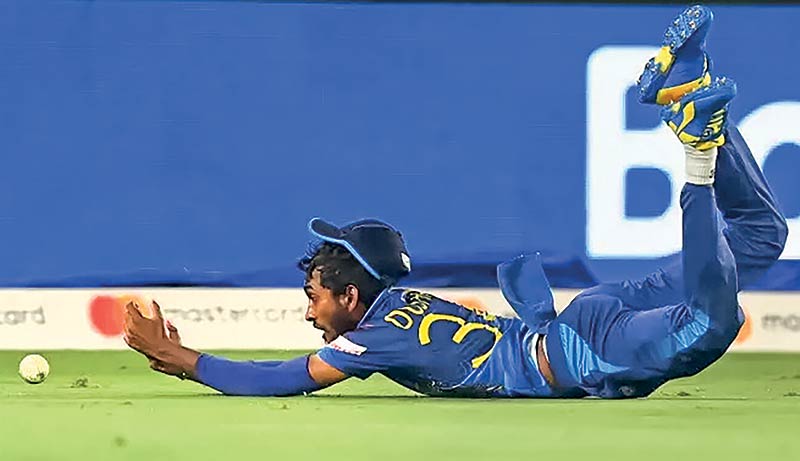
Fielding was Sri Lanka’s Achilles’ heel and the team management’s approach to fixing it was akin to putting a band-aid on a fractured leg. They hired a foreign fielding coach to create an illusion of progress, but the reality was starkly different. Sri Lanka finished the tournament as the worst fielding side – proof that simply ticking boxes doesn’t win matches.
Take the match against Pakistan in Hyderabad. After posting a formidable 344, Sri Lanka should have won easily. Instead, butter-fingered fielding gifted Pakistan reprieves, and they chased down the target with ten balls to spare. The lapses in the field turned what should have been a regulation win into an agonizing defeat.
Then there was the curious case of Sri Lanka’s inability to bat out 50 overs consistently. In a desperate bid to plug the hole, the selectors turned to Dimuth Karunaratne, hoping his Test match resilience would steady the ship. While the idea had merit – given Karunaratne’s solid showing in the 2019 World Cup – he was inexplicably underutilized, playing just two matches. The end result? The problem persisted, and the batting continued to implode under pressure.
Even amid the wreckage, there were glimpses of brilliance. Sri Lanka dismantled defending champions England in emphatic fashion, thanks largely to Lahiru Kumara breathing fire with the ball. He sent Jos Buttler and Ben Stokes packing, putting Sri Lanka in the driver’s seat. But just when he looked like being the X-factor, Kumara was sent home. The official word was an injury, but murmurs in cricketing circles suggested otherwise. Whatever the real reason, losing a strike bowler mid-tournament only added to Sri Lanka’s woes.
But here’s the good news – Sri Lanka has begun to turn the tide. Currently ranked No. 5 in ODIs, the team has clawed their way back through sheer grit, a clearer strategy, and, most importantly, a no-nonsense approach to discipline. Indiscipline, which once festered unchecked, is no longer tolerated. And it’s paying dividends.
Captaincy, long a poisoned chalice, has now been handed to Charith Asalanka, who is marshalling his troops with composure. The team is slowly but surely putting the heartbreak of missing the Champions Trophy behind them and is now focused on regaining lost glory.
Since their World Cup exit, Sri Lanka have beaten both India and Australia in bilateral ODI series – no mean feat, considering these two sides were finalists in the last World Cup. That’s quite the statement of intent. Adding to the feel-good factor, Maheesh Theekshana has climbed to the No. 1 spot in the ICC ODI bowler rankings, becoming only the second Sri Lankan after Nuwan Kulasekara to achieve the feat.
Off the field, crucial reforms have been implemented to ensure Sri Lankan cricket regains its competitive edge. The domestic structure, once bloated and diluted, is finally being streamlined. The number of first-class teams has been reduced to 14, meaning a powerhouse like SSC will temporarily lose their first-class status after finishing at the bottom. It’s a bitter pill to swallow, but credit to the authorities for having the courage to make tough calls. Next year, the number will be cut further to 12, making the tournament more competitive and weeding out mediocrity.
Additionally, the schools’ first eleven knockout matches have been extended from two to three days, and even Big Matches will now be played over three days, with Sri Lanka Cricket (SLC) footing the bill. This move is aimed at nurturing players who can bat long and take games deep – a skill set that has been sorely lacking in recent years.
Meanwhile, Sri Lanka ‘A’ and the Under-19 teams are getting regular exposure, ensuring a robust pipeline of talent for the future.
Sri Lankan cricket has endured its fair share of setbacks, but the signs are encouraging. The team has taken its knocks, learned its lessons, and is charting a course back to the top. There’s still plenty of work to be done, but if recent performances are anything to go by, the dark days may finally be behind them.
As any seasoned cricketer will tell you, form is temporary, but class is permanent. Sri Lanka may have hit a rough patch, but the fire still burns.

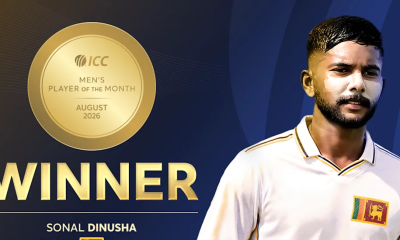



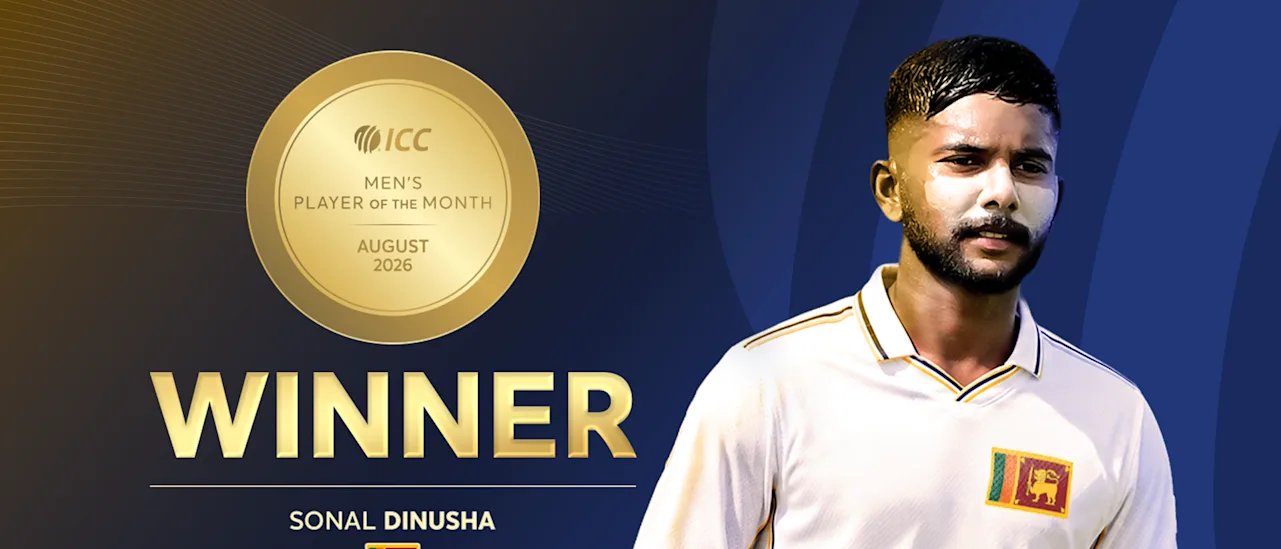
Sonal Dinusha has been named the ICC Men’s Player of the Month for August 2026.
This marks Dinusha being crowned with the accolade for the first time in his career.
Having played only three Tests for Sri Lanka coming into the ICC World Test Championship series against India, the left-handed batter was the leading run-getter in the two-match series.
Dinusha finished with 420 runs, averaging a spectacular 140, with three centuries and a half-century to his name.
“This recognition means so much to me, especially so early in my career, and I’m truly grateful to the ICC for this honour,” Dinusha said while reflecting on his latest achievement.
While Sri Lanka lost the first Test by 165 runs, Dinusha managed to score 100 in the first innings, followed by 84 runs in the second.
In the second Test, with the hosts battling to avoid a series sweep, Dinusha scored twin centuries in the two innings (103 and an unbeaten 133) to orchestrate a famous draw.
“The series against India will always hold a special place in my heart,” Dinusha added.
“Scoring three centuries was a dream come true, made even more meaningful by achieving them in Colombo and Galle in front of our home fans. “Although we didn’t get the overall result we hoped for, the way our team fought back in the second match showed the character, belief and determination we have as a side. I’m proud to have shared that fight with my teammates.
Dinusha made his Test debut for Sri Lanka last year, during the home series against Bangladesh.
In a short time, the all-rounder has made a big impact while representing his team in the longest format, an achievement he isn’t taking for granted.
“Representing Sri Lanka is a privilege I never take for granted, and this recognition gives me even more motivation to keep learning, improving and contributing to the team.
“I’ll continue to give my very best for Sri Lanka in the months and years ahead.”
The hosts managed to keep the series at 1-0, and Dinusha was named the Player of the Match in Colombo.
[ICC]
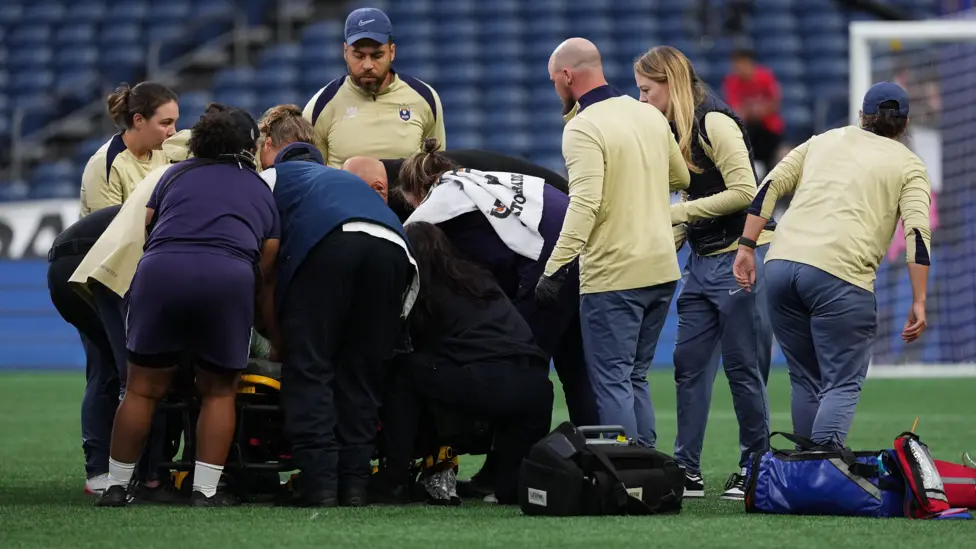
United States women’s national team player Savannah DeMelo is suing a hospital and two doctors after she suffered a cardiac arrest on the pitch last year.
Midfielder DeMelo, who has seven senior caps for the USA, has filed a lawsuit against University of Louisville Health (UofL Health) for negligence.
The 28-year-old, who plays for Racing Louisville, collapsed in the first half of a National Women’s Soccer League (NWSL) match on 14 September 2025.
According to documents seen by BBC Sport, the case was filed on Tuesday morning with Jefferson Circuit Court in Kentucky, where her club is based – a year and a day after her on-field collapse.
DeMelo’s filing claims UofL Health and two doctors, Dr Sarabjeet Suri and Dr Jennifer Daily, “failed to act as a reasonably prudent and competent medical practice, and such negligence was a substantial factor in causing DeMelo to suffer severe physical injuries, including, but not limited to, her cardiac arrest”.
Dr Daily, according to her online UofL biography, is Racing Louisville’s chief medical officer. The lawsuit states DeMelo was under the care of Dr Daily from January 2024 to July 2026.
It states that in March 2025, Dr Daily referred DeMelo to Dr Suri for “evaluation and treatment” after she had been complaining of chest pain, dizziness and shortness of air; Dr Suri obtained a history, performed a physical examination and ordered diagnostic tests.
Nearly six months later, DeMelo suffered the cardiac arrest.
“She was subsequently diagnosed and treated for ventricular tachycardia [an abnormal heart rhythm],” the suit states.
DeMelo, who has spent her entire professional career with Racing Louisville, has not played since her collapse.
In a post to her instagram page on Tuesday, De Melo – who was picked in the USA squad for the 2023 Women’s World Cup and started their first two games – marked the anniversary of the incident.
“A year ago today, while playing soccer, I collapsed due to an undiagnosed cardiac arrhythmia, that caused me to go into cardiac arrest,” she wrote.
“I respect and appreciate the privacy everyone has met me with while going through everything I have this year. I’ll never be able to fully put into words how emotionally hard this year has been. There has been a lot of uncertainty and emotions intertwined with it all.”
[BBC]
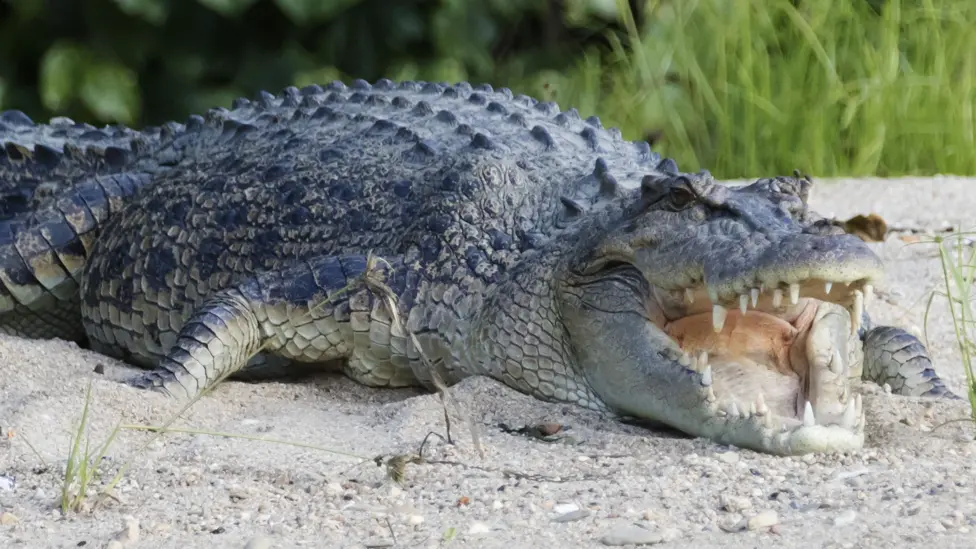
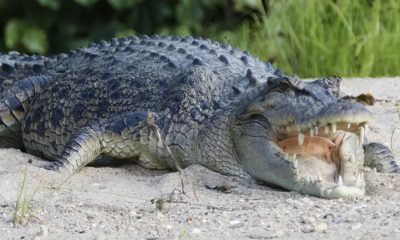
A river that is home to about 500 saltwater crocodiles has been given the OK to host Olympic and Paralympic rowing and canoeing events at the 2032 Brisbane Games.
The course on the Fitzroy River in Rockhampton, Queensland, has passed an independent technical assessment into its suitability.
The assessment did not consider the crocodiles but instead looked at “how the course would perform under a range of conditions, weather patterns, water levels and flood risk at both Games time and throughout the period leading into the Games”.
The report was commissioned by the Games Independent Infrastructure and Coordination Authority (GIICA), which noted that the Fitzroy River Flatwater Facility “is already a training and competition venue for flatwater sports, supporting school state championships, local regattas, and national team training camps”.
As a recognised rowing facility, contingency plans are in place at events for when crocodiles are spotted and Olympic officials have previously been assured of rower safety.
World Rowing and Paddle Worldwide, formerly International Canoe Federation, both endorsed the course.
“Based on the extensive analysis undertaken, we now know that the Fitzroy River is capable of providing fair competition conditions during the period of the Games, consistent with the requirements of Olympic and Paralympic Rowing,” World Rowing President Jean-Christophe Rolland said .
Paddle Worldwide President Thomas Konietzko said: “The quality and depth of the technical work undertaken has significantly improved our understanding of the field of play and provides confidence to us and our athletes that the course can deliver fair competition for Canoe Sprint athletes.”
Brisbane 2032 President Andrew Liveris played down the issue of crocodiles last year.
“There are sharks in the ocean and we’re still surfing… it’s a can do, not a can’t do – please change the mindset here,” he said at the time.
Speaking on Thursday about the venue having now been given the go-ahead, he said: “The endorsement provides additional certainty as we move into the next phase of venue planning and Games delivery, ensuring all future design and operational work continues to focus solely on Rockhampton.”
Saltwater crocodiles – known locally as Salties – live in both freshwater and saltwater and can grow to be in excess of six metres long.
‘I’m sure all the athletes would row faster’
Drew Ginn, who won three Olympic gold medals for Australia in rowing, told BBC Radio he has concerns over potential flooding and “fairness and integrity” at the venue, along with the Olympic experience for athletes and spectators at a location “six or seven hours” from Brisbane.
“Personally, I’m not fearful of the Australian animals but I’ve never had a crocodile near me,” he said.
“I’m sure I’d row faster, I’m sure all the athletes would row faster. That’s on the list of concerns, I don’t think it’s the highest priority in concerns but it was certainly cited very early on.
“Things like relocating crocodiles out of the river, you sort of go, ‘does international rowing want to have the athletes in jeopardy of that sort of stuff?’.
“Even just the idea of being at a venue where you could have your race decided by half a second and it could show it’s different in lanes by two or three seconds.
“And, while I’m thinking Rockhampton is a great town, I just don’t think it’s right for the Olympic Games to spread the venues out in such a way that jeopardises the experience for the athletes and spectators.”
[BBC Sports]

Sonal Dinusha named the ICC Men’s Player of the Month for August 2026.

USA midfielder sues doctors after on-pitch cardiac arrest

River home to 500 crocodiles chosen as Olympic rowing venue

Steps will be taken to implement a new National Youth Policy in Sri Lanka in the first quarter of 2027 – PM

Pakistan survive Thailand scare to make Asian Games semi-finals

Bangladesh through to semi-final after washout against China

‘Dates have the highest sugar content to fight Coronavirus’

Sunday Island 27 December – Headlines

#SundayIsland 17th December – Headlines

Sunday Island – 28th March

Sunday Island Headlines – 21 March

Sunday Island – 21st February – Headlines
-

 Sports7 days ago
DDS set to lose Test captaincy
-

 News6 days ago
Sri Lanka faces new grid challenge as rooftop solar surges: former CEB GM
-

 Latest News6 days ago
Shafali, Deepti power India into sixth T20 Asia Cup final
-

 Latest News6 days ago
Sri Lanka thwart Fatima Sana challenge to secure Asia Cup final spot
-

 News4 days ago
Gnanasara Thero absconding after SC ruling
-

 News6 days ago
Ammunition cache found in old Kandy bungalow
-

 Editorial7 days ago
A flight of fancy
-

 News5 days ago
Green Climate Fund (GCF) Regional Dialogue for East and South Asia will be held from 14 to 17 September 2026 at Cinnamon Life at City of Dreams Hotel, Colombo