
Features
Trapped in Myanmar’s cyber-scam factories


A university student before the pandemic, La Awng joined mass education boycotts after the coup. Ten months later, when a friend mentioned that a casino in Laukkai was offering 7,500 Chinese yuan ($1,035) a month – more than most minimum-wage workers in Myanmar earn in a year – La Awng decided to give it a try.
He paid a job agent 750,000 kyats ($360) and joined a friend for the 530km (329-mile) car journey to the city. Dropped off on the outskirts of Laukkai, they were escorted inside by a militia the next day and dropped off at a newly built high-rise.
“When we saw it, we thought, ‘This isn’t a casino; maybe they will make us work as carpenters,’” said La Awng. But when training began a day later, he and his friends realised they were caught up in something far more sinister.
Each assigned a computer, they had to strike up conversations with men and women in foreign countries using fake profiles on applications including Instagram, Facebook, and Tinder, or use virtual WhatsApp numbers to send messages at random. “We start by saying things like, ‘Oh, I sent a message to the wrong number. Sorry,’” said La Awng.
During 15 days of training, the company fired people they considered underperformers, but La Awng and his friends passed the selection. They began working 12 hours a day or sometimes more in order to meet scamming targets set by their bosses.
While many people are trafficked into online fraud by friends or acquaintances, others are lured by fraudulent job advertisements. “People would take any job that would accept them, without fact-checking,” said an anti-trafficking specialist with a nonprofit based in northern Myanmar who spoke on condition of anonymity due to the sensitive nature of her work. “We advise people not to take jobs advertised on Facebook that look too good to be true.”
But in a country where millions of students boycotted classes after the coup and formal jobs evaporated, many young people were tempted.
Htun, a former English tutor from Myanmar’s central Sagaing region, responded to an advertisement calling for customer service workers in Laukkai in February 2022.
During an online interview, an agent told him that the job involved talking to foreigners on the phone and that because he had some English and computer skills, he would be paid a starting salary of 1.5 million kyats ($715) a month. “The main thing is money,” said Htun. “I was persuaded by that amount.”
It was only after he had signed a one-year contract that he realised what he was expected to do. Assigned to be an English scammer, he used fictitious profiles on Instagram to strike up romantic connections with people overseas and move the conversation to WhatsApp before transferring the case to another worker.
Although he was unhappy, his bosses demanded two months’ compensation to allow him to quit – an impossible amount given that they also deducted money from his wages if he did not meet their daily scamming targets. With the building surrounded by armed guards, escape also felt impossible. So he toiled from early morning to midnight, seven days a week. “I wanted to go home, but I faced so much pressure,” he said.
Brang, from Kachin State, also fell foul of the traffickers. A university student before the pandemic, he joined nonviolent protests after the coup and travelled to Laukkai in October of 2021 at the invitation of a friend.
He arrived to learn that his friend had set him up with a scamming company but reluctantly accepted.
Only when he tried to quit, and his bosses told him that they had paid for him under a two-year contract, did he realise his friend had profited from the arrangement.
“I accepted this job because I felt bad freeloading at my friend’s house, but it turned out, I was sold,” said Brang. “I felt betrayed and stabbed in the back.”
By then, however, he was trapped. “I worked like a robot from 8am to 2am without rest. I wasn’t even allowed to leave the building,” he said.
Seated at a long table, he had to search for wealthy-looking women in their 30s and 40s on the Chinese social media and messaging application WeChat, comment on their posts using a translation application, and send them private message requests.
For each woman who accepted, Brang got 300 yuan ($42), and a bonus if the contact led to a scam. But if he did not net at least 10 women a day, he was “punished”.
Most days, only three or four women accepted Brang’s requests, and his bosses beat him in front of the other workers, who were forced to watch in silence as he was thrashed on the bottom. “It was harrowing. I ached when I sat down,” he said.
Brang estimates that he was beaten on 10 to 15 occasions before his company decided he would be more useful to them in a different role. Forced to wear the uniform of a military-affiliated militia, he became a bodyguard for the company’s bosses.
The job offered Brang a sense of the scale of Laukkai’s cyber-scamming industry, as well as the power of the Chinese gangs running it. “The whole of Laukkai was like their city or territory,” he said. “The Myanmar military and militia controlled Laukkai, but they didn’t seem to have that much authority, because the Chinese bosses had enormous amounts of money.”
Although he was no longer beaten, Brang seethed with resentment. Not only did he have to protect the same bosses who were holding him captive, but he was also working for a group associated with the military.
The last straw came when he was forced to beat another worker. Soon after, he requested a leave of absence from his boss, concocting a story that he needed to go home for his mother’s funeral. “I even cried in front of him so that he would let me go,” said Brang.
Months after returning home, he fled to Malaysia, where he joined an undocumented workforce from Myanmar that has swelled since the pandemic. He now fears being caught up in an immigration raid, while he is also struggling to cope with memories of his trafficking. “I’m still traumatised by what I’ve been through,” he said.
them, but I cannot show my emotions to my bosses,” he said.
Were he to do so, or to deviate from the rules in any way, the consequences were clear. “We hear all the groaning and torture on a daily basis and sometimes, it even feels strange if we don’t hear it,” he said. Once, his bosses made a public display of cutting off a worker’s ear after he tried to escape, according to La Awng.
He and another worker interviewed separately by Shwe Phee Myay, a Shan State-based media outlet which collaborated with Al Jazeera for this report, said scamming bosses also kept cages with animals, including lions, tigers, bears and large birds, and threatened to lock workers in these cages if they disobeyed. Both sources also believed that some workers at their companies had been killed, and their bodies quickly burned to destroy the evidence.
Al Jazeera was unable to verify their claims, but regardless of whether the punishments actually happened, the psychological effect of scamming under the constant threat of violence was clear. “I had dreams for my future, but because of working here, I feel like all my dreams have gone,” said La Awng. “Even If I manage to get out of this industry, I think the trauma will still haunt me.”
(Aljazeera)



 It may be some time before the full impact of food inflation is felt in the West. Until such time the world would continue to keep itself in suspense over whether the Trump administration is in earnest when it seeks to convey the impression that it is backing a negotiated solution in West Asia.
As is usually the case, consumer stress would be one of the final determinants of political change. To the degree to which the average US consumer somehow ‘muddles through’ and puts the food on the table, to the same extent would the Republican sections of the US public in particular be tolerant of the Trump administration’s inconsistent handling of the West Asian war and the main issues stemming from it. That is, there would be no grave popular disaffection and a demand for political change in the short term.
However, the indications are that the Trump administration’s support base is suffering some erosion in the wake of the current economic crisis. While reports indicate that Democratic sections are firming-up their opposition to the political centre, Republican support for Trump is also showing signs of waning, we are given to understand.
The above developments are probably why Trump is on record as having given Israeli Prime Minister Benjamin Netanyahu a ‘dressing down’ recently on his seeming intransigence on the question of giving negotiations a chance in West Asia. The show of displeasure could be really aimed by Trump at containing the impatience of the American public.
However, the current ground situation in the Middle East, particularly the uncontained bloodshed, is likely to impress on the thinking sections of the world that more than temporary political change is needed in West Asia and the US.
A well thought out political solution that addresses all the contentious issues at the heart of the Middle East conflict is what enlightened opinion would demand, and very rightly. Right now, the ‘peace efforts’ initiated by the Trump administration give the impression of being piecemeal solutions at best.
There have been, of course, numerous initiatives in the past aimed at bringing permanent peace to the Middle East. These failed mainly because they did not address in full the root causes of the conflict.
At bottom the Middle East conflict is mainly about race and religious hate bred by socio-economic and material inequalities. For instance, if the Palestinian people were not displaced and deprived of land occupied by them at the time of the founding of the Israeli state, ethnic enmities would not have grown to the current unmanageable proportions.
When addressing the above questions, though, it must be remembered that the Israelis too were a displaced people who were entitled to land and a state of their own in the Middle East. Basically, out of these seemingly irreconcilable and conflicting demands have grown the Middle East imbroglio.
Middle East peace is considerably about reconciling these demands and arriving at a solution that would ensure the creation of two states that would opt for peaceful co-existence thereafter.
As long as the US does not see the need for a non-partisan solution that addresses the needs of both ethnicities and religions and goes all-out, as it were, to have it implemented, the Middle East would continue to bleed.
However, staunching the blood flow through the creation of two states would be only half the job done, though a very important part of it. More pernicious, pervasive and difficult to remedy are the inter-ethnic and inter-religious hatreds that have been unleashed over the decades.
However, if substantial, long-lasting peace is to be fostered in the region the latter ‘demons’ would need to be exorcised from the hearts and minds of the communities concerned. No doubt an uphill task but one that must be undertaken by those who wish the region well.
The UN would need to put its ‘best foot forward’ in such undertakings but it is time that it dawned on the international community and other caring quarters that Middle East peace, and all other such uphill challenges, require proactive peacemaking on the part of all civilized sections for their effective management. That is, public involvement in peacemaking too is a must.
Since hatreds are harboured in the human consciousness the enmities embedded in the latter need to be managed and defused judiciously alongside other undertakings in a peace process. In the case of West Asia, such enmities could be even spread globe-wide besides being multi-dimensional. For instance, it ought to be thought-provoking that Iran is insistent on a peace initiative that would also include Lebanon.
Besides security considerations it is also ethnic and religious affiliations that account for Iran making this demand. For instance, the Shias are a numerically important religious community in Lebanon and they provide a significant number of Hizbollah fighters, who are in a vital sense carrying out a ‘proxy war’ for Iran. It also needs to be factored in that Iran is a Shia-majority country.
Thus trans-border religious affiliations could add to the complexities and enormity of ethno-religious conflicts. However, the task of managing centuries-long enmities needs to be launched and prodded on with by peacemakers since a downing of arms alone would not guarantee substantive peace.
It is not realized sufficiently that the process of ending hatreds begins with mutual apologies by antagonists to a conflict for the harm inflicted on each other. This would be anathema in some ears but there is no getting away from the requirement. It is the vital first step to permanent peace anywhere.
In fact there could be no reconciliation worth speaking of without such mutual apologies. It is a point worth re-iterating in these times when even the government of Sri Lanka is voicing the need for national reconciliation. Well, without the words, ‘I am sorry’, there could be no permanent end to enmities – they would do well to remember.
The above requirements may not go down very well with governments, but they resonate in the hearts and minds of most people, since they are inheritors of religious traditions of some kind.
This is a principal reason why peacemaking works well when publics too are involved in them. The effectiveness of such campaigns increases several fold when they have a Mahatma Gandhi or a Jawaharlal Nehru at their helm. A strong proactive involvement by the public in peace could lead to the emergence of such leaders at some point in these campaigns.

Official Digital Partner of the 2026 ‘Dakshina Prabha’ National Vesak Zone
Dialog Axiata PLC, Sri Lanka’s #1 connectivity provider, collaborated with the Ministry of Buddha Sasana, Religious and Cultural Affairs to bring one of Sri Lanka’s largest and most technologically advanced Vesak experiences to the ‘Dakshina Prabha’ National Vesak Zone. The three-day celebration, in Matara attracted more than hundred thousand visitors, who engaged with a series of innovative digital activities powered by Dialog 5G Ultra, including Artificial Intelligence (AI) and Virtual Reality (VR) experiences, digital pandols and a Data Dansala. The opening ceremony was attended by Hon. Sunil Handunnetti, Minister of Industry and Entrepreneurship Development and Hon. Saroja Savithri Paulraj, Minister of Women and Child Affairs, along with distinguished guests and Dialog’s senior management.
One of the key attractions at the venue was the Dialog 5G Ultra-powered Virtual Reality (VR) experience, which attracted more than 35,000 participants. The activation enabled devotees to virtually visit and pay homage to sacred Buddhist sites, including the Jaya Sri Maha Bodhi in India and the Atamasthana in Anuradhapura, directly from the Vesak zone in Matara.

Visitors receive complimentary mobile data through Dialog’s QR-powered Data Dansala.
Dialog also conducted an AI Digital Vesak Greeting Card Competition from 21 May to 01 June 2026, attracting numerous entries from across the country. The shortlisted designs were showcased across 20 large LED screens throughout the venue and across Matara City, and were also made available for download via mobile devices. Further, through the use of AI, traditional Jathaka Katha were reimagined in a digital format, demonstrating how technology can be used to preserve and enhance cultural and religious heritage. Together, these initiatives blended traditional Vesak celebrations with emerging technologies, offering visitors a unique and immersive way to engage with Vesak traditions.
Extending the spirit of Vesak through connectivity, Dialog conducted a special Data Dansala powered by its QR Reload platform, enabling visitors to receive complimentary mobile data by scanning QR codes placed across the venue. In addition to the Matara National Vesak Zone, similar Data Dansala activations were also conducted at the Gangaramaya and Bauddhaloka Vesak zones in Colombo.Visitors also had the opportunity to create personalised Vesak-themed digital photos through an AI Photo Booth, generating AI-enhanced portraits using their own photographs and adding a contemporary digital element to the Vesak celebrations.
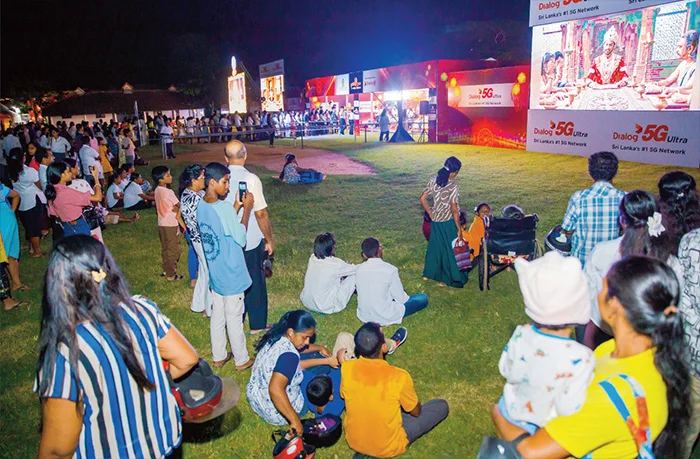
Visitors watch AI-generated Jathaka Katha
Commenting on the initiative, Hon. Sunil Handunnetti, Minister of Industry and Entrepreneurship Development, said, “The 2026 Dakshina Prabha Vesak Festival marked the first time AI-powered digital innovations were incorporated into a National Vesak Festival in Sri Lanka. Presenting Buddhist stories and teachings through technology created a new and engaging way for visitors to connect with these traditions. We thank Dialog for supporting this initiative and for working closely with us to bring our vision to life. Their contribution played an important role in making this first-of-its-kind event a reality.”
Lasantha Theverapperuma, Group Chief Marketing Officer of Dialog Axiata PLC said, “We thank the Government of Sri Lanka for the opportunity to support the 2026 Dakshina Prabha National Vesak Festival and for embracing technology as part of this year’s celebrations. As the Official Digital Partner, we were privileged to contribute through our Dialog 5G Ultra and AI capabilities, creating new ways for visitors to engage with Vesak traditions while preserving their cultural significance for future generations.”
Beyond supporting the National Vesak Zone in Matara, Dialog also enhanced the Gangaramaya and Bauddhaloka Vesak zones through a range of digital activations during the Vesak season. The company additionally continued its sustainability initiatives, including the Thirasara Aloka Poojawa, which illuminated rural places of worship through solar-powered lighting solutions.

Universal Woman is an international pageant focused on “beauty, elegance, and talent” for women, positioning itself as a platform to shape global ambassadors. The 2026 edition will be held in Cambodia, and Sri Lanka will be there, as well.
According to reports coming my way, contestants, at the international event, will work with industry trailblazers, under international standards.
Sri Lankan supermodel, runway and pageant trainer Chulpadmendra Kumarapathirana, is the National Director for Universal Woman Sri Lanka 2026.
With over two decades in the industry, Chula was crowned Miss Sri Lanka 2006, and has since shaped the next generation of titleholders through her Colombo-based Chulpadmendra Catwalk Studio, widely regarded as one of the country’s leading modelling academies.

The team behind Universal Woman Sri Lanka 2026
A former host of Derana Miss Sri Lanka for Miss World 2008 and a judge for Miss Universe Sri Lanka 2025, Chula now serves as National Director for Universal Woman Sri Lanka 2026, leading the franchise’s search for Sri Lanka’s delegate to the international final in Cambodia.
Applications for Universal Woman Sri Lanka 2026 are being taken, via WhatsApp: 077 659 4994, says Chula.
The judging panel for Universal Woman Sri Lanka 2026 includes Senaka De Silva, Pageant Aesthetic Advisor & Chairperson of the Judging Panel, Angela Seneviratne, Caroline Jurie, Rozelle Plunkett, and Suraj Mapa.
Universal Woman Sri Lanka 2026 officially began its journey with a first round of auditions, held in Colombo, marking the start of an exciting new chapter in Sri Lanka’s pageant industry.

Launching the first round of auditions
The platform aims to empower women while selecting an intelligent, confident, and inspiring representative to compete at the Universal Woman International Pageant 2026 in Cambodia, this September.
Universal Woman Sri Lanka now moves forward with the vision of creating one of the country’s most prestigious and empowering pageants while preparing to crown a queen who will proudly represent Sri Lanka on the international stage.

Netanyahu downplays US-Israel rift after Trump confirms criticism

Sabalenka the latest French Open shock exit as Shnaider wins quarterfinal

Kusal Mendis, Pathum Nissanka, bowlers put Sri Lanka 1-0 up

Showers about 100 mm are likely at some places in the Western and Sabaragamuwa provinces and in Galle, Matara, Kandy and Nuwara-Eliya districts

BASL asks govt. to abandon plan to raise retirement ages of CA and SC judges

New US tariffs proposed on 60 countries, including Sri Lanka

‘Dates have the highest sugar content to fight Coronavirus’

Sunday Island 27 December – Headlines

#SundayIsland 17th December – Headlines

Sunday Island – 28th March

Sunday Island Headlines – 21 March

Sunday Island – 21st February – Headlines
-
 News5 days ago
IMF urges Lanka not to meddle with exchange rate
-

 Business6 days ago
Sri Lanka’s construction industry losing ground while no one watches
-

 News2 days ago
Lankan duo emerge winners in Latin dance championship held in Blackpool, UK
-
 Business3 days ago
IMF’s unstated rate:Sri Lanka’s $695m loan costs about 5.33% per annum
-
 News5 days ago
State of emergency extended
-

 Features6 days ago
The Division Bell Mystery
-

 Features4 days ago
Are threats to Buddha Sasana external or from within?
-
 News3 days ago
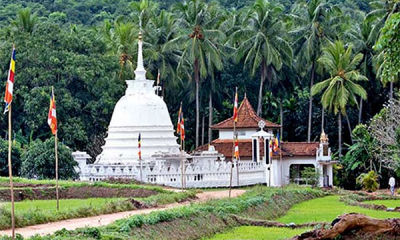
UNP challenges NPP move to amend Vihara – Devalagam Act