
Opinion
The Walk for Peace in America a Sri Lankan initiative: A startling truth hidden by govt.

When we come to it
We, this people, on this wayward, floating body
Created on this earth, of this earth
Have the power to fashion for this earth
A climate where every man and every woman
Can live freely without sanctimonious piety
Without crippling fearWhen we come to it
We must confess that we are the possible
We are the miraculous, the true wonder of this world
That is when, and only when
We come to it.
· Concluding lines of the poem ‘A brave and startling truth’
(1995)
– Maya Angelou
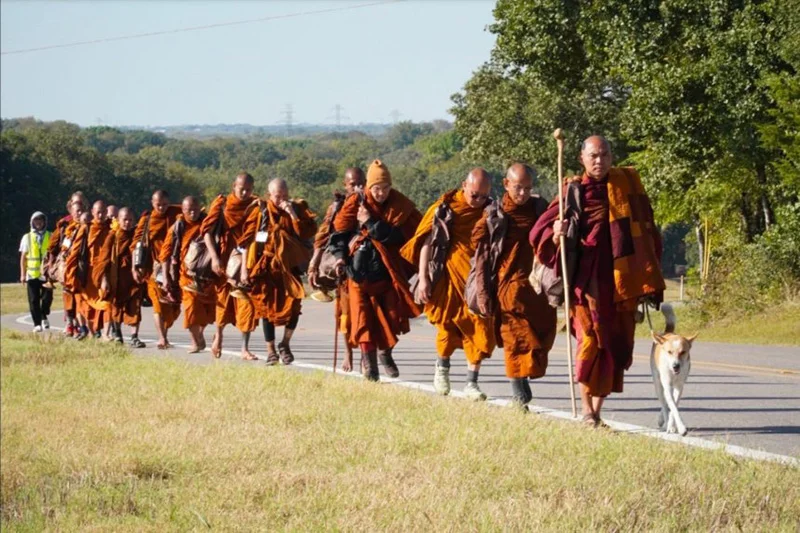
Ven. Dr Melpitiye Wimalakitti Nayake Thera, Head Monk of the Wijesundararamaya, Asgiriya, Kandy, and the Chief Incumbent of the Gotama Viharaya Monastery, Fort Worth, Texas, USA, claims that the ongoing Texas to Washington Walk for Peace march led by the American monk of Vietnam origin Ven. Pannakara is ‘an initiative of ours’ (ape wedak). He made this claim during a recent podcast hosted by the well-known YouTuber and journalist Chamuditha Samarawickrema (CNB/February 5, 2026). The Huong Dao Monastery of Bhante Pannakara, who is leading the peace walk is close to the Gotama Viharaya Monastery of Wimalakitti Thera, who tells us that he has had a strong connection with Vietnamese monks and has already collaborated with them in many Buddhist activities.
Talking about Ven. Pannakara, Ven. Wimalakitti says that he is a pupil of senior Vietnamese bhikkhu Ven. Ratanaguna of the same Huong Dao Monastery in Fort Worth Texas. He is leading a team of 24 Buddhist monks from different countries in the (Southeast Asian) region including Vietnam, Cambodia, Thailand, Bangladesh, Laos, etc., taking part in the Walk for Peace (from Fort Worth in Texas to Washington D.C.). It is going to be 2723 miles long according to Wimalakitti Thera. The Walk for Peace started on October 26, 2025 and is due to pass through 4 time zones and 10 states, braving extremes of weather and trekking through patches of harsh terrain.
It was 40 degrees Celsius in Texas, when they started. In seven days, the Peace Walkers reached Georgia in Atlanta. It was raining there. Then, they arrived in South Carolina, where it was cold, the temperature usually being under 20 degrees Celsius. By the time of the podcast with Chamuditha, the Walk for Peace was proceeding through the even colder North Carolina, the temperature barely rising above 1 or 2 degrees Celsius. Then, they reached Virginia with heavy snowfall, but the Walk went ahead nonstop.
The original plan was to walk 8 hours and cover 20 miles in a day. Now they want to do 10 hours a day and cover a targeted 40 miles. They hoped to have at least 20 participants in the Walk at any time. The whole Walk is expected to take 120 days and end on February 13, 2026.
America is a big democratic country, the monk says. The ordinary people are more interested in inner peace than in politics. There are 125 Sri Lankan Buddhist pansalas in America, 15 of which stand on the route of the continuing Walk for Peace. Sri Lankan monks resident in these monasteries, in partnership with monks from other countries, provide the Walkers with essential food, temporary lodgings, and hygienic facilities. They also work out security arrangements for the peace-walking monks in coordination with government and municipal authorities and Police.
Ven. Wimalakitti provides this information as a member and a director of the organising committee responsible for the Walk for Peace project. According to him, Ven. Pannakara takes part in an annual walk in India from Buddha Gaya to Kolkata (the capital city of India’s West Bengal state) as a dhutanga practice (one of the 13 strict ascetic practices recommended for bhikkhus in Theravada Buddhism that aim at perfecting austerity, mental purification, and renunciation). About 200 Buddhist monks join Bhikkhu Pannakara on this walk.
The dog now celebrated as Aloka started following Ven. Pannakara at Buddha Gaya and reached Kolkata with him. He followed the monk even to the airport. Bhikkhu Pannakara could not leave the dog behind in India and fly back to America. So, he canceled his flight and stayed back in India for eight months, during which he trained the dog and completed the paperwork necessary to take him to America with him. Once in America, Aloka sometimes started growling at people at first, because he was not used to the new environment. So, they put a pet cone around his neck to calm him while on the move. Now he participates in the Walk without the pet cone and walks beside Bhikkhu Pannakara at the head of the column of Walkers. The monk usually takes Aloka on a leash and occasionally, off-leash. Aloka had a paw injury during the walk and had to be hospitalised for a few days for surgery. He has rejoined the walk now. The dog has a car reserved for him to move with the walking party whenever he is unable to walk.
Ven. Wimalakitti Thera says he took part in six discussions held at the Huong Dao pansala when the peace walk was being planned. They had to discuss security matters with the Police. Concerns were raised about possible assassination attempts on Bhikkhu Pannakara. The dedicated monk said that he was ready to lay down his life for the cause of the Walk. Wimalakitti Thera said Bhikkhu Pannakara is only 37 years old.
At the beginning of the fourth week into the Walk, there was a serious traffic accident. The monks were walking along the shoulder of the road (near Dayton, Texas, east of Houston, on November 19, 2025) guided by a slow-moving escort vehicle (with hazard lights on). A truck hit the rear of the pilot car pushing it into the monks. The impact left two monks injured, one of them (Phra Ajarn Maha Dam Phommasan, aka Bhante Dam Phommasan) very seriously. The injured monks were airlifted to Houston for medical attention. Bhante Dam Phommasan had to undergo multiple surgeries, including the amputation of his leg. (The information given within parentheses in this piece of writing is added by me for clarity.)
On another occasion (in early January 2026, in Walton County, near Good Hope, Georgia) an unidentified protestor accompanied by a group of his supporters blocked the monks’ path (holding signs like ‘JESUS SAVES’, ‘Turn to Christ’; WARNING: ‘walking to hell’, ‘Hell awaits’, etc., but the people gathered there cheered on the monks, and asked the protestors to just move on). Ven. Wimalakitti (who was presumably on the scene) says that the police diverted them onto an alternative route. The unperturbed monks did not react to the disruptors and continued their walk in silence. The night routes were decided by the Police. The initial hostility petered out gradually, as thousands gathered on the roadsides to watch the monks walking and to listen to the sermons in the night.
(On Christmas Day 2025, the monks stopped at a church in Alabama, before entering into Georgia the next day.) Ven. Wimalakitti says that when Bhikkhu Pannakara made an address in the church that evening, it was filled to capacity, and his speech had to be broadcast on outdoor screens.
The Walk actually began as a dhutanga (please, see above) observance as Ven. Wimalakitti explains during the discursive podcast, which forms the basis of this essay. But, on the third day, the name was changed to ‘Walk for Peace’. Its purpose is non-religious and non-political. ‘Today is my day of peace’ is the theme. (Ven. Pannakara exhorts) “When you get up in the morning, say to yourself ‘Today is going to be my day of peace’”. When Wimalakitti Thera says “Ordinary Americans are really interested in Meditation (bhavana). They are much less interested in the dhamma”, he is making an obvious oversimplification that seems to be limited exclusively to the current Walk for Peace context.
WimalakittiThera claims that a single Pakistani individual from Texas ‘provides security for the Walk’. However much I tried, I couldn’t catch his name as the monk pronounced it. So I sought AI help. AI clarifies that ‘Based on the results of the 2025-2026 Walk for Peace from Texas to Washington D.C., the security and the logistics for the Buddhist monks are primarily handled by local law enforcement agencies (sheriffs and police departments) who secure the roads as the group walks’.(So, there is no mention of a Pakistani (American) providing security for the walk). The monk might be mistaken about the matter. But that piece of information is not so important. Though the monks have absolutely no political motives, the Sri Lankan monk thinks they expect (US President Donald) Trump to be there when they reach Washington, near the White House. A reception for the monks is scheduled to take place on that occasion with the participation of the Sri Lankan ambassador.
The highlight of the Chamuditha News Brief (CNB) podcast featuring Ven. Dr Melpitiye Wimalakitti uploaded on February 5, 2026 is his revelation of a well-kept secret, which is that the Sri Lankan monks living in America played the major pioneering role in organising the Walk for Peace across America project and that they wanted the Sri Lankan government to support it. The 17-member organising committee under the leadership of Ven. Wimalakitti, including the Vietnamese American bhikkhu Ven. Pannakara (who is now leading the Walk for Peace march) visited Sri Lanka in this connection in May 2025, that is, nine months ago. Ven. Wimalakitti showed the group photographs that the visiting monks took with prime minister Harini Amarasuriya, some ministers and other dignitaries. Still, ordinary Sri Lankans are unaware of this momentous event, it seems.
Unfortunately, there had not been any response to the monks’ request up to the day that Chamuditha did the podcast with Ven. Wimalakitti. The monk said that he broke off his participation in the Walk in order to visit Sri Lanka again for the express purpose of urging the Sri Lankan government’s participation in the Vesak celebration at Walk team leader Ven. Pannakara’s monastery in Texas in May. Ven. Wimalakitti said he gave the president and the prime minister (as I think he claimed) formal invitation cards requesting them to arrange for government delegates to attend the Vesak ceremony set to be held at the Huong Dao Monastery of Ven. Bhante Pannakara in Dallas, Fort Worth, Texas on May 26 this year (2026). He also wants them to grace the transport of relics from Sri Lanka. The monk was due to leave for America the night following the day of the programme with Chamuditha; but he had still got no reply from those important invitees. However,the Sri Lankan Ambassador in Washington is taking a great interest in this event, according to Ven. Wimalakitti.
At the end of the podcast, Ven. Wimalakitti voiced two important messages: “I want to say a word of diplomatic importance. This is a great opportunity for Sri Lanka, diplomatically speaking. This is a moment of awakening, not only for America but also for the whole world. All of you citizens of the Democratic Socialist Republic of Sri Lanka as a Theravada Buddhist state, can make your contribution to this global awakening. I urgently request that this great opportunity be not missed”. (The Walk for Peace, the peace pilgrimage across America, from Texas to Washington D.C., is performed by a group of Theravada Buddhist monks. It showcases the key Buddhist spiritual values of compassion, loving-kindness, non-violence, and peace that underlie Sri Lanka’s dominant religious culture. These values are a source of soft power for Sri Lanka in its diplomatic and cultural relations with the powerful United States of America.)
“Secondly, as Buddhists of Sri Lanka, please don’t criticise our monks or the Buddhist religion, simply because others do so. Please, think about this (insulting the monks and the Dhamma) with great equanimity. Both Buddhist monks and laypersons must keep updated about current trends. Some of our monks often attract criticism because they fail to adjust to changing times.”
By Rohana R. Wasala


This is regarding the editorial of The Island on 19 May 2026, titled “Defeat of Terrorism- Triumph of hypocrisy”.
I fully agree with the Editor when he says that Terrorism needs to be eliminated in all its forms and manifestations. Terrorism is generally defined as “massacring innocents to achieve a political aim”. Whether the cause for terrorism is justifiable or not, terrorism per se, cannot be justified and thus, should be eliminated.
However, I have different views with the rest of the editorial.
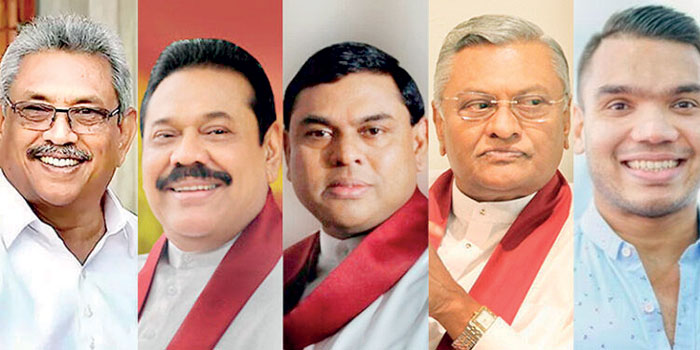
The editor says what Rajapaksas did to the country was like saving a damsel in distress and abusing her thereafter. Elaborating the same, he says that Rajapaksas have thought leadership to defeat terrorism was a special license to do as they pleased and sought to politicise and monopolise war victory to accelerate their dynasty building projects. He continues to say that the post war Mahinda Rajapaksa (MR) admininstration became a government of Rajapaksas by the Rajapaksas and for Rajapaksas. In short, the implication was that MR, after defeating LTTE, has done nothing except furthering his and his family’s political interests.
MR, even during the critical period in the war against LTTE, handled the economy professionally. There was an upward trend in SL economy from 2005–2009 showing GDP growth from 24.4 billion dollars in 2005 to 42.5 billion dollars in 2009, doubling the 2005 GDP. During 2010–2015 showed Sri Lanka’s strongest economic performance with the economy growing from US $ 56.7 billion to US $ 80.6 billion.
The annual growth rate was over 7.4%, per capita income more than tripled (from US $ 1200 to over US $ 3,600) elevating SL to lower-middle income status. National poverty level declined significantly, dropping from over 15% in 2006 to below 7% by 2012. Unemployment declined to 4 %. Transport and energy sectors received a significant boost. Massive power generation projects such as Norochcholai coal power plant and Upper Kothmale Hydro power plant were completed.
The expansion of Colombo port, development of Hambantota port, Mattala International Airport and building of expressways (Southern and Colombo-Katunayake) greatly improved the country’s transportation capacity and brought SL clear to a goal of being a dynamic Maritime and Aviation Hub.
The above statistics of the Central Bank does not prove the fact that Rajapaksas only looked after their interests after the war. Hence the proverbial “Damsel” that the editor was referring to, was not abused as he claimed, but had been looked after very well.
Excesses may have happened and it happens everywhere in every field. But the fact remains that MR defeated the most ruthless terrorist organisation in the world and developed the country with roads, rails, ports, airports, expressways, bridges, power plants, stadiums etc. which deserves appreciation.
The editor then says MR suffered a humiliating electoral defeat in 2015, again came to power in 2019, but mismanaged the economy, indulged in corruption and bankrupted the country. That too is far from the truth.
The foreign exchange crisis that culminated in 2002 was not due to mismanagement /corruption of Gotabaya Rajapaksa (GR) government but mainly due to excessive foreign borrowings during 2015-2019. By 2019 Nov, the economy was already in a precarious state, with the IMF itself warning that SL was highly vulnerable to external shocks.
The editorial never mentions Covid 19, the worst global pandemic the GR government had to face. During this period the government revenue fell by approx. Rs 534 billion. (revenue lost from import restriction of motor vehicles, Covid lockdown and closure of liquor shops were Rs 136 billion, 323 billion and 75 billion respectively.) At the end of the MR regime in 2014, the outstanding ISBs were US $ 5.3 billion and the reserves were US $ 8.2 billion. By the time GR came to power, the outstanding ISBs were US $ 15.2 billion and the reserves were US $ 7.6 billion. In 2020-2021, the GR government did not issue any ISBs but settled them in time.
The decision to maintain debt servicing was not just about protecting the country’s image in financial markets but to ensure critical health and humanitarian support including vaccines, medicines, and essential supplies continued to flow into the country during the worst global health crisis in the country.
It’s a pity that the public who remained silent when foreign debt was piling up, launched an Aragalaya to expel the leader who settled the debts without obtaining fresh loans. Was it hypocrisy or treason?
The claim that the tax reduction implemented in Dec 2019 caused a significant loss of revenue was also not correct. When economic activity is deliberately halted by a global pandemic, with borders shut, businesses closed, citizens confined to their residences, production at the lowest, no tax rate high or low, can generate revenue from transactions that are simply not occurring.
The economic downfall was not due to mismanagement or corruption but due to the promulgation of bankruptcy (debt standstill) by Central Bank (CB) on the advice of former CB governor Dr. Indrajth Coomaraswamy and consultant Prof. Shantha Devaraja. That decision undermined the on-going efforts to stabilise the economy. I consider allowing such an announcement was a mistake done by GR. It halted IMF staff level already agreed loan, Indian Credit Line of US $ 3 billion and suspended WB and ADB loans. Also, China had to halt the loans already requested as China Secure (the government insurance company) could not insure loans to a bankrupt country.
The reserves were carefully used by GR to buy vaccines giving priority to human lives, and due to lack of foreign exchange, procurement of gas and fuel was critically effected. In the final stages there was an organised campaign by saboteurs to steal and hoard fuel. The JVP members publicly appealed to Sri Lankans abroad not to send any dollars to the country. A hate campaign was carried out against the Rajapaksas.
A protest called Aragalaya was held at Galle face. The entire episode was a grand conspiracy to oust GR, who was sworn in as the President at Ruwanwelisaya, the great symbol of Sinhalese Buddhist culture. Black Vesak lanterns, ridiculing Buddhist sacred symbols, insulting the Mahanayakas, anti-unitary slogans and glorifying federalism and free biriyani for the entire crowd by “unknown” sponsors were ample evidence of its hidden agenda.
Aragalaya, which forcibly took over the Presidential Secretariat, was obviously illegal. The other mistake done by GR was to allow protesters to operate without chasing them away using force if necessary. Finally, GR, the Commander in Chief of the three forces, left the country without hurting anyone.
The editor says that Rajapaksas squandered an opportunity that presented itself after the war to bring about national reconciliation and defeat LTTE ideology politically. He says reconciliation has become a victim of hypocrisy.
MR, after the war, launched a large number of development projects in the North constructing roads, bridges, grounds, schools, hospitals, etc. All the roads were carpeted. During the period 2010-2012 the growth rate in Jaffna was 22% compared to 7% in the rest of the country. That was the first step he took towards reconciliation.
Reconciliation needs an equal contribution from both sides. Unfortunately, the goodwill shown and the enormous economic support provided by MR were never reciprocated by the Tamil politicians. MR held PC elections (without abolishing 13A even with two-thirds majority in parliament) and allowed them to elect their own leaders. That was the second step towards reconciliation.
Mr. C. V. Vigneswaran studied at Royal college and Colombo Law College, became a Magistrate, High Court judge, a judge in the Court of Appeal and in the Supreme Court. Having lived among Sinhalese for more than 65 years, after being elected as the Chief Minister in the Northern Province, he declared that the Sinhalese had no right to live in Jaffna. Every year he returned most of the funds allocated for Northern development back to the Treasury without utilising it fully, to indicate that there was no support from the government. That was how Tamil politicians contributed towards reconciliation.
After 2009, hundreds of Tamil students in the North have become doctors, engineers, lawyers, top government officials, etc., due to unhindered education. The civilians who suffered under LTTE facing abductions, paying ransom, etc., now live in peace without any fear. Most of the Tamils have migrated to areas outside the North and the East. More than 52% of the Tamils are now living among Sinhalese without any problem. Main businesses in Colombo are dominated by the Tamils. What else is required Mr. Editor for the so-called reconciliation? Granting a separate state on a platter?
With all the above, the Tamils in the North annually commemorate the very person who made their lives miserable for 30 years. How would the Sinhalese feel when they see the terrorists who killed pregnant women, monks, infants, devotees being garlanded and felicitated in the North every year?
Yes, the editor was correct. Reconciliation has become a victim of hypocrisy.
Retired Rear admiral (Dr) Sarath Weerasekera VSV RWP USP
Former Public Security Minister
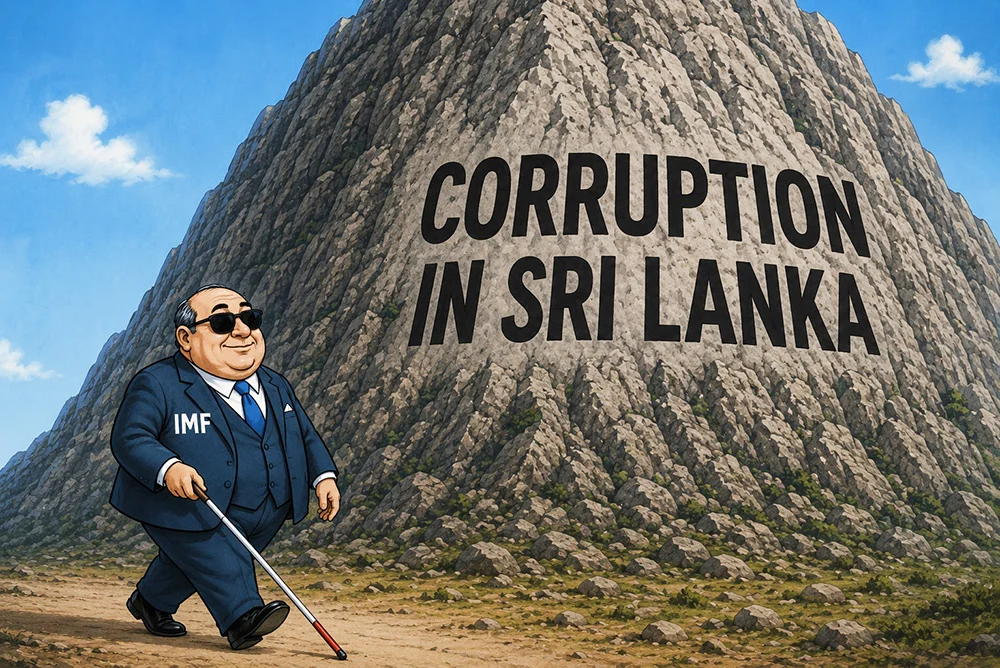
Anti-corruption and governance reforms are central pillars of Sri Lanka’s $2.9 billion bailout agreement with the International Monetary Fund (IMF). This was the first time in Asia that an IMF programme was explicitly linked to a comprehensive anti-corruption diagnostic and specific legislative measures.
At the press conference announcing the deal, Senior Mission Chief Peter Breuer said that the IMF had emphasised that anti-corruption and governance reforms are central pillars of the programme. He added that the IMF would subject Sri Lanka to a comprehensive governance diagnostic exercise, making it the first Asian economy to undergo such an exercise, which will assess corruption and governance vulnerabilities in Sri Lanka and provide prioritised and sequenced recommendations. “Sri Lanka will be the first country in Asia to undergo a governance diagnostic exercise by the IMF. We look forward to further engagement and collaboration with stakeholders and civil society organisations on this critical reform area,” the IMF official said.
An extract from the Technical Assistance Report on Governance Diagnostic Assessment, Sri Lanka (September 30, 2023) is as follows; “The report highlights immediate and short-term measures to address key corruption issues, as well as structural reforms that require more time and resources but are essential to strengthen governance and initiate lasting change. The recommendations are designed as a coherent approach to improving governance through a focus on: clarity of authority and responsibility for core functions; financial and operational independence of essential accountability and law enforcement institutions; transparency in government practices and performance, especially relating to the planning, spending, and accounting for the use of public funds and assets; inclusive, accessible, and rule-based means to enforce private agreements and challenge official behaviour; and efficient mechanisms for making information public and holding organisations and individuals to account for their performance and behaviour”.
Further, the agreement required Sri Lanka to implement several specific, actionable measures to curb corruption vulnerabilities:
New Anti-Corruption Legislation: The government passed the landmark Anti-Corruption Act in 2023, which expanded the powers of the Commission to Investigate Allegations of Bribery or Corruption (CIABOC), required electoral candidates and officials to declare their assets, and introduced protections for whistleblowers.
Fiscal and Procurement Reforms: The IMF programme included commitments to improve public financial management, increase tax transparency, and advance public procurement laws to eliminate political interference and cronyism in government contracts.
The IMF Executive Board is supposed to continuously track these anti-corruption and governance benchmarks during its periodic programme reviews to ensure compliance. The IMF officials’ last visit to Sri Lanka was from March 26th to April 9th when they reviewed the progress of the programme, decided that it was going well and approved the release of the final tranche. Their statement did not carry any reference to the activities of the government regarding control of corruption.
The Letter of Intent submitted by the government at the conclusion of the review becomes relevant under these circumstances. It was officially released on May 29, 2026. One of the critical undertakings by the government, according to the Letter of Intent, relates to cost-recovery pricing, the government has reaffirmed its commitment to maintaining cost-recovery pricing for fuel and electricity.
Going by available communications, apparently the IMF has not inquired into what caused the increase of cost of production of electricity. Cost of electricity production has gone up due to increased use of diesel, as low quality coal is not producing the required amounts. The coal that has been recently imported has been found to be of low quality and the government has said the losses due to this misadventure will not be shifted to the people. The irregularities in the coal procurement process that has happened recently is no secret, the Auditor General’s report has pointed out the flaws in the said procedure. Ironically, the IMF programme highlights the need to have fool proof procurement and tender procedures, and emphasises “holding organisations and individuals to account for their performance and behaviour” as the above quoted Technical Assistance Report mentions, yet it is silent on this matter showing its lack of responsibility. And it wants cost-recovery pricing for electricity! This may be taken as proof that the IMF is not very much concerned about the plight of the poor.
Further, these policies and recommendations of the IMF may substantiate the accusations made by left oriented organisations that the IMF insists on austerity measures, often at the expense of welfare expenditure, in order to serve neoliberalism. The clauses on corruption control in its agreement with the government appear to be mere lip service and window dressing. If no follow-up action is taken on these requirements, such clauses have no meaning and serve no useful purpose. If it is a responsible organisation, the IMF should have called for an impartial inquiry into the coal procurement procedure, for it is mandated to ensure transparency and integrity in these procedures. Moreover, if it is concerned about the welfare of the public it should not have asked for cost-recovery pricing of electricity when the reason for the increased cost could be corruption. Instead of going into the matter of corruption the IMF asks the government to recover the losses from the people. Cannot it think of a fairer means of recovering these losses instead of burdening the already impoverished people?
Thus, the question arises whether the IMF is a tool of imperialism. Many critics, particularly in the Global South, argue that the IMF functions as an instrument of financial imperialism or neo-colonialism. Structural Adjustment Programmes of the IMF ties its emergency loans to strict conditions like austerity, privatisation, and deregulation. Critics argue these demands dismantle local welfare systems, strip developing nations of their sovereignty, and open their markets to exploitation by multinational corporations. Further, the wealthy nations, particularly the United States and European powers, hold the majority of voting shares and effectively control the institution, dictating economic policy to weaker states. Critics claim that IMF-mandated currency devaluations artificially lower the cost of raw materials and natural resources in developing countries, benefiting wealthy creditor nations which amount to resource extraction.
Another matter of concern is that the interest rate for IMF loans to Sri Lanka, contrary to common belief that it is concessionary, is 5% which is pretty high and may be unbearable to a poor country like Sri Lanka. The country was in a woeful state in 2022 and was forced to declare bankruptcy, and seek IMF assistance. If we seriously examine the cause of this economic disaster, we will see that it was due to the economic policies the country had been following since independence. We import more than we export and take loans to meet the shortfall. This practice has gone on and on and is continued at present. No government, including the present one, despite its left leaning claims, had attempted to correct this colossal mistake. Our debt burden is frightening, less said about it the better.
The obvious solution to this problem would have been to achieve self-sufficiency in our essential needs, like food, and reduce reliance on imports. Most of our needs in food and other essentials could be locally produced. The IMF may not recommend such a course of action. It would want us to remain a poor country, struggling in the vicious cycle of import-export-debt quagmire.
by N. A. de S. Amaratunga
Opinion
When the decisive vote changes hands: Sri Lanka’s next electoral shift may already be underway
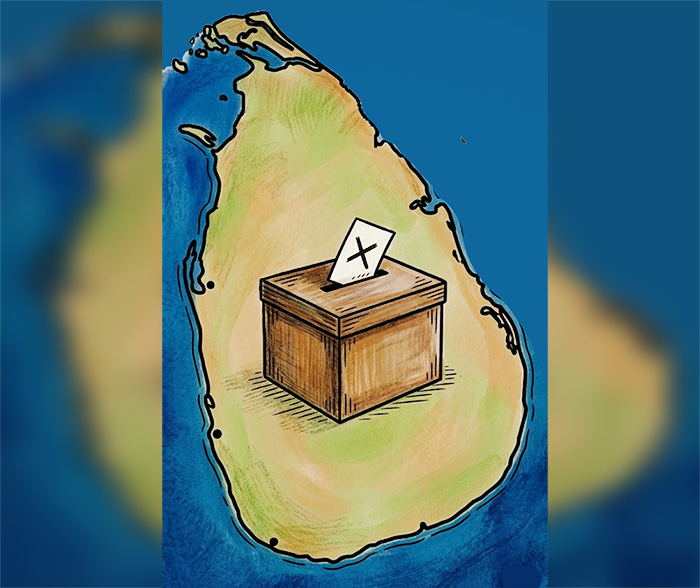
In the summer of 1789, as the French Revolution gathered momentum, delegates of the National Assembly assembled in Versailles to debate the future of France. The seating arrangement inside the chamber was not planned to shape political vocabulary for centuries to come. Yet it did. Those who favoured sweeping political change, greater equality, and the dismantling of inherited privilege gravitated to the left side of the hall. Those who defended the monarchy, established institutions, and traditional social hierarchies took their seats on the right. What began as a matter of convenience soon became a political metaphor. More than two centuries later, we still speak of the “left” and the “right” to describe competing visions of society.
Since then, the terms have evolved and acquired different meanings across countries and historical periods. Yet, the broad distinction remains remarkably durable. Ideologies associated with the left generally place greater emphasis on social, political, and economic equality, often advocating a more active role for the state in addressing disparities and expanding collective welfare. Ideologies associated with the right tend to place greater value on tradition, market mechanisms, authority, and various forms of social hierarchy, arguing that stability and prosperity emerge from preserving established institutions and incentives. Most political movements, of course, occupy positions somewhere between these poles, combining elements of both traditions in different proportions.
Few elections have altered the course of Sri Lankan politics as dramatically as the general election of 1977. Sweeping to power with an unprecedented five-sixths majority in Parliament, the United National Party ushered in a new political and economic era under the leadership of J. R. Jayewardene. He would later become the country’s first Executive President under a constitutional framework that vested extensive powers in the office. The changes that followed reflected a decisive move towards market-oriented reforms and a political outlook that leaned more to the right than anything Sri Lanka had previously experienced.
Yet even a political machine as formidable as the UNP’s could not hold power indefinitely. After nearly seventeen years of dominance, its grip on the electorate weakened. In 1994, the pendulum swung once again, bringing Chandrika Bandaranaike Kumaratunga. The victory was widely interpreted as a return to a more socially conscious and centre-left political vision.
What followed was not merely a change of government but the emergence of a recurring pattern in Sri Lankan political landscape. Since 1994, governments of varying compositions and personalities have risen to power with crucial support from parties and constituencies positioned on the left of the political spectrum. Whether through formal coalitions, strategic alliances, or ideological influence, the left has often provided the decisive electoral weight needed to secure victory. In many cases, without that support, the arithmetic of power would have looked very different.
Yet it is equally important to recognise what Sri Lanka has not become. Despite the enduring influence of left-wing thought, the country has never embraced an uncompromising far-left political project. Instead, successive governments have largely occupied a centre-left space, balancing market economics with welfare commitments, nationalism with social reform, and political pragmatism with egalitarian aspirations. The result has been a political landscape where power changes hands, parties rise and fall, and personalities dominate headlines, but the centre of gravity remains remarkably leftist. Sri Lanka’s electorate has repeatedly rewarded those who speak the language of social justice, even while stopping short of endorsing political extremes.
One possible explanation for this enduring centre-left tendency lies not in political parties themselves, but in the cultural formation of the electorate. For much of the period between the 1960s and the liberalisation of the economy in 1977–78, Russian literature occupied a prominent place in Sri Lanka’s reading culture. Affordable translations of the works of writers such as Tolstoy, Dostoevsky, Gorky, Chekhov and Pushkin circulated widely among students, teachers and ordinary readers. Alongside their literary value, these works exposed generations of Sri Lankans to questions of social justice, class inequality, collective responsibility and the moral obligations of society toward the vulnerable.
By the early 1990s, the generation that had grown up reading this literature had come of age politically. As they entered the electorate in larger numbers, they helped shape the contours of public opinion. Their voting preferences did not necessarily favour revolutionary socialism or radical left-wing politics. Rather, they appeared to support governments that combined commitments to welfare, social protection and egalitarian ideals with the practical realities of governing a developing nation. In this sense, the centre-left orientation that has characterised much of Sri Lanka’s political landscape since 1994 may owe as much to the country’s literary and intellectual culture as to the strategies of political parties themselves.
Yet there is an apparent paradox at the heart of this story. While successive governments often drew legitimacy from centre-left political ideals, their economic policies frequently moved in a different direction. Confronted by fiscal constraints, global economic pressures and shifting geopolitical realities, they operated within an international economic order largely shaped by market-oriented principles. Institutions such as the International Monetary Fund exerted considerable influence over economic policymaking, encouraging reforms associated more closely with liberalisation, fiscal discipline and market efficiency than with traditional left-wing economics.
It was thus a balancing act that defined Sri Lankan governance for decades after 1994: governments elected on promises of social justice and collective welfare, yet compelled to pursue economic strategies shaped by the imperatives of a global market economy. Politically, the country remained centre-left. Economically, it often travelled along a more market-oriented path.
Sri Lanka may have settled its political direction for the next few years, but the next truly decisive moment may arrive closer to 2030. By then, the composition of the electorate will have changed once again. A growing share of voters will belong to Generation Z and Generation Alpha, generations whose intellectual and cultural worlds differ markedly from those that came before them.
If the electorate that emerged in the 1990s was shaped, in part, by the values encountered in Russian literature and a reading culture that emphasised questions of social responsibility, collective welfare and inequality, the generations now entering political maturity have been formed by a different landscape altogether. Their influences are increasingly digital, global and instantaneous, are shaped more by algorithms and by social media feeds, content creators and transnational cultural currents. Many have grown up in a world where entrepreneurship, individual success, innovation and market-driven solutions occupy a far more visible place in public discourse.
This generational shift is unfolding alongside broader transformations in global politics. Across much of the world, including major powers such as the United Kingdom and the United States, contemporary political movements that emphasise markets, national interests, economic competitiveness, and stronger state authority have gained momentum. Whether these trends will find a lasting echo in Sri Lanka remains a question that deserves careful attention, not merely as an electoral matter, but as one intertwined with some of the defining challenges of our time.
Today, concerns of national sovereignty, security, strategic influence and even soft power are increasingly mediated through economic strength and market performance. Nations are judged not only by their political ideals but also by their ability to compete, innovate and secure their place within an interconnected global economy. Sri Lanka, still navigating the aftermath of economic crisis and charting its future development path, finds itself at the centre of these debates.
Against this backdrop, if the decisive vote is gradually passing from a generation shaped by the books that once filled the nation’s shelves to one shaped by the screens that now fill its hands, the question therefore does not simply become who will win the next election. It is whether the intellectual and cultural influences that shaped Sri Lanka’s centre-left political consensus can retain their hold on a new electorate formed by different experiences, different technologies, and different aspirations.
If every era is ultimately defined by the stories it tells itself, what story is the next generation of Sri Lankan voters already beginning to write? Will it move the centre of gravity towards a more market-oriented, centre-right vision? The answer may well determine not only the outcome of future elections, but the ideological direction of Sri Lanka itself.
By Viran Maddumage PhD (Reading), Macquarie University,
and Sanduni Rathnayake, AAL

Showers will occur at times in the Western, Sabaragamuwa and North-western provinces and in Galle, Matara, Kandy and Nuwara-Eliya districts

China, Lanka intensify cooperation to fight cross-border crimes spreading across Asia and beyond

Asst. Manager, security officer arrested over Rs 30 mn snatch at Horana PB branch

Anguruwatota elders’ home fire death toll rises to 13

HC orders seizure of assets worth Rs 30 Mn allegedly acquired with drug money

Further inquiry into death of former SriLankan Airlines CEO postponed to June 09

‘Dates have the highest sugar content to fight Coronavirus’

Sunday Island 27 December – Headlines

#SundayIsland 17th December – Headlines

Sunday Island – 28th March

Sunday Island Headlines – 21 March

Sunday Island – 21st February – Headlines
-

 News4 days ago
Lankan duo emerge winners in Latin dance championship held in Blackpool, UK
-
 Business5 days ago
IMF’s unstated rate:Sri Lanka’s $695m loan costs about 5.33% per annum
-
 Latest News2 days ago
Kusal Mendis, Pathum Nissanka, bowlers put Sri Lanka 1-0 up
-
 News2 days ago
New US tariffs proposed on 60 countries, including Sri Lanka
-

 Business5 days ago
Sri Lankan scientist-innovator Milinda Edirisinghe introduces AI-integrated gem testing system to gemological world
-
 Features6 days ago
Are threats to Buddha Sasana external or from within?
-
 News5 days ago
UNP challenges NPP move to amend Vihara – Devalagam Act
-

 News4 days ago
Sri Lankan teen killed in Chennai clash; three arrested