


News
Successive governments’ budgetary operations caused financial instability
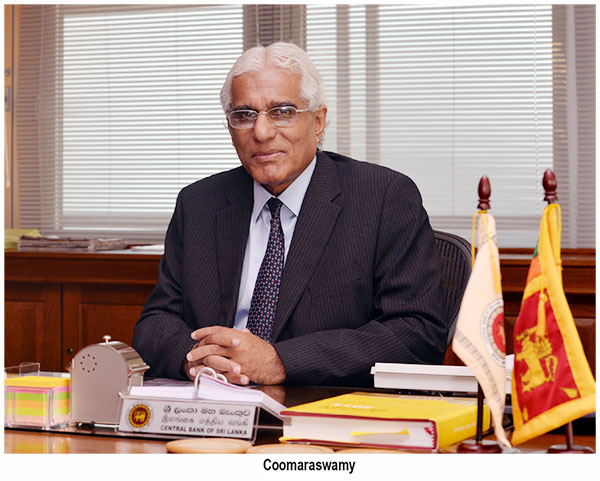
Ex-CBSL Governor Dr. Coomaraswamy:
‘My generation has failed the country…’
By Shmaindra Ferdinando
Former Governor of the Central Bank Dr. Indrajit Coomaraswamy says the failure on the part of successive governments to manage expenditure since the country gained Independence has caused the current economic instability.
Throughout Sri Lanka had been plagued by a toxic combination of populist politics and an entrenched entitlement culture among the people, Dr. Coomaraswamy told The Island. “Time and again, the electoral calendar has undermined fiscal discipline,” Dr. Coomaraswamy, who had served as the Governor (July 2016 to Dec. 2019) said.
Dr. Coomaraswamy said so when he was asked to explain why he had advised the electorate to be extremely cautious in exercising their franchise during the yahapalana administration at a time when the national economy was in a much better shape.
Dr. Coomaraswamy was testifying before a Presidential Commission of Inquiry (PCoI) probing rampant corruption in the public sector.
President Maithripala Sirisena brought in Dr. Coomaraswamy as the Central Bank Governor in the wake of the second Treasury bond scam. Dr. Coomaraswamy who had previously served the CBSL for a period of 15 years in its Departments of Economic Research, Statistics and Bank Supervision. He had also worked at the Finance and Planning Ministry from 1981 – 1989 during the UNP administration.
The Island
raised the issues at hand with Dr. Coomaraswamy close on the heels of one-time Auditor General Gamini Wijesinghe lashing out at the Parliament for its failure to ensure fiscal discipline. Wijesinghe, who served as the AG (2015-2019) alleged that the country was paying a huge price today for electing those who pursued destructive agenda. Wijesinghe said that he felt the electorate lacked the political sense to elect sensible people.
Dr. Coomaraswamy explained that for many decades, Sri Lankans had lived beyond their means and got away with it due to generous inflows of concessional loans and grants. However, the situation had changed though those elected seemed bent on following the same policies, he said.
Sri Lanka should not forget that the country had graduated to middle-income country status and was no longer eligible for concessional assistance, the former Central Bank Governor said. “At the same time, there has also been a reduction in the availability of long-term lending from official sources. As a result, since then there has had to be greater reliance on more expensive borrowing from international capital markets. This is an entirely different paradigm. Increased exposure to capital markets and rating agencies requires far greater discipline in macroeconomic policy-making.”
The former CB Governor emphasised that the much-needed discipline could be achieved only if politicians understood the parameters within which macroeconomic policies should be set. “They should also have sufficient understanding to provide leadership in raising the awareness of the people regarding the most urgent need for fiscal discipline. So, it is important that Sri Lankans exercise their franchise judiciously to make sure the right people are in Parliament.”
Commenting on the responsibility of those who manage the economy especially at a time the country was in turmoil, Dr. Coomaraswamy stressed that large budget deficits led to what he called excessive aggregate demand, which fuelled inflation and exerted balance of payments pressure. It would be pertinent to stress that large budget deficits ultimately undermined the value of the currency.
Those were the main negative impacts on the people as a result of politicians not exercising parliamentary oversight of public finance in a responsible manner, Dr. Coomaraswamy said.
“There are challenges on many fronts. My generation has failed the country. It is now up to the young people to chart a new course for the country. I hope a sufficient number of the talented ones remain in the country to do so,” he said.
Dr. Coomaraswamy however expressed confidence in talented youth remaining in the country amidst reports of many seeking to migrate.
Dr. Coomaraswamy and Gamini Wijesinghe demanded immediate remedial measures to restore financial discipline as President Gotabaya Rajapaksa finally confirmed negotiations with the International Monetary Fund (IMF) to overcome the financial crisis.
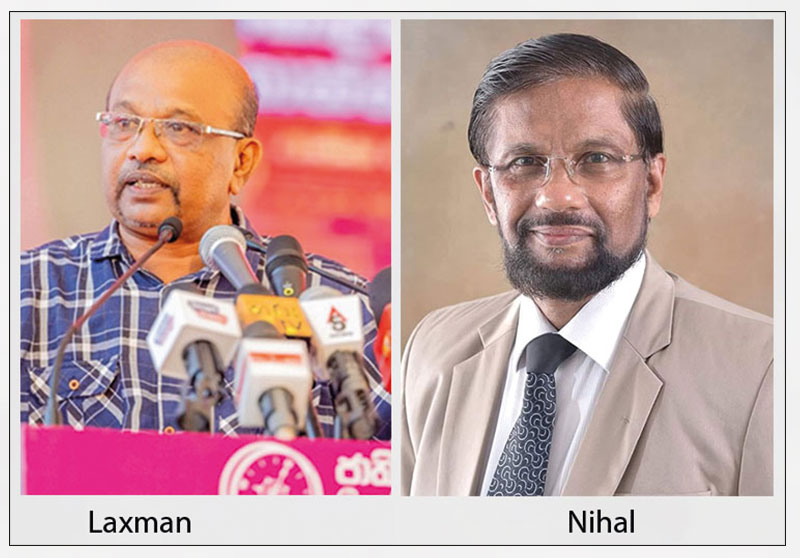
Former Deputy Governor of the Central Bank Dr. W.A. Wijewardena has recently said that Sri Lanka should have sought the IMF’s intervention in April 2021 during Prof. W.D. Lakshman’s tenure as the Governor of the CBSL. The government compelled Prof. Lakshman to quit in September 2021 to bring in the incumbent Governor Ajith Nivard Cabraal.
News
The guidance of Religious Leaders is essential to strengthen coexistence among communities. — Prime Minister
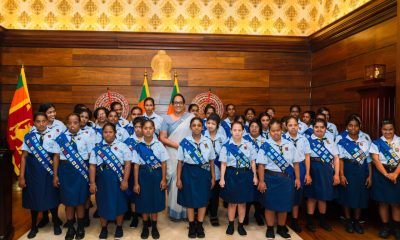
Prime Minister Dr. Harini Amarasuriya stated that the guidance or religious leaders is essential to further strengthen harmony and solidarity among communities in multicultural areas such as Anamaduwa, where Sinhala, Tamil, and Muslim communities live together.
The Prime Minister made these remarks while addressing the official ceremony of presenting the Sannas Patra to confer the title of Chief Sanghanayaka of the Rajavanni and Kumaravanni two provinces upon Venerable Dharmakeerthi Sri Pangnananda Nayaka Thero of Anamaduwa. The ceremony was held on Wednesday (13) at Sudampaya, Anamaduwa.
The event was held under the patronage of the Anunayaka Thero of the Malwathu Chapter, Most Venerable Niyangoda Vijithasiri Thero. During the ceremony, Prime Minister Dr. Harini Amarasuriya formally presented the official declaration appointing Venerable Dharmakeerthi Sri Pangnananda Nayaka Thero as the Chief Sanghanayaka of the Rajavanni and Kumaravanni provinces. The ceremonial Vijinipatha was presented by Opposition Leader Sajith Premadasa.
Addressing the gathering, the Prime Minister stated:
“Venerable Dharmakeerthi Sri Pangnananda Nayaka Thero of Anamaduwa is a distinguished member of the Maha Sangha who has rendered invaluable service to both the Buddha Sasana and the education sector through the country nearly 50 years of monastic life and 35 years of service as an educator.
His service is not confined merely to religious observances. He has sheltered the children and people of the area in times of both hardship and happiness. In particular, it is important to remember the humanitarian leadership he demonstrated in providing relief to the people of the Puttalam District affected by cyclone Ditwah, which became a source of strength for the entire region.
His dedication towards restoring and preserving historic religious sites, including the Paramakanda Rajamaha Viharaya, for future generations is commendable.
As the government strives to lead the country towards ’a new era of renaissance’ built upon compassion and solidarity, the guidance and blessings of religious leaders such as him are of immense value to the government”.
The occasion was graced by the presence of members of the Maha Sangha representing the three Nikayas, clergy of other religions, and attended by the Governor of the North Western Province, Minister of Public Administration, Provincial Councils and Local Government Chandana Abayarathna, Diyawadana Nilame Nilanga Dela Bandara, Members of Parliament, government officials, and a large number of devotees.
[Prime Minister’s Media Division]
Latest News
Special Coordination Committee meeting for Badulla District chaired by the President
A Special Coordination Committee meeting for the Badulla District was held on Wednesday (13) afternoon at the Badulla District Secretariat under the patronage of President Anura Kumara Dissanayake to review the progress of measures taken to restore normalcy to the lives of people affected by the cyclone “Ditwah” and to develop infrastructure in the district.
As a result of the disaster situation, 90,667 individuals belonging to 26,517 families in the Badulla District were affected. A total of 77 estate houses and 507 rural houses suffered complete damage. In addition, 1,376 estate houses and 1,474 rural houses have been identified as high-risk dwellings. Accordingly, the total number of families that need to be resettled in the Badulla District is 3,434. During the meeting, the President inquired separately at divisional secretariat level about the resettlement process and the issues that had arisen.
Special attention was also given to the speedy release of state lands currently occupied by private companies, which have been proposed for resettlement purposes. The President instructed officials to commence housing construction work immediately after reaching agreement among the relevant institutions regarding the release of these lands.
The President further emphasized the need to expedite the resettlement process and stated that authorities should move beyond reports and plans and ensure that people who lost their homes gain confidence and hope in owning a new house.
The President also instructed that people who are hesitant about relocating to different lands should be given time until June 15 to make a decision.
The President separately reviewed the progress of compensation payments to affected people in the Badulla District, including compensation for loss of livelihoods, compensation for small and medium-scale business establishments, housing rental assistance and compensation for loss of life.
Attention was also drawn to the process of removing sand and rocks deposited on paddy fields and agricultural lands due to the disaster. It was decided to provide an allowance of Rs. 25,000 per acre for this purpose and to implement the programme with the support of farmer organizations.
Special focus was also given to the development of roads in the Badulla District damaged by the disaster. The President instructed that work on all 21 affected roads under the Road Development Authority be completed within this year.
The President also inquired about the programme being carried out for provincial road development and the required allocations and instructed officials to prepare and submit estimates for the necessary funding for all those roads.
The President further instructed officials not to consider financial constraints as an obstacle in restoring normal life for those affected by the disaster. President Dissanayake stated that the district should recover from the destruction caused by the cyclone within this year and be prepared to restart the Badulla District development programme from next year onward.
Also attending the meeting were Badulla District Coordination Committee Chairman and Minister of Plantation and Community Infrastructure, Samantha Vidyarathna; Co-Chairman and Uva Province Governor, Attorney-at-Law Kapila Jayasekara; Deputy Minister of Tourism, Ruwan Ranasinghe; Deputy Minister of Youth Affairs, Dinidu Saman Hennayake; Members of Parliament Kitnan Selvaraj and Ravindra Bandara; the Mayors of Badulla and Bandarawela Municipal Councils; Chairpersons of Local Councils; public representatives; the Chief Secretary of the Uva Province; the District Secretary; government officials of the Badulla District; Heads of relevant Departments; and representatives of the security forces.
(PMD)
News
SJB flays PUCSL for shifting coal scandal losses to electricity consumers
Alleging that the Public Utilities Commission of Sri Lanka (PUCSL) has shifted the massive losses, caused by the coal scam, to the hapless public, Opposition and SJB Leader, Sajith Premadasa, has questioned the conduct of the regulator, noting that it is mandated to protect the interests of both the service provider and the consumers.
Premadasa alleged that the PUCSL ignored the representations made by the SJB on behalf of local industries.
Premadasa said that the PUCSL had authorised the latest 18% increase, in response to the request made by the recently established National System Operator (Pvt) Ltd (NSO), on behalf of the NPP government.
The PUCSL was established in terms of the Public Utilities Commission of Sri Lanka Act, No. 35 of 2002. Although the PUCSL was supposed to function as a multi-sector regulator for electricity, water services and petroleum industries, successive governments refrained from bringing water services and petroleum industries under its purview.
The Opposition leader alleged that the PUCSL did the bidding of the government.
Since January this year, PUCSL has increased electricity tariffs on three occasions. The latest came into operation on 11 May.
The PUCSL consists of Prof. K. P. L. Chandralal (Chairman), Engineer Piyal Henanayake (Deputy Chairman), Dr. M.C.S. Fernando, and Lilantha Samaranayake, PhD.
Premadasa said that instead of taking tangible measures to recover the unbearable losses caused by the coal scam, the government burdened the entire country through the PUCSL.
“Don’t forget that the government is shielding its henchmen responsible for the coal scam at the expense of the country,” MP Premadasa said, pointing out that there couldn’t have been any dispute over their culpability, after the National Audit Office (NAO) found fault with the Energy Ministry for granting the tender for the supply of coal for the 2025/2026 season to a company not qualified even to participate in the tender process.
The SJB leader declared that the resignation of Energy Minister, Kumara Jayakody, and its Secretary, Prof. Udayanga Hemapala, in the immediate aftermath of Parliament defeating a no-faith motion against the Minister was meant to protect the ruling party.
The PUCSL has stated that the NSO received Rs 15 bn from the government to grant relief to 95% of the consumers. “How could the PUCSL justify unbearable electricity tariff increases for the remaining 5% of the consumers, knowing very well that it will destabilise key sectors in the economy?” a power sector expert said.
By Shamindra Ferdinando
-
News5 days agoLanka Port City officials to meet investors in Dubai
-
News2 days agoEx-SriLankan CEO’s death: Controversy surrounds execution of bail bond
-
News6 days agoSLPP expresses concern over death of former SriLankan CEO
-
Editorial7 days agoThe Vijay factor
-
News6 days agoPolice inform Fort Magistrate’s Court of finding ex-CEO of SriLankan dead under suspicious circumstances
-
Features3 days agoWhen University systems fail:Supreme Court’s landmark intervention in sexual harassment case
-
Features3 days agoHigh Stakes in Pursuing corruption cases
-
Features7 days agoPalm leaf manuscripts of Sri Lanka – 1