
Sports
Sri Lanka eye England rematch after sealing Super Eight berth

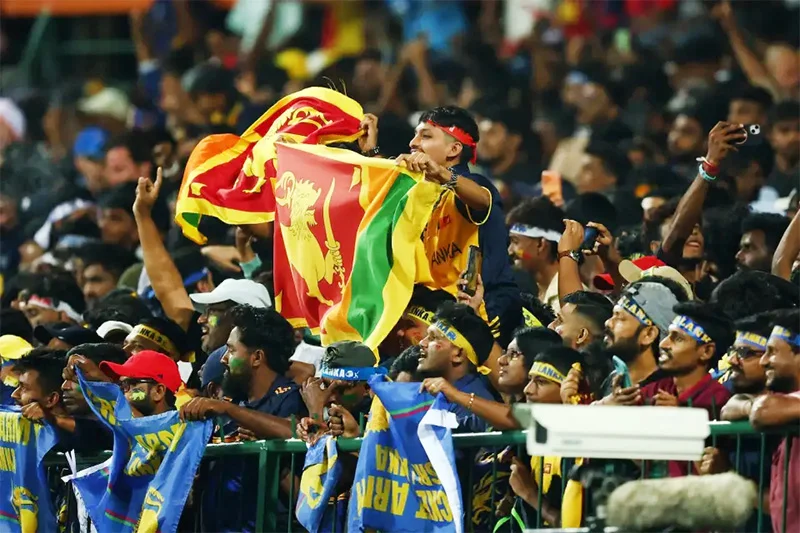
Sri Lanka became the first side from Group ‘B’ to punch their ticket to the Super Eight stage of the T20 World Cup, getting the job done with a game to spare and ticking the qualification box in clinical fashion. While they still have Zimbabwe to contend with in their final league outing today, the bigger fish to fry awaits on Sunday, a heavyweight rematch against England at Pallekele.
Earlier this month, England handed Sri Lanka a humbling 3-0 whitewash in a bilateral series at the same venue. Sri Lanka’s batting unit, in particular, was found wanting as England’s spinners kept them on a tight leash. But batting coach Vikram Rathour is not losing sleep over that setback, insisting the scoreline flattered the visitors.
“We have had three good games. I don’t think there were any issues as such during the England series with batting. We had some good games and not so good games. I wasn’t concerned about the results during that series. It was all about getting the process right,” said Rathour, who is contracted with Sri Lanka until the end of the World Cup.
Rathour, part of India’s backroom staff when they lifted the T20 World Cup in the Caribbean in 2024, knows a thing or two about peaking at the business end of a tournament. He stressed that dwelling on past scars would be counter-productive.
“We need to play to our strengths. We need to focus on the game and not think too much about the past or the future,” he explained.
Before they lock horns with England, however, Sri Lanka must first negotiate Zimbabwe, the tournament’s dark horses who have already sent Australia packing and gatecrashed the second round. The African side have punched above their weight, breathing fire with the new ball and showing steel with the bat.
 “Zimbabwe have played really well so far. They have a decent bowling unit. We need to play to our potential. If we can stick to our plans and execute them well, that will be good for us,” Rathour said.
Sri Lanka’s resurgence has been underpinned by a batting unit beginning to hum in unison. Opener Pathum Nissanka has become the cynosure of all eyes after his majestic hundred against Australia, the first century of this tournament, a knock that blended timing, temperament and a touch of audacity.
“It was almost the perfect batting knock. Pathum played one of the best T20 innings you will ever see. Kusal Mendis has been very consistent with three half-centuries in three games. Pavan Rathnayake has been good against spinners, using his feet well. We have played to our potential and we need to be consistent in doing that.”
Conditions, though, will once again demand adaptability. Colombo’s R. Premadasa Stadium is a different kettle of fish to the truer surfaces of Pallekele, where Sri Lanka outplayed Australia. At RPS, the ball grips, stops and asks awkward questions, a venue where flat-track bullies often come unstuck.
“I read a great line where someone had said that these are not tough conditions but these are different conditions. We have enough skill in the side to adapt to these conditions,” Rathour noted.
by Rex Clementine


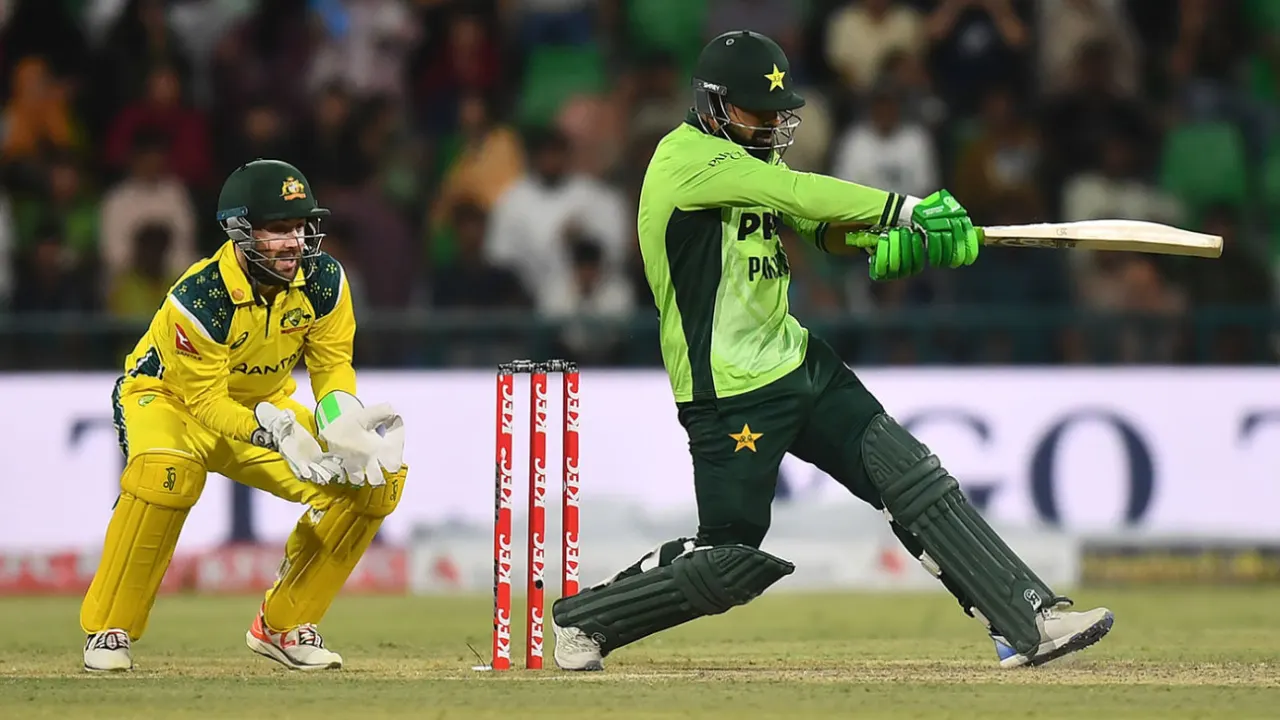
Pakistan edged home in a low-scoring tussle to secure their third straight ODI series win against Australia. They batted with grit and patience to scale the target of 158 with four wickets and 49 balls remaining on a square-turner in Lahore.
Pakistan – in a surprising move – produced spin-heavy surfaces for this series, which was supposed to test their player pool ahead of the next year’s ODI World Cup in southern Africa and the pitch for the last match offered extra bite to the spinners as the ball turned and bounced sharply, making run-scoring a difficult proposition, especially during the chase.
Maaz Sadaqat seemed aware of how tough batting would get as the innings progressed and he provided Pakistan a rapid start with a 26-ball 27, hitting five fours. He must have taken notes watching Josh Inglis bat in the first innings, as the Australia captain picked up boundaries in the first powerplay to make the most of the run-scoring opportunities with the balls – one from each end – hard and new.
However, Sadaqat was trapped in front by Matt Short as he looked to paddle-sweep his off-break. The left hander did not curb his attacking instincts despite the wicket of Sahibzada Farhan in the third over as he fell prey to Nathan Ellis’ vicious off-cutter.
The chase was anchored by Babar Azam who made a gutsy 40. He hit only three boundaries – two off Matt Kuhnemann and the other off Ellis – in his 84-ball vigil at the crease. Ellis, who had removed him in the previous two matches, tested his defences with his variations, but Babar had done his homework and seemed to be picking his cutters and slower-ones from the hand rather than the pitch.
The highlight of his stay was his battle with Kuhnemann, who beat his outside edge on myriad occasions. The left-arm finger spinner dragged him forward with his tossed up deliveries on a length and spun the ball away from him sharply. Babar, on each occasion, covered his off stump intelligently, bringing his bat and front foot in unison. But he was undone when Kuhnemann dragged his length back a fraction and produced a magnificent delivery which ripped past the outside edge as Babar went on the back foot.
Kuhnemann had previously removed Ghazi Ghori and Salman Ali Agha to keep Australia in the contest and he finished with 3 for 38. When Matt Renshaw also struck for his first ODI wicket, having Arafat Minhas held at slip by Cameron Green after a bobble, Pakistan were wobbling on 112 for 6
They were dragged over the line by Shadab Khan, who Pakistan feel is their next batting allrounder, as he made an unbeaten 29 off 42 in an unbeaten partnership of 49 with Abdul Samad.
Australia had been skittled for 157 in 42 overs, losing 7 for 38 from 119 for 3, as Shaheen Shah Afridi took three wickets alongside two apiece for Abrar Ahmed and Shadab after Inglis decided to bat having comfortably defended 232 in the previous match.
The decider began 15 minutes late because of a brief downpour. The only innings of note in the first half of the match was posted by Inglis who made 65 off 71 balls having been moved up to open, with the next best score was 19.
After Short had picked out mid-on second ball of the match (following Alex Carey’s first-ball dismissal two days ago) Inglis batted with fluency. He took on Afridi and welcomed Minhas with a crunching drive for four then a monstrous inside-out six over cover. In an innings in which he scored heavily on the off side, Inglis unfurled reverse sweeps against the spin. He made only 13 out of 65 runs on the leg side.
Marnus Labuschagne’s struggles in ODIs and on this tour continued as a mix up in the 12th over curtailed his stay. He was supporting Inglis by milking the spinners and seemed to have settled when Inglis did not return his call for a second. He had to scramble back from the middle of the wicket only to fall short of a Minhas’ direct hit from the non-striker’s end.
Carey provided a supporting hand to Inglis in a 52-run partnership before a scorching delivery from Haris Rauf nipped into him and struck the top of middle stump. It sparked a collapse and soon Afridi had Inglis and Cameron Green caught across three balls at the start of his second spell.
Salman then took a sharp catch at slip as Abrar lured Renshaw – Australia’s best batter on the tour – into a drive. Abrar also bowled Cooper Connolly in his next over as Australia slipped from 119 for 3 to 131 for 7. Connolly, who replaced Tanveer Sangha, was playing as a batter only as he continues to recover from a back injury which prevented him bowling during the IPL.
Shadab’s wicketless patch finally ended after five ODIs (and more than 300 deliveries) when Ghori took a spectacular catch as the ball looped off Oli Peake’s foot after taking an inside edge. It was after the second ODI that Mike Hesson, the Pakistan head coach, had relegated Shadab to the fifth bowler in this line-up, but the legspinner bowled with good rhythm, bringing the stumps into play more often by tossing the ball on length regularly.
He had Adam Zampa bowled off a ball that stayed low in the 42nd over before the run out of Ellis brought an end to the innings.
Whether producing rank-turners for these three games was the best preparation for the 2027 World Cup which will be played in South Africa, Zimbabwe, and Namibia is debatable. That Pakistan have something to celebrate after their poor ODI and Test tour of Bangladesh and a hapless outing in the T20 World Cup will motivate this side.
Scores:
Pakistan 161 for 6 in 41.5 overs (Babar Azam 40, Shadab Khan 29*; Matthew Kuhnemann 3-38) beat Australia 157 in 42 overs (Josh Inglis 65; Shaheen Shah Afridi 3-30, Abear Ahmed 2-19, Shadab Khan 2-28 ) by four wickets
[Cricinfo]
Welcome to England’s new Test era. Stop me if you’ve read this one before.
The opening day of the 2026 Test summer proved to be wildly undulating, intermittently chaotic, and utterly compelling. It was blessed with moments of genius and splashes of rank ineptitude, as polarised as the bright sunshine and torrential downpours in which it was staged, and it finished with England in command against New Zealand despite their best efforts at self-sabotage.
The net result was scarcely distinguishable, in other words, from the last first day of an England versus New Zealand Test match at Lord’s – the original Stokes-McCullum launch party of June 2022, when 17 wickets tumbled in a madcap day of seam and swing, and England’s eventual total of 141 in 42.5 overs (compared to 140 in 39.4 this time around) ended up being the launchpad for greater things.
The parallels were hardly exact – notwithstanding another counterattacking cameo from Harry Brook, timidity rather than bravado proved to be the defining feature of England’s innings. It was as if their determination to play “smarter cricket”, as per Ben Stokes’ pre-match comments, had caused the entire order to second-guess their previously route-one methods. The key beneficiary was the returning Kyle Jamieson, who booked his place on the Lord’s honours-board with a magnificent haul of 5 for 62, his first Test wickets since February 2024.
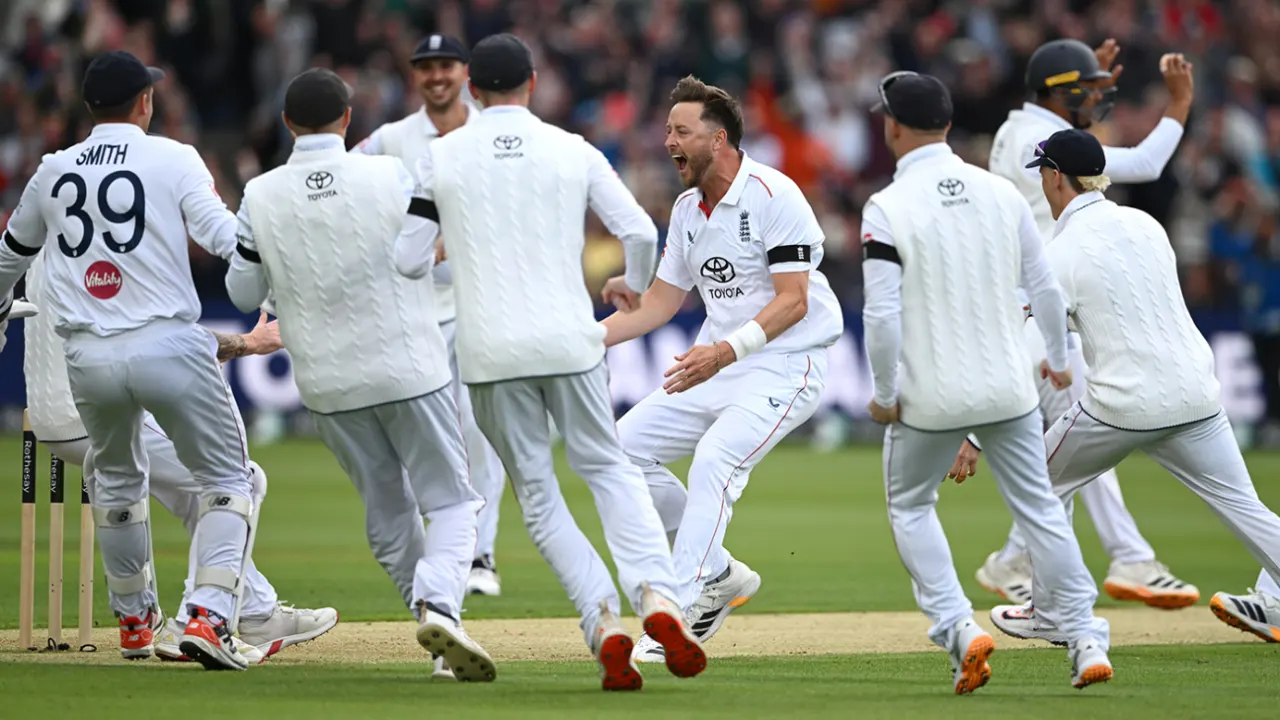
But then, in the evening sunshine, that performance was trumped by an even more startling comeback from England’s own rangy right-armer. Like Jamieson, Ollie Robinson chugged in from the Nursery End, exploiting his towering release point and metronomic accuracy to prove that outright pace is no pre-requisite for world-class status. He too was back after a two-and-a-half year absence from Test cricket, although Robinson’s many critics would argue that his own back issues in that period had been symptom, rather than cause, of his banishment.
As far as the Lord’s crowd was concerned, however, all was forgiven by the end of Robinson’s astonishing opening over. Six balls, three wickets, no runs, and an almighty acclaim as he trooped down to fine leg at the end of it, armed with instant evidence that he was worthy of the “No.1” shirt that he had claimed on his return.
His first victim was Devon Conway, pinned by a third-ball nip-backer as he thrust his pad down the line; his second was the mighty Kane Williamson, caught off a looping inside-edge at short leg as Robinson began his familiar airplane celebration before the ball had even nestled in Emilio Gay’s hands. One ball later, he was on a hat-trick, as Rachin Ravindra was late coming forward and thumped in front of all three. For the second time in the over, Rod Tucker’s verdict was shown to be marginal, but such was Robinson’s command of his own fingers on the seam, he effectively took ownership of the umpire’s too.
Gus Atkinson, 10mph quicker but initially off the pace at the business end, then made it 12 for 4 when Tom Latham also played down the wrong line. Not to be outdone, Robinson flattened Daryl Mitchell’s middle stump as he shouldered arms to another bail-trimmer, before Josh Tongue ploughed through Tom Blundell’s defences to cap a sorry scoreline of 29 for 6. Though Glenn Phillips stepped into the Brook role with an enterprising 31 from 34 balls, the deficit at the close was still a daunting 79.
New Zealand’s concerns weren’t limited to the scoreline. Though it seemed immaterial for much of the day, the loss of their attack leader, Matt Henry, to a back spasm could have more serious ramifications as and when England’s second innings gets underway. He managed four of the ten overs in a truncated morning session, in which period the debutant Gay came and went. Though Gay showed glimpses of his potential, having helped himself to a first-ball four off Jamieson’s loosener, he soon fell to the same bowler when squared up and caught at slip.
In Henry’s absence, New Zealand resumed with the seam-and-swing pairing of Nathan Smith and Will O’Rourke, and all hell broke loose. From 31 for 1 in the second over of the session, England tumbled to 34 for 4 in the space of 14 balls, culminating in the priceless scalp of Joe Root for 1. That then became 55 for 5 when Jamie Smith inexplicably shouldered arms to an in-ducker from Jamieson and lost his off stump, also for 1.
It will be little consolation to Smith that his dismissal was marginally less embarrassing than his awful slap to cover off Marnus Labuschagne in England’s previous Test at Sydney in January, but as an illustration of England’s scrambled post-Bazball mindset, it was perfect.
A glimpse of that commitment to “smarter cricket” had been witnessed from the outset of England’s innings. Duckett, fronting up for the first ball in the absence of his former partner, Zak Crawley, offered consecutive leaves to Henry’s opening deliveries en route to a maiden over, and had struck just one boundary in 31 balls before lunch.
He wasn’t able to make his start count, however. Smith, fresh from a six-wicket haul against Ireland last week, roared in from the Nursery End with an aggressive full length, and pinned Duckett on the back leg as he nipped the ball back down the slope – the first of six lbws in the day.
Jacob Bethell showed decent judgment in persuading his partner not to burn a review, but he couldn’t translate that eye on the ball into his own innings. After an indifferent spell with Royal Challengers Bengaluru in the IPL, and the added distraction of a finger injury, the sparkling form of his 154 at Sydney in January felt like a fever dream. After nudging along to 6 from 22 balls, Bethell launched into a drive as O’Rourke fired in a full length, missed the ball by a distance, and was sent on his way via three reds on review.
At 33 for 3, the stage was set for a Root special – he certainly had Lord’s full blessing to rebuild the innings at any tempo necessary. But O’Rourke had other ideas, and the ball with Root’s name on it was a beauty: a vicious lifter from just back of a length, which kissed the edge on its way through to Blundell.
Brook, who had swayed out of the way of a first-ball bouncer and took 11 balls to get off the mark, initially seemed unsure how to pace his attempted fightback. But, as so often, a moment of good fortune helped to crystallise his thought process. On 8, he sliced into a cut off O’Rourke, but Conway failed to grasp a routine chance as he attempted a reverse-cup take. Four balls later, Brook climbed through a trademark pull in front of square, and his innings was up and running.
His partners, however, were unable to find similar traction. After Smith’s aberration, Stokes emerged at his new berth at No.7, but scarcely exuded an air of permanence throughout an off-the-pace display. And, just as he was beginning to find his range with a pair of leg-side fours, he was undone by a blinder from his old adversary, Williamson, in the cordon. A low edge off Jamieson looked for all the world to be going to ground, but Williamson flung himself across first slip from second, scooped the chance up in his fingertips, and clutched it to his chest to be sure.
Brook carried on swinging, taking lumps out of Jamieson’s heavy lengths to march towards a 64-ball fifty with nine fours. But with New Zealand setting in-out fields for the inevitable miscue, the bowler should have had the last laugh on 46, only for Ravindra to spill a top-edged pull in front of the Mound Stand.
It didn’t matter too much in the long run, however. After Atkinson had come and gone for 4, Jamieson himself made amends on the fine leg rope to give Smith a deserved second, then landed his coveted place on the honours board soon afterwards too. Another downpour forced an early tea at 118 for 8, but two balls after the resumption, Robinson dangled his bat outside off and Latham smartly took the review with seconds to spare, to reveal a thin edge off the toe of his blade.
Tongue and Shoaib Bashir were an unlikely source of late resistance. However, both men played the shots that their senior team-mates had scrapped from their game-plan to add 22 for the last wicket, the second-highest stand of the innings. By the close, that injection of impetus was looking significantly more important than it seemed at the time.
Scores:
New Zealand 61 for 6 in 19.2 overs (Glenn Phillips 31*; Ollie Robinson 4-10) trail England 140 in 39.4 overs (Harry Brook 56; Kyle Jamieson 5-62, Nathan Smith 3-38, Will O’Rouke 2-25) by 79 runs
[Cricinfo]

Rumesh Tharanga produced the best javelin throw of his career to smash the Golden Gala Pietro Mennea meeting record with a world-leading 92.62m at the Wanda Diamond League meeting in Rome on Thursday (4).
The Sri Lanka National Record holder opened with 84.49m – a mark that would have been good enough to win – before launching his second-round effort way beyond 90 metres. His 92.62m added more than two metres to the meeting record of 90.34m set by Andreas Thorkildsen 20 years ago, moved Tharanga to eighth on the world all-time list and made him the second-best Asian thrower in history.
It was also the best throw in the world since the 2024 Olympic final, and secured him a clear victory over two-time world champion Anderson Peters, who was second with 83.91m, and world bronze medallist Curtis Thompson, who was third with 83.89m.

Pakistan hold their nerve to take series in low-scoring scrap

Robinson routs New Zealand top-order as England hit back on 16-wicket day

Rumesh Tharanga shatters Rome Diamond League record

Showers about 100 mm are likely at some places in the Western and Sabaragamuwa provinces and in Galle, Matara, Kandy and Nuwara-Eliya districts

Elders’ home devastated by fire was a ‘house of horror’: Witnesses

CERT : AI-generated videos depicting Prez, PM lure public into financial scams

‘Dates have the highest sugar content to fight Coronavirus’

Sunday Island 27 December – Headlines

#SundayIsland 17th December – Headlines

Sunday Island – 28th March

Sunday Island Headlines – 21 March

Sunday Island – 21st February – Headlines
-

 News6 days ago
IMF urges Lanka not to meddle with exchange rate
-

 News3 days ago
Lankan duo emerge winners in Latin dance championship held in Blackpool, UK
-

 Business4 days ago
IMF’s unstated rate:Sri Lanka’s $695m loan costs about 5.33% per annum
-
 News6 days ago
State of emergency extended
-

 Features5 days ago
Are threats to Buddha Sasana external or from within?
-

 News4 days ago
UNP challenges NPP move to amend Vihara – Devalagam Act
-

 Business4 days ago
Sri Lankan scientist-innovator Milinda Edirisinghe introduces AI-integrated gem testing system to gemological world
-

 News3 days ago
Sri Lankan teen killed in Chennai clash; three arrested