
Editorial
Sinners stoning sinners


Monday 27th November, 2023
The SJB has commenced collecting signatures for a public petition as part of a campaign to have those who are responsible for the current economic crisis stripped of their civic rights. Given public resentment, which is palpable, the SJB may be able to obtain hundreds of thousands of signatures for its petition, but the chances of its political venture yielding the desired results are remote; the Rajapaksas and their cronies are controlling Parliament. The SJB seems to be thinking that the ongoing campaign will help it gain some traction, but that move could turn out to be counterproductive because the Opposition politicians are not free from blame for the economic crisis.
The SLPP leaders are directly responsible for the country’s bankruptcy. The Mahinda Rajapaksa government indulged in wasteful expenditure, invested heavily in vanity projects, and did precious little to prevent the misappropriation of public funds. Corruption became the order of the day under that regime. The Gotabaya Rajapaksa administration totally mismanaged the economy, ruined the agricultural sector with its disastrous organic farming experiment and the ill-conceived blanket ban on agrochemicals, resorted to excessive money printing, did not make a serious effort to arrest the rapid depletion of foreign currency reserves and refused to seek international assistance to straighten up the economy until it was too late.
All SLPP MPs including those who have broken ranks with the government must be held accountable for the current economic crisis; even the dissidents among them supported the wrong policies of the Gotabaya administration until they fell from grace. Similarly, besides those who, the Supreme Court has said in a recent judgement, contributed to the current economic crisis, there are many others who made a tremendous contribution to the country’s bankruptcy, which was the culmination of a process that lasted for years under successive governments.
The SJB parliamentary group members who were in the Yahapalana government, which consisted of the UNP, the SLFP, the SLMC, etc., cannot absolve themselves of the blame for the current crisis. The UNP-led UNF administration did not care to reduce public debt. Instead, it slashed fuel prices and granted unusually high pay hikes to the public sector workers with the view to winning the 2015 general election. It neglected national security, and failed to prevent the Easter Sunday carnage, which entailed an enormous economic cost besides claiming more than 270 lives. The 2019 terror strikes, which crippled tourism, adversely impacted the country’s foreign exchange reserves.
The SLPP keeps saying that the Yahapalana government (2015-2019) worsened the national debt by borrowing USD 12.5 billion in sovereign bonds; nearly USD 7 billion were raised in just 15 months from early 2018 to mid-2019; out of that amount only USD 2 billion had been settled by the end of 2019. It will be interesting to see what the UNP, and its offshoot, the SJB, have got to say to this. Besides, the Yahapalana government allowed its cronies to enrich themselves at the expense of the economy. The Treasury bond scams are a case in point.
Above all, no less a person than Justice Minister Dr. Wijeyadasa Rajapakshe has revealed that the abolition of the Exchange Control Act No 24 of 1953 owing to the introduction of the Foreign Exchange Act No 12 of 2017 has stood unscrupulous exporters and other such elements in good stead. Most export proceeds are not repatriated, Minister Rajapakshe has said, adding that according to his information some exporters have hoarded about USD 56.5 billion offshore.
SJB MP Dr. Harsha de Silva has, in a recent television interview, sought to dispute Minister Rajapakshe’s claim, arguing that the new exchange control laws were intended to enable Sri Lankan businesses to expand abroad. But they certainly benefited racketeers more than anyone else. The new Foreign Exchange Act, inter alia, converted some criminal offences under the previous law into civil ones for the benefit of some crooks.
Thus, criminal cases that had been filed previously lapsed, and legal action was not instituted against the offenders concerned anew for obvious reasons; about 30 persons including the kith and kin of UNP and SLPP leaders are believed to have benefited from the new Act, which the SJB politicians voted for when they were in the Yahapalana government. The abolition of tough foreign exchange control laws contributed to the depletion of the country’s forex reserves and the current economic crisis.
The political parties that resorted to terrorism and/or supported terrorists are also guilty of having contributed to the ruination of the country’s economy. The economic cost of the JVP’s reign of terror in the late 1980s is hard to estimate due to the multifaceted nature of the repercussions of the mindless violence, which crippled the country. The TNA, created by the LTTE, functioned as the latter’s mouthpiece. It must also be held responsible for the damage the LTTE inflicted on the economy to the tune of billions of rupees. When the members of the current parliament accuse one another of having ruined the economy and call for punitive action, it is a case of sinners stoning sinners.









Monday 21st September, 2026
Sri Lankans always use highways and waterways recklessly as if they had a death wish. This fact is borne out by the chilling statistics about fatal road accidents and drowning incidents. About seven people, including five youths, have drowned in separate incidents during the past week alone, according to media reports. Road accidents snuff out about seven lives a day. Drowning reportedly causes about 600-900 deaths annually.
The disturbing cluster of drowning incidents that received media attention, during the past three weeks, is as follows: a 13-year-old schoolboy drowned in the Maha Oya on 08 September; an 11-year-old Buddhist monk drowned while bathing in the Heen Ganga on 13 September; a 25-year-old Indian tourist drowned during a sea-rafting outing in Sri Lanka on 15 September, and four young people drowned while bathing in the Maha Oya on 19 September. There was also a drowning incident involving two young men, aged 23 and 24, in the Nanu Oya canal earlier in September.
According to media reports quoting the Sri Lanka Life Saving organisation, many fisherfolk cannot swim or even float. The vulnerability of others who do not live close to water bodies is self-evident. Swimming skills and water experience do not necessarily go hand in hand, and one does not have to be a good swimmer to operate a fishing craft, but the general consensus is that swimming or at least the ability to survive in sudden immersions should be in the DNA of the coastal and fishing communities. Shouldn’t a vast majority of inhabitants of a country that boasts an ancient hydraulic civilisation at least be able to float and survive, much less swim like otters?
Sri Lanka’s drowning-prevention efforts are noteworthy. They include Swim for Safety and women’s and children’s swimming programmes, Coast Guard lifesaving training, Navy and Police rescue training, community and fishermen’s water safety education, putting up warning signs, public awareness campaigns, and a national multisectoral drowning prevention action plan. If not for these initiatives, many more lives may have been lost annually. However, going by the sheer number of drowning incidents reported almost daily, it can be argued that much more remains to be done.
The World Health Organization (WHO), which plays an active role in helping Sri Lanka prevent drowning incidents, has identified several gaps in drowning prevention efforts, the main being that swimming education is not mandatory in schools, drowning data are fragmented between agencies and the effectiveness of existing interventions has not been adequately evaluated. It has recommended sustained national campaigns aimed at children, parents, boat users and tourists, as well as the expansion of community-level swimming and water-safety interventions. This, we believe, is the way forward.
There has been much hullabaloo about attempts to introduce sex education into the school curriculum. This is an issue to be dealt with separately, but shouldn’t survival skills take precedence over, or receive the same attention as, sex education in schools?
The best way to determine whether a bathing place is safe is to seek the advice of the people living close to it. Many Sri Lankans consider a dip in a waterway, a reservoir or the sea, or a boat ride, an integral part of a trip; they tend to throw caution to the wind and plunge into unfamiliar waters, particularly when they are sozzled to the gills. They ignore warning signs, which in some cases are not properly visible.
Serious thought should be given to adopting digital solutions to prevent drowning incidents. There is a need to introduce an official national water-safety app, supported by the Police, Coast Guard and lifesaving organisations, to enable people to check the latest safety status of beaches, rivers, reservoirs and other popular bathing places and the availability of lifeguards at such places before entering the water. Sri Lanka can learn from other countries, such as New Zealand, where Safeswim provides location-specific swimming risk information, current hazards, lifeguard patrol information and Australia, whose Beachsafe informs the public of beach locations, surf conditions, hazards and the status of lifesaving services. It may not be difficult to find sponsors for such an app.
A truly national effort is called for to prevent avoidable drowning deaths.

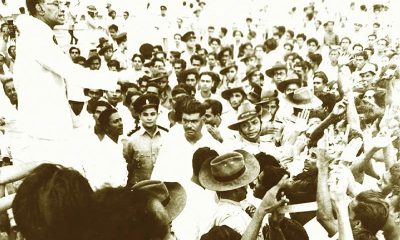
The 120th birth anniversary of President J. R. Jayewardene (JRJ) was commemorated in Colombo on Thursday. The well-attended event, with a representative audience, brought the UNP and its offshoot, the SJB, together, with their leaders, former President Ranil Wickremesinghe and Opposition Leader Sajith Premadasa, respectively, stressing the need for their parties to unite and fight what they described as the JVP-led NPP government’s dictatorial rule. Ironically, about four decades ago the JVP itself used the same allegation in a bid to justify its violent campaign against the JRJ government.
JRJ or the Old Fox, as he was popularly known, achieved what many considered impossible; he rebuilt the UNP from a mere 17 seats, which it was reduced to in the 1970 general election, and steered it to a mammoth victory with a five-sixths majority just seven years later. He not only opened up Sri Lanka’s economy but also reoriented the country’s geopolitical alignment in a bipolar world. He was pejoratively dubbed “Yankee Dickie” because of his pro-American stance. His rule was a Dickensian paradox, characterised by both progress and decline. It ushered in economic growth and infrastructural development but upended Sri Lanka’s political culture, paving the way for the institutionalisation of corruption, abuse of power, political violence, electoral malpractice, and political interference with the judiciary on an unprecedented scale; the debilitation of state-owned enterprises, particularly the bus service, also began under the JRJ rule. The 1978 Constitution, which entrenched the executive presidential system, is one of the most enduring features of the JRJ’s political legacy.
On watching the commemoration of Yankee Dickie’s birth anniversary, one may have recalled an American Civil War marching song, ‘John Brown Body’. The missions of Brown and JRJ bear little resemblance to each other; the former is a rebel and martyred abolitionist and the latter is remembered mostly as a self-seeking, conservative political leader, but their causes continue to advance long after their deaths. So, on Thursday, one may have sung under one’s breath, parodying the John Brown song:
JRJ’s Constitution is strapped upon his back,His soul is marching on.
About half a century has elapsed since JRJ introduced the current Constitution to achieve his presidential dream. All his successors, except Ranasinghe Premadasa and Gotabaya Rajapaksa, contested presidential elections, promising to abolish the executive presidency and restore the Westminster system, but they have followed the Machiavellian maxim on promises and considered ‘the word broken is the necessity of the present’.
JRJ may be blamed for many wrongs, but it may be argued that he was less hypocritical than his successors. He made no bones about his autocratic disposition, and had the courage to stand up for what he believed in. He yearned for absolute power, and blatantly undermined the separation of powers and reduced the legislature to a mere appendage of the Executive. He also sought to keep the judiciary under his thumb, but with little success, thanks to some upright judges who had the courage to act without fear or favour. It was not without reason that he bragged that the only thing he could not do with his executive powers was to make a man a woman and vice versa. He brooked neither criticism nor dissent and bulldozed his way through. He did not scruple to amend the Constitution to advance his political agenda. All his successors have emulated him.
It may not be too cynical a view that the JVP should replace Rohana Wijeweera’s portrait at its Pelawatte office, if any, with that of JRJ, for its current policies are more closely aligned with JRJ’s capitalist ideology than its founder’s. The JVP-led NPP government is apparently pursuing open market policies more vigorously than its predecessors. Whoever would have thought that the JVP would ever embrace capitalist policies, much less pursue them with missionary zeal and capitulate to the Bretton Woods twins. The JVP’s 36-page Revolutionary Policy Declaration with Wijeweera’s imprimatur, ends with the Communist revolutionary slogan, Death to imperialism––Liberation to the People and Death to Capitalism––Victory to Socialism. But the present-day JVP leaders have embraced capitalism. They sought to kill JRJ for what they described as his capitulation to India. Today, they themselves stand accused of touching their forelocks to Indian leaders.
The SLFP also denounced JRJ’s economic policies vehemently while in the political wilderness, but unflinchingly adopted them after its return to power. So, the SLFP, too, should have JRJ’s portrait hung at its Darley Road office. The SLPP should also consider hanging a portrait of JRJ at its Nelum Mawatha office, for it also follows his policies.
The leaders of the JVP, the SLFP and the SLPP are no admirers of JRJ, but imitation is said to be the sincerest form of flattery. The Old Fox must be guffawing wherever he may be.

Saturday 19th September, 2026
The US has refused to grant Palestinian President Mahmoud Abbas a visa to attend the UN General Assembly in New York next week, according to a BBC report. Washington claims that it has denied visas to Palestinian representatives, including Abbas, for their failure to live up to peace process commitments. Sanctions were initially imposed in August last year, when 80 Palestinian officials were denied visas for the annual UN meeting in New York, BBC report says.
The US has accused the Palestinian Authority and the Palestine Liberation Organisation of “glorifying terrorism” and attempting to “internationalise” the Israeli-Palestinian conflict. It is laughable that such concerns about peace have been raised by the US, which has made six major military interventions commonly known as wars since 1945, namely, Korean War (1950–53), Vietnam War (major US combat involvement, 1964–73), Gulf War (1990–91), Afghanistan War (2001–21), Iraq Invasion (2003–11), War against ISIS in Iraq and Syria (from 2014), Libya engagement and the ongoing Iran war.
Interestingly, the Trump administration has granted Iranian leaders visas to attend the UN summit. A State Department Spokesman is reported to have said that a core delegation from Iran will be allowed to attend the summit in line with the United States’ obligations as the UN host country. Iranian President Masoud Pezeshkian and Foreign Minister Abbas Araghchi are expected to be granted US visas.
Aren’t the US obligations as the UN host country applicable to Palestine? The Palestinian Foreign Ministry has called the visa sanctions “an unjustified measure that runs counter to efforts to rebuild trust, develop Palestinian-US relations, and create the necessary political climate for implementing the two-state solution and achieving peace and stability”. It has vehemently rejected the long-held accusations by the Trump government and Israel, noting that Palestine has a right to seek accountability against an occupying force under international law.
One may recall that the UN had to contend with a similar issue in 1988; over a statement concerning Yasser Arafat’s visa, the UN Legal Counsel stated that the 1947 UN-US Headquarters Agreement gives persons, covered by Section 11, an “unrestricted right” to enter the US for the purpose of UN proceedings. The US maintained that its law preserved its authority to exclude persons on national security grounds. The UN Legal Counsel responded that there was a difference of opinion between the UN and the US concerning the legal character and validity of that US security reservation.
The Headquarters Agreement has created a special treaty-based obligation concerning the entry and transit of accredited representatives of UN member states attending official UN business. It establishes the protection against impediments to transit, and its Section 13(a) specifically says immigration laws must not interfere with that protection and requires US visas, where necessary, to be issued promptly and free of charge. Section 12 of the Agreement specifically states that the US authorities must provide necessary protection to such persons while they are travelling to or from the UN Headquarters district, and this provision applies regardless of the relationship between the person’s government and the US. The Agreement however does not give UN representatives unrestricted freedom to visit other parts of the US unless such travel is for official UN meetings or official UN business.
There have been only half-hearted attempts to address the issue of access restrictions imposed by the US on some accredited representatives of UN member states, seeking to attend UN proceedings. It is time the UN stopped dilly-dallying and grasped the nettle. It should ensure that UN representatives attending the UN General Assembly and other official events of the world body are not left at the mercy of Washington. But who will bell the cat?

“ViYASA” National Business Facilitation Centre (NBFC) to be opened tomorrow (22)

Court of Appeal Judge M. Sri Mevan Anthony Edirimannasuriya Corea appointed as Acting President of the Court of Appeal

President instructs expediting further measures concerning Sivarasa Anojan, sentenced to death in Saudi Arabia

It’s Shafali vs Athapaththu as Sri Lanka seek to stop India juggernaut

Trophy row unlikely to repeat in Japan

Powerful explosions at Syrian army site near Aleppo injure at least four

‘Dates have the highest sugar content to fight Coronavirus’

Sunday Island 27 December – Headlines

#SundayIsland 17th December – Headlines

Sunday Island – 28th March

Sunday Island Headlines – 21 March

Sunday Island – 21st February – Headlines
-

 News5 days ago
US embassy won’t comment on IGP’s probe into joint drug raid
-

 News4 days ago
Bid for Basil’s extradition nears final stage: Police
-

 News3 days ago
Shanakiyan urges urgent action over reported death sentence for Lankan in Saudi Arabia
-

 Features7 days ago
The emptying university: why are academics leaving?
-

 Business5 days ago
All-new Bolero MaXX unveiled in Sri Lanka
-
 Opinion7 days ago
Who committed genocide and created mass graves in Sri Lanka?
-

 News2 days ago
Namal Rajapaksa Buddhist gambit fails, bail denied
-
 Opinion5 days ago
A journalist who wrote across the divide