
News
Conditional permission for Thriposha products

… permitted value of Aflatoxins raised
The government has lifted the ban on providing Thriposha products for children. The ban was imposed late last year after finding Aflatoxins in one of its ingredients above permissible levels.
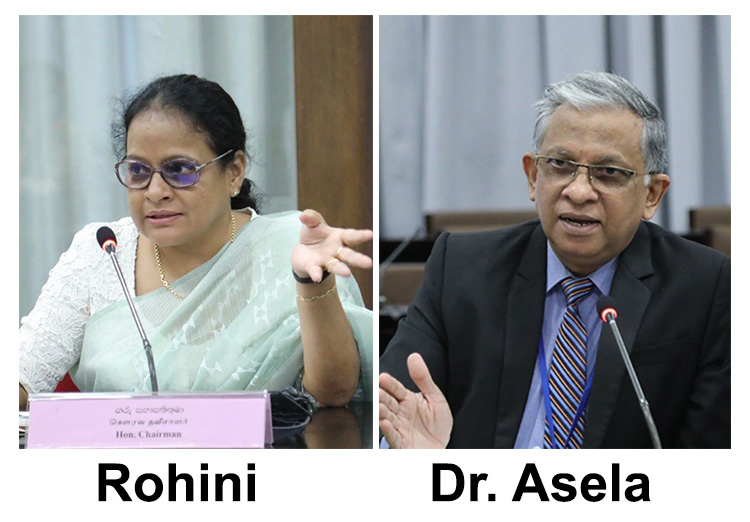
Director General of Health Services (DGHS) Dr. Asela Gunawardena has told the Parliamentary Caucus for Children that the Ministry has given permission to restart the production of Thriposha provided to children between the ages of 06 months to 03 years.
Acting Director Communications (Parliament) Jayalath Perera quoted Dr. Gunawardena as having told the Parliamentary Caucus for Children that Thriposha would be provided to children with identified nutritional requirements. MP Rohini Kumari Wijeratne chaired the meeting.
Aflatoxins are a family of toxins produced by certain fungi that are found on agricultural crops such as maize (corn), peanuts, cottonseed, and tree nuts. Corn is one of the ingredients in Thriposha.
The production of Thriposha was suspended after tests revealed that Aflatoxin in Thriposha were above permissible levels. Initially, the government denied media reports but later confirmed higher and unacceptable levels of Aflatoxin in Thriposha. The issue has been raised in Parliament.
Aflatoxins should be less than 1 part to a billion, according to the Health Ministry. The DGHS has emphasised that the Ministry accepted and approved Aflatoxin value up to 5 in Thriposha to cater to the needs of children between the ages of 06 months to 03 years with nutritional needs.
Thriposha is provided under the Maternal and Child Health Programme implemented by the Ministry of Health as a supplementary food for children with low nutritional level from 06 months to 03 years of age and as an additional nutrient for pregnant and lactating mothers.
Officials of Lanka Thriposha told the Caucus that the company could produce another nutritional food from rice, instead of Thriposha. However, a different type of milling machine is required for that purpose, they told the grouping, while estimating the machine would cost about Rs 400 mn.
The Parliament quoted them as having claimed that they could secure Rs 200 mn through the World Food Programme if the governemnt was willing to provide the balance requirement.MP Wijeratne has assured that she would bring up the issue to the notice of the relevant officials. (SF)









News
Establishment of an Institutional Framework to Inagurate Upper Hydro Catchment Areas Management Authority


Policy approval of the Cabinet of Ministers was granted at their meeting held on 08.06.2026 to establish the Upper Hydro Catchment Areas Management Authority for identification and
execution of a formal and long – lasting remedy to secure the central hills including the upper hydro catchment areas enabling them to sustain amidst extreme weather conditions
due to natural calamities and human activities as well as to be used for the sustainable development of the country.
Accordingly, a concept paper has been prepared including
institutional structure, activities, powers, active subject area as well as administrative and coordination mechanism for the proposed authority by an expert technical committee appointed by the Secretary to the President.
Based on the said concept paper, the Cabinet of Ministers granted approval to the resolution furnished by the President to instruct the Legal Draftsman to prepare a draft bill including legal provisions required for the establishment of Upper Hydro Catchment Areas Management Authority.
News
Introduction of Flora and Fauna (Regulation of actions of the Indigenous Community within the nominated areas) Regulations
With the objective of securing the traditional livelihood and the eco system of the indigenous community, it has been recognized the necessity of introducing a formal regulation methodology to secure their engagement in livelihood activities by being more sensitive to the existing laws.
Thereby, the Fauna and Flora (regularizing) regulations under the Fauna and Flora Protection Ordinance (Authority 469) have been prepared so that nominated activities within the prescribed area to a member of the indigenous community
who has been registered for securing the rights acquired from law or custom or usage or traditional stance to execute an act within a certain state land that is fundamental to the survival of the indigenous community permission can be granted
Accordingly, the Cabinet of Ministers granted approval to the resolution furnished by the Minister of Environment to publish the said regulations in the government gazette notification and thereby submit to the Parliament for its concurrence.
Latest News
M. M. D. J. Senarathne, appointed Director General of the Department of National Botanical Gardens
The Cabinet of Ministers approved the resolution furnished by the Minister of Environment to appoint M. M. D. J. Senarathne, who is the senior most officer in Grade I of Sri Lanka Scientific Service se

Establishment of an Institutional Framework to Inagurate Upper Hydro Catchment Areas Management Authority
Introduction of Flora and Fauna (Regulation of actions of the Indigenous Community within the nominated areas) Regulations
M. M. D. J. Senarathne, appointed Director General of the Department of National Botanical Gardens

Harmanpreet Kaur steps down as India captain

Turkiye, Pakistan agree Saudi Arabia military deployment under Mecca pact

Rumesh Tharanga among nominees announced for World Athlete of the Year 2026

‘Dates have the highest sugar content to fight Coronavirus’

Sunday Island 27 December – Headlines

#SundayIsland 17th December – Headlines

Sunday Island – 28th March

Sunday Island Headlines – 21 March

Sunday Island – 21st February – Headlines
-

 Latest News7 days ago
Gold winner Tharanga gets brand-new Honda Vezel from SLAAJ
-

 News6 days ago
US-assisted ‘Ice’ detection: NPC to examine IGP’s move to transfer drug-busting team
-

 Features7 days ago
Why Sri Lanka needs an Inclusive Civic Nationalism – urgently
-

 Editorial5 days ago
Colombo Port drug bust: The plot thickens
-

 News7 days ago
Civil society activist accuses govt. of favouring Ven. Gnanasara
-
 Midweek Review7 days ago
Dappula’s Easter Sunday ‘grand conspiracy’ claim demolished
-

 Editorial7 days ago
When crime bosses rise above law and shrines
-
Editorial6 days ago
Drug busting, transfers and trust deficit