
News
SLPP ensures passage of Electricity Amendment Bill

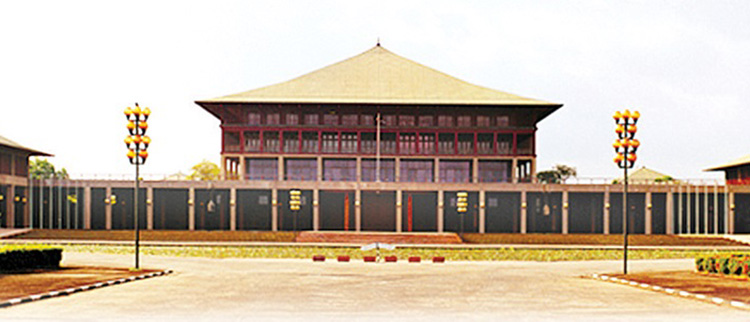
Regardless of MR’s call to suspend divestiture drive:
By Saman Indrajith
The government parliamentary group yesterday voted for the Electricity Amendment Bill in spite of SLPP leader Mahinda Rajapaksa’s opposition to the ongoing privatisation and restructuring programmes. The Bill was passed in Parliament yesterday with amendments.
As no division was called at the end of the third reading stage, Speaker Mahinda Yapa Abeywardena announced that the Bill had been passed with amendments.
The second reading of the Bill was passed with a majority of 44 votes with 103 voting for the Bill while 59 opposed it.
The SJB, JVP/NPP and SLPP dissidents voted against the Bill. TNA MPs were not present in the Chamber in the time of the vote was taken.
The Bill was taken for the debate despite questions on amendments, overlooking Standing Orders and absence of Sectoral Oversight Committee certificate on the Bill to the House.
Soon after the House commenced sitting, UPFA dissident MP Prof. Charitha Herath raising a point of order said that the Bill had been rushed through parliament without giving ample time for the MPs to study its content. As per Standing Order 50 (2), after Bill’s passage through the Sectoral Oversight Committee, time should be given to the MPs to study the amendments. We know the Bill went through the Sectoral Oversight Committee and it is scheduled to be taken up today itself. This deprives the MPs of time to study this. The purpose of Standing Order 50 (2) is lost. The Speaker should prevent this,” Prof Herath said.
SLPP dissident MP Chandima Weerakkody said that the Sectoral Oversight Committee (SOC) after considering a Bill should submit its certificate on the amendments and other remarks on the Bill to the House.
This requirement has not been completed regarding the Electricity Amendment Bill. The report should have been submitted by the Chairman of the SOC. Instead, we saw the subject minister announcing to the House on Wednesday of the amendments to be introduced at the committee stage. The Supreme Court has determined that the Bill, as a whole, was against the Constitution and recommended amending 13 out of 54 clauses of the Bill. We call on the Speaker to prevent this undemocratic act. The Chair can give a ruling to stop this for the sake of democracy. This government has only two more months to go. It is unjust to pass Bills in this manner,” Weerakkody said.
Minister Kanchana Wijesekera said that the government brought the Bill to debate after completing all legal requirements.
State Finance Minister Shehan Semasinghe said that the Bill sought to eliminate the monopoly of electricity distribution. “The opposition has been trying to put this off for the past two years. They will try to do the same today,” he said.
SLPP dissident MP Gevindu Cumaratunga said that there are many amendments proposed to the draft bill and they were of very technical in their nature. “The Supreme Court has questioned one such clause and not even given a guideline as to how it should be amended. We need time to study this. On the other hand, if you limit this debate to a single day, then many MPs would not get a chance to speak. We oppose this Bill and need to speak of its ill. It is our duty as MPs. What is the use of we are being here if we are not given time to speak,” Cumaratunga queried.
SLPP Kandy district MP Mahindananda Aluthgamage said that Minister Wijesekera gave time to all MPs to present their views on the Bill. “A day was allocated, and time was given for all MPs to attend that meeting and speak of this Bill. Time for the debate was determined at the party leaders’ meeting where the opposition should have asked for more time. They agreed for a single day debate,” Aluthgamage said.
Chief Opposition Whip Kandy District SJB MP Lakshman Kiriella: I asked for two days’ time for the debate. The government did not give it. The Speaker too was present, and he can confirm this to the House. The government has no mandate to sell national assets in this manner.
Opposition Leader Sajith Premadasa: People did not give a mandate to this government to bankrupt the country, but they did. Now to cover the losses caused by the bankruptcy, they have resorted to sell off national assets. This Bill needs to be debated properly. It is reasonable for the opposition to ask for time.
Leader of the House Education Minister Susil Premajayantha: The matter of deciding the time for a debate should be done by a party leaders’ meeting. The next party leaders’ meeting is scheduled for this afternoon, so we can take this matter up.
Speaker Abeywardena said that the matter to consider whether the debate be prolonged or not could be decided by the party leaders.
The government made use of its numerical supremacy to reject the opposition’s call to conduct the debate for two days and to put the Bill to vote on Friday at the party leaders’ meeting with the Speaker presiding. Accordingly, the matter was reverted to the previous agreement to have the vote as planned.









News
Establishment of an Institutional Framework to Inagurate Upper Hydro Catchment Areas Management Authority

Policy approval of the Cabinet of Ministers was granted at their meeting held on 08.06.2026 to establish the Upper Hydro Catchment Areas Management Authority for identification and
execution of a formal and long – lasting remedy to secure the central hills including the upper hydro catchment areas enabling them to sustain amidst extreme weather conditions
due to natural calamities and human activities as well as to be used for the sustainable development of the country.
Accordingly, a concept paper has been prepared including
institutional structure, activities, powers, active subject area as well as administrative and coordination mechanism for the proposed authority by an expert technical committee appointed by the Secretary to the President.
Based on the said concept paper, the Cabinet of Ministers granted approval to the resolution furnished by the President to instruct the Legal Draftsman to prepare a draft bill including legal provisions required for the establishment of Upper Hydro Catchment Areas Management Authority.
News
Introduction of Flora and Fauna (Regulation of actions of the Indigenous Community within the nominated areas) Regulations
With the objective of securing the traditional livelihood and the eco system of the indigenous community, it has been recognized the necessity of introducing a formal regulation methodology to secure their engagement in livelihood activities by being more sensitive to the existing laws.
Thereby, the Fauna and Flora (regularizing) regulations under the Fauna and Flora Protection Ordinance (Authority 469) have been prepared so that nominated activities within the prescribed area to a member of the indigenous community
who has been registered for securing the rights acquired from law or custom or usage or traditional stance to execute an act within a certain state land that is fundamental to the survival of the indigenous community permission can be granted
Accordingly, the Cabinet of Ministers granted approval to the resolution furnished by the Minister of Environment to publish the said regulations in the government gazette notification and thereby submit to the Parliament for its concurrence.
Latest News
M. M. D. J. Senarathne, appointed Director General of the Department of National Botanical Gardens
The Cabinet of Ministers approved the resolution furnished by the Minister of Environment to appoint M. M. D. J. Senarathne, who is the senior most officer in Grade I of Sri Lanka Scientific Service se

Establishment of an Institutional Framework to Inagurate Upper Hydro Catchment Areas Management Authority
Introduction of Flora and Fauna (Regulation of actions of the Indigenous Community within the nominated areas) Regulations
M. M. D. J. Senarathne, appointed Director General of the Department of National Botanical Gardens

Harmanpreet Kaur steps down as India captain

Turkiye, Pakistan agree Saudi Arabia military deployment under Mecca pact

Rumesh Tharanga among nominees announced for World Athlete of the Year 2026

‘Dates have the highest sugar content to fight Coronavirus’

Sunday Island 27 December – Headlines

#SundayIsland 17th December – Headlines

Sunday Island – 28th March

Sunday Island Headlines – 21 March

Sunday Island – 21st February – Headlines
-

 Latest News7 days ago
Gold winner Tharanga gets brand-new Honda Vezel from SLAAJ
-

 News6 days ago
US-assisted ‘Ice’ detection: NPC to examine IGP’s move to transfer drug-busting team
-

 Features7 days ago
Why Sri Lanka needs an Inclusive Civic Nationalism – urgently
-

 Editorial5 days ago
Colombo Port drug bust: The plot thickens
-

 News7 days ago
Civil society activist accuses govt. of favouring Ven. Gnanasara
-
 Midweek Review7 days ago
Dappula’s Easter Sunday ‘grand conspiracy’ claim demolished
-

 Editorial7 days ago
When crime bosses rise above law and shrines
-
Editorial6 days ago
Drug busting, transfers and trust deficit