
Editorial
Sinners stoning sinners


Monday 27th November, 2023
The SJB has commenced collecting signatures for a public petition as part of a campaign to have those who are responsible for the current economic crisis stripped of their civic rights. Given public resentment, which is palpable, the SJB may be able to obtain hundreds of thousands of signatures for its petition, but the chances of its political venture yielding the desired results are remote; the Rajapaksas and their cronies are controlling Parliament. The SJB seems to be thinking that the ongoing campaign will help it gain some traction, but that move could turn out to be counterproductive because the Opposition politicians are not free from blame for the economic crisis.
The SLPP leaders are directly responsible for the country’s bankruptcy. The Mahinda Rajapaksa government indulged in wasteful expenditure, invested heavily in vanity projects, and did precious little to prevent the misappropriation of public funds. Corruption became the order of the day under that regime. The Gotabaya Rajapaksa administration totally mismanaged the economy, ruined the agricultural sector with its disastrous organic farming experiment and the ill-conceived blanket ban on agrochemicals, resorted to excessive money printing, did not make a serious effort to arrest the rapid depletion of foreign currency reserves and refused to seek international assistance to straighten up the economy until it was too late.
All SLPP MPs including those who have broken ranks with the government must be held accountable for the current economic crisis; even the dissidents among them supported the wrong policies of the Gotabaya administration until they fell from grace. Similarly, besides those who, the Supreme Court has said in a recent judgement, contributed to the current economic crisis, there are many others who made a tremendous contribution to the country’s bankruptcy, which was the culmination of a process that lasted for years under successive governments.
The SJB parliamentary group members who were in the Yahapalana government, which consisted of the UNP, the SLFP, the SLMC, etc., cannot absolve themselves of the blame for the current crisis. The UNP-led UNF administration did not care to reduce public debt. Instead, it slashed fuel prices and granted unusually high pay hikes to the public sector workers with the view to winning the 2015 general election. It neglected national security, and failed to prevent the Easter Sunday carnage, which entailed an enormous economic cost besides claiming more than 270 lives. The 2019 terror strikes, which crippled tourism, adversely impacted the country’s foreign exchange reserves.
The SLPP keeps saying that the Yahapalana government (2015-2019) worsened the national debt by borrowing USD 12.5 billion in sovereign bonds; nearly USD 7 billion were raised in just 15 months from early 2018 to mid-2019; out of that amount only USD 2 billion had been settled by the end of 2019. It will be interesting to see what the UNP, and its offshoot, the SJB, have got to say to this. Besides, the Yahapalana government allowed its cronies to enrich themselves at the expense of the economy. The Treasury bond scams are a case in point.
Above all, no less a person than Justice Minister Dr. Wijeyadasa Rajapakshe has revealed that the abolition of the Exchange Control Act No 24 of 1953 owing to the introduction of the Foreign Exchange Act No 12 of 2017 has stood unscrupulous exporters and other such elements in good stead. Most export proceeds are not repatriated, Minister Rajapakshe has said, adding that according to his information some exporters have hoarded about USD 56.5 billion offshore.
SJB MP Dr. Harsha de Silva has, in a recent television interview, sought to dispute Minister Rajapakshe’s claim, arguing that the new exchange control laws were intended to enable Sri Lankan businesses to expand abroad. But they certainly benefited racketeers more than anyone else. The new Foreign Exchange Act, inter alia, converted some criminal offences under the previous law into civil ones for the benefit of some crooks.
Thus, criminal cases that had been filed previously lapsed, and legal action was not instituted against the offenders concerned anew for obvious reasons; about 30 persons including the kith and kin of UNP and SLPP leaders are believed to have benefited from the new Act, which the SJB politicians voted for when they were in the Yahapalana government. The abolition of tough foreign exchange control laws contributed to the depletion of the country’s forex reserves and the current economic crisis.
The political parties that resorted to terrorism and/or supported terrorists are also guilty of having contributed to the ruination of the country’s economy. The economic cost of the JVP’s reign of terror in the late 1980s is hard to estimate due to the multifaceted nature of the repercussions of the mindless violence, which crippled the country. The TNA, created by the LTTE, functioned as the latter’s mouthpiece. It must also be held responsible for the damage the LTTE inflicted on the economy to the tune of billions of rupees. When the members of the current parliament accuse one another of having ruined the economy and call for punitive action, it is a case of sinners stoning sinners.









Tuesday 13th October, 2026
The Opposition and the government engaged in an interesting thrust and parry over secret political deals in Parliament the other day. SJB MP Mujibur Rahman lashed out at the JVP, accusing it of having struck a deal with what he described as the corrupt political forces and helped them rise to power in 2005. He argued that the JVP’s political history was replete with similar deals.
Prime Minister Dr Harini Amarasuriya promptly stuck her oar in to defend the JVP, arguing that even if the SJB’s points were conceded for the sake of argument, the JVP had never struck secret political deals under cover of darkness, unlike its critics in the Opposition. But history tells a different story. The JVP has failed to distinguish itself from other political parties when it comes to deal-making. Like its rivals, it has shown that it does not scruple to subjugate principle to political expediency in pursuit of its own interests.
The JVP-led NPP government has faced severe criticism over ‘deals with foreign governments’, particularly its failure to make public the full texts of several agreements and memoranda of understanding (MoUs) signed with India, China and the United States. Critics have questioned whether the current administration is living up to its promises of transparency and accountability, especially where the agreements concern defence, national security, foreign policy and the media. This wall of secrecy, as it were, has made a mockery of the government’s much-advertised commitment to upholding transparency and accountability.
Can the JVP-NPP government reconcile what it describes as legitimate confidentiality requirements with its stated commitment to transparency? Signing international agreements is an ordinary function of any government, but withholding their terms can undermine public confidence when the arrangements may affect national security, economic interests or even sovereignty.
Founding Leader of the JVP Rohana Wijeweera would turn in his grave if he knew of the agreements between India and the JVP-led government. It was during a violent anti-India campaign that Wijeweera met a tragic end in 1989.
The JVP has struck deals with both the SLFP and the UNP. Adversity and expediency are said to make strange bedfellows. In 1970, the JVP actively took part in the election campaign of the SLFP-led United Front (UF), with its stalwarts like Mahinda Wijesekera leading the propaganda campaign of the UF. It took up arms against the UF government in 1971. In 1977, it gravitated towards the UNP. The Batalanda Commission report, which the JVP is using against former President Ranil Wickremesinghe, has revealed that “by the time the 1977 General Elections were declared, the peripheral organizers of the JVP were active, and in fact went to the extent of directly supporting the United National Party, which had been during that period classified as a right-wing capitalist political force” (p. 14). Following its abortive second uprising, the JVP entered into what could be described as a political deal with the SLFP in 1994. Ten years later, it coalesced with the SLFP-led United People’s Freedom Alliance, obtained 39 seats and secured Cabinet posts. It left the UPFA government the following year. However, it campaigned hard for SLFP presidential candidate Mahinda Rajapaksa, playing a crucial role in ensuring his victory in 2005. Thereafter, it closed ranks with the UNP-led political alliances at the 2010 and 2015 presidential elections, and had representation on the National Executive Council of the Yahapalana government.
It is popularly said in this country that when floods strike, even mongooses and cobras forget their enmity and cling to floating logs to stay afloat. When the floodwaters recede, however, their fights resume. This is precisely what we are witnessing on the political front. In Sri Lanka, there is hardly a political party that has not played the role of either the mongoose or the cobra, depending on the circumstances. One may recall that the vociferous SJB bigwigs now berating their JVP counterparts were prominent members of the UNP-led Yahapalana government, which enjoyed a political honeymoon with the JVP between 2015 and 2019.

Monday 12th October, 2026
Fifty-one government MPs have proposed a parliamentary select committee (PSC) probe into the 1983 anti-Tamil violence, known as Black July, and make recommendations to Parliament. Their call has come close on the heels of a private member’s motion presented by Democratic Tamil National Alliance MP Selvam Adaikalanathan, demanding that a Presidential Commission of Inquiry be appointed to establish the truth about the 1983 ethnic violence, assess the damage and recommend measures to prevent its recurrence. The government has argued that a parliamentary select committee will be a far more effective mechanism than a presidential commission to examine the tragic events, enforce accountability and promote reconciliation.
There is no reason why the government cannot appoint a Presidential Commission to probe Black July. The calls for fresh probes into the 1983 anti-Tamil pogrom indicate that questions about the adequacy of previous investigations have remained unresolved for more than four decades. Those efforts did not result in a comprehensive, independent and effective process for holding the organisers and perpetrators of the violence criminally accountable.
The problem with parliamentary probe committees is that the ruling party can manipulate them by appointing a majority of their members. How the UPFA government used a PSC in 2012 to harass the then Chief Justice Dr. Shirani Bandaranayake before clearing the way for her ‘impeachment’ is a case in point.
The current government led by the JVP should have launched an investigation into the 1983 anti-Tamil pogrom much earlier. A thorough probe may shed light on hitherto undisclosed aspects of organised anti-Tamil violence, and the survivors of the pogrom and the families of the victims deserve justice. The Jayewardene government falsely blamed the JVP, the Communist Party and the Nava Sama Samaja Party for the pogrom and proscribed them. The JVP could not have its proscription removed and remained underground. The Jayewardene regime created conditions for the second JVP uprising, which plunged the country into a bloodbath.
Several other campaigns of violence, including mass killings, have not been properly investigated. The JVP’s terror campaign in the late 1980s and the equally brutal counter terror operations conducted by two UNP governments, under Presidents Jayewardene and President Ranasinghe Premadasa, claimed tens of thousands of lives. Those crimes must also be investigated. The incumbent government promised to launch a probe into the Batalanda torture chamber, but baulked at doing so. Maybe it did not want to open a can of worms. The JVP-led government has taken steps to reopen or expedite investigations into high-profile assassinations and other crimes under previous governments. But it has not ordered a probe into the extrajudicial execution of its own founding leader, Rohana Wijeweera, while in state custody, in 1989.
In June 2014, the Retired Senior Police Officers’ Association requested the Presidential Commission to Investigate Complaints Regarding Missing Persons to investigate the massacre of approximately 600 policemen by the LTTE in the Eastern Province in 1990. The commission identified the massacre as one of several grave incidents requiring further investigation by a special probe team with a view to gathering evidence for criminal proceedings. The police personnel surrendered to the LTTE on the orders of the Premadasa government. It is believed that many of them may have survived if they had been allowed to fight. SJB MP Chaminda Wijesiri has been sentenced to an 18-month jail term for obstructing, threatening and assaulting a group of police officers, but the massacre of 600 policemen has not been probed. This contrast raises an uncomfortable question: why do the police act decisively in individual cases while the 1990 massacre of their own personnel remains uninvestigated.
Any future PSC probe into the 1983 ethnic violence should focus on the findings of previous investigations, their inadequacies, why their recommendations were not fully implemented, whether fresh evidence could be ascertained, and, most all, what practical steps could be taken to address the continuing demand for truth and accountability.
One can only hope that the proposed PSC probe is not intended to distract public attention from the government’s failure to fulfil its election pledge to hold the Provincial Council elections within one year of assuming office.

The past few weeks have seen several high-profile arrests, much to the delight of critics of former rulers whose governments were widely associated with abuse of power, the suppression of democracy, political interference in key state institutions and corruption.
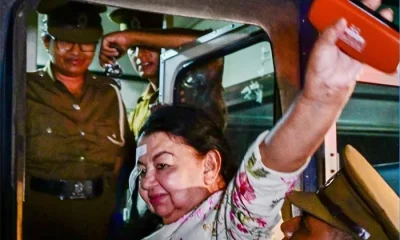
The arrest and remand of former First Lady Shiranthi Rajapaksa have triggered what may be described as a social media feeding frenzy, with government propagandists having a field day. The Rajapaksas and their allies were accused of manipulating legal and judicial processes for political expediency and harassing the Opposition when they were in power. Today, the boot is on the other foot, and they are crying foul. If only they had realised then that those who manipulate the law for political ends might one day find themselves at the receiving end of the same treatment.
It is hardly surprising that the JVP-led government is accused of resorting to show arrests and detentions to divert public attention from pressing issues and advance its political agenda. The government has gone on the offensive, seeking to neutralise key Opposition figures politically. Its modus operandi brings to mind Maslow’s hammer, the cognitive bias of relying excessively on a familiar tool or approach to tackle every problem, much like someone who has only a hammer and sees every problem as a nail. Critics see the suppression of dissent as ingrained in the JVP’s political culture and consider it naïve to expect a JVP-led government to refrain from using state power against its political opponents. After all, successive governments have done so, setting deeply damaging precedents.
Minister and Leader of the House Bimal Rathnayake took great pains in Parliament on Thursday to debunk the Opposition’s claim that the government has launched a witch-hunt against its political rivals. He sought to convince the House and the public that the government had nothing to do with most of the court cases and investigations against the Opposition politicians and their family members. He said all cases against Opposition politicians, except a few, had been filed during the Yahapalana and SLPP governments. If it is true that the cases were initiated under previous administrations, can the JVP/NPP leaders legitimately claim credit for fulfilling their pledge to punish the corrupt? Shouldn’t that credit go to the UNP and the SLFP, the two main constituents of the Yahapalana coalition?
Can anything be more disingenuous than politicians’ claims that they keep their hands off the legal process and the administration of justice? Governments in this country are notorious for making the wheels of justice turn at a politically expedient pace, often resorting to flimsy excuses to justify their shameful actions. While justice delayed is justice denied, justice hurried is justice buried. Justice must be neither delayed nor rushed to achieve political ends. It must be allowed to take its course, free from political interference. This has not happened under any government during the past several decades.
Some suspects are arrested and remanded or detained even before investigations against them get underway in earnest. Such action ought to be the exception, if it is warranted at all, rather than the rule. Otherwise, it could turn law enforcement into political theatre and investigations into a witch-hunt in the eyes of the public. The police and the Commission to Investigate Allegations of Bribery or Corruption must therefore act with such impartiality and professionalism that they cannot reasonably be accused of staging arrests to help the government of the day score political points. As legal experts have pointed out, premature arrests before investigations have established reasonable grounds for suspicion, risk violating individual liberty and the presumption of innocence, compromising the gathering of reliable evidence, and undermining public confidence by making law enforcement appear politically motivated or driven by a desire for publicity rather than justice. Perceptions matter as much as reality when it comes to the dispensation of justice.
The incumbent leaders ought to remember that they, too, will eventually lose their grip on power and may sooner or later have to answer for their actions. Their administration is already facing very serious questions over several controversies, including the release of 323 shipping containers without mandatory inspections, coal procurement, the disappearance of US$ 2.5 million from Treasury funds and alleged import rackets. When the Rajapaksas were at the height of their power, who would have imagined that some of them, too, would one day find themselves in remand prison? The incumbent leaders and their associates would do well to learn from their predecessors’ predicament.

Delegation from Korean Volunteer Association meet Secretary to the President

Imran Khan’s PTI braces to fight federal takeover of Khyber Pakhtunkhwa

Nissanka’s return headlines Sri Lanka’s Test squad against Pakistan

HRCSL issues recommendation on seizure of four books by B. Piratheepan by Sri Lanka Customs

Former Zimbabwe player and umpire Sarah Dambanevana dies aged 36

Deflated Sri Lanka look to prevent whitewash against dominant Pakistan

‘Dates have the highest sugar content to fight Coronavirus’

Sunday Island 27 December – Headlines

#SundayIsland 17th December – Headlines

Sunday Island – 28th March

Sunday Island Headlines – 21 March

Sunday Island – 21st February – Headlines
-

 Features5 days ago
The Sri Lankan who made Scottish history
-

 Sports5 days ago
Nissanka absence opens door for Sri Lanka’s young guns
-

 News4 days ago
NDB fraud Rs 60mn more than reported
-

 News6 days ago
Gnansara Thera to be assigned to prison printing section: Officials
-

 News4 days ago
Removing monk’s robes matter for Sangha to decide: Mahanayake Theras
-
 News6 days ago
OIC of FCID summoned before Maligakanda Magistrate
-

 Features5 days ago
Future of Sri Lanka’s state university system: Should it be shut down and reopened?
-
 News5 days ago
Shiranthi R remanded until 13 Oct.