
Sports
Cricket’s cosy club faces the axe

by Rex Clementine
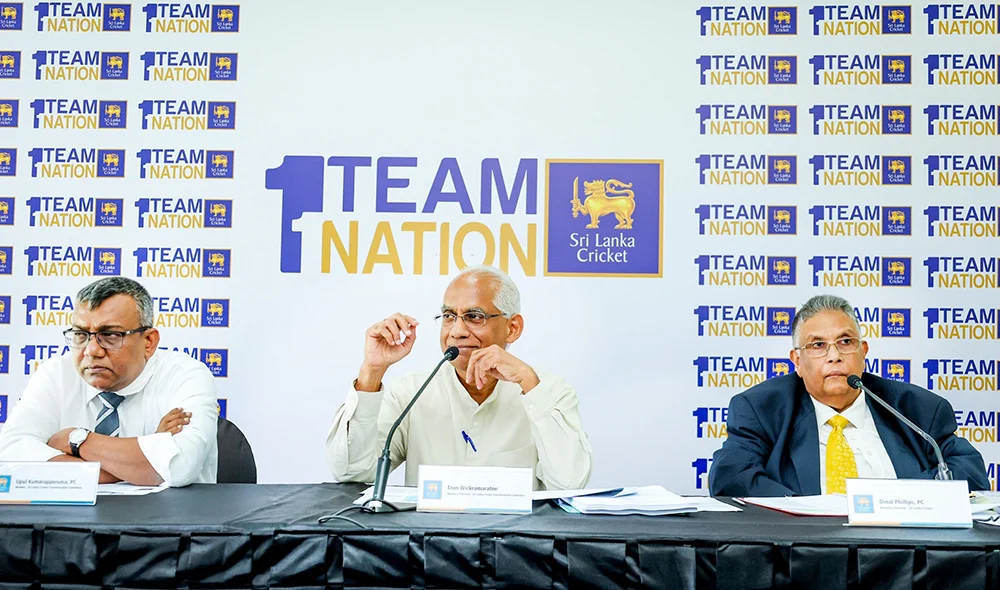
The proposed new constitution for Sri Lanka Cricket has gathered considerable momentum over the past fortnight, with the Bill presented to Parliament, debated by MPs and now facing judicial scrutiny. The courts are examining whether the proposed reforms are consistent with the laws of the land.
The Island learns that a lawyer has challenged certain provisions of the proposed constitution, while former cricket board chief Thilanga Sumathipala has also sought judicial intervention.
The learned judges will hear their submissions and determine whether the proposed legislation passes legal muster. It is possible that the courts may require the authorities to amend certain provisions should they be found incompatible with existing laws.
Among the concerns raised by stakeholders is the proposed exclusion of district associations from having a say in SLC elections. Others are uncomfortable with the prospect of appointed members, rather than elected representatives, heading the board.
These are legitimate concerns and deserve a fair hearing. But there is a larger issue that cannot be swept under the carpet. It is the very system that has governed Sri Lankan cricket for decades that has brought the game to its knees. Unless bold decisions are taken, we will continue to languish near the bottom of the rankings, wondering where it all went wrong.
Opening the door for appointed members offers the possibility of having a well educated, professionally accomplished individual at the helm, rather than leaving the administration of a multi billion rupee organisation in the hands of individuals whose qualifications have sometimes barely extended beyond the GCE Advanced Level.
Some of those who have occupied the hot seat in recent years have spent money like drunken sailors on shore leave. The figures emerging from SLC are enough to make your eyes water.
It has emerged that SLC’s catering bill alone over the past three years has amounted to a staggering Rs. 1.2 billion. During roughly the same period, SLC has reportedly spent more than Rs. 600 million on legal fees. That is an extraordinary amount of money for an organisation whose primary responsibility is to develop and promote cricket.
Giving independent directors a greater say in the affairs of the board would also help curb the tendency of club representatives to put their own interests ahead of the greater good.
Take, for instance, SLC’s recent decision to upgrade club grounds with floodlights. The first beneficiary happened to be the very club represented by the board President. Such decisions inevitably raise questions about priorities and conflicts of interest.
The parliamentary debate on cricket reforms also provided its share of entertainment.
One former Sports Minister was busy blowing his own trumpet, claiming that cricket had flourished during his tenure. The reality, however, tells a rather different story. Far from presiding over a golden era, his constant interference in the affairs of the board did little to advance the game and on occasions, stalled much needed progress.
MP Ravi Karunanayake’s assertion that politicians should have no place in sports administration also raised a few eyebrows.
The senior parliamentarian may well have made the observation with the best of intentions, but history suggests that painting every politician with the same brush would be a mistake. Some of the finest administrators Sri Lankan cricket has produced have come from the political establishment, including several stalwarts of his own party.
J.R. Jayewardene served as President of the cricket board, while Gamini Dissanayake remains one of the most outstanding administrators the game has known. It was under Dissanayake’s leadership that Sri Lanka secured the coveted Test status in 1981, opening the doors to cricket’s most exclusive club.
Tyrone Fernando was another influential figure in cricket administration, while Lalith Athulathmudali, a former President of NCC, was widely regarded as a future cricket board President before his life was tragically cut short.
Nor was the affection for cricket confined to the political right. The leftists had their own distinguished association with the gentleman’s game. Dr. N.M. Perera and Lakshman Jayakody both served as Presidents of the cricket board.



The Rose Bowl, which has been awarded to the winner of ODI series between the women’s teams of Australia and New Zealand since 1985, has now been expanded to include T20Is as well.
New Zealand’s three match T20I tour of Australia, which begins on Sunday at the North Sydney Oval, will be the first T20I edition of the Rose Bowl. The teams will get to face off again for the trophy in March 2027 when they meet again for three ODIs, also in Australia.
For Rose Bowl series that include matches in both white-ball formats, the trophy will go to the team with the most wins overall. In case of a drawn series, the current holder will retain the trophy.
“The Rose Bowl is a prestigious trophy that holds a lot of meaning to current and past players, and it’s a series we’ve always taken a lot of pride in competing in,”Catherine Campbell, NZC’s chief cricket operations officer and a former New Zealand player, said. “With so much T20I cricket now being played, this is a brilliant opportunity to keep the Rose Bowl relevant and to build on the history between us and our Australian rivals.”
New Zealand captain Melie Kerr was excited by the broadening of opportunities to compete for the Rose Bowl.
“We’re all aware of what the Rose Bowl represents and the importance it holds in the White Ferns whakapapa [genealogy],” said Kerr. “Great players and teams have fought for it over the years and we’d love the opportunity to claim our own piece of that history.”
Australia have held the Rose Bowl continuously since wresting it back from New Zealand in 2000. Since that 3-0 win, Australia have won 18 times with one series – in 2008-09 – shared 2-2. Overall, Australia have won 26 of the 31 ODI series played for the Rose Bowl, with New Zealand winning three times and three series drawn.
North Sydney will host all three T20Is of the upcoming Rose Bowl series, on October 18, 20 and 22.
[Cricinfo]

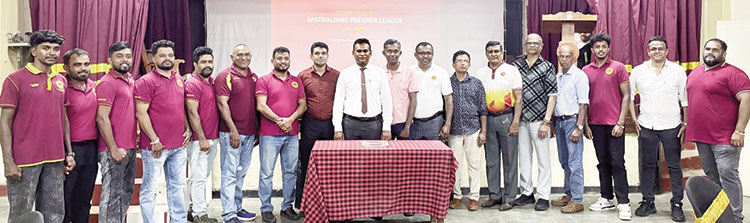
The inaugural Sastralian Premier League (SPL), a T10 cricket tournament aimed at strengthening the cricketing fortunes of Ananda Shasthralaya National School, Matugama, will get underway next month, bringing together eight teams.
Organised by the Old Sastralians Cricket Association in collaboration with the school, the tournament is designed to provide a platform for emerging talent while generating much needed financial support for the school’s cricket development programme.
Each franchise will be required to assemble a squad of 16 players, excluding the captain, with the competition featuring a unique set of regulations aimed at encouraging participation across different age groups.
Cricketers from other schools in the Matugama area will also have an opportunity to showcase their skills under the ‘Guest Players’ category. Each team can recruit up to six guest players, with four required to feature in the playing XI.
In a move designed to nurture the next generation, every team must include two current school cricketers in its squad, with at least one guaranteed a place in the playing XI.
The tournament will also accommodate experienced campaigners, with teams permitted to select five players over the age of 20 and three over 40. The provision to use an ‘Impact Player’ is another feature of the competition.
The eight teams have been divided into two groups. Group A comprises JSD Challengers, Jagath Express, Liveka Power Lions and Rexhill Warriors, while JPI Royals, Five Star Heroes, Marine Titans and Finnk Falcons make up Group B.
A total of 16 matches will be played across November 7, 8 and 15, with November 16 set aside as a reserve day.
Beyond the action on the field, organisers hope the tournament will provide a financial boost to school cricket while forging stronger ties between past and present cricketers.
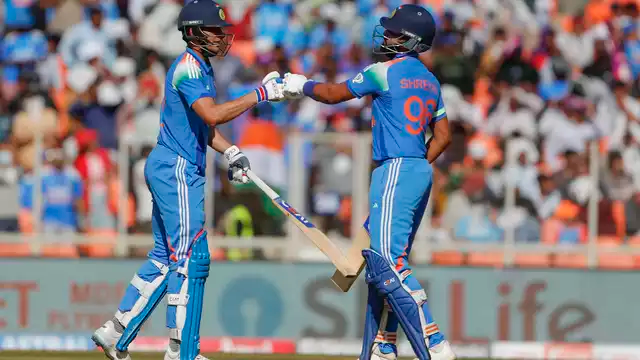
Squad for the first three ODIs: Shubman Gill [C], Rohit Sharma, Virat Kohli, Shreyas Iyer [VC], KL Rahul [WK], Nitish Kumar Reddy, Axar Patel, Naman Dhir, Anshul Kamboj, Gurnoor Brar, Ruturaj Gaikwad, Arshdeep Singh, Ishan Kishan [WK], Mohammed Siraj, Prasidh Krishna*, Kuldeep Yadav
Squad for fourth and fifth ODIs: Shreyas Iyer [C], Rohit Sharma, Virat Kohli, Tilak Varma, Ishan Kishan [WK, VC], Nitish Kumar Reddy, Axar Patel, Naman Dhir, Auqib Nabi, Gurnoor Brar, Ruturaj Gaikwad, Arshdeep Singh, Kumar Kushagra [WK], Mohammed Siraj, Yash Thakur, Kuldeep Yadav
[Cricbuzz]
-

 News6 days ago
Sri Lanka escalates anti-graft drive with Shiranthi’s jailing
-

 Latest News5 days ago
Farhan and Sadaqat help Pakistan seal series in style
-

 News6 days ago
Iranian ships stranded, Lanka fears US sanctions
-

 Latest News4 days ago
Nissanka’s return headlines Sri Lanka’s Test squad against Pakistan
-

 Features5 days ago
Intake 16: 45 years of duty and honour
-

 News5 days ago
Malwathu Chapter issues statement on talks with President over Gnanasara Thera’s robes
-

 News5 days ago
CP alleges NPP has taken the blame for illegal US sanctions on Iranian vessels
-

 News6 days ago
Navi Pillay’s Lankan affairs in focus as she wins 2026 Nobel Peace Prize