
Opinion
Red Sea, Gaza and Sri Lanka’s foreign policy

by Lasanda Kurukulasuriya
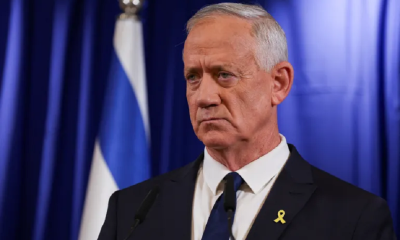
Sri Lanka’s remarks at the meetings of the 19th Summit of the Non Aligned Movement in Uganda, must surely have had observers of international relations, especially relating to West Asia, scratching their heads. President Ranil Wickemesinghe in Kampala on Friday (19 Jan.) said he welcomed the fact that the 19th Summit gave “highest priority to the crisis in Gaza and the inalienable rights of the people of Palestine to self- determination and the realisation of an independent and sovereign state of Palestine,” according to the Foreign Ministry.
At the Ministerial Meeting on Wednesday 17th Foreign Minister Ali Sabry asserted that “Non-alignment forms a cornerstone of Sri Lanka’s foreign policy.” At the Ministerial Committee on Palestine the following day, he expressed Sri Lanka’s “deep concern on the tragedy that is continuing to unfold” in Gaza, stressing that “a humanitarian ceasefire is the only solution to halt the mounting civilian death toll.”
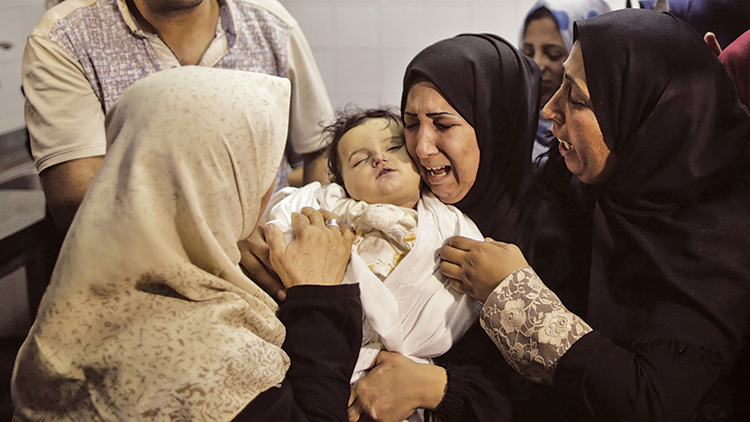
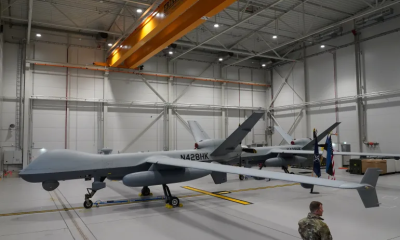
These remarks would appear ironic, coming a fortnight after Wickremesinghe announced a decision ‘to deploy a ship from the Sri Lanka Navy to the Red Sea, contributing to the security of the region against Houthi activities.’ It would contribute to a US-led operation to counter attacks on merchant ships by Yemen’s Houthi militants in the vital trade route. The Houthis say they are targeting Israeli-linked vessels in solidarity with Palestinians, and to bring pressure on Israel to end the assault on Gaza.
It is not clear how the President’s decision came about. There has been speculation that he was possibly responding to a request from the US, to support its military action against the Houthis. His disclosure on January 3, at an event at the BMICH, came on the same day that the White House issued a joint statement from the US and some allies, warning that the Houthis would bear the responsibility of the ‘consequences’ if they did not stop the attacks.
There has been a marked reluctance on the part of even the US’s western allies to be associated with the exercise. Some countries, like India, reportedly deployed their ships in the region to protect their own maritime traffic, but not under US command. The call to join a US-led military adventure in the Red Sea cannot be seen as simply an exercise to protect international shipping for the common good, comparable with, say, the multinational effort launched some years ago that effectively countered piracy in the seas off Somalia.
This was a call to ‘take sides’ on a political issue – one that has shaken the conscience of the world. Sri Lanka, a founding member of the NAM and part of the global South will be seen, not only to have taken the wrong ‘side’ on this issue, but will end up on the wrong side of history with this wrong-footed decision – if it is carried out. It doesn’t help that amid the crisis, Sri Lanka dispatched a group of workers to Israel, possibly to meet a labour shortfall arising from the ongoing war on Gaza.
Charge of genocide
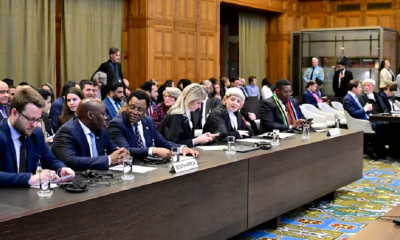
The UN General Assembly has overwhelmingly voted for an immediate humanitarian truce in Gaza, while UN agencies deplore the catastrophic proportions of the humanitarian crisis. Israel now faces the charge of genocide before the International Court of Justice, the UN’s highest legal body. The charge brought by South Africa is one that “fits clearly under the definition of genocide in the Geneva Convention, to which Israel is a signatory,” wrote Prof. John Mearsheimer, Distinguished Service Professor in Political Science and Co-director of the Programme on International Security Policy at the University of Chicago. He described the application as being “comprehensive, well-written, well-argued, and thoroughly documented.
” Anuradha Chenoy wrote that “South African lawyers unpeeled the layers of Israel’s actions in each sphere of Gaza’s people’s life to show that ‘a people are being destroyed.” The retired Dean and Professor at the School of International Studies, Jawaharlal Nehru University went on to say, “The argument and evidence presented by South Africa, is been watched by the world over the last three months. What South Africa has done is to systematically bring it together, in a compelling, convincing and courageous way.”
The US has joined Israel in rejecting South Africa’s charge of genocide.
This is the backdrop against which the Sri Lanka government seeks to support the US-led Red Sea military operation. The government’s argument is that the re-routing of ships around Africa, resulting from disruption of shipping in the Red Sea, would lead to a rise in the cost of goods and would be harmful to Sri Lanka’s economy. It is anybody’s guess whether this rationalisation would fly with ordinary Sri Lankans, who may find reasons for the ‘rising cost of goods’ nearer home.
Related events
It does not appear that the Sri Lanka Navy has been consulted on matters such as readiness of its vessels and weaponry to counter attacks by drones and anti-ship ballistic missiles reportedly being used by the Houthis, or the costs (that experts suggest could far exceed the government’s estimate of Rs 500 million a month – calling into question the argument of ‘rising cost of goods.’) A decision relating to the crisis in Gaza would anyway call for an approach that goes beyond pedestrian considerations of a ‘cost-benefit analysis.’ This was amply displayed in the high priority accorded to Palestine and Gaza at the 19th NAM summit.
At this summit Sri Lanka strongly supported the call for an immediate ceasefire in Gaza and stood by Palestine’s cause, alongside other leaders of the global South. The apparent desire, at the same time, to appease the US by acceding to a request to join its military operation against Houthis in the Red Sea, is inexplicable. Has the government failed to see any connection between the two? The relatedness of these events was noted by Russian envoy to the UN Vasily Nebenzya. The developments in the Red Sea are the “direct projection of violence in Gaza, where the cruel operation of Israel continues already for three months,” he is reported as saying at a UN Security Council meeting,
Analysts looking at the bigger picture say that what the US and UK are doing could lead to further escalation of conflict. “The US and UK are ignoring the source of the crisis, which is the genocide in Gaza, but they’re also enabling it,” said Omar Rahman, a fellow with the Middle East Council on Global Affairs. Speaking to Al Jazeera, he observed “They’re trying to prevent a wider regional escalation by taking military action against the flashpoints that are occurring as a result of what’s happening in Gaza.”
President Wickremesinghe has often said Sri Lanka will not join any big power or ‘take sides.’ But observers have sometimes found it difficult to fathom the rationale for seemingly contrary positions adopted by the Wickremesinghe-Rajapaksa government in its foreign relations. Could a remark by the president at an event hosted by the Carnegie Endowment in New York last year, give a clue to the thinking? The question put to him, in the context of US-China rivalry, was whether Sri Lanka was ‘hedging back and forth to extract as much as possible.
’ In the course of his reply he said “We have to deal with all powers that come in. We may have played one against the other, but that’s for our survival.” Can such an approach, if that is the case, be justified with the crisis in Gaza, with its deeply moral dimension, and a genocide case before the ICJ? One can only hope the government’s seemingly principled stance in Kampala will translate into course-correction, even now, on the matter of sending a Sri Lanka Navy ship to the Red Sea.








“When the principal sneezes, the whole school catches a cold. This is neither good nor bad; it is just the truth. The principal’s impact is significant; his focus becomes the school’s focus.” These are Whitaker’s words and they illustrate the predominant role that a principal has to execute in a school. The Wallace Foundation has identified the following as the five key responsibilities of a school principal.
- Establishing a school wide vision of commitment to high standards and success of all students.
- Ensuring that learning is at the centre of all activities.
- Cultivating leadership in others
- Improving achievement by focusing on the quality of instruction.
- Managing people and resources at hand.
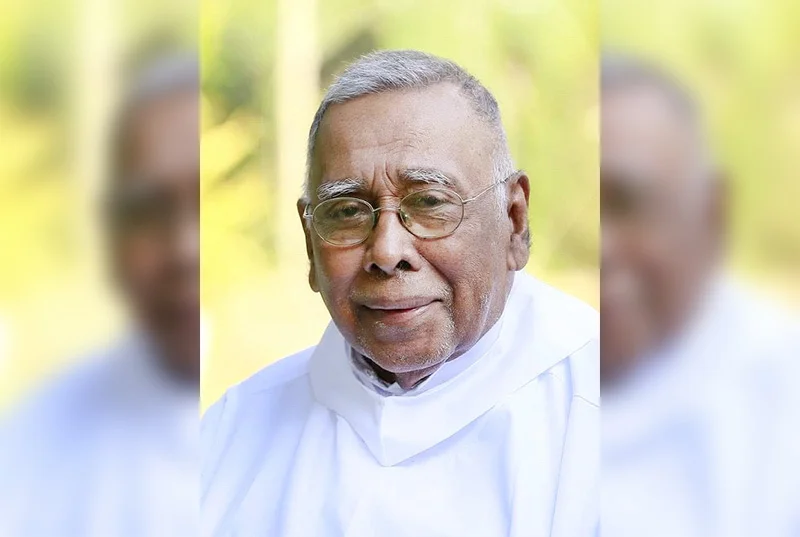
Rev. Fr. Stephen Abraham is one such principal who fulfilled these commitments at the highest level possible at St. Anthony’s College, Katugastota, for a period of 15 years from 1979 to 1994. He was born on the 15th of February 1933 and ordained a Priest in the Benedictine Order of the Catholic Church on 17 December 1964. His demise was on 21st February 2026, on the fourth day of the period of lent in the catholic calendar. As such he has been in the service of God as a priest for 62 years of his life of 93 years. This article contains extracts from a piece that I wrote when he celebrated the Golden Jubilee of his priesthood in December 2014.
St. Anthony’s College went through a burdensome period after the handing over of the school to the government as the teachers, support staff and parents were baffled about the direction of the school. It is at this stage that Fr. Stephen was appointed as the Principal. In his own inimitable manner he took control with authority and raised the confidence of the staff and the community. This was needed as the confidence was at its lowest ebb and he had the vision to realise that boosting the level of confidence had to be the priority. As the famous quote says “A good leader inspires others with confidence in him; a great leader inspires them with confidence in themselves”. He could not have done this without self-confidence which he had in abundance. Alongside, he laid his emphasis on maintaining a strict code of discipline as it had degraded due to the unfortunate incidents paving way for the handing over of the school.
A quality that any good principal should possess is to be a great communicator. Fr. Stephen had a natural ability to be dexterous with people. He made connections with each person showing them that he cares about their own situations. Through these connections he set high expectations for each individual letting them know that they cannot get away with mediocrity. The articulation and eloquence of his expression convinced people of his opinions and decisions. He is blessed with a sound sense of humour and it helped to ease tensions and resolve conflicting situations. More importantly, he was passionate about his responsibilities as the head of the school and he spent all his time and energy with the sole objective of creating a proper environment for the students to be responsible learners striving for personal excellence. Fr. Stephen was everywhere in the school and knew everything that was happening within the premises and he made himself visible at all times. He fits well with the description of a leader in Harold Seymour’s quotation “Leaders are the ones who keep faith with the past, keep step with the present, and keep the promise to posterity”. No wonder therefore, that he is considered as an outstanding principal.
In 1979 when the school celebrated its 125th anniversary, Fr. Stephen invited His Excellency the President J. R. Jayewardene as the chief guest of the Prize Giving ceremony. His emphasis on discipline is highlighted through this excerpt from his speech at this function. “The progress of any society depends mainly on discipline and discipline is not come by so easily unless the members of the society work towards it. No nation can be great unless its students aspire to greatness. But all this calls for training which is impossible without quality in teaching. Teachers should command the greatest respect in the land. Teaching is not a mere avocation, it is indeed a vocation and a very noble one at that.”
When it comes to educating the youth, Fr. Stephen believed in developing the whole person. This is reflected in the emphasis that he laid not only in the academic arena but also the field of extra-curricular activities. He believed that inculcating, promoting and enhancing values such as compassion, integrity, courage, appreciation, determination, gratitude, loyalty and patience are crucial for the proper upbringing of the younger generation. In 1980, he invited the Prime Minister Hon. R. Premadasa for that year’s prize giving ceremony and in the principal’s address he said “When our young charges leave this emotionally safe and secure world of school with all its disciplines, they must be able to adjust to the wider world in which they must live and work. It is our responsibility to see that they leave the College mentally, spiritually and physically whole, so that they in turn may assume the roles they will be called upon to fulfill in the future”, demonstrating his belief in the advocacy of values.
He identified sports activities as a healthy medium to instill discipline and an acceptable value system and did his utmost in promoting, encouraging and popularising all types of sports in the school. With his foresight and guidance, the school gained new heights in almost all spheres of sports activity. Just to name three great sportsmen who had their grounding in that era are Muttiah Muralidharan – record breaking cricket bowler, Priyantha Ekanayake – a respected past rugby captain of Sri Lanka and president of SLRFU and Udaya Weerakoon – a former national and world inter airline badminton champion.
He did not neglect the expansion of the infra-structure in the school in keeping with the needs of the time. Some of the projects completed during his time were the building of a two-story block of classrooms with the assistance of funds released by the Prime Minister, completion of the indoor sports complex and later a pavilion named after the famous Antonian cricketer Jack Anderson, with the help of the old boys association.
The inspiration that Fr. Stephen Abraham had as Principal within the school community of St. Anthony’s College can be aptly described by John Quincy Adam’s quotation ” May God grant him the eternal reward!
R.N.A. de Silva
The author had his secondary education at St. Anthony’s College, Katugastota, and later served as a member of its staff
rnades@gmail.com

Excerpts from the speech of the Chairman of the Communist Party of Sri Lanka, D.E.W. Gunasekera, at the 23rd Convention of the Party
This is not merely a routine gathering. Our annual congress has always been a decisive moment in Sri Lanka’s political history. For 83 years, since the formation of our Party in 1943, we have held 22 conventions. Each one reflected the political turning points of our time. Today, as we assemble for the 23rd Congress, we do so at another historic crossroads – amidst a deepening economic crisis at home and profound transformations in the global order.
Our Historical Trajectory: From Anti-imperialism to the Present
The 4th Party Convention in 1950 was a decisive milestone. It marked Sri Lanka’s conscious turn toward anti-imperialism and clarified that the socialist objective and revolution would be a long-term struggle. By the 1950s, the Left movement in Sri Lanka had already socialized the concept of socialist transformation among the masses. But the Communist Party had to dedicate nearly two decades to building the ideological momentum required for an anti-imperialist revolution.
As a result of that consistent struggle, we were able to influence and contribute to the anti-imperialist objectives achieved between 1956 and 1976. From the founding of the Left movement in 1935 until 1975, our principal struggle was against imperialism – and later against neo-imperialism in its modernised forms,
The 5th Convention in 1955 in Akuressa, Matara, adopted the Idirimaga (“The Way Forward”) preliminary programme — a reform agenda intended to be socialised among the people, raising public consciousness and organising progressive forces.
At the 1975 Convention, we presented the programme Satan Maga (“The Path of Battle”).
The 1978 Convention focused on confronting the emerging neoliberal order that followed the open economy reforms.
The 1991 Convention, following the fall of the Soviet Union, grappled with international developments and the emerging global order. We understand the new balance of forces.
The 20th Convention in 2014, in Ratnapura, addressed the shifting global balance of power and the implications for the Global South, including the emergence of a multipolar world. At that time, contradictions were developing between the United People’s Freedom Alliance (UPFA), government led by Mahinda Rajapaksa, and the people, and we warned of these contradictions and flagged the dangers inherent in the trajectory of governance.
Each convention responded to its historical moment. Today, the 23rd must responded to ours.
Sri Lanka in the Global Anti-imperialist Tradition
Sri Lanka was a founding participant in the Bandung Conference of 1955, a milestone in the anti-colonial solidarity of Asia and Africa. In 1976, Sri Lanka hosted the 5th Summit of the Non-Aligned Movement (NAM) in Colombo, under Prime Minister Sirimavo Bandaranaike.
At that time, Fidel Castro emerged as a leading voice within NAM. At the 6th Summit in Havana in 1979, chaired by Castro, a powerful critique was articulated regarding the international economic and social crises confronting newly sovereign nations.
Three central obstacles were identified:
1. The unjust global economic order.
2. The unequal global balance of power,
3. The exploitative global financial architecture.
After 1979, the Non-Aligned Movement gradually weakened in influence. Yet nearly five decades later, those structural realities remain. In fact, they have intensified.
The Changing Global Order: Facts and Realities
Today we are witnessing structural Changes in the world system.
1. The Shift in Economic Gravity
The global economic centre of gravity has shifted toward Asia after centuries of Western dominance. Developing countries collectively represent approximately 85% of the world’s population and roughly 40-45% of global GDP depending on measurement methods.
2. ASEAN and Regional Integration
The Association of Southeast Asian Nations (ASEAN), now comprising 10 member states (with Timor-Leste in the accession process), has deepened economic integration. In addition, the Regional Comprehensive Economic Partnership (RCEP) – which includes ASEAN plus China, Japan, South Korea, Australia and New Zealand – is widely recognised as the largest free trade agreement in the world by participating economies.
3. BRICS Expansion
BRICS – originally Brazil, Russia, India, China and South Africa – has expanded. As of 2025, full members include Brazil, Russia, India, China, South Africa, Saudi Arabia, United Arab Emirates, Egypt, Ethiopia and Iran. Additional partner countries are associated through BRICS mechanisms.
Depending on measurement methodology (particularly Purchasing Power Parity), BRICS members together account for approximately 45-46% of global GDP (PPP terms) and roughly 45% of the world’s population. If broader partners are included, demographics coverage increases further. lt is undeniably a major emerging bloc.
4. Regional Blocs Across the Global South
Latin America, Africa, Eurasia and Asia have all consolidated regional trade and political groupings. The Global South is no longer politically fragmented in the way it once was.
5. Alternative Development Banks
Two important institutions have emerged as alternatives to the Bretton Woods system:
• The New Development Bank (NDB) was established by BRICS in 2014.
• The Asian Infrastructure Investment Bank (AIIB), operational since 2016, now with over 100 approved members.
These institutions do not yet replace the IMF or World Bank but they represent movement toward diversification.
6. Shanghai Cooperation Organisation (SCO)
The SCO has evolved into a major Eurasian security and political bloc, including China, Russia, India. Pakistan and several Central Asian states.
7. Do-dollarization and Reserve Trends
The US dollar remains dominant foreign exchange reserves at approximately 58%, according to IMF data. This share has declined gradually over two decades. Diversification into other currencies and increased gold holdings indicate slow structural shifts.
8. Global North and Global South
The Global North – broadly the United States, Canada European Union and Japan – accounts for roughly 15% of the world’s population and about 35-40% of global GDP.
The Global South – Latin America, Africa, Asia and parts of Eurasia – contains approximately 85% of humanity and an expanding share of global production.
These shifts create objective conditions for the restructuring of the global financial architecture – but they do not automatically guarantee justice.
Sri Lanka’s Triple Crisis
Sri Lanka’s crisis culminated on 12 April 2022, when the government declared suspension of external debt payments – effectively announcing sovereign default.
Since then, political leadership has changed. President Gotabaya Rajapaksa resigned. President Ranil Wickremesinghe governed during the IMF stabilization period. In September 2024, Anura Kumara Dissanayake of the National People’s Power (NPP) was elected President.
We have had three presidents since the crisis began.
Yet four years later, the structural crisis remains unresolved,
‘The crisis had three dimensions:
1. Fiscal crisis – the Treasury ran out of rupees.
2. Foreign exchange crisis – the Central Bank ran out of dollars.
3. Solvency crisis – excessive domestic and external borrowing rendered repayment impossible.
Despite debt suspension, Sri Lanka’s total debt stock – both domestic and external – remains extremely high relative to GDP, External Debt restructuring provides temporary could reappear around 2027-2028 when grace periods taper.
In the Context of global geopolitical competition in the Indian Ocean region, Sri Lanka’s economic vulnerability becomes even more dangerous,
The Central Task: Economic Sovereignty
Therefore, the 23rd Congress must clearly declare that the struggle for economic sovereignty is the principal task before our nation.
Economic sovereignty means:
• Production economy towards industrialization and manufacturing.
• Food and energy security.
• Democratic control of development policy.
• Fair taxation.
• A foreign policy based on non-alignment and national dignity.
Only a centre-left government, rooted in anti-imperialist and nationalist forces, can lead this struggle.
But unity is required and self-criticism.
All progressive movements must engage in honest reflection. Without such reflection, we risk irrelevance. If we fail to build a broad coalition, if we continue Political fragmentation, the vacuum may be filled by extreme right forces. These forces are already growing globally.
Even governments elected on left-leaning mandates can drift rightward under systemic pressure. Therefore, vigilance and organised mass politics are essential.
Comrades,
History does not move automatically toward justice. It moves through organised struggle.
The 23rd Congress of the Communist Party of Sri Lanka must reaffirm.
• Our commitment to socialism.
• Our dedication to anti-imperialism.
• Our strategic clarity in navigating a multipolar world.
• Our resolve to secure economic sovereignty for Sri Lanka.
Let this Congress become a turning point – not merely in rhetoric, but in organisation and action.
The future will not be given to us.
It must be won.
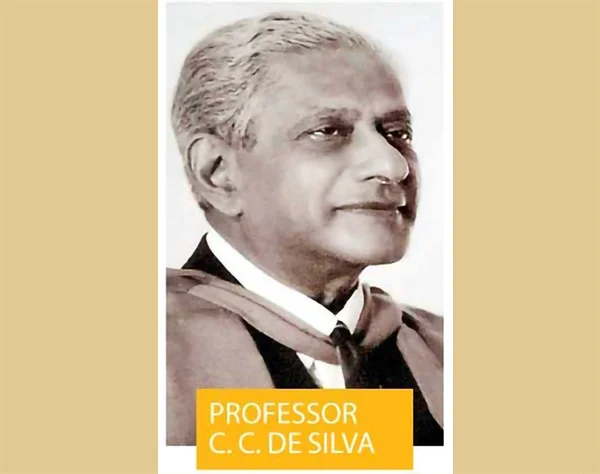
On the 25th of February, the 122nd birth anniversary of Emeritus Professor C. C. De Silva, the medical fraternity, as well as the general public, should remember not just the “Godfather of Modern Sri Lankan Paediatrics,” but a unique intellectual whose fantastic brainpower was matched only by his relentless pursuit towards perfection.
To the world, he was a colossus of science. For me, he was a mentor who transformed a raw medical graduate into a disciplined scholar through a “baptism by fire”; indeed, a baptism that I shall cherish forever.
I do hope and pray that this narrative is a sufficiently adequate and descriptive tribute to a persona par excellence, a true titan of the Sri Lankan Medical Landscape.
From Scepticism to Admiration
Our first encounter in 1969 was, quite strangely and perhaps humorously, a lesson to me on my own youthful ignorance and audacity. As a fourth-year medical student, I watched a grey-haired gentleman in the front row challenge an erudite foreign guest lecturer with questions: queries which I considered to be “irrelevant”. I dismissed him then as a “spent old force”. On inquiry, I was told that the person was Professor C. C. De Silva, who had just retired. I quietly thought to myself, “Thank God for small mercies, as I would not be taught by someone like him.”
God forbid, too, as to how terribly wrong I was. Years later, I realised that those questions were the hallmark of a visionary and a dedicated pedagogic academic celebrity, intensely relevant to the health of the children of our beloved Motherland. They were totally and far above the head and intellect of a “raw” medical student. Thankfully, it was not long before, this dignitary, whom I had the bravado to call “a spent old force”, became one of the most influential and gravitational forces in my professional life.
The Seven-Fold Refinement
The true turning point came in 1971. Under the guidance of Dr M. C. J. Hunt, the Consultant Paediatrician at Lady Ridgeway Hospital, under whom I did the second six months of Pre-Registration Internship, I was forced by my “Boss”, terminology used at that time to describe the Consultants, to write my very first scientific paper on a very rare and esoteric condition. When it was submitted to the Ceylon Journal of Child Health, its Editor, Dr Stella De Silva, sent it to a reviewer for assessment. Impudently armed with my “masterpiece”, I jauntily presented myself at the residence of Emeritus Professor C. C. De Silva, who was allocated to be the reviewer of my creation.
What followed was a merciless masterclass in fantastic academic expertise. With a sharp mind and an even sharper red pen, Professor C. C. De Silva took my handiwork completely apart. He cut, chopped, and rearranged the text until barely a sentence of my original prose remained. Over several weeks, this “torture” was repeated no less than seven times. Each week, I would return with a retyped manuscript, only to have it bled dry, again and again, by his uncompromisingly erudite brain. It was indeed a “Baptism by fire“.
Yet for all this, there was absolute grace in his rigour. The man was so exacting in academic literary work that nothing, nothing at all, escaped his eagle’s eye. Each session ended with a delicious high tea served by his gracious wife, and the parting words: “My boy, you do have a lot to learn”.
By the eighth attempt, the paper that had originally been a raw, uncut nugget was finally polished into a veritable gem. The journal published it, and it was my very first scientific publication. However, much more importantly, it was the occasion when I learned the compelling truth of Rabindranath Tagore’s immortal words, “Where tireless striving stretches its arms towards perfection“. It clearly impressed on me the fact that for intellectuals like Professor C. C. De Silva, it was a compelling intonation.
An Unending Legacy
Professor C. C. De Silva was definitely much more than just an academic; he was the personification of British English at its finest and a scientist with an obsessive craving for detail. Later, he became a father figure to me, even attending my presentations and offering gentle constructive criticisms, which eventually moved yours truly from fearing it to desperately craving for it.
In 1987, in a final act of characteristic generosity, he asked for my Curriculum Vitae to nominate me for the Fellowship of the Royal College of Physicians of London, UK. I was just 40 years of age. Though the Great Leveller took him from us before his letter to the Royal College of Physicians could be posted, his belief in me was the ultimate validation of my academic progress.
The Good Professor left a heritage of refinement and scholastic brilliance that was hard to match. Following his demise in 1987, the Sri Lanka Paediatric Association, which later became the Sri Lanka College of Paediatricians, established an Annual Professor C. C. De Silva Memorial Oration. I was greatly honoured but profoundly humbled to be competitively selected to deliver that oration, not just once, but three times, in 1991, 1999, and 2008, on three different scientific technical topics based on my research endeavours. Those were three of the highest compliments that I have ever received in my professional life.
The Singular Man
Today, as we mark 122 years since his birth, the shadow of Professor C. C. De Silva still looms ever so large over the Lady Ridgeway Hospital for Children. He taught us that in medicine, “good enough” is never enough; it simply has to be the “best”. He was a caring and vibrant soul who demanded the best because he believed his students and his patients deserved nothing less.
I remain as one of a singularly fortunate cluster that had the extraordinary privilege of walking along a pathway lit by this great man. He was a fabulous leading torch-bearer who guided us in our professional lives. I was always that much richer for the time that I spent in his ever-so-valued company.
Emeritus Professor Cholmondeley Chalmers De Silva: My dear Sir, we will never forget you. This tribute is for a classy scholar, a superb mentor, a master craftsman, and most definitely, an extraordinary man like no other. Today, WE DEVOTEDLY SALUTE YOU and wish you HAPPY BIRTHDAY, in your heavenly abode.
by Dr B. J. C. Perera
MBBS(Cey), DCH(Cey), DCH(Eng), MD(Paediatrics), MRCP(UK), FRCP(Edin), FRCP(Lond), FRCPCH(UK), FSLCPaed, FCCP, Hony. FRCPCH(UK), Hony. FCGP(SL)
Specialist Consultant Paediatrician and Honorary Senior Fellow, Postgraduate Institute of Medicine, University of Colombo, Sri Lanka.

HNB supports Sri Lanka’s recovery with record advances growth

HNB Assurance delivers industry leading 42% revenue (GWP) growth and 28% rise in profits (PAT)

An efficacious strategy to boost exports of Sri Lanka in medium term

Hyacinthesis’ Accelerator launches to convert Water Hyacinth into livelihood opportunities

Sri Lanka must plan smarter to compete in World Cups, says Atapattu

Ananda, Nalanda enter survival battle

‘Dates have the highest sugar content to fight Coronavirus’

Sunday Island 27 December – Headlines

#SundayIsland 17th December – Headlines

Sunday Island – 28th March

Sunday Island Headlines – 21 March

Sunday Island – 21st February – Headlines
-
 Features5 days ago
Why does the state threaten Its people with yet another anti-terror law?
-
 Features5 days ago
Reconciliation, Mood of the Nation and the NPP Government
-
 Features5 days ago
Victor Melder turns 90: Railwayman and bibliophile extraordinary
-

 Features4 days ago
LOVEABLE BUT LETHAL: When four-legged stars remind us of a silent killer
-
 Features5 days ago
Victor, the Friend of the Foreign Press
-
 Latest News6 days ago
New Zealand meet familiar opponents Pakistan at spin-friendly Premadasa
-
 Latest News6 days ago
ECB push back at Pakistan ‘shadow-ban’ reports ahead of Hundred auction
-
 Latest News6 days ago
Tariffs ruling is major blow to Trump’s second-term agenda